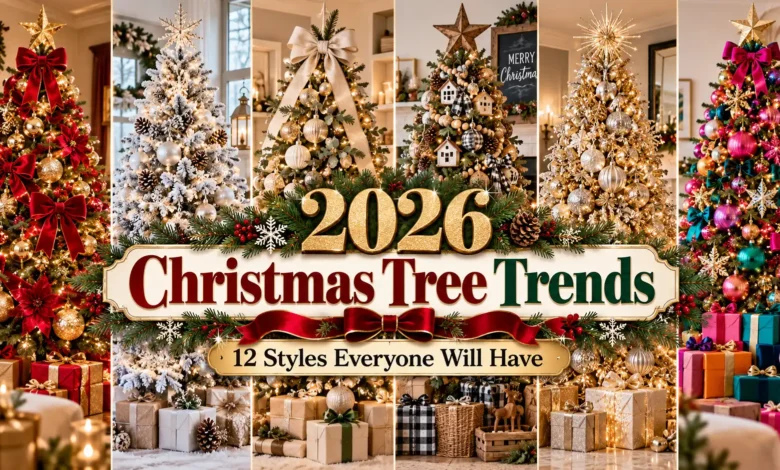
The most useful way to approach 2026 Christmas tree trends is to choose a mood before buying another box of ornaments. A big velvet bow creates a different feeling from frosted glass, folded paper, or a tree full of family keepsakes. This year’s inspiration gives you room for all of them.
If you want a quick starting point, choose the oversized-bow tree for a simple update, the collected heirloom tree to use what you already own, or the icy translucent tree for a noticeable color change. Below are 12 distinct styles, with the materials, placement decisions, and small adjustments that make each one work.
The official Christmasworld Trends 26+ forecast highlights expressive, light-filled, and geometric directions. Pinterest’s public 2026 forecast also includes theatrical gatherings, icy blue, celestial accents, and delicate animal-inspired styling. The trees below translate those signals into decorating ideas, alongside established holiday favorites. They are editorial interpretations, not a ranking of what every American household will buy.
The images are AI-generated decorating concepts, created to illustrate the palettes and arrangements rather than document real finished rooms.
1. The Oversized-Bow Tree
Start here if your tree already looks good but needs one memorable detail. A generous bow at the crown gives the eye somewhere to land; long tails carry that detail down through the branches. In the concept shown, dusty rose velvet softens a simple green tree and champagne ornaments.

For the placement: attach the bow to the upper trunk or another firm support point rather than balancing it on a bendy tip. Let the tails follow different paths instead of laying them flat like two straight stripes. One can tuck into the branches while the other stays more visible. Keep both clear of light bulbs and electrical connections.
Before committing, hold the bow up and look from the doorway. The loops should feel generous beside the tree’s upper branches without swallowing its entire crown. On a slim tree, a slightly narrower bow with longer tails usually looks more balanced than an enormous round knot.
Use your existing neutral baubles and resist adding a second showpiece topper. If the tree already has a crowded assortment of ornaments, remove a few around the bow so its shape has room to read. Wired ribbon helps with shaping; a ready-made fabric bow needs secure loops or ties at the back.
Also Read: 21 Christmas Tree Bow Ideas That Turn Simple Ribbon Into a Statement
2. The Collected Heirloom Tree
This tree looks gathered over time: ribbed glass, painted houses, wooden toys, stitched hearts, and ornaments with a little history. Its appeal is the mix. Red, green, and gold provide a loose thread through the collection, while tartan and small colored lights add warmth.

Unpack the sentimental pieces first. Choose a handful you want people to notice, then use ordinary baubles to fill around them. Hang a rocking horse or painted house where it has open space beneath its silhouette; a crowded branch can hide the very detail that makes it special.
To make mismatched ornaments feel connected, repeat one quiet element around the tree. The illustrated design uses tartan bows and gold beads. You could use just the beads if your collection is already colorful. Neither needs to be a perfect spiral.
Spread your largest ornaments across the tree rather than grouping every heavy-looking piece at the bottom. Actual weight still matters: fragile or heavy ornaments belong on strong, secure branches, with valuable keepsakes away from busy walkways.
The budget move: buy a small set of plain filler ornaments only after arranging your favorites. You may need far fewer than you expected. This is a good style for a family living room because the tree stays personal even when the surrounding decor is restrained.
Also Read: 23 Vintage Christmas Tree Decorating Ideas That Bring Back Childhood Christmas
3. The Opera-Inspired Jewel Tree
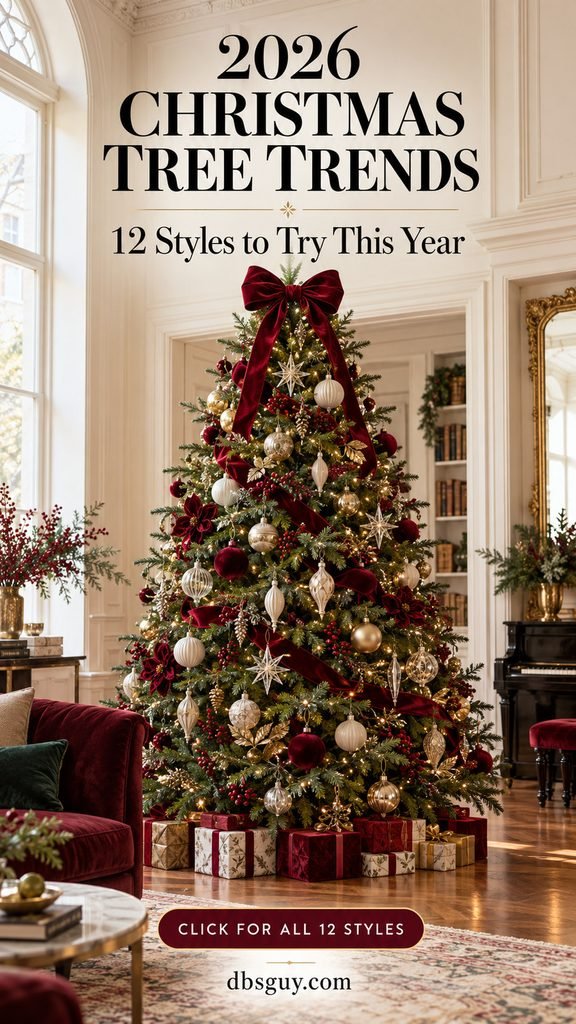
For an evening room, turn the tree into a small piece of theater. Burgundy velvet, ruby and plum ornaments, antique gold, and faceted clear accents create depth without needing every decoration to sparkle. This is our Christmas interpretation of Pinterest’s broader Opera Aesthetic, not a separate measured tree trend.

The jewel-tone recipe: make burgundy the main fabric color, use plum and ruby for the baubles, and reserve gold for outlines and finishing details. Clear pendants give the eye a break between the darker pieces. A few artificial red rose picks can support the theatrical mood without becoming a floral tree.
Shape velvet into short, supported swags instead of wrapping one tight band around the whole tree. Tuck each attachment point inward and leave branches visible between the curves. Add ornaments after the fabric so you can see where the gaps are.
A room with dark walls can handle more gold and clear accents; in a pale room, let the velvet do most of the work. Check the tree with its lights switched off as well as on. If all the plum ornaments disappear into the foliage during the day, bring a few forward.
Try this look with existing gold decorations before buying elaborate finials. One roll of velvet ribbon may deliver a bigger change than another set of shiny balls. The mistake to avoid is equal amounts of every jewel color, which can make the overall impression hard to read.
Also Read: 21 Burgundy and Gold Christmas Tree Ideas That Feel Rich and Inviting
4. The Candy-Bright Retro Tree
Some rooms need a little fun. This tree uses glossy pink, orange, blue, and red ornaments, striped baubles, and a starburst topper. The reference to retro decorating comes through the shapes and patterns as much as the color. It suits a playful family room or an apartment that already has colorful furniture.

A workable color formula: choose three colors to repeat throughout the ornaments, then introduce a fourth through smaller details. In this concept, pink, orange, and blue carry the look, with red threaded between them. White stripes keep the combinations crisp.
Place the largest glossy balls in a loose zigzag from top to bottom. Move around the tree as you work; decorating only the front can create a bright wall of ornaments and a completely bare side. Give striped pieces their own pockets of space so their patterns remain visible.
Multicolored lights reinforce the nostalgic feeling. If your tree is already prelit with warm white lights, keep them and let the baubles supply the color. You do not need two different light systems to make the style work.
A small pack of striped ornaments can refresh plain baubles you own. Keep ribbon minimal or skip it altogether: the round shapes, glossy surfaces, and topper already provide plenty of movement. Avoid adding every novelty ornament simply because it is colorful.
Also Read: 21 Budget Christmas Tree Decorating Ideas That Make Affordable Ornaments Look Expensive
5. The Icy Translucent Tree
The defining feature here is transparency. Clear teardrops, icicle shapes, pale blue ribbed ornaments, and matte silver accents let light move through the decorations. A flocked tree strengthens the frosty effect, but you can use the same mix on a green tree for more contrast.

Begin with clear pieces, then add pale blue as the color cue. Use silver in smaller amounts to outline the look rather than turning the entire tree into a metallic surface. The close view shows how different finishes can sit together: smooth clear drops, ribbed blue glass, and soft silver moons.
Hang long ornaments beneath branch tips where they can drop freely. If an icicle rests against a lower branch, shorten its hanging loop or move it to a more open spot. Keep the heavier pieces closer to firm support.
Before replacing your lights, test a few decorations on the lit tree. Warm white creates a gentler icy palette; cool white produces a sharper impression. Matching the existing lights across the tree often matters more than choosing a supposedly perfect temperature.
For households where glass is impractical, look for lightweight clear acrylic ornaments with secure hanging points. Check them in daylight: cloudy plastic can lose the transparent effect. Leave some foliage visible, especially if the tree is heavily flocked, so individual ornaments do not merge into one pale mass.
Also Read: 25+ Christmas Tree Decorating Ideas That Make the Whole Room Feel Magical
6. The Sculptural Pastel Paper Tree
Folded paper changes the tree through texture rather than shine. Honeycomb spheres, pleated fans, and angular stars have visible edges that catch daylight. Blush, lilac, cream, and misty green keep the arrangement soft while the green branches stop it from looking washed out.

Choose a mixture of sizes. A few generous honeycomb ornaments establish the look; smaller folded pieces connect them. Buying all the ornaments at one large size can make a narrow tree feel crowded before you have finished decorating.
As a starting point, place three of your largest pieces at different heights on the visible side. Fill around them with smaller stars and fans, then inspect the arrangement from across the room. You should still be able to see the outline of each fold.
This is a useful option if you like making part of your decor yourself. Start with one straightforward folded-star design and repeat it in two colors. Mix those handmade pieces with ready-made honeycomb ornaments rather than attempting several unfamiliar projects at once.
Paper is combustible. Keep it away from bulbs and heat sources, follow the light manufacturer’s instructions, and avoid covering sockets or wires. Do not assume that LED lights make any placement safe. When storing the ornaments, close collapsible designs carefully and keep them dry so next year’s folds stay crisp.
Also Read: 13 DIY Paper Christmas Decorations That Look Surprisingly Expensive
7. The Earthy Wood-and-Linen Tree
If your home has oak furniture, warm white walls, or woven rugs, this palette can fit without changing the whole room. Turned wooden ornaments, cocoa-colored baubles, soft linen ties, and a few straw or woven shapes make the tree feel tactile and grounded.

The texture mix is the important part. Use wood for structure, linen for softness, and a small amount of woven material for detail. Combine pale and dark wood so the ornaments do not all disappear against the green needles. A plain wooden star keeps the crown consistent.
Loosely shape the linen into short bows or tails, leaving its natural softness visible. It does not need the sculpted loops of the oversized-bow tree. Set the wooden pieces at different depths, with some near the outer branches and others tucked inward.
Finish with a simple linen skirt, arranged so you can still reach the stand if you have a real tree. The floor-level fabric should soften the base, not spread into a walking route.
For a low-cost update, keep any brown or cream ornaments you own and add just a few wooden pieces. Avoid treating the words “natural” or “wooden” as automatic proof of sustainability; buying fewer items and using them for several seasons is a more concrete decision. A sparse arrangement also lets you appreciate the materials you chose.
Also Read: 21 Budget Christmas Tree Decorating Ideas That Make Affordable Ornaments Look Expensive
8. The Graphic Silver Geometry Tree
This style takes its character from crisp silhouettes: triangles, elongated diamonds, folded white forms, and silver spheres. A few cobalt ornaments supply a clean accent. It is a tree for a room with architectural windows, simple furniture, or strong black-and-white details.

Choose two geometric shapes and repeat them. In the concept, pointed diamonds and triangular forms create the rhythm, while round silver ornaments soften the pattern. Brushed and mirror finishes add variation without introducing more colors.
Keep the hanging shapes clear of neighboring branches. An elongated diamond needs open space below it; a broad triangle needs room on either side. Position larger pieces farther down the tree, then use smaller ones near the crown to preserve its taper.
A geometric star and plain metal-look collar finish the design. You can skip ribbon, floral picks, and decorative sprays. The strongest adjustment is often removing an element that interrupts the clean outline.
You do not need a new tree or expensive metal ornaments. Silver baubles you already own can do most of the work, with a small set of folded white shapes providing the change. Inspect reflective decorations in the room’s actual lighting: if every surface creates glare, swap a few glossy pieces for matte ones.
Also Read: 25+ Christmas Tree Decorating Ideas That Make the Whole Room Feel Magical
9. The Handmade Gingerbread Tree
A gingerbread-inspired tree brings the warmth of a holiday kitchen into the decorations. Brown house shapes, cookie-style stars, white icing details, cream ornaments, and small gingham bows make the theme recognizable. Use decorative replicas for a display you want to keep and reuse.

Choose one gingerbread motif to lead. The concept uses little houses, with stars and heart shapes supporting them. Repeat the white icing detail across the ornaments so their shapes feel related without being identical.
Place the largest houses where their windows and rooflines can be seen. Small gingham bows fill quieter gaps; cream baubles lighten the brown palette. Keep peppermint stripes or bright candy colors to a minimum if you want this softer, handmade effect.
A tabletop or medium-size tree works well in a breakfast room, provided its stable stand stays away from heat sources and food-preparation space. Keep ornament cords and light cables out of the work area. It does not need to sit on the kitchen counter to feel connected to the kitchen.
For a DIY version, make a few painted cardboard or air-dry-clay ornaments and follow the material manufacturer’s drying and finishing directions. Label decorative pieces as non-edible where children could mistake them for food. Avoid making a scent or durability promise about homemade ornaments: the materials and storage conditions vary.
Also Read: 15 Christmas Kitchen Decor Ideas That Keep Your Counters Clear
10. The Midnight Celestial Tree
Navy ornaments, crescents, metallic stars, and opalescent details create a small night sky among the branches. This is our holiday interpretation of the celestial inspiration in Pinterest’s 2026 forecast. Its effect is moodier than the pale icy tree, with recognizable sky shapes taking the lead.

Make midnight blue the background color and use silver for the stars and moons. Add a few pearly or iridescent ornaments where they can catch light. If every piece is holographic, the quieter constellation effect can become difficult to see.
Distribute moons at several heights instead of gathering them at the top. Let stars sit between them, and place plain navy balls farther into the tree. A delicate star topper makes more sense here than a large ribbon bow.
Small white lights can suggest points in the sky, but check the tree in daylight too. Dark blue ornaments may need to sit nearer the outer branches to stay visible. A few pale pieces are especially helpful if both the room and the foliage are dark.
To try the idea without replacing your collection, keep existing silver ornaments and introduce a few navy balls plus crescent shapes. Use lightweight versions on slim branches. Avoid adding a second motif, such as woodland animals, unless you are deliberately changing the theme.
Also Read: 25+ Christmas Tree Decorating Ideas That Make the Whole Room Feel Magical
11. The Delicate Woodland Tree
Woodland decorating can be light and detailed. Small bird ornaments, moth-like wing shapes, fawn motifs, pinecones, and soft green accents make the tree feel like a quiet forest scene. Pinterest’s broader Wilderkind direction supplies inspiration; the Christmas arrangement is an editorial adaptation.

Choose two or three creatures rather than building a miniature zoo. A few pale birds near the outer branches, detailed wing ornaments in open gaps, and a small number of fawn shapes are enough. Plain moss-green or cream ornaments give those delicate pieces space.
Repeat one natural texture, such as pinecones or wooden details, around the tree. Place the smaller motifs near eye level so people can appreciate them. Large rustic burlap loops would overwhelm this particular look; use narrow ties or skip ribbon.
A simple topper keeps attention on the small decorations. Warm white lights suit the soft palette, and a woven basket-style collar can connect it to a room with natural furniture.
Start with two or three woodland ornaments as a trial before buying a full themed set. For homes with pets or young children, use securely attached, lightweight decorations and keep small loose pieces out of reach. Decorative berries and nature-inspired shapes should not be treated as harmless toys or snacks just because they look natural.
Also Read: 13 DIY Paper Christmas Decorations That Look Surprisingly Expensive
12. The Airy Light-Led Tree
End with the quietest option: an open-branched tree, warm white lights, and very few ornaments. The shape of the tree becomes the decoration. This is an enduring minimalist approach that fits the season’s emphasis on light and considered materials, rather than a claim that bare trees are newly popular everywhere.

Look for visible spaces between the branches. A densely filled tree can still be beautiful, but it will produce a different silhouette. Spread the lights from inner branches toward the tips so the glow has depth instead of forming one bright outline.
Step back before adding ornaments. If the tree already feels complete, stop. Otherwise, add a few small clear or cream pieces in places where they do not hide the branch structure. A modest star is optional; the top can remain bare.
The main practical decision is proportion. Measure the tree’s base width as well as its height, and allow space for the stand, nearby furniture, and a clear walking route. A light-looking tree can still have a wide footprint.
This is a good option for a small room or anyone who wants less to unpack. Use the tree and lights you own first. When a section looks uneven, rearrange the lights before buying more decorations; exposed branches make differences in brightness easier to notice.
Also Read: 17 Small Christmas Tree Decorating Ideas That Won’t Take Over Your Living Room
How to Choose a 2026 Tree Style Without Replacing Everything
Lay out the decorations you already have before shopping. Sort them loosely by color and material, then choose the style above that needs the fewest additions. A box of gold and red ornaments can become an heirloom tree or support the opera palette. Silver and clear pieces can move toward icy glass, graphic geometry, or a celestial theme.
Pick one leading feature and let the rest support it. That feature might be the bow, folded paper, woodland motifs, or simply the lights. You can borrow details from another style, but combining several equally strong themes makes it harder to know where to look.
For an American holiday schedule, plan the palette and check your lights before the late-November decorating rush. If you use a cut tree, choose your setup date around how long you expect to keep it and how you will maintain it, rather than treating an early decorating date as a rule.
Use this order to avoid reworking the same branches:
- Position the stable stand and tree, check the footprint, and shape artificial branches according to the manufacturer’s instructions.
- Inspect and test the lights. Follow the manufacturer’s limits on connected strands and indoor or outdoor use.
- Place ribbon, large paper forms, or other major accents, keeping electrical connections accessible.
- Add larger ornaments on suitable branches, then fill with smaller pieces.
- Check the doorway view, side view, and daylight view before adding anything else.
Keep basic safety in the plan. NFPA guidance calls for at least 3 feet between the tree and heat sources, a clear exit, daily water for a cut tree, and no lit candles on the tree. Replace damaged light strings and turn tree lights off before leaving home or going to bed. Keep access to the water reservoir clear even when a skirt or collar hides the stand.
Questions About 2026 Christmas Tree Trends
What Christmas tree colors should I consider for 2026?
For these 12 looks, the strongest starting palettes are burgundy and antique gold, frosty blue and silver, soft paper pastels, warm wood and cream, or bright retro colors. Choose the one that works with your existing room and ornaments. There is no single verified color that every household will use.
Are red and green Christmas trees out of style?
No. They remain a useful foundation for a collected heirloom tree. You can refresh the familiar combination through tartan, varied glass shapes, a different topper, or more deliberate ornament spacing. A trend list does not require you to retire decorations you enjoy.
Can I use these ideas on a slim or tabletop tree?
Yes. Reduce the size and number of the decorations, especially broad paper fans and oversized bows. Keep a few recognizable details from the chosen style rather than squeezing in every element from a larger-tree image. Check the stand and branch support before hanging heavier pieces.
Should I buy warm white or cool white lights?
Warm white suits the heirloom, opera, wood-and-linen, gingerbread, and airy looks. Cool white can sharpen the icy or silver-geometric palettes. Those are design choices, not requirements. If your existing lights are in good condition and suitable for the tree, test the ornaments with them before replacing anything.
How do I keep a trend-inspired tree from looking too busy?
Choose one main feature, repeat a small color palette, and leave enough visible foliage to separate the shapes. Look at the whole tree from the entrance to the room. If every decoration competes for attention, remove a few pieces around your chosen focal point.
The tree you will enjoy most is the one that fits your room and the way you celebrate. Choose a direction, keep the ornaments that matter to you, and make one thoughtful change at a time.