
You can give a dorm room a red color scheme without painting a wall or replacing the furniture. Start with one noticeable red element, such as a quilt, a piece of art, or a pair of storage bins. Then decide whether you want the rest of the room to feel bright, soft, graphic, or earthy.
These 11 red dorm room ideas show different ways to make that choice. Keep the pieces you already like, choose a look that works with your assigned furniture, and leave enough space to study, get dressed, and share the room.

The images are AI-generated styling concepts, not photographs of completed dorm rooms. Adapt their layouts to your room dimensions and campus housing rules.
Before You Buy Anything Red
Check your housing information for the mattress size, furniture dimensions, and decoration rules. Confirm the fitted sheet’s pocket depth as well as its length, especially if you plan to use a mattress topper. Measure the usable space under the bed before ordering bins.
Wall rules deserve a separate check. For example, the University of Michigan’s room-decoration guidance names particular permitted hanging methods. That is one school’s policy, not permission for every dorm. Follow your own residence hall’s current rules; if hanging art is restricted, keep your color on bedding and freestanding desk accessories.
1. Start With Cherry Red and Ivory

An ivory bed with a cherry-red throw is a useful starting point if you love red but do not want it across the whole comforter. The light quilt stays the largest surface, while the throw creates a clear band of color at the foot.
Add one red cushion, then repeat the shade in something small you actually use, such as a pencil cup. The colors do not need to be identical, but hold the fabrics together before committing: an orange-red throw and a purple-red cushion may look less connected than they did in separate product photos.
Buy first: the throw. Try it with your existing bedding before adding anything else. If the combination already looks complete from the doorway, skip the extra accessories. This is also an easy look to change next semester without replacing your main bedding.
Also Read: 30 Best Minimalist Bedroom Design Ideas You’ll Love
2. Build a Burgundy Study Nook

Choose burgundy when you want a deeper red that sits comfortably beside the warm wood furniture already in many dorms. A burgundy duvet, cream sheet fold, and small navy cushion make the bed look layered without requiring a dark wall.
Carry the palette toward the desk with a book cover or a small print. Keep the middle of the desktop available for your laptop and an open notebook; the arrangement should still work when you are doing homework.
The cream bedding matters here. Let a generous strip show rather than hiding every light surface under burgundy. Use a shaded task lamp for reading instead of relying on decorative colored lighting. If the room gets little daylight and the bed feels too dark, reverse the balance: cream duvet, burgundy throw, navy cushion.
3. Pair Tomato Red With Sky Blue Stripes

Sky-blue sheets and a red-and-cream striped quilt create a crisp, cheerful option. Blue supplies a second noticeable color, while cream separates the red stripes so the bed does not read as one solid block.
Keep the pattern choice simple. In this concept, the quilt carries broad stripes and the pillows stay solid. Adding a checked rug, a busy poster wall, and patterned sheets would make it harder to see which element leads the room.
If you already own pale-blue bedding, test the pairing with one red cushion before replacing the quilt. For a striped cover, check the product’s full-bed photo as well as its fabric close-up; a stripe that looks delicate in a swatch may look very different across a narrow dorm bed.
4. Soften Red With Blush and One Bow Detail
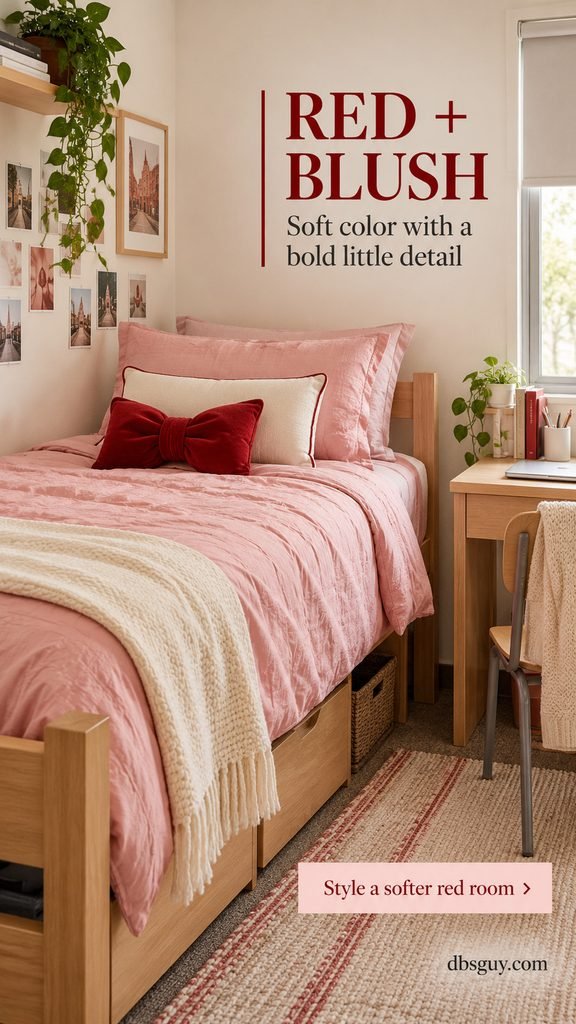
Blush bedding gives a small red accent a softer setting. A bow-shaped red cushion and red piping on a cream lumbar pillow bring the colors together without covering every surface in bows or hearts.
Keep the bow to one focal piece. If you prefer a simpler bed, use an ordinary red cushion with a textured cover instead. You can get the same color relationship without buying a novelty shape.
The cream throw breaks up the pink and gives you a neutral layer to reuse with other bedding. Choose cushion covers with care instructions that fit your laundry routine, and use inserts you already have when the dimensions match. Before ordering several decorative pillows, decide where they will go at night; a narrow dorm floor is a poor storage spot.
5. Use Red Gingham for a Cottage Look

A red-and-cream gingham duvet introduces the pattern and the color in one purchase. Plain cream pillows, a simple lamp, and a woven basket let the checks remain the main feature.
This approach works especially well when the existing furniture has a straightforward wood finish. You do not need a new bed frame, a floral wall covering, or a collection of vintage furniture to suggest a cottage style.
Check the scale of the gingham before buying. Small checks create a finer texture; larger squares make a stronger graphic statement. If you already have patterned bedding, try a gingham pillowcase instead of layering two large prints. For the basket, measure the clearance below the lowest bed rail and make sure you can pull it out without moving your desk chair.
Also Read: Cottagecore Bedroom Ideas for a Storybook Retreat
6. Add Scarlet to Charcoal Bedding

If you already own gray bedding, a scarlet cushion and throw can give it a more deliberate direction. Charcoal supplies the dark foundation, cream pillows interrupt it, and the red becomes the clearest accent.
A small red-and-black abstract print connects the desk to the bed. One thin black frame is enough; there is no need to replace the wood furniture or make every accessory black.
Watch the amount of charcoal in a dim room. Keep the walls and window area visually open, and use lighter bedding if the dark duvet takes over. To simplify the bed further, choose either the red throw or the cushion. The print can provide the second appearance of red, so you still have a connection between the sleeping and study areas.
7. Work With Honey Wood Using Brick Red and Oatmeal

Brick red is a good option to compare with cherry red when your assigned furniture has a golden or orange cast. Its brownish tone creates an earthy combination with oatmeal textiles and natural woven storage.
Look at the fabric beside the actual furniture, both in daylight and with your room light on. A color labeled “rust,” “terracotta,” or “brick” can vary considerably between sellers; the name alone will not tell you how red or orange it looks.
Use a brick quilt as the anchor and keep the other large textiles oatmeal or cream. A woven basket adds texture without introducing another strong pattern. If the existing carpet is busy, leave out the additional rug and let the quilt, wood, and basket carry the look.
8. Make a Retro Statement With a Checkerboard Rug

A red-and-cream checkerboard rug can establish the color scheme while the bedding stays plain. A rounded red lamp repeats the red at desk height, making the floor pattern feel connected to the rest of the room.
Lay out the proposed rug footprint with paper or measurements before ordering. Test the door swing, the route beside the bed, and the chair’s movement. Choose a rug that lies securely and does not catch the chair or curl into the walking path.
The rounded lamp supplies the retro shape, but it still has to suit the room. Check its dimensions and your housing’s lighting rules. If its light is mostly decorative, keep a proper task lamp for studying. Avoid adding more checkerboard to the pillows and desk; the floor already gives this small space plenty of pattern.
9. Let Red Artwork Lead the Study Area

You do not need new bedding to create a red dorm aesthetic. Keep your neutral quilt and gather a few red-dominant prints on a freestanding pinboard at the back of the desk.
The concept uses three simple images: an oval, a line drawing, and overlapping blocks. Their shared color connects them, while their different shapes keep the display interesting. Use your own drawings, personal photos with red details, or prints you have permission to reproduce.
Check the board’s footprint and stability before filling it. It should stand securely behind your work area without covering an outlet or forcing your laptop to the front edge. If your desk is too shallow, use one small tabletop frame instead. A red pencil cup gives the artwork a practical companion without filling the desk with ornaments.
Also Read: 15 Bedroom Design With Study Table Ideas
10. Make Red Storage Part of the Design

Two red under-bed bins can do more for a small room than several decorative objects. Their visible fronts create a band of color, and the contents stay out of sight. A small red desk tray repeats the shade and gives keys or other everyday items a place to land.
Measure height, width, and depth around the bed’s legs and crossbars. The bin’s stated exterior dimensions, handles, and any lid all need to fit. Leave room to reach the handle and slide the bin out; a perfect fit that cannot be opened is not useful storage.
Put less frequently used items farther back and keep everyday items easy to retrieve. Choose bin construction for what you plan to store, not just the color. If you already have suitable neutral bins, keep them and use a red tray or throw for the accent instead.
11. Give Your Side of a Shared Dorm Its Own Red Zone

Your roommate does not have to choose red for your side to look finished. A red duvet and one striped cushion can define your bed while their side uses oatmeal and pale blue.
Agree on shared decisions before buying a rug, rearranging furniture, or decorating the common wall. Each person can choose their own bedding while the walkway and shared surfaces remain useful to both.
The two-bed concept leaves the center clear rather than adding a table between the beds. Use the permitted layout that fits your actual room; do not assume the picture’s spacing will match yours. If you share a desk or storage surface, keep the red accents on your own bed and personal organizers. That gives you a clear color zone without making the whole room depend on matching purchases.
How to Choose Your First Red Piece
Start with the part of the room that needs attention. If your bedding works, try artwork or useful red storage. If the bed feels unfinished, choose a throw or cover before shopping for small accessories.
- Keep existing ivory bedding: try the cherry-red throw in idea 1.
- Keep existing gray bedding: use the scarlet accents in idea 6.
- Work with golden wood: compare the brick-and-oatmeal palette in idea 7.
- Keep purchases practical: consider the pinboard in idea 9 or storage in idea 10.
- Share with a different style: keep the color on your own side, as in idea 11.
Make the bed, put the desk into its normal working setup, and look from the doorway before adding more. A room that looks good only after you remove your textbooks and laundry basket needs a simpler arrangement.
Red Dorm Room FAQs
How do you keep red from overwhelming a tiny dorm?
Keep the largest surfaces light and start with a smaller red piece. A throw is easier to scale back than a red duvet, rug, and wall display bought together. Once you see the first piece in the room, decide whether it needs a second red accent.
What colors go with red dorm decor?
Ivory gives cherry red a light background; charcoal creates a stronger contrast; blush makes a softer pairing; and sky blue introduces a fresh second color. For a brownish brick red, try oatmeal and the room’s existing wood. These are styling options, so compare actual materials rather than relying only on color names.
Can I create the look without hanging anything?
Yes. Bedding, fitted under-bed bins, a desk tray, and an appropriate lamp can establish the palette. Use a stable tabletop frame or freestanding board if space allows. Nothing in the color scheme requires wall paint, wallpaper, or a new headboard.
What should I buy if my budget is small?
Use what you already own and choose one missing piece: a red cushion cover for an existing insert, a throw, or a useful organizer. Compare the total cost and care requirements before buying a coordinated set. Add the next piece only after the first one works with your furniture and daily routine.