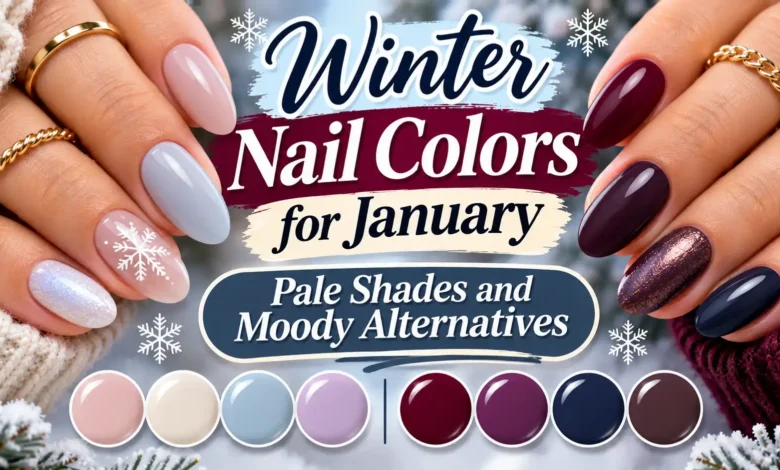
Winter nail colors for January can go in two satisfying directions: pale shades that keep the manicure light, or moody colors that give it more definition. Start with milky ivory, icy blue, dove gray, or blush pink. If you want something deeper, compare them with espresso, midnight navy, charcoal, and black cherry.
The useful question is how much contrast you want to see when you look down at your hands. A pale color can be striking, especially against deeper skin; a dark shade can feel quiet when it repeats the colors you already wear. These four comparisons will help you choose the shade, coverage, and wording for your next appointment.
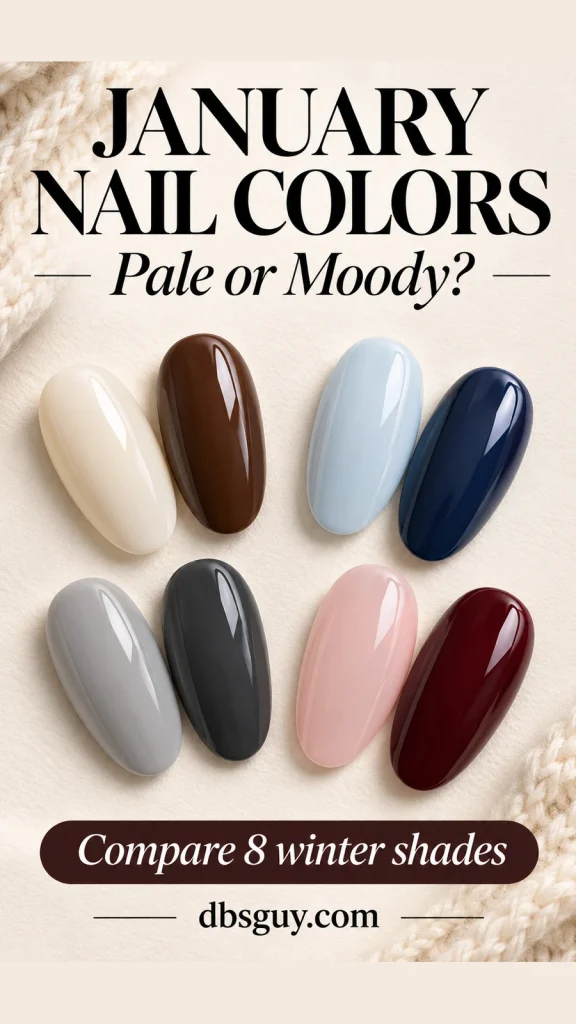
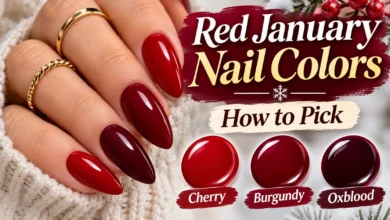
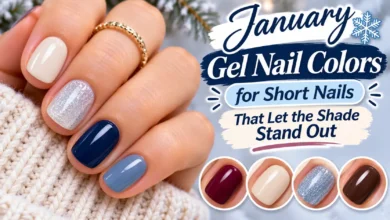
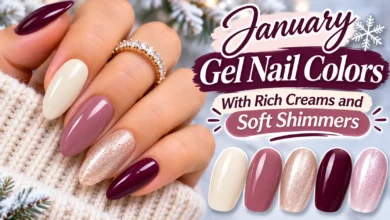
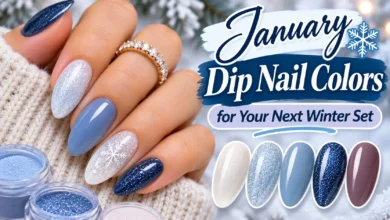
The visuals are AI-generated manicure concepts for dbsguy.com. They illustrate color and shape, not completed salon work, product swatches, or wear tests. Each paired image shows two alternatives; you can choose one color for your whole manicure.
Choose Your Contrast, Then Your Color
Pull out a sleeve, scarf, or coat you wear often and compare your shortlist beside it. That makes the decision more concrete than scrolling through isolated nail photos.
- For cream, camel, and warm brown outfits: start with milky ivory or espresso. One brightens the palette; the other repeats its depth.
- For denim, navy, and cool gray: compare icy blue with midnight navy. Decide whether you want blue to look airy or inky.
- For a mostly black-and-gray wardrobe: dove gray gives a lighter break, while charcoal keeps the manicure close to your clothing.
- For rose, burgundy, and soft winter neutrals: blush pink and black cherry offer a gentle or richer version of that same color mood.
These are starting points for styling, not rules about who can wear a color. Keep your usual nail length while comparing shades so a change in shape does not distract from the color choice.
Milky Ivory or Espresso: Two Ways to Wear a Warm Neutral
Choose this pair when you like the colors of an oatmeal sweater or camel coat. Both belong comfortably beside warm winter clothes, but they give the hands a very different focal point.

Milky ivory keeps the color soft
Look for an off-white with a small amount of warmth and some translucency. The concept image leaves a hint of natural nail visible through the ivory. That is a different request from fully opaque white, even when both bottles look pale on the shelf.
Essie’s guide to sheer and cream white polish explains the distinction: sheer white lets some natural nail show through, while an opaque cream covers it. Decide which result you want before choosing a shade name.
If a sample looks yellow beside your hand, compare a less creamy ivory. If it looks brighter and more solid than you intended, ask to see a sheer formula instead. Extra layers of an opaque white will not turn it into a translucent one.
Espresso brings the depth
Espresso is the darker option when you want a brown that still reads as brown. In this reference it has a glossy surface, with no shimmer or reddish accent. The short oval shape keeps the whole look compact.
Compare the finished brown sample with something black. If they look almost identical in room light, move a little lighter within the brown family. You do not need a near-black shade to get a moody result.
Salon wording: “Short oval nails, one color, and a glossy finish. I’d like either a softly translucent milky ivory or an opaque espresso brown. Can I compare finished samples beside my hand?”
Icy Blue or Midnight Navy: Light Winter Color or an Inky Finish
Blue is a useful place to start if you want an unmistakable color without returning to holiday red. This comparison keeps the polish plain so you can see the difference in depth.
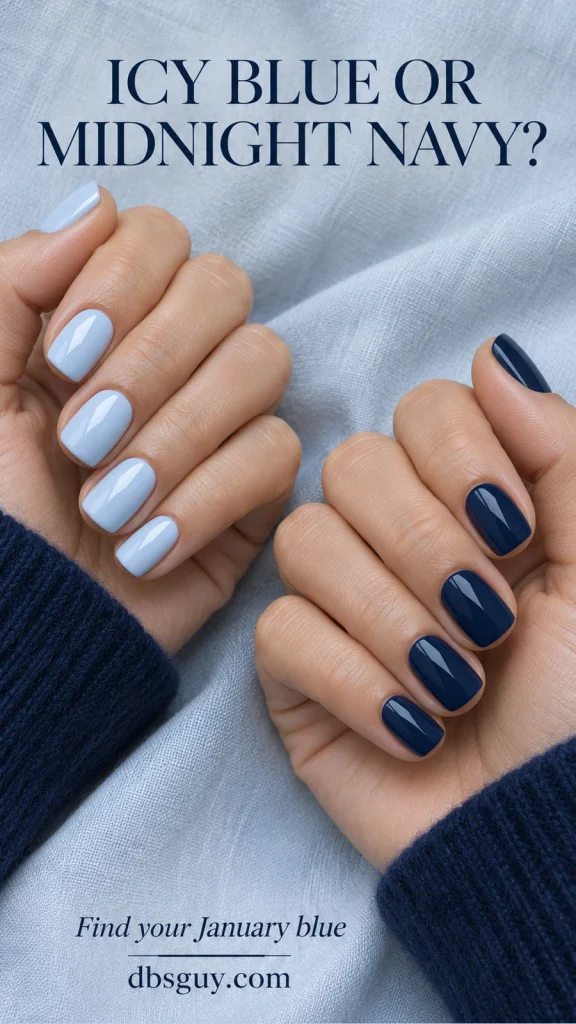
Icy blue works here as a pale, opaque cream: no shimmer, no mirror finish, and enough blue to distinguish it from white. A slightly muted sample will give a different mood from a bright pastel, so compare both if the first option feels too sweet.
The reference uses short squoval nails. A smooth, uninterrupted blue surface makes the shade easy to see even at this length. You can keep your own rounded shape; the color does not depend on having extensions.
Midnight navy puts the emphasis on a dark outline and glossy reflection. Look at the sample away from the brightest salon lamp. If you only recognize the blue under that lamp, decide whether you enjoy that nearly black effect or would prefer a lighter navy.
For either choice, ask to see the sample straight on and tilted slightly. The reflection in a glossy finish can hide part of the color in a photograph. A pale blue photo with a white glare and a navy photo with a dark shadow are imperfect references for choosing the actual polish.
Make the choice: pick icy blue if you want a noticeable light color beside a dark coat. Choose navy if you want depth that repeats denim or blue wool. Once the base color is settled, 15 Blue January Nail Art Ideas With More Than Snowflakes offers ways to add a detail later.
Dove Gray or Charcoal: A Neutral Without the Beige
Gray makes sense when warm cream and rosy pink both feel wrong for the look you have in mind. The key is choosing the kind of gray you mean: pale and cloudy, or deeper and more defined.
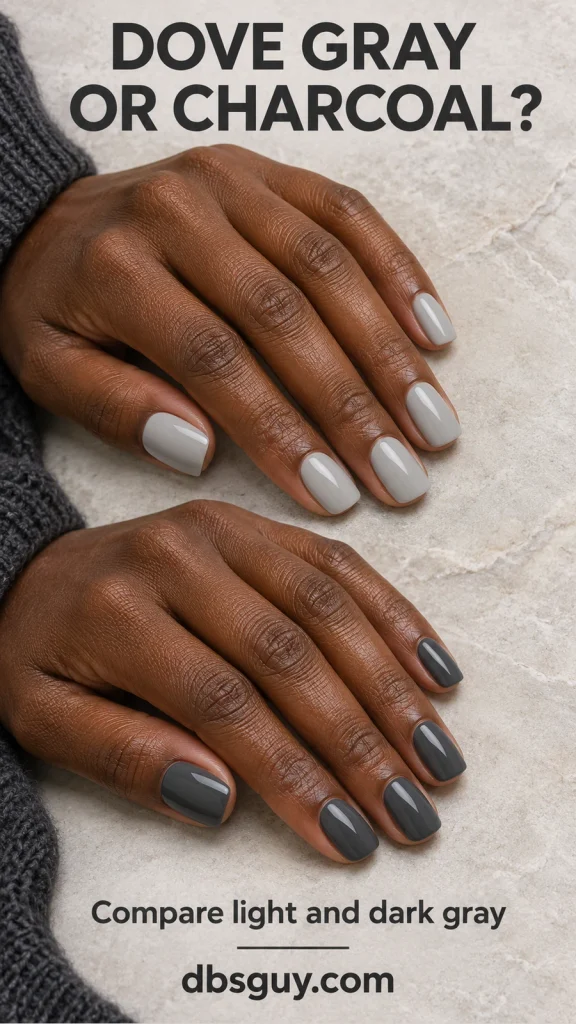
Dove gray is a light neutral in this comparison. It gives you a fully covered pale nail without the brightness of white. Against the deeper skin tone in the image, it creates visible contrast; “pale” does not automatically mean barely noticeable.
Some light grays lean blue, lavender, or beige. Hold two or three samples beside each other to make those differences easier to spot. If you want the quiet neutral shown here, choose the one with the least obvious color cast to your eye.
Charcoal has more depth, with enough visible gray to separate it from black. It is an option for someone who likes a dark manicure but wants a softer-looking alternative to a pure black polish. The reference keeps the surface glossy, rather than adding sparkle.
Both hands use the same short rounded-square shape. That makes this a particularly useful comparison if you already know you want a short manicure and simply need to settle the shade.
What to ask: “I’d like an opaque neutral gray with gloss. Please show me a light dove gray and a dark charcoal in the same finish. I want to compare the undertones before choosing.”
Blush Pink or Black Cherry: Gentle Color or a Rich Wine Tone
This pair is for the reader who likes a little warmth and romance in a manicure, even in the middle of winter. You can get that feeling from the color alone.
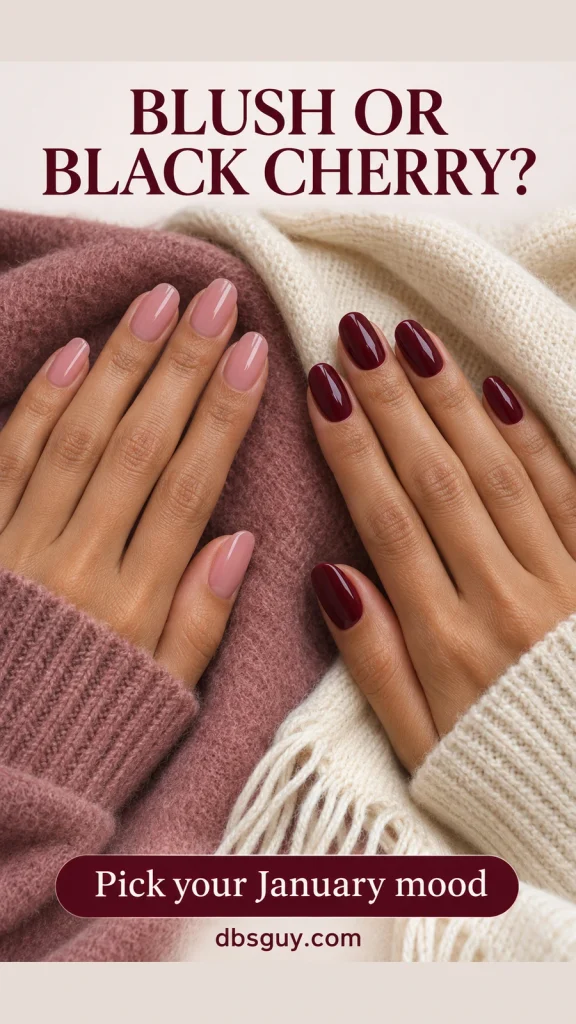
Choose blush when you want the natural nail to stay part of the look
The blush reference is a muted pink with a translucent appearance. It has more visible rose than the milky ivory option, while keeping the nail underneath involved in the final color. That means a sheer polish can look different on different natural nails.
Check whether you like your free edge showing through. If you prefer it covered, request an opaque blush cream and compare a finished sample. Keep the pink slightly dusty if a very white-based baby pink looks stronger than you wanted.
Choose black cherry when you want a darker red
Black cherry brings a wine-red depth to the same simple manicure. The concept has a recognizable burgundy tone across the nails, not just a tiny red reflection at the edges. It is a good direction if you still enjoy red after the holidays but want a richer mood.
Shade names vary by brand and salon. One “black cherry” may look purple, another brown, and another almost black. Point to the red you want to keep, then compare the closest actual samples. The name alone will not communicate that balance.
Keep from this reference: the plain glossy finish and medium oval shape. If that length feels impractical, shorten it while keeping the color. Neither blush nor black cherry needs nail art to make the choice feel complete.
Check the Shade on Your Hand Before You Commit
Once you have picked a pair, narrow it to two real samples. Start with the level of lightness you want, then adjust the undertone. Comparing eight unrelated bottles at once makes it harder to tell what you are responding to.
- Look beside your own skin. Hold the sample close to your nails. You might want a soft blend or a strong contrast; neither requires matching the model’s skin tone.
- Check ordinary lighting. Compare in daylight and normal indoor light when possible. Make sure a pale shade still shows its color and a dark shade still has the depth you intended.
- Confirm coverage. “Light pink” describes color; “sheer” describes how much nail shows through. Tell your artist both.
- Separate the color from the service. A picture cannot tell you whether the finish was made with lacquer, gel, or dip. Choose the service separately, then ask which shades are available in that system.
For a powder manicure specifically, compare the options in January Dip Nail Colors for Winter: Soft Neutrals and Rich Jewel Tones. Similar-looking color names across systems do not guarantee identical finished results.
Turn Your Favorite Into a Clear Salon Request
Save the image that contains your preferred color and point out which hand you mean. Then settle length, shape, opacity, and shine. “The pale blue on the left, short squoval, opaque, and glossy” gives your artist more useful information than “January nails.”
If you paint at home, use the same selection process with regular polish. Read the chosen product’s directions for preparation, layering, drying, and finishing; the number of coats needed depends on the formula and the coverage you want. These images are color references, so they do not provide a universal application or gel-curing routine.
January Nail Color Questions
Do January nails have to be pale?
No. Espresso, navy, charcoal, and black cherry all offer a darker direction. Choose the shade you want to wear through your normal week rather than treating the month as a dress code.
Which of these colors works on very short nails?
Any of the eight can work as a solid-color manicure. For a compact reference, look at the ivory/espresso and dove gray/charcoal comparisons. Choose your comfortable length first; you do not need extra length to make a dark shade worthwhile.
Is milky white the same as opaque white?
Not necessarily. “Milky” is often used for a soft, translucent-looking white, but the label is not a consistent coverage standard. Ask whether the finished sample allows the natural nail and free edge to show.
Can I copy the exact shade from a pin?
Use it to communicate the direction, then choose from real swatches. Lighting, screens, and AI-generated imagery can change how a color appears. Confirming the actual polish is more useful than trying to match every pixel.