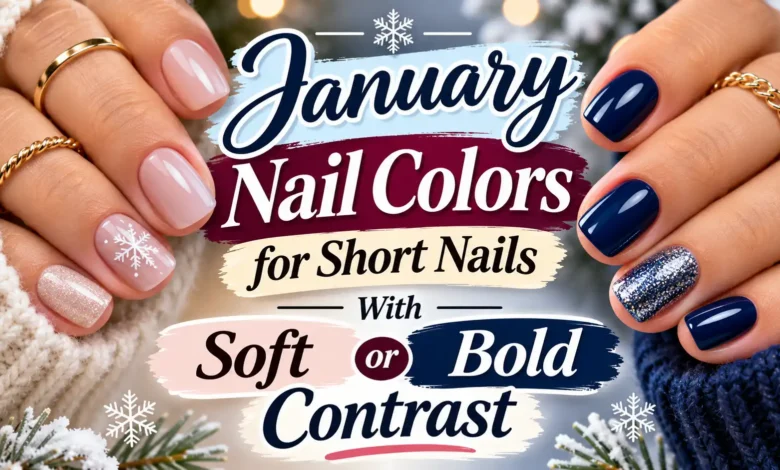
For soft contrast on short nails, pair milky pink with white, dove gray with mauve, powder blue with pearl, or oatmeal with taupe. For a bolder January manicure, try navy with ice blue, burgundy with blush, espresso with cream, or charcoal with silver. Each pairing works as full-nail color, so you can see the difference without squeezing a detailed design onto a small nail.
Start with the amount of contrast you want to notice while looking down at your hands. Then choose the colors. The eight combinations below explain which shade should lead, how to keep the accent balanced, and what to change if the swatches look different against your own skin.

The images are AI-generated manicure concepts showing suggested colors and finishes, rather than photographs of tested salon work. Screens and lighting can change how polish appears.
Choose How Much Contrast You Want
There are two comparisons to make: one polish against the other, and the whole manicure against your skin. Two pale shades can be close to each other yet look striking on a deeper skin tone. A dark brown can blend with one person’s skin and stand out strongly on another’s. Either result can be the look you want.
Compare finished swatches beside your hand in daylight and in the indoor light you use most. For a soft pairing, look for colors with similar lightness. For bold contrast, choose a clearly lighter accent beside the main shade. Check the finish, too: a pearl or metallic accent can stand out even when its color is pale.
The eight section references use four nails in the main shade and the ring finger in the accent color on each hand. That gives you a straightforward starting point. You can move the accent to your thumb if you would rather see it while holding a cup or using your phone; keep the same two-color palette.
1. Milky Pink and Soft White
Choose this combination when you want a pale manicure with a small change from finger to finger. The pink supplies a rosy tint; the white adds a cooler-looking highlight. Use a translucent milky pink on four nails and a soft white on the ring finger, with a glossy finish across the set.

The word milky does not guarantee the same coverage in every bottle. Compare a painted sample: a faint natural nail edge showing through the pink can be part of the look. If you prefer to hide that edge, choose a more opaque pale pink rather than piling on extra coats of a sheer formula.
For gentle contrast, pass over a stark, fully opaque white and look for one that has a softened appearance beside the pink. If your chosen pink looks too peachy or too purple against your nail bed, switch the pink first; you can keep the white accent.
2. Dove Gray and Dusty Mauve
Dove gray gives you a winter neutral with less warmth than beige. A dusty mauve accent brings in a little pink-purple without turning the manicure bright. This is a useful middle ground if a pale pink set feels too delicate and navy feels darker than you want.
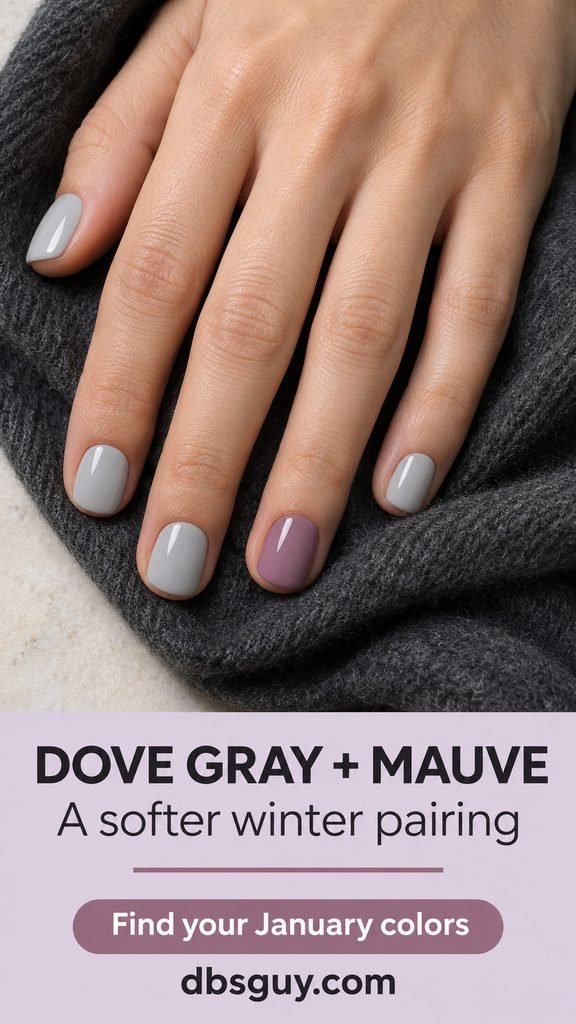
Put the gray and mauve swatches next to each other before choosing. Aim for a light gray and a muted mauve that is only moderately deeper. A vivid orchid or a deep plum changes the balance into stronger contrast. The pictured version keeps both colors glossy so the difference comes from color, not competing textures.
If the gray looks too blue under your office lighting, try a more neutral gray sample. You do not need to abandon the combination; a small shift in the main shade can make the mauve feel more connected to it.
3. Powder Blue and Pearl White
For an icy palette without snowflakes, use powder blue as the main color and pearl white on one nail. Choose a blue with enough color to remain visibly blue in daylight. A nearly white blue may blend into the accent more than you expect.
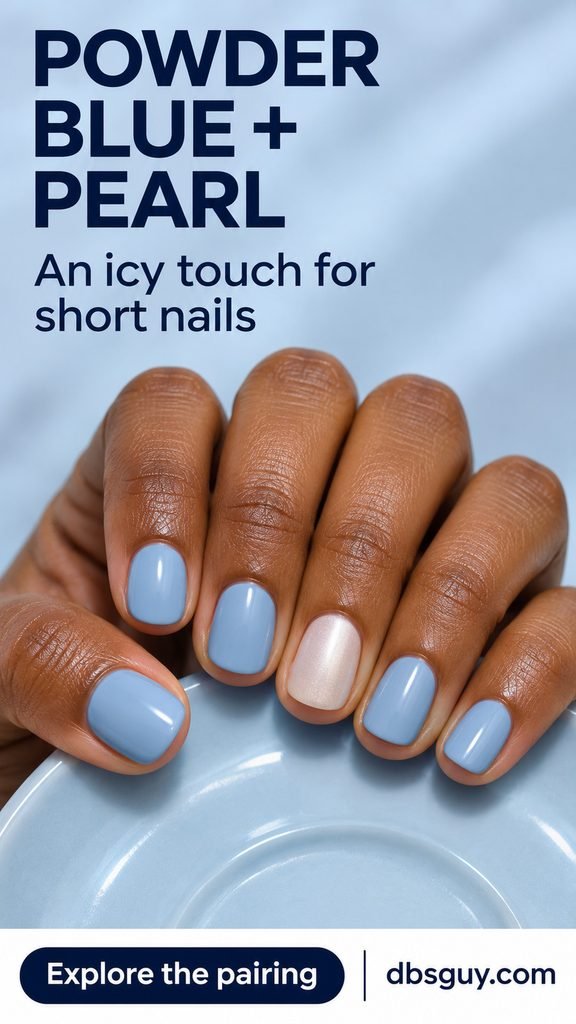
Here, pearl means a soft, luminous shimmer rather than a mirror-chrome surface. Look for fine shimmer if you want to keep the effect restrained. Rotate the painted sample under a light: some pearl finishes show obvious brush lines, while others give a more diffused glow. Pick the finish you actually like at that angle.
Keep the blue nails glossy and let the ring finger supply the shimmer. At a salon, describe the finish as well as the color: ‘Short rounded nails, powder blue on four, and one soft pearl-white accent with no chunky glitter.’
4. Oatmeal Beige and Mushroom Taupe
A January palette can be warm. Oatmeal beige and mushroom taupe make a practical choice if you wear camel, ivory, or brown and want the manicure to sit comfortably beside those colors. The oatmeal is the lighter main shade; the taupe is a brown-gray accent, not a dark chocolate.
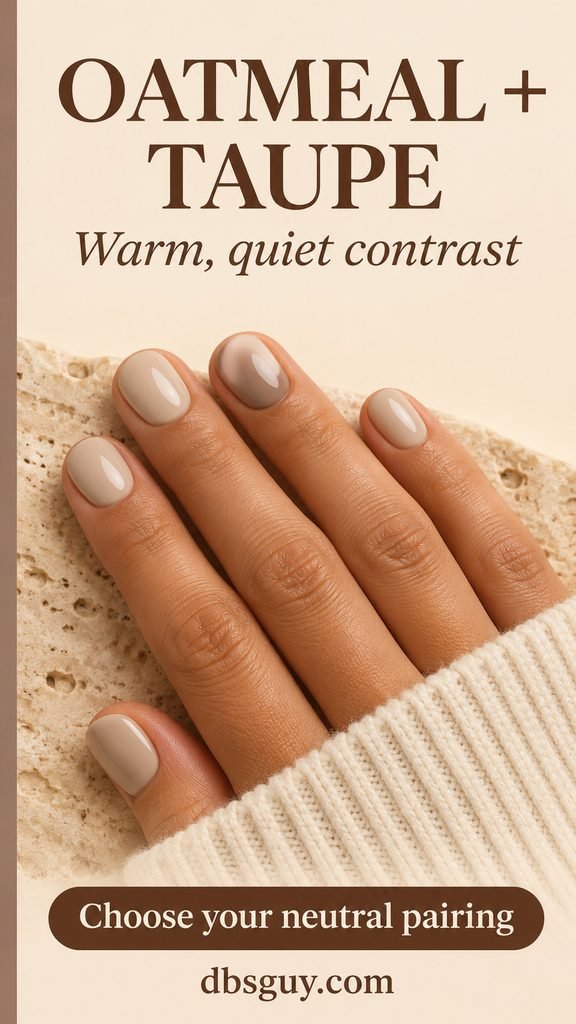
Check that the oatmeal and taupe share the kind of warmth you want. A strongly yellow beige beside a cool purple-taupe can look more separated than the soft version shown here. Try a less yellow oatmeal or a slightly browner taupe if that happens.
There is no need for the beige to match your skin exactly. Choose a lighter or deeper oatmeal according to how clearly you want the outline of each nail to show. Keep the taupe just a step or two deeper for the quieter version of this pairing.
5. Deep Navy and Ice Blue
Navy and ice blue give short nails a strong color contrast while staying within the blue family. Paint four nails deep navy and the ring finger a pale icy blue. Full coverage makes the light nail easy to distinguish, even at a small nail length.

Choose the navy by its painted appearance rather than the bottle. If you want a blue manicure, check that it still reads blue away from a bright display light. A near-black navy can be beautiful, but it produces a different effect from the visibly blue version shown here.
The pale accent needs its own coverage check. Select an opaque light blue instead of trying to turn a sheer blue opaque with heavy layers. If the single light nail feels too prominent, make ice blue the main shade and keep just one navy accent; you will still have strong contrast, with less dark color overall.
6. Burgundy and Blush Pink
Keep the rich red you enjoy after the holidays and pair it with a pale blush accent. The lighter nail breaks up the wine color without introducing a third shade or seasonal artwork. It suits someone who wants a noticeable manicure built from familiar colors.

Look at the burgundy’s undertone beside the blush. A blue-leaning wine and a muted rosy blush give a different mood from a brown-red and peach blush. Neither is a mistake; choose the pair that looks deliberate together on painted swatches. The reference uses a red-wine main shade with a soft pink accent.
Use an opaque blush if you want the accent to stand out clearly against burgundy. For the dark nails, leave a tidy edge around the cuticle rather than taking color onto the skin. If you want to add a small red detail later, explore red January nail art that works after the holiday season.
7. Espresso Brown and Warm Cream
Espresso and cream are the warmest high-contrast pair here. Choose a deep brown that still shows a chocolate cast, then use an opaque ivory on the ring finger. The pale nail gives the set a focal point while the brown remains the main color.

This pairing depends on which cream you choose. A softly warm ivory continues the brown palette; a stark white makes the split crisper. If your ivory looks unexpectedly yellow beside the espresso, compare a more neutral cream before committing to the whole hand.
Short length does not require leaving strips of bare nail down the sides. Cover the nail evenly within its natural outline. If the espresso feels too intense, choose a slightly lighter chocolate while keeping the cream accent; that reduces the jump in depth without losing the warm palette.
8. Charcoal Gray and Fine Silver Shimmer
Choose charcoal and silver when you want a cool, darker manicure with one bright point. Charcoal has a softer gray appearance than pure black, and a silver-shimmer ring finger adds light without needing a motif or a long nail.
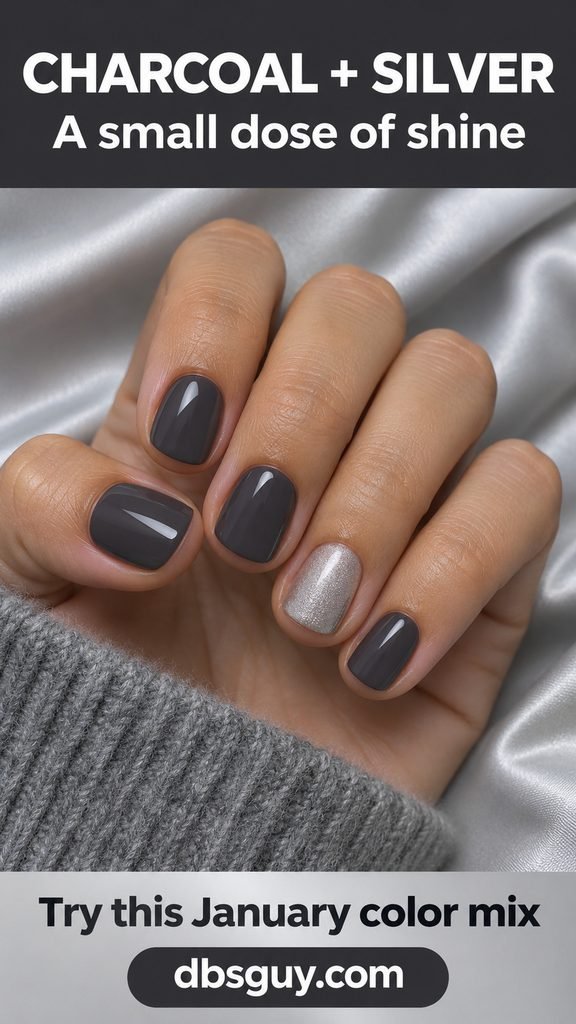
A fine metallic shimmer and a chunky glitter polish will not give the same result. For the pictured look, use closely packed small shimmer particles, with enough coverage to read as silver. Large flakes produce a more scattered, textured effect. A sheer sparkle topper on a bare nail will also look different from this filled-in accent.
This is a useful option for evenings when you want shine but would rather keep most nails in a solid color. If the silver looks too bright during the day, compare a softer pewter shimmer. Keep charcoal as the main shade so the reflective nail remains a small part of the set.
Make the Pairing Work at Your Actual Nail Length
Full-nail color does not need a large free edge. Use the short outline you can wear comfortably, and check the two shades on your smallest nail as well as your widest one. An accent does not need to be bigger to be noticeable.
For regular polish, follow your formula’s directions for base coat, thin color layers, drying between coats, and top coat. Coverage varies, so a sheer polish may stay translucent even after another coat. Do not try to fix that by applying a thick layer. Keep polish off the surrounding skin and avoid building a heavy ridge at the tip.
Keep cuticle care gentle, too. The American Academy of Dermatology’s manicure guidance recommends moisturizing nails, especially after polish removal, and avoiding cutting or forcefully pushing back cuticles. Color can change the appearance of a manicure; it is not a treatment for a nail problem.
If you want to keep a square outline and add artwork later, these January nail-art ideas for square nails explain details that follow the nail’s edges.
Questions About January Colors for Short Nails
Do dark colors work on very short nails?
Yes. Navy, burgundy, espresso, and charcoal can be worn as solid color on very short nails. Choose the depth because you enjoy it, and check a painted sample on your hand. A dark shade does not need extra length or an accent nail to look intentional.
Which pairing should I choose if I want the smallest change?
Start with milky pink and soft white if you already wear pale pink. If you usually choose beige, oatmeal and taupe may feel more familiar. Keep the two shades similar in lightness and use one accent nail per hand.
How can I choose colors for my skin tone?
Compare the actual painted shades beside your hand instead of treating an undertone label as a rule. Decide whether you like a color that blends with your skin or stands out from it. Then compare the accent beside the main shade. Those two checks are more useful than choosing from a bottle name alone.
Do I need gel or extensions for these combinations?
No extensions are needed for the color placements shown. You can choose regular polish in these color families; confirm the coverage and finish of the formula you use. If you prefer a salon service, choose that separately from the color reference and ask about its application and removal requirements.
What should I say at the salon?
Try: ‘Please keep my current short length. I’d like navy on four nails and an opaque ice-blue ring finger on each hand, with a glossy finish and no artwork. Could we compare the two painted colors before you start?’ Swap in your chosen pair and mention whether you want the gentle or stronger contrast.