For January dip nail colors, start with the contrast you want: milky ivory, pink-beige, mushroom taupe, and dove gray give you a softer winter manicure; garnet, emerald, sapphire, and amethyst make the color itself the focal point. You can get a seasonal look with one solid shade and a glossy finish.
The eight color families below cover both directions. Each includes a shade description, a practical way to wear it, and wording to take to your appointment. These are editorial color suggestions, not a forecast or exact matches to a particular brand’s powder.

The visuals are AI-generated manicure concepts. They illustrate color and shape, not completed salon work or tested dip products. Use a finished salon swatch to confirm the actual shade and opacity.
Choose your January color direction
- Light and creamy: milky ivory for a soft white; pink-beige for a rosy everyday neutral.
- Muted and understated: mushroom taupe for a brown-gray balance; dove gray for a cooler finish.
- Deep and warm: garnet for a wine-red manicure that still looks red beside black clothing.
- Deep and cool: emerald, sapphire, or amethyst when you want a distinct green, blue, or purple.
Take two favorites to the salon rather than a whole folder of similar images. Hold each finished swatch against your hand, then beside the coat or sweater you wear most. That makes the choice more concrete than deciding whether a color is “winter enough.”
Before choosing a dip powder, check the finished swatch
A loose powder, an online photo, and a completed nail are different things to compare. Ask to see the shade after the salon’s usual application and top coat. With a pale neutral, look for how much natural nail shows through; with a jewel tone, check whether the color still reads clearly in ordinary indoor light.
Decide on opacity before the service starts. “Milky” might mean a translucent veil to you and a fully covered creamy white to someone else. Point to the part of the reference you want: the visible nail edge, the even cream coverage, or the depth of the red. Follow the chosen system’s application instructions rather than asking for extra layers simply to chase a picture.
Also confirm that the color you selected is available in dip powder. A familiar shade name or a similar-looking bottle does not confirm the product format. You do not need chrome, magnetic polish, or added decorations for any of the eight looks here.
1. Milky ivory for a soft winter white
Milky ivory gives you the brightness of a pale manicure with a warmer, gentler edge than a crisp opaque white. The reference pairs short oval nails with a glossy finish and a little softness in the coverage. It is a useful starting point if you want a quiet change after a December set full of glitter.

Compare an ivory swatch with both a bright white and a pink-based milky shade. If the ivory looks too yellow beside your hand, move toward the pink-based option. If you like a deliberate cream-on-cream look, hold it beside your favorite knit before deciding.
Salon request: “A soft milky ivory dip on short oval nails, with slightly translucent coverage and a glossy finish. I want a creamy white rather than a sharp white.”
For a more covered version, choose a powder designed for that opacity. The image is a color reference, not a recipe for the number of coats.
2. Pink-beige for an everyday neutral with a rosy edge
Choose pink-beige when a plain beige feels too brown but a baby pink feels too sweet. The balance matters: look for a muted rose mixed into a beige base. On the short squoval nails shown here, even coverage gives the manicure a tidy, finished shape without extra art.

This is a practical shade to compare with the clothes you wear during an ordinary workweek. A cream shirt may bring out the pink; a charcoal sweater can make the beige more noticeable. Neither is a problem as long as you like both readings.
What to ask for: “A muted rosy pink-beige dip with opaque, glossy coverage on short squoval nails. Please show me a finished swatch that is more beige than bubblegum pink.”
If you want the color to sit closer to your skin, compare a deeper rose-beige as well as a lighter one. A neutral does not have to be pale to feel understated.
3. Mushroom taupe for a neutral that bridges brown and gray
Mushroom taupe earns its place when your winter wardrobe moves between camel, black, denim, and gray. It has enough brown to feel grounded, with a gray cast that keeps the color muted. The reference uses a medium-depth taupe on short rounded-square nails.

Check this one away from the warm salon lights if possible. You might prefer a browner taupe, or you might like a cooler version with a hint of mauve. Set two finished swatches side by side; that small comparison is more useful than relying on the word “mushroom” alone.
Salon wording: “A medium mushroom taupe dip with a balanced brown-gray undertone, full coverage, and a glossy finish. Keep the corners softly rounded.”
Let the solid shade carry the look. A clean outline makes its undertone easier to see than a layer of glitter would.
4. Dove gray for a cooler alternative to beige
Dove gray is the lightest cool neutral in this guide. Choose a soft pale gray rather than a dark slate if you want the manicure to feel airy. A subtle blue cast can suit the icy direction, but compare it with a neutral gray if you do not want your nails to read blue.
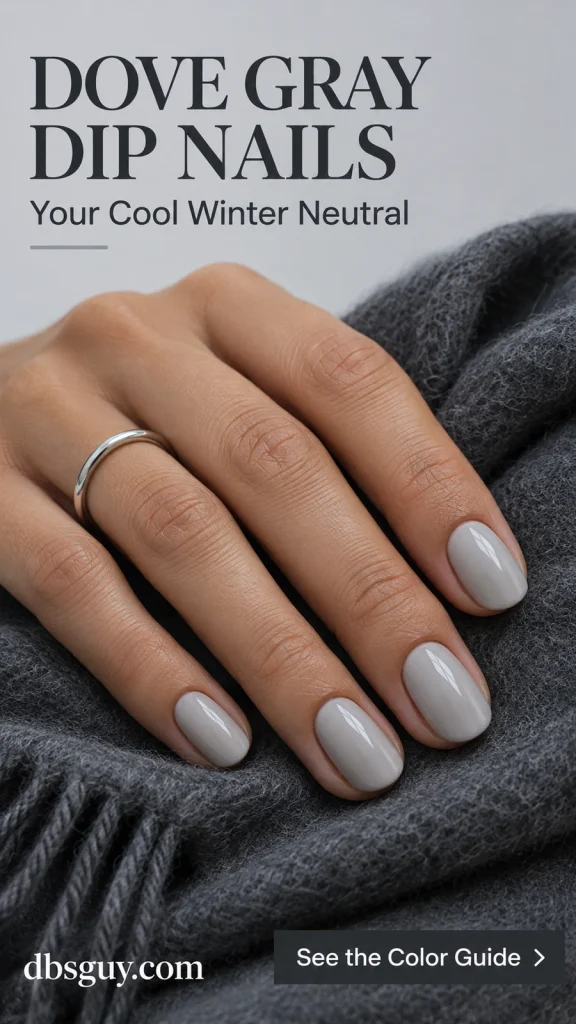
The short oval shape in the concept keeps the pale, opaque color simple. A dark coat creates contrast; a gray scarf makes the manicure part of a quieter tonal outfit. Silver jewelry is an easy styling option, though gold can add a warmer contrast.
Ask your nail artist: “A pale dove-gray dip on short oval nails, fully covered and glossy. I want a soft gray, not charcoal, silver glitter, or a blue pastel.”
If the lightest swatch looks chalkier than you want, compare the next deeper gray before adding any shimmer.
5. Garnet red for depth without losing the red
Garnet is a deep wine-red choice for the days when a neutral feels too quiet. The key is keeping enough visible red in the finished manicure. A very dark burgundy may look nearly black indoors, which is a different effect from the rich red shown here.
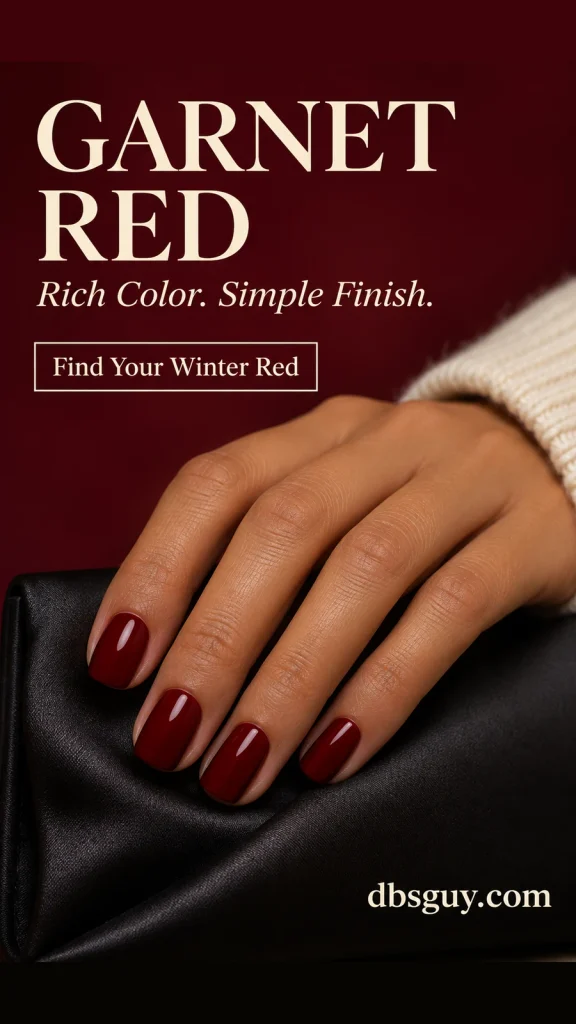
Hold the swatch beside something black, then turn it slightly in the light. If you can only see the red under a bright lamp, ask to compare a lighter wine shade. Short rounded-square nails make a strong solid-color version; you do not need long extensions for the depth to show.
Salon request: “A glossy garnet-red dip with opaque coverage on short rounded-square nails. Deep wine red, but visibly red in normal room light.”
Keep the finish plain if you want the manicure to carry you beyond a party outfit. For a small jewelry-inspired detail later, browse these elegant January nail art ideas to pair with winter jewelry and ask which additions suit your chosen system.
6. Emerald green for a jewel tone with a clear green base
Emerald gives you a saturated green without a holiday motif. The concept uses medium almond nails, a smooth cream color, and a glossy top coat. Keeping every nail the same shade makes the green the main feature.

Ask to compare emerald with both a forest-green and a teal swatch. A forest shade can be darker and more muted; a teal can introduce more blue than you intended. Choose the green you like beside your own hand rather than assuming every powder labeled emerald will look alike.
What to say: “A rich emerald-green dip with full, glossy coverage on medium almond nails. I want a recognizable jewel green, without teal shift or glitter.”
A gold ring adds a warm point beside this color, while a black sleeve keeps the overall palette restrained. Short oval nails are an easy adaptation if medium almond is more length than you want.
7. Sapphire blue for a saturated alternative to navy
Sapphire sits on the bolder side of this palette: a deep blue with enough brightness to remain blue at a glance. Choose it when you like the idea of navy but want the color to show more clearly. The concept pairs medium oval nails with a plain glossy finish.
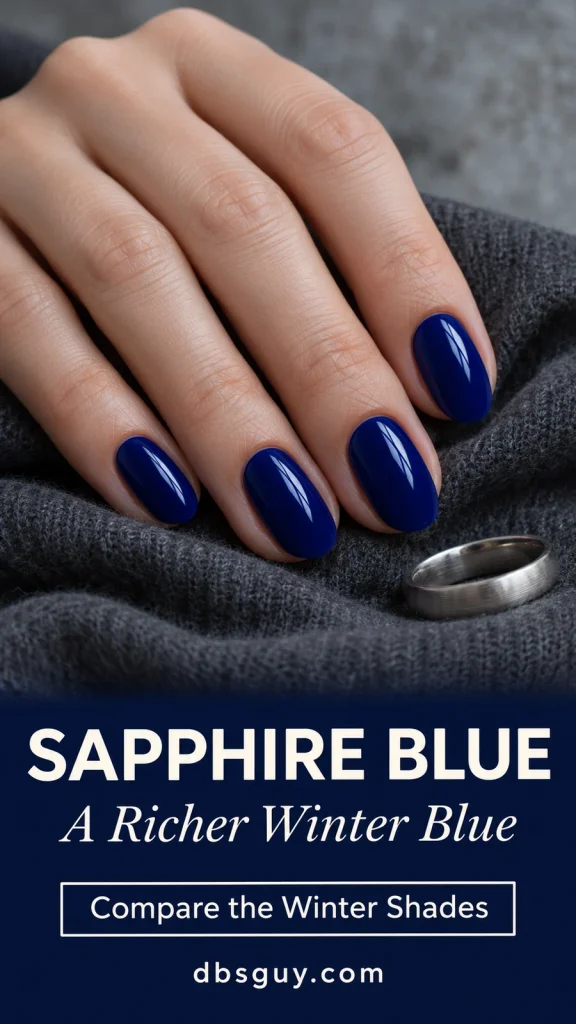
Look at the swatch in the same indoor lighting where you will usually see your hands. If it reads black, try a slightly brighter blue. If it reads electric cobalt and that feels too vivid, move one step deeper. “Sapphire” is a direction for the conversation, not a standardized shade code.
Salon wording: “A deep sapphire-blue dip, opaque and glossy, on medium oval nails. Rich blue rather than nearly black navy, with no shimmer.”
A silver ring and charcoal clothing repeat the cool mood without adding another color to the manicure.
8. Amethyst purple for a jewel shade with a softer mood
Amethyst is the purple option for someone who wants color beyond red and blue. Look for a medium-deep violet with enough saturation to feel rich. The concept has a slightly rosy purple base on medium almond nails; it is visibly lighter than a nearly black aubergine.

Decide whether you want the purple to lean red or blue before choosing the powder. A rosy amethyst can sit comfortably beside blush and camel; a bluer violet gives a cooler contrast. Compare both against your hand instead of treating either undertone as a rule for a particular skin tone.
Ask for: “A glossy amethyst-purple dip with opaque coverage on medium almond nails. A rich, slightly rosy violet that stays visibly purple indoors, without glitter.”
If the reference feels too bright, choose a deeper swatch while keeping the same plain finish. You can adjust the depth without turning it into a different nail-art project.
Make the final choice at your appointment
Bring the image for its color direction, then settle three details with your nail artist: the actual powder shade, the finished opacity, and your preferred length. Keep the nail shape you can comfortably wear; none of these colors depends on the exact length in its reference.
If you are still choosing between light and dark, picture your usual January week. Milky ivory or pink-beige gives a softer visual effect beside everyday clothes. Garnet or sapphire makes a more defined contrast. Mushroom taupe and dove gray sit between those directions without adding a bright color.
Want artwork after you have picked the base? These winter nail designs with snowflakes, chrome, and cozy knits offer separate design inspiration. Check the materials with your artist, since a finished picture alone does not identify a dip service.
A few dip-manicure checks before the color goes on
Ask how the salon handles its powder. The American Academy of Dermatology recommends avoiding containers that other clients have dipped into. A fresh disposable portion with leftovers discarded, or powder sprinkled onto the nail, avoids that shared dipping.
Dip products can cause allergic reactions. If you are trying dip for the first time, the AAD recommends doing one nail first and waiting seven days before a full set. Its dip powder manicure guidance also covers cuticle care and recovery between services.
Check your bare nails when the old color comes off. If you notice lifting, swelling, or other changes, pause the manicure rather than covering the area with a new color.
Questions about January dip nail colors
Which shade should I try if I usually wear pale pink?
Start by comparing pink-beige with milky ivory. Pink-beige keeps a rosy base while shifting toward a muted neutral. Ivory makes a clearer color change. Use finished swatches to choose the amount of coverage you prefer.
Can I wear a jewel tone on very short dip nails?
Yes. A solid garnet, emerald, sapphire, or amethyst does not need space for a pattern. Keep your comfortable length and choose the color in the lighting where you will usually see it.
Does a dip manicure always need a UV or LED lamp?
No. OPI’s Powder Perfection is one example of a dip system that does not require an LED lamp. Ask which system and top coat your salon uses, and follow that system’s instructions. The appearance of a manicure does not tell you its curing method.
Will a sheer neutral hide regrowth?
A shade close to your natural nail color may make the color contrast less noticeable, but the grown-out edge can still show. Choose the coverage you like rather than treating a pale shade as a guarantee of invisible regrowth.