Being in a band looks like the best job in the world from the outside — sold-out arenas, hit records, lifelong friends making music together. The reality is messier. Bands are small businesses, marriages, and families all rolled into one, and they run on sleep deprivation, ego, money arguments, and very long tours in very small spaces. Sooner or later, something snaps. Sometimes a member walks out mid-tour. Sometimes the rest of the band votes them out. And sometimes the reason is so strange that it sounds made up — a spilled cup of milk, a wrong song on live television, or a phone call that ends a decade-long partnership.
These are 19 wild reasons band members quit or got fired, from rock legends to pop superstars. Every one of these exits changed the band forever — and in a few cases, it launched a solo career that eclipsed the group itself.
1. Lindsey Buckingham — Fleetwood Mac

Lindsey Buckingham and Stevie Nicks joined Fleetwood Mac together in 1975, already a couple, and their breakup two years later became the emotional fuel for some of the biggest-selling albums of all time. But working beside an ex for decades takes a toll. Buckingham first left the band in 1987 after years of friction, then returned for a presidential inauguration performance in 1993 and a full reunion in 1997. The second ending came in 2018, after a tense awards ceremony where the atmosphere between Buckingham and Nicks turned icy. Days later, he was out. Nicks later said she had simply decided she was no longer willing to work with him, and the band carried on with two new members. Remarkably, the story has softened in recent years — the pair have spoken warmly about each other again, and a documentary project has helped heal old wounds. Few band breakups have ever been so public, so bitter, and so unfinished.
2. Dave Mustaine — Metallica

Dave Mustaine was Metallica’s original lead guitarist, joining the band in the year it formed, 1981. Within two years, his drinking and behaviour had worn the rest of the band down. The other members quietly arranged an audition for Exodus guitarist Kirk Hammett, and in April 1983 they made their move: while Mustaine was asleep, they packed his things, woke him, and put him on a bus back to Los Angeles with a one-way ticket. He has said he woke up barely understanding what was happening. The firing became the fuel for everything that followed — Mustaine co-founded Megadeth and spent years trying to be faster and heavier than the band that had thrown him out. Over the decades the bitterness faded, and in 2011 he joined Metallica onstage for an anniversary show, a moment fans had waited nearly thirty years to see.
3. Bobby Brown — New Edition

Bobby Brown was only thirteen when New Edition found fame, and the group was marketed with a squeaky-clean, boy-next-door image. As Brown grew up, that image started to feel like a cage. He wanted a bolder, more grown-up stage presence, and the clash with the group’s style caused constant tension with his bandmates. He left the group in 1985, convinced he was being held back, and his solo career soon exploded — he became a far bigger star on his own than he had ever been in the group. He reunited with New Edition for a tour in 1996, but even that did not last: he walked off mid-tour in New Mexico after a dispute, and the reunion collapsed around him. It was a reminder that the same restless energy that makes a great frontman can make a terrible bandmate.
4. C.C. DeVille — Poison
One live television performance ended C.C. DeVille’s first run with Poison. At the 1991 MTV Video Music Awards, the band was meant to play “Unskinny Bop,” but DeVille launched into a different song, “Talk Dirty to Me,” instead. Mid-song he stepped on his guitar cable and unplugged himself, leaving the rest of the band playing on while he scrambled to fix it. Backstage, he and singer Bret Michaels erupted into a furious argument, and DeVille was fired soon after. The split did not stick forever — he rejoined Poison in 1996, and the two have since described each other as close friends. But the awards-show meltdown remains one of the most famous onstage disasters in hair metal history, watched live by millions.
5. Dave Glover — Slade
In 2003, Slade bassist Dave Glover was fired after founder Dave Hill learned that Glover had been writing letters to convicted murderer Rosemary West. Reports at the time claimed Glover was engaged to her and had exchanged hundreds of letters, claims Glover denied. He said the two had become friends after he wrote to her because he believed she had been wrongly convicted, and he felt sympathy for her decision not to pursue an appeal. Hill was horrified when he found out, telling reporters he had no idea Glover had any contact with her, and that Glover had to go for the good of the band’s name. It remains one of the strangest reasons any musician has ever lost their place in a band — a private correspondence that became a public scandal.
6. Glen Matlock — Sex Pistols
When bassist Glen Matlock parted ways with the Sex Pistols in 1977, the official story was wonderfully absurd: the band’s manager, Malcolm McLaren, sent a telegram to the music press claiming Matlock had been fired because he liked Paul McCartney too much. Matlock has always denied that version. He says leaving was his own decision, driven by musical differences and the chaos surrounding the band. He was replaced by Sid Vicious, a man famous for his image rather than his playing — Vicious could barely play bass, and Matlock’s melodic bass lines had been a key part of the band’s early sound. The “fired for liking the Beatles” story stuck anyway, and it is still repeated today as one of punk’s great myths.
7. Johnny Rotten — Sex Pistols
A year after Matlock left, the Sex Pistols themselves fell apart. By early 1978 the band was in turmoil: bassist Sid Vicious was struggling with heroin addiction, several dates on their American tour had been cancelled, and the members reportedly could barely stand each other. The tour had been booked through conservative towns almost deliberately to provoke outrage, and the tension on the road was unbearable. Their final show, at San Francisco’s Winterland Ballroom, was the end of the line. Singer Johnny Rotten — John Lydon — walked away from the group, and the Sex Pistols were finished. The band would reunite in later decades, but Lydon has not been part of the group since 2008, and their most recent reunion went ahead without him.
8. Joe Perry — Aerosmith
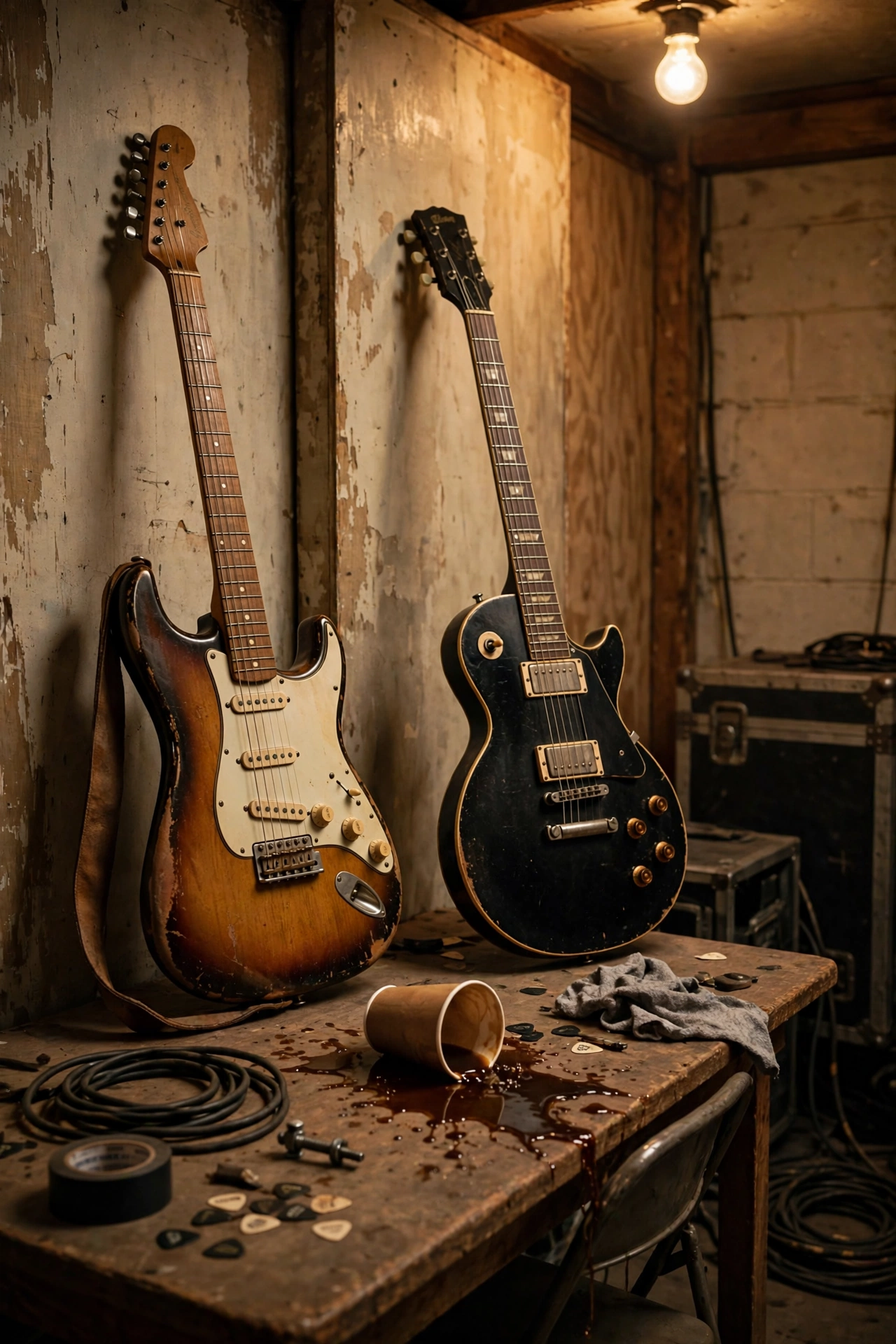
They say never cry over spilled milk, but a cup of milk really did break up Aerosmith. During the 1979 World Series of Rock festival, bassist Tom Hamilton’s wife threw a cup of milk at guitarist Joe Perry’s then-wife, and the backstage incident escalated into a furious argument between Perry and singer Steven Tyler. Tyler told Perry he was fired, and Perry walked out of the band he had helped build. Perry later said he simply needed to take care of himself and deal with his personal life. He launched a solo project while Aerosmith carried on without him, but the split lasted only a few years — Perry returned in 1984, and the reunion sparked one of the greatest comebacks in rock history.
9. Al Bryant — The Temptations

Elbridge “Al” Bryant was an original member of The Temptations, but success came slowly — the group’s early years produced only one modest national hit — and Bryant grew restless. He missed his day job as a milkman and disliked the endless recording and performing. His drinking worsened, and so did his temper. In 1963 he got into a backstage fight with bandmate Paul Williams that left Williams needing hospital treatment. Williams forgave him and even persuaded the others not to fire him. Bryant got a second chance and blew it within months: at the record label’s Christmas party he was involved in another onstage altercation, and this time the group fired him. His replacement was David Ruffin, whose voice would soon take the group to number one.
10. David Ruffin — The Temptations

David Ruffin started with The Temptations as a backing singer, but when he was promoted to lead vocalist on “My Girl,” the song became the group’s first number one, and Ruffin became one of its stars. Fame changed him. Attention from fans and the press, along with cocaine use, made his behaviour unpredictable. The final straw came in 1968, when he asked for the group to be renamed “David Ruffin and the Temptations” — a demand the others took as a step too far. They fired him on the spot. Ruffin went solo and would sometimes turn up at Temptations shows unannounced, trying to steal the spotlight back. He rejoined the group briefly for a reunion tour in 1982, but missed dates because of his drug struggles, and the reunion did not last.
11. Don Felder — Eagles
After the enormous success of the Eagles’ 1976 album Hotel California, guitarist Don Felder’s relationship with singer and guitarist Glenn Frey turned poisonous. The tension boiled over on the tour for the follow-up album, The Long Run. At a benefit show in Long Beach, Felder exchanged sharp words with Frey onstage, and the two men were openly threatening each other between songs. The band soon broke up, and Felder’s first chapter with the Eagles was over. When the group reunited in 1994, Felder returned — but the peace did not hold. In 2001 he was dismissed from the band after disputes over money, ending one of rock’s most profitable and most combustible partnerships for good.
12. Dave Abbruzzese — Pearl Jam

Drummer Dave Abbruzzese joined Pearl Jam in 1991 and played on the albums that made them one of the biggest bands in the world, but he never quite fit in. He has described himself as an outsider in the group, someone who celebrated success loudly while his bandmates were far more reserved. In 1994, the band fired him, explaining it as a clash of philosophies and personalities. Abbruzzese said he was not involved in the decision and did not agree with it, but accepted it and said he was proud of what the band had been. Pearl Jam went through several drummers before settling on Matt Cameron, and Abbruzzese’s firing remains one of the most discussed lineup changes in 1990s rock — the drummer on two classic albums, gone just as the band hit its peak.
13. Ozzy Osbourne — Black Sabbath
In 1979, Black Sabbath fired their singer, Ozzy Osbourne, after years of heavy substance abuse had made him unreliable in rehearsals and on tour. Osbourne has said the news was delivered by drummer Bill Ward, and he blamed guitarist Tony Iommi for pushing him out. Iommi has said the decision was made on behalf of the whole band. Either way, the firing became one of the great turning points in metal history. The band replaced Osbourne with Ronnie James Dio, and Osbourne launched a solo career that made him a bigger star than ever. He would reunite with Black Sabbath several times from 1997 onwards, and the band’s story came full circle with a final hometown farewell show decades later.
14. Zayn Malik — One Direction

In March 2015, Zayn Malik announced he was leaving One Direction, breaking the hearts of millions of fans around the world. In his statement he said that after five years, it was the right time to go, and that he wanted to be a normal 22-year-old who could relax and have some private time out of the spotlight. He thanked his bandmates, calling them friends for life. The band carried on as a four-piece, released one more album, and went on indefinite hiatus in 2016. Malik later said he had not been enjoying the music and felt creatively stifled. The members came together again at Liam Payne’s funeral in 2024, and Malik later reconnected with Louis Tomlinson, a reminder that even the most famous boy band breakup of the decade could not erase the bond entirely.
15. Vince Neil — Mötley Crüe

In 1992, singer Vince Neil and Mötley Crüe parted ways, and to this day the two sides tell different stories about what happened. The band’s public statement said race car driving had become a priority in Neil’s life and his bandmates felt he no longer shared their passion for music. Neil has always denied that, saying he would never have given up rock for racing. He blamed the split on a musical disagreement: he wanted the band to stay on a straight hard-rock path, while the others wanted to move towards a blues sound. He said being fired took him completely by surprise. Neil went solo while the band carried on with a new singer, but the original lineup eventually reunited in 1997 — proof that in rock, even the bitterest firings are rarely final.
16. Jimi Hendrix — Little Richard’s Backing Band

Long before he became the greatest guitarist in rock history, Jimi Hendrix was a hired hand. In the early 1960s he was hired to play guitar in The Upsetters, Little Richard’s backing band, performing under the name Maurice James. It did not last long. He was reportedly fired for constantly being late — and for upstaging the star himself. Hendrix’s playing was already so flashy and attention-grabbing that it pulled focus from the frontman, which is not a survivable offence in someone else’s band. Little Richard’s loss was music’s gain: Hendrix went on to form his own bands, and within a few years he had changed the sound of the electric guitar forever.
17. Robbie Williams — Take That
In 1995, Robbie Williams left Take That in the middle of a tour, and the departure was as dramatic as the band itself. Williams was struggling with alcohol, addiction and mental health problems, and he was also caught in a reported feud with bandmate Gary Barlow. He has described the band at the time as a burning building he needed to escape, and said he planned to finish the tour and then leave — only for the band to tell him to go right away. It looked like career suicide at the time. Instead, Williams became one of the biggest solo stars Britain has ever produced, outselling his old band many times over. He eventually rejoined Take That for a reunion album and tour, closing the circle on one of pop’s most famous walkouts.
18. Sammy Hagar — Van Halen
Sammy Hagar’s decade with Van Halen ended with a phone call. In 1996, guitarist Eddie Van Halen rang Hagar to tell him the band would be moving on without him. Hagar has said the real cause was a new manager who came in after their old manager died, and who turned the band against him by claiming Hagar thought it was his band. He has insisted he was innocent in the whole affair, and that the manager in question was gone within months — proof, in his view, that he had been right all along. Being right did not save his job. Hagar went solo, and the two sides eventually reunited for a tour in 2004, though the reunion brought its own arguments, including Hagar calling out Eddie’s playing onstage.
19. Doug Bogie — Queen
And finally, the shortest stint on this list. In 1971, 18-year-old trainee telephone technician Doug Bogie played bass in Queen for exactly two shows before the band sacked him. According to the band’s history, guitarist Brian May said Bogie jumped up and down onstage in a manner that did not suit the group at all — Freddie Mercury wanted a quiet bassist who stayed put and held the groove. Bogie later said he thought he had done really well, full of energy and leaping about, and was stunned to be let go. Queen kept searching and found John Deacon later that same year, completing the lineup that would become one of the greatest bands of all time. Bogie remains a footnote in rock history — the bassist who was too energetic for Queen.
The Bottom Line
Band breakups are rarely about one moment, even when they look that way from the outside. A wrong song on live television, a cup of milk, or a phone call is usually just the final straw after years of pressure building up behind the scenes. What is remarkable is how often the ending becomes a beginning: Mustaine built Megadeth, Ozzy became a solo superstar, Bobby Brown and Robbie Williams both went on to eclipse the groups they left. The bands, meanwhile, usually carried on — sometimes better, sometimes worse, but always different. In music, getting fired is not always the end of the story. Sometimes it is the best thing that ever happened.
You May Also Like
If you love digging into music history, you will enjoy these too: 17 Famous Music Feuds In History, 25 Mind-Blowing Music And Song Facts, 21 Mega-Popular Songs That Are Actually Covers, and Music’s Most Hated Musicians, According To Fellow Musicians.