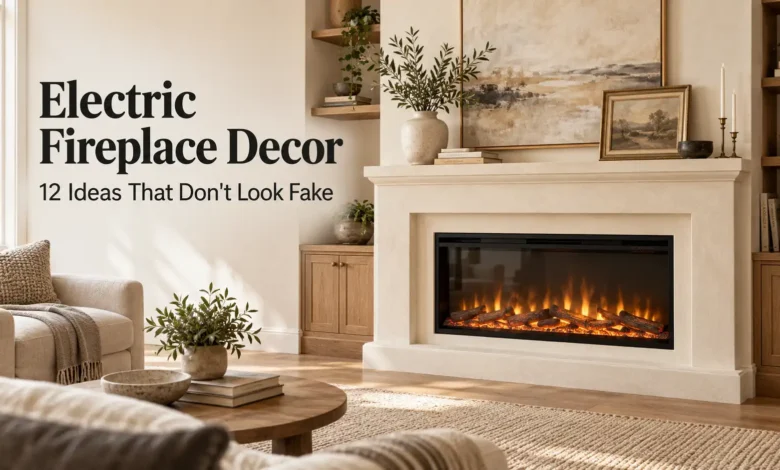
An electric fireplace usually looks out of place for a reason you can fix: the surround is too small, the cord is visible, the flame setting dominates the room, or the wall around it feels unfinished. Start with the thing that breaks the illusion before buying more mantel accessories.
For a believable result, give the unit a convincing frame, repeat materials already in your room, and keep the flame effect quieter than the decor around it. These 12 electric fireplace decor ideas range from an evening of rearranging to a planned surround renovation. You do not need to do all of them.
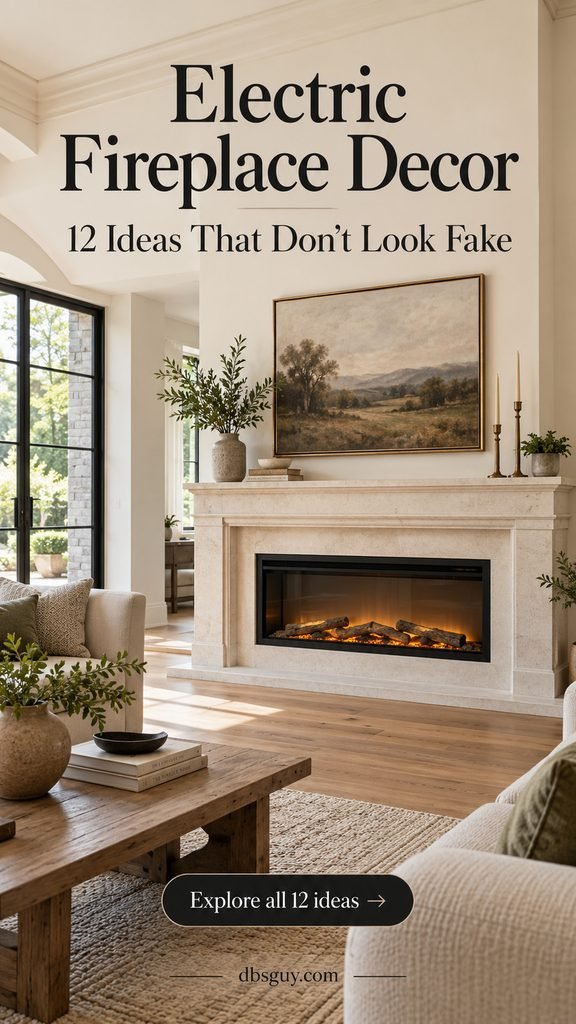
The images below are AI-generated design concepts, not completed installations or product photographs. Use them for styling inspiration; they do not establish safe installation dimensions.
Choose your starting point
- No renovation: start with flame settings, artwork, lighting, or furniture placement (ideas 4, 7, 8, and 12).
- A surface refresh: consider paint or a carefully planned tile surround (ideas 5 and 9).
- A larger project: plan the surround, base, built-ins, or TV wall around the exact appliance (ideas 1, 2, 3, 6, and 11).
- A freestanding unit: use the placement approach in idea 10.
Check the appliance before decorating
Find your model number and installation manual first. Keep air intakes, heat outlets, controls, and service access clear. Follow its material and clearance requirements, and plug corded units directly into a suitable wall receptacle rather than an extension cord or power strip. Never hide the cord under a rug. For an example of the details manufacturers specify, see the Dimplex XHD owner’s manual; its dimensions apply only to the listed models. Use your own model’s instructions for your installation.
1. Give the insert a surround with believable proportions
A small black rectangle stranded on a wide wall can read like a screen. A properly proportioned surround gives it a place in the architecture. For a traditional room, try simple side columns and a mantel shelf; for a contemporary room, use a clean, broad frame with fewer changes in depth.
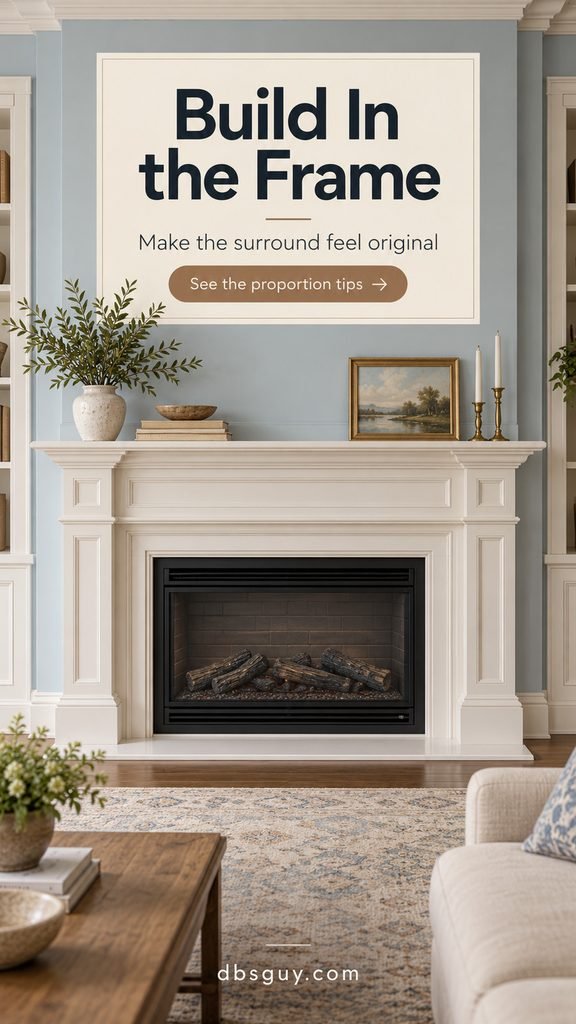
Before ordering trim, mark the proposed outer edges with painter’s tape. Mark the firebox opening separately, then sit in your usual chair. You should be able to read the surround as one shape, with enough material beside and above the opening to avoid a thin, picture-frame effect.
Match the room’s existing trim language. A house with plain baseboards usually needs a simpler mantel than a room full of ornate molding. Carry the baseboard neatly to the surround instead of leaving unexplained gaps. Choose the exact appliance before finalizing an enclosure; a surface-mounted unit cannot automatically be recessed.
Skip the floating-box look: adding a narrow shelf above an undersized unit rarely fixes the proportions of the whole wall.
2. Use tactile material where you see it up close
If the surround looks flat even with the flames off, look at its finish. Honed stone, ceramic tile, or a thoughtfully finished plaster-look surface can introduce the small variations that make a wall feel substantial. Choose one main material rather than layering several imitation finishes together.
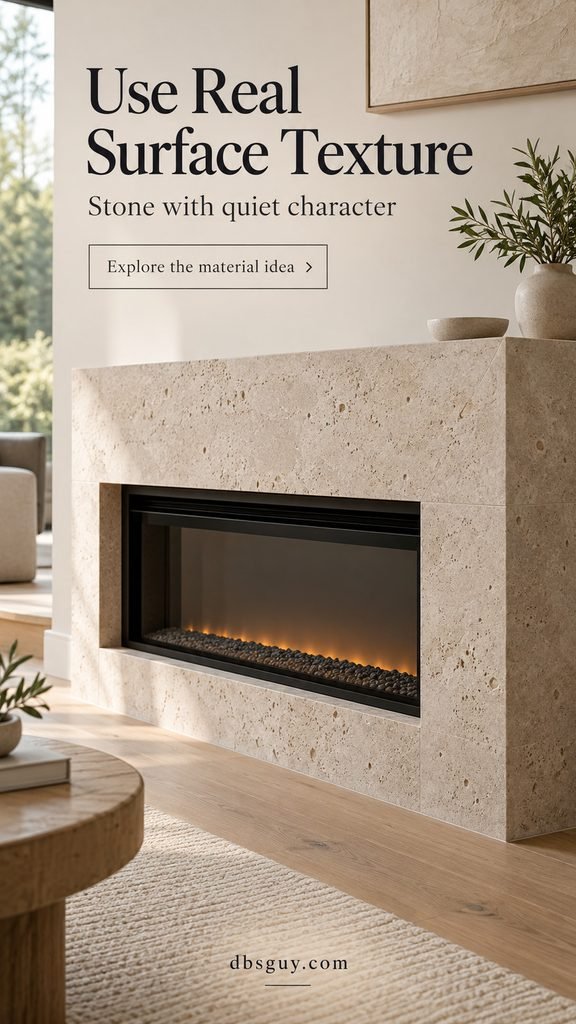
Bring a sample home and view it upright beside the fireplace in daylight. A sample that looks quiet on a store counter may show a repeating printed pattern once several pieces sit together. With patterned tile or stone-look porcelain, lay out the pieces first and rotate or redistribute conspicuous repeats.
Spend attention on corners and side returns. A convincing front loses its effect if the side exposes an unfinished board edge. Ask how the material terminates at the opening, floor, and adjacent wall. The substrate, adhesive, weight, and finish must suit the proposed assembly and the appliance instructions.
For a smaller project, finish only the surround face well instead of stretching the budget over an entire feature wall.
3. Add a base that grounds the fireplace
A hearth-like base can make a freestanding mantel or new surround feel planted rather than perched against the wall. A dark slab creates a clear bottom edge; a pale surface that matches the surround makes the whole structure read as one piece.
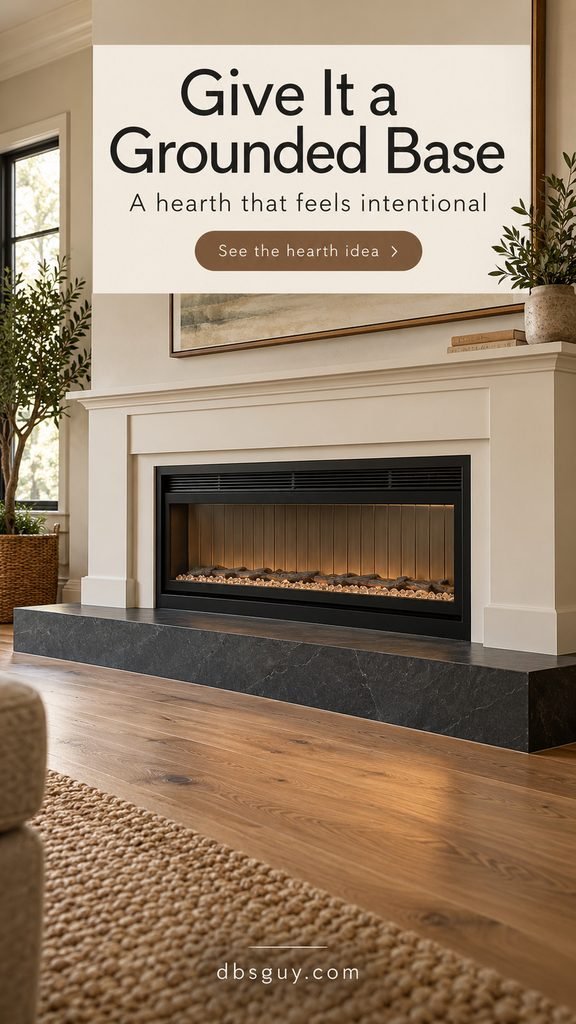
This is a design choice, not a universal requirement for electric fireplaces. Tape its footprint on the floor before committing. Walk past it carrying a laundry basket and open nearby cabinet doors. If it pinches the walkway, a shallower base or flush floor treatment may be the better answer.
Keep the surface mostly empty. Stacked lanterns, log baskets, and tall ornaments can turn a useful visual anchor into clutter. Plan the base around the unit’s required support and airflow, and keep rugs and furnishings outside its specified clearances.
A hearth should solve a proportion problem. Do not add a projecting step solely because a reference photo has one.
4. Choose restrained flames and the right media bed
For a wood-fire impression, begin with the warmest amber or orange setting your unit offers. Reduce brightness until the flame effect stops overpowering the room, then adjust speed or height if those controls are available. The best setting in bright afternoon light may feel exaggerated after dark.
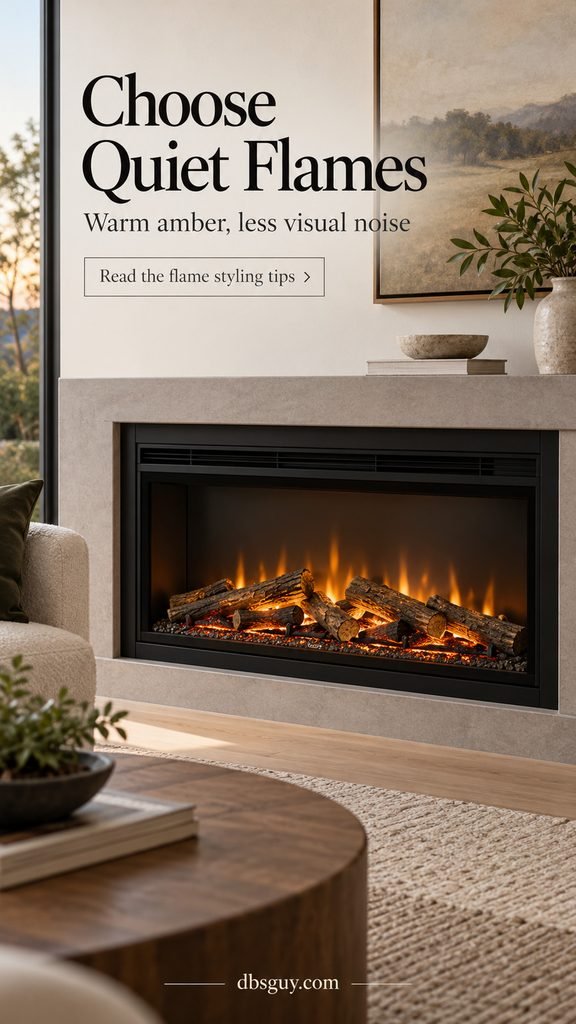
Judge the effect from the sofa, not with your face next to the glass. Check the ember bed separately when the controls allow it; an intensely bright bed can still look theatrical even when the flames are subtle. Keep colorful backlighting off if your goal is a traditional hearth.
Use only media approved for your model. A supplied log set often suits a classic mantel, while a restrained crystal or stone-look bed can belong in a modern surround. Do not add backyard branches, real firewood, or decorative filler to the appliance. If the display itself is visibly flat, better styling can integrate the unit but cannot change its underlying flame technology.
Try the existing controls before shopping for a replacement. This is the easiest idea to test without changing the room.
5. Soften a strong black border with a deeper wall color
A glossy black frame against a bright white wall can become the first thing you notice. Painting the surrounding wall a deeper olive, charcoal, or muted brown can reduce that contrast. The goal is to let the whole fireplace wall hold together, rather than making the border disappear completely.
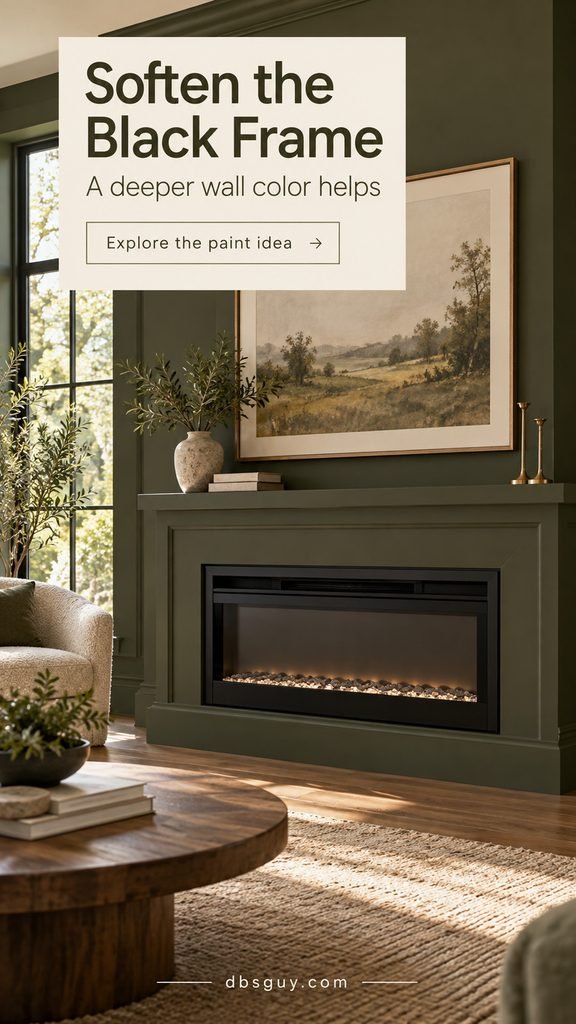
Test large painted sample boards beside the unit with the flames both on and off. Choose a shade that connects to something already in the room: the sofa fabric, a rug detail, or a wood finish. Repeat that color once elsewhere so the fireplace wall does not feel like an isolated accent.
Paint only suitable surrounding surfaces. Leave the appliance housing, glass, vents, labels, and controls alone. If a darker wall makes the room feel heavy, keep nearby upholstery or art lighter instead of adding more decorative objects.
A warm charcoal and a blue-black are not interchangeable. Compare undertones in the room’s actual light.
6. Make the fireplace part of useful built-ins
Bookcases and closed cupboards can give a modest fireplace enough architectural presence for a larger room. Start with what you need to store, then decide where open shelves belong. A wall designed around actual books, games, or media equipment is easier to live with than one made entirely for ornaments.
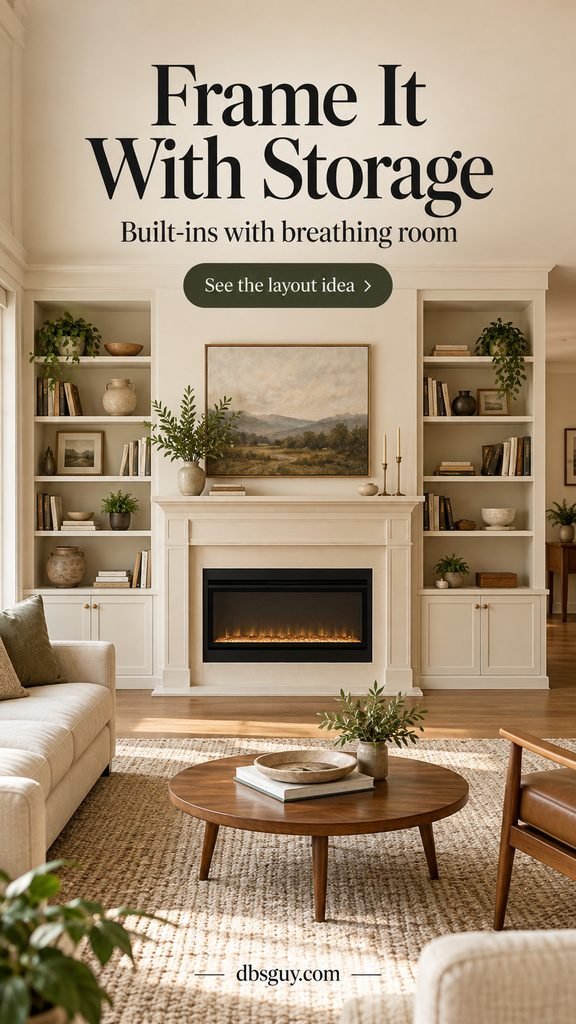
Use shared horizontal lines to connect the pieces. Matching cabinet-top heights and consistent shelf thicknesses usually feel calmer than a collection of unrelated units. Perfect symmetry is optional: on an awkward wall, one useful bookcase can work better than two squeezed-in ones.
Keep some shelf space empty and spread darker objects across the arrangement. Before construction, plan appliance access and cable routes with the installer. The fireplace must remain serviceable; a clean-looking wall should not depend on permanently sealing the unit behind joinery.
Avoid making every shelf a miniature mantel. Books stored normally and a few objects look more believable than repeated staged vignettes.
For a quieter room around the fireplace, explore our Japandi living room ideas and borrow the materials that suit your existing furniture.
7. Give the mantel one clear focal point
If the fireplace itself is fine but the wall still feels artificial, empty the mantel and rebuild the arrangement around one piece of art. A landscape, abstract painting, or quiet photograph can give the wall a subject beyond the flame display.
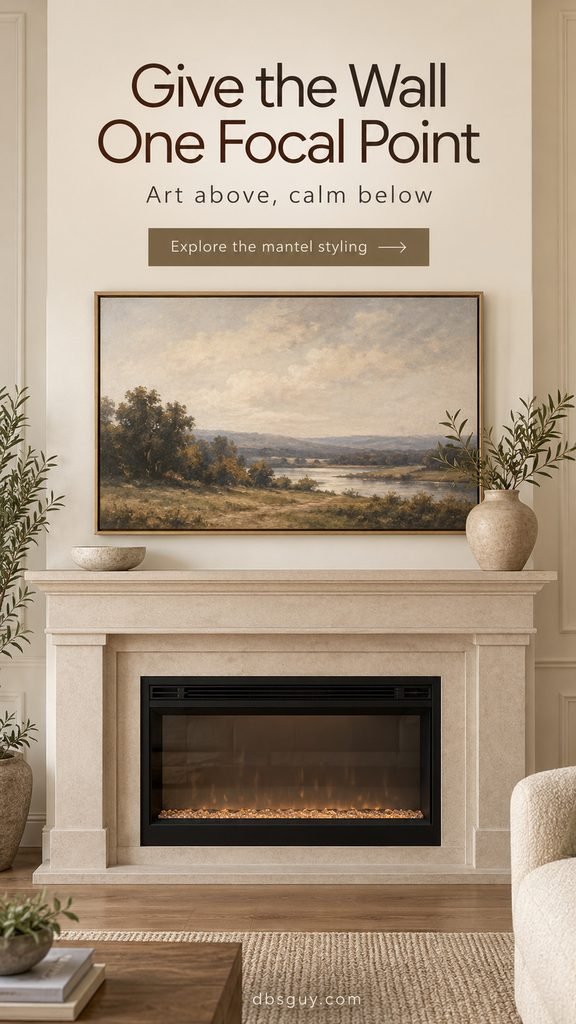
As a starting point for a paper mock-up, try artwork around two-thirds of the mantel’s width. This is a visual experiment, not a rule: narrow walls or tall ceilings may need a different shape. Leave visible wall around the frame, and assess the arrangement from the doorway.
Add one taller object on one side and a lower object on the other, leaving the center mostly open. Secure artwork appropriately rather than assuming a leaned frame will stay put. A mirror can work too, but check its reflection from the sofa; a ceiling fan or busy kitchen may become the mantel’s unintended focal point.
Choose objects you would keep even without a fireplace. Personal pieces tend to feel less staged than matching decorative sets.
8. Reduce glare and light the rest of the room
Reflections on the glass can draw attention to the fireplace’s flat front. Check the view in the daytime and after sunset. Sometimes moving a lamp or adjusting a window shade does more for the effect than changing anything on the mantel.
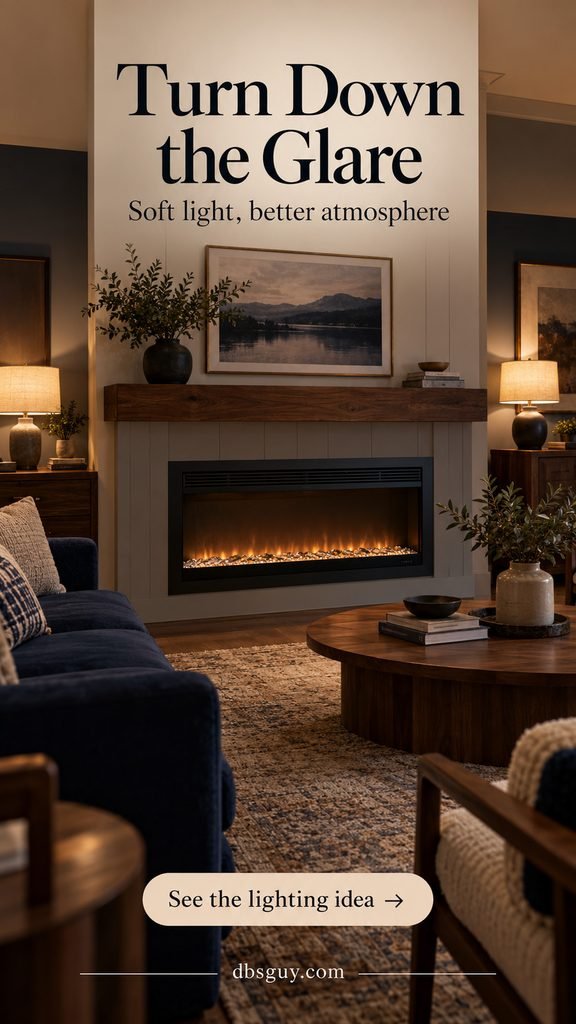
Use shaded lamps to light the seating area, and avoid aiming a spotlight straight at the glass. For a warm-looking scheme, bulbs labeled around 2700K are a useful starting point; compare them with your existing lighting so one corner does not turn noticeably yellow.
Do not darken the whole room just to make the flames more visible. You still need comfortable light for reading and walking. Aim for several gentle pools of light, with the fireplace as one contributor. A dimmable table lamp makes this easier to adjust as daylight changes.
Take a quick photo from your usual seat. Bright reflections are often easier to spot in the image than while you are rearranging the room.
9. Use tile as a deliberate surround detail
Tile works especially well when you want more character than a painted surround but do not want a full stone wall. Try a restrained field of sage, cream, or warm gray ceramic around the opening. Subtle variation can be enough; the fireplace already brings movement.
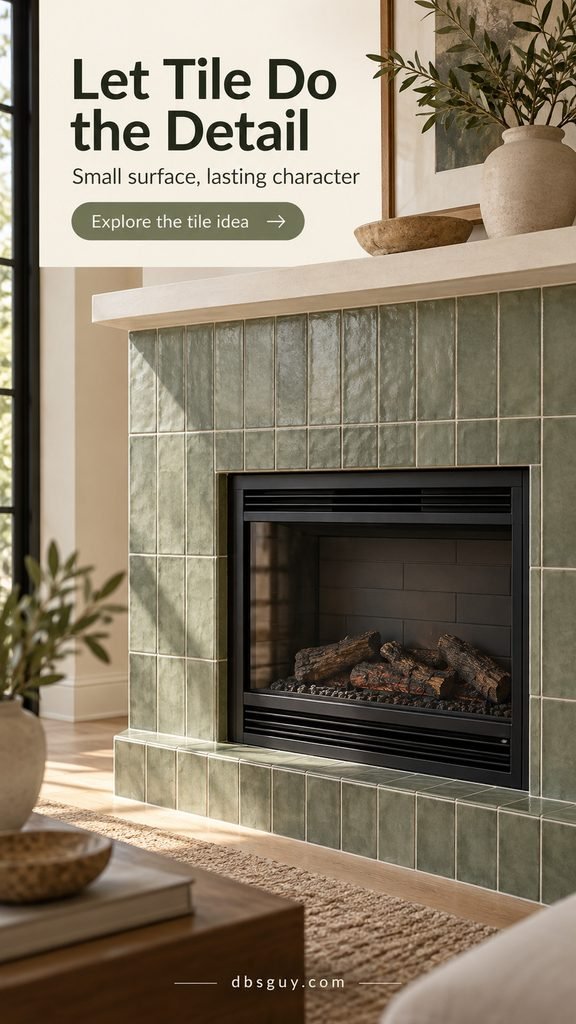
Plan the layout from the opening outward. Dry-lay the tile and check where cuts will land, particularly at the top corners and beneath the mantel. An orderly layout with finished edges usually looks more intentional than an elaborate pattern interrupted by awkward slivers.
Choose grout with the whole composition in mind. Similar-toned grout keeps attention on texture; contrasting grout emphasizes every joint. Use an appropriate tile assembly and preserve the appliance’s required openings and access. Peel-and-stick products are not a default substitute near a heater; compatibility needs to be established for the specific location.
If your room already has a patterned rug or wallpaper, use simpler tile so the fireplace does not introduce another competing motif.
10. Let a freestanding mantel unit look intentional
A freestanding electric fireplace does not need a fake chimney breast to look good. Treat it as a substantial piece of furniture: place it on a wall with enough room for its full width, align the artwork above it, and keep neighboring furniture from crowding the ends.
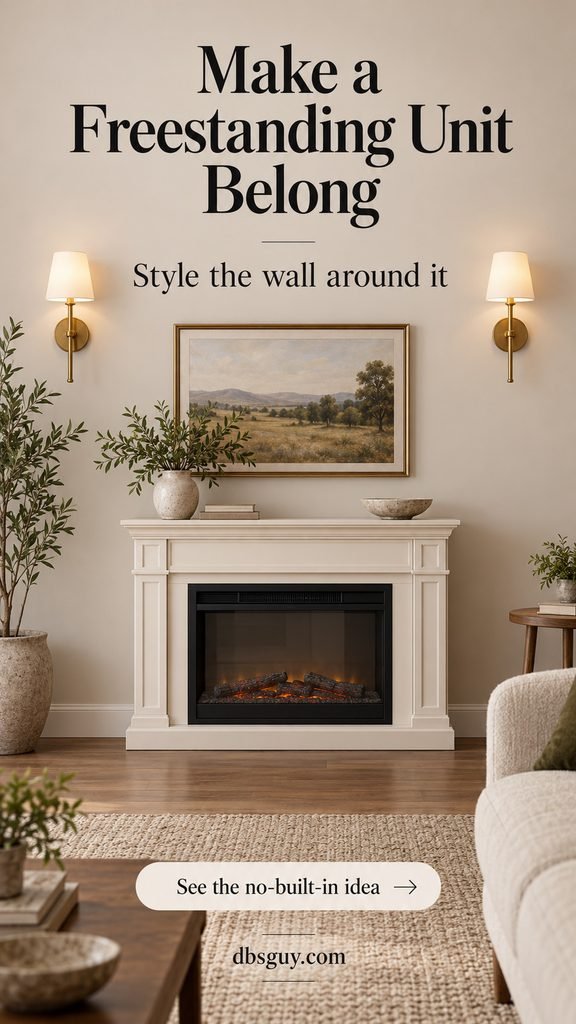
Before you settle on the location, check the outlet position and the manufacturer’s placement and anchoring requirements. A visible cord is a styling problem, but running it under a rug or extending it across the room is not the solution. Choose a suitable location or have a qualified electrician provide the appropriate supply.
Pair the unit with the room’s existing finishes. An ivory mantel can connect to ivory trim; a wood finish can echo a side table without matching every piece. In a rental, get permission before anchoring, painting, or adding electrical work, and avoid wrapping the unit in homemade cabinetry unless it is designed for that installation.
Leave the unit’s depth honest. A well-placed furniture-style fireplace is more convincing than a shallow box dressed up with unrelated trim.
11. Compose the television and fireplace as one wall
A television and electric fireplace create two dark rectangles. They need a relationship, not a crowd of shelves squeezed between them. Start by testing the television height from your actual seat, then assess whether the fireplace can fit below without compromising either appliance’s instructions.
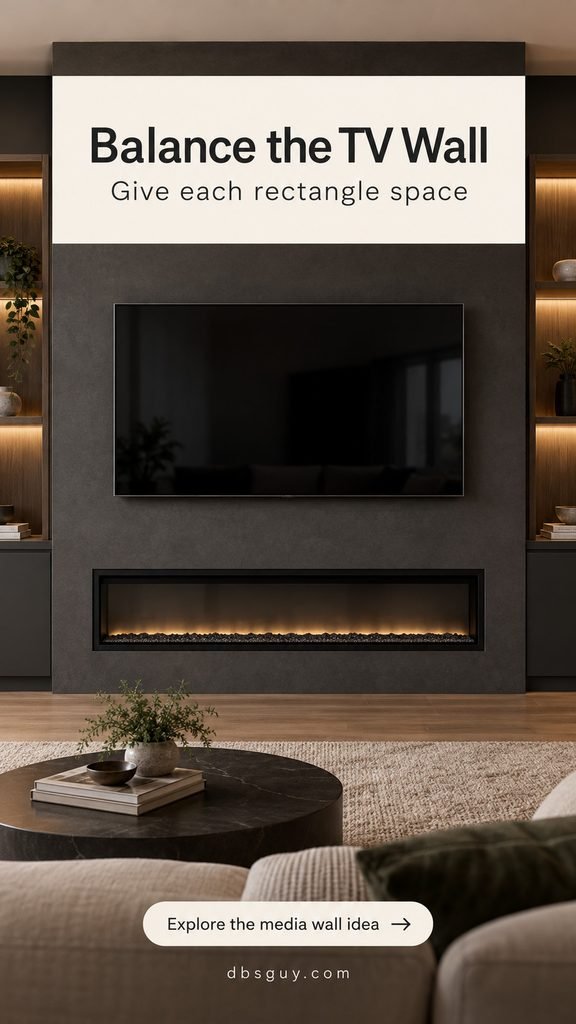
Tape both rectangles on the wall before construction. Aligning their centers is a useful first layout; a larger surround can balance mismatched widths. Leave the intervening wall visually quiet, and use closed storage to reduce the number of smaller rectangles competing for attention.
There is no universal safe gap for a television above an electric fireplace. The fireplace’s heat outlet, its installation instructions, the television’s requirements, and the proposed mantel or enclosure all matter. If the resulting screen position is uncomfortable, put the TV on another wall. A decorative mantel is not automatic heat protection.
Check the composition with the TV switched off. That is when you will most clearly see whether the wall feels balanced.
12. Arrange a room people can actually use
A fireplace can look like a showroom prop when nothing in the room relates to it. Angle a chair toward the hearth while keeping it close enough to a side table and lamp to be useful. In a larger room, two chairs facing a coffee table can include the fireplace in a conversation area without forcing everyone to stare at it.
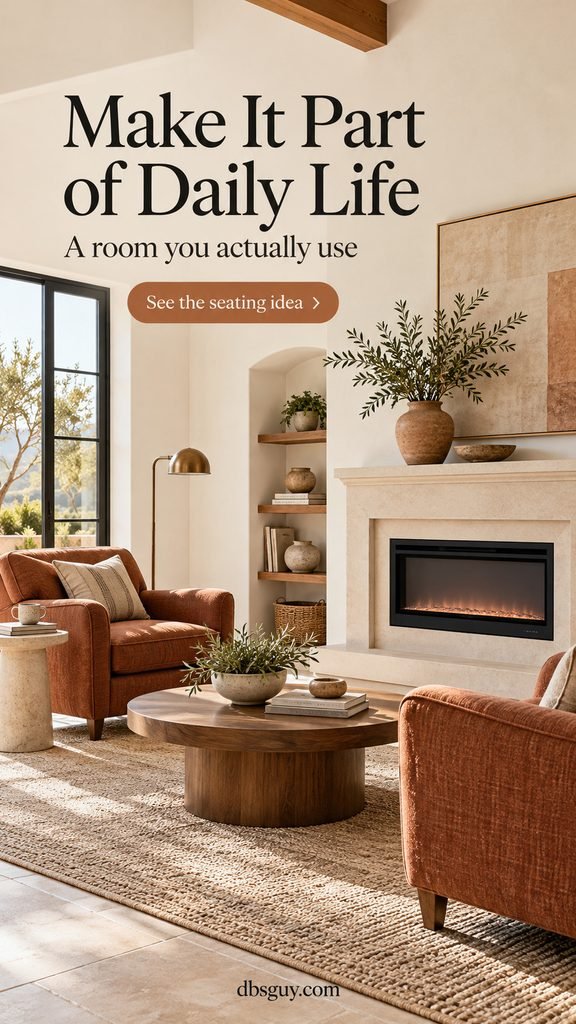
Keep the walking route open and all furniture outside the model’s required clearances. Put throws on seating and baskets in a separate storage spot, not against the heater. You can echo the surround’s color in a cushion or book cover without building a themed display.
Live with the arrangement for a few evenings before adding anything else. Can you reach a drink, read comfortably, and cross the room without detouring around the furniture? Those answers matter more than whether every accessory looks perfect from one camera angle.
Change one thing first: turn a chair, move a lamp, or remove the decor blocking the view. A better arrangement may be all the fireplace needs.
For the seating side of the project, our cozy reading nook ideas for small spaces offer more ways to combine a chair, light, and useful surface.
Electric fireplace decor questions
How do I make an electric fireplace look more realistic without remodeling?
Start with the flame settings, reduce glare on the glass, and simplify the mantel. Then check whether the surrounding wall color makes the black frame stand out too strongly. These changes can help the fireplace belong in the room, although they cannot improve the appliance’s actual flame technology.
Can I put a mantel around any electric fireplace?
No. Check whether your exact unit is intended for freestanding, surface-mounted, or recessed installation. Build around the dimensions, ventilation, material restrictions, and access requirements in its instructions, rather than around an inspiration picture.
Should I add real logs or a fireplace screen?
Do not put real wood or unapproved decorative media inside the unit. A screen may obscure the effect, block access, or interfere with airflow; only use one where the manufacturer permits it. For this look, a clear opening is usually the stronger styling choice.
Does an electric fireplace need a chimney or hearth?
Electric fireplaces do not burn fuel and generally do not need a combustion chimney. They still need the airflow and installation conditions specified for the model. A visible hearth may be a decorative choice; the manual determines the required support, surface, and clearances.
Which upgrade should I do first?
Identify the distraction you notice from the sofa. Harsh flames suggest a settings change; reflections suggest lighting changes; an undersized frame suggests a surround project. Fix that one problem before buying accessories for the whole wall.