21 December Nails Ideas for When You’re Ready to Give Your Usual Manicure a Break


If you keep choosing the same red, sheer pink, or white French tips, you do not have to change everything at your next appointment. Keep the length you like and switch one feature: the color, the finish, or where the detail sits. Cobalt blue gives a short square manicure a new mood; a silver cuticle cuff makes a sheer base feel different without covering it up.
These 21 December nail ideas range from small changes to more noticeable departures. Each includes the detail that makes the look work and a practical way to request it or scale it to your nails. Pick the change you want first, then save the matching reference.
The visuals are AI-generated manicure concepts, not photographs of completed salon work. Use them to discuss color, placement, and finish with your nail artist.

Choose the Part of Your Manicure You Want to Change
- If you always wear red: compare cobalt in idea 1, aubergine velvet in idea 3, and the midnight aura in idea 10.
- If you always wear nude: try the taupe side swoops in idea 4, black line art in idea 12, or silver cuffs in idea 20.
- If you always choose French tips: look at the split colors in idea 5, diagonal corners in idea 6, or open outlines in idea 19.
- If you want to paint them at home: solid cobalt, pearl polish, small dots, and the coordinated colors in idea 18 are useful starting points with regular nail polish.
1. Cobalt Blue on Short Squares
A saturated blue is a useful first move when red has become your automatic choice. Keep every nail the same glossy cobalt so the color gets your attention immediately. Short, softly squared tips give it a crisp outline without needing intricate art.
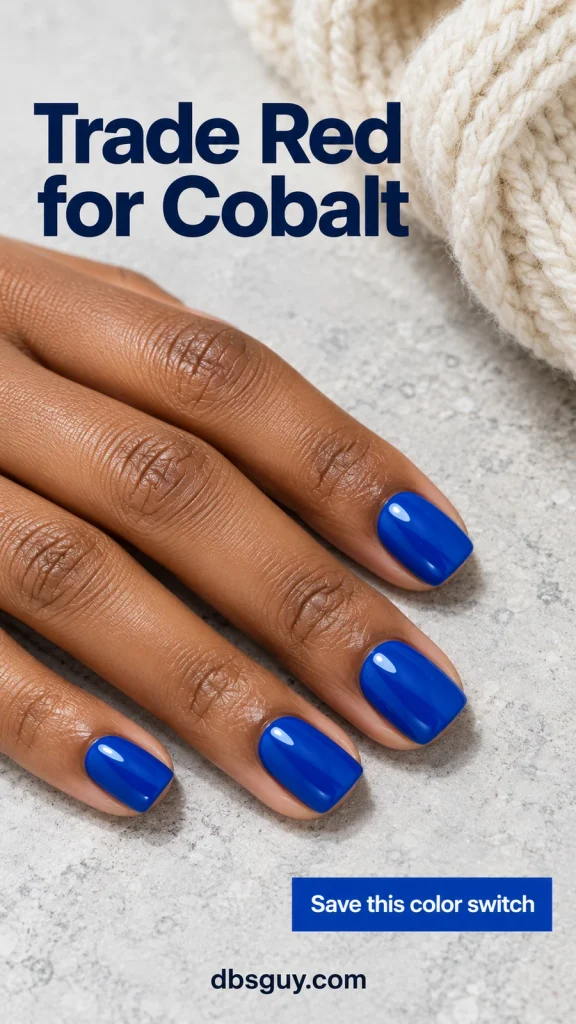
Compare a cobalt swatch with navy before deciding. The blue in this reference is visibly bright, even against a pale background; an almost-black shade would create a quieter result. If you prefer rounded nails, keep that shape and borrow only the color. For a home manicure, choose a cobalt lacquer and follow its base, coat, and drying directions rather than trying to make one heavy layer cover everything.
2. Pistachio Pearl
This is a gentle departure from milky pink: a muted green with a soft pearl reflection. The pale color stays quiet beside cream knitwear, while the sheen gives the manicure something to notice when your hand moves.
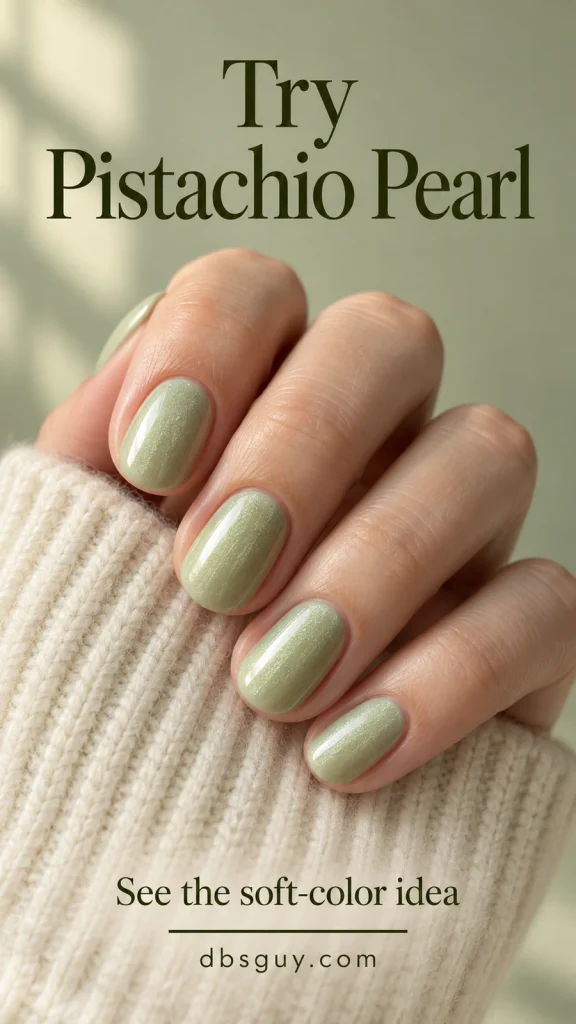
Ask for light pistachio rather than bright mint, and compare the finish on a sample nail. You want fine luminosity with the green still visible, not a silver coating that hides the color. A pearlescent regular polish is a straightforward home interpretation. If you are using a separate topper, test the combination first; some toppers shift a pale shade more than you might expect.
3. Aubergine Velvet
If you like the richness of burgundy but want a different reflection, try a blackened purple with a broad, soft magnetic glow. The smooth velvet effect adds depth without a painted motif. It is an especially useful reference for evening plans when you want the nails themselves to carry the detail.

Tell your technician you prefer a diffused highlight across the nail rather than one sharp cat-eye stripe. Magnetic polish uses responsive shimmer arranged with a magnet; ordinary glitter polish will not give the same effect. Check a finished swatch from a few angles, because a still image shows only one view. On shorter nails, keep the full-color finish and skip extra decoration.
4. Taupe Side Swoops
Your usual neutral can feel new simply by moving it. Here, a broad taupe curve hugs one side of each sheer nail, leaving much of the center visible. It has the calm palette of a nude manicure with a more deliberate shape.
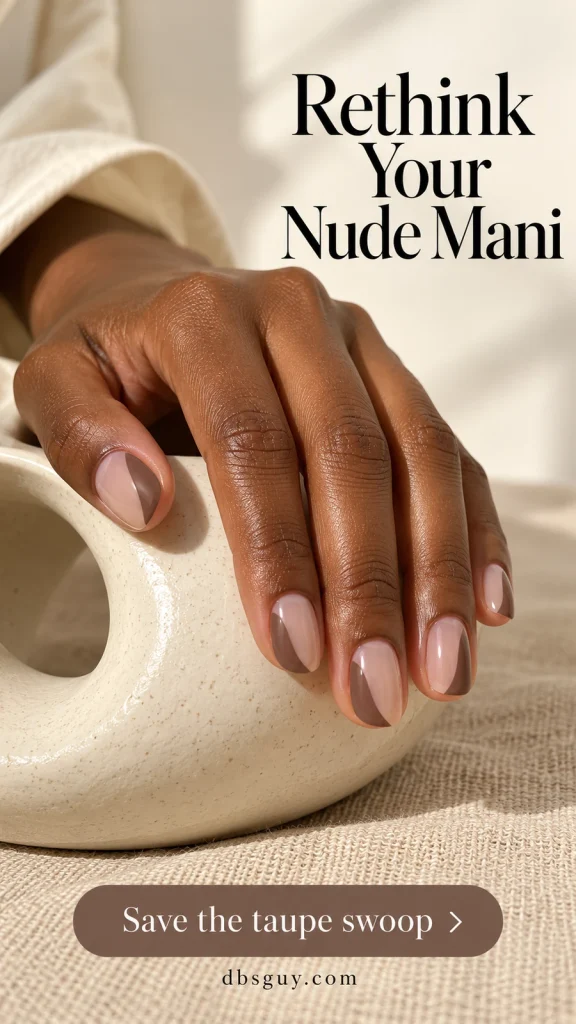
Point out the open center when showing this reference. A stripe drawn straight down the middle or a filled French tip would change the design. On a narrow nail, reduce the width of the swoop so the sheer area still reads clearly. The curves can vary slightly between fingers; the shared color and placement keep them connected. Choose a pink, peach, or beige sheer base that creates the transparency you want on your own nails.
5. Chocolate and Ice-Blue Split Tips
Chocolate brown and pale blue make the familiar French layout feel less predictable. Each tip has two colored halves that meet near the center, while the nail bed stays sheer. The warm brown gives the icy blue a clear edge to sit against.
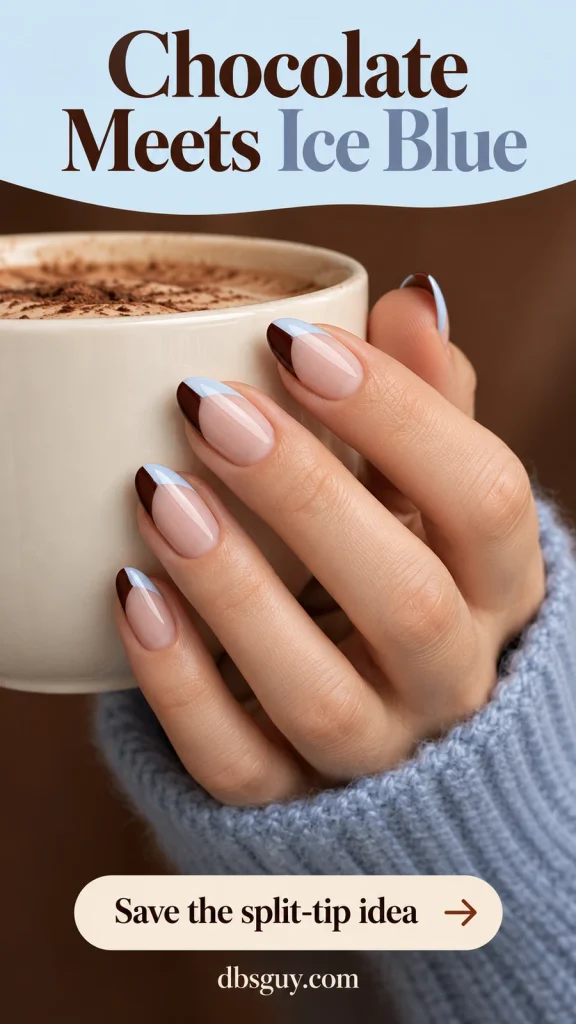
Ask for the color split within the tip, not brown on one hand and blue on the other. A medium almond shape gives both halves room to show. For short nails, use a shallow tip and keep the join simple; a thick band can take over the nail. Bring a photo of the two colors together, because a very dark blue beside chocolate will lose the contrast that makes this pairing useful.
6. Diagonal Silver Corners
If a full chrome manicure feels like too large a jump, put the metal in one corner. A small silver triangle at the free edge gives sheer nails a graphic finish. The diagonal placement is the feature, so it does not need a silver line around the rest of the tip.
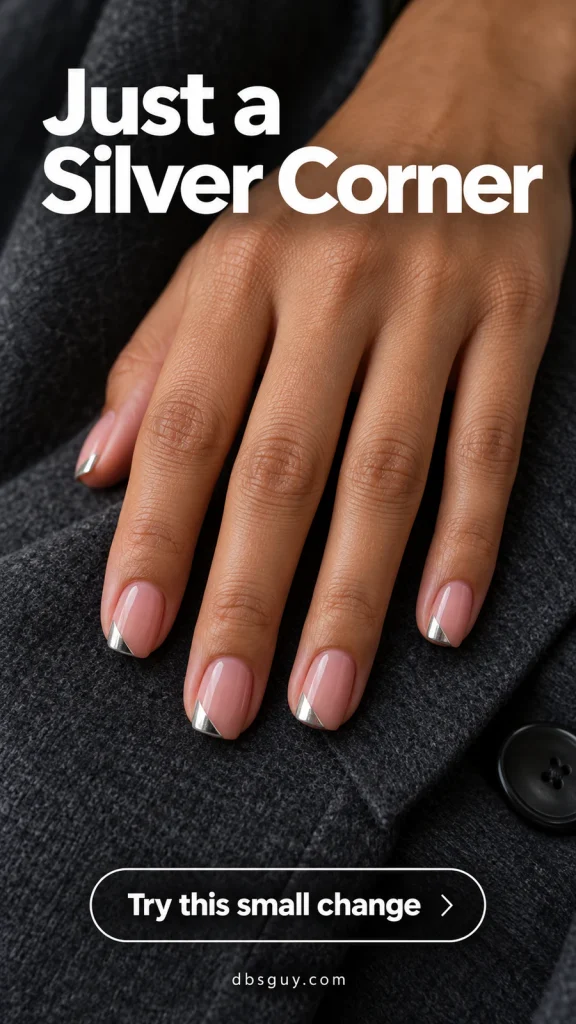
Request the same corner placement across the set, with the triangle sized to each nail rather than identical in width. On very short nails, make it a tiny wedge. A silver metallic lacquer can suggest the shape at home; a salon chrome effect will look more reflective. Keep those expectations separate when choosing a product or discussing the reference.
7. Amber Tortoiseshell Accent
Warm caramel stays in familiar neutral territory, but an amber tortoiseshell nail gives it a different texture. The pattern needs irregular dark patches and some lighter, translucent-looking space between them. A dense layer of brown spots would feel more like an animal print.

Keep one finger as the accent and repeat caramel on the other nails. This lets a short set show the pattern without turning every finger into a tiny canvas. Ask your artist for softly layered patches rather than crisp dots. If you want an easier home version, use a flat tortoiseshell nail-art wrap that fits the accent nail, following its application instructions; do not expect ordinary brown dots alone to reproduce the layered effect.
8. Smoky Charcoal Marble
Smoky marble is a softer alternative to an opaque black manicure. Charcoal wisps move through a light gray background, with enough pale space to keep each nail from becoming one dark block. The reference has the cloudy depth of smoky quartz rather than bright white stone veining.

At the salon, describe the balance you want: translucent-looking gray, a few blurred dark trails, and no heavy black outlines. A shorter version can use fewer wisps instead of miniaturizing a complicated pattern. This is worth treating as a technique-led salon request if you have not worked with layered nail art before. The effect depends on how the colors overlap, not just which two bottles you choose.
9. Wine Nails with Bare Half-Moons
You can keep your favorite dark red and still give the manicure a different structure. Leave a small sheer half-moon at the base of each nail, then let wine polish cover the rest. The open arc is easy to appreciate on short ovals because the surrounding color stays simple.
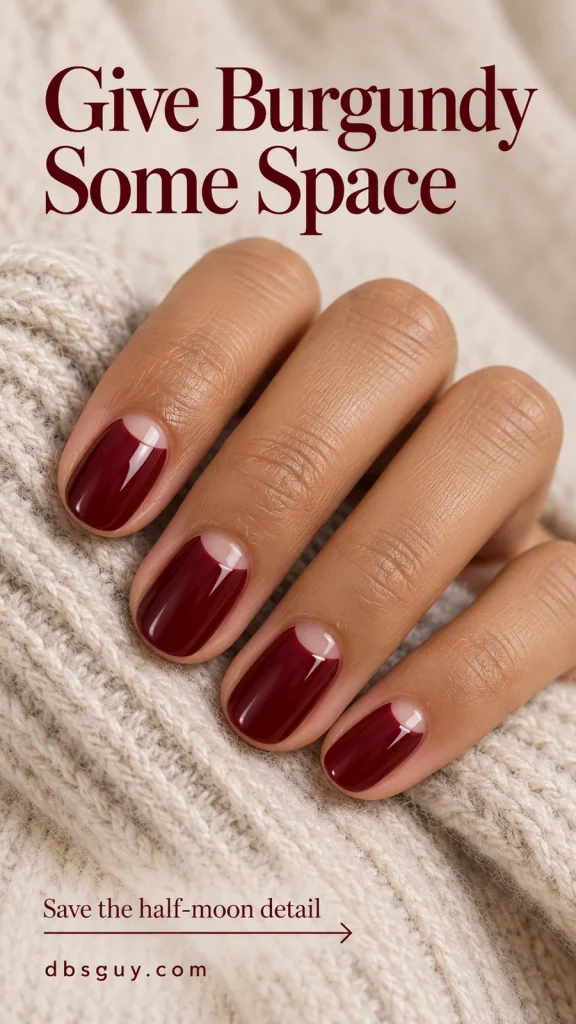
Make the salon brief clear about which part is bare: the little semicircle near the cuticle, not a red crescent painted onto a mostly sheer nail. Ask for the arcs to follow your nail shapes with a clean gap from the skin. Keep them modest; large half-moons would turn the reference into a much bolder color-blocked set.
10. Midnight Blue Aura
This blue aura is the option for when a new solid color still feels too familiar. The center glows cobalt while the edges remain midnight navy, creating a soft pool of color inside each nail. The transition should be blurred, with no crisp oval drawn around it.

Show your artist both the dark edge and the bright center you want to keep. If the blue fills the whole nail, you lose the framed effect; if it is reduced to a tiny dot, it becomes a different design. On short nails, use a smaller but still diffused center. Leave glitter, stars, and extra outlines off the brief so the gradient remains the focal point.
11. Espresso and Cream Polka Dots
Espresso makes a useful base when you want something dark but softer in color than black. Tiny cream dots add a playful change, especially if your usual manicure is a single neutral shade. Keep visible brown space between the dots so the pattern stays light.

This is one of the more approachable regular-polish ideas to try at home. Let the brown base dry according to the product directions, then practice the dot size on a spare tip before working on the nail. Use a small dotting tool and a light touch; a large bead of polish can make the dots crowded or raised. Short nails need fewer dots, not the same number squeezed closer together.
12. Blush Nails with Black Line Art
If you love sheer pink but are tired of how predictable it feels, add one loose black curve to each nail. The contrast is clear even with very little decoration. It gives an otherwise quiet manicure a slightly graphic edge.
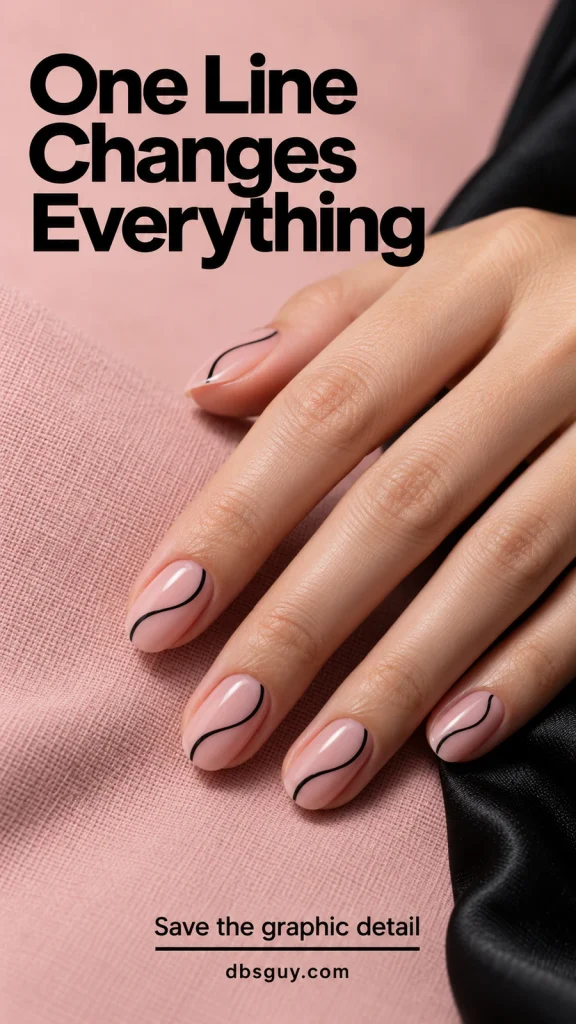
Request fine, flat linework with a gentle bend, leaving most of the blush background untouched. The lines do not need to trace an identical path on every finger. On short nails, an off-center curve has more breathing room than a little tangle of loops. A smooth black nail-art decal is an alternative if brush control is the obstacle at home; choose a design small enough to stay fully on the nail.
13. Mocha Checkerboard Accent
A checkerboard gives you a stronger geometric change than dots or a fine line. Keep most of the nails solid mocha and put cream-and-mocha squares on one accent nail. Repeating the same brown connects the accent to the rest of the set.

Ask for a handful of legible squares rather than a dense miniature grid. On a narrow nail, fewer columns will show the alternating colors more clearly. The reference uses a full accent nail, but you can borrow the pattern for a smaller panel if you prefer less coverage. For a home version, a fitted flat wrap is a practical alternative to trying to paint every square freehand.
14. Matte Forest with Glossy Tips
Keep the green and change its surface. A matte forest base beside a glossy tip in the same shade creates a subtle French manicure that becomes clearer under side light. There is no need for a second green or a glitter border.
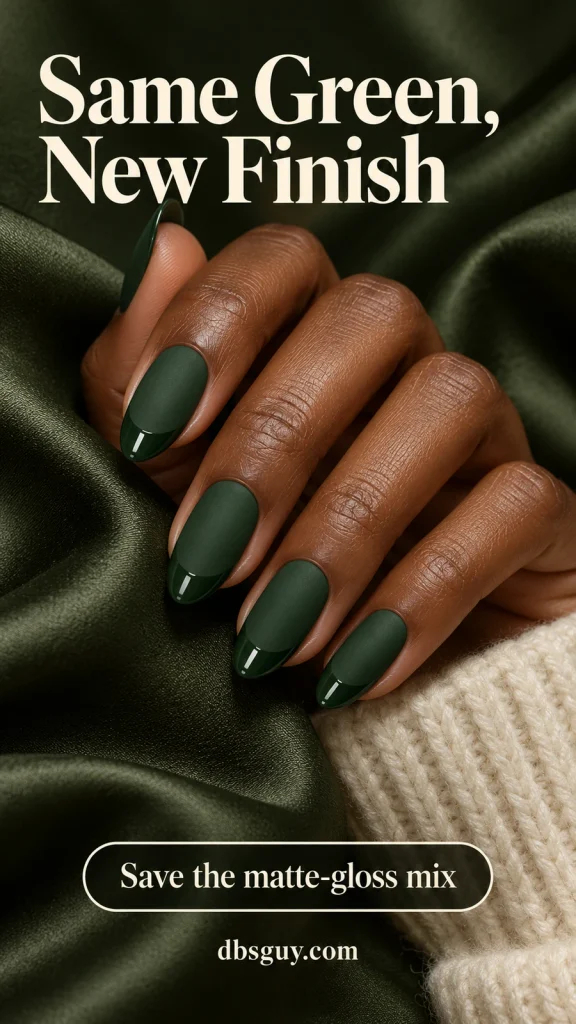
Ask to see the finish contrast on a sample, since it will be quieter in flat lighting than in a close-up photograph. Your technician can choose a compatible system that preserves the matte area while leaving the tip glossy. For a short version, keep the shiny band slim but visible. Adding a glossy top coat over the entire finished nail would remove the distinction you chose this look for.
15. Lavender-to-Milk Ombré
A muted lavender gradient gives pale nails more depth without turning them dark. The color starts near the base and fades toward milky ivory at the tip. It is a useful choice when you want a softer December manicure but are ready to leave plain pink behind.

Keep the blend gradual. A visible lavender band meeting a solid white tip would read as a French manicure instead. Almond nails give the transition more room, while short nails can use a lighter lavender and a less dramatic contrast. Ask your artist to preserve a trace of purple through the middle so the effect does not become mostly white.
16. Bronze Foil on Inky Black
Bronze foil offers a different kind of shine from a full glitter coat. Irregular fragments catch the light in a few places while glossy black remains visible around them. Keep the detail on the middle and ring nails and leave the others plain.

Request sparse, flat fragments concentrated toward one side, with separate patches of black between them. A thick metallic sheet covering the accent nail would lose the broken-up effect. The warm bronze is part of the choice: bright yellow gold or silver will change the palette. If you like this direction for a party, our New Year’s nail ideas offer more ways to choose where the shine goes.
17. One Navy Tartan Nail
A single tartan nail lets you borrow the feeling of a winter scarf without wearing a full set of plaid. Navy holds the manicure together; fine cream lines and a subdued red crossing line supply the pattern on the ring finger.

The scale matters more than the number of stripes. Ask for a few clear intersections and enough navy behind them, especially on a short nail. If every line has the same thickness, the pattern may look like a simple grid; a little variation gives it more of a woven appearance. A stamping design or fitted wrap can be an alternative to detailed freehand work, provided its pattern is not too large for your accent nail.
18. Muted Winter Skittle Nails
“Skittle nails” means using different colors across the set. Here, forest green, olive, taupe, dusty terracotta, and cream make a restrained winter palette. It is a noticeable change from one-color nails without needing brushes, decals, or detailed motifs.

Lay the five swatches side by side before painting. The reference works because the colors are muted, with a mix of dark, middle, and pale tones. A neon orange among them would become a separate focal point. Repeat the same finger order on both hands if you want the simplest plan. You can use regular polish for every color, keeping the same glossy finish to make the set feel connected.
19. Icy Blue Outline French
An outline French changes how much color you use. Fine icy-blue lines frame the tip, but the area between them stays sheer. That open space is what separates this look from a filled pastel-blue French manicure.
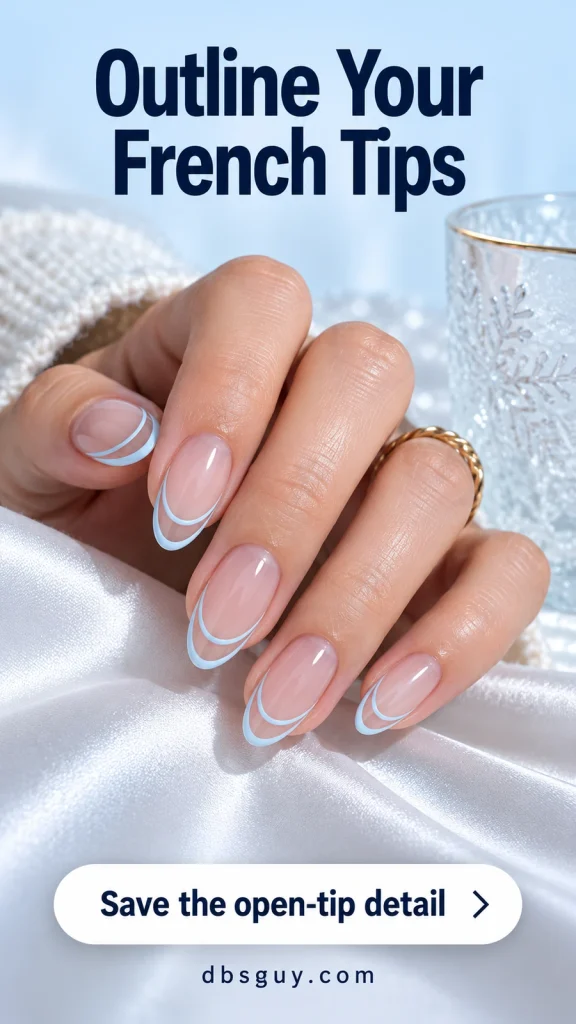
Show your technician the upper edge and the lower smile line, and explain that you want the middle left unfilled. The lines should remain distinct rather than merging into a thick band. Medium almond nails give the frame more room; on a very short free edge, ask whether the two lines will still be readable. If they cannot stay separate, the single silver corner in idea 6 may suit your available space better.
20. Silver Cuticle Cuffs
Move the shine from the tip to the base for a small but clear change. A fine silver cuff follows the lower curve of a sheer nail, leaving the rest of the surface open. Short ovals suit this placement because the arc has a soft outline to follow.
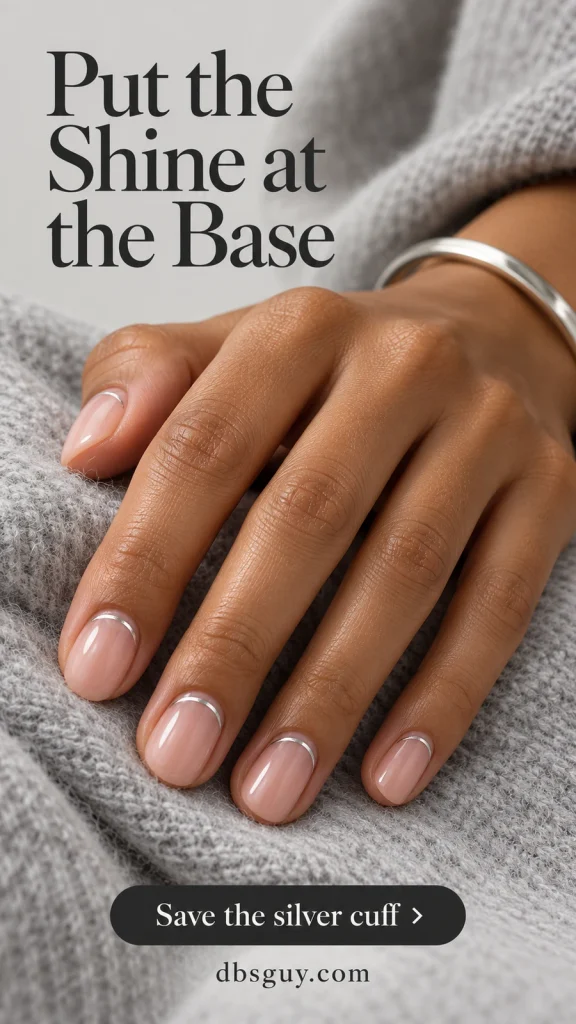
Ask for a painted metallic line on the nail plate with a visible gap from the skin. The detail should not sit on or cover the cuticle. Keep the cuff thin enough to look like an arc rather than a broad silver half-moon. If you normally wear a sheer manicure, this is a useful reference to bring alongside your usual base shade so you can keep the transparency you already like.
21. Black Cherry with a Gold Thread
This is the smallest change for the reader who still wants a dark red manicure. Use black cherry across the set, then put one fine gold line down the center of the ring nail. Keeping the other nails plain makes that single detail easier to see.
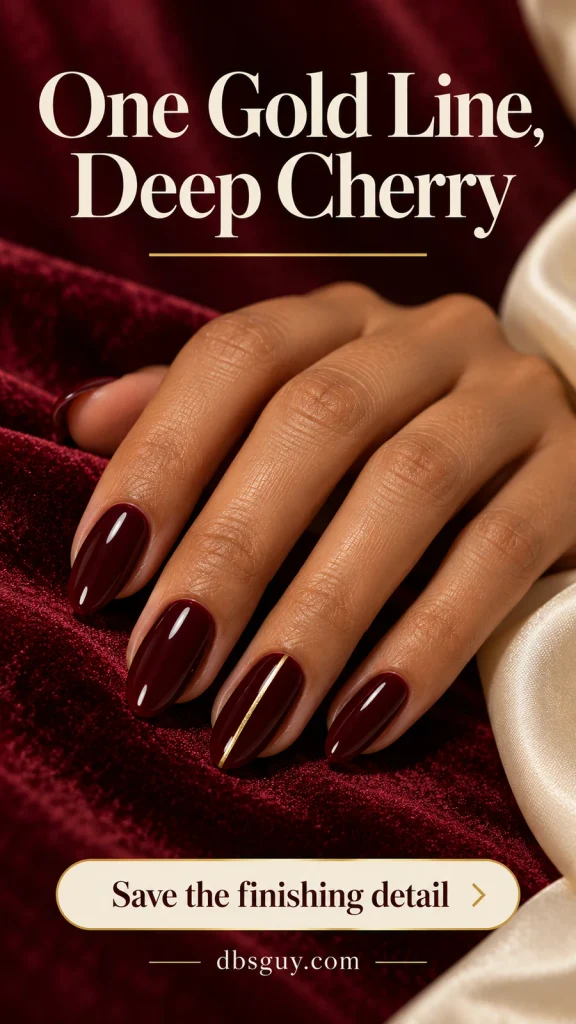
Specify a flat, narrow line from just above the cuticle toward the free edge, with the dark polish visible on both sides. A broad metallic strip would feel much bolder. The idea also works on a short oval; shorten the line to fit the nail rather than extending the nail for the decoration. Choose a visibly red-black swatch if you want the cherry tone to show in ordinary indoor light.
Make the Change Work on Your Own Nails
Save one reference, then name the feature you want to keep: the cobalt color, the open half-moon, the matte-and-gloss contrast, or the tiny checkerboard. Tell your artist your preferred length and shape separately. This makes it easier to adapt the design without treating the entire generated image as a promise of an identical result.
For regular polish at home, begin with solid color, a pearl finish, dots, or the five-color palette. Magnetic effects, layered marble, and fine outline work need the right products or technique; send those references when booking so the salon can confirm what it can create. Follow the instructions for the exact system you use rather than borrowing drying or curing steps from a different product.
If you decide you want a more literal winter theme after all, our winter nail designs with snowflakes, chrome, and cozy knits offer a different direction.
Questions Before You Switch Your Manicure
Which idea is the easiest change from a plain nude manicure?
Taupe side swoops, one black curve, and silver cuticle cuffs keep a sheer base visible. Pick the detail you want people to notice: a soft shape, a dark line, or a little metal. For the smallest first step, put the detail on one accent nail instead of the full set.
Can these December nail ideas work on short natural nails?
Yes—the color and placement ideas do not require extensions. Solid cobalt, pistachio pearl, half-moons, small dots, and cuticle cuffs are useful starting points. Simplify tartan and checkerboard patterns by using fewer lines or squares. Keep outline French tips for a shape with enough room to show both lines.
Do I need gel for these looks?
Many of the colors, dots, lines, and mixed-color ideas can be interpreted with regular polish. Magnetic velvet needs magnetic polish and its appropriate magnet; a reflective salon chrome effect differs from an ordinary metallic lacquer. The design name alone does not tell you which system is required, so ask the artist or check the product instructions.
Does “give your manicure a break” mean repairing damaged nails?
Here it means changing your usual style. If your nails are uncomfortable or damaged, decoration should wait while you address the problem. For everyday care, the American Academy of Dermatology’s healthy-nail guidance recommends leaving cuticles intact, moisturizing after handwashing, and wearing gloves for wet chores. Ask a dermatologist about nail pain, swelling, or concerning changes.
Choose one look that changes the part you are bored with and keeps the part you already enjoy. If that means your usual short nails with a new blue polish, that is enough. Save the reference with a note about your preferred length so it is useful when you are ready for the appointment.