Do you dream of harvesting fresh herbs while cooking dinner? Many homeowners face limited counter space, but Vertical/green wall kitchen garden ideas provide a smart solution. Use empty surfaces to transform a cramped room into a lush, productive oasis.

Whether you rent and need a non-permanent setup or own a home and want a permanent feature, a suitable method exists. Simple wall-mounted rails, fabric pockets, and sophisticated hydroponic towers support these indoor kitchen garden ideas for year-round growing. Crates, baskets, and decorative trellises can match your home’s aesthetic.
This guide explores creative ways to maximize your vertical garden kitchen. We examine sunny windows, compact corners, and stylish living displays that bring nature inside. Prepare to elevate your culinary space with functional, beautiful designs.
Key Takeaways
- Maximize small footprints by growing plants upward on walls.
- Choose between soil-based systems or modern hydroponic setups.
- Select appropriate lighting to ensure your herbs thrive indoors.
- Use renter-friendly options like suction cups or tension rods.
- Combine aesthetics with function for a beautiful culinary space.
How to Choose the Right Vertical/green Wall Kitchen Garden Ideas
A lush indoor garden begins with understanding your kitchen’s unique layout. Before choosing a style, assess your home so plants receive the care they need to flourish. Finding the perfect vertical/green wall kitchen garden ideas depends on available room and how you use your kitchen each day.

Match the Garden to Available Wall, Window, and Counter Space
Your architecture determines the best system for your home. Limited floor space favors wall-mounted rails or fabric pockets that maximize verticality. For deep windowsills, a tiered shelf system works well for small kitchen garden design.
Countertop towers suit renters who cannot drill into walls. Assessing your layout first helps prevent systems from cluttering prep areas or blocking essential light sources.
Consider Light Direction, Humidity, and Airflow
Plants depend on specific conditions to survive. South-facing windows provide intense light, ideal for sun-loving herbs like basil and rosemary. Check your kitchen’s humidity, because cooking steam may benefit tropical greens while harming others.
Good airflow prevents mold and keeps your green wall kitchen ideas healthy. Avoid placing your garden near cold drafts or intense heat sources like the stove.
Choose Herbs and Vegetables That Suit Indoor Growing
Not every plant thrives in containers. Focus on culinary herbs such as chives, parsley, and mint, which adapt well to indoor kitchen garden ideas. For vegetables, choose compact varieties like cherry tomatoes or dwarf peppers that do not require massive root systems.
Choosing suitable species helps your garden remain productive throughout the year. Always verify the light requirements of chosen plants before committing to a wall location.
Balance Function, Appearance, and Maintenance Time
A garden succeeds only when you have time to maintain it. Consider how often you will water, prune, and harvest your plants. A complex small kitchen garden design might look stunning, but it needs more attention than a simple rail system.
Prioritize green wall kitchen ideas that fit your lifestyle and cleaning habits. Balancing appearance with practical maintenance keeps your indoor garden a source of joy, not a chore.
Build a Wall-Mounted Rail Garden for Everyday Herbs
A wall-mounted rail system offers a sleek, modern way to keep favorite herbs within easy reach. This vertical herb garden suits busy cooks who need fresh ingredients without losing valuable counter space. By using vertical surfaces, you can transform a blank wall into a thriving culinary hub.

Use Metal Rails and Removable Pots for Flexible Placement
Metal rails create a sturdy foundation for your vertical garden design. Hooks slide along the rail, so you can adjust plant spacing as herbs grow. Removable pots let you carry individual herbs to the sink for watering or the stove for quick harvesting. This flexible system adapts to changing cooking needs.
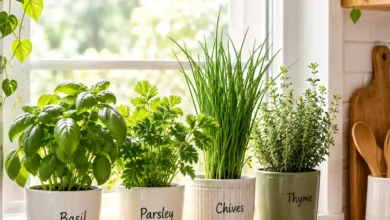
Group Basil, Parsley, Chives, and Mint by Water Needs
Indoor gardening often succeeds when plants with similar needs share a space. Basil and parsley thrive with consistent moisture, making them suitable neighbors on your rail. Chives and mint also enjoy regular hydration, so grouping them simplifies maintenance. Consistency is key when managing thirsty culinary staples in a compact space.
Prevent Drips With Trays and Waterproof Wall Protection
Protecting kitchen surfaces is essential when growing plants indoors. Install a small drip tray beneath each pot to catch excess water after watering. For added security, apply clear, waterproof adhesive film or a decorative backsplash panel behind the rail. This protects walls from moisture while preserving a clean, professional appearance.
Style the Rail System as Practical Kitchen Garden Decor
Your rail system functions as both a practical tool and an attractive piece of kitchen garden decor. Choose matching stainless steel or matte black pots for a cohesive look that complements existing appliances. You can hang small, labeled tags on each pot to add a charming, rustic touch.
| Herb Variety | Watering Needs | Sunlight Preference |
|---|---|---|
| Basil | High | Bright Direct |
| Parsley | Moderate | Partial Shade |
| Chives | Moderate | Bright Indirect |
| Mint | High | Partial Shade |
By combining these elements, you create a vertical garden design that is both beautiful and useful. This arrangement keeps your kitchen organized and helps herbs remain healthy throughout the year.
Use Fabric Pocket Planters for a Small Kitchen Garden Design
A small kitchen garden design must use each inch with care. When floor and counter space are limited, vertical fabric pockets offer an efficient way to grow food. These light systems turn bare walls into productive, living displays.

Select Breathable Pockets With Strong Wall Support
Choose high-quality, breathable fabric pockets so roots receive adequate oxygen. Strong wall support is essential because wet soil and plants can become quite heavy. Ensure mounting hardware can support the garden’s total saturated weight and prevent accidents.
Plant Shallow-Rooted Greens and Compact Culinary Herbs
Choose varieties that thrive in limited soil volume, keeping your diy kitchen garden healthy. Shallow-rooted greens, including arugula, spinach, and loose-leaf lettuce, suit these pockets. Add compact culinary herbs, such as chives, thyme, and cilantro, for quick access while cooking.
Arrange Pockets for Easy Harvesting and Even Light
Place pockets at a comfortable height for simple harvesting. Be sure to arrange the layout so every plant receives consistent light throughout the day. Keep the unit out of deep shadows; limited light can stunt growth and reduce overall yield.
Manage Drainage, Spills, and Fabric Moisture Indoors
Indoor gardening demands careful moisture control to protect walls and floors. Use a waterproof backing or drip tray beneath the lowest pocket row to catch excess water. Check the fabric regularly for dampness, and give your diy kitchen garden enough airflow to prevent mold or mildew.
Train Edible Plants on a Trellis for a Decorative Green Wall
Turn empty wall space into a productive feature with a decorative trellis for favorite edible vines. This is one of the most creative indoor green wall ideas for homeowners seeking a larger harvest within a small footprint. With the right structure, you create living art that supports daily cooking.

Choose Climbing Crops Such as Peas, Cucumbers, and Nasturtiums
Choosing suitable plants is essential for a successful vertical display. Peas and cucumbers naturally seek support, while nasturtiums add a vibrant splash of color and edible flowers to your kitchen garden decor. These fast-growing plants produce lush foliage that covers the trellis beautifully.
Install a Trellis Away From Cabinets and Cooking Heat
Proper placement keeps plants healthy and preserves kitchen function. Mount the trellis where natural light is adequate, but keep it away from direct heat from stoves or ovens. Distance from cabinets allows for better airflow and protects woodwork from moisture.
Guide Stems With Soft Ties Without Restricting Growth
As vines climb, they may need guidance to remain on course. Use soft, flexible garden ties to secure stems gently against the trellis frame. This method provides necessary support without pinching delicate vines, helping them grow strong and healthy as they reach toward the light.
Combine Edible Vines With Colorful Kitchen Garden Decor
Integrating the trellis with your kitchen style makes the garden feel like an intentional design choice. Hang small decorative pots or add colorful accents that complement your kitchen garden decor. Thoughtful accessories balance the greenery, creating a stunning focal point that enhances your home’s aesthetic and supplies fresh ingredients for meals.
Create a Sunny Windowsill Herb Ladder
Transform your kitchen window into a lush, productive oasis with a simple herb ladder. This clever setup grows fresh ingredients without using valuable counter space. Using the window frame’s vertical height creates a thriving vertical herb garden that adds life and color to your home.

Stack Narrow Shelves Without Blocking the Window
The key to a successful ladder setup is slim, tiered shelving that fits snugly inside the window frame. These shelves increase planting capacity while allowing plenty of natural light to enter your kitchen. Narrow shelves preserve your view and keep the workspace bright.
Place Rosemary, Thyme, Oregano, and Sage in Brightest Spots
Sun-loving Mediterranean herbs thrive with direct light for most of the day. Place your rosemary, thyme, oregano, and sage on the top tiers, where sunlight is strongest. These hardy plants reward careful placement with robust growth and intense flavor, making them ideal for an indoor setup.
Rotate Containers to Encourage Balanced Growth
Plants naturally lean toward light, which can produce lopsided stems over time. Rotate your pots every few days so each side receives equal sun and maintains healthy growth. This simple habit supports a beautiful vertical garden design that looks appealing from every angle.
Use Matching Pots to Create a Cohesive Vertical Garden Design
Uniform containers can elevate your kitchen garden decor with little effort. Matching pots create a clean, professional look and turn your functional herb collection into a stylish focal point. Whether you choose sleek ceramic or rustic terracotta, consistency creates a polished, intentional aesthetic.
Turn a Pegboard Into a Custom Vertical Garden Kitchen
Transforming a plain wall into a functional diy kitchen garden requires only a simple pegboard. This modular design offers unusual flexibility, so your indoor greenery can evolve with your culinary habits. Its grid system creates a dynamic display that changes when you replace plants or reorganize the space.

Customize Hooks, Shelves, and Containers as Plants Change
A pegboard adapts easily as your needs change. Move hooks, small shelves, and lightweight containers to suit different plant sizes and growth stages. This flexibility makes it one of the most practical Vertical/green wall kitchen garden ideas for busy home cooks.
Reserve Lower Sections for Frequently Harvested Herbs
Efficiency matters when you prepare a meal. Place frequently used herbs, such as basil or cilantro, in the board’s lower sections. This keeps your favorite ingredients within easy reach during food preparation.
“The secret to a successful indoor garden is placing your plants where they are both happy and accessible.”
Add Labels, Small Tools, and Seed Storage Without Clutter
Keep your vertical garden kitchen tidy with dedicated spaces for essential gardening supplies. Use small hanging baskets for seed packets, snips, and plant markers. Clear labels on pots look professional and help track your growing progress without visual clutter.
Protect the Pegboard From Water and Soil Damage
Protect the pegboard from moisture to keep your setup durable. Always use pots with saucers or liners to catch excess water before it reaches the surface. Applying waterproof sealant to the pegboard adds defense against soil spills and humidity.
Try a Compact Hydroponic Wall for Year-Round Greens
Fresh greens can grow year-round on a hydroponic wall at home. These systems create a lush, productive space without traditional soil’s mess. Using these indoor kitchen garden ideas, you can maintain fresh ingredients in every season.

Grow Lettuce, Arugula, Basil, and Other Fast-Harvesting Plants
Hydroponic setups suit plants that grow quickly in water-based environments. You can harvest crisp lettuce, peppery arugula, and fragrant basil within a few weeks. These fast-harvesting crops help beginners see immediate rewards from their efforts.
Compare Recirculating Systems With Passive Hydroponic Containers
Before choosing a setup, compare active and passive methods. Recirculating systems pump nutrient-rich water through the roots, often producing faster growth. Passive containers use wicking or simple submersion, so they remain quieter and easier to maintain in small spaces.
| Feature | Recirculating System | Passive Container |
|---|---|---|
| Growth Speed | High | Moderate |
| Maintenance | Requires Pump Care | Low Effort |
| Noise Level | Low Hum | Silent |
| Space Needs | Medium | Compact |
Plan for Grow Lights, Reservoir Access, and Electrical Safety
Successful indoor green wall ideas depend on careful kitchen-layout planning. Place the wall near a power outlet for LED grow lights and water pumps. Keep the reservoir accessible for easy refills, and protect electrical safety by keeping cords away from water splashes.
Monitor Nutrients, Water Levels, Roots, and Algae
Consistency keeps a hydroponic garden healthy. Check water levels weekly and monitor nutrient concentrations to prevent deficiencies. Inspect root health and watch for algae, which you can control by keeping the reservoir dark and clean.
Repurpose Wood Crates for a Rustic DIY Kitchen Garden
Create a unique diy kitchen garden by giving reclaimed wood crates a second life. These versatile containers add farmhouse warmth while providing space for your favorite herbs. Stack them to maximize available space and keep fresh ingredients within reach.

Prepare Reclaimed Crates for Safe Indoor Planting
Before planting, prepare the crates carefully for safe indoor use. Clean the wood thoroughly to remove dust and debris. If the surface feels rough, sand it lightly to prevent splinters and create a smoother finish.
Apply a food-safe sealant to the crate’s interior. This coating protects the wood from moisture damage and helps prevent rot. These precautions keep your project beautiful and functional for years.
Line Containers and Add Drainage Before Filling With Soil
Wooden crates are not naturally waterproof, so line them before adding soil. Use a heavy-duty plastic liner or specialized pond liner to contain water. Follow these steps for a successful setup:
- Cut the liner to fit the interior, leaving a small overlap at the top.
- Poke several holes in the bottom of the liner to allow for proper drainage.
- Add small pebbles or expanded clay at the base to prevent water from pooling around the roots.
Arrange Crates in Staggered Rows for Better Sun Exposure
A vertical garden design works best when every plant receives enough light. Arrange crates in staggered rows to prevent upper containers from casting deep shadows below. This layout suits a small kitchen garden design with limited space.
Place the tallest plants in the back or upper crates, so they cannot block sunlight from smaller herbs. This tiered arrangement creates a dynamic, living look in your kitchen. Strategic placement is the secret to a thriving indoor harvest.
Pair Natural Wood With Ceramic Pots and Kitchen Accessories
For a cohesive look, pair the wood’s raw texture with contrasting materials. Place ceramic pots inside or beside the crates for modern elegance. Hang small kitchen tools or copper measuring cups from the crate sides to combine utility with style.
This texture blend creates a professional vertical garden design with an intentional, curated feel. Bright white ceramics or colorful glazed pots will make the natural wood highlight your plants. Style the garden to complement your personal kitchen decor.
Make a Countertop Vertical Herb Garden for Renters
Refresh your kitchen prep area with a space-saving garden that needs no permanent installation. Many indoor kitchen garden ideas challenge renters because they require drilling into walls or cabinets. Fortunately, you can create a lush display without risking your security deposit.

Choose Freestanding Towers That Do Not Require Wall Drilling
Freestanding towers offer a flexible setup for renters. These units stand firmly on counters and provide several plant levels without hardware. A vertical structure uses limited surface area while keeping walls pristine.
Keep Cooking Herbs Within Easy Reach of the Prep Area
Efficiency matters when you are preparing dinner. Place your vertical herb garden beside the cutting board, so fresh basil or cilantro stays seconds away. This practical approach to a small kitchen garden design can make each meal feel gourmet.
Use Lightweight Pots With Built-In Drainage Control
Choose containers that are easy to handle and control water effectively. Lightweight plastic or resin pots suit a vertical garden kitchen because they add little weight to the tower. Ensure the pots include built-in drainage trays to keep water from spilling onto your countertops.
Move the Garden Easily When Cleaning or Rearranging the Kitchen
One major benefit of a portable garden is moving it whenever necessary. During deep cleaning or a refresh of your small kitchen garden design, a freestanding unit moves in seconds. This adaptability makes it one of the most convenient indoor kitchen garden ideas for apartment dwellers. It can support a vertical garden kitchen or a simple vertical herb garden.
Hang a Tiered Basket Garden Near a Bright Kitchen Window
For an airy vertical solution, consider a tiered basket garden. It uses space near a bright kitchen window without covering valuable counter surfaces. This design brings green wall kitchen ideas into a smaller home.

Select Secure Hooks and Weight-Rated Hanging Hardware
Safety matters most when you suspend plants from a ceiling or window frame. Choose heavy-duty hooks and hardware rated for the combined weight of pots, soil, and water. Incorrect hardware may cause accidents, so inspect ceiling joists or window headers for secure mounting points.
“The beauty of a vertical garden lies in its ability to transform a plain window into a living, breathing piece of art that serves a culinary purpose.”
Grow Trailing Herbs and Compact Salad Greens in Separate Tiers
To keep the garden productive, arrange plants according to their growth habits. Place trailing herbs, such as mint or creeping thyme, in lower tiers where they can cascade freely. Reserve upper, accessible tiers for compact salad greens or upright culinary herbs like chives.
- Top Tier: Best for upright herbs that need maximum light.
- Middle Tier: Ideal for leafy greens that prefer consistent moisture.
- Bottom Tier: Perfect for trailing varieties that add visual depth.
Keep Hanging Baskets Clear of Doors, Lights, and Cooking Areas
Placement affects plant health and kitchen function. Keep baskets well away from busy doorways and overhead lighting fixtures. Most importantly, place them clear of cooking areas to prevent heat damage and grease buildup on foliage.
Coordinate Basket Materials With Existing Green Wall Kitchen Ideas
Your basket material becomes a key part of your overall kitchen garden decor. Whether you choose rustic woven seagrass, modern metal wire, or sleek ceramic, match the material to your design theme. Materials that complement your other green wall kitchen ideas create a cohesive, professional look throughout the room.
Design a Living Herb Wall as a Kitchen Focal Point
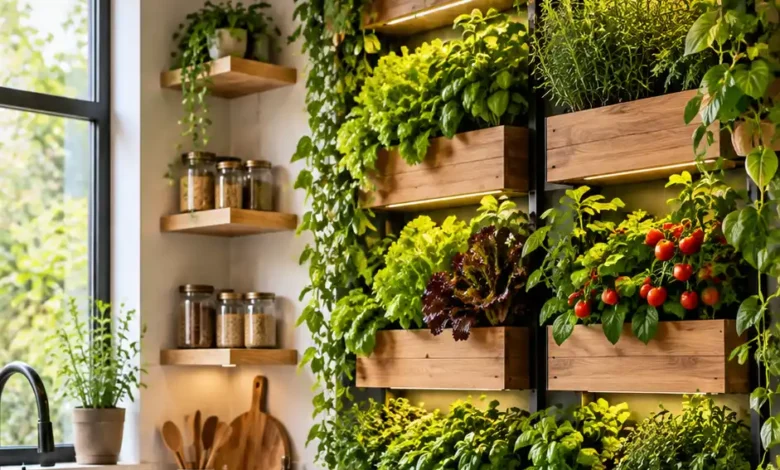
A living herb wall combines a useful garden with natural art, creating a striking focal point in your home. By incorporating vertical/green wall kitchen garden ideas, you transform an empty wall into a vibrant, productive space. This design brings life to your kitchen and keeps fresh ingredients within arm’s reach.

Choose a Modular Living Wall System for Easier Maintenance
Choose a modular system to simplify management of your vertical herb garden. These kits often contain individual, removable pots or pockets, making watering and plant care much easier. You can replace plants without disturbing the structure, keeping your green wall kitchen ideas fresh and healthy year-round.
Layer Foliage, Texture, and Herb Height for Visual Interest
Create a professional display by varying plant forms and textures. Pair trailing herbs with upright varieties to give the arrangement depth and dimension. Different leaf shapes and green shades make your indoor green wall ideas appear lush and intentional, not cluttered.
Use Rosemary, Lemon Thyme, Basil, and Cilantro Strategically
Placement determines whether your garden thrives. Place sun-loving herbs, including rosemary and lemon thyme, at the wall’s top, where they receive the most light. Place basil and cilantro in middle or lower sections because they often prefer more moisture and tolerate partial shade from taller plants.
Protect Cabinets, Flooring, and Walls From Moisture
Water management is essential when installing a garden on a vertical surface. Use waterproof backing or a dedicated drip tray system to catch excess water before it reaches walls or cabinets. Protecting your surfaces prevents long-term damage and keeps your kitchen pristine.
Know When a Living Wall Needs Pruning, Replanting, or Relocation
Regular maintenance keeps your wall looking its best. Prune herbs often to encourage bushy, healthy growth and prevent leggy stems. If a plant stops thriving or outgrows its space, replant it or move the entire system to a spot with better light.
Keep Indoor Green Wall Ideas Healthy, Attractive, and Productive
Keeping your indoor green wall ideas vibrant and productive requires consistent care. This routine keeps plants lush and ready for your next culinary creation.

Set a Watering Routine Based on Soil Moisture Rather Than a Calendar
Many gardeners make the mistake of following a strict watering schedule. Instead, check the soil moisture by inserting your finger about an inch deep into the potting mix. If the mix feels dry, hydrate your plants.
Prune Herbs Regularly to Encourage Bushier Growth
Regular pruning promotes a fuller, healthier garden. Pinch off the top sets of leaves to encourage outward growth instead of upward growth. This simple habit keeps your Vertical/green wall kitchen garden ideas looking dense and professional.
Identify Common Indoor Pests and Treat Them With Food-Safe Methods
Even indoor gardens can attract pests such as aphids or spider mites. If you spot tiny webs or sticky residue, act quickly to protect your harvest. Use organic solutions such as neem oil or mild dish soap mixed with water to keep plants safe for consumption.
Feed Container Plants Without Creating Fertilizer Buildup
Container plants need nutrients, but excess fertilizer can create salt buildup in the soil. Dilute liquid fertilizer to half-strength to prevent root burn. Flush the soil with plain water once a month to remove excess minerals.
Clean Leaves, Pots, Trays, and Nearby Surfaces
Dust can block sunlight and attract pests, so occasionally wipe leaves with a damp cloth. Clean pots and trays to prevent mold and keep your kitchen space tidy. This clean environment supports successful Vertical/green wall kitchen garden ideas.
Use Supplemental Lighting During Short Winter Days
During darker months, plants may struggle to receive enough energy. Supplemental LED grow lights can bridge this gap, helping plants continue to thrive. These compact lights integrate easily with most indoor green wall ideas.
Harvest Correctly So Plants Continue Producing
Always harvest from the outside inward, taking older, larger leaves first. Remove no more than one-third of the plant at once, allowing the herb to recover quickly. Proper harvesting keeps your garden a reliable source of fresh ingredients all year long.
Conclusion
Creating a lush, productive space at home is easier than you may imagine. The right Vertical/green wall kitchen garden ideas can transform empty walls or sunny windows into vibrant sources of fresh flavor.
Success begins by matching your environment with the proper setup. Assess available light, humidity levels, and the time you can devote to maintenance. Whether you choose a simple rail system, modular living wall, or compact hydroponic unit, let your cooking habits guide the decision.
A well-planned vertical garden kitchen brings nature indoors while preserving valuable counter space. These systems provide more than fresh basil or rosemary for recipes. They also become living art, improve air quality, and add a refreshing aesthetic to daily routines.
If indoor gardening is new to you, start small. Expand your collection as your confidence with plants grows. Embrace growing your own food and enjoy harvesting ingredients just steps from your stove. Your dream vertical garden kitchen can grow whenever you are ready.
FAQ
What is the best vertical garden kitchen setup for a small apartment or a rental home?
Renters with limited square footage need a small kitchen garden design without permanent installation. Consider a freestanding AeroGarden Harvest for your countertop or an IKEA SUNNERSTA rail system with minimal impact. These options provide a vertical herb garden without major renovations.
How do I know if my kitchen has enough light for indoor kitchen garden ideas?
Most culinary herbs, especially Mediterranean varieties like rosemary and thyme, require at least six hours of bright sunlight. If your kitchen lacks a south-facing window, supplemental lighting can support successful indoor green wall ideas. Brands like GE and Soltech Solutions offer stylish LED grow lights that blend with kitchen garden decor and provide the spectrum plants need.
Can I create a DIY kitchen garden using recycled materials?
Absolutely! A diy kitchen garden adds character to your home. You can repurpose old wooden crates or pallets into a rustic vertical garden design. Line the wood with plastic or apply waterproof sealant to prevent rot. Use high-quality potting soil from a trusted brand like Miracle-Gro Performance Organics to give your herbs the best start.
How do I prevent water from damaging my walls in a vertical herb garden?
Protecting your surfaces is crucial when using green wall kitchen ideas. Always choose planters with built-in reservoirs or drip trays. For fabric systems, the WallyGro Eco Wall Planter is popular with professional designers. Its clever “leak-proof” design directs water to the roots while keeping the planter’s back dry against your wall.
Which plants are easiest to grow in a vertical garden design?
For beginners, leafy greens and soft-stemmed herbs are the most forgiving. Basil, mint, cilantro, and chives thrive in a vertical garden kitchen environment. You can train climbing edible plants like Burpee’s Nasturtiums or snap peas up a trellis. They create a stunning and productive indoor green wall.
Is a hydroponic system better than soil for a kitchen garden?
It depends on your maintenance style! A hydroponic vertical garden design, such as the Rise Gardens Personal Garden, supports year-round, soil-free growth and often produces faster harvests. However, soil-based diy kitchen garden setups usually cost less initially and offer flexibility. They work well if you frequently swap different plants and pots.
How can I integrate my garden into my existing kitchen garden decor?
Consistency is the secret to a professional look. Choose containers that match your kitchen’s hardware or color palette. For a modern vertical garden kitchen, sleek matte black or white pots from West Elm work beautifully. For traditional spaces, classic terracotta pots on a copper rail can make your vertical herb garden a warm, inviting focal point.
What should I do to keep my indoor kitchen garden ideas productive during the winter?
During winter, plants often struggle with dry air and shorter days. Increase humidity around your small kitchen garden design by misting plants or using a small humidifier. Also, harvest correctly by trimming from the top. This encourages “bushy” growth instead of “leggy” plants reaching for limited winter light.