Smartphones Killed The Gadget Drawer—Now People Want It Back: 25 Pieces Of “Dumb Tech” That Suddenly Make Sense Again

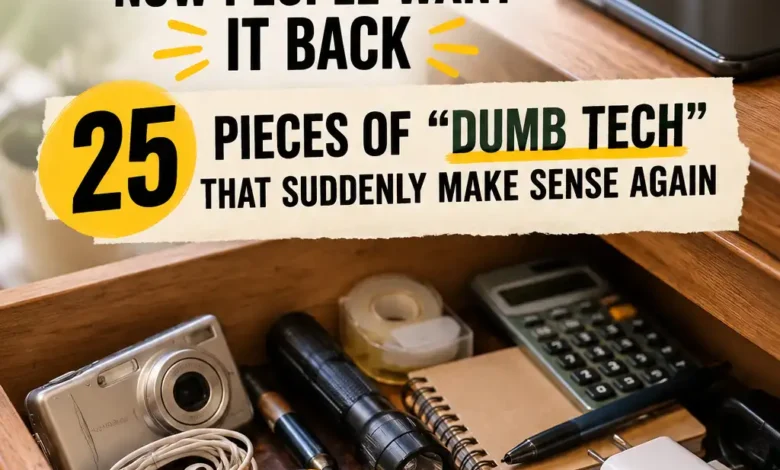
We spent years celebrating the fact that one glass rectangle could replace the camera, music player, map, alarm clock, radio, recorder, calculator and half the junk drawer. Now some people are voluntarily buying the junk drawer back.
The smartphone won for a very good reason.
It is absurdly convenient.
One device takes photos, plays music, gives directions, wakes you up, stores tickets, translates menus, records audio, streams movies, handles banking, calls a car, scans documents and tells you whether the actor in the movie really is the guy from that other thing.
That consolidation felt like progress because, in many ways, it was.
But the phone did not simply absorb gadgets.
It also absorbed their moments.
Listening to an album became something you could interrupt with a message.
Taking a photograph became something you could interrupt by checking the photograph, editing the photograph, posting the photograph and then checking who liked the photograph.
Using an alarm clock became waking up beside the same device that contains your inbox, news, social feeds and every argument currently happening on Earth.
So a strange counter-movement has appeared: people are deliberately adding separate objects back into their lives.
Not because the old technology is objectively better at everything.
Often it is worse.
That is part of the point.
A compact camera that cannot order dinner is excellent at not ordering dinner.
A music player that cannot display notifications has no choice but to remain a music player.
A wired pair of headphones cannot run out of Bluetooth.
An alarm clock has never once asked whether you would like to watch one more short video before sleeping.
The trend is measurable in several categories. Camera-industry shipment data have documented renewed strength in fixed-lens compact cameras. Circana has reported a rebound in wired-headphone revenue after years of decline. RIAA reporting has shown fresh growth in physical music formats even while streaming remains dominant. Marketplace search data have shown renewed interest in retired MP3 players. Fujifilm continues to report strong demand for instant-photo products. CIPA camera statistics; Circana; Reuters/RIAA; Axios; Fujifilm.
Still, this needs a reality check.
This is not a mass abandonment of smartphones.
Even people inside dumbphone communities regularly point out that modern life assumes access to maps, messaging apps, authentication, banking, QR codes, rideshare services and other smartphone-dependent systems. Their own recurring advice is basically: there is no perfect dumbphone; you choose your compromises. r/dumbphones community guide.
And that is what makes the revival interesting.
The goal is often not to go backward.
It is to ask a question we stopped asking when the smartphone swallowed everything:
Would this task feel better if the device doing it could not also do 900 other things?
A note on “dumb tech”: I am using the phrase loosely here. Some devices below contain sophisticated electronics, software, wireless radios or internet access. What connects them is narrower purpose: they do one job—or a small cluster of related jobs—without trying to become your entire digital life. Also, old hardware has real downsides: aging batteries, obsolete networks, unsupported storage formats, missing chargers and poor security. Nostalgia is not a warranty.
Here are 25 gadgets that explain why the drawer is opening again.
1. The Dumbphone: A Phone That Refuses To Become Your Day
A dumbphone sounds like a downgrade until you list what the downgrade removes.
Infinite scroll.
Push notifications from fifteen apps.
News before breakfast.
A camera roll you check while standing inside the event you are supposedly photographing.
The simplest feature phones focus on calls and texts. More modern “minimal” phones may add maps, hotspot functions, music or selected messaging without offering a full app-store buffet.
The attraction is not primitive technology for its own sake. It is a physical boundary.
If the device cannot install the social app, willpower does not have to renegotiate the decision forty times a day.
But dumbphone enthusiasts are unusually honest about the tradeoff. Depending on where you live, an older handset may not support current cellular networks. Messaging standards can be messy. Work may require authentication apps. Friends may organize everything through internet messaging. Banking, transport and tickets can assume a smartphone exists.
For many people, the realistic version is not “throw away the smartphone.”
It is “use a simpler phone on weekends, evenings or nights out.”
Why it makes sense: distraction is constrained by hardware, not just settings.
Best for: people willing to tolerate inconvenience in exchange for boundaries.
Reality check: verify network bands, messaging compatibility and essential apps before buying old hardware.

2. The Home Phone: Calling Without Holding The Entire Internet
Landline-style phones are interesting because they separate one of the smartphone’s oldest functions from all the newer ones.
You pick up the handset.
You call.
You talk.
You put it down.
No one accidentally checks email halfway through because email is not hiding behind the dial pad.
Some modern “home phones” are not traditional copper landlines at all. They use internet calling, Wi-Fi, cellular service or Bluetooth to route calls through another device. That makes the retro shape compatible with modern infrastructure—but it also means the old promise that “the landline works when the power is out” does not automatically apply.
That distinction matters.
The interesting use case is social, not technological purity: a shared household phone can give children, roommates or families a way to make voice calls without handing over a full smartphone.
Why it makes sense: calls become a dedicated activity instead of one app among dozens.
Best for: households that want voice access without another personal screen.
Reality check: modern VoIP/Bluetooth home phones may still depend on power, internet or a smartphone connection.

3. Wired Headphones: The Accessory That Never Learned To Pair
Wireless headphones are wonderfully convenient right up until one side is at 4%, the case is missing, the wrong device connects, or the Bluetooth menu decides you need character-building.
Wired headphones solve those problems with an almost insulting amount of simplicity.
Plug in.
Audio happens.
Market-research firm Circana has documented a recent revenue rebound in wired headphones after years of decline. Price is part of the appeal: simple wired models can cost far less than premium wireless ones. Fashion is part of it too; visible cords have returned as a deliberate Y2K-era styling cue.
There are technical advantages in some contexts as well. Wired audio can avoid Bluetooth latency and does not require a battery in the headphones themselves.
But “wired is always higher quality” is too simplistic. Excellent wireless headphones exist, terrible wired headphones exist, and modern phones often require an adapter because the headphone jack itself was one of the smartphone’s casualties.
Why it makes sense: no pairing, no headphone battery, low latency and often lower cost.
Best for: desks, gaming, travel and people tired of charging another object.
Reality check: check whether your device needs a USB-C/Lightning adapter or DAC.

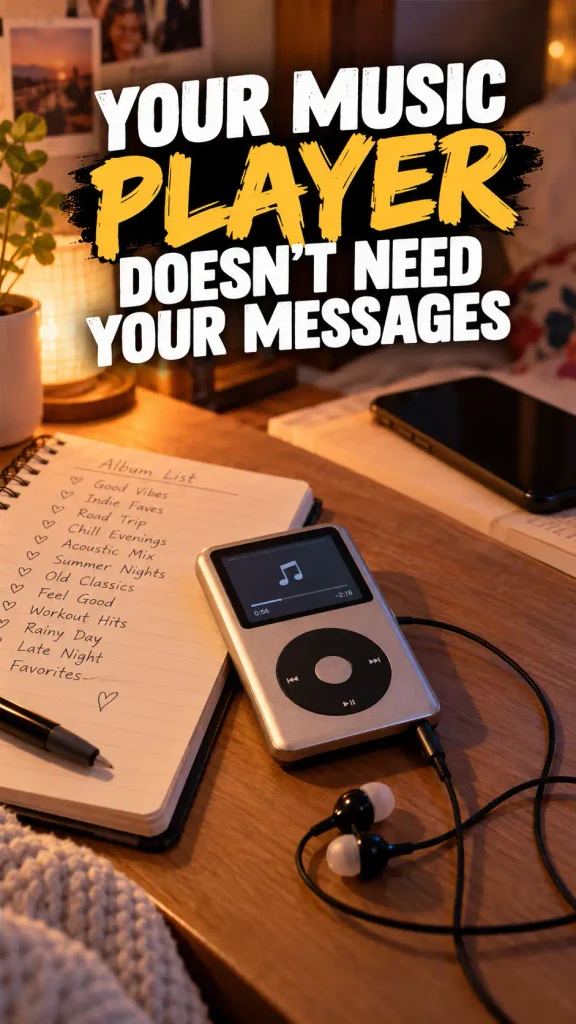
4. The MP3 Player: Music Without The Rest Of Your Phone
The old MP3 player has one feature that now feels almost exotic:
Nothing happens when a message arrives.
Because the message arrives somewhere else.
Marketplace search data have shown renewed interest in old iPod models, while online communities now restore aging players with fresh batteries, storage upgrades and modernized parts.
The appeal goes beyond nostalgia.
A local music library changes the listening relationship. You decide what files live on the device. There may be no algorithmic home page trying to predict your next mood. There may be no cellular connection at all.
The downside is equally obvious.
You manage the files.
You organize the library.
You obtain the music legally.
You remember how metadata works.
Convenience did not become popular by accident.
But for some listeners, the tiny amount of friction is the feature because it turns music back into something they intentionally chose before pressing play.
Why it makes sense: local music + no social notifications + predictable offline access.
Best for: focused listening, workouts and trips where streaming is unnecessary.
Reality check: old players may need new batteries, adapters, storage work or legacy syncing software.
5. CDs: The Album You Can Hold, Lend And Keep On A Shelf
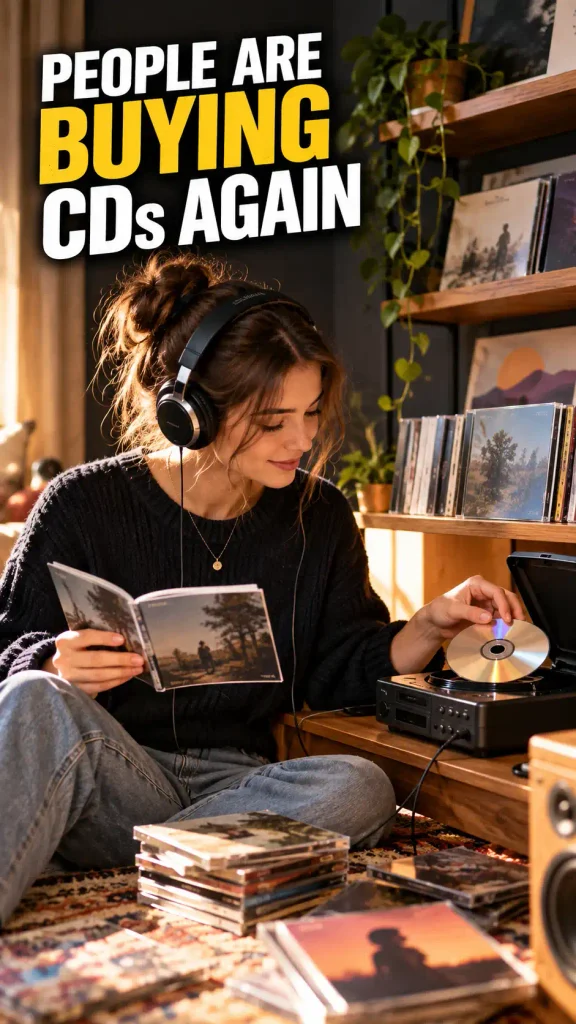
Streaming won the music war so decisively that the CD’s renewed growth feels almost rude.
RIAA reporting has documented a fresh jump in U.S. CD revenue alongside continued vinyl growth, even though streaming still accounts for the overwhelming majority of recorded-music revenue.
That second fact is important.
CDs are not replacing streaming.
They are offering something streaming cannot reproduce exactly: a physical copy, packaging, artwork, liner notes, a track list that does not change when a license changes, and the ability to hand the album to someone else.
The U.S. Federal Trade Commission has warned consumers that clicking “buy” on digital media may sometimes purchase only a license whose continued availability depends on platform terms. Physical media is different in a very basic way: if you possess the disc, the disc does not need your account password to remain on the shelf. FTC Consumer Advice.
Of course, discs scratch. Drives fail. Some new computers have no optical drive at all.
Ownership has maintenance costs too.
Why it makes sense: tangible ownership, album art, lending and offline playback.
Best for: favorite albums rather than every song you casually stream.
Reality check: you need a working CD drive/player, and physical storage is real storage.
6. The Record Player: Inconvenience As A Listening Ritual
Vinyl has been back long enough that calling it a comeback now feels like calling sourdough a temporary bread trend.
The attraction is partly sound, but arguments about “vinyl sounds better” quickly become complicated by mastering, equipment, pressing quality, cartridges and personal preference.
The more universal difference is behavioral.
A record asks you to choose one object, remove it from the sleeve, put it on the turntable and eventually stand up to flip it.
Those are inefficiencies.
They are also a ritual.
Streaming is excellent at removing friction. Vinyl makes friction visible enough that listening can become the thing you are doing rather than the soundtrack to seven other things.
The downside: records cost money, take up space, require care and are not automatically environmentally virtuous just because they are physical.
Why it makes sense: deliberate album listening and tactile ownership.
Best for: music you care enough about to give shelf space.
Reality check: avoid romantic claims that every vinyl pressing automatically sounds superior.

7. Cassette Players: Worse Specs, Better Personality
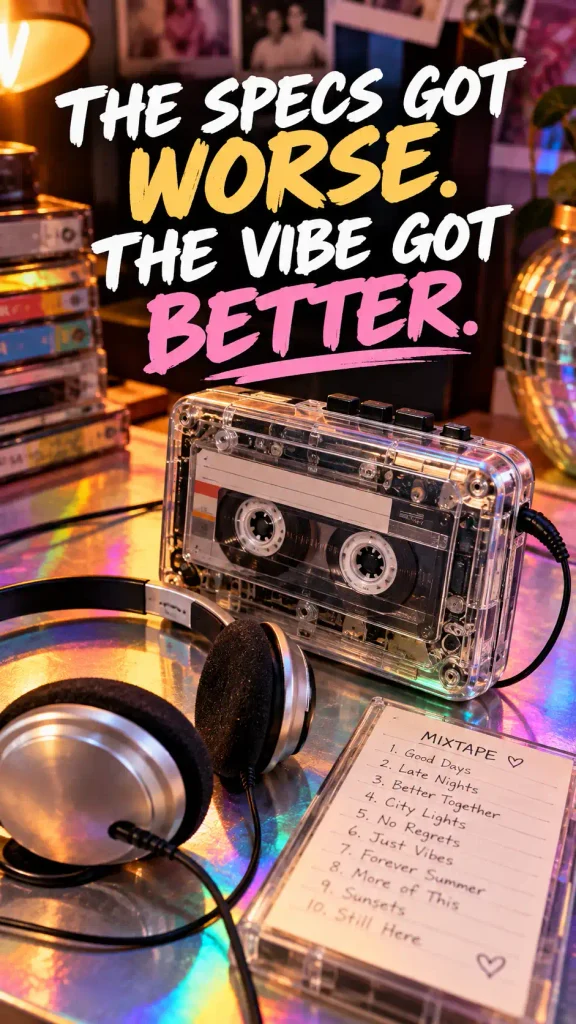
The cassette revival makes no sense if your only measurement is technical perfection.
Tape can hiss.
It wears.
It can tangle in a way that instantly awakens ancient pencil-based repair instincts.
Digital audio is easier and usually cleaner.
So why bother?
Because technology is not only a spreadsheet of specifications.
Cassettes have physical controls, visible motion, compact artwork and a sound/feel that instantly announces its era. Small labels and artists also use them as inexpensive collectible merchandise.
For people drawn to transparent plastics and Y2K design, the player itself can be as interesting as the audio.
No one needs to pretend the medium won on fidelity.
It won on character.
Why it makes sense: tactile playback, collectible releases and retro design.
Best for: enthusiasts who enjoy the format itself.
Reality check: tape quality varies, mechanisms age and replacement belts may be necessary.
8. The Radio: Audio Without An Account
A normal radio does something modern media increasingly struggles to do:
It plays without asking who you are.
No login.
No profile.
No personalized home screen.
No algorithm deciding that the song you liked once should become your entire identity.
Turn the dial and accept what is there.
That limitation can be refreshing for casual listening, sports, local news and community broadcasting.
Radio also has a less aesthetic reason to remain relevant. Emergency-preparedness guidance from U.S. agencies recommends battery-powered or hand-crank radios as part of disaster supplies because power and data networks can be disrupted. NOAA Weather Radio serves a specialized warning role in the United States. Ready.gov emergency kit guidance; NOAA Weather Radio guidance.
Why it makes sense: local broadcasts without accounts, feeds or cellular data.
Best for: kitchens, workshops, sports, local stations and emergency kits.
Reality check: station availability and emergency-radio systems vary by country.

9. The Compact Digital Camera: When “Worse” Photos Look More Like Memories
The point-and-shoot camera was supposed to be one of the smartphone’s cleanest kills.
Then fixed-lens camera shipments started climbing again.
CIPA data have shown renewed growth in the compact-camera segment, and recent community discussions make the aesthetic demand easy to understand: people explicitly ask for built-in flash, early-digital color, lower resolution and the slightly harsh “night out” look older cameras produce.
Modern phones often make technically excellent photos automatically.
Computational processing can brighten shadows, combine exposures, sharpen details and smooth the path between pressing the button and receiving a polished image.
An older digicam may do less.
That limitation creates a look people now imitate with filters.
But the used-camera market has consequences. Trendy old models can become wildly overpriced. Original batteries may be dead. Proprietary chargers and memory cards can turn a cheap thrift find into a scavenger hunt.
Why it makes sense: separate shooting experience, built-in flash aesthetic and less phone interruption.
Best for: parties, travel and people who enjoy imperfect early-digital texture.
Reality check: check battery availability, charger type and memory-card compatibility before buying.

10. The Instant Camera: A Camera Roll With Only One Copy
Instant cameras make photography physically expensive enough that you notice pressing the shutter.
That sounds like a disadvantage.
Sometimes it is the advantage.
Fujifilm’s financial reporting continues to describe strong demand for instant-photo systems across a broad range of users.
The appeal is not image quality in the smartphone sense.
It is consequence.
You take one photo.
The photo exists in your hand.
You can write on it, put it in a wallet, stick it to a wall or give away the only copy you have.
There is no 47-photo burst followed by ten minutes of selecting which near-identical face looks least weird.
The obvious downside is recurring film cost.
Every click literally has a price.
Why it makes sense: physical output makes each photo feel finite and social.
Best for: gatherings, trips, gifts and memory walls.
Reality check: film cost adds up fast; this is not the economical choice for high-volume shooting.

11. The Film Camera: Thirty-Six Chances To Stop Checking The Screen
Film takes the instant-camera idea and removes the instant part.
You make the photograph without immediately knowing whether it worked.
That delay changes behavior.
There is nothing to inspect after each shot.
No preview to zoom into.
No immediate correction loop.
You keep moving.
That can make an event feel less like a photo-production session.
Film also has a distinct physical and chemical look, but nostalgia tends to erase its less romantic details: film costs money, processing costs money, labs vary, airport scanners can affect some film, old light seals fail and a vintage camera may need service before it becomes a reliable companion.
It is slower because it actually is slower—not because slow automatically means better.
Why it makes sense: delayed feedback encourages shooting without reviewing every frame.
Best for: photographers who enjoy process as much as result.
Reality check: film and development are ongoing costs; test old cameras before important trips.

12. The Camcorder: Video That Looks Like Someone Was Actually There
Phone video is often astonishingly clean.
Old camcorder footage is often the opposite.
Zoom motors.
Blown highlights.
Handheld wobble.
Odd timestamps.
A tiny microphone that somehow captures both your friend laughing and the wind personally attacking it.
And that is exactly why the look keeps returning in music videos, parties and social clips.
A camcorder also changes how you hold the moment. A flip-out screen, optical zoom rocker and dedicated record button make video feel like the primary task rather than something selected from a phone app.
Vintage units can be annoying to maintain, though. Tape formats may require old capture hardware. Batteries die. Some cameras use obscure connectors.
A newer retro-styled camcorder can deliver the ergonomics without all the archaeology.
Why it makes sense: dedicated controls and a visual texture phone video often tries to imitate later.
Best for: trips, parties, performances and casual documentary footage.
Reality check: confirm how footage gets off the camera before buying it.

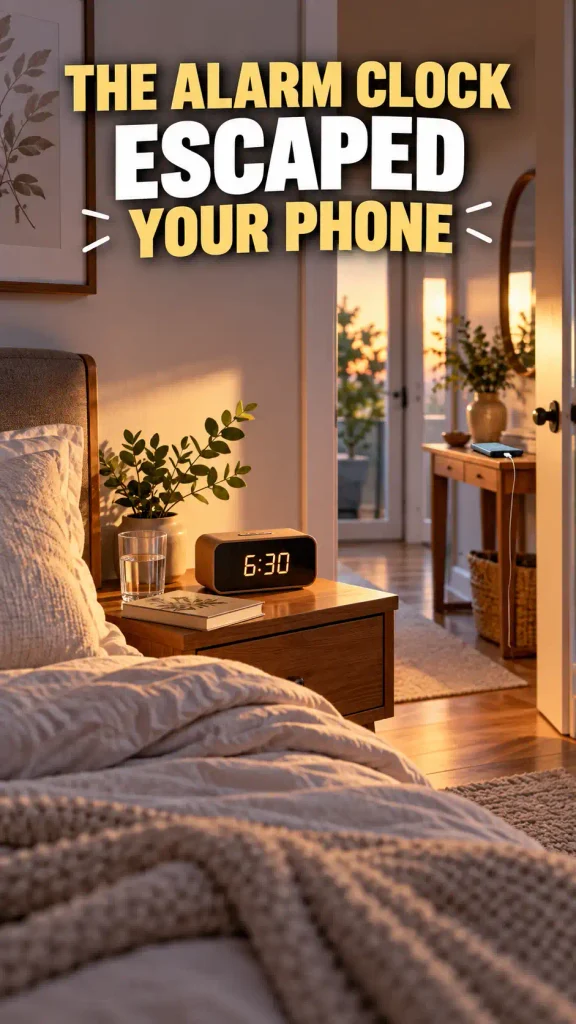
13. The Alarm Clock: A Tiny Device That Can Evict Your Phone From Bed
The alarm clock became unnecessary the moment phones learned to ring at 7:00 a.m.
It becomes useful again the moment you decide the phone does not belong next to your pillow.
Research on smartphone and electronic-media use consistently finds associations between heavier or bedtime use and poorer sleep outcomes, though observational evidence cannot prove every individual’s phone is the direct cause of every bad night. Systematic review and meta-analysis; National Sleep Foundation population study.
An alarm clock is not sleep medicine.
It is logistics.
If the only reason the phone sleeps beside you is “but it wakes me up,” a $20 clock can remove the excuse.
That is a remarkably high-impact career for a device whose user interface is mostly four buttons and regret.
Why it makes sense: it lets the phone charge outside the bedroom while preserving a reliable wake-up cue.
Best for: people whose bedtime scrolling begins with “I only need the alarm.”
Reality check: choose a clock with battery backup if power interruptions matter where you live.
14. The Wristwatch: Checking The Time Without Accidentally Losing Twelve Minutes
A phone tells time beautifully.
It also keeps fifteen other things directly behind the time.
You lift it to check whether you are late.
A notification is waiting.
You answer it.
Another app is there.
And eventually you put the phone away without remembering what time it was.
A basic wristwatch closes that loop.
Raise wrist.
Read time.
Lower wrist.
Nothing else happens.
Mechanical watches can become an expensive collector world, but the useful version of this idea can be a cheap quartz or digital watch that runs for years on one small battery.
Why it makes sense: time checking becomes a one-second action rather than a phone unlock.
Best for: meetings, travel, exercise and anyone deliberately keeping the phone in a bag.
No need: to turn this into a luxury-watch hobby unless you actually want one.

15. The E-Reader: A Screen That Mostly Wants You To Read
An e-reader is technically modern smart hardware.
But compared with a phone or tablet, its narrowness is almost radical.
The best e-readers are boring on purpose.
Pages turn.
Fonts change.
Books download.
Depending on the model, there may be a store, dictionary, notes and a minimal browser.
What there usually is not: the full social-media circus one swipe away.
That makes an e-reader one of the clearest examples of single-purpose technology surviving the smartphone era by refusing to compete on everything.
The caveat is ownership. E-books purchased through platforms may be licensed rather than owned in the same sense as a physical book, and DRM can limit transfer between ecosystems. The FTC has specifically warned consumers to understand what “buy” means for digital goods.
Why it makes sense: hundreds of books without turning reading into general tablet time.
Best for: travel, long-form reading and distraction-sensitive readers.
Reality check: check file-format support, library integration and DRM before committing to an ecosystem.

16. The Voice Recorder: Press Record Without Opening A Universe
Phones contain excellent voice recorders.
They also contain every message, app and alert capable of interrupting the reason you started recording.
Dedicated recorders still make sense for journalists, students, musicians, researchers, meeting notes and people who collect spoken ideas while walking.
Physical buttons are especially useful when you need to start recording without navigating a screen.
Higher-end models can also offer better microphones, inputs and recording formats than a basic phone workflow.
But privacy matters more than nostalgia here.
Recording laws vary by location. Consent requirements differ. Sensitive interviews and meetings need secure handling.
A dumb device can simplify capture.
It does not simplify ethics.
Why it makes sense: fast physical controls and purpose-built audio features.
Best for: interviews, lectures, rehearsals and spoken notes where permitted.
Reality check: understand local recording-consent laws and protect sensitive files.

17. The Handheld Game Console: Gaming Without A Notification Drawer
A phone can run thousands of games.
A dedicated handheld can still feel better to play.
Physical controls matter.
A proper D-pad does not disappear under your thumb.
Shoulder buttons exist in three-dimensional space.
Your session does not have to share a screen with messages, banking and a delivery notification.
Modern handhelds range from tiny retro emulation devices to powerful portable PCs, so “single-purpose” is a spectrum here.
The clearest version is a console that primarily exists to play games.
It can still connect online.
It just does not pretend to be your entire life while you are in the middle of a boss fight.
Why it makes sense: physical controls and a device designed around gaming ergonomics.
Best for: travel, couch play and people who dislike touch-screen controls.
Reality check: retro emulation laws and ROM ownership vary; use legitimately obtained games and software.

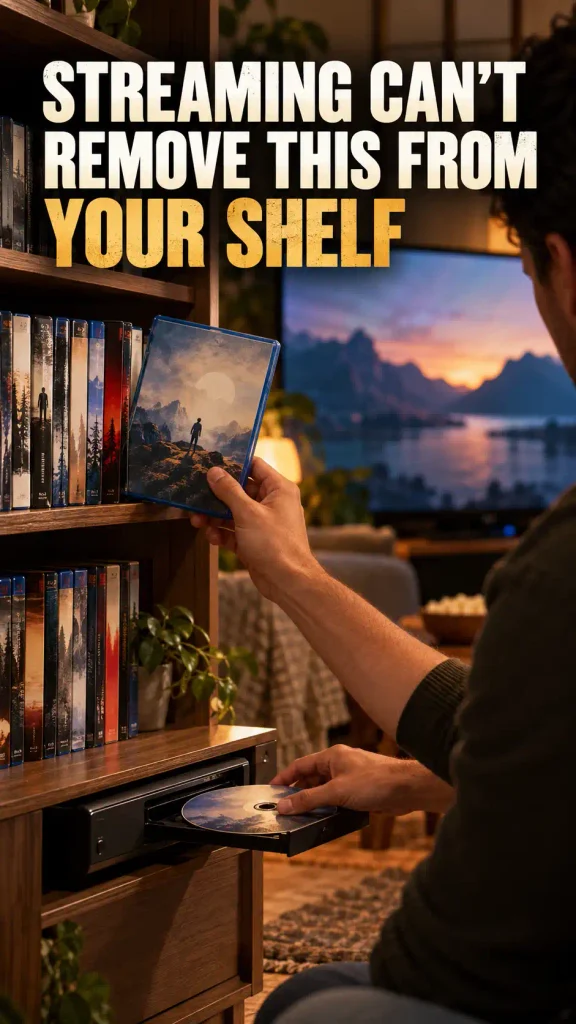
18. DVD And Blu-Ray Players: When “My Movie” Actually Lives In The House
Streaming solved the problem of storing hundreds of plastic cases.
It created a new problem:
The library is not entirely yours.
Titles move between services. Subscriptions change. Regional catalogs differ. A digital purchase may come with platform-dependent licensing conditions.
The FTC’s consumer guidance explicitly warns that a digital “buy” button does not always mean permanent, transferable ownership.
A disc is less elegant and more literal.
If you own the compatible disc and player, the movie is sitting in the room with you.
This is particularly appealing for favorite films, director cuts, bonus features and titles that bounce unpredictably between streaming catalogs.
Physical discs are not immortal—scratches, disc rot in rare cases, hardware failure and format obsolescence still exist—but the relationship is more direct.
Why it makes sense: predictable access to specific films without a recurring streaming catalog.
Best for: favorites, special editions and hard-to-stream titles.
Reality check: region codes and format/player compatibility still matter.
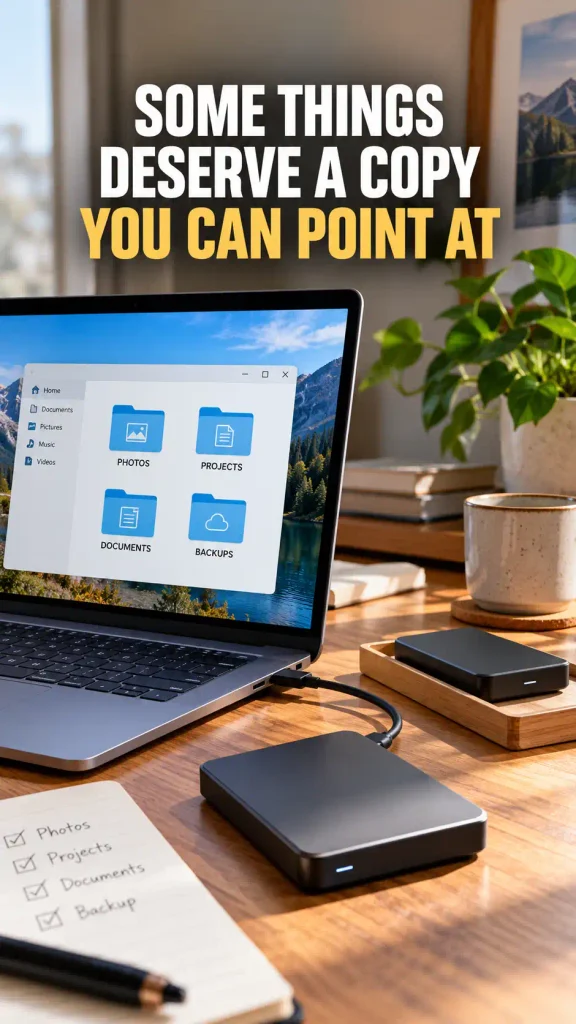
19. The External Drive: Your Files, On A Box You Can Point At
Cloud storage is one of the great conveniences of modern computing.
It is also easy to forget that “in the cloud” still means “on someone else’s computers, under some set of account and service conditions.”
A local external drive gives files a physical second home.
Photos.
Videos.
Music.
Documents.
Projects.
That does not mean one drive is a complete backup strategy.
Drives fail.
They get lost.
They get stolen.
Ransomware can reach connected storage.
The sensible idea is redundancy: important data should exist in more than one place, ideally including at least one copy not permanently connected to your computer.
The “dumb” external drive earns its place because it does one deeply useful job without a feed, subscription recommendation or notification bell.
Why it makes sense: direct local control and an additional copy of important files.
Best for: photos, video archives and project backups.
Reality check: one external drive is not a backup plan; use multiple copies for irreplaceable data.
20. The Dedicated GPS: Maps Without A Social Life
Phone navigation is excellent.
Dedicated GPS devices survive because some jobs care more about reliability and mounting than about elegance.
Road trips.
Motorcycles.
Boats.
Hiking units.
Commercial vehicles.
A purpose-built navigator can stay mounted, keep navigation separate from phone calls and preserve phone battery for communication.
Some models store maps locally and work with satellite positioning without cellular data once maps are loaded.
But “GPS works anywhere” is too broad. Satellite reception can be affected by terrain, buildings and dense cover. Maps still need updating. Search/live traffic features may require data.
Phones can also download offline maps, so this is not a universal upgrade.
It is a separate tool for people who value separation.
Why it makes sense: navigation remains visible even if the phone is busy, hot, low on battery or being used for something else.
Best for: frequent driving and specialized outdoor/marine use.
Reality check: map updates and satellite visibility still matter.

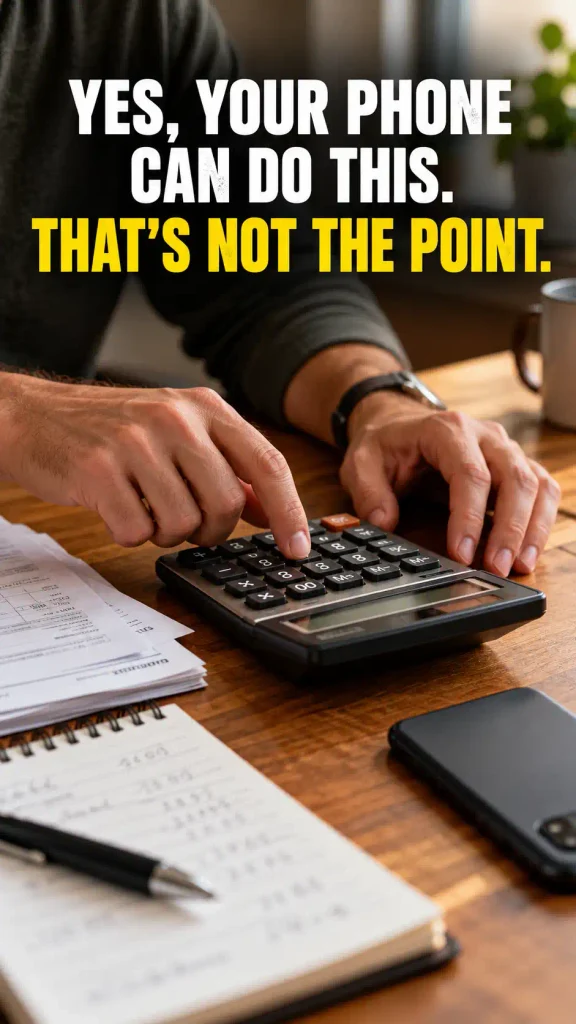
21. The Calculator: A Keyboard For One Kind Of Problem
Yes, your phone has a calculator.
Your laptop has one too.
A search engine will do the arithmetic if you type it into the address bar.
And yet physical calculators remain everywhere people do repeated calculations.
The reason is gloriously boring.
Keys.
A number pad lets a practiced user enter figures by touch. A desktop calculator stays on the desk. Scientific and graphing calculators expose functions without menus fighting for screen space.
Schools and examinations may also restrict connected devices while allowing approved calculators.
This is the purest single-purpose-tech argument:
The phone can do the job.
The dedicated tool may simply be nicer to use repeatedly.
Why it makes sense: tactile numeric entry and zero app switching.
Best for: bookkeeping, study, workshops and repeated calculations.
Reality check: exam rules differ; always check which models/functions are permitted.
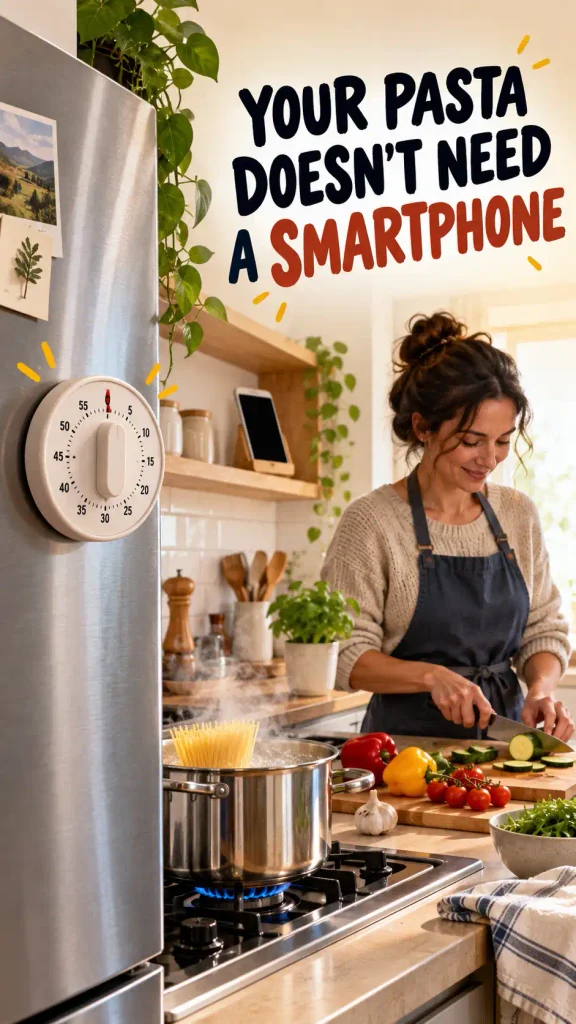
22. The Kitchen Timer: Your Pasta Does Not Need Screen Time
The phone timer is one of the smartphone’s least offensive features.
It is also an extremely common portal.
You set twelve minutes.
There is a notification.
You check it.
Suddenly the pasta is receiving more independence than you planned.
A cheap mechanical or digital kitchen timer does exactly one thing loudly.
That is useful for cooking, focused work, stretching, cleaning sprints and anything else that needs a countdown but not an internet connection.
The device is so simple that calling it “digital minimalism” feels embarrassing.
Which is probably why it works.
Why it makes sense: timing does not require unlocking a multifunction screen.
Best for: cooking and short focus intervals.
Bonus: a magnetic timer can remain exactly where the task happens.
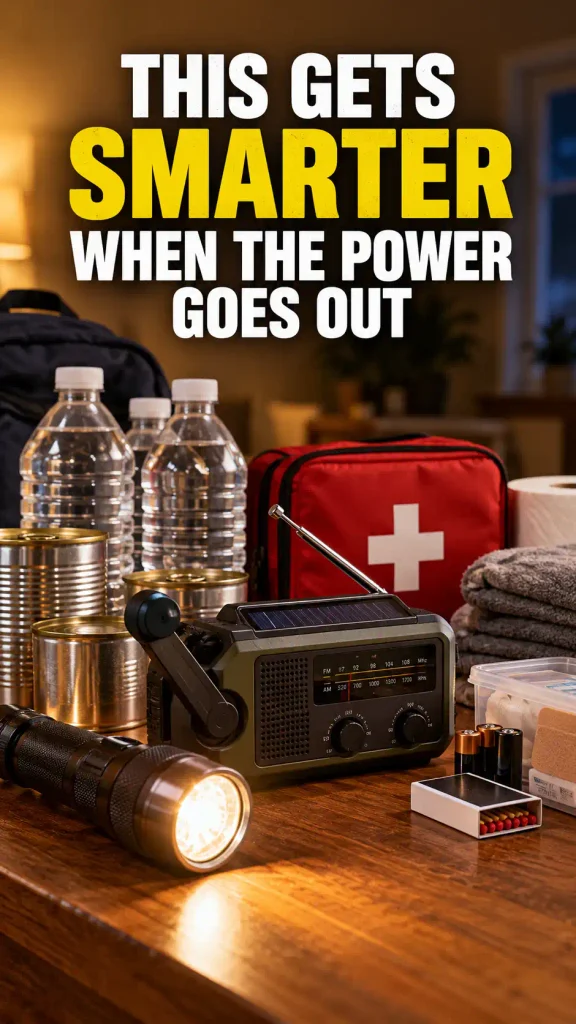
23. The Emergency Radio: “Dumb” Tech That Gets Smarter When The Power Goes Out
Most retro-tech arguments are about attention.
This one is about resilience.
Emergency-preparedness guidance recommends a battery-powered or hand-crank radio because disasters can interrupt electricity and data connectivity.
A weather/emergency radio is deliberately narrow.
It is not fun.
It does not need to be aesthetically Y2K.
It sits quietly until the exact day you are glad it exists.
In the United States, NOAA Weather Radio continuously broadcasts warnings and hazard information through a dedicated network. Other countries use different systems, so local recommendations matter.
This is a good reminder that consolidating every function into one rechargeable glass device creates a single point of dependence.
Why it makes sense: independent information channel during power/data disruption.
Best for: emergency kits and weather-prone areas.
Reality check: buy for your local alert system; features and frequencies differ by country.
24. The Distraction-Free Writer: A Laptop That Refuses To Become A Browser
The modern typewriter is a wonderfully specific rebellion.
It gives you a keyboard and somewhere for words to appear.
Then it stops helping.
Dedicated writing devices range from literal typewriters to electronic word processors and modern e-ink drafting machines. Some sync documents later, but deliberately make web browsing, messaging and multitasking awkward or impossible.
This is not automatically better for writing.
Research, editing and collaboration often benefit from a full computer.
The narrow device solves a different stage: drafting.
If the goal is to turn an empty page into a bad first version without checking email every ninety seconds, less capability can become functional design.
The irony is perfect.
We made computers capable of everything.
Then built expensive new computers whose main feature is refusing to do everything.
Why it makes sense: hardware creates a drafting environment with fewer escape routes.
Best for: writers who separate drafting from research/editing.
Reality check: dedicated writing devices can be pricey; a cheap offline laptop or old word processor can create similar constraints.

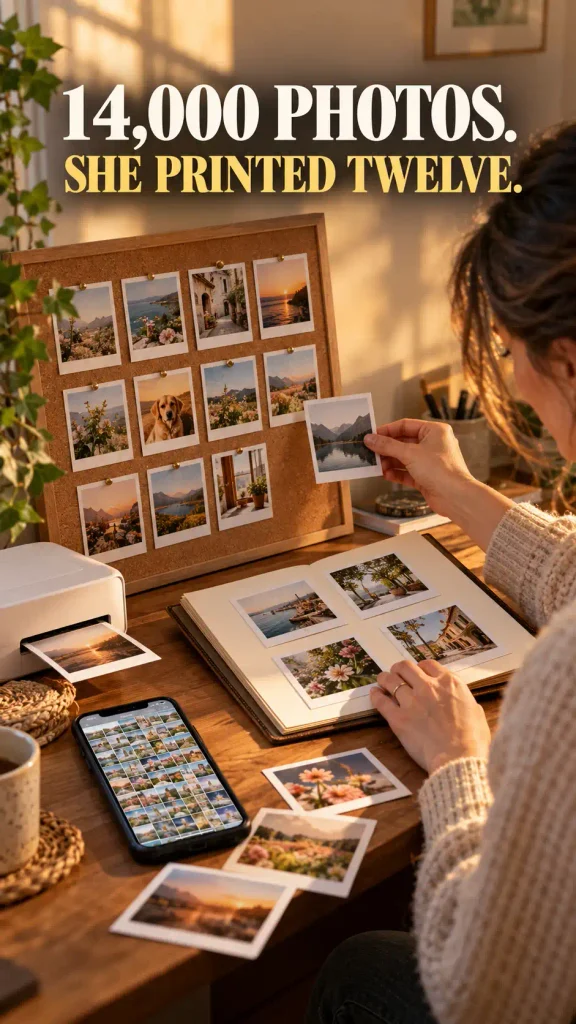
25. The Photo Printer: Because 14,000 Photos In Your Phone Can Still Feel Like None
We take more photographs than ever and physically encounter fewer of them.
They live in camera rolls.
Cloud libraries.
Old phones.
Folders named “DCIM.”
Screenshot graveyards.
A small photo printer restores one old behavior without demanding a return to film.
Take the digital image.
Choose a few.
Print them.
Put them somewhere your eyes can reach without searching.
The constraint matters again.
You probably will not print 3,000 photos.
You may print twelve.
And those twelve become objects: inside a frame, on a refrigerator, in a wallet, tucked into a book, handed to another person.
The digital archive is excellent for abundance.
The physical print is excellent at saying:
This one.
Why it makes sense: turns selected digital memories into visible physical objects.
Best for: albums, walls, gifts and family photos.
Reality check: consumable paper/ink costs vary; check long-term print durability before choosing a system.
The gadget drawer disappeared because the smartphone was genuinely brilliant.
It made dozens of objects unnecessary.
No serious argument needs to pretend otherwise.
But “unnecessary” and “useless” are not the same word.
A separate camera can make photography feel separate.
A separate music player can turn music into the only thing happening.
A wristwatch can tell you the time without showing you a notification.
An alarm clock can wake you up without sleeping beside your inbox.
A disc can remain on your shelf when a platform changes its catalog.
A radio can keep receiving information when the internet is having a very bad day.
That does not mean everybody needs twenty-five gadgets again.
The useful question is smaller:
Which parts of your life became worse when they were folded into the phone?
Maybe none.
Maybe one.
Maybe it is worth spending $15 on an alarm clock to find out.
The smartphone gave us the freedom to carry one device instead of a bag full of technology.
Now the funny new luxury may be choosing when not to use it.
Which “obsolete” gadget would you happily bring back—and which one deserved to stay dead?
Sources & Further Reading
- Camera & Imaging Products Association — Digital Camera Shipment Statistics
- Camera & Imaging Products Association — Camera Market Outlook and Shipment Track Record
- Circana — Wired Headphone Market Rebound
- Reuters / RIAA — Physical Music Revenue and CD Growth
- Axios — Renewed Interest in iPods and Single-Purpose Music Players
- Fujifilm — Imaging Business and Instant-Photo Demand
- r/dumbphones — Community Guide to Real-World Dumbphone Tradeoffs
- Reddit r/GenZ — Community Debate on Whether the Retro-Tech Revival Is Mainstream or Niche
- Reddit r/photography — Community Discussion of Compact-Camera Aesthetics
- U.S. Federal Trade Commission — What “Buying” Digital Media Can Actually Mean
- Journal of Clinical Sleep Medicine — Smartphone Use and Sleep Quality Meta-analysis
- Sleep Health — Technology Use Near Bedtime and Sleep
- Ready.gov — Emergency Supplies Including Battery/Hand-Crank Radio
- NOAA — Weather Radio and Emergency Information
- New York Magazine / Strategist — Transparent and Retro Technology Culture