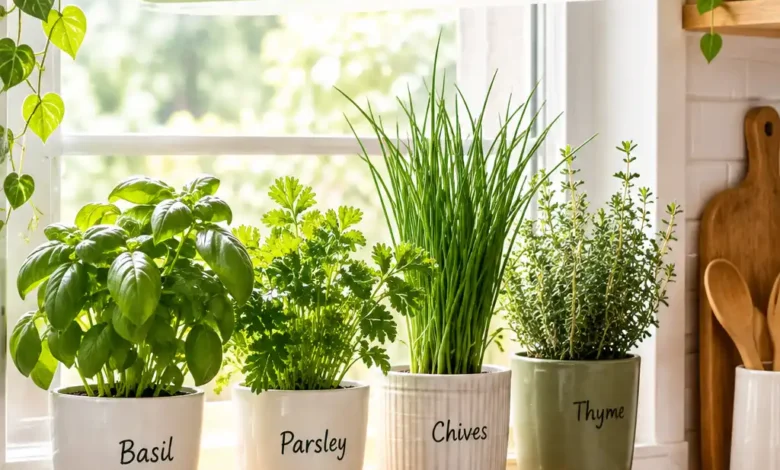
Growing fresh greens indoors is a rewarding way to improve your cooking. Even without a backyard or extra counter space, you can cultivate a thriving small space herb garden beside your meal preparation area.
Many people believe fresh basil or mint requires a large plot of land. Yet creative vertical layouts and smart containers can help plants flourish in tight spots. These practical methods bring nature’s bounty to homes of almost any size.

This guide presents essential kitchen window herb garden ideas for limited areas. It covers proper lighting, watering schedules, and seasonal care. You will learn to select plants such as chives, thyme, and rosemary, keeping indoor greenery healthy and productive all year.
Key Takeaways
- Maximize vertical space to grow more plants in tight areas.
- Choose the right light exposure for your specific plant varieties.
- Select containers with proper drainage to prevent root rot.
- Rotate your pots regularly to ensure even growth and sunlight.
- Harvest your greens frequently to encourage bushier, healthier stems.
Kitchen Window Herb Garden Ideas for Planning a Small Growing Space
A thriving herb collection must balance your cooking needs with your home’s architecture. Before buying your first pot, assess the available space so each plant can flourish. Creative kitchen window herb garden ideas begin with a clear understanding of your physical limits.
Measure the Windowsill, Counter, and Nearby Wall
Start by measuring your windowsill’s precise depth and width. Standard sills are often narrow, so consider adding a small shelf or using slim, rectangular containers. Also measure the counter below the window and nearby wall areas that could support vertical planters.
Accurate measurements prevent the frustration of buying pots that do not fit. Mapping your space reveals whether you can support a sprawling collection or need a compact, high-impact display.

Match the Garden to Cooking Habits
Your kitchen herb garden should reflect the flavors you use most in daily meals. If you frequently prepare Italian dishes, reserve space for basil, oregano, and parsley. For fresh salsas or Asian-inspired cuisine, cilantro and chives are essential additions.
“The secret to a successful indoor garden is growing what you actually enjoy eating, rather than just what looks pretty on a shelf.”
Use the following table to prioritize plant selections according to common culinary needs:
| Herb Type | Culinary Use | Space Requirement |
|---|---|---|
| Basil | Italian/Pesto | Medium |
| Chives | Garnishes/Salads | Small |
| Parsley | General Seasoning | Medium |
| Cilantro | Salsas/Curries | Small |
Choose Between a Permanent Garden and a Portable Setup
Choosing between a fixed installation and a mobile system depends on your lifestyle and housing situation. A permanent setup integrates more naturally with kitchen design, while a portable one provides greater flexibility.
When a windowsill herb garden works best
A windowsill herb garden suits homeowners seeking a permanent, low-maintenance solution. It keeps plants within arm’s reach while you cook at the stove or prep station. It also uses otherwise empty space, making it ideal for tiny apartments.
When to use a rolling cart or shelf
If your kitchen lacks a deep windowsill, consider a rolling cart or tiered shelf. These options let you move plants to follow sunlight throughout the day. They also suit renters who cannot install permanent wall fixtures or need to clear counters for large meal preparations.
Assessing Kitchen Window Light Before Choosing Herbs
Your success with indoor herb garden ideas depends on the quality of light reaching your windowsill. Before buying pots, observe how sunlight moves across your kitchen throughout the day. This assessment helps plants receive the energy required for healthy growth.

Identify South-, East-, West-, and North-Facing Windows
A window’s direction determines the intensity and duration of its sunlight. South-facing windows usually provide intense, steady light, making them ideal for sun-loving Mediterranean herbs. East-facing windows offer gentle morning sun, while west-facing windows receive stronger, warmer afternoon rays.
North-facing windows receive the least direct light. These locations suit shade-tolerant varieties or require supplemental lighting for a healthy indoor herb garden. Understanding window orientation helps you place each plant in the right location.
Recognize Direct Sunlight, Bright Indirect Light, and Shade
Each plant has specific light requirements that shape its growth. Direct sunlight reaches leaves without obstruction, while bright indirect light illuminates an area without touching the foliage directly. Shade occurs where structures block light and levels remain low.
“Light is the most critical factor in indoor gardening; without it, even the most resilient herbs will struggle to survive.”
| Light Type | Sun Exposure | Best Herbs |
|---|---|---|
| Direct Sun | 6+ hours daily | Rosemary, Thyme |
| Bright Indirect | 4-6 hours daily | Basil, Parsley |
| Partial Shade | 2-4 hours daily | Mint, Chives |
Use a Simple Light Check Throughout the Day
Track your light by checking the kitchen at several points throughout the day. Observe where sunlight falls in the morning, at noon, and during late afternoon. This habit reveals your space’s potential for different indoor herb garden ideas.
Signs that herbs are stretching toward the glass
If plants appear thin, pale, or heavily tilted toward the window, they probably lack sufficient light. This condition, called etiolation, occurs when a plant reaches urgently for a stronger source. Move these pots somewhere brighter or add a grow light to support their recovery.
How curtains, neighboring buildings, and seasonal changes affect light
External factors can alter how much light reaches your kitchen. Sheer curtains filter strong rays, while nearby buildings or trees may cast shadows across your windows. During winter, the sun sits lower, reducing light intensity compared with summer’s long, bright days.
Choosing Containers That Keep a Small Kitchen Herb Garden Tidy
Thoughtful containers keep herbs organized within your kitchen layout. A well-planned windowsill herb garden adds beauty while preventing soil spills and water damage. Suitable vessels support healthy plants and help keep your cooking area clean.

Use Individual Pots for Flexible Herb Placement
Individual pots offer the most flexibility for an indoor setup. Rotate containers so each plant receives enough sunlight throughout the day. If one herb looks tired, move it without disturbing the others.
Group Herbs in a Long Window Box
A long window box creates a uniform display when you group several plants together. This arrangement gives your kitchen a cohesive, professional garden appearance. It also simplifies watering by keeping several herbs and their soil in one unit.
Add Drainage Trays Without Blocking Counter Space
Place a drainage tray beneath each pot to catch excess water and protect surfaces. These trays prevent leaks that can damage wood or stone countertops. Choose slim, low-profile designs for maximum protection without sacrificing valuable preparation space.
Materials that suit indoor growing
The right material supports plant health and kitchen cleanliness. Terracotta is porous, helps prevent overwatering, and can be heavy. Plastic or glazed ceramic pots weigh less and wipe clean easily, making them suitable for busy kitchens.
Container sizes for basil, mint, thyme, and rosemary
Herbs have different root systems, so they need specific container dimensions. Fast-growing basil and mint require at least six inches of depth. Woody herbs such as thyme and rosemary prefer slightly smaller, well-draining pots to prevent root rot.
| Herb Type | Ideal Depth | Water Needs |
|---|---|---|
| Basil | 6-8 inches | Moderate |
| Mint | 6 inches | High |
| Thyme | 4-5 inches | Low |
| Rosemary | 6-8 inches | Low |
Repurpose Safe Household Items for a DIY Herb Garden
Create a charming diy herb garden by repurposing household items. Old metal tins or glass jars can become distinctive planters if you drill drainage holes in their bottoms. Ensure each container is food-safe and stable on your windowsill.
Arranging a Windowsill Herb Garden Without Crowding the Kitchen
Strategic placement helps you maintain a productive kitchen herb garden in tight quarters. Think vertically to enjoy fresh flavors without sacrificing counter space needed for daily cooking.
Place Tall Herbs Behind Short, Sun-Loving Plants
Arrange pots by height so every plant receives enough light. Place taller varieties, such as rosemary or dill, behind shorter, sun-loving plants, such as thyme or basil.
This arrangement keeps larger plants from shading their neighbors. Proper light distribution supports a healthy small space herb garden because each leaf receives energy for growth.

Leave Space for Airflow and Routine Harvesting
Do not pack containers tightly together. Good airflow helps prevent mold and keeps plants resilient against common indoor pests.
Leave enough room between pots to reach in with scissors for a quick harvest. Easy access encourages frequent herb use while you prepare meals.
Use Tiered Risers to Give Every Pot Access to Light
If your windowsill is narrow, use tiered risers to maximize your footprint. These stands let you stack plants safely, so those in back still receive plenty of sunshine.
Creating levels with wood, metal, or sealed ceramic stands
Choose from various materials to match your kitchen decor. Sealed ceramic or metal stands are excellent choices because they wipe clean after water spills during routine care.
Keeping elevated containers stable near a busy work area
Stability matters when your garden sits near a high-traffic zone. Ensure your risers have a non-slip base to prevent tipping while you chop vegetables or wash dishes.
Vertical Herb Garden Ideas for Walls, Shelves, and Narrow Kitchens
When floor space is limited, vertical growing lets you cultivate herbs without sacrificing valuable room. A vertical herb garden uses bare walls as a practical feature while keeping ingredients within easy reach. It also adds visual interest without crowding your counters.

Install a Wall-Mounted Rail With Individual Planters
A simple rail system keeps herbs organized and accessible. Small pots hang from the rail with S-hooks, so you can move them toward better light. This herb garden design keeps the workspace clear while placing basil and mint within reach.
Build a Compact Tiered Shelf Near the Window
If you have a narrow window, a tiered shelf can maximize available vertical height. Stacking plants helps every herb receive adequate sunlight throughout the day. Tiered shelving creates a lush, layered look that adds depth to a small kitchen layout.
Use Hanging Planters Without Blocking Kitchen Tasks
Hanging planters suit kitchens where cooking requires every inch of counter space. Suspended herbs stay clear of spills and food preparation zones. Secure each installation so it will not interfere with daily movement.
Protecting walls from water and condensation
To protect your walls, place drip trays or liners beneath every pot. These barriers stop water from seeping into the wall surface, preventing damage or mold growth. Taking this extra step keeps your kitchen clean and healthy.
Choosing lightweight containers for secure hanging
Choose lightweight materials, such as plastic, thin metal, or fabric, for hanging pots. Heavy ceramic pots can strain hardware and create a safety risk in a busy kitchen. Lightweight containers mount securely and allow quick adjustments as your needs change.
Arrange a Pegboard or Grid for a Changeable Herb Garden Design
A pegboard or wire grid gives your herb garden design exceptional flexibility. Rearrange pots as seasons change or as herbs grow larger. This modular approach supports different layouts, helping plants receive the best light and airflow.
- Use S-hooks for quick repositioning.
- Group herbs by their specific water requirements.
- Keep a small spray bottle nearby for easy maintenance.
DIY Herb Garden Projects for a Budget-Friendly Kitchen Window
A lush indoor garden does not require a large budget or a professional contractor. With household materials, you can build a diy herb garden that looks polished and works well. These projects let you customize your space while controlling costs.

Turn a Wooden Crate Into a Tiered Herb Display
A small wooden crate provides an excellent base for a vertical herb garden. Set the crate on its side and add a shelf inside to create two planting levels. This simple design doubles your growing space without using extra windowsill room.
Create a Mason Jar Herb Station With Proper Drainage
Mason jars are popular for their aesthetic appeal, but they have no natural drainage. To protect your herbs, place small pebbles at the bottom before adding soil. The pebbles create a reservoir for excess water and keep roots from sitting in moisture.
Make a Recycled Can Planter With a Coordinated Finish
Empty food cans work well for small herbs such as basil or cilantro. Paint them to match your kitchen decor, creating a cohesive and intentional look.
Preparing food containers safely for plant use
Before planting, clean and dry the cans thoroughly. Use a drill or sturdy nail to punch several drainage holes in each bottom. Safety is key, so file away sharp edges left after opening the cans.
Adding labels that make herbs easy to identify
Clear labels help you track your harvest, especially while plants are young. Use chalkboard paint for reusable labels, or attach small wooden tags with twine. This small step makes your diy herb garden easier to manage during busy cooking sessions.
Build a Narrow Window Box From Sealed Scrap Wood
Leftover wood from other projects can become a custom window box. A narrow design fits most sills and provides a stable base for several plants. Seal the wood with a non-toxic, water-resistant finish to protect it from moisture and help your vertical herb garden last for many seasons.
- Measure your window space carefully before cutting wood.
- Use cedar or pine for natural resistance to rot.
- Always include a plastic liner or drainage tray to protect your windowsill.
Best Herbs for a Small Indoor Herb Garden
Herbs grow differently, so choose varieties that match your kitchen’s light and cooking habits for indoor herb garden ideas. These choices help beginners and seasoned cooks get more from every harvest and support indoor herb garden success.

Choose Compact Herbs for Everyday Cooking
Basil for warm, bright windows
Basil thrives in heat and needs direct sunlight to produce flavorful leaves. This kitchen staple adds fresh aromatics to pasta and salads throughout the growing season.
Parsley and cilantro for frequent harvesting
Parsley and cilantro grow quickly and benefit from regular trimming. Harvest outer stems often to encourage tender growth from the center.
Chives for compact growth and low maintenance
Chives suit small spaces because they grow vertically and need little care. They add mild onion flavor and brighten any windowsill.
Grow Mediterranean Herbs in Dry, Sunny Conditions
Thyme, oregano, sage, and rosemary
Thyme, oregano, sage, and rosemary prefer dry soil and abundant sunshine. These resilient herbs bring a warm, earthy scent into your home.
Why well-draining soil matters for Mediterranean herbs
These plants come from arid climates and hate having “wet feet.” A fast-draining potting mix prevents root rot and keeps these hardy herbs healthy for years.
Contain Herbs That Spread Aggressively
Keep mint in its own pot
Mint develops fast-growing roots that quickly crowd other plants. Give it a dedicated container so it cannot take over your entire indoor herb garden.
Trim lemon balm before it overtakes nearby plants
Lemon balm grows vigorously and can become invasive in a shared planter. Regular pruning keeps it contained and prevents shade from limiting your other indoor herb garden ideas.
Indoor Herb Garden Ideas for Kitchens With Limited Light
Limited natural light cannot prevent you from growing a lush indoor herb garden. Many kitchens receive bright, indirect light instead of harsh, direct sunlight. These conditions suit varieties that prefer a gentler environment.
Select Herbs That Tolerate Bright Indirect Light
When your kitchen lacks sunny southern exposure, choose herbs that thrive in lower light. Mint, parsley, and chives are excellent choices for these conditions. They remain productive and flavorful without direct sunlight’s intense heat.

Add a Full-Spectrum Grow Light to a Window Setup
To expand your options, use full-spectrum grow lights. These lights mimic the sun’s natural rays and provide energy for healthy growth. They are essential indoor herb garden ideas for anyone managing persistent shade.
Positioning a grow light above the foliage
For the best results, place your grow light directly above the plants. Keep the light source six to twelve inches from the leaf tops. This provides even coverage without burning delicate foliage.
Using a timer for consistent daily lighting
Consistency supports a healthy garden. Use a simple plug-in timer to keep the lights on for 10 to 12 hours daily. This mimics a natural day-night cycle and prevents stress from irregular lighting.
Combine Natural and Artificial Light in Winter
During winter, natural light levels drop significantly. Supplementing your window setup with artificial light helps plants survive the darker season. This combination keeps your herbs vibrant and healthy throughout the year.
Preventing pale leaves and weak stems
If your herbs look thin or pale, they likely need more light. Weak stems often lean toward the nearest window while seeking energy. Increasing artificial light duration helps restore their sturdy, upright growth.
Keeping cords away from sinks and cooktops
Safety matters when adding electrical equipment to your kitchen. Route power cords away from water sources, such as sinks, and heat zones, such as cooktops. Use cable clips to secure wires against the wall, keeping your workspace clean and hazard-free.
Watering, Soil, and Drainage for Healthy Windowsill Herbs
Maintaining a thriving windowsill herb garden requires more than sunlight; it demands steady attention to hydration and soil health. In confined containers, conditions shift far faster than they do in a garden bed. A dependable routine keeps your herbs vibrant and flavorful throughout the year.

Use Fast-Draining Potting Mix for Indoor Containers
Standard garden soil is often too heavy for an indoor herb garden because it compacts and retains excessive water. Choose a high-quality, peat-based or coco-coir potting mix containing perlite or vermiculite. These additives create air pockets, helping excess water move quickly past the roots while preserving necessary moisture.
Check Soil Moisture Before Watering
Resist watering your herbs according to a strict calendar. Instead, use the finger test by pushing your index finger about an inch into the soil. If the soil feels dry, hydrate your plants; if it feels damp, wait another day or two.
Prevent Root Rot in Small Pots and Window Boxes
Root rot is the most common threat to container-grown herbs. It often develops when stagnant water remains at the pot’s base. Proper drainage protects your plants and keeps the soil from becoming waterlogged.
Emptying saucers after watering
Always use pots with drainage holes in the bottom. After watering, wait about fifteen minutes, then empty water collected in the saucer. Waterlogged herbs can develop suffocated roots and decay.
Recognizing overwatering and underwatering
Reading your plants’ signals is an essential skill for any gardener. Overwatered herbs often develop yellow leaves or a mushy stem base, while underwatered plants look wilted, dry, and brittle. Use the following guide to identify your plants’ specific needs:
| Condition | Visual Sign | Soil Texture | Recommended Action |
|---|---|---|---|
| Overwatered | Yellowing leaves | Soggy or muddy | Improve drainage |
| Underwatered | Crispy, brown edges | Hard and cracked | Deep, slow soak |
| Healthy | Firm, vibrant stems | Slightly moist | Maintain routine |
Keep Watering Supplies Close Without Creating Clutter
You do not need bulky equipment to keep your plants hydrated. A small watering can with a narrow spout reaches tight spaces without splashing your counters. Store it on a decorative tray or hang it from a small hook near the window, keeping your workspace tidy and functional.
Herb Garden Design Ideas That Make a Kitchen Feel More Inviting
A thoughtful herb garden design supplies fresh ingredients and elevates your cooking space. Treating plants as decor creates a vibrant, fresh, and intentional atmosphere.

Coordinate Pots With Cabinet, Countertop, and Window Colors
For a polished look, choose containers that complement your kitchen’s existing palette. White or light-colored pots create striking contrast against dark cabinets. Sleek metallic or matte black planters suit modern kitchens and help unify the room.
Mix Textures Without Making the Display Look Busy
Add depth to your kitchen window herb garden ideas by combining different materials. Keep the shapes consistent to prevent a cluttered appearance. Choose one color family while varying finishes, such as smooth glazed ceramic and rough stone.
Use Labels, Plant Markers, and Matching Trays
Organization helps maintain an attractive display. Matching trays protect windowsills from water damage and create a clean, unified base for your pots.
Choosing readable labels for frequently used herbs
Clear labels are essential for a functional diy herb garden. Choose slate markers or wooden tags that remain readable at a glance during busy cooking sessions.
Creating a cohesive look with terracotta, ceramic, or metal
A consistent material theme makes your garden resemble a professional installation. Consider these options for your setup:
- Terracotta: Offers a classic, warm look that breathes well for plant health.
- Ceramic: Provides endless color options to match your backsplash or appliances.
- Metal: Adds an industrial or modern touch that is highly durable.
Balance Decorative Styling With Easy Plant Care
While aesthetics matter, your kitchen window herb garden ideas must remain practical. Ensure decorative pots have drainage holes and keep the soil easy to reach for watering. A healthy diy herb garden depends on care, so prioritize pruning and harvesting over decorative arrangements.
Small Space Herb Garden Setups for Different Kitchen Layouts
Designing a small space herb garden requires a thoughtful plan that respects your kitchen’s unique footprint. Whether you live in a cozy studio or a busy family home, you can grow fresh flavors without losing valuable counter space. By choosing the right layout, you can turn modest corners into a thriving green sanctuary.

Organize Herbs in a Narrow Apartment Windowsill
Narrow windowsills often seem wasted, but they suit a slim kitchen herb garden. Use long, rectangular planters that fit snugly against the glass to maximize every inch. If the sill is too shallow, install a tension rod to hang small pots and keep your herbs elevated and secure.
Use a Countertop Corner in a Kitchen Without a Usable Sill
When windows are unavailable, use a dedicated countertop corner as your plants’ home. Grouping pots on a decorative tray makes them easy to move during meal preparation. This vertical herb garden approach, using tiered stands, lets you stack plants upward instead of spreading them across your workspace.
Fit Herbs Into a Galley Kitchen
Galley kitchens require efficiency, so wall-mounted solutions work well. Use magnetic strips or wall rails to hold small herb containers above the backsplash. This keeps herbs within arm’s reach while leaving narrow walkways clear for cooking.
Make Use of a Bright Shelf in an Open-Plan Kitchen
Open-plan kitchens often feature floating shelves that can display greenery beautifully. Place sun-loving herbs on the highest shelves, where they receive the most natural light. This arrangement adds a vibrant, organic touch to your living space while keeping herbs organized and accessible.
Keeping walkways and food-preparation areas clear
Safety and function matter when adding plants to your cooking zone. Choose placements that do not obstruct movement or crowd your cutting boards. Wall-mounted or hanging systems keep your small space herb garden a helpful addition rather than a kitchen obstacle.
Choosing portable arrangements for renters
Renters often face restrictions on permanent wall installations or drilling. Choose modular, portable trays that rest on existing surfaces without hardware. These flexible setups let you move your kitchen herb garden whenever necessary, so you can take your green companions to your next home.
| Layout Type | Best Setup Method | Primary Benefit |
|---|---|---|
| Narrow Windowsill | Slim rectangular boxes | Maximizes unused depth |
| Countertop Corner | Tiered plant stands | Saves horizontal space |
| Galley Kitchen | Wall-mounted rails | Keeps walkways clear |
| Open-Plan Shelf | Floating display pots | Adds aesthetic appeal |
Keeping an Indoor Herb Garden Productive Through Every Season
Maintaining a thriving indoor herb garden requires seasonal adjustments to keep plants healthy throughout the year. Although kitchen conditions remain fairly stable, outdoor changes in light and temperature still affect indoor greenery. Watch these shifts carefully to keep your plants vibrant and useful for cooking.

Adjust Light and Watering During Winter
Winter brings significantly less natural light, which slows plant growth. Move your pots to the brightest available window for maximum exposure. Be mindful that slower growth reduces water needs, so check soil moisture before watering.
Protect Herbs From Summer Heat Behind Glass
Summer sunlight can intensify through window glass and scorch delicate leaves. If your kitchen becomes very hot, use a sheer curtain during peak afternoon hours. This simple measure reduces heat stress and keeps your indoor herb garden ideas looking fresh and lush.
Refresh Plants After Flowering or Harvest Stress
Plants may appear tired after heavy harvesting or when they begin flowering. Flowering redirects energy from leaf production and can alter herb flavor. Regular maintenance helps plants recover and continue producing flavorful foliage.
Pinching basil to encourage fuller growth
Keep basil bushy by pinching off the top leaf sets just above a leaf node. This technique encourages the plant to produce two stems instead of one. Consistent pinching prevents legginess and keeps basil productive for months.
Cutting perennial herbs without weakening the plant
When harvesting woody perennials such as rosemary or thyme, remove no more than one-third of the plant at once. Cut just above a leaf set to encourage healthy branching. This careful method keeps the plant strong and thriving in its container.
Replace Failing Annual Herbs With Fresh Starts
Despite careful attention, an annual herb may eventually reach the end of its life cycle. Rather than keep a struggling plant, compost it and start fresh. Replacing tired plants remains one of the most effective indoor herb garden ideas for a productive kitchen space.
| Season | Light Strategy | Watering Needs | Maintenance Focus |
|---|---|---|---|
| Winter | Maximize exposure | Reduce frequency | Monitor for dormancy |
| Spring | Increase gradually | Increase slightly | Prune and fertilize |
| Summer | Filter intense sun | Check daily | Pinch and harvest |
| Autumn | Adjust for shorter days | Decrease gradually | Clean and refresh |
Harvesting and Maintaining a Clean Kitchen Herb Garden
Maintaining a thriving windowsill herb garden requires more than water and sunlight. A steady routine keeps plants healthy, productive, and attractive throughout the year.
Harvest Herbs in Ways That Encourage New Growth
To keep your plants bushy and productive, harvest from the stem tops or outer edges. Never strip a plant of all its leaves at once, because this limits effective photosynthesis. Pinching off the tips encourages branching and creates a fuller, stronger windowsill herb garden.

Prune Leggy Plants and Remove Damaged Leaves
Indoor herbs often become “leggy” as they reach toward limited light. Use clean, sharp scissors to trim long stems and promote compact new growth. Inspect pots regularly, removing yellowing or damaged leaves that may attract pests and harbor disease.
Inspect Plants for Aphids, Fungus Gnats, and Spider Mites
Pests can quickly turn a healthy garden into a serious challenge. Check leaf undersides and soil surfaces weekly for infestation signs. Early detection provides the best defense against common indoor garden invaders.
Isolating a problem plant from the rest of the garden
If you spot pests, move the affected plant to another room immediately. This keeps insects from spreading to your other healthy herbs. Keep the plant isolated until you confirm that the infestation has ended.
Using gentle, food-safe control methods
Avoid harsh chemicals in your kitchen. Instead, wipe leaves with water mixed with one drop of dish soap. For persistent issues, neem oil offers a popular, natural option that is safe for edible plants when used according to the label.
Keep Soil, Leaves, and Water Away From Food Preparation Areas
Hygiene is essential when growing herbs near where you cook. Move pots to a sink or dedicated tray before watering to prevent soil runoff on counters. Wipe the area around your windowsill herb garden frequently, preventing debris from entering your food.
| Pest Type | Common Sign | Control Method |
|---|---|---|
| Aphids | Sticky residue on leaves | Soap and water spray |
| Fungus Gnats | Small flies near soil | Allow soil to dry out |
| Spider Mites | Fine webbing on stems | Increase humidity/Neem oil |
Conclusion
Transforming your cooking area into a vibrant oasis is easier than you might expect. Combine kitchen window herb garden ideas with your unique layout to create a useful space that rewards you with fresh flavors each day.
A successful small space herb garden matches plant choices with available light and proper drainage. Use a sunny windowsill, wall-mounted rail, or compact shelf, while prioritizing plant health and easy access for your culinary needs.
Thoughtful herb garden design turns simple pots into a beautiful feature of your home. Choose containers that fit your aesthetic, keep the display tidy, and give your herbs enough room to thrive throughout the seasons.
Regular care and seasonal adjustments keep your greenery productive and lush. Nurture your plants and add your own harvest to favorite meals; these living additions make the kitchen more inviting and alive.
FAQ
What are the best herbs to include in a kitchen window herb garden for beginners?
If you are starting out, basil, chives, and parsley are excellent choices because they adapt well to indoor life. When exploring kitchen window herb garden ideas, choose herbs you use often in recipes. For a small space herb garden, these three offer varied flavors without huge containers or complicated care.
How can I tell if my indoor herb garden is getting enough sunlight?
A key sign that plants need more light is “stretching,” when stems become thin and leggy while reaching toward the glass. Most indoor herb garden ideas recommend a south-facing window for maximum sunlight. Pale leaves or weak growth may mean your windowsill herb garden needs a full-spectrum grow light, especially during darker winter months.
What should I do if I have very little counter space for a kitchen herb garden?
When floor and counter space are limited, a vertical herb garden is your best friend. Install wall-mounted rails, such as the IKEA SUNNERSTA system, or use a hanging pegboard to lift pots from the workspace. These kitchen window herb garden ideas let you grow many herbs while keeping food preparation areas clear and functional.
How do I prevent my herbs from getting root rot in small pots?
Drainage is the most important factor in a healthy kitchen herb garden. Use fast-draining potting mix, and ensure every container has drainage holes. A common diy herb garden mistake is forgetting to empty water from drainage trays or saucers. For Mediterranean herbs like rosemary and thyme, let soil dry slightly between waterings to protect the roots.
Can I use recycled containers for a DIY herb garden?
Absolutely! You can create a charming diy herb garden by repurposing Mason jars, wooden crates, or cleaned-out tin cans. Add drainage holes to the bottoms of metal or plastic containers. To create a cohesive herb garden design, paint containers to match kitchen cabinets or use uniform labels for easy identification.
How do I manage herbs like mint that tend to grow very quickly?
Mint is notoriously aggressive and quickly takes over a shared container. The best indoor herb garden tip for mint or lemon balm is giving each plant its own pot. This prevents crowding slower-growing plants such as sage or oregano. Regular pruning controls vigorous growth and encourages bushier plants instead of longer stems.
What are some clever herb garden design ideas for a modern kitchen?
For a sleek, modern look, coordinate pots with countertop materials, such as matte black ceramic or polished slate. Another popular herb garden design uses tiered risers or minimalist metal stands to create levels on your windowsill. This looks professional and ensures smaller plants are not shaded by taller ones, such as cilantro or dill.
Is a windowsill herb garden easy to maintain for renters?
Yes, a windowsill herb garden suits renters because it is usually portable. If drilling holes for a vertical herb garden is not allowed, use a rolling cart or freestanding tiered shelf. These small space herb garden solutions let you move plants when changing apartments or adjusting their position for better seasonal light.