
Some dangers announce themselves. A cliff edge, a speeding car, a storm rolling in — your instincts know exactly what to do. But the scariest risks are the quiet ones, hiding inside the most ordinary moments of a normal day. A haircut. A car ride. A glass of iced tea. None of them feel dangerous, and that is exactly the point.
Doctors, nurses, radiologists, sailors, and surgeons deal with the aftermath of these everyday hazards all the time, and they keep saying the same thing: most people have no idea how quickly a routine moment can turn serious. This list is not meant to scare you into hiding under the bed. It is a reminder that a little awareness goes a long way — and that the small precautions are usually very simple.
If you enjoy this kind of eye-opening list, you will also like our roundup of 32 scary facts that sound fake but are actually true — and if you want something lighter after all this, our 25 simple changes that genuinely improve your quality of life is a good palate cleanser.
1. Getting Your Hair Washed at the Salon

A relaxing hair wash is one of the nicest parts of a salon visit — warm water, a scalp massage, ten minutes of doing nothing. But the position your neck sits in matters more than most people realise. When your head tips sharply backward over the hard edge of a shampoo basin and stays there, the arteries that run up through the bones of your neck can be compressed or, very rarely, torn. Doctors call the result beauty parlor stroke syndrome, and it was first described in medical literature in the early 1990s after several patients developed stroke symptoms following a salon wash.
It is extremely rare, and it mostly affects older adults or people who already have narrowed neck arteries, high blood pressure, or arthritis in the neck. The warning signs — sudden dizziness, nausea, a severe headache, or neck pain during or shortly after the wash — are worth taking seriously. The easy fix is a folded towel under your neck for support, a shorter wash, or asking for a forward-leaning basin if the salon has one.
2. Reclining Your Seat in a Moving Car

On a long drive, tipping the passenger seat back feels like the obvious way to nap. The problem is that a seatbelt is designed to work with you sitting upright. Once you recline, the lap belt rides up onto your stomach instead of sitting on your hip bones, and the shoulder belt slides away from your chest. In a crash, your body can slide forward underneath the belt — safety experts call it submarining — and the belt can press into your abdomen and internal organs instead of holding you in place.
The seat itself can also fold your body in ways it was never meant to fold. The safest position in a moving car is upright, belt snug across the pelvis and chest. Save the recline for the rest stop.
3. Hammocks

A hammock looks like the definition of relaxation, and most of the time it is. But a hammock is only as safe as whatever is holding it up. A rope that has rotted in the weather, a hook screwed into a dead branch, or a stand that was never tightened properly can all give way without warning — and the fall is onto hard ground, often with the frame or the trees themselves in the way. People have broken bones, hit their heads, and suffered spinal injuries from hammock falls.
Before you climb in, check the ropes, the knots, and the anchor points, and hang it low — close enough to the ground that a fall is a surprise, not a disaster. And never hang a hammock from anything that was not built to hold a person’s weight.
4. Metal Straws

Reusable metal straws are a small, sensible swap for single-use plastic — sturdy, washable, and better for the planet. They also happen to be rigid, pointed, and held right in front of your face. If you trip, slip, or stop suddenly while drinking, a metal straw can be driven into the mouth, throat, or even the eye with serious force. There has been at least one documented death from exactly this kind of accident.
The risk is highest for children, for anyone walking with a drink, and for people in moving vehicles. Using a metal straw at a table, sitting still, is a very different thing from carrying one across a room. If you are on the move, put the straw down or use a soft silicone one instead.
5. Commotio Cordis — A Blow to the Chest at the Wrong Instant

Commotio cordis is one of the most frightening concepts in sports medicine, because the blow that causes it does not have to be hard at all. If a ball, a fist, or any blunt object strikes the chest at the precise moment the heart is between beats, it can throw the heart into a chaotic rhythm called ventricular fibrillation. The heart stops pumping blood effectively, and the person collapses within seconds.
It is most often seen in young athletes — baseball, lacrosse, hockey — because their chest walls are more flexible and the impact reaches the heart more easily. Survival depends on how fast someone nearby starts CPR and uses a defibrillator, which is why chest protectors and defibrillators at youth sports fields genuinely save lives. It is rare, but it is a real reason coaches take chest impacts seriously even when the player looks fine at first.
6. Popping a Zit in the “Danger Triangle”
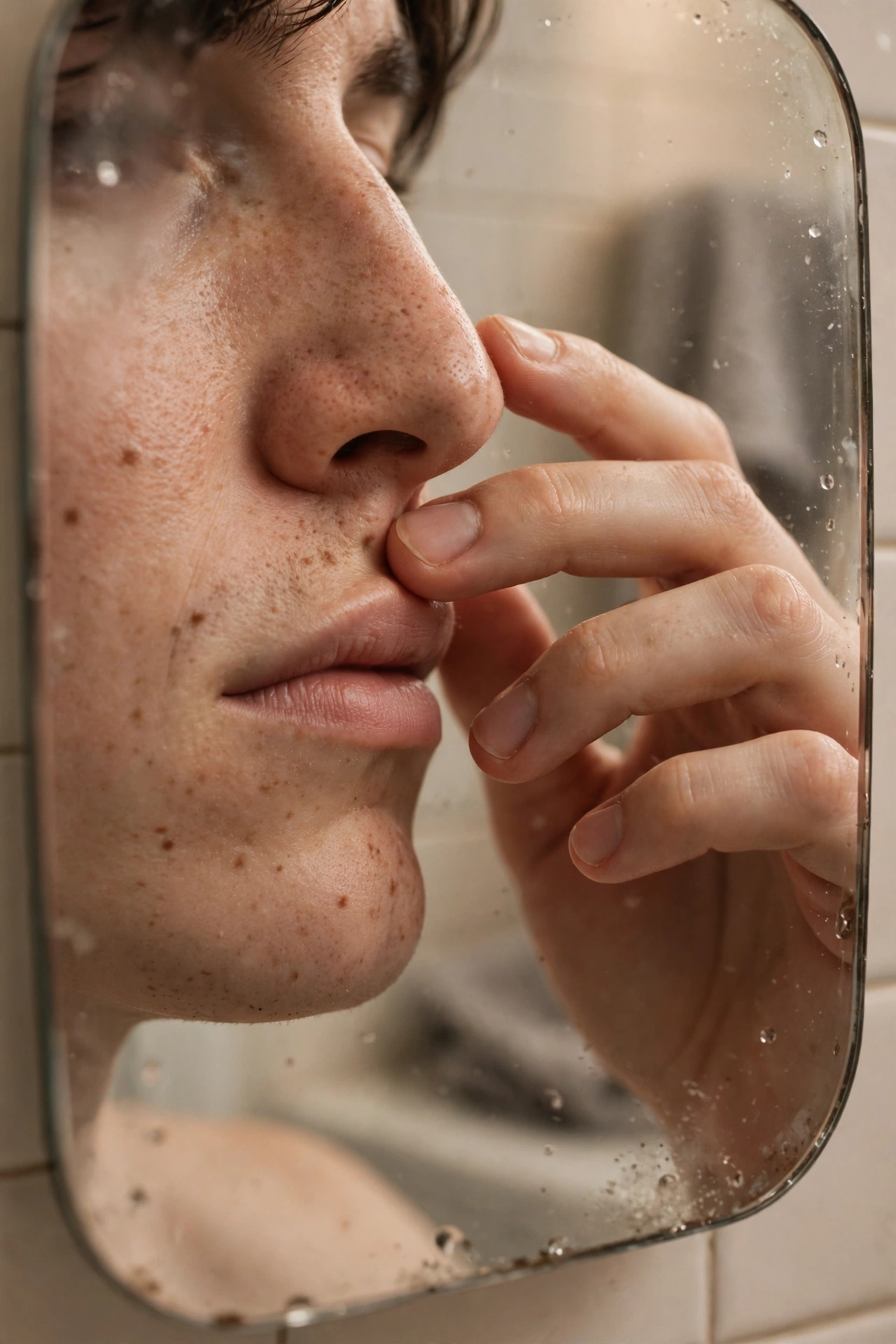
The triangle from the bridge of your nose down to the corners of your mouth has an ominous nickname for a reason. The veins in this part of the face connect, through a network with very few valves, toward the cavernous sinus — a large vein-filled space at the base of the brain. In theory, an infection from a squeezed spot in this area can travel along those veins and reach the brain, causing a serious infection.
Let us be honest: this is extremely rare, and most squeezed pimples heal without any drama at all. But the reason dermatologists keep repeating the warning is that the consequences, on the rare occasions they happen, are severe. Hands off, warm compress on, and let it heal on its own — your face will thank you either way.
7. MRI Machines
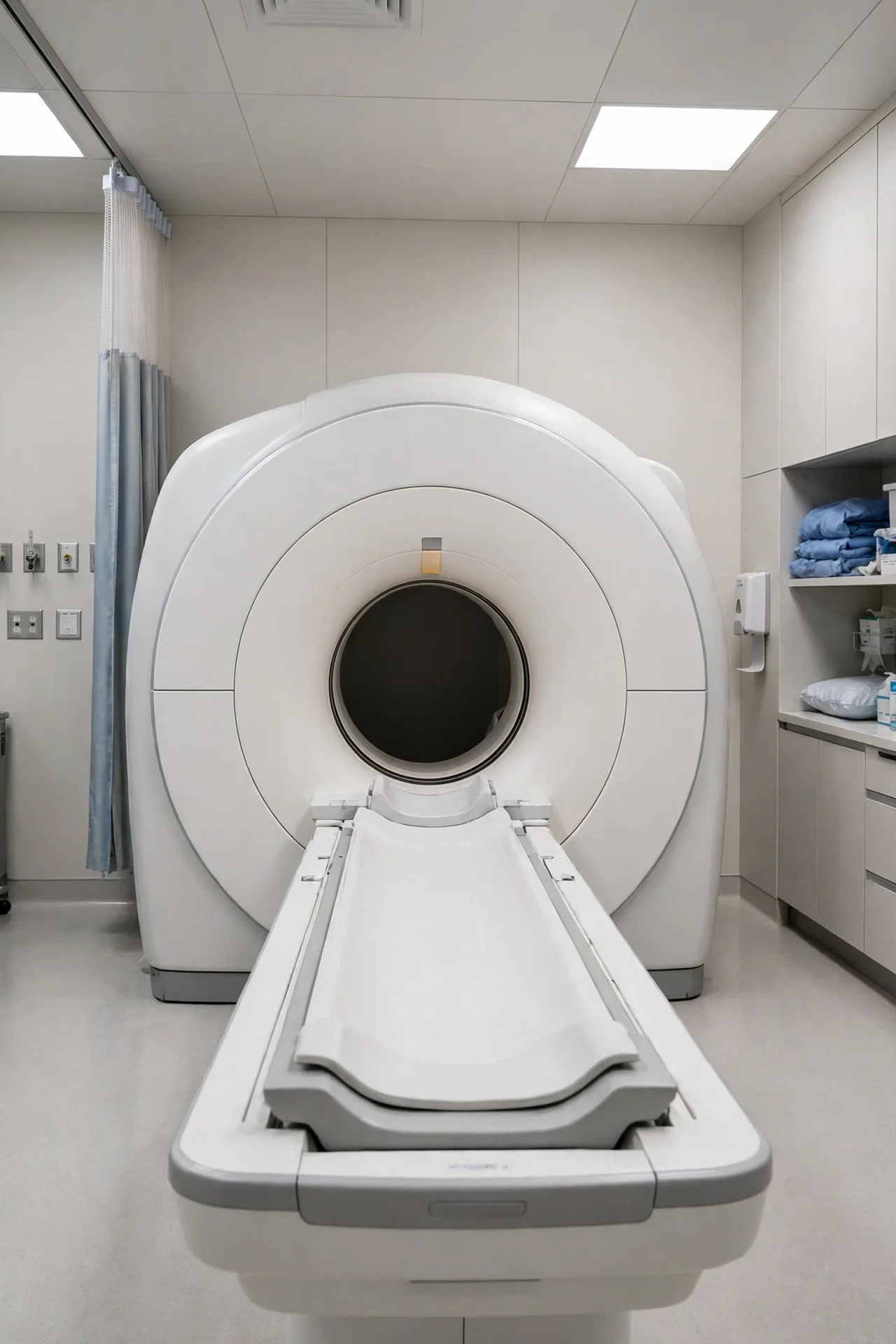
An MRI scanner looks like a harmless white tunnel, and the scan itself uses no radiation at all. What makes it dangerous is the magnet — and it is not the kind of magnet you switch on and off. The magnetic field in a clinical MRI scanner is tens of thousands of times stronger than the Earth’s magnetic field, and it is always on, even during a power cut. Anything ferromagnetic that enters the room becomes a projectile, pulled toward the machine with enormous force.
That is why hospitals screen everyone so carefully: oxygen tanks, wheelchairs, tools, and even some implants have been pulled into scanners, with fatal results in the worst cases. It is also why you should never walk into an MRI suite carrying metal, no matter how small or harmless it seems. The machine does not know the difference between a paperclip and a wrench.
8. Smoking While Wearing an Oxygen Cannula

Oxygen itself does not burn, but it makes everything else burn faster, hotter, and harder to put out. A nasal cannula delivers oxygen right under the nose, so the air around a person’s face and clothes becomes oxygen-enriched. A single cigarette, a lighter, or even a spark from a stove can set hair, clothing, or bedding alight in seconds — and burns in oxygen-enriched air are far more severe than ordinary burns.
Burn units see this injury regularly, and the advice is absolute: no smoking, no open flames, and no lighters anywhere near supplemental oxygen. If you or someone you love uses oxygen at home, the rule is simple and non-negotiable — the oxygen and the flame never share a room.
9. Expired Medications

That half-empty bottle at the back of the medicine cabinet feels harmless — it is just medicine, after all. But expired medicines can lose their strength, which means a drug you are counting on may not work when you need it. Worse, some medicines change as they break down, and liquid medicines in particular can grow harmful bacteria once their preservatives stop working. Taking an expired liquid antibiotic or eye drop is a genuine infection risk.
Most solid pills degrade slowly and simply become weaker, but “probably fine” is a poor standard for something you swallow. Check dates once or twice a year, throw out anything past its date, and store medicines somewhere cool and dry — the bathroom cabinet, warm and steamy, is actually one of the worst places for them.
10. Taking Ibuprofen Regularly

Ibuprofen is one of the most useful medicines in the world — it takes down pain, fever, and inflammation, and it is sold everywhere. Taken occasionally, it is very safe for most people. Taken every day for weeks or months, though, it quietly raises the risk of stomach ulcers and bleeding in the digestive tract, because it blocks the same protective lining that shields the stomach from its own acid. Those ulcers can bleed slowly for a long time, or burst suddenly — a genuine emergency.
Regular use also strains the kidneys and can raise blood pressure, especially in older adults. The practical takeaway is not to fear the occasional tablet. It is to avoid making daily painkillers a habit without a doctor’s guidance, to always take them with food, and to use the lowest dose that works for the shortest time you need it.
11. Tetrahydrozoline Eye Drops — Swallowed, Not Used in the Eyes

Redness-relief eye drops are perfectly safe when used the way they are meant to be used — a drop or two in the eye. The active ingredient, tetrahydrozoline, is a different story if it is swallowed. Even a small amount can slow the heart, drop blood pressure dangerously low, and cause drowsiness, breathing problems, or coma. It has been used in deliberate poisonings, including murders, precisely because a few drops in a drink are hard to taste.
Keep these bottles where children cannot reach them, never leave them near drinks, and treat them like any other medicine — useful in the right place, dangerous in the wrong one.
12. Brazilian Butt Lifts (BBLs)

A Brazilian butt lift sounds straightforward — fat is taken from one part of the body and injected into the buttocks to reshape them. But researchers have repeatedly called it the cosmetic procedure with the highest death rate of any elective surgery. The danger is fat embolism: if fat is accidentally injected into or under the large gluteal muscle, it can enter the bloodstream and travel to the lungs, blocking blood flow within minutes.
The risk is closely tied to technique, which is why surgical societies have issued strict safety guidance and why unlicensed clinics and bargain prices are such a red flag. Anyone considering this surgery should know the numbers before they book anything — and should only ever consider a board-certified surgeon working in a properly equipped facility.
13. Lying About Eating Before Surgery

Before any operation under general anesthesia, the team will ask the same question several times: have you eaten or drunk anything? It can feel like an annoying rule, especially when you are hungry and nervous. But it exists because anesthesia relaxes the muscles that normally keep stomach contents where they belong. If there is food in your stomach when you go under, it can come back up and be inhaled into the lungs — aspiration — which can cause severe pneumonia or block the airway entirely.
That is why fasting times are strict, and why sneaking a snack before surgery is never worth it. If you did eat, say so. The operation can be rescheduled. An aspiration injury cannot be undone.
14. Choking on Boba Pearls

Bubble tea is fun, sweet, and everywhere — and the pearls that make it special are also a genuine choking hazard. The soft, slippery tapioca balls are just the wrong size to lodge in an airway, and because they are sucked up through a wide straw, they can arrive at the back of the throat faster than you expect. Laughing, talking, or walking while drinking makes it worse, because the pearl can be pulled down the windpipe instead of the food pipe.
Most of the time a cough clears it. But a pearl that fully blocks the airway is a real emergency — vision can start to go dark within a minute. Slow down, sip sitting down, chew the pearls properly, and keep bubble tea away from small children altogether.
15. Bath Toys With Holes in Them

The rubber duck is the mascot of bath time — cheerful, soft, and seemingly harmless. The problem is the little hole in the bottom. Every time the toy is squeezed, water gets inside, and the dark, warm, damp interior becomes a perfect home for mold and bacteria. Squeeze an old bath toy and you may see a stream of black, slimy water come out — water your child has been splashing, and sometimes swallowing, at every bath.
Hole-free bath toys exist, and they are the better choice. If a toy already has a hole, seal it with a dab of hot glue, or replace it regularly and let it dry fully between baths. And like any small toy, keep them out of reach of babies who might chew on them or put them in their mouths.
16. Cows

Cows look slow, placid, and about as threatening as a hay bale. They are also large animals — often weighing over half a tonne — with hard hooves, sharp horns in some breeds, and a strong protective instinct around their calves. Every year, cows injure and kill far more people than sharks do, usually through kicks, trampling, or headbutts when someone gets too close, surprises them, or steps between a mother and her calf.
Most incidents involve farm workers, walkers cutting across fields, or people trying to take a photo up close. The safety rules are simple: never walk through a field of cattle with a dog, keep your distance from calves, and treat a cow the way you would treat any animal that outweighs you ten times over — with respect.
17. Ostriches

An ostrich looks almost cartoonish — a huge bird on two spindly legs, all neck and feathers. But those legs are among the most powerful in the animal kingdom. An ostrich can run at highway speeds, and a single forward kick, delivered with a long, sharp claw, can disembowel or kill a person or a predator. Farmers and zookeepers treat them with the same caution they would give any large, unpredictable animal.
Wild ostriches usually prefer to run away, and attacks on people are rare. But a cornered ostrich, or one defending its nest, is a very different animal. Admire them from behind a fence, and never approach one in the open.
18. Nylon Mooring Line Snapback

Docking a ship looks slow and stately, but the ropes involved are under astonishing tension. Nylon mooring lines stretch like giant rubber bands as they hold a ship against the dock — and if one snaps, the stored energy releases in an instant. The broken line whips back across the deck faster than anyone can react, and sailors call the danger area the snapback zone for good reason. A snapped line can cut a person in half or throw them overboard.
Ports and ships mark these zones clearly, and crews are trained to stay out of them during mooring operations. It is a hazard most of us will never meet — but for anyone who works around boats, it is one of the first things they learn.
19. Exploding Tires
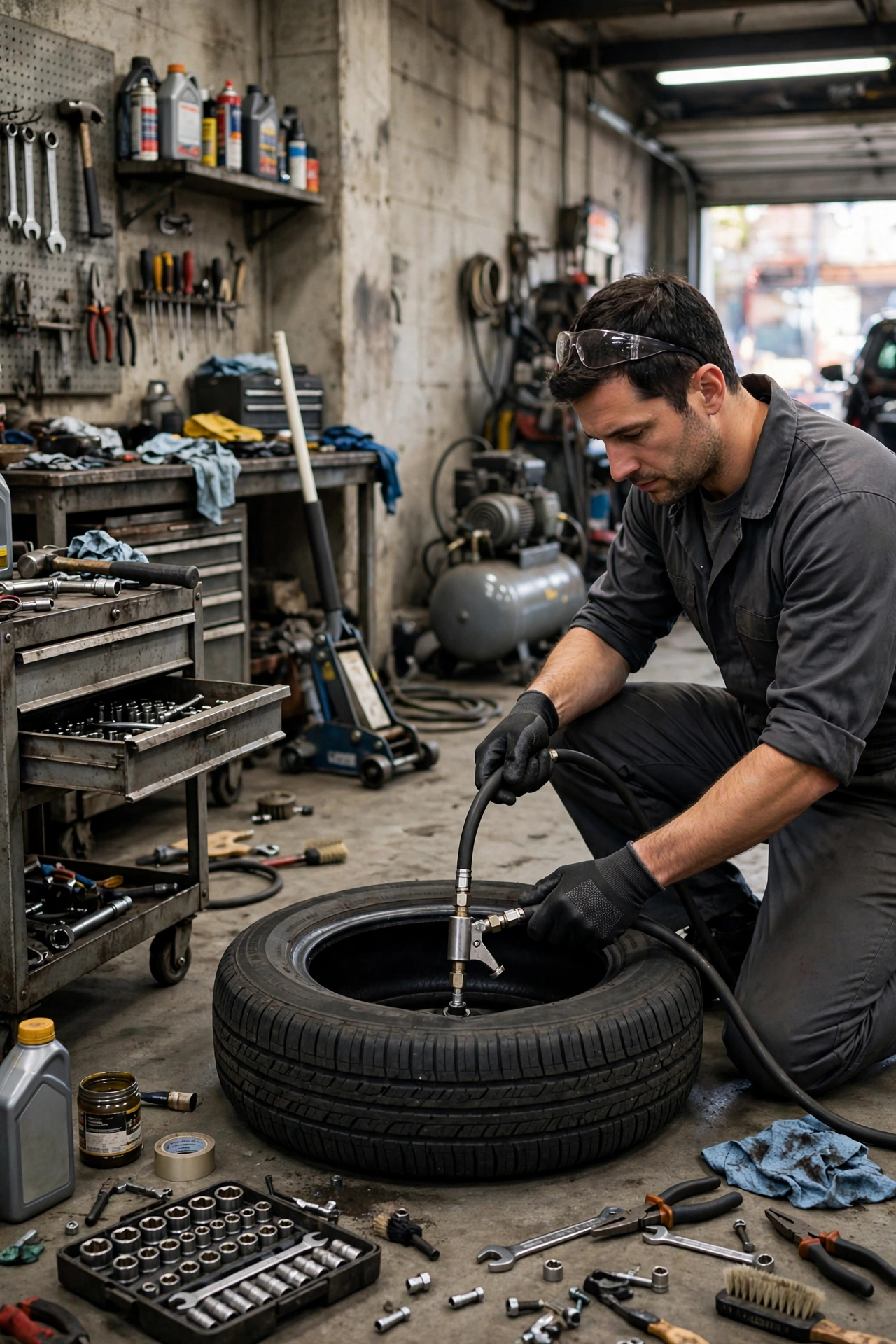
A car tire is a pressure vessel. At normal road pressure, it holds an enormous amount of stored energy — and when a tire fails during inflation, that energy releases all at once. The explosion can throw the tire, the rim, and anything nearby across a workshop, and people have been killed standing beside a tire that let go. The risk is highest with damaged, worn, or over-inflated tires, and with truck tires, which run at far higher pressures.
This is why tire shops use safety cages for inflation and why mechanics stand to the side, never leaning over the tire. If you are inflating a tire at home, check it for bulges, cracks, or damage first, use a gauge, and never exceed the pressure listed on the tire or the car.
20. Pressurized Air
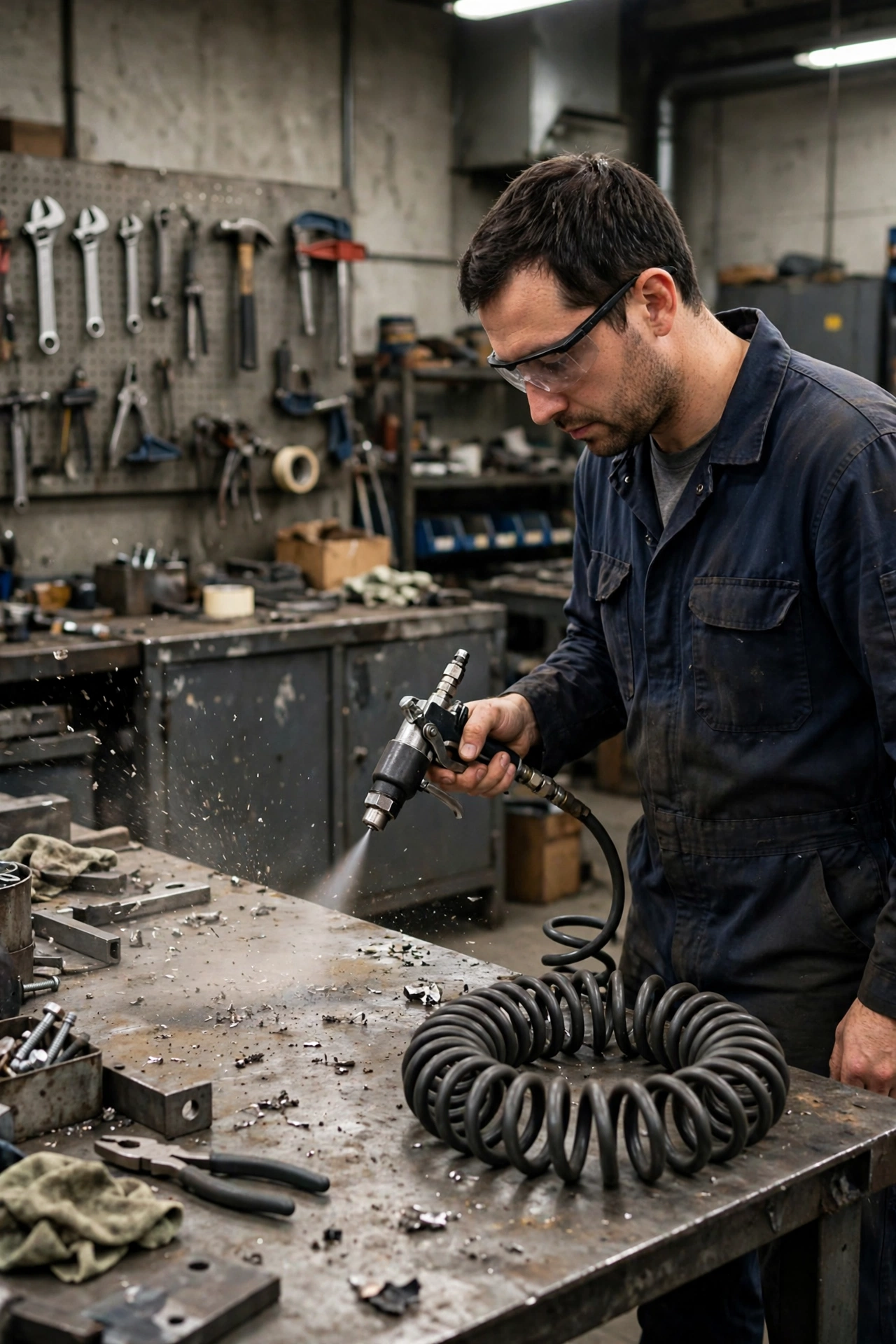
A blast of compressed air feels like nothing more than a strong breeze — workshops use it to blow dust off benches and clothes every day. But air at workshop pressure, around 100 pounds per square inch or more, can force its way through skin, even through clothing. If it enters the bloodstream, it can cause an air embolism: a bubble that blocks blood flow to the brain or heart, which can kill within minutes.
Compressed air can also rupture an eardrum or damage an eye in an instant. The safety rules are clear and simple: never point an air hose at yourself or anyone else, never use it to clean dust off your body, and always wear eye protection when using it.
21. Jumping Through Glass
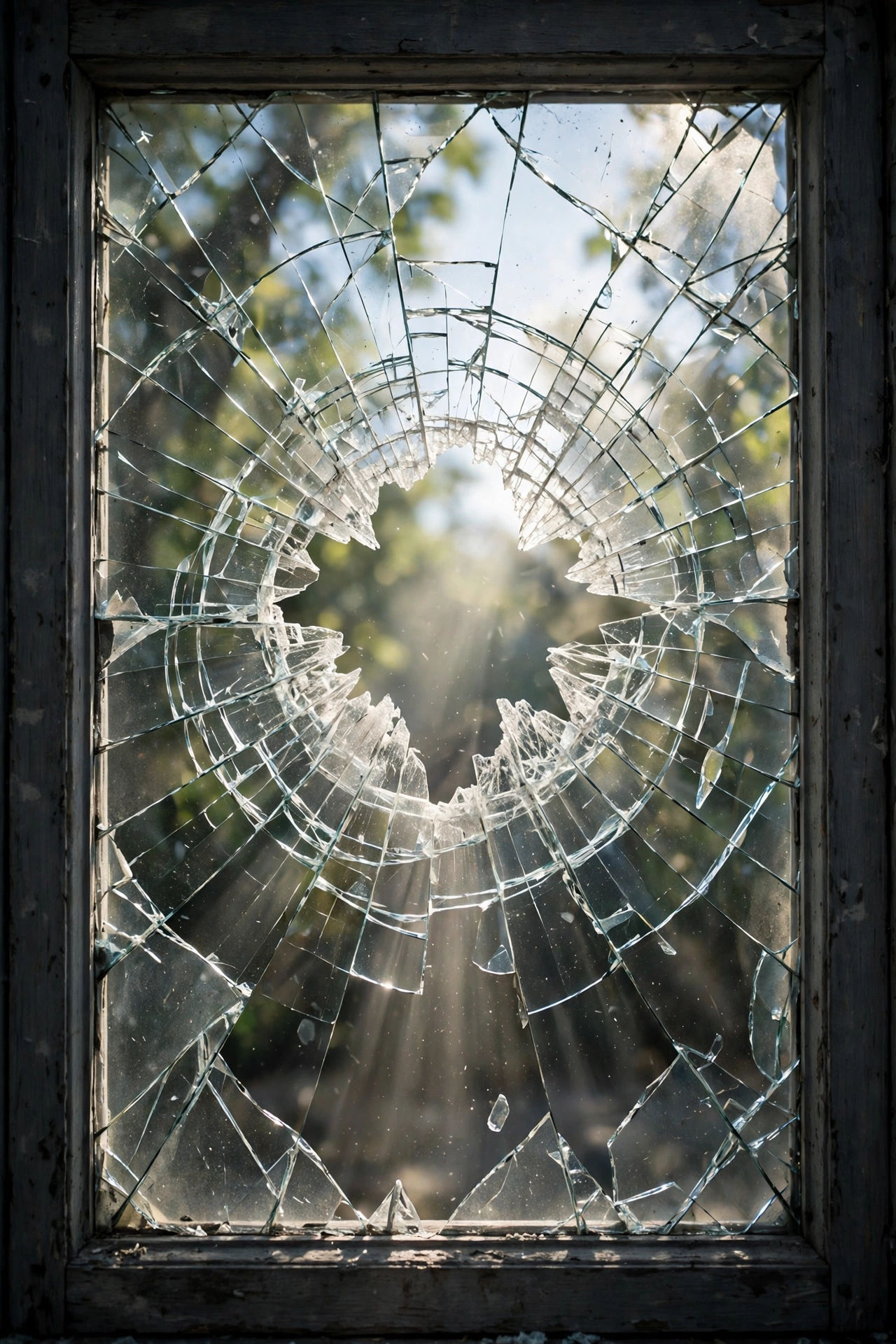
Movies make jumping through a window look effortless — the hero sails through in a shower of harmless sparkles and lands running. Real glass does not work that way. A window pane breaks into large, razor-sharp shards that can slice deep into arms, legs, and the neck as you pass through. People have bled to death from glass injuries that looked minor at first, because a shard can sever an artery before anyone realises how deep the cut is.
Even safety glass, which breaks into small cubes, is not safe to throw yourself through — the frame, the edges, and the fall on the other side are all waiting. If you ever need to get through a window in an emergency, break it from a distance, clear the frame carefully, and climb through slowly, or better yet, find another way out.
22. Manhole Covers
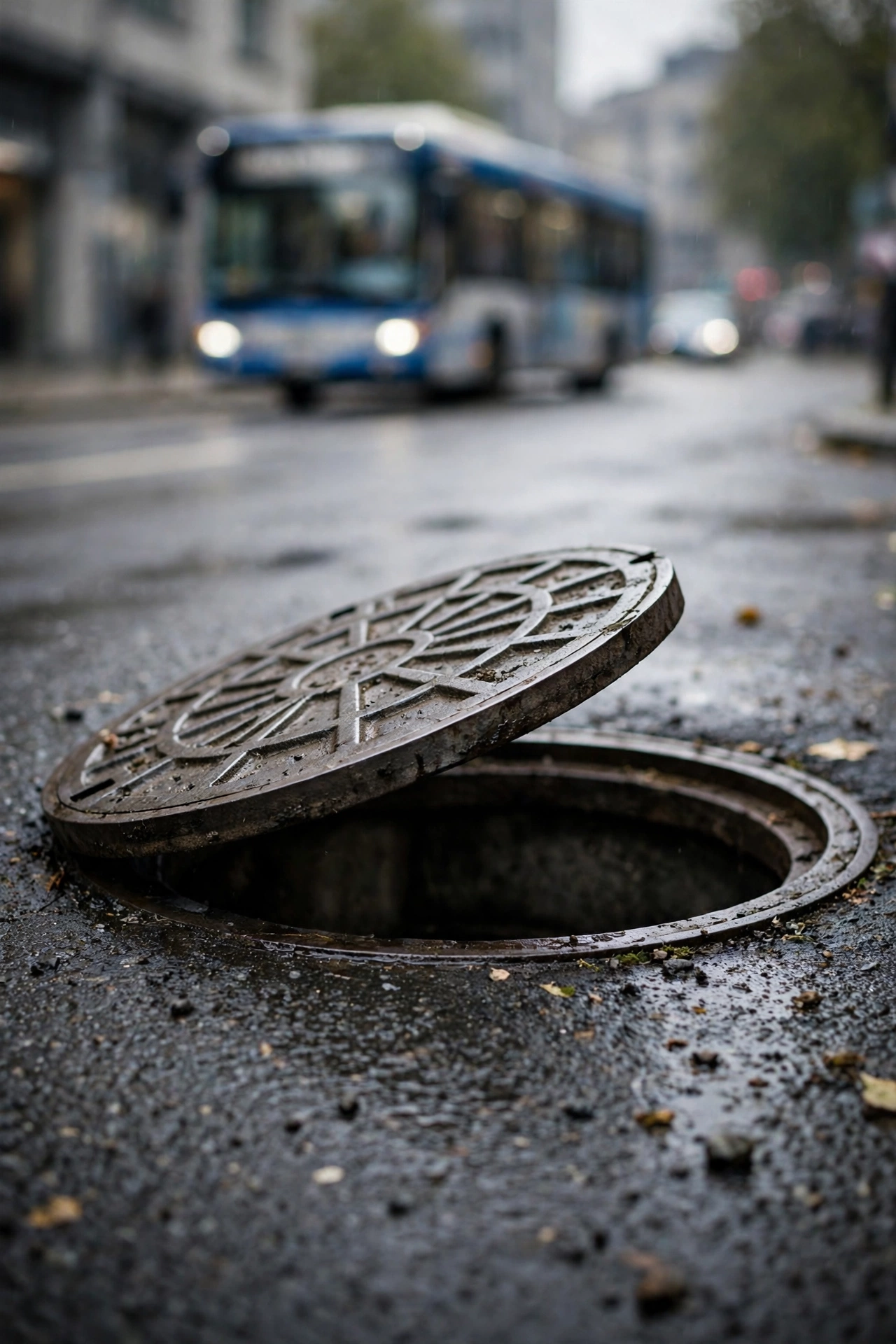
A manhole cover is one of the most boring objects in a city — a heavy iron disc you walk over without a thought. But a loose or unsecured cover is a real hazard. A heavy vehicle can catch its edge and flip it into the air like a coin, or a build-up of pressure or gas below can lift it out of place. The result is a sudden, deep hole in the middle of a road or pavement, and a heavy iron disc flying through the air.
It is rare, but it happens — and a person walking over a cover just as it shifts has almost no time to react. If you ever see a cover that is cracked, rocking, or sitting crooked, report it to the city and give it a wide berth. Boring infrastructure only stays boring when someone is looking after it.
None of these things should keep you awake at night. Millions of people get their hair washed, drink bubble tea, and walk past manhole covers every single day without incident. But a little respect for the quiet risks — checking the hammock, sitting up in the car, keeping the straw out of your pocket while you walk — costs nothing and buys a lot of peace of mind.
And if you found this list unsettling in a good way, there is more where it came from: our 21 societal shifts no one really talks about, according to older folks and the 27 things people brag about that are actually big red flags are both worth a read next.