A wood stove already gives a winter room a strong focal point. The styling works best when you let the hearth materials carry the close-up detail, then add softness, storage, and light farther out in the room. You get the inviting view of a fire without turning the loading area into an obstacle course.
Start here: choose one material-led idea from the first three, then add whichever of the remaining ideas solves a real problem in your room. You do not need ten new purchases. A chair turned toward the stove, a better place for logs, or a lamp switched on at dusk may be the change you notice most.
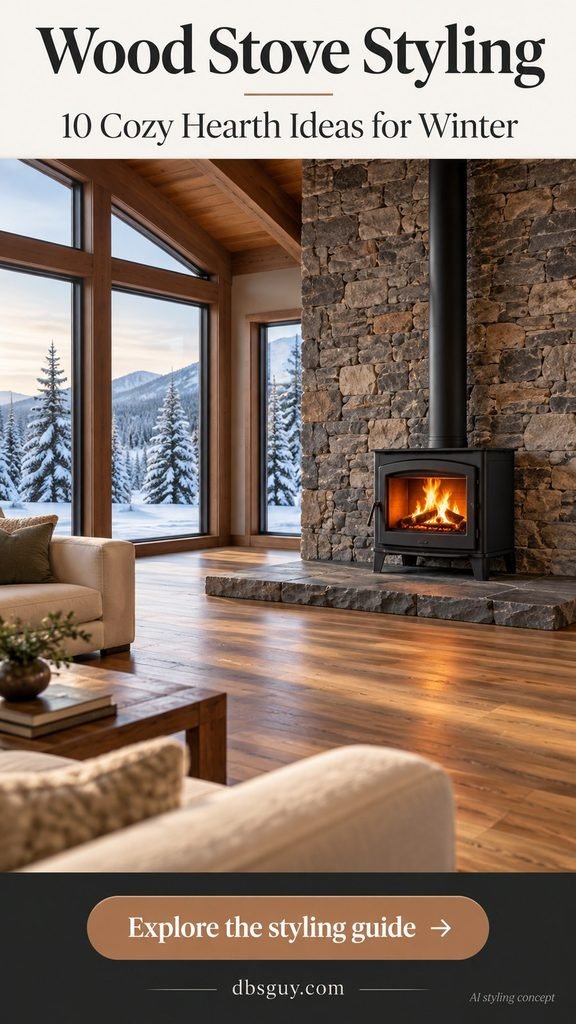
The images in this guide are AI-generated styling concepts, not photographs of inspected installations. Use them for color, texture, and room-composition ideas—not to judge distances, hearth dimensions, chimney details, or code compliance.
Before You Style: Keep the Working Hearth Clear
Find the manual for your exact stove and venting system before moving furniture or changing the surround. Required clearances and floor protection depend on the appliance, installation, and local requirements. Have a qualified hearth professional check proposed changes to the hearth, wall finish, shielding, or venting. A layer of attractive tile or stone does not automatically make an underlying combustible wall or floor safe.
The U.S. Fire Administration’s heating fire safety guidance calls for keeping things that can burn at least 3 feet from heat sources, including wood stoves, and having heating equipment and chimneys professionally cleaned and inspected each year. Treat that as a baseline for movable decor; follow any greater distance your installation requires. It is not a substitute for model-specific installation clearances.
Keep the stove top, door swing, loading route, and access for cleaning unobstructed. Locate curtains, throws, baskets, books, firewood, and seasonal greenery outside the required clearances. Measure from the heat source, not simply from the edge of the hearth.
Choose Your Starting Point
- Your hearth looks unfinished: explore stone, brick, or patterned tile in Ideas 1–3.
- The room feels awkward to use: focus on seating, log storage, and tools in Ideas 4–6.
- It feels cold even when the fire is glowing: try textiles or lamplight in Ideas 7–8.
- You want a seasonal refresh without crowding: use Ideas 9–10.
1. Let Stone Set the Mood
A textured stone backdrop gives a plain black stove enough visual company that you can leave the hearth itself bare. Warm gray, sandy beige, and softly mottled brown all sit comfortably beside winter whites. Choose a stone tone that already appears somewhere in the room—a floor undertone, a chair fabric, or even the view outside.
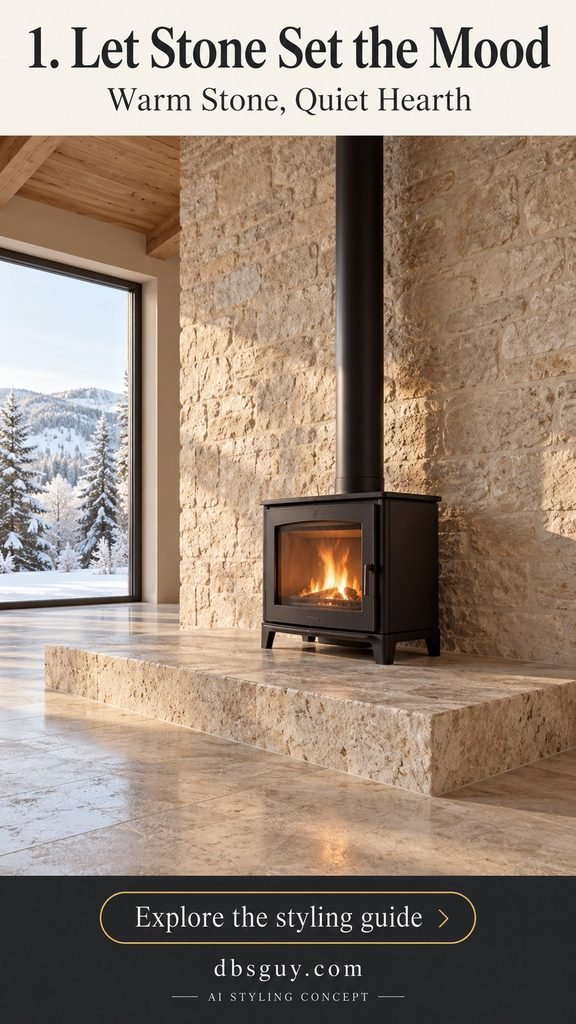
For an existing stone hearth, start by removing decorative objects and looking at the stone in daylight. If it reads cool, repeat a warmer color in the seating area rather than adding more items beside the stove. Oatmeal upholstery and one caramel cushion can soften the overall picture while leaving the stone visible.
If you are renovating: ask your installer to specify the complete approved hearth and wall assembly before choosing the visible finish. Texture and color are design decisions; the required protection underneath is a separate decision.
Smallest useful change: borrow a warm neutral pillow from another room and test it on the sofa. This lets you judge the palette before buying stone samples or new furnishings.
2. Make Brick Feel Cozy With Warm Neutrals
Red brick can feel inviting without a whitewash or a new mantel. Its orange, brown, and charcoal flecks already form a palette. Pull one of the lighter tones into the nearby room with cream upholstery, a pale lampshade, or a simple framed print on a wall away from the stove.
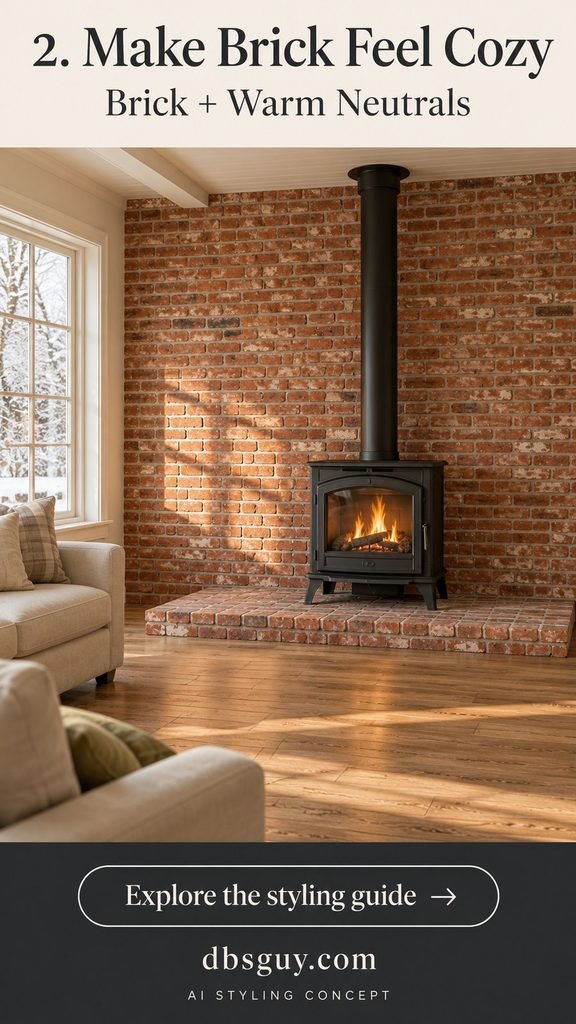
Keep the hearth visually simple so the brick pattern has room to register. If the room feels dark, lighten the seating and lighting first. You may find that the brick looks richer once it is no longer surrounded by equally dark furniture.
With a busy brick wall, use mostly solid fabrics and one restrained pattern elsewhere. A small check on a cushion gives a cottage feel; smooth oatmeal linen takes the same brick in a quieter direction.
Avoid the quick-cover trap: do not add peel-and-stick panels, a timber surround, or an ordinary decorative coating near the stove as a cosmetic shortcut. Any change in the heated area needs to be suitable for that exact application and checked against the installation requirements.
3. Give the Hearth a Pattern
If your walls and furniture are simple, a patterned hearth finish can provide the detail the room is missing. A muted two-color design—ivory and charcoal, for example—connects naturally with a black stove without needing extra accessories.
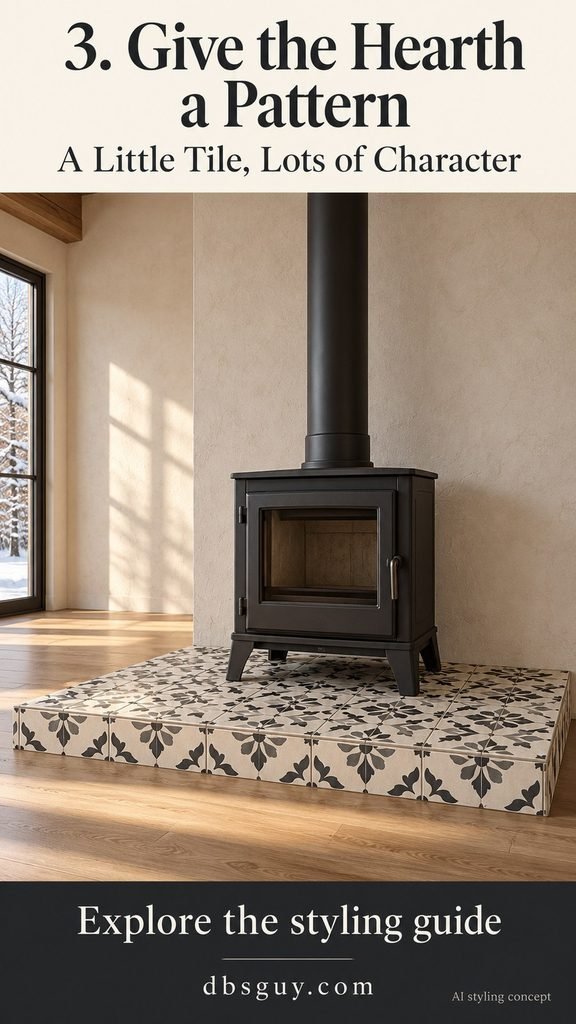
Choose one patterned surface and let the surrounding wall stay quiet. Before committing, lay out several tile samples together away from the stove. A single tile can look delicate in your hand but feel surprisingly busy when the motif repeats across a whole platform.
For a softer winter look, favor a lower-contrast pattern. For a graphic room, repeat the dark tile color in a distant picture frame or lamp base. Either way, leave the finished hearth uncovered so the pattern can do its job.
Plan this as a renovation: tile is the finish, not proof of adequate heat protection. Your installer needs to confirm the supporting assembly, any required thermal resistance, finished dimensions, and suitability of the setting materials. Do not layer decorative tiles onto an existing installation without that check.
4. Create a Reading Corner With a View of the Fire
A reading chair does not need to sit beside the stove to feel connected to it. Place the chair outside the required clearances, then angle it so you can see the fire without twisting your shoulders. The resulting corner feels purposeful even when the stove is unlit.
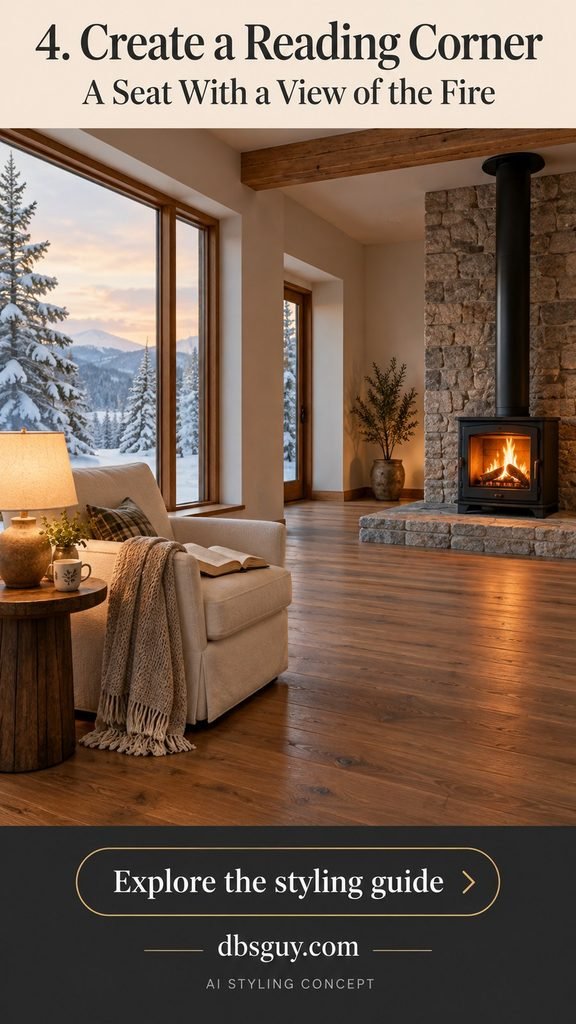
Add a side table large enough for a mug and your current book, plus a lamp positioned for reading. Keep those pieces within comfortable reach of the chair so you are not tempted to use the hearth as a table.
Before settling on the layout, walk the route you take when carrying wood and accessing the stove. Then check where an ottoman or recliner extends during use. The arrangement needs to work with the furniture occupied, not just neatly pushed back for a picture.
Try it without shopping: move an existing armchair and lamp first. Live with the view and walking route for a few evenings before buying a matching ottoman.
Also Read: 28 Cozy Reading Nook Ideas for Small Spaces
5. Make Log Storage Intentional
A modest stack of split wood brings natural texture into the room, but firewood is fuel—not a harmless accessory. Give it a dedicated place outside the stove and venting clearances, rather than leaning it against the appliance or filling the space underneath.
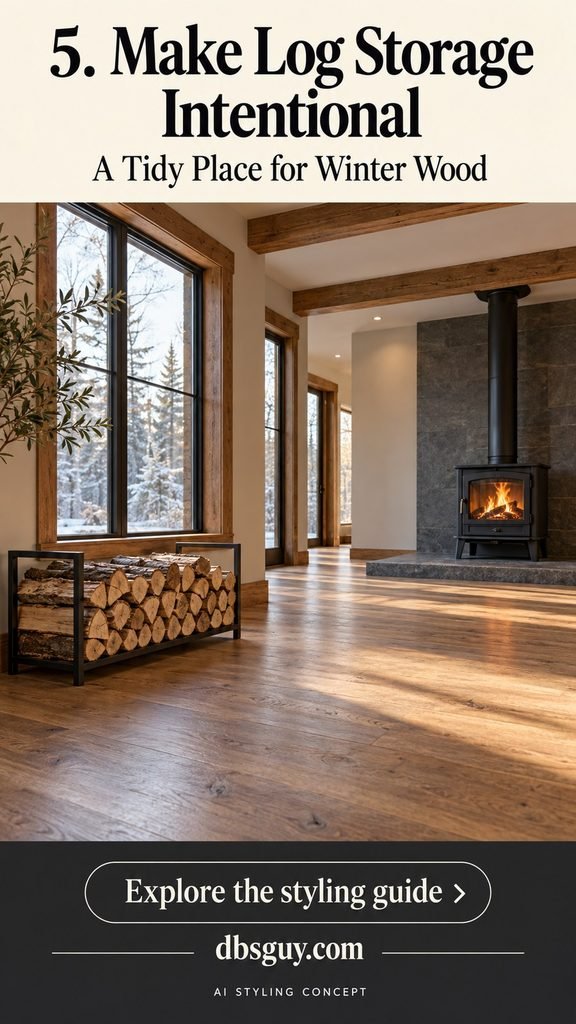
A low metal rack makes the ends of the logs visible and helps define a tidy storage area. Choose one that holds the quantity you actually bring inside, keeps pieces contained, and leaves the route to the stove open. A metal holder does not make the wood inside it noncombustible.
For a calmer appearance, keep the stack below the top of the rack and clear up bark fragments instead of letting the pile spread. Store the main supply outdoors, off the ground, with the top covered and the sides open to airflow; the living room should not become the seasoning area.
If space is tight: keep the supply in another suitable location. You can bring warmth into the color scheme without displaying firewood in the room at all.
6. Keep Tools Simple and Easy to Reach
A practical tool set can be the only accessory the hearth area needs. A plain black stand repeats the stove’s finish and looks settled against either stone or brick. Choose tools suited to your appliance and the tasks described in its manual, rather than buying a large set for appearance alone.
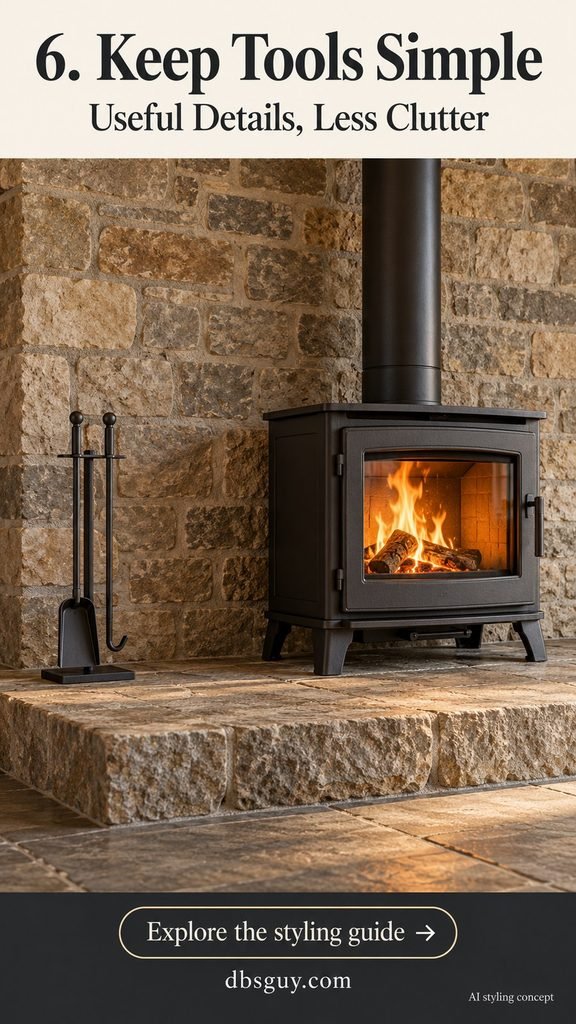
Check the stand’s stability, the space it occupies, and whether a tool lifts out without knocking the others loose. Position it to the side where it will not interfere with opening the stove or carrying a load of wood. Tools and handles can become hot; convenient access does not mean pressing the stand against the appliance.
If your set includes a brush, wooden grips, or other combustible parts, keep those outside the required clearances. The spare all-metal arrangement shown here illustrates the look, not an instruction to place every tool directly on your hearth.
Keep ash handling separate: an ornamental pail is not automatically an appropriate ash container. Follow the stove manual; EPA guidance calls for a covered metal container stored outdoors on a nonflammable surface.
7. Layer Softness in the Seating Area
The contrast between a hard hearth and soft seating makes the room feel comfortable. Keep that softness on the furniture: one textured throw, a supportive cushion, and a fabric you enjoy touching are enough to change how the space feels.
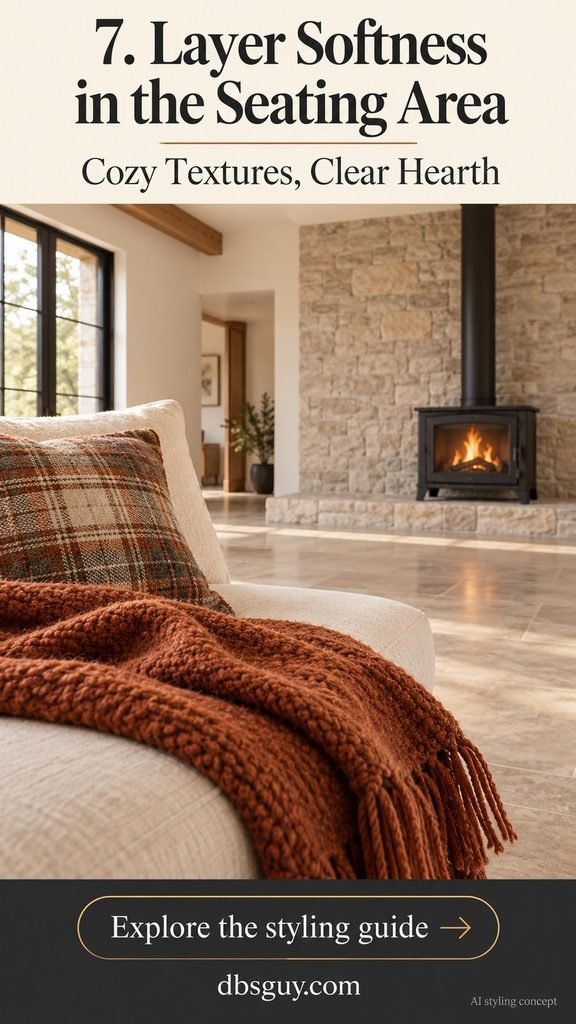
Try rust with warm stone, olive with red brick, or oatmeal with charcoal tile. Repeat the chosen accent once elsewhere in the room so it feels connected. You do not need a matching collection of blankets, pillows, curtains, and accessories.
Fold a throw over the back of a chair or sofa instead of leaving long ends trailing toward the stove. If you add an area rug, keep it within the seating zone and outside the required clearances. A decorative rug does not replace the specified hearth protection, whatever its product name suggests.
Budget-friendly approach: swap cushion covers and use a blanket you already own. Buy for comfort and washability rather than adding more layers than the seat can comfortably hold.
Also Read: Top Fall Indoor Decorations Ideas for Cozy Living Spaces — especially the warm palettes and textile pairings that carry into winter.
8. Add a Second Warm Glow
Firelight draws your eye, but it does not make every corner usable. A table lamp in the seating area adds a separate pool of light for conversation, reading, or finding a mug after sunset. It also keeps the room inviting when the stove is off.
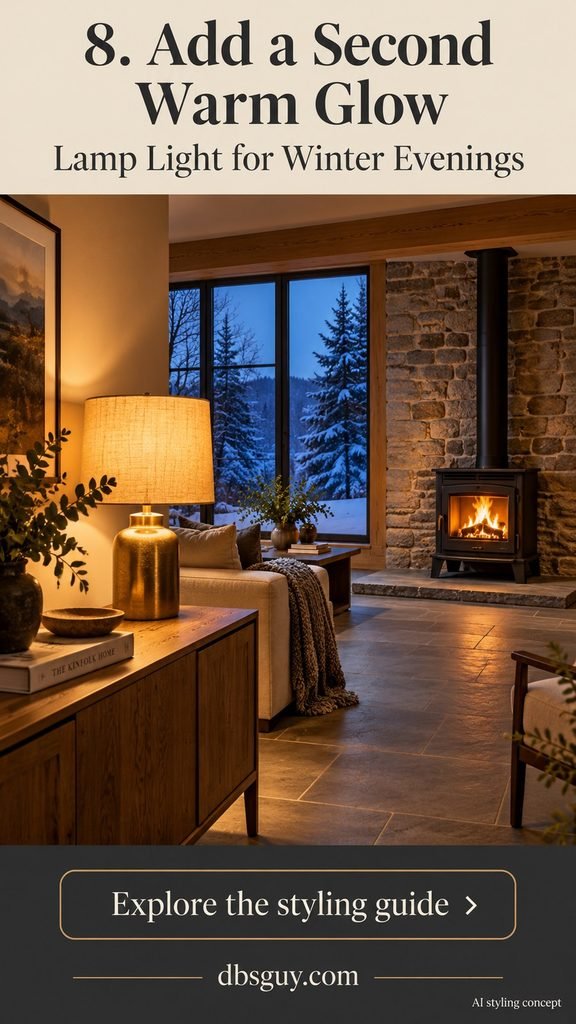
Place the lamp on a stable side table or console away from the stove and flue. A shade that hides the bulb from your usual seated position helps the light feel gentler. A brass or warm ceramic base can echo the fire’s color without adding another flame.
Test the arrangement after dark. If the overhead light makes the room feel flat, try using the table lamp on its own for a quieter mood, adding task lighting where you need it. Choose a bulb compatible with the fixture and its rating.
Practical check: route the cord away from the hearth, hot surfaces, and walkways. If the only outlet requires a cable across the stove-loading route, choose another position.
9. Move Winter Greenery Away From Heat
A winter arrangement can belong to the room without sitting on the hearth. Put a small vase of greenery on a console or sideboard outside the required clearances, and keep the stove area clear. From the doorway, you can still see the seasonal accent and the fire together.
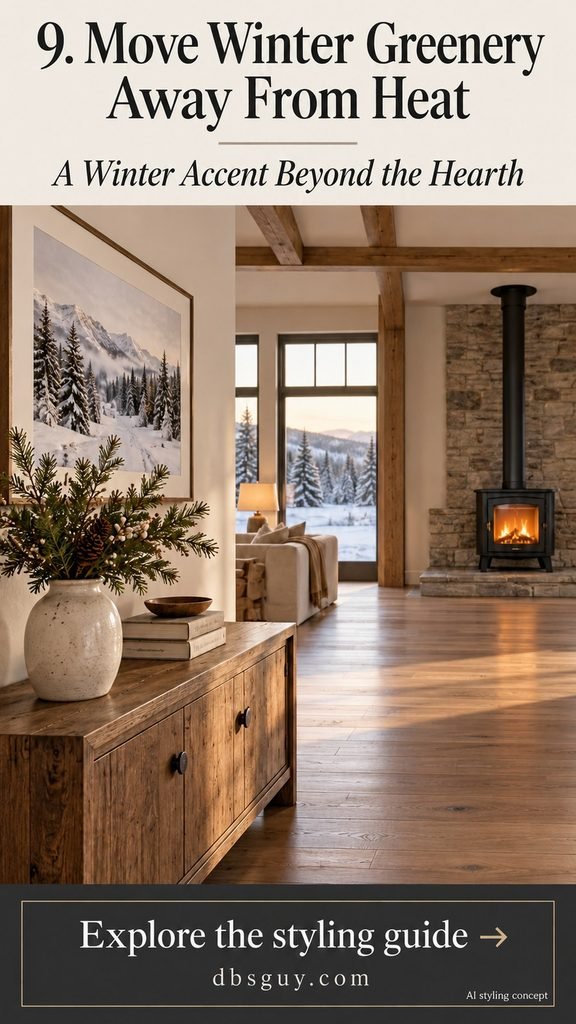
Choose one simple combination: evergreen stems and an ivory vase, or a winter landscape print and an empty ceramic bowl. Keeping the display small makes it easier to carry the look into January without a full room reset.
Real, dried, and artificial greenery all need to stay away from heat. Do not drape garlands across the stove, pipe, or nearby surround. Check the reach of the tallest stems as well as the position of the container; the vase may sit safely while a branch extends into an unsuitable area.
For the easiest version: use a snowy landscape print on a distant wall. It gives the room a winter cue without dropping needles or occupying a tabletop.
Also Read: How to Create a Cozy Living Room with Floating Shelves & Plants — for decorating other walls in the room, away from stove heat.
10. Keep a Small Hearth Visually Quiet
In a small room, the most useful styling decision may be leaving the hearth alone. Keep the stove, its required floor protection, and its clear space visually legible. Then give the rest of the room a limited palette so the installation feels like part of the space rather than a crowded corner.
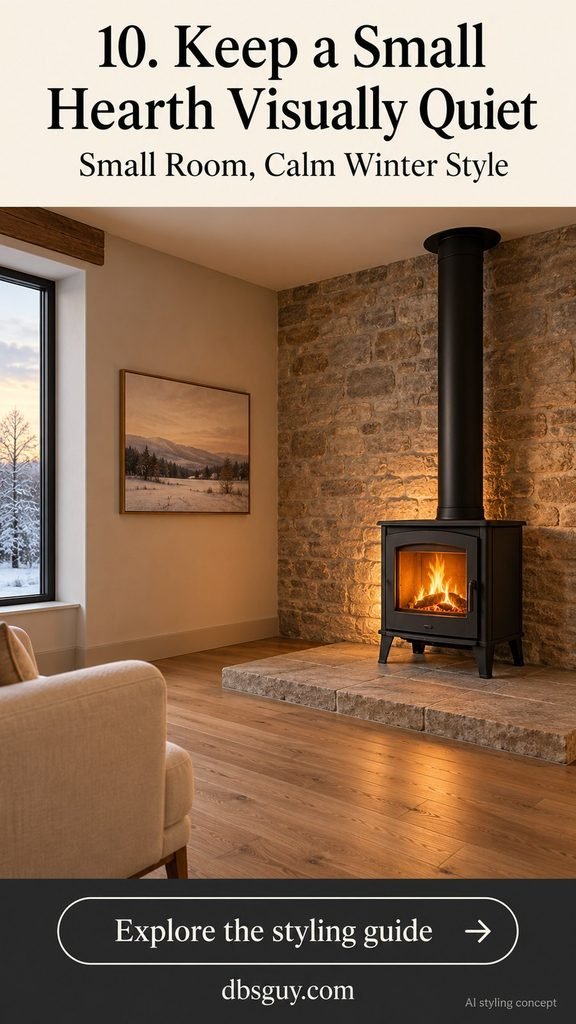
Repeat just two or three existing colors: black from the stove, a pale tone from the wall, and a warm neutral from the floor or stone. A single artwork on another wall can supply the detail. Avoid lining the hearth edge with little objects that each need to be moved for cleaning.
Choose furniture by how it fits outside the clearances and circulation routes. A narrower chair may help; shrinking the hearth or moving a stove closer to a wall to gain decorating space is not a styling adjustment.
Five-minute edit: remove nonessential objects from the hearth area, put books beside the chair, and clear the loading route. Take a doorway photo. If the stove already anchors the room, you may be finished.
Also Read: 30 Japandi Living Room Ideas for Effortless 2027 Calm
Bring Your Winter Hearth Together
Pick one surface to feature, one place to sit, and one source of light beyond the fire. Give logs and tools a home that supports everyday use. Then stop adding things when the room feels comfortable and the stove remains easy to access.
Before lighting the stove after your refresh, check the furniture in its normal, lived-in positions: chair pulled out, blanket unfolded, footrest extended. The best arrangement is one you can enjoy all winter without constantly moving decorations out of the way.