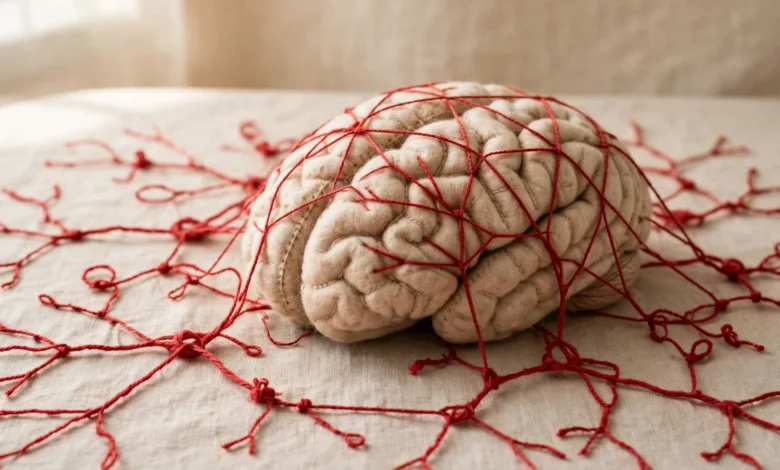
Most of us keep a close eye on our hearts. We check our blood pressure at the pharmacy, we watch our cholesterol numbers, and we notice when our step count drops. But when was the last time you gave your brain the same kind of routine attention? For most people, the answer is: never. Memory, focus, and clear thinking tend to get noticed only when something starts to feel off — and by then, valuable time may already have passed.
Neurologists say that is exactly the habit worth changing. The single most useful mindset shift for protecting your brain as you age is surprisingly simple: start treating your brain the way you already treat your heart. Give it regular check-ins, pay attention to small changes, and take care of it long before anything goes wrong. It sounds obvious, but for most of us it is a genuinely new way of thinking — and experts say it could make a real difference over the years.
1. Your Brain Deserves the Same Routine Attention as Your Heart

Think about how much attention your heart gets. Blood pressure readings, cholesterol tests, blood sugar checks — these are all part of ordinary medical care, and nobody finds them unusual. Your brain, on the other hand, almost never comes up in a routine appointment unless there is already a problem.
Davide Cappon, director of neuropsychology at Tufts Medical Center, puts it plainly: we should think about brain health the same way we think about heart health. Just as a doctor asks about your blood pressure or your cholesterol, conversations about memory and thinking should be a normal, unremarkable part of growing older. The goal is not to worry more — it is to notice sooner, when there is still plenty of time to act.
2. Make Brain Health Part of Your Regular Checkups

The easiest place to start is the appointment you already have. When you see your doctor, mention how your memory and thinking have been — not just when something feels wrong, but as a regular part of the conversation. A brief mention, once a year, is enough to establish a baseline that makes future changes much easier to spot.
This is also where being proactive pays off. Keep challenging yourself, stay engaged with the world around you, and treat brain health as a standing item on your health list rather than a crisis to deal with later. If you notice a change — a name that keeps slipping away, a familiar route that suddenly feels confusing — bring it up with your provider instead of brushing it aside. Small changes are worth mentioning precisely because they are small.
3. Stay Curious and Keep Challenging Yourself

A brain that is regularly asked to do new things stays sharper for longer. That does not mean puzzles for hours a day — it means keeping your days varied and your mind engaged. Read about something unfamiliar. Take a different route on your walk. Learn the names of the birds in your garden. The point is not the activity itself, but the habit of staying mentally active.
Physical activity belongs in the same picture. Regular movement supports the brain as much as it supports the rest of the body, and it pairs naturally with the other everyday habits that protect thinking: eating well, sleeping properly, and staying connected to the people around you. None of these is dramatic on its own. Together, they add up to a daily routine that quietly works in your brain’s favor.
4. Catching Changes Early Makes a Real Difference

One reason early attention matters is simple: the sooner a change is noticed, the more options there are. With conditions like dementia and Alzheimer’s disease, recognizing a problem early gives doctors more room to step in, fine-tune treatment, and work on slowing progression. Waiting until symptoms are impossible to ignore narrows those options considerably.
That is why knowing what to watch for is so useful. Subtle shifts — in memory, in language, in the ability to follow a familiar task — are worth noticing rather than explaining away. If you would like to know which early signs specialists say people most often miss, our earlier look at the overlooked signs of Alzheimer’s that neurologists wish everyone knew is a helpful companion to this one. Even small, everyday changes can be early signals — researchers have even found that changes in handwriting may be linked to cognitive decline in older adults.
5. Don’t Wait for Symptoms to Start Taking Care of Your Brain

The most important part of the mindset shift is timing. Brain care is not something to begin after a scare — it is something to build into ordinary life, starting now, at whatever age you are. The habits that support thinking are the same ones doctors recommend for almost everything else, which makes them easy to start and easy to keep.
Stay physically active in whatever way suits you. Eat in a way that is rich in vegetables, whole grains, and healthy fats. Get enough sleep — and if your sleep is regularly disturbed, it is worth looking into, because even something like drooling in your sleep can be a tell about your health. Keep your social life active, hold on to a sense of purpose, and keep conditions like high blood pressure and diabetes well managed. Each of these steps is modest. Together, they are linked to a lower risk of cognitive decline.
6. The Numbers Behind Prevention Are Encouraging

If you need motivation, the research is genuinely hopeful. According to the 2024 Lancet Commission on dementia, as many as 45 percent of dementia cases worldwide could potentially be prevented or delayed by addressing 14 modifiable risk factors — things like hearing loss, high blood pressure, smoking, obesity, depression, physical inactivity, diabetes, excessive alcohol use, and social isolation, among others.
That figure comes up again and again in conversations with neurologists, including Dr. Majid Fotuhi, a neurologist and adjunct professor of neuroscience at Johns Hopkins University. The message is not that dementia is anyone’s fault, or that it can always be avoided. It is that a large share of risk sits in areas we can actually influence — and that makes everyday prevention worth taking seriously rather than treating it as a lost cause.
7. The Five Pillars of Brain Health

Experts often describe brain health as resting on five pillars: exercise, sleep, diet, stress reduction, and brain training. The list is short enough to remember and broad enough to fit any lifestyle — a walk counts as exercise, a regular bedtime counts as sleep care, and a crossword counts as brain training.
The encouraging part is that the brain responds to how it is treated at any age. As Dr. Fotuhi puts it, the brain is like a muscle: it responds to care and challenge, whether you start at 40 or at 80. There is no point at which it is too late to benefit from looking after it, and no point at which the basics stop mattering.
8. Build Your Cognitive Reserve

Neurologists also talk about something called cognitive reserve — the brain’s ability to cope with aging and disease. People with more reserve tend to keep functioning well for longer, even when age-related changes are happening underneath. The good news is that reserve is not fixed at birth. It is built, slowly, over a lifetime of learning and challenge.
Every new skill adds a little to that reserve. Learning a language, picking up an instrument, taking a course, or simply reading deeply about a new subject all count. The brain builds new connections when it is asked to do something unfamiliar, and those connections become a kind of savings account that can be drawn on later in life.
9. Step Out of Autopilot

There is a catch, though: the brain only builds reserve when it is actually challenged. When everything in life becomes familiar and easy, we tend to stop learning — and the brain coasts. The daily routine that feels comfortable can quietly become a routine that asks nothing new of us.
The fix is to deliberately step outside that comfort zone now and then. Try something you have never done before: a new language, a musical instrument, a craft, a dance class. Stay curious and keep learning throughout life, not because every hobby has to become a passion, but because the act of learning itself is what keeps the brain flexible. Novelty, even in small doses, is the ingredient that makes the difference.
10. A Simple Resource Worth Keeping

If you want a practical starting point, the Alzheimer’s Association publishes a short guide called “10 Healthy Habits for Your Brain” — a one-page flyer that covers the essentials in plain language. It is the kind of thing worth pinning to the fridge: stay active, eat well, sleep well, keep learning, stay connected, protect your hearing, manage your health numbers, and check in with your doctor.
For a broader view of everyday habits that support healthy aging, our earlier piece on 8 habits to help older people stay healthy covers much of the same ground from a day-to-day angle — the two go well together as a simple, realistic checklist rather than a demanding program.
11. Do It With Friends and Family

Here is the part people enjoy most: brain-challenging activities work even better when they are shared. Dr. Michael Stanley, a neurologist at Tufts Medical Center, suggests doing these things with friends or family — learn a language together, join an improv class, take a dance class, or pick up an instrument as a group. Make a plan together and stick to it.
The social element doubles the benefit. You get the mental workout of learning something new, plus the motivation of a shared commitment and the pleasure of regular company. A weekly class with friends is far easier to keep than a solitary resolution, and it turns brain care from a chore into something to look forward to.
12. Social Connection Is Linked to Living Longer

That social side matters more than most people realize. Research consistently links strong social connection to living longer — and to a lower risk of cognitive decline. Conversation, companionship, and community are not extras on top of brain health; they are part of it.
Which brings the whole mindset shift full circle. There is a great deal that can be done to lower the risk of cognitive decline, and almost all of it is ordinary, enjoyable, and available right now. The only real mistake is waiting — waiting for a symptom, waiting for a scare, waiting for a reason. Treat your brain the way you treat your heart: check in on it regularly, look after it daily, and never assume it will take care of itself.
The Bottom Line
Protecting your brain does not require a dramatic overhaul or an expensive program. It asks for one change in how you think: give your brain the same routine attention you already give your heart. Mention memory at your checkups, notice small changes early, move your body, eat well, sleep properly, keep learning, and stay close to the people you love. The science says nearly half of dementia cases could potentially be delayed or prevented by addressing modifiable risks — and every one of those steps is something you can start today, at any age.
Disclaimer: This article is for general information only and is not medical advice. If you have concerns about your memory, thinking, or brain health, please speak with a qualified healthcare professional.