15 Valentine Classroom Ideas for Kids, From Heart Art to Friendship Games

If you have 20 minutes and a stack of cardstock, try swipe-painted hearts and a round of Mirror Maker. If you need a class-party station, set out a tabletop heart-slide game so kids can take turns without leaving their seats. These 15 Valentine classroom ideas are designed for elementary kids, with options for a quick lesson, a small group, or a project you can keep using after February.

The images are AI-generated concepts that illustrate the activity setups.
Heart art kids can make at their desks
1. Swipe paint through a heart stencil
Cut a heart window from scrap cardstock and tape the stencil over white drawing paper. Inside the window, put three small dabs of washable paint in a row near the top. Hold the stencil flat and pull the straight edge of a scrap card down across the dabs. The colors blend as they move. Peel the stencil up while the paint is wet, then set the print on a drying tray.
Try pink, red, and white for the first print. Let each child make a second pull with the colors in a different order and compare the stripes. If paint seeps under the stencil, use smaller dabs and press the paper flat around the opening.

2. Draw a heart with a halo of dots
Place a solid paper heart in the middle of a sheet and use a loop of painter’s tape to hold it down. Dot washable markers right up against the edge of the heart, then spread the dots farther apart as you move outward. Lift the template to reveal the empty heart in the center.
This is a dry option for a short art block. Set out chunky dot markers for kids who like a larger grip, or let them use a regular marker to add stars or tiny dashes to their halo.

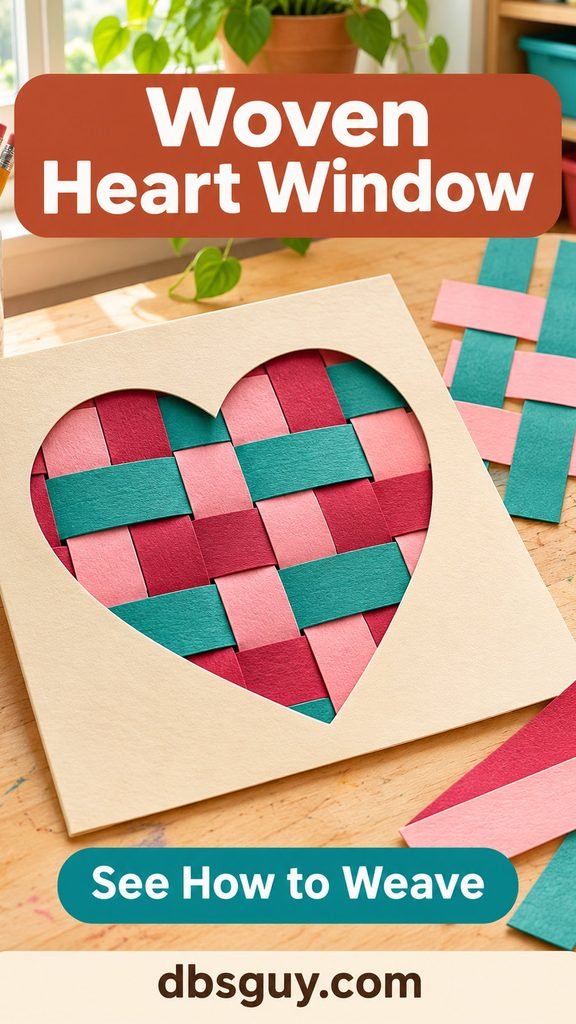
3. Frame a paper weave with a heart window
Make a small weaving mat by cutting parallel slits in a rectangle of cardstock, stopping about half an inch from each edge. Give each child four or five wide paper strips. Thread the first strip over one section and under the next. Start the second strip under, then alternate the starting direction across the mat.
Glue a square of cardstock with a heart-shaped window over the finished weave. Show two rows on a sample before handing out supplies. If a row makes long stripes instead of a checkerboard, have the child compare its first crossing with the row above it.
4. Make a paper heart that stands up
Fold a large cardstock heart down the middle. Open it partway so its two wings angle back, then stand it with the point resting on the desk. Fold a short flap along one upright side of a small cardstock triangle and tape the flap to the back of the heart. Set the triangle with its flat edge on the desk to make an easel.
Ask kids to test their sculpture on a flat surface before decorating it. If it tips, make the triangle deeper from front to back. Offer pre-cut hearts and triangles when the class has time to build but only a few minutes for prep.

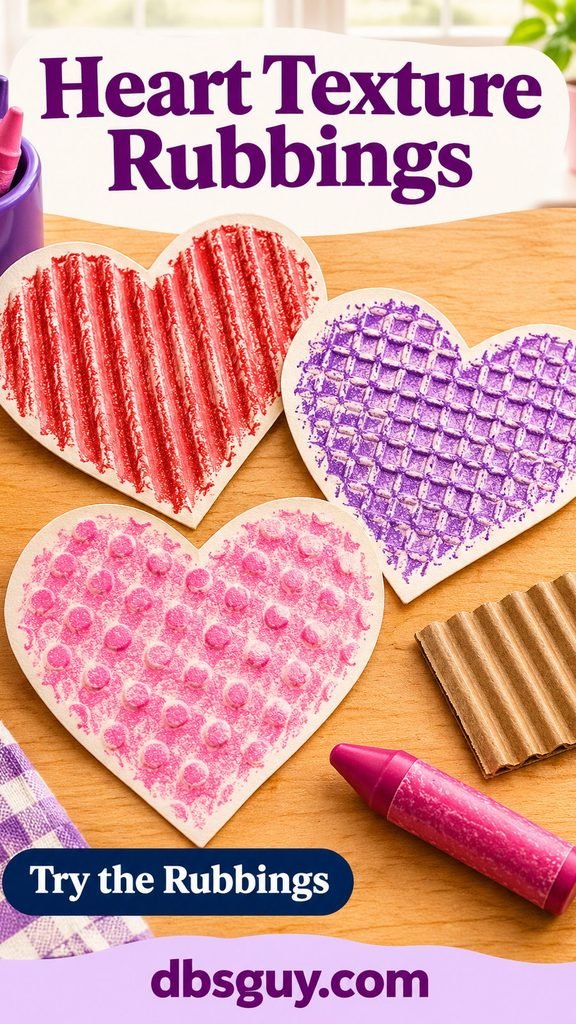
5. Collect textures in crayon-rubbing hearts
Set out corrugated cardboard, a piece of mesh, and an embossed paper scrap. Place a thin paper heart over a texture and rub with the side of an unwrapped crayon. Try the same color over two surfaces to see how the pattern changes. Tape one edge of the heart to the desk if it keeps sliding.
Let kids guess which surface made a partner’s rubbing. Put the three textures in reach so a child can answer by pointing or touching as well as by speaking.
Friendship games with a shared goal
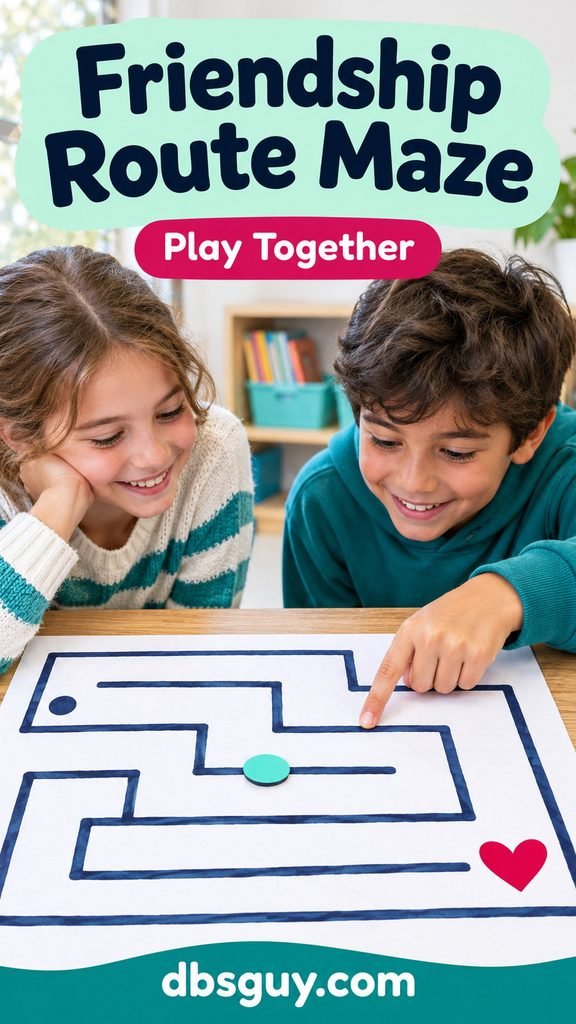
6. Guide a token through a friendship maze
Draw a wide maze with a start dot and a heart at the finish. Give each pair one paper token. One partner moves it to the next turn while the other points out a possible route. Switch roles at the next junction. If they hit a dead end, back up together to the last place they had a choice.
For younger kids, draw a route with just two forks. For older kids, let each pair draw a maze for another team and test it once before trading.
7. Take turns being the Mirror Maker
Have partners face each other at a table. One child makes three slow movements, such as opening a hand, lifting both elbows, or tilting their head. The other follows at the same pace. Switch leaders after the third movement, then ask both partners to end with a pose they invent together.
Set a comfortable speed before the first round. A child can mirror a single finger, move a paper shape across the desk, or choose the movements for the pair.

8. Aim for a team total in Heart Slide
Draw three nested hearts on a sheet and tape the sheet flat to a table. Mark a starting line about 10 inches from the target with painter’s tape. Give each player one cardstock circle to slide from the line. Count one point for the outer band, two for the middle band, and three for the center. If a circle touches a dividing line, count the lower value. A circle that stops outside scores zero.
Add the points into one group total. Clear the target after each turn, then play a second round from the same line and see whether the group can match its first score. Bring the line closer for a player who wants a shorter reach.

9. Choose a kind next move
Draw a few everyday scenes on cards. A classmate drops a pencil and it rolls under a desk. Someone approaches a table with an empty chair. Two kids reach for the same marker. Flip one card and ask the group to choose a helpful next move.
After the group picks an answer, change one detail. What if the student with the dropped pencil wants to get it themselves? Practice a short offer such as “Want help?” and let children point to an illustrated choice, say their answer, or draw what happens next.

10. Pass a rhythm around the table
Seat four to six kids where they can see one another. Start with a three-part pattern such as two light taps and a pause. The next child repeats it, and the pattern travels around the group. If someone loses their place, replay it together and keep going. Let a new child pick the next pattern.
For a quiet version, use a silent sequence such as palm up, palm down, hands still. Put three simple picture cues on the table if kids want a reminder of the order.

11. Rebuild a partner’s block design
Put an upright cardstock divider between partners and give both kids the same three blocks. One child makes an arrangement and describes it one piece at a time. The builder can ask questions such as “Is the triangle above the square or beside it?” Lift the divider to compare, fix one difference together, and switch roles.
Choose pieces that differ in shape as well as color. A square, a long rectangle, and a triangle give kids several ways to identify each piece.

Class projects for the rest of the school day
12. Assemble a class heart quilt
Cut one 5-inch paper square for each student. Place a sample heart in the middle and show how much space to leave around the edges. Invite each student to decorate a tile with a heart and a pattern they choose. Lay the tiles on a table first, then tape the paper quilt to a bulletin board with even gaps between squares.
For a class of 24, try four rows of six. Keep a space and a blank tile for an absent child, so they can add their square when they return.

13. Sort and graph a handful of hearts
Give each pair a small envelope of paper hearts in three colors, such as four red, three pink, and two teal. Sort them, then line them up in columns from the same baseline. Each heart stands for one count. Ask which column has the most and how many more it has than the shortest one.
Add a stripe, dot, or cross to the backs to give students a second way to sort. For an extra challenge, add one paper heart to the shortest column and ask which comparisons changed.

14. Draw a two-panel friendship comic
Give each child a sheet with two large frames. In the first, draw a moment that calls for a friendly response, like seeing a student standing alone by a table. In the second, show one small thing a classmate could do, such as pointing to an open seat and asking if they want to join.
Offer a speech bubble, an adult scribe, or room for a picture-only response. For kids who want a starting point, put a chair, a crayon, and a backpack on the board as possible details to draw.

15. Make a welcome guide for the next new classmate
Fold cardstock into a two-panel mini guide. Use the first panel for a picture of a place a new student needs to find, such as the cubbies or the return bin for library books. Use the second for a class routine, such as how to ask for a turn or where to get supplies.
Have a partner look at the guide and say what they would do first. If they can’t tell, add an arrow, a word, or a clearer picture. Keep a finished guide in the classroom so it’s handy when someone new arrives.

Put together a short Valentine classroom party
For a 30-minute block, give dot-halo hearts, the friendship maze, and the block build 7 minutes each. Use 3 minutes to demonstrate, 2 minutes to switch stations, and 4 minutes to tidy up. Prep one supply tray per table. If you’re the only adult, run the stations as three whole-class rounds with the same groups staying at their desks.
Check the teacher’s rules for activities, food, and exchanges before sending a note home. Every activity above uses classroom supplies. If families plan to send treats, coordinate with school staff and follow the school’s allergy procedures. CDC guidance on food allergies in schools
Valentine classroom questions
Which activities work well for kindergarten?
Try dot-halo hearts with a large template, texture rubbings with chunky crayons, or seated Mirror Maker with two slow movements. Demonstrate the first step before passing out materials, and give children the option to watch one turn first.
How can we handle a card exchange fairly?
Ask the teacher how cards are distributed. If the class exchanges cards, leave extra blanks at school and use the class roster to check that every participating child has a card. Use school-approved names or labels and make room for students who choose a different activity. For a design that’s easy to make in batches, see 21 Valentine Card Ideas That Make a Simple Message Feel Personal.
What if a child doesn’t celebrate Valentine’s Day?
Offer the same task with a neutral shape or theme to anyone who wants it. A star works in the maze, and a circle works for the dot halo. Keep the supplies, time, and choices the same across both versions.