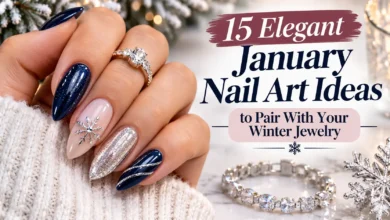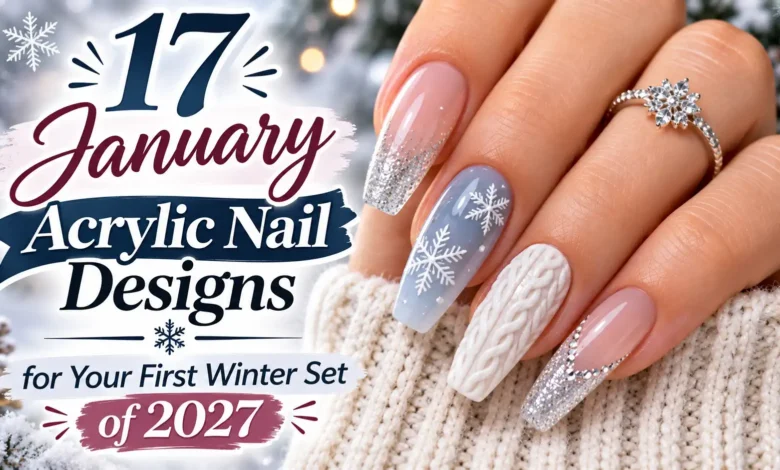
For your first January acrylic set, start with the kind of manicure you want to live with: soft milky ombre for a quiet reset, blue French tips for a winter detail, or deep garnet when you still want a little drama. You can get a seasonal look without carrying Christmas trees and candy canes into the new year.
These 17 January acrylic nail designs include short, practical shapes and longer statement sets. Each gives you a specific color arrangement, a salon request, and a way to adjust the reference. Choose the length first; the artwork can follow.
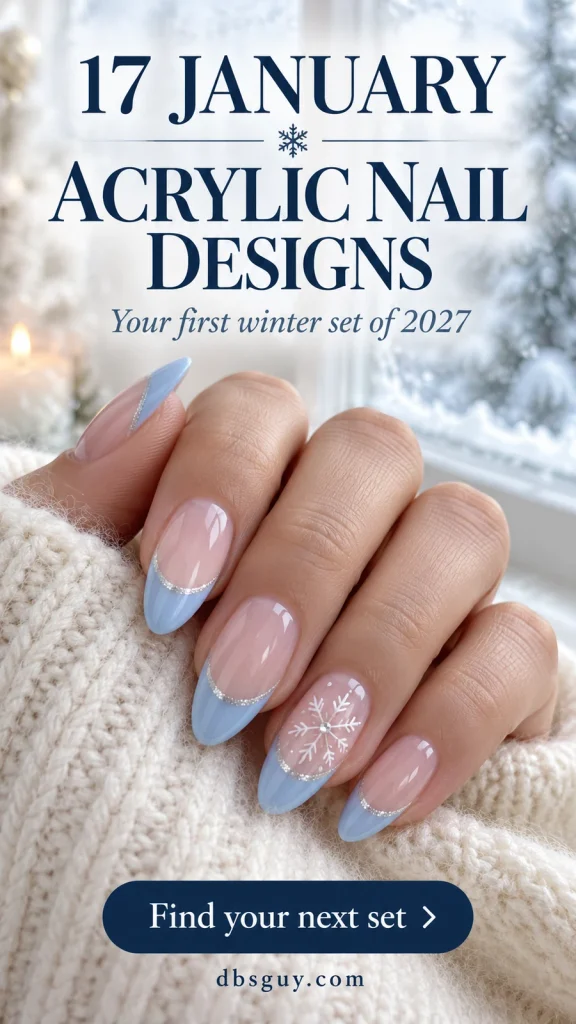
The visuals in this guide are AI-generated manicure concepts, not photographs of completed or tested salon services. Use them to discuss shape, color, and placement with your nail artist; actual finishes and results will vary.
Choose a direction for your first winter set
- Simple and soft: milky ombre in design 1, lilac pearl in design 15, or the five-shade neutral set in design 17.
- A small winter detail: blue French tips in design 2, one snowflake in design 3, or a sweater accent in design 5.
- A statement finish: clear foil tips in design 6, silver velvet in design 7, or smoky aura nails in design 10.
- Detailed salon art: argyle in design 11, glacier marble in design 12, or the night-sky layout in design 16.
Acrylic is the structure underneath the design. The color and decoration may be created with colored acrylic, polish, gel polish, or other compatible nail-art products. Ask which system your artist plans to use, especially for chrome, magnetic finishes, and raised details. The picture alone cannot identify the materials.
1. Milky Pink-to-White Ombre on Short Almond Nails
A blush base that gradually turns milky white gives you the softness of a French manicure without a distinct tip line. This is a useful January reset if your December set was full of glitter and detailed artwork. The glossy surface and gentle fade do enough on their own.
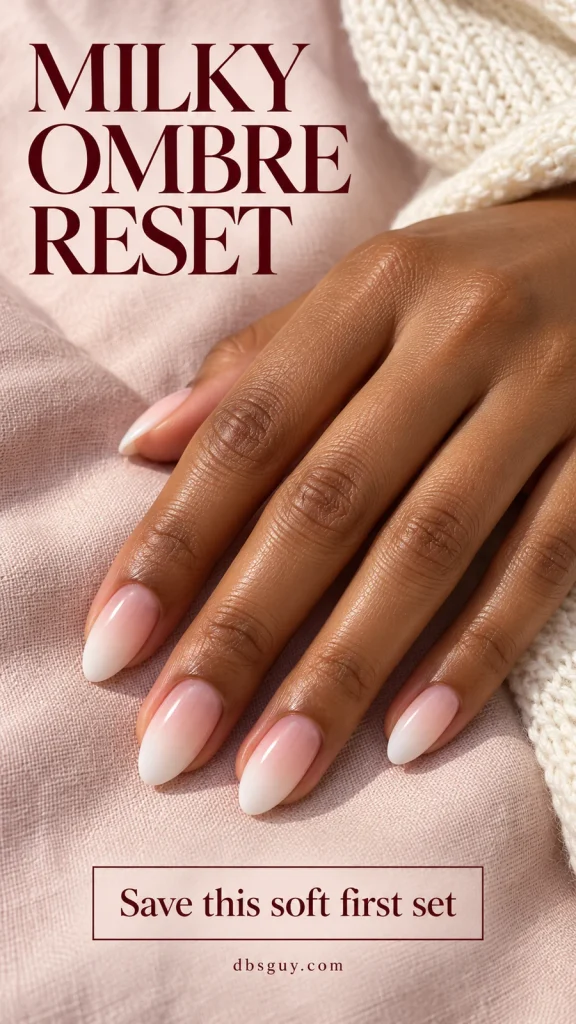
Ask for a pink-to-milky-white ombre on a short almond shape, with the transition blended through the middle of the nail. A bright white block at the end would create a different effect. If your preferred length does not leave enough room for an almond outline, take the same fade onto a short oval instead.
2. Powder-Blue French Tips With a Fine Silver Border
Here, the winter color stays at the ends: powder-blue French tips sit above a translucent pink base, and a narrow silver line traces the curved boundary. The square shape makes the blue edge especially clear. It suits someone who likes a familiar French layout but wants a cooler palette for January.
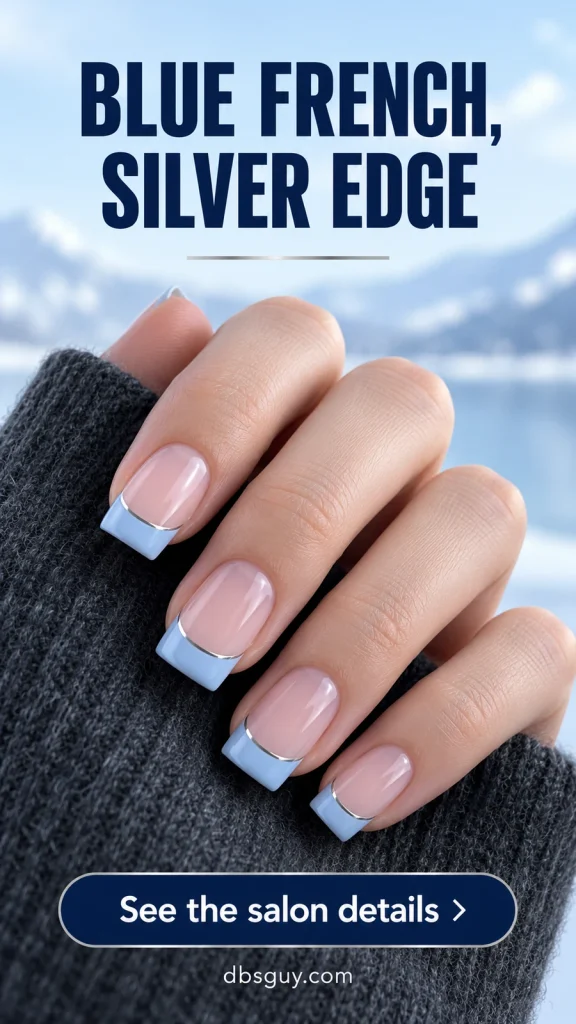
Have your artist show you the blue-tip width on one nail before repeating it. Leave enough pink visible that the silver line reads as a small detail. For a shorter square set, reduce both the blue band and the silver border rather than trying to fit the reference at full scale.
3. Glossy Navy With One Silver Snowflake
If pale winter nails are not your thing, deep navy gives a single silver snowflake plenty of contrast. The short oval shape keeps this set compact, while the plain surrounding nails let the ring-finger detail stand out. You still get a winter reference without a full snowy scene.
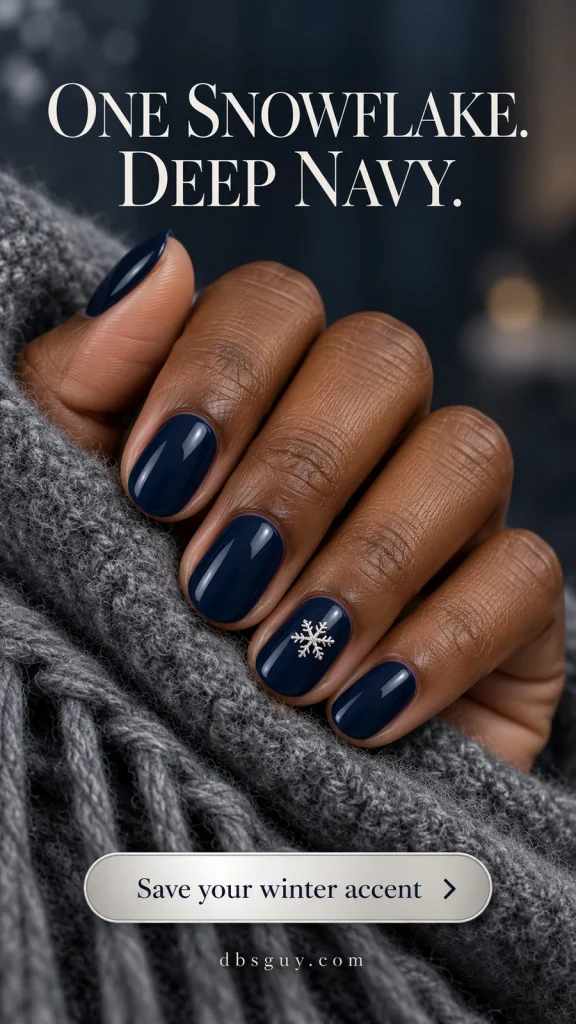
The request is glossy blue-black navy with one small, six-armed silver snowflake on each ring nail. Compare the navy swatch in ordinary indoor light if you want it to stay visibly blue. Ask for painted silver artwork if you prefer a smooth finish; a charm would add texture. For other placements, see our delicate snowflake nail ideas.
4. Deep Garnet on Medium Coffin Nails
Garnet makes a strong first set of the year when you want rich color without decorative extras. The reference uses a deep wine red with a slightly translucent, jewel-like depth. Medium coffin nails give the glossy highlights a long, clean surface.
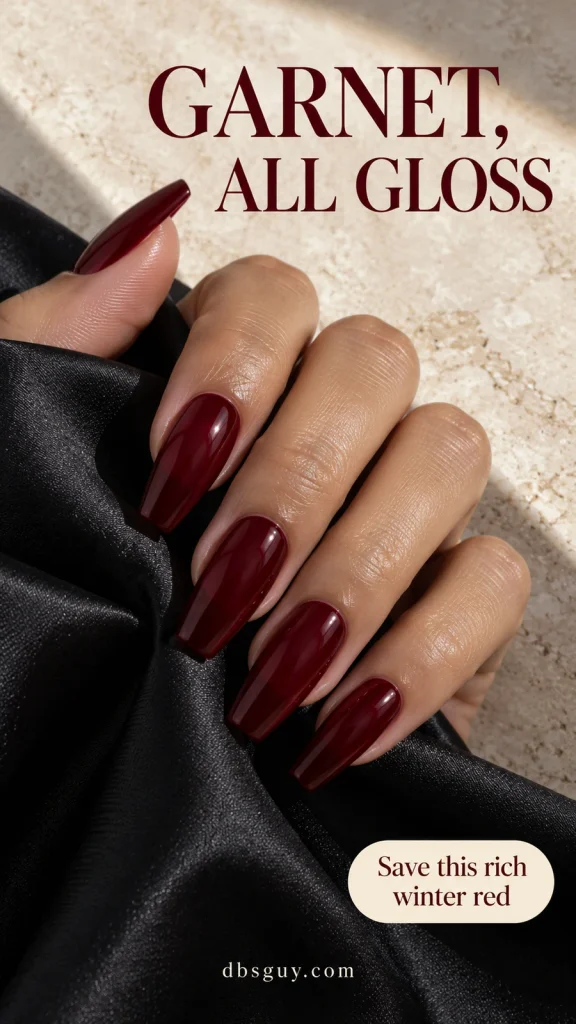
Show the artist both the shade and the shape: tapered sides with a flat end, plus a red that remains wine-colored in the light. An opaque burgundy is a good alternative if you prefer full coverage, but it will have less of that translucent depth. For less length, keep the garnet and switch to short squoval; you do not need extra art to make the change feel intentional.
5. Oatmeal Nails With One Cable-Knit Accent
Warm oatmeal gives sweater nails a quieter look than bright white. In this version, only the ring nail carries a raised cable pattern; the rest stay plain with a soft matte finish. The short square shape and one-accent arrangement keep the texture from taking over the whole set.
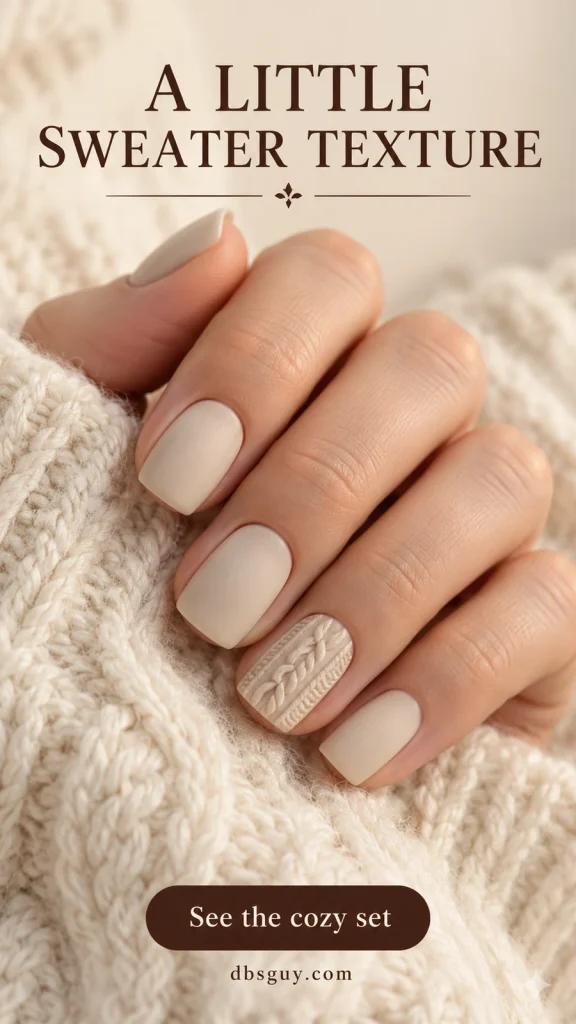
Ask for low-profile, tone-on-tone cable-knit art and show the artist how much empty space you want around it. If you dislike feeling texture on your nails, request a flat painted cable pattern instead. That changes the dimensional effect but keeps the sweater reference. Confirm the finish before work starts, since a glossy top layer would change this matte look.
6. Clear Acrylic Tips With Champagne Foil
This design uses the see-through free edge as part of the manicure. A blush nail bed fades into clear tapered-square tips, with small gold foil flecks concentrated toward the ends. The spaces between the flecks matter: they let the transparent edge remain visible.
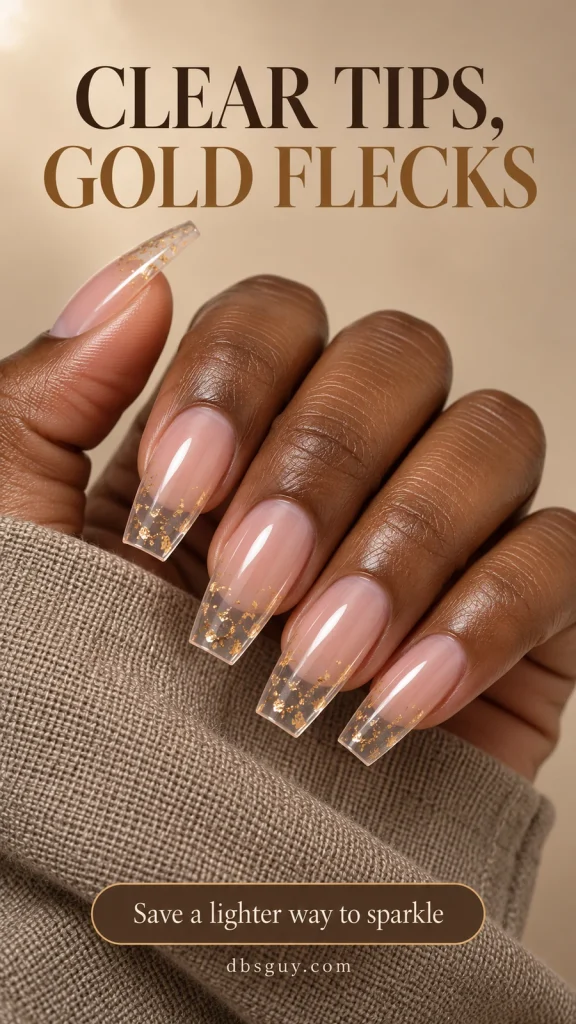
Book this as a clear-extension and encapsulated-foil design, and send the image ahead so the artist can confirm the service. Ask for a smooth finished surface with the foil enclosed inside it. Shortening the extension will reduce the amount of visible clear space; if you want very short nails, choose a sheer blush base with a few surface foil accents as an interpretation.
7. Silver Velvet on Short Almond Nails
Silver velvet is for the reader who wants winter sparkle without drawn snowflakes. The reference has a smoky gray background and a broad, luminous silver glow across the nails. Fine reflective particles give it a softer visual texture than a continuous mirror-chrome surface.
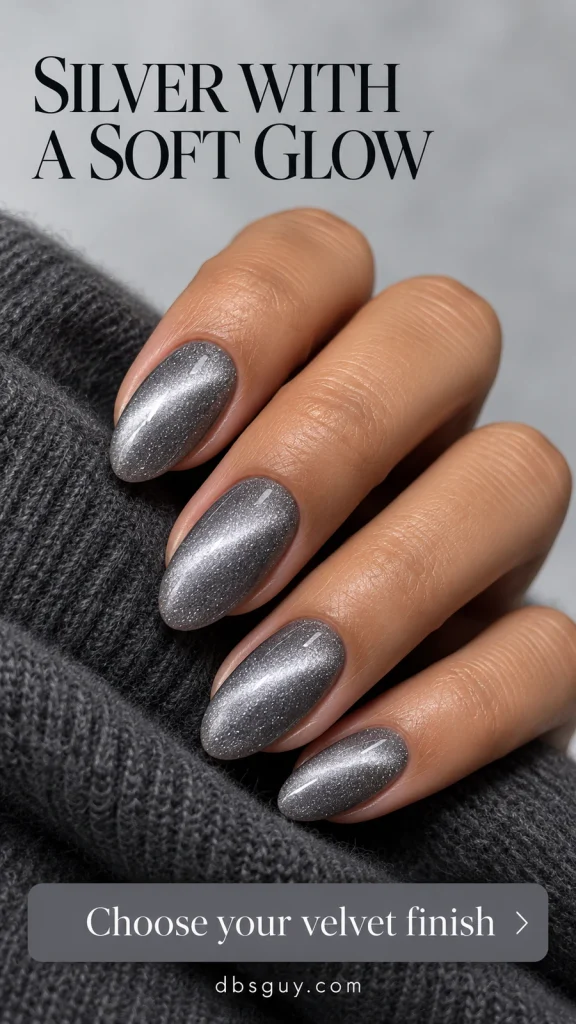
Ask to see a magnetic velvet-finish swatch and move it under the salon light before choosing. A static photo captures only one view of the effect. Keep the short almond shape plain so the shifting reflection remains the feature, or use short oval nails if you want a rounder outline. Ask which compatible finish will be used over the acrylic base.
8. Amber Tortoiseshell French Tips
For a warm alternative to icy blue, put amber and espresso tortoiseshell at the tips of a sheer pink manicure. The almond outline gives the patterned ends a curved frame. This is an easy palette to picture beside a camel coat, a cream sweater, or brown leather accessories.
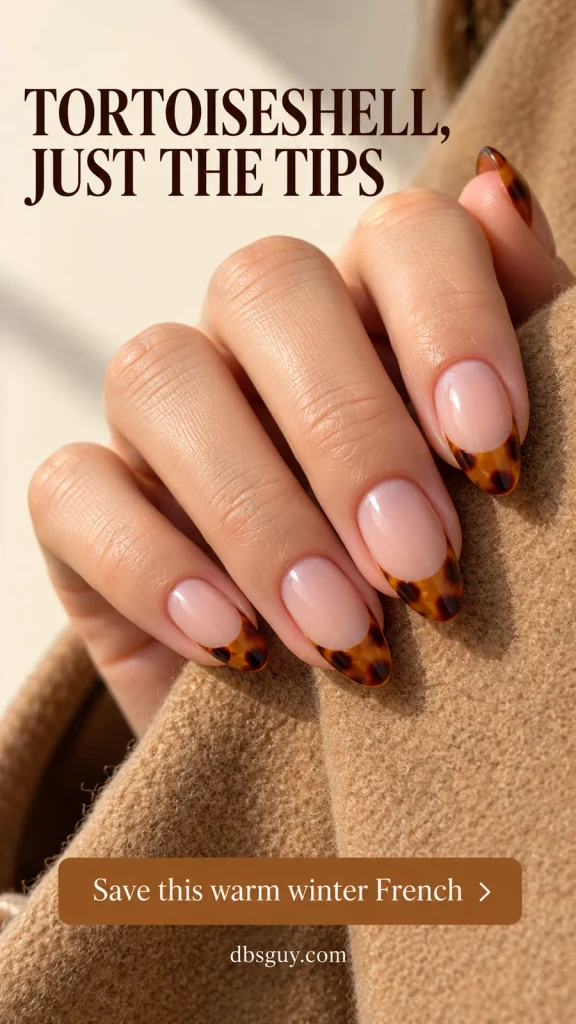
Request irregular dark patches with amber showing between them, confined to the French tips. Uniform black dots would look more like a spotted print. On shorter nails, use fewer, slightly larger patches so the pattern remains readable. You can also put the tortoiseshell on two tips per hand and leave the others a solid caramel if you want less detailed art.
9. Matte Slate With Glossy French Tips
Using one color in two finishes gives this set its detail. The body of each square nail is matte blue-gray slate, while the curved French edge is glossy in the same shade. It is a good option when you want something that reveals itself up close rather than a high-contrast pattern.
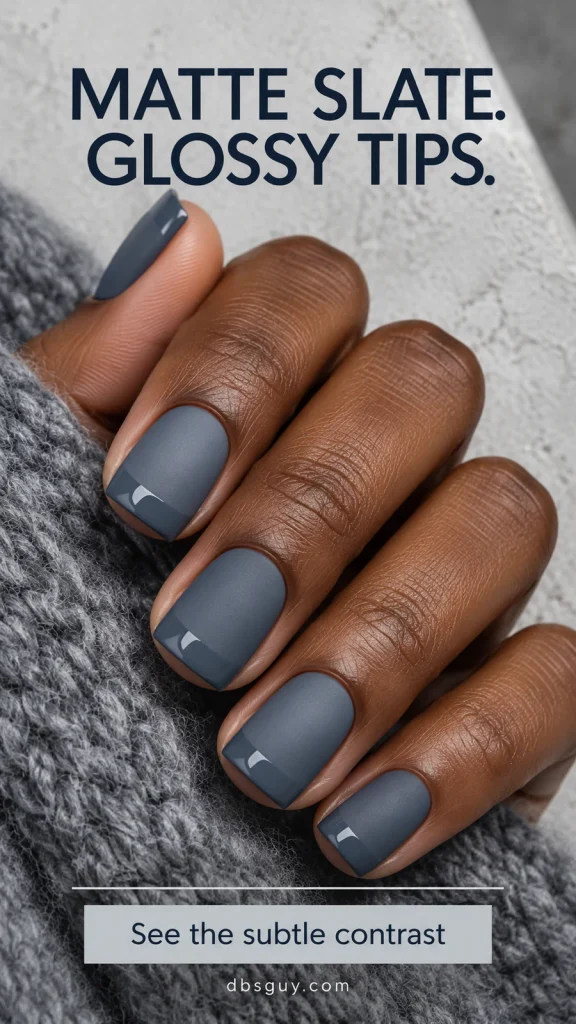
Be explicit that the tips should match the base color. Ask your artist to show you the finish contrast on one nail under angled light; a straight-on view may hide it. Keep the glossy band shallow on a very short set. If you prefer a stronger contrast, change the tip to a darker slate, understanding that the result becomes a two-color French manicure.
10. Smoky Plum Nails With a Mauve Aura
A hazy mauve center softens the dark plum edges of these coffin nails. Unlike an ombre that travels from cuticle to tip, this color change sits inside the nail and fades outward. It gives a moody winter set some light without adding metallic artwork.
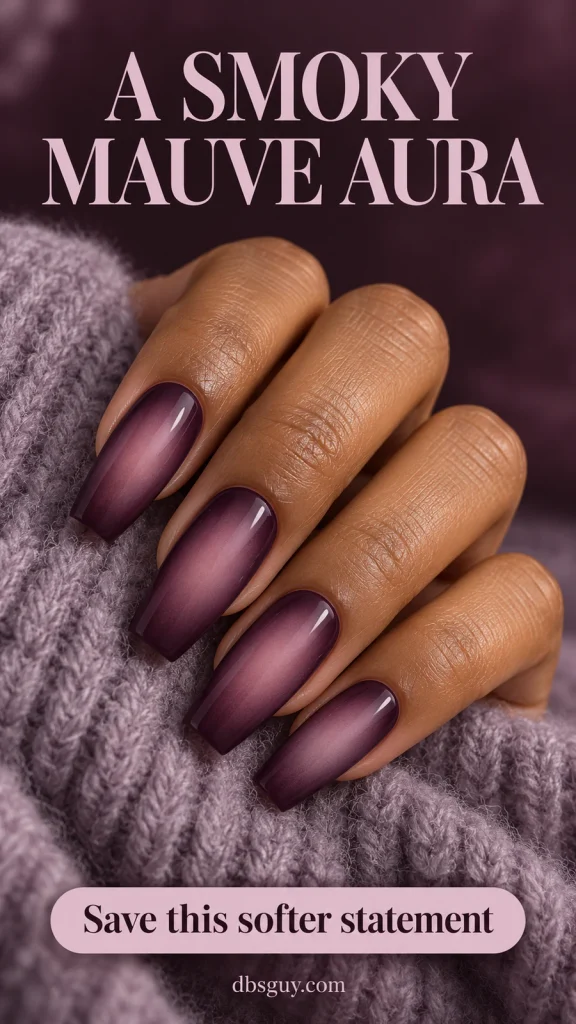
Send the reference when booking and ask whether your artist offers an airbrushed or softly blended aura effect. The center should have no hard oval outline. For shorter nails, use a smaller central glow and leave a visible plum border; making the center too large can turn the whole nail into a nearly solid mauve.
11. Cream Nails With a Blue Argyle Accent
One argyle nail can echo a winter sweater without using raised texture. The cream surrounding nails keep this layout light, while pale-blue diamonds and fine navy lines make the ring nail the focal point. Square tips give the geometric pattern a clear frame.
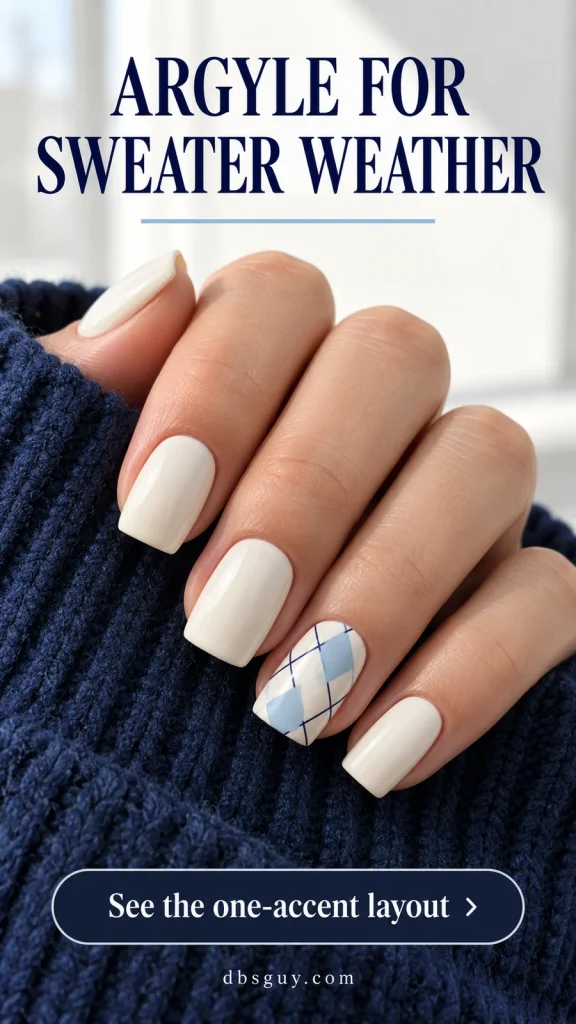
Request large enough diamonds to see individually, with thin diagonal lines rather than a dense plaid grid. For a short version, two partial diamonds are enough; the pattern does not have to fill every corner. Keep the accent colors tied to the cream base so the set feels coordinated. This is a different direction from the textured cable-knit nail in design 5.
12. Glacier-Blue Marble With Sparse Silver Veins
Cloudy ice blue and irregular white veins give these coffin nails a glacier-like appearance. The reference adds silver to the middle and ring nails while leaving the other veins white. That limited metallic detail keeps the softer marble visible.
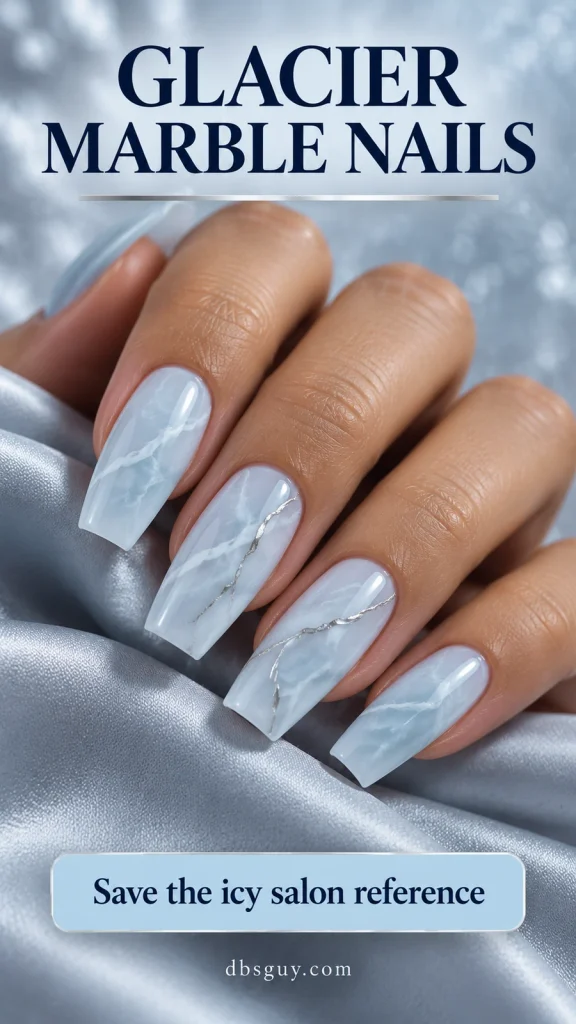
Ask for a milky pale-blue background and fine, uneven diagonal veins with open blue space between them. Heavy outlines would make the effect more graphic. On a shorter set, choose one main vein per nail rather than shrinking a complicated network. Decide which two fingers will receive silver before the artwork begins.
13. Sheer Blush With Tiny Painted Bows
White bows on a pink base give a short oval set a playful detail that can work beyond the holiday season. In this layout, the ring nail and thumb carry the bows, with the remaining fingers plain. The bows are painted, so there is no separate raised ornament in the design.
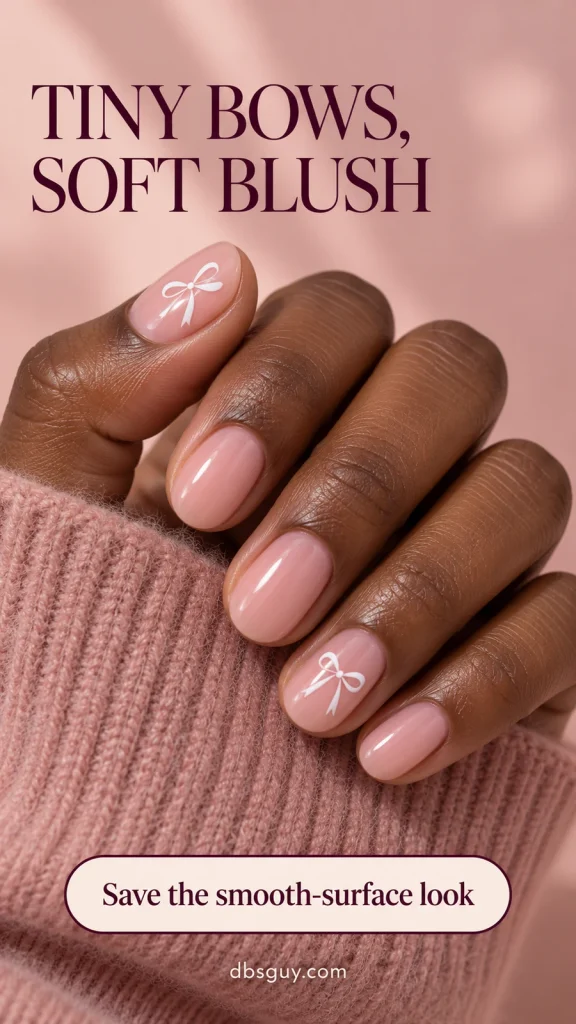
Ask for fine loops and short ribbon tails, with pink space around each bow. If your nail beds are narrow, one bow on the ring finger is enough. A flat decal can provide a similar visual layout, but show its size to the artist first. Oversized loops can fill the nail and make the set feel much busier than this reference.
14. Forest Green With Sheer Half-Moons
A small blush half-moon at the base breaks up an otherwise solid forest-green manicure. The green still covers most of each almond nail, so the result feels rich rather than delicate. Leave out red accents and holiday motifs when you want to carry green into January.
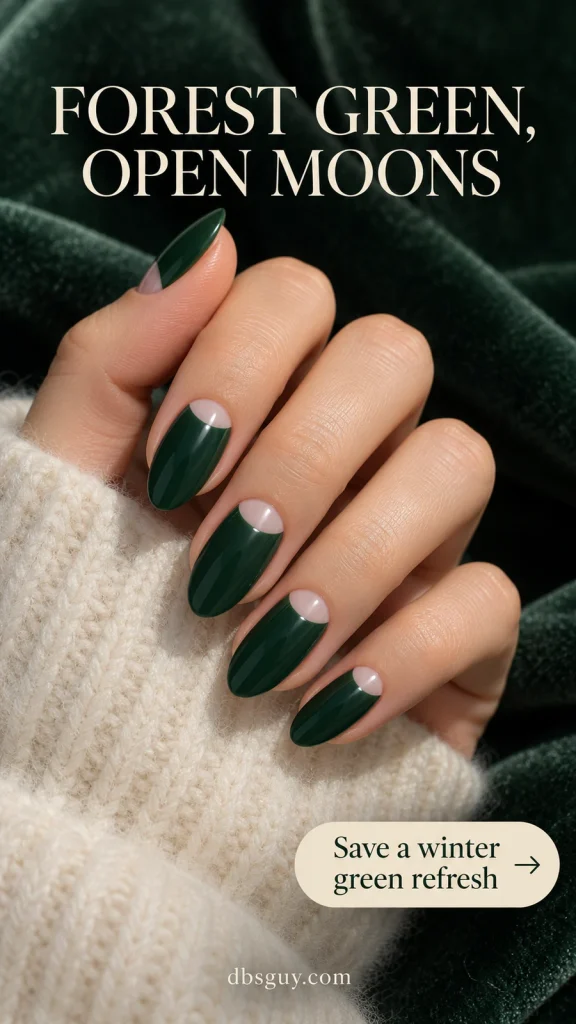
Describe the half-moons as intentional sheer areas within the finished design, with a crisp boundary between blush and green. Ask the artist to check their proportions across the hand, since the nail beds will vary. A sheer base can make the color transition at the cuticle look softer, but it does not remove the need for acrylic maintenance.
15. Pale Lilac With a Pearl Glaze
Lilac offers a gentle change when you are ready to move away from reds and dark greens. A pearlescent glaze gives the color a soft white-pink reflection while leaving the lavender visible underneath. The oval shape keeps the overall look rounded and simple.
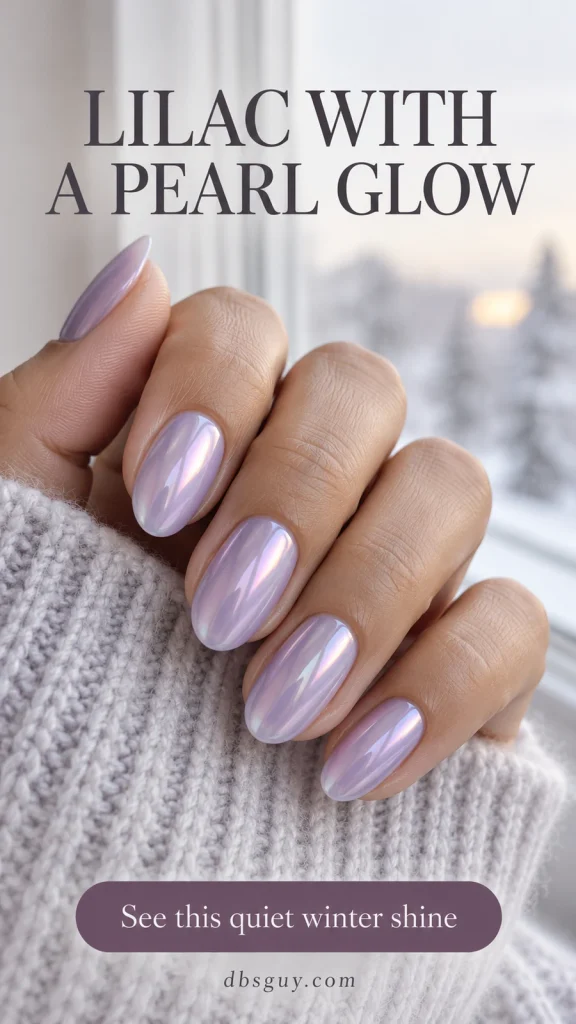
Compare a plain lilac swatch with the same color under the proposed pearl finish. Some toppers change the base shade more than you may expect. Ask for fine sheen and a smooth surface if you want this look, rather than visible glitter particles. The same finish can work on a shorter oval without changing the arrangement.
16. Midnight Navy With Silver Constellation Art
For a longer January set, tiny connected silver dots and four-point stars make a winter-night reference. The middle and ring nails carry the artwork, leaving the other navy nails plain. The extra length of the tapered-square shape gives the lines room to remain separate.

Ask for delicate constellation-style art and specify whether you want painted dots or small embellishments; a reference image cannot settle that material choice. The pictured arrangement is decorative, rather than a verified star chart. On shorter nails, reduce it to one small cluster and one star on a single accent finger instead of crowding both patterns together.
17. A Five-Shade Latte Manicure on Short Squoval Nails
If choosing one neutral is the hard part, wear a small palette. This set moves from ivory on the thumb through pale beige, latte taupe, and cocoa to espresso on the little finger. Each nail has one solid glossy color, so the variation happens across the hand rather than within each nail.
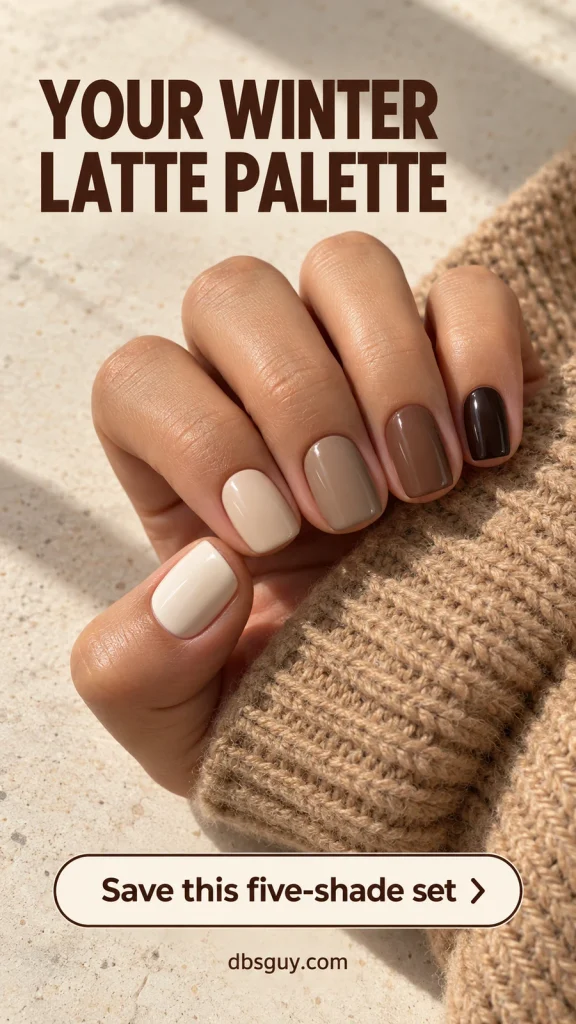
Line up all five swatches before your artist starts. Keep them in a warm family and look for a visible step between neighboring shades; two almost identical beiges can make the progression look accidental. Mirror the order on the other hand for a coordinated result. Short squoval nails give this design a compact outline without needing detailed artwork.
What to confirm before your acrylic appointment
Send your chosen reference ahead of time, especially for clear foil tips, aura blending, or detailed linework. Confirm the length, shape, number of accent nails, and finish, then ask what those details add to the quote. Check whether removal of your existing set and your next maintenance visit are priced separately. Salon rates and service times vary, so a specific quote is more useful than a generic estimate.
If this is your first acrylic set, explain how you use your hands during a normal day. Ask the artist to show you the proposed length before committing to the structure. A short oval or squoval interpretation may suit your routine better than the longer reference, and most color arrangements here can be simplified to fit.
For more ways to compare finishes before choosing, browse our winter nail designs with snowflakes, chrome, and cozy knits.
A few nail-care details worth planning for
Acrylic application and repeated upkeep can weaken natural nails, and the products can irritate skin. The American Academy of Dermatology’s artificial-nail guidance recommends leaving cuticles untrimmed and reserving artificial nails for special occasions to help reduce damage. Do not use a new set to hide brittle or damaged nails.
Plan maintenance with your artist; the AAD describes touch-ups about every two to three weeks as natural nails grow. That is an upkeep interval, not a promise that every set will wear perfectly until then. Ask for product-appropriate removal, and seek medical advice if you develop a rash or a persistent nail problem.
January Acrylic Nail Questions
Which design should I choose for a simple first set?
Start with milky ombre, garnet, lilac pearl, or the latte palette if you want to focus on shape and color. If you want one recognizable winter detail, choose the navy snowflake. Detailed art is a style choice, not a requirement for a finished-looking January manicure.
Can I get these designs on short acrylic nails?
Yes, with adjustments to the artwork. The short oval, square, and squoval references already show compact options. For a longer reference, keep its palette and reduce the number of motifs. Clear-tip designs need enough free edge to show the transparent effect, so they change more noticeably when shortened.
Does every detail have to be made from acrylic?
No. The acrylic can provide the underlying shape while compatible polish or nail-art products create the visible finish. A magnetic silver manicure, for example, describes the surface effect rather than identifying the extension system. Tell the salon you are asking for an acrylic base and confirm how the design will be finished.
Do I need a completely new set in January?
The calendar alone does not decide that. Have your artist assess the current set and your natural nails before choosing a fill, a color change, or removal. Some polish-based designs can be changed without rebuilding the whole set; embedded foil or a major shape change may need a different plan. Ask before assuming your reference can be added during a routine fill.
Are these confirmed nail trends for 2027?
These are design suggestions for planning your January 2027 manicure. They are not a prediction of which styles will rank as trends. Choose the palette and shape you want to wear, then use the reference to settle the details with your artist.