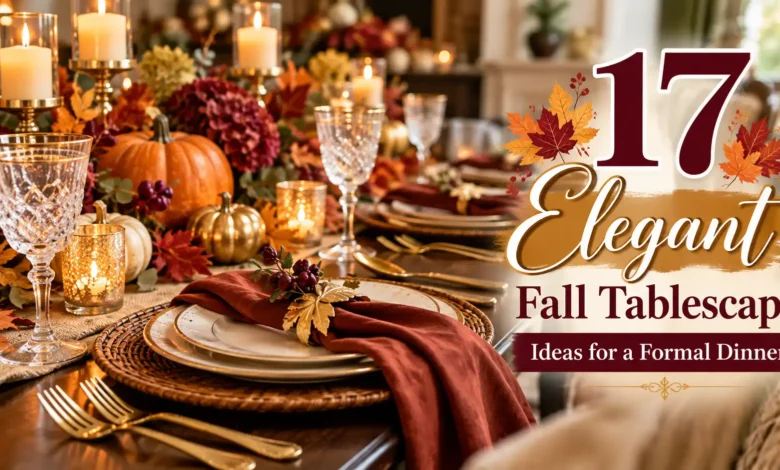
A formal fall dinner starts with a table that feels considered from every seat: pressed linens, tableware chosen for the menu, and an autumn detail that leaves room for the meal. These fall tablescape ideas give you 17 different starting points, from ivory damask and bronze accents to a low burgundy centerpiece and an open table designed for family-style serving.
Choose one look as your starting point. Then repeat its main material or color in two or three places. You can build most of these settings around white dishes and clear glasses you already own.
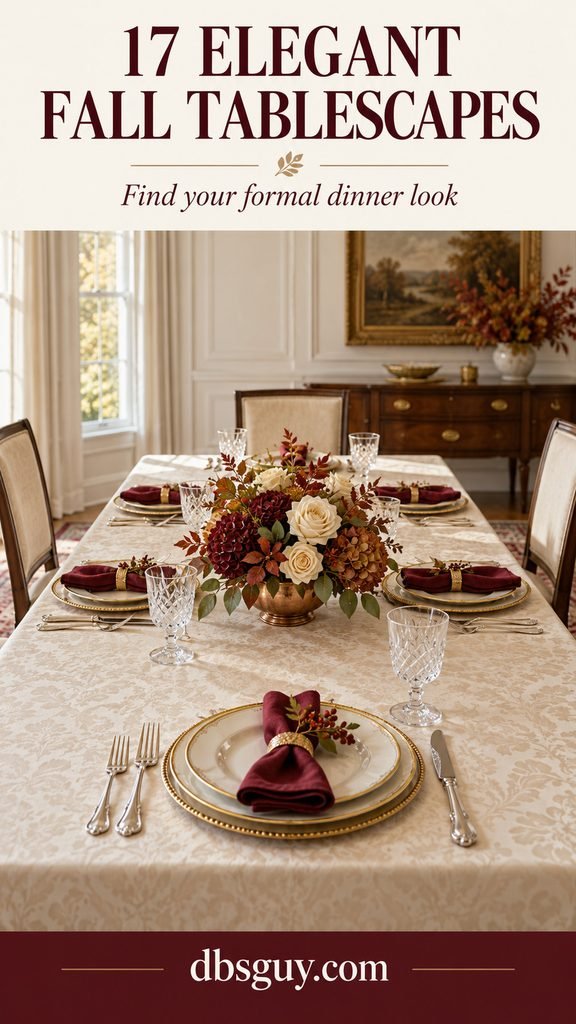
The visuals are AI-generated styling concepts. Use them for design inspiration, then check spacing, stability, and place settings on your own table.
Choose the Look That Fits Your Dinner
- Classic and understated: try ivory damask in idea 1 or botanical china in idea 7.
- Flowers as the focal point: choose the burgundy compote in idea 2 or sculptural callas in idea 5.
- A round table: use the compact arrangement in idea 12.
- Food served at the table: borrow the service gaps in idea 13 or the open center in idea 14.
- A narrow table: move the tall display to a sideboard, as in idea 17.
Set the Places Before Adding Decorations
Put out one complete place setting before buying flowers or spreading a runner. Include the dishes, glasses, and utensils you will actually use. If bowls and platters will stay on the table, put those out too. What remains is your decorating space.
For a conventional American setting, forks go to the left, knives go to the right with their cutting edges toward the plate, and a soup spoon sits farther right when soup is served. Arrange utensils in course order, starting at the outside. A bread plate belongs above the forks; drinking glasses sit above the knives. Bring dessert utensils with dessert if you want to keep the initial setting simple. The Emily Post formal place-setting guide is a helpful reference when planning several courses.
Decorative chargers are optional. If you use them, plan when they will be cleared, and serve food on dinnerware intended for food contact. Sit in a chair and check the view across the centerpiece before you finish the whole table.
1. Let Ivory Damask and Bronze Leaf Rings Carry the Look
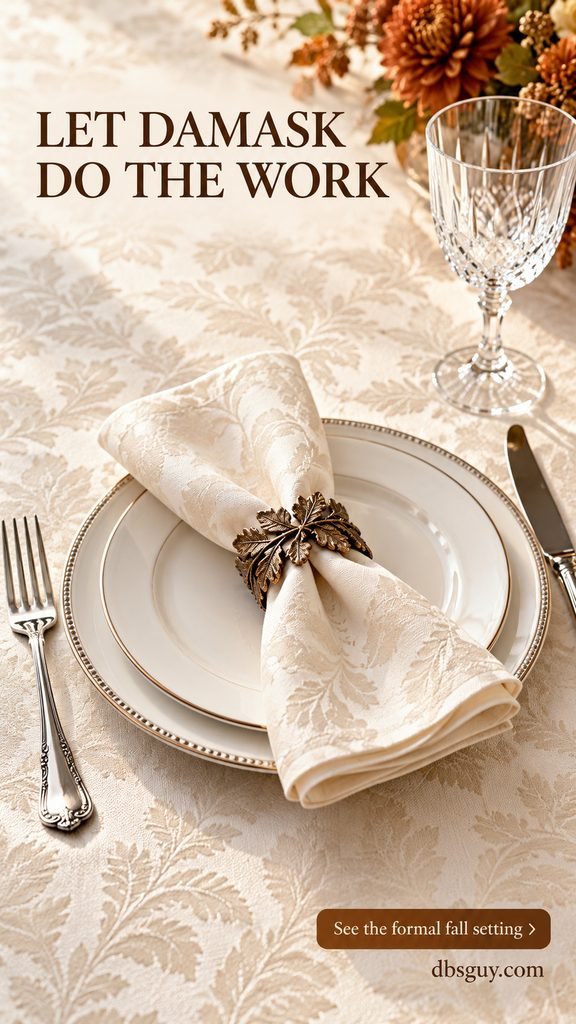
Ivory damask gives the table a pattern that appears through its weave rather than a strong printed color. Choose a leaf or scrolling motif, then pair it with plain white china and folded ivory napkins held by bronze leaf rings. The metal supplies the fall reference without needing decorations around every plate.
Check the fabric beside your dishes in the light you will use for dinner. A yellow ivory can look quite different against cool white porcelain; a softer oatmeal shade may connect them more comfortably. Press the cloth and keep its drop clear of guests’ laps.
Use clear stemware and the flatware you own. If the napkin rings are detailed, a modest flower bowl is enough for the middle.
2. Build a Low Burgundy Dahlia Compote
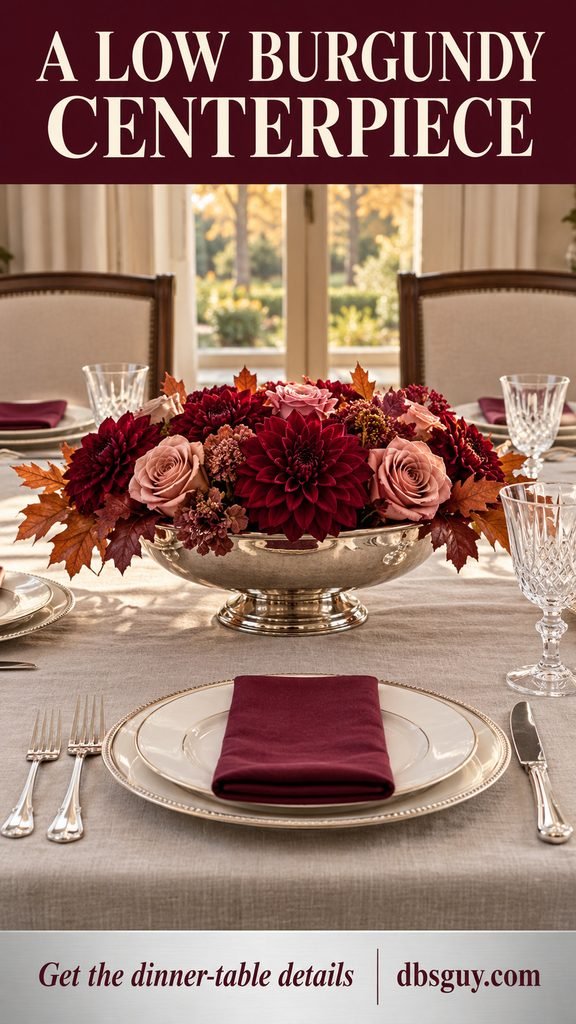
A wide, footed silver bowl gives burgundy flowers a formal outline. Keep the arrangement broad and low, with a few dusky rose blooms and copper-colored leaves softening the edges. Stone-colored linen helps the dark flowers stand out.
Begin with a watertight insert that fits inside the bowl, especially if the vessel is decorative or antique. Arrange the flowers so their heads sit close to the rim. Check the full width as well as the height: blooms should stay away from glasses and cutlery.
This is a good choice when you plan to plate the main course in the kitchen. For family-style serving, shrink the arrangement until you can comfortably set down the largest platter.
If you prefer this palette, explore 17 Burgundy & Plum Simple Fall Tablescape Ideas for other ways to combine the two shades.
3. Tuck Cream Menus Into Navy Napkin Pockets
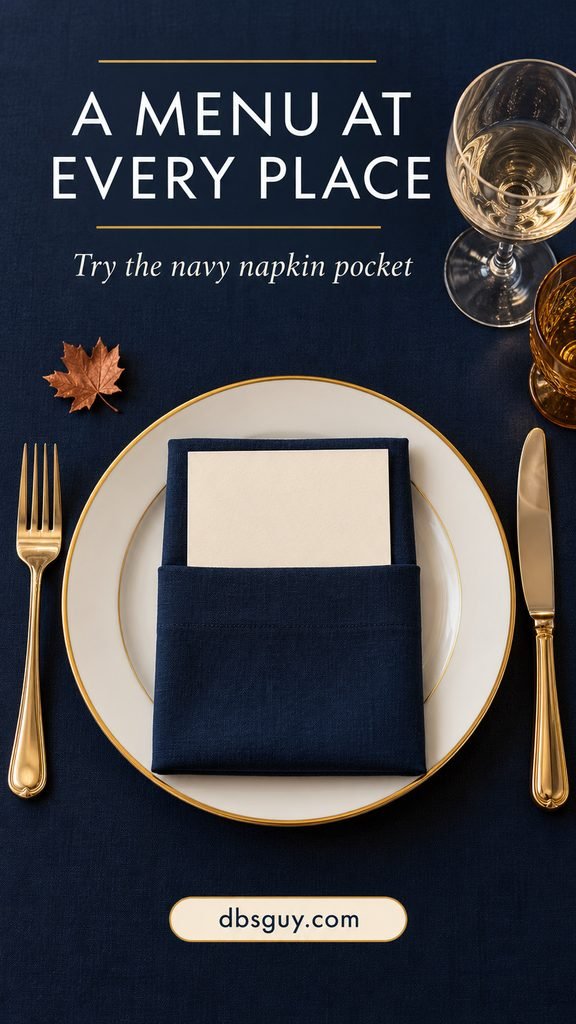
A printed menu can make a seated dinner feel carefully planned before the first course arrives. Fold a navy linen napkin into a flat pocket and tuck a single cream menu card inside. Set it across a gold-rimmed white plate, leaving enough of the card exposed to read without unfolding the napkin.
Test the fold with a scrap of paper before printing the menus. The finished pocket should support the card without covering the whole plate or sliding onto the table. List the courses in their serving order, using a large, readable typeface.
An amber water glass adds a warm autumn accent. Keep other paper details small so guests can find their names and menus at a glance.
4. Make a Crystal-Light Centerpiece With LED Pillars
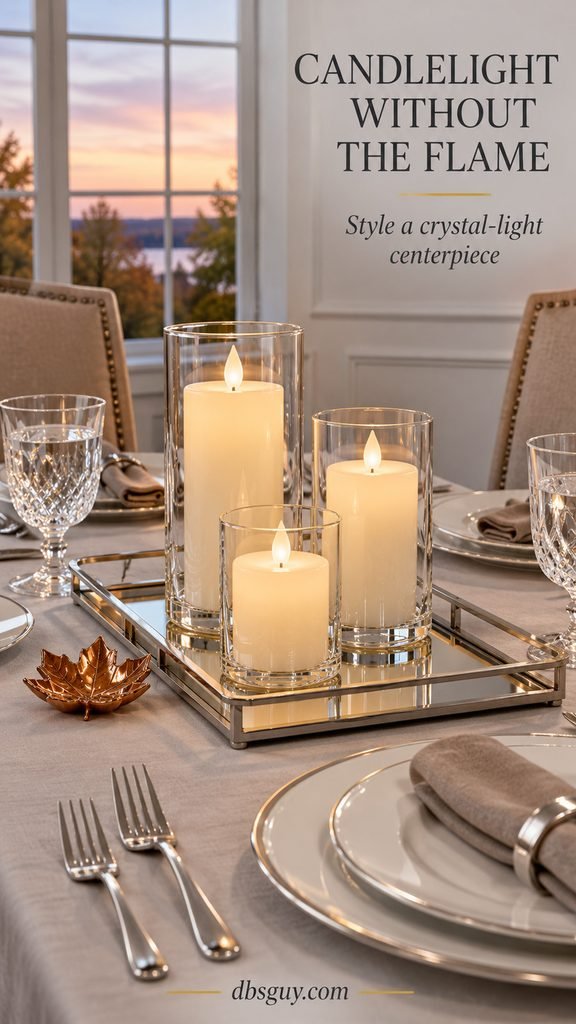
For a dinner centered on sparkle, place a few ivory battery-operated pillar candles on a compact mirrored tray. Clear cylinders and cut-glass goblets catch the light, while pale gray linen and silver-rimmed dishes keep the setting quiet.
Check the candle bases against the tray before arranging them. Each one should sit flat, and the mirror should have a finished edge. Turn the candles on under your actual dinner lighting; some LEDs look warmer or brighter than others.
Use flameless candles for this close grouping. If you choose real candles elsewhere, the U.S. Fire Administration advises keeping them at least 12 inches from combustible materials, using stable holders, and extinguishing them before leaving the room. A glass sleeve does not replace that clearance.
5. Arrange Three Sculptural Copper Callas
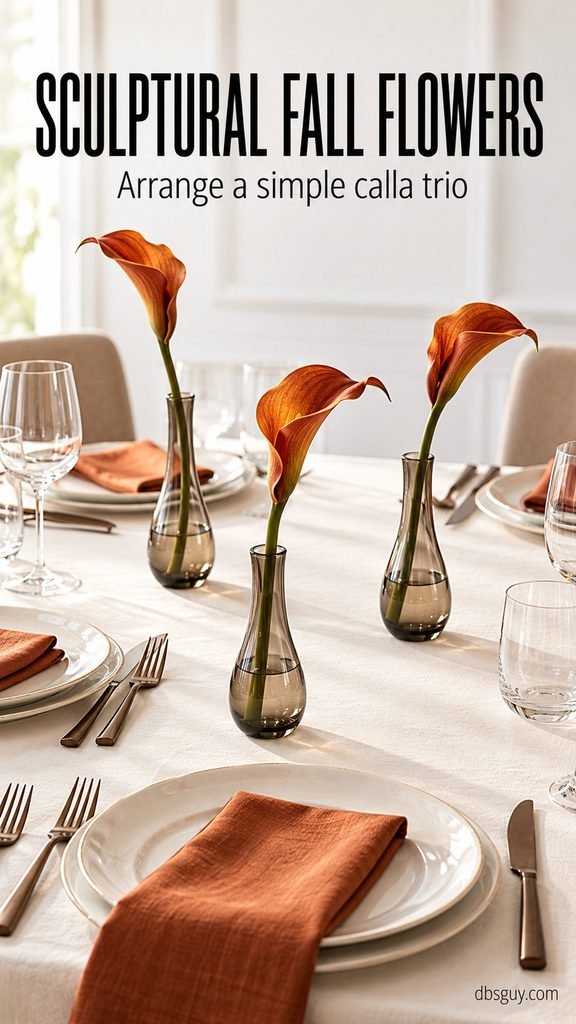
Three slender bud vases can give a modern table more definition than a large bouquet. Put one burnt-orange calla lily in each short smoke-glass vase, allowing the curved stems to face slightly different directions. Leave visible space between the vessels.
Start with the shortest practical stems and choose vases with stable bases. From a seated position, check that the flowers do not interrupt the person opposite you. On a shorter table, two vases may fit better; the useful feature is the space around each stem.
White plates, copper napkins, and simple bronze-toned flatware connect the flowers to the settings. Skip additional scattered leaves so the clean shapes remain easy to see.
6. Use Bosc Pears as Place-Card Holders
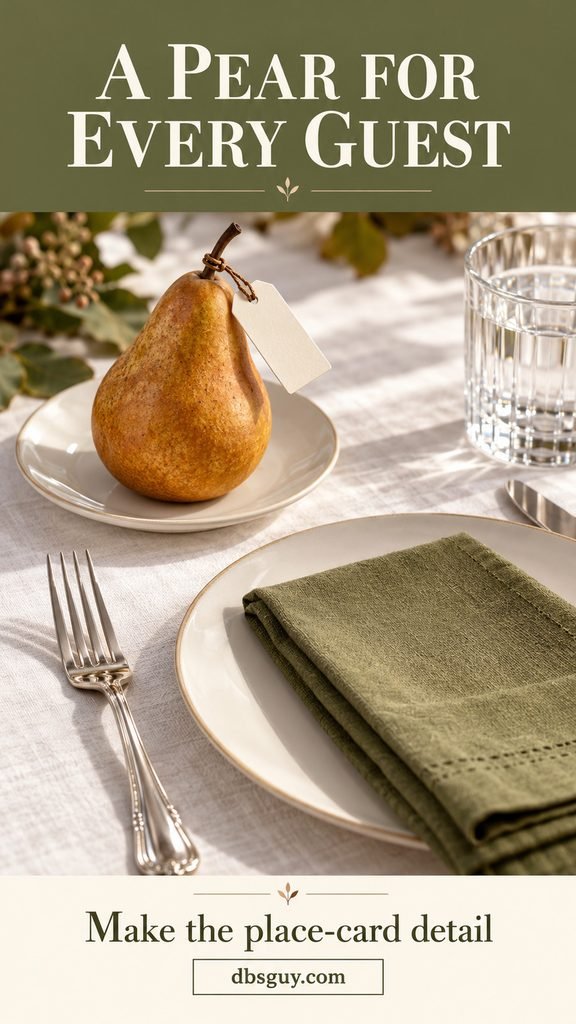
The warm brown skin and narrow neck of a Bosc pear make a small seasonal detail feel deliberate. Tie a light cream name tag loosely around the stem with fine cord, then stand the pear on a small side plate above and to the left of the main setting.
Choose pears that stand securely, and make sure the tag faces the chair. If the side plate is needed for bread, put the pear beside it only where there is room, or move the fruit to a sideboard after guests find their seats. Keep the menu and food service in mind before assigning that space to decoration.
Olive napkins work especially well with the pears’ bronze color. Wash any fruit you intend to serve, and keep ink, glue, and decorative coatings off its skin.
7. Let Botanical China Set the Fall Palette
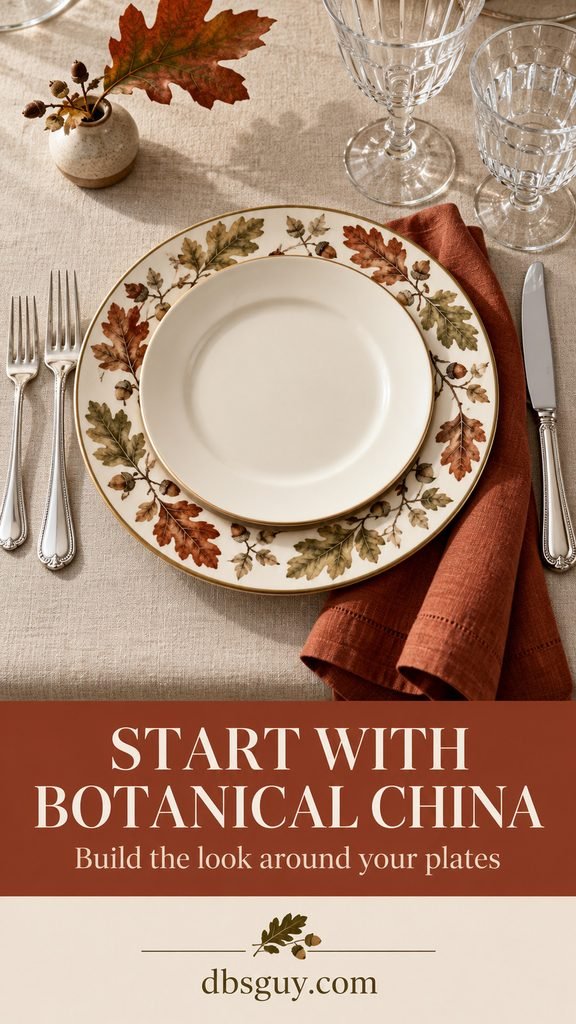
If your china has an oak-leaf, vine, or botanical border, pull a color from that design for the napkins. Brown-and-olive plates look particularly good with rust linen and an oatmeal cloth. Keep the starter plate plain so the patterned rim stays visible.
Place the folded napkin beside the plate when there is enough room. If you need to put it on the plate, use a narrow fold that exposes part of the border. Let the pattern carry most of the decoration; a small low flower cup can finish the table.
When using inherited china, check the maker’s care guidance before washing or heating it. Modern tableware that echoes the pattern is a practical alternative if you are unsure how older pieces should be used.
8. Group Small White Pumpkins on a Walnut Plateau
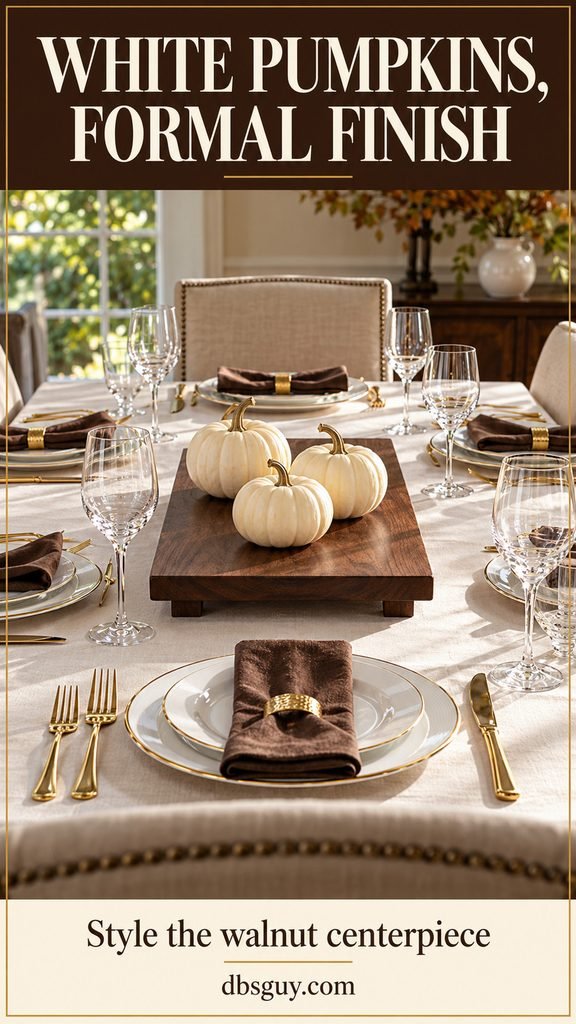
A dark walnut serving plateau gives miniature ivory pumpkins a crisp, formal base. Group a few small pumpkins closely rather than lining the full table with them. A low, flat plateau gives the pumpkins a clear outline; a shallow rimmed tray is another option.
Use a finished piece with a flat, stable underside, and protect the tablecloth from damp pumpkin bases. Keep the stems away from the path of reaching arms. Chocolate napkins and brass flatware repeat the warmth of the wood around white china.
Before committing to the tray, set it between two opposing place settings. If its corners interfere with glasses or serving dishes, use a smaller base. The grouping should look complete within the space you actually have.
For a lighter version of this palette, see 15 Neutral White Simple Fall Tablescape Ideas.
9. Give Tartan a Tailored Role
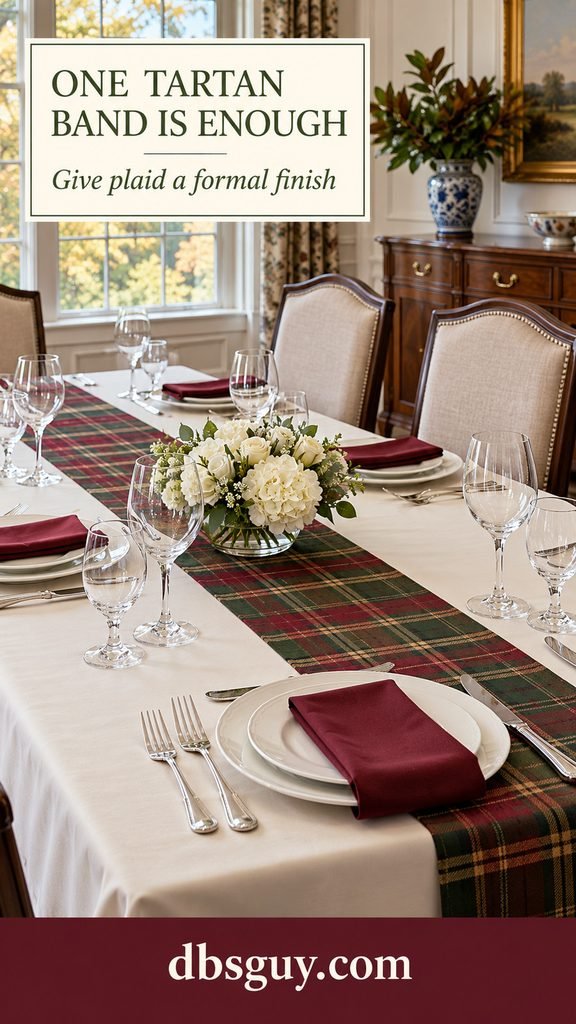
A narrow tartan runner in moss, burgundy, and muted gold can suit a formal country-house style. Lay it flat over a solid cream tablecloth, then use plain napkins and dishes. Keeping the pattern in one continuous band helps the individual settings remain clear.
Measure the space between the plates before choosing the runner. Glasses and cutlery should sit steadily; avoid a thick fabric edge underneath them. A small cream flower bowl can occupy the center without introducing another pattern.
Repeat just one tartan color in the napkins. You can keep the rest of the room simple, particularly if there are already patterned curtains or upholstered dining chairs nearby.
10. Layer Glazed Terracotta With Cream
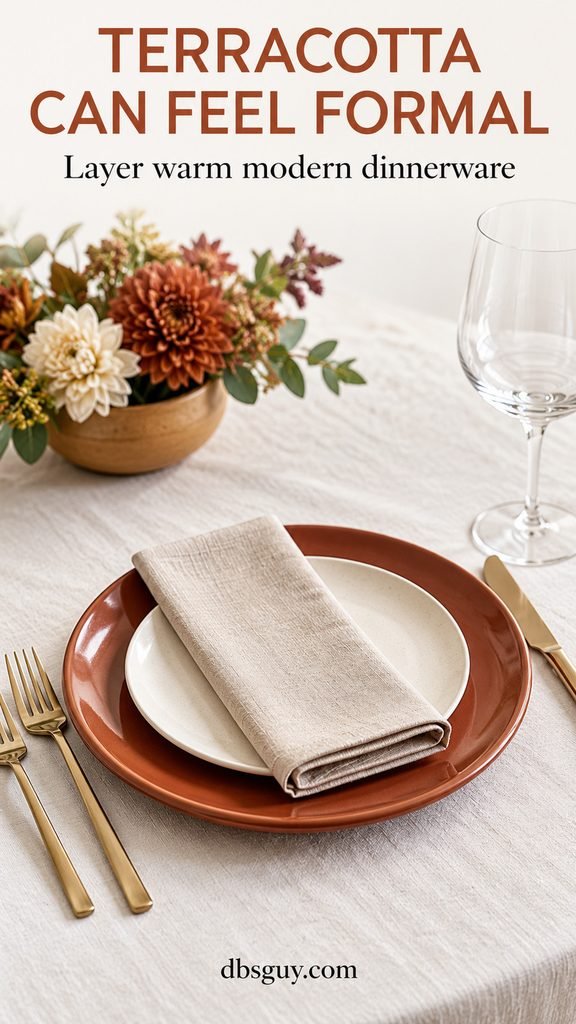
Terracotta can feel polished when the shapes and finishes are restrained. Try a smooth glazed coupe dinner plate beneath a smaller cream starter plate, with a pressed sand-colored napkin and slender brass flatware. The warm ceramic color supplies the autumn mood.
Check that the plates stack securely without rocking. A deep bowl on top of a curved plate may feel crowded even if the colors work beautifully. Set out only the pieces needed at that stage of the meal.
Choose dinnerware sold for food use and follow its care instructions. Clear stemware and a pale tablecloth help this setting feel light, particularly in a room with dark wood furniture.
11. Put a Small Autumn Still Life Under Glass
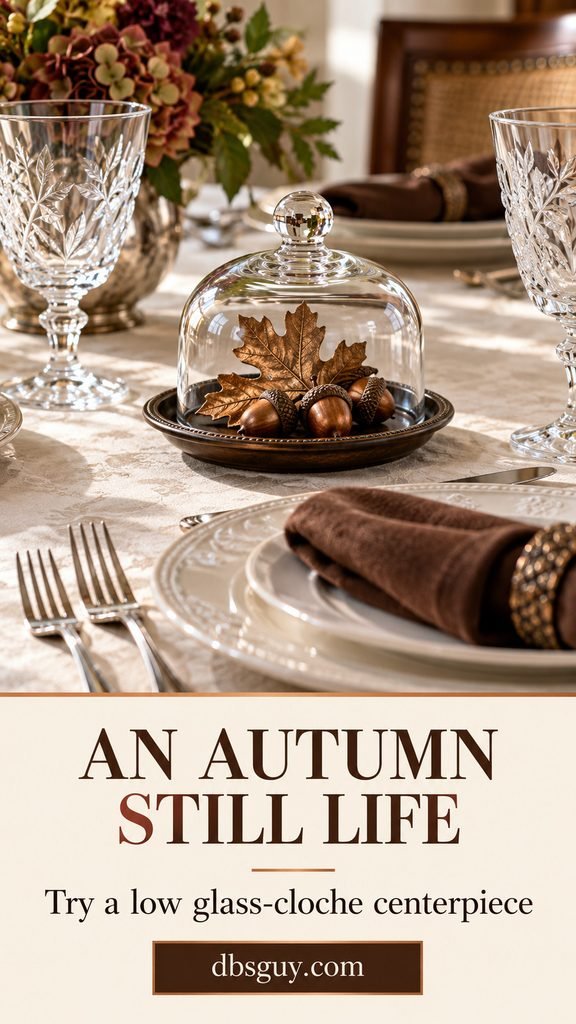
A low glass cloche makes a few decorative acorns and a bronze-toned oak leaf feel like a considered collection. Use a shallow base and leave some space around the objects so guests can see their shapes through the glass.
Try the dome on the table before filling it. Reflections can hide the contents under overhead lighting, so you may need to turn the base or move it slightly. Keep the entire piece low enough for conversation across the table.
This works well when you want a flower-free centerpiece you can assemble before dinner day. Keep the decorative contents separate from food, and use brown linen napkins and etched clear glasses to carry the detail into the settings.
12. Give a Round Table One Compact Focal Point
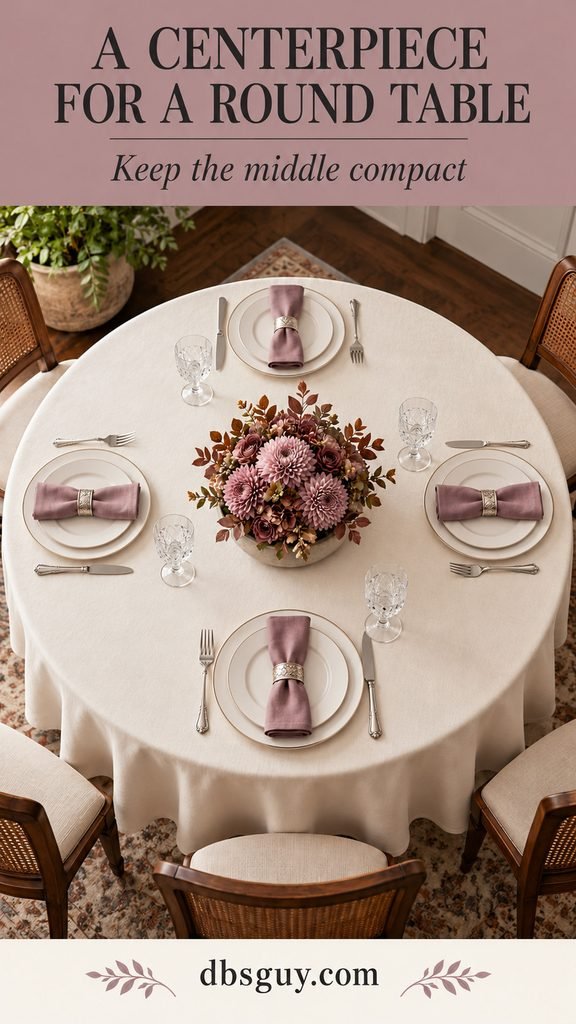
On a round table, a compact rounded arrangement echoes the shape of the dining surface. Use a shallow bowl of dusty mauve chrysanthemums with a few bronze leaves. Set four places first, then adjust the bowl until there is a clear ring of empty table around it.
Check the view from every chair. A centerpiece that seems low from one side may have a branch or flower head blocking another guest. Rotate or shorten individual stems rather than judging the height only from above.
Mauve napkins can repeat the flowers without adding more objects to the middle. If dinner is served family-style, reduce the arrangement further or move it away when the platters arrive.
13. Break a Long Table Into Flower Islands
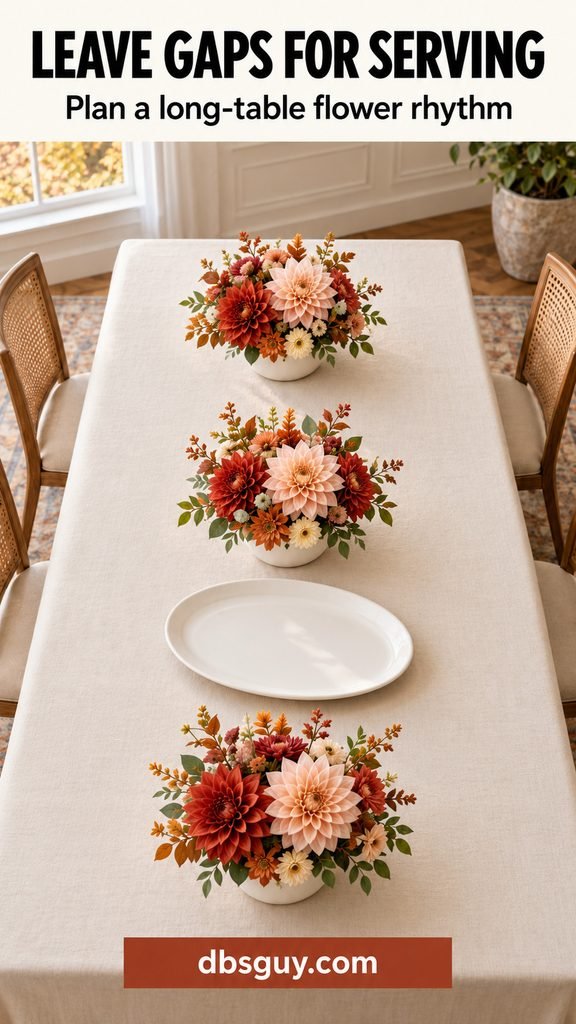
A long table benefits from repetition, but a continuous garland can consume the very space needed for serving. Try three separate small bowls of rust and blush flowers, with generous gaps between them. Repeat the bowl shape and keep each arrangement low.
Use actual serving pieces to plan those gaps. Place the largest platter where it will land during dinner, then move the bowls until someone can set it down without shifting glassware. Keep the ends of the table clear if you will serve from there.
For a longer guest list, add another small arrangement only after every place setting fits. The useful rhythm comes from alternating flowers and open space.
14. Keep the Center Open for a Formal Family-Style Meal
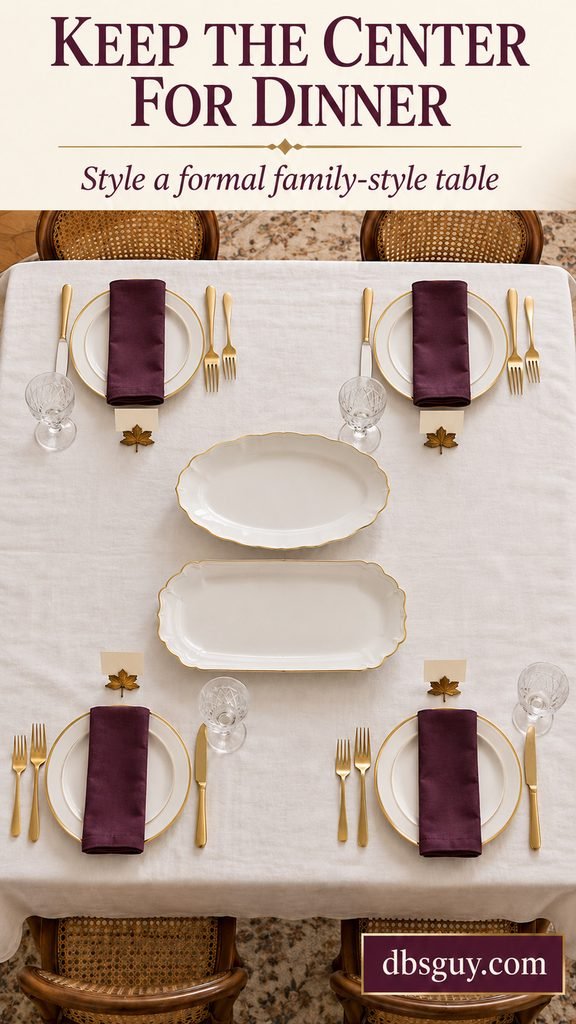
For a dinner with several shared dishes, put the decoration at each seat and reserve the middle for food. Gold-rimmed white plates, aubergine napkins, and small bronze leaf-shaped card holders can create a complete formal look without a centerpiece.
Lay out empty serving platters before guests arrive so you can see where each dish belongs. Put trivets or heat-safe supports underneath any vessels that will need them. Keep serving utensils beside their dishes rather than borrowing from a guest’s setting.
Once everyone is seated, move the place cards to a sideboard if they obstruct the meal. This approach is especially useful for Thanksgiving tablescapes, when platters and bowls need more room as dinner progresses.
15. Make the Napkins a Tonal Autumn Sequence
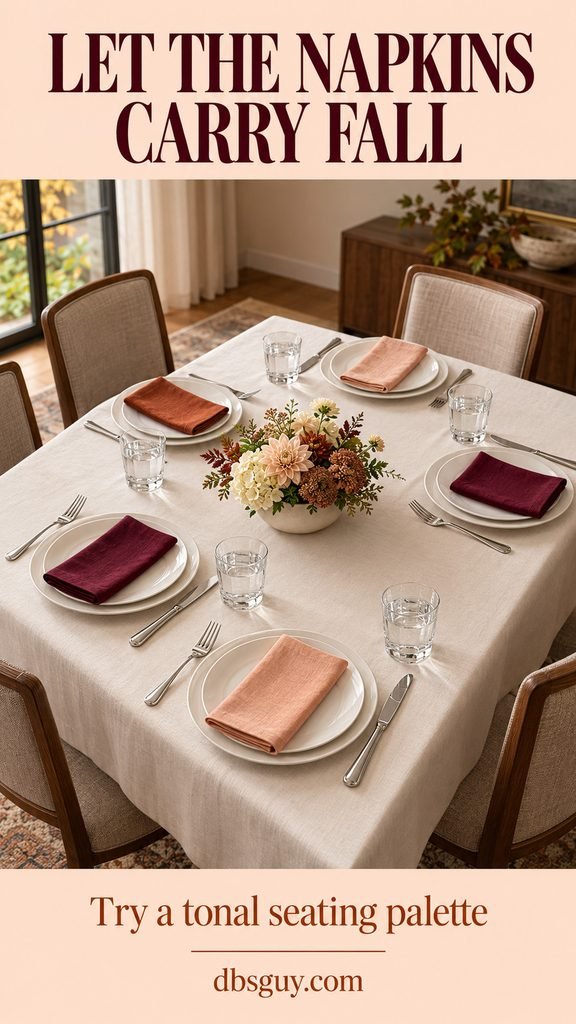
Give identical white dishes a different mood with napkins that move from pale peach to copper rust to deep burgundy. Repeat the shades around the table, and fold every napkin the same way so the variation looks planned.
Lay the napkins out together in daylight before setting the table. Different fabrics can change how the colors appear; similar linen weights and finishes help the sequence feel connected. At dinner, keep the strongest colors spread around the table rather than concentrated at one end.
A small pale flower bowl with muted autumn accents is enough for the center. Matching glasses and flatware give this setting consistency while the napkins supply the visual interest.
16. Compose a Restrained Silver-Tray Harvest
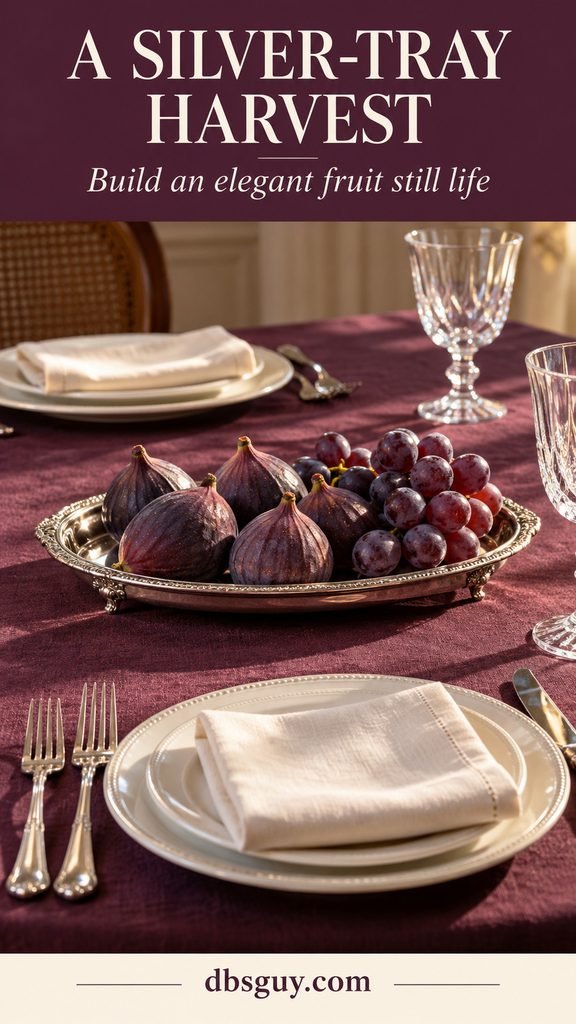
Whole purple figs and a compact cluster of grapes look rich against a small silver tray. Keep the fruit within the tray’s edge, with a little metal still visible around it. Plum linen and cream napkins extend the palette without adding another centerpiece material.
Choose a tray low enough for guests to see across and small enough to lift in one movement. Arrange the fruit shortly before dinner and remove any pieces showing damage. A tray makes it easy to clear the entire display when the meal needs more space.
If the fruit will be eaten, wash it and use a food-safe liner or inner dish when the tray’s suitability for direct food contact is uncertain. Decorative fruit should remain separate from anything you serve.
17. Move the Tall Autumn Display to a Sideboard
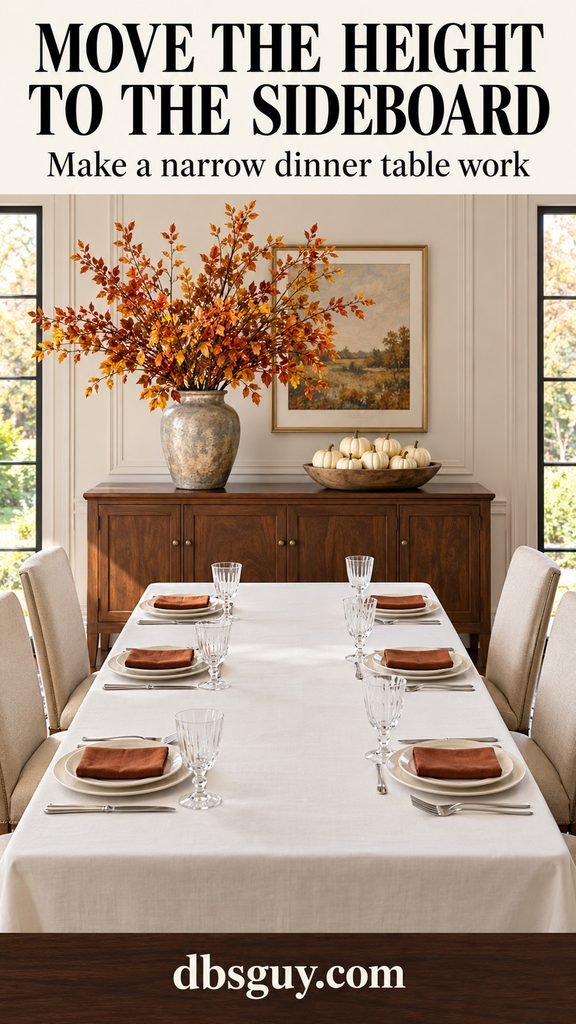
A narrow dining table can still have a dramatic autumn backdrop. Put a tall vase of copper-colored branches and a bowl of small ivory pumpkins on a nearby sideboard, then keep the table center open. White linen, copper napkins, and clear goblets connect the two areas.
Check the vase for stability, and keep branches clear of the dining chairs and walking route. The arrangement should remain over the sideboard, away from anyone carrying food. If that surface is also your serving station, reserve room for platters before adding the display.
Look at the room from the doorway as well as from a chair. The sideboard supplies height while the table stays comfortable for the people using it.
A Simple Setup Order for Dinner Day
- Confirm the serving plan. Decide which courses arrive plated and which dishes need room on the table.
- Press the linens and set one place. Adjust the layout before repeating it at every chair.
- Add your chosen focal point. Check its footprint with the largest serving dish beside it.
- Finish the guest details. Add names, menus, and napkins, keeping cards out of the way of glasses.
- Test from a seat. Look across the table, reach for a glass, and check the lighting you will use during the meal.
If you are starting with simple fall tablescapes, concentrate your effort on pressed fabric, a repeated accent, and one well-proportioned focal point. Those are useful decisions to make before adding anything else.
Frequently Asked Questions
What makes a fall tablescape feel formal?
A clear place for each guest, cared-for linens, and tableware arranged for the meal do much of the work. Autumn can appear in a botanical plate, a rust napkin, or a small flower arrangement. Choose the seasonal details after the dining layout is comfortable.
Do I need chargers and several wine glasses?
Use the pieces your menu calls for. Chargers are a decorative option, and extra glasses make sense when you will serve different drinks in them. You can bring additional glassware with a later course rather than crowding the opening setting.
Can I use these ideas for Thanksgiving dinner?
Yes. For a plated Thanksgiving dinner, the low compote or round-table arrangement can work well. If you pass several shared dishes, choose the open-center setting or use small flower bowls with gaps sized for your serving platters. Plan the table around the way you will serve the food.
How can I make the table elegant without buying new dishes?
Choose a look that changes the linens or one small detail: damask, menu pockets, pear place cards, or tonal napkins. Put a sample beside your existing plates before buying a full set of accessories. Clear glasses and plain white dishes work with several of these palettes.