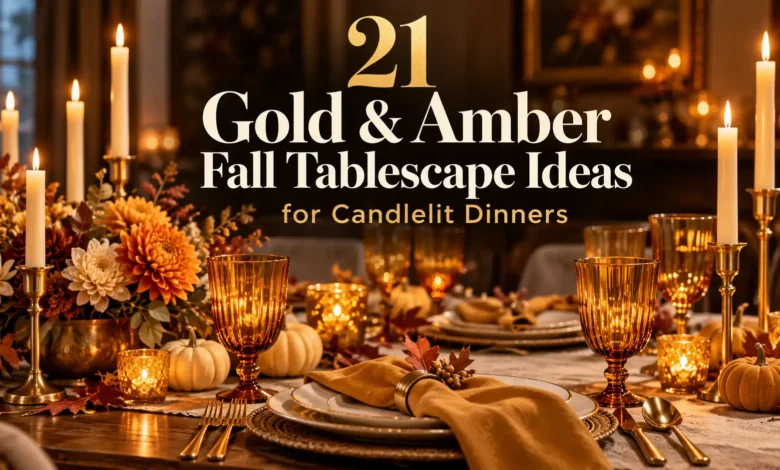
Set out your dinner plates and largest serving dish before you add a single candle. The space left between them tells you whether your table needs a few amber votives, one brass candelabra, or a centerpiece you can move when dinner arrives.
These gold and amber fall tablescape ideas make the evening glow part of the layout. You’ll find options for round tables, family-style meals, a quiet dinner for two, and a patio supper. Choose one arrangement, then borrow its colors and proportions using the dishes you own.
The images are AI-generated styling concepts. They illustrate the arrangements rather than document completed or tested table settings. Use flameless LED candles to recreate the close groupings shown here.
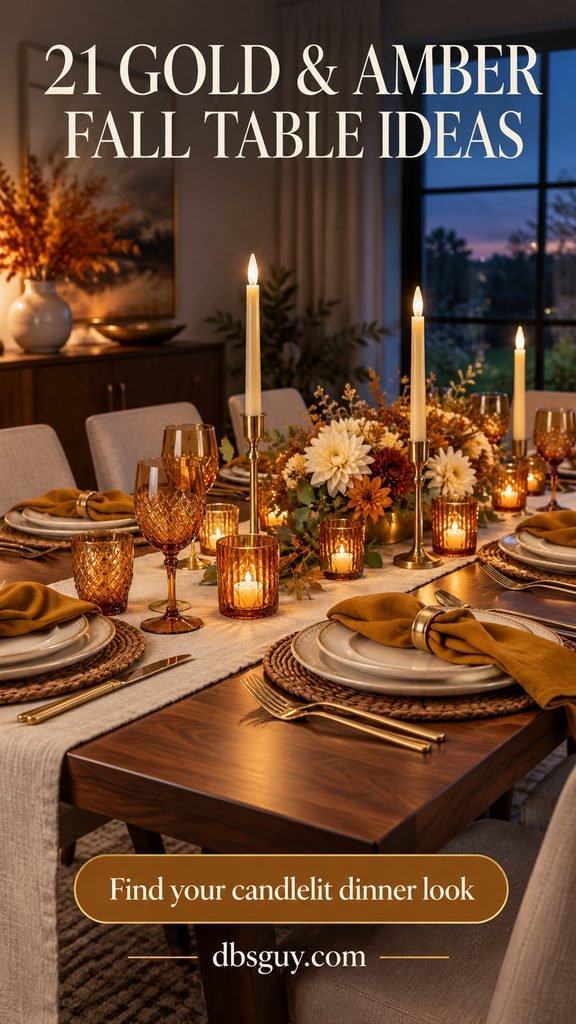
Find the Layout That Fits Your Dinner
- Serving food at the table? Start with the open lane in idea 1 or the removable arrangement in idea 15.
- Working with a round table? Compare the candle crescent in idea 2 with the compact two-person setting in idea 17.
- Want a dressier dinner? Try the single candelabra in idea 3 or navy backdrop in idea 8.
- Keeping dinner casual? The checked cloth in idea 11 and soup setting in idea 19 use familiar everyday pieces.
For these looks, gold means a small metallic accent; amber supplies the translucent honey-to-brown color. You don’t need both at every seat. A brass holder can provide the gold while a few candle cups provide the amber. Turn the lights to their dinner setting before choosing how many LEDs to use, and keep enough room light to see food, steps, and faces comfortably.
These close arrangements are designed for flameless candles. If you use real candles in a different, more open layout, follow the candle and holder instructions. The National Candle Association’s candle safety guidance calls for stable, heat-resistant surfaces, at least 12 inches from flammable materials, and constant supervision. A glass hurricane does not remove the need for clearance. Keep paper, textiles, foliage, and sleeves away from flames, and choose LEDs when that separation isn’t practical.
1. Keep a Serving Lane Between Two Rows of Amber Votives
On a long table, divide the glow into two slim rows instead of filling the middle with a centerpiece. Start with six low amber cups holding LED tea lights, three on each side of a central serving lane. White dishes and oatmeal napkins keep the narrow rows easy to see.
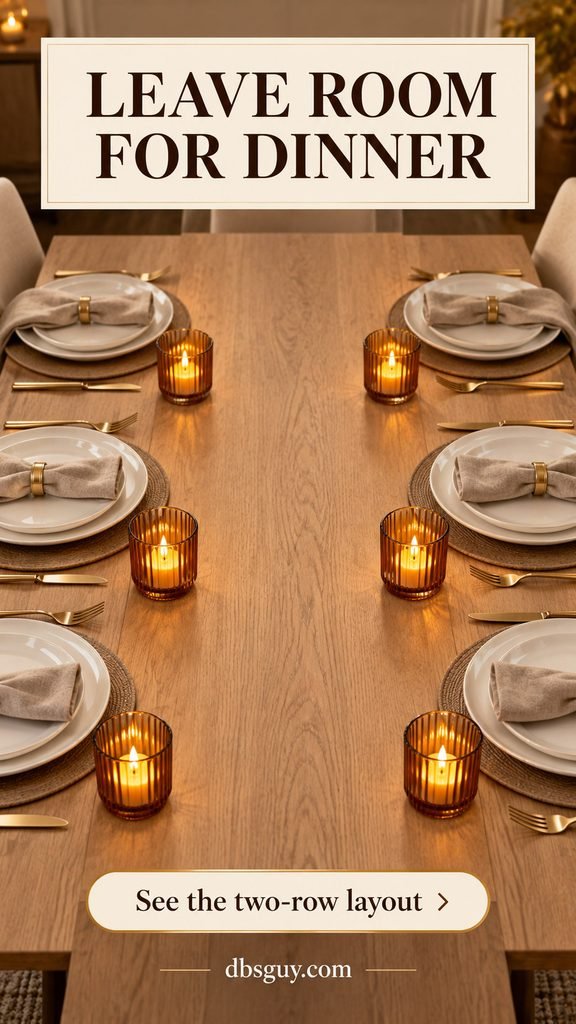
Test the lane with the actual platter and bowls you plan to serve. Guests should be able to reach a serving spoon without moving a candle. If the table is too narrow, reduce the cups to four or move the food to a sideboard; don’t squeeze the place settings toward the edge just to preserve the pattern.
2. Curve the Candlelight Around a Round Table
A loose crescent of low amber lights follows a round tabletop without turning its center into a solid block of decor. Arrange a small group of LED votives along one side of the middle, with a serving bowl in the open part of the curve. Cinnamon napkins and gold flatware repeat the warmth.
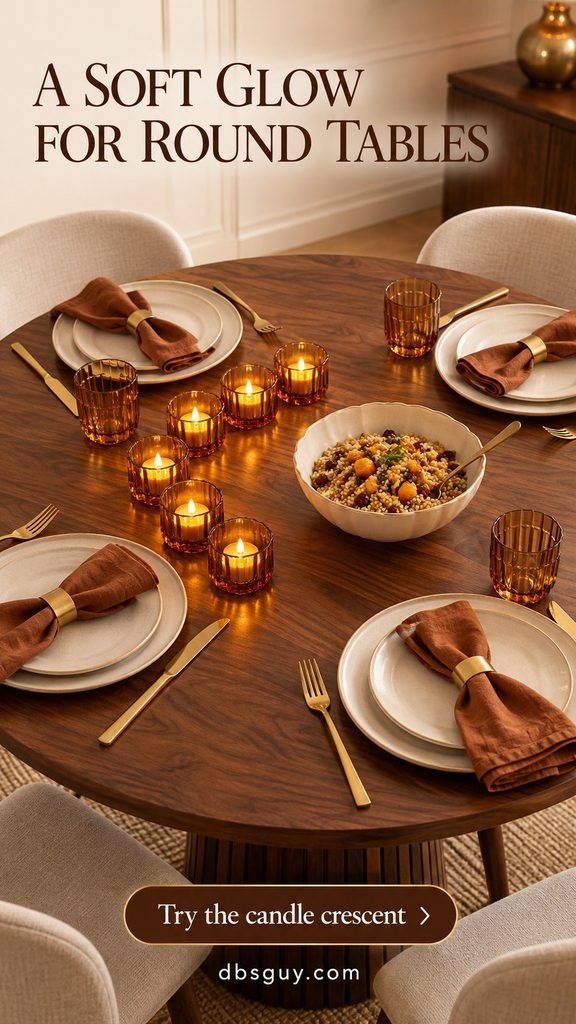
The concept shows six cups, but a smaller table may need only three. Keep them within the central area, clear of elbows and glassware. Sit in every chair and check the reach to the serving bowl. If someone has to reach over the lights, shorten the crescent or rotate it toward an unused gap between settings.
3. Let One Brass Candelabra Be the Centerpiece
A three-arm brass candelabra gives a plain table a defined focal point. Fit it with secure ivory LED tapers, add amber goblets, and leave the rest of the center bare. On a stone tabletop, the reflected light supplies another layer without extra objects.
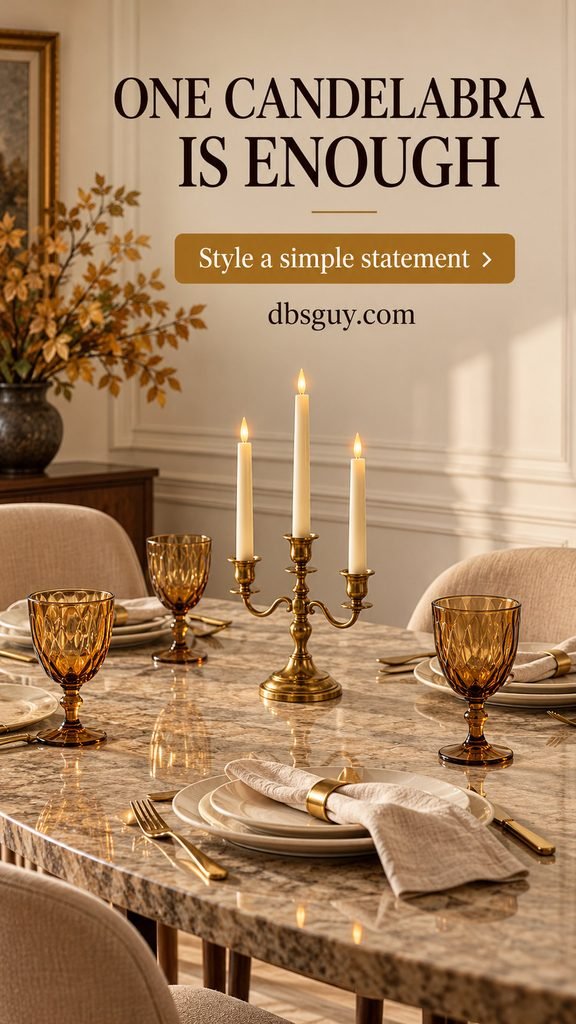
Look for a compact base and arms that stay inside the space between the plates. Sit opposite another person before committing to its position; the stem and candles shouldn’t cut across both faces. If the candelabra feels bulky, try it at an unoccupied end rather than surrounding it with more decorations. Keep the napkins soft and plain so the metal’s shape remains the feature.
4. Put Honey-Colored Glass Against Chocolate Linen
Chocolate-brown linen makes honey-colored glass and ivory dishes stand out. Use a few low amber LED candle cups, caramel napkins, and a restrained gold detail at each setting. A small cream pumpkin at the far end gives the darker palette a clear fall reference.
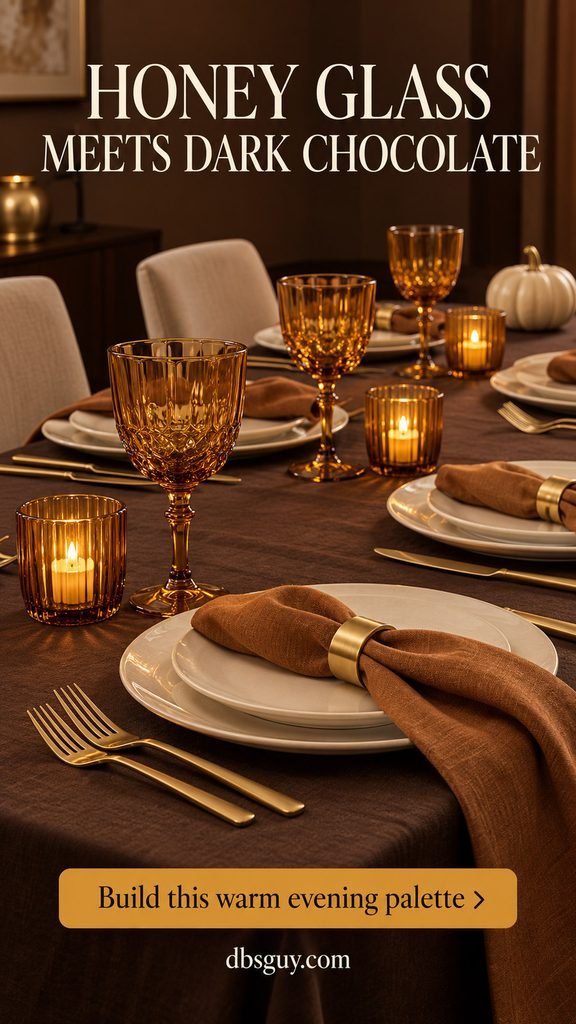
Choose the cloth in the room where you’ll use it. Very dark amber can disappear against dark brown, so hold a glass beside the fabric under your dinner lighting first. If the combination feels heavy, bring in lighter napkins or skip the full cloth and show more pale tabletop. Keep overhead or nearby lighting on low rather than asking the small candle cups to light the entire meal.
5. Pair a Low Golden Bouquet with Slender LED Tapers
For a flower-led dinner, gather cream and golden chrysanthemums in a shallow compote, then place a brass LED taper holder on either side. The broad flowers supply color at table level while the slim candles draw the eye upward. Amber glasses connect the two.
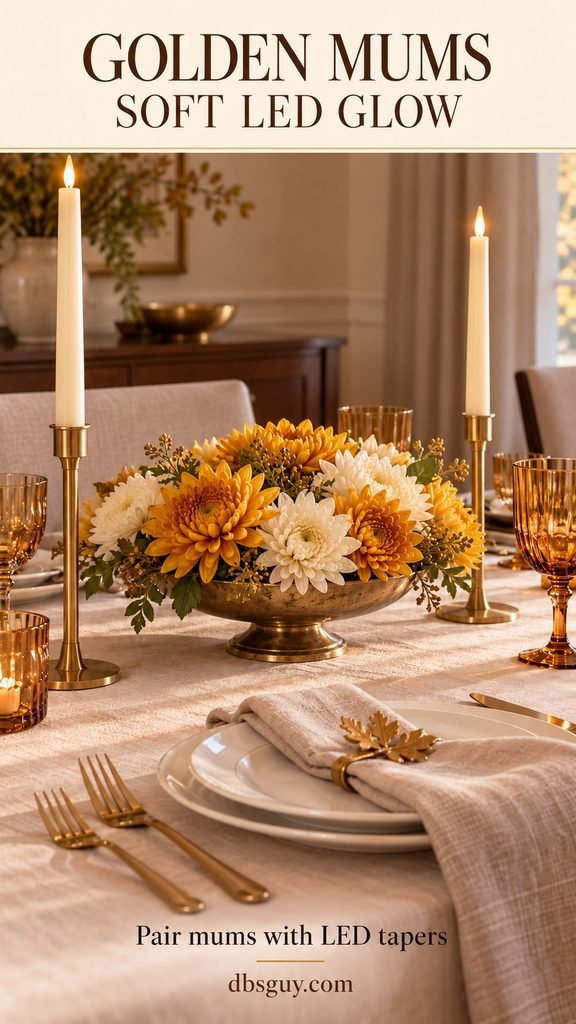
Use a watertight liner if the decorative bowl isn’t intended to hold water. Cut the stems in stages until the flowers sit close to its rim, then check the arrangement from a chair. If the bowl blocks conversation, reduce its width or move it to the sideboard. Choose LED tapers that fit the holders securely; tall, leaning candles will distract from the low, settled shape you’re building.
6. Group Honey-Colored Pillars on Pale Stone
Three honey-colored LED pillars on a low stone slab make a simple, sculptural centerpiece. Choose slightly different heights so their glowing tips don’t form one flat line. Pale travertine, tan napkins, and white plates give the amber color a quiet background; small gold napkin rings finish the setting.
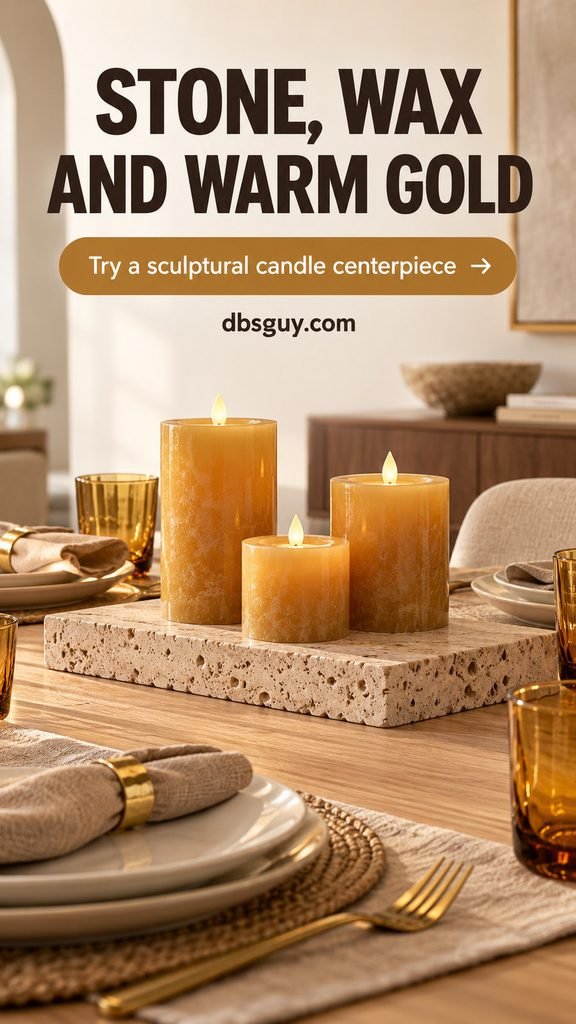
Use a slab or stone tray you can lift comfortably, and protect the tabletop with pads appropriate for its finish. Try the arrangement with the shortest candle toward the nearest seats so the group doesn’t feel like a wall. This is a useful option when you want no flowers, fruit, or seasonal figurines. Keep the slab free of food unless it is specifically suitable for food contact.
7. Nestle a Small Pumpkin Cluster Between Amber Lights
Gather three small pumpkins in cream, tan, and muted orange, then place two amber LED votive cups beside the group. Keep everything low on bare wood. The different pumpkin shapes make the fall theme clear, so the place settings can stay as simple as white plates and cream napkins.
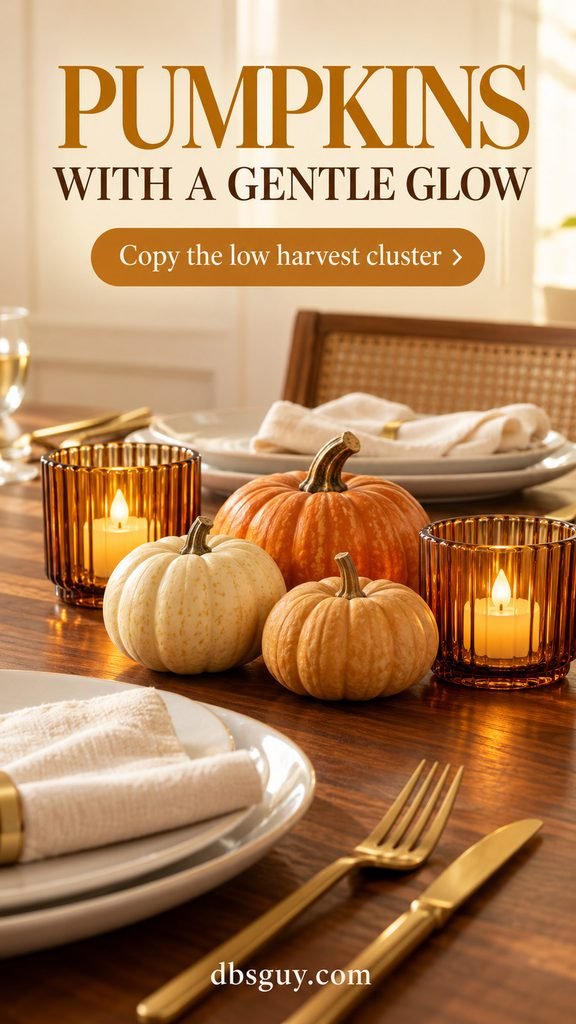
Clean and dry the pumpkin bases, and use discreet surface protection if your table finish needs it. The cluster should fit inside the space left after dishes are down; don’t scatter extra pumpkins into every gap. If the table is compact, one pumpkin and two lights will communicate the same idea. Use flameless candles for this close arrangement and leave the stems clear of guests’ sleeves.
8. Use Navy as a Backdrop for Gold and Amber
Navy gives gold and amber a dressier setting while still leaving room for familiar fall pieces. Use a washable navy cloth, cream dishes, amber goblets, and brushed-gold utensils. A low bowl of pale pumpkins and a few amber LED cups keep the center connected to the season.
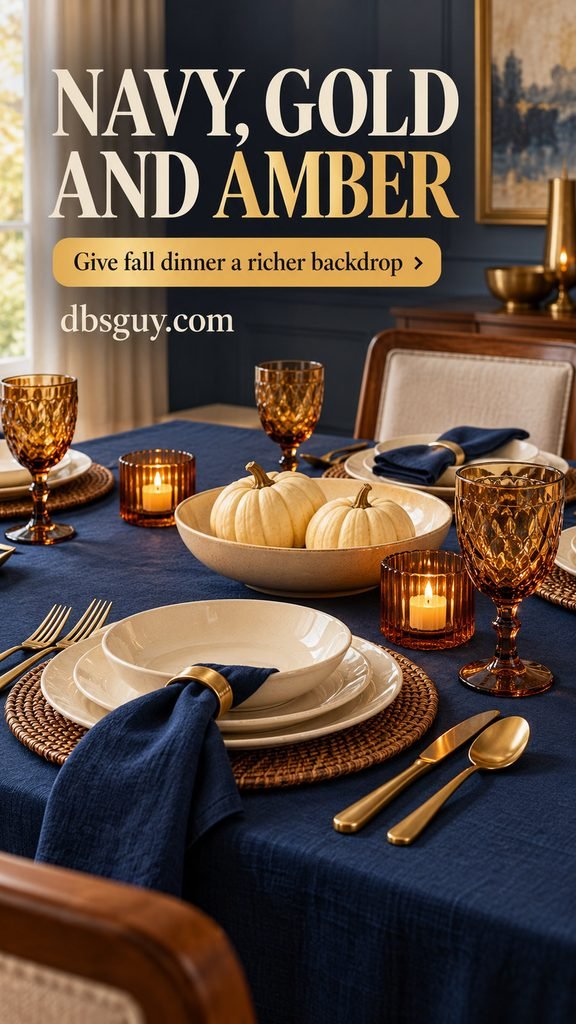
Let the blue remain visible between the settings. Adding a runner, patterned plates, and several metallic layers would hide the contrast that makes this look work. Try one complete place setting before laying out the rest, especially if your plates are warm ivory rather than bright white. If you prefer deeper red accents for a different evening, browse our 17 Burgundy & Plum Simple Fall Tablescape Ideas.
9. Soften the Palette with Olive Linen and Clear Hurricanes
Olive napkins keep the setting earthy, while clear hurricane cylinders let ivory LED pillars show through. Add amber drinking glasses and a small gold detail to warm up a pale stone or light wood table. The clear glass gives the center presence without introducing another opaque color.
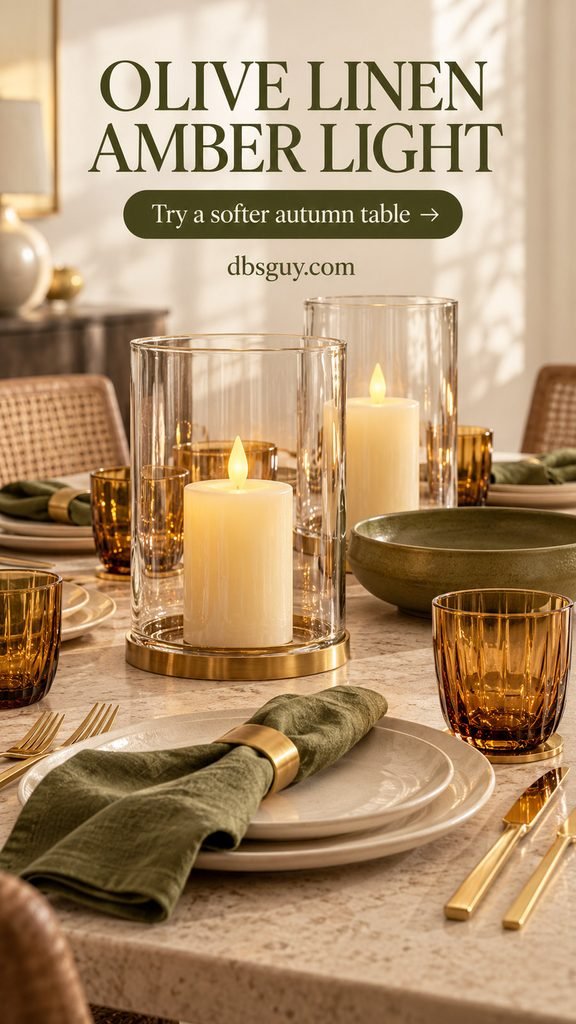
Check the cylinder’s width as carefully as its height: two broad hurricanes can take more space than a small flower bowl. On a narrow table, use just one. Keep the napkins a muted olive so they sit comfortably beside the honey glass. A plain olive serving bowl can repeat the color, but leave it out if it competes with the dishes you actually need for dinner.
10. Warm Up Terracotta Dinnerware with One Gold Lantern
If your everyday dishes are rust or terracotta, build around them. Set them on oatmeal placemats, use short amber tumblers, and place one low brass-framed lantern with an ivory LED pillar in the middle. The lantern introduces a crisp shape among the rounded pottery.
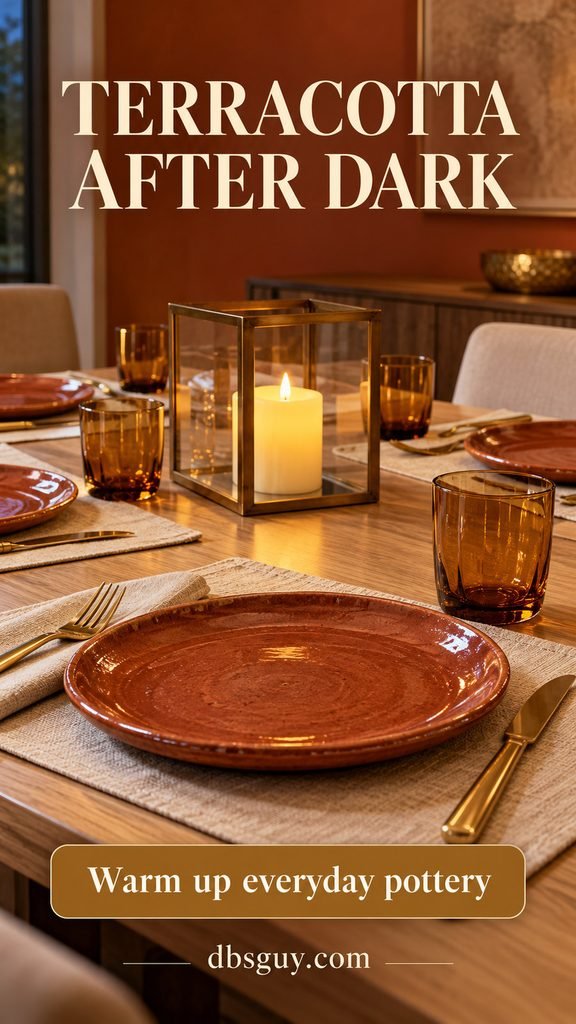
A low, wide lantern is easier to see across than a tall narrow one. Check that its base sits flat and that any door stays closed during dinner. If your dishes have a glossy glaze, keep the napkins and mats matte to avoid an overly shiny surface. This look needs very little seasonal decoration because the warm ceramic, amber glass, and evening light already establish the mood.
11. Give a Checked Supper Cloth an Amber Glow
A butterscotch-and-ivory checked cloth brings pattern to a casual fall dinner. Keep the plates white, the napkins plain, and the glassware short. Three low amber LED cups are enough to repeat the warmth along the middle without covering the checks.
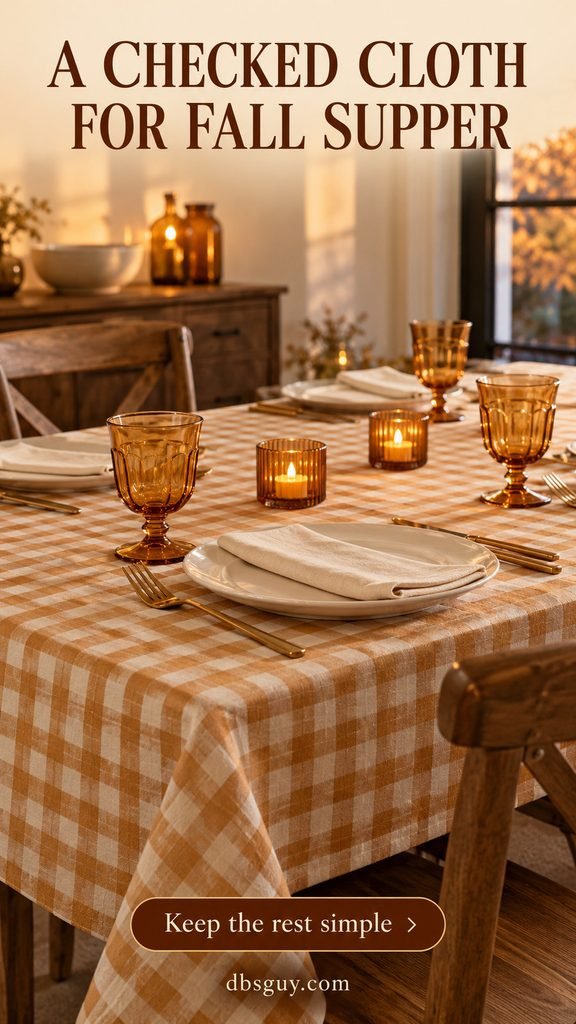
Pick either the cloth or the napkins for the pattern; both don’t need to compete. Lay the cloth flat under each holder and smooth any folds that make a base wobble. If a large check dominates your small table, try a finer pattern or use checked napkins on bare wood instead. For more ways to balance woven textiles and simple dishes, see our 15 Modern Farmhouse Fall Tablescape Ideas.
12. Balance Vintage Lace with Substantial Brass Holders
A narrow ivory lace runner feels less delicate when paired with substantial brass candleholders and pressed amber glass. Choose two holders with different silhouettes, fit them with ivory LED tapers, and use plain cream dinner plates. The texture comes from the lace and glass rather than a large centerpiece.
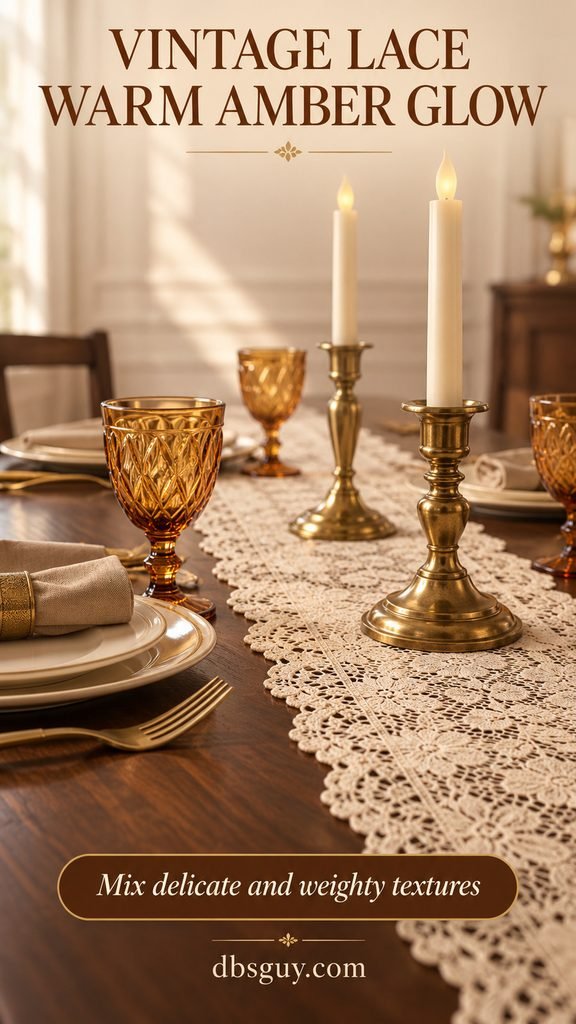
Check older textiles for fragile spots before putting them on a dining table, and keep the holders on flat portions of the runner. Borrowed vintage pieces can be decorative without needing to form a matching set. Repeat one metal color and one glass color to hold the arrangement together. If the lace is especially detailed, fold the napkins into simple rectangles so the setting has a quiet place for the eye to rest.
13. Make a Paper-Leaf Runner for Flameless Candlelight
Cut simple leaf shapes from matte ochre and soft-gold paper, then arrange them in a narrow overlapping line on a cream runner. Add amber cups holding LED tea lights, keeping the leaves low enough that the shape of each cup remains visible. Plain plates let the handmade strip be the feature.
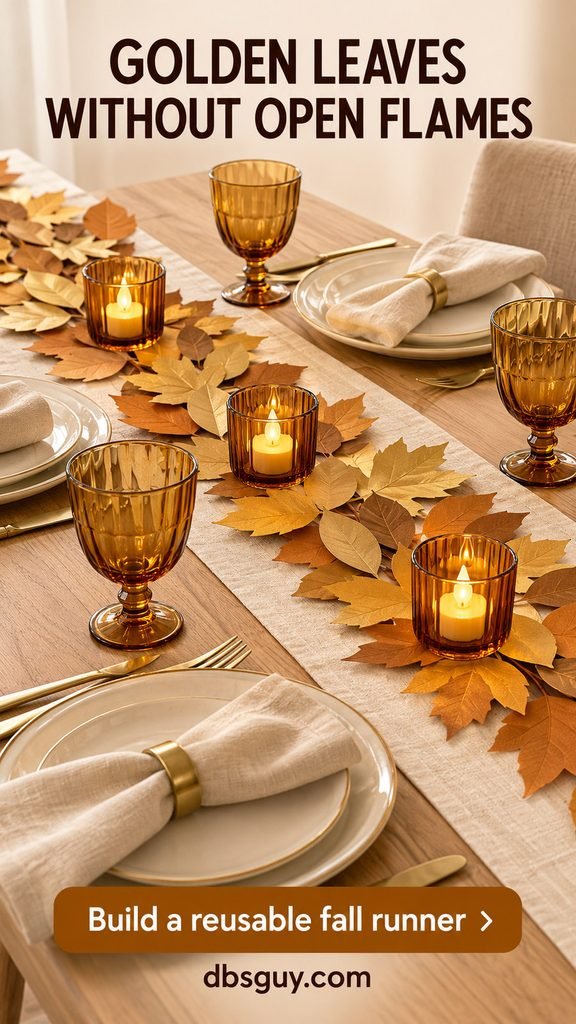
Use only flameless candles in this close paper arrangement. Skip loose glitter and keep the paper away from food and damp serving dishes. Make a short trial section first; you may need fewer leaves than you expect once the cups are in place. After dinner, store the dry leaves flat in an envelope so you can rebuild the runner for another gathering.
14. Move the Harvest Detail to Each Place Setting
Put a whole yellow-gold pear on a small plate at each seat, with a welcome card beside it. Amber glasses and a few low LED votives provide the glow, while the fruit supplies the seasonal color. This keeps the decorative emphasis around the edge instead of building a large centerpiece.
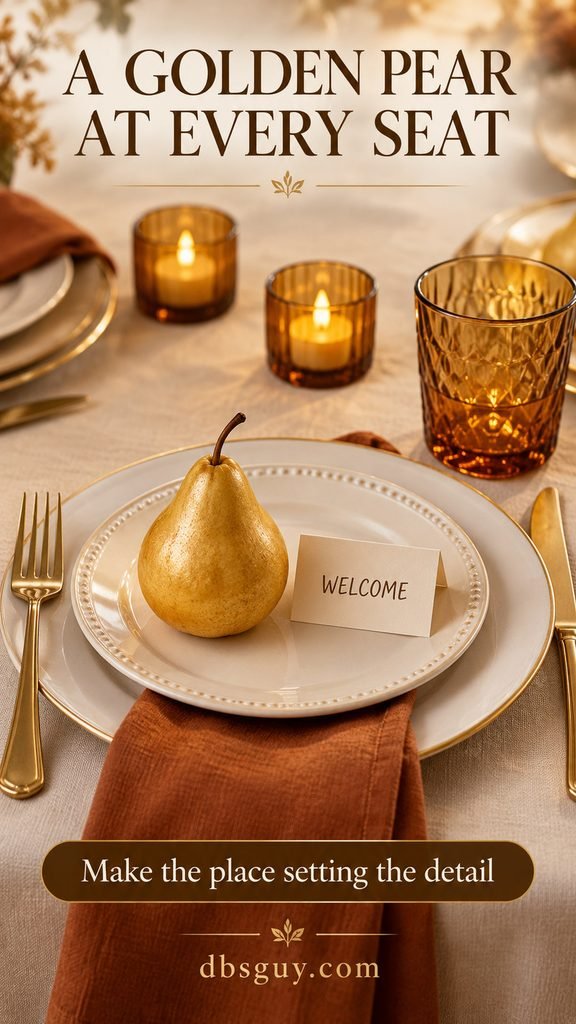
Use clean, unpainted fruit on clean plates, and keep glue, glitter, and floral products off anything intended for eating. A separate small bowl gives guests somewhere to move their pear before dinner. For assigned seating, replace the welcome wording with names. Fold the napkins beside the plates if placing them underneath would make the fruit unstable or awkward to lift.
15. Put the Candle Arrangement on a Tray You Can Lift Away
For a dinner that starts with a styled table and ends with passing bowls, group three short ivory LED pillars on a shallow gold tray. Add one small amber vase with a single golden flower. Choose a tray with a raised rim and handles so the arrangement has a clear boundary.
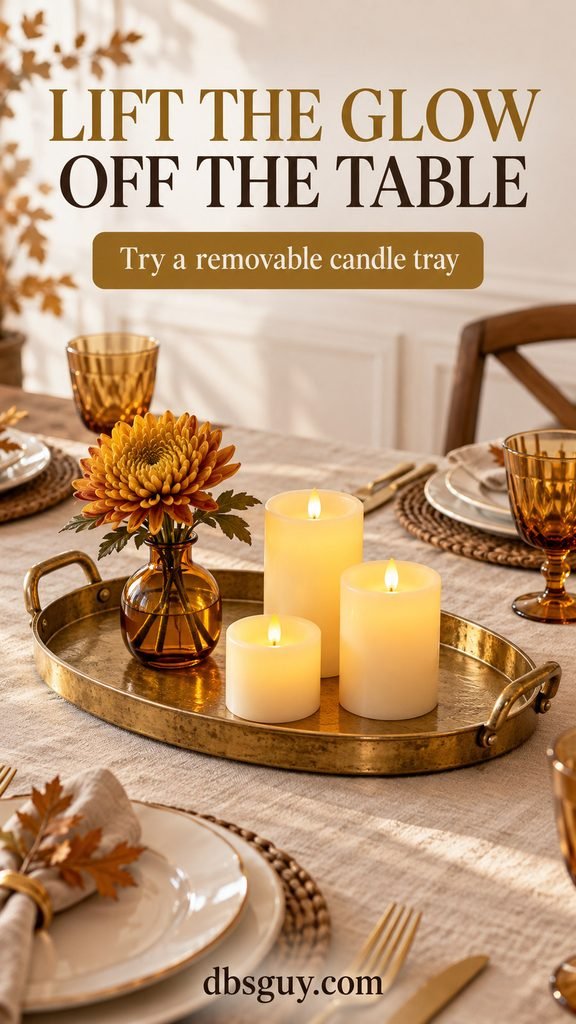
Test the loaded tray before guests arrive and keep it light enough to carry comfortably. Move it to a cleared sideboard before the hot food comes out; LEDs let you relocate the arrangement without handling burning candles. Leave the glasses and napkins in place so the palette remains after the centerpiece moves. For the wider gathering plan, our 27 Fun & Cozy Friendsgiving Ideas Everyone Will Love can help with the rest of the evening.
16. Shift an Oval Table’s Flowers and Glow to One End
On an oval table, try a low flower bowl and two amber LED cups toward one end of the central area. Golden and rust flowers repeat the warm glass, while the opposite part of the middle stays open. Cream dishes and taupe napkins make the asymmetry feel calm.
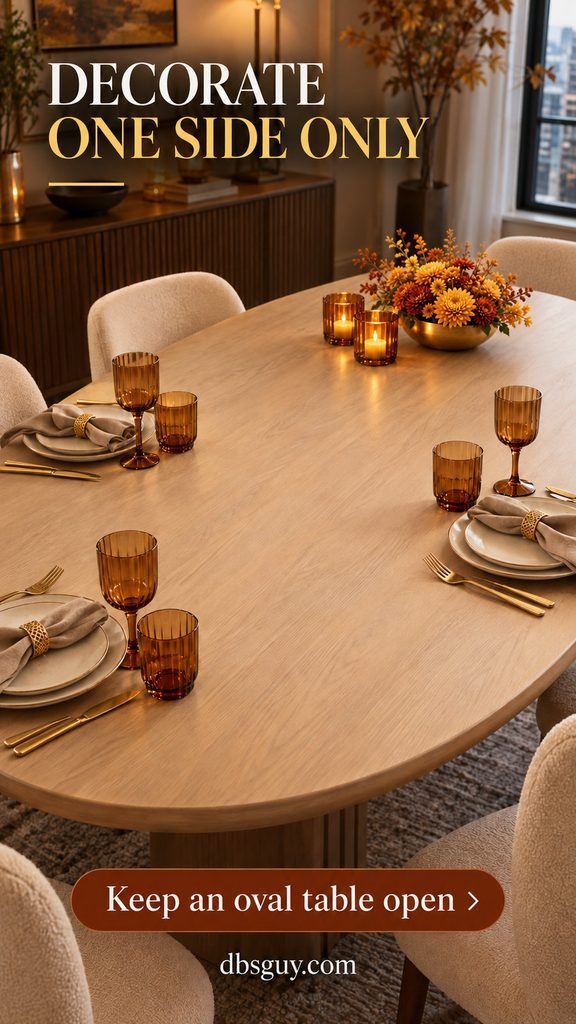
This works only when that end has space beyond the place settings. If someone is seated there, move the cluster inward until their glass, plate, and reach remain comfortable. Check the layout from both ends, since an arrangement that looks balanced from one chair can crowd another. For a fully occupied small oval table, use one candle cup and move the flowers off the dining surface.
17. Use One Amber Light for a Bistro Dinner for Two
A small round bistro table doesn’t need a miniature version of a banquet centerpiece. Use one amber LED votive, two drinking glasses, caramel napkins, and white dishes. Thin gold chargers can frame the plates if the table has room for them.
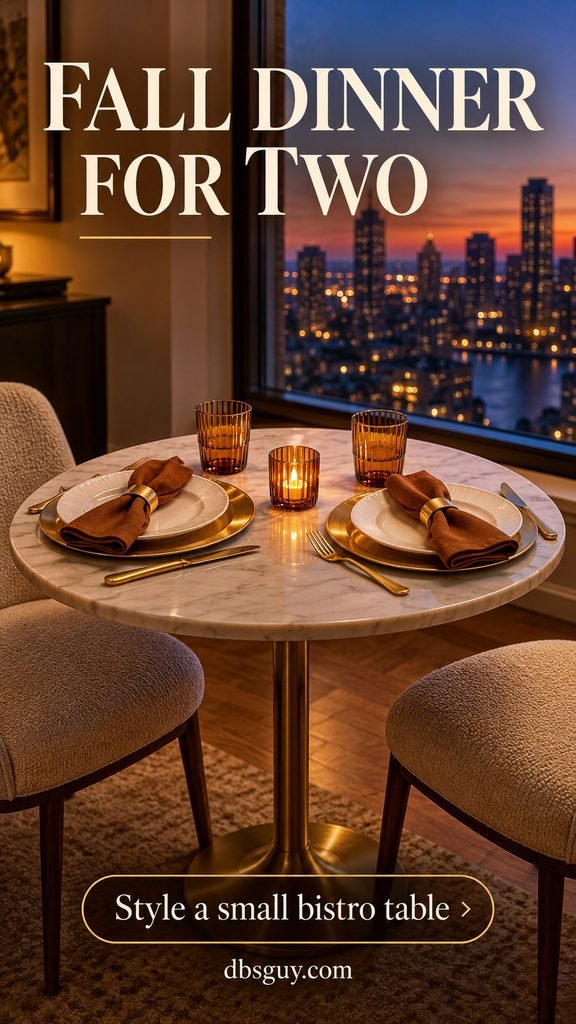
Set out both complete places before adding chargers; their extra diameter can make a tiny table uncomfortable. Serve from the kitchen or a nearby counter so the center stays available for the light and a small shared dish. Move a lamp nearby if the room is dim. One modest source of glow reads clearly at this scale, and you can pack away the whole setting without needing a box of seasonal ornaments.
18. Bring Gold Lanterns to a Covered Fall Patio
For a covered patio supper, combine ochre cotton napkins, cream plates, amber tumblers, and two sturdy gold-toned lanterns with LED pillars. The enclosed shapes make the candle arrangement easy to read against the outdoor background. Skip loose paper leaves and light decorations that may blow into dishes.
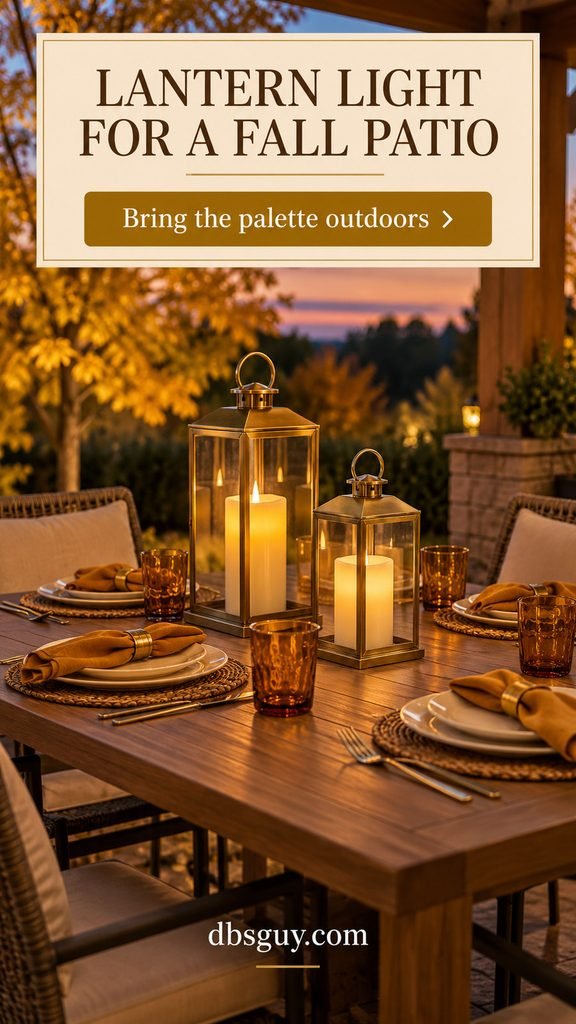
Use lanterns and LED candles rated for the conditions where you’ll place them; a roof doesn’t make an indoor-only light suitable for damp weather. Keep the table on a stable surface and leave enough patio lighting to see the route indoors. Bring the textiles and indoor tableware back inside after dinner. If the weather turns, the same two lanterns can anchor an indoor table without changing the palette.
19. Build a Golden Soup-Supper Setting Around the Meal
Let dinner supply some of the fall color. Cream soup bowls on underplates, gold-colored soup spoons, flax napkins, and amber water glasses make a useful base. A low bread bowl and two compact amber LED cups finish the center without a separate decorative arrangement.

Leave a clear landing place for the ladle or serve the soup in the kitchen. Each guest should be able to reach bread without passing a sleeve over the lights. Underplates give spoons a place to rest and help the bowls feel like a complete setting. If your bowls already have a strong pattern, keep the napkins plain and use the amber glass as the only added color.
20. Unify Mismatched Amber Glass with a Plain White Table
Different amber glasses can work together when the background is simple. Mix ribbed, pressed, and smooth shapes in a similar honey-brown range, then repeat that color in a small central group of LED candle cups. White linen and cream plates give the collected pieces space to show.
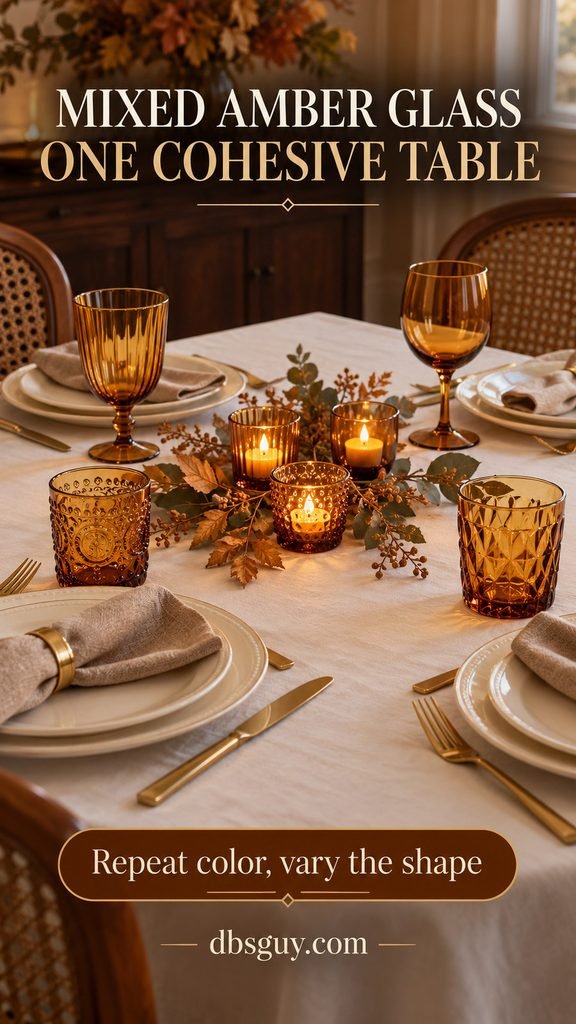
Use sound, food-safe drinking glasses for beverages; unknown decorative or damaged vintage glass can stay out of service. Put one glass at each setting and compare the overall height and scale before filling them. You don’t need an exact match, but one oversized goblet among tiny tumblers can feel awkward. Repeat a plain napkin and the same flatware at every seat to give the varied glass a steady frame.
21. Carry the Amber Glow Through Dessert
After clearing dinner, reset with small white plates, gold dessert forks, cocoa-brown napkins, and a pair of amber LED candle cups. A low cake stand holding an apple tart becomes the centerpiece. The food supplies the harvest color, so you can leave pumpkins and flowers off the table.
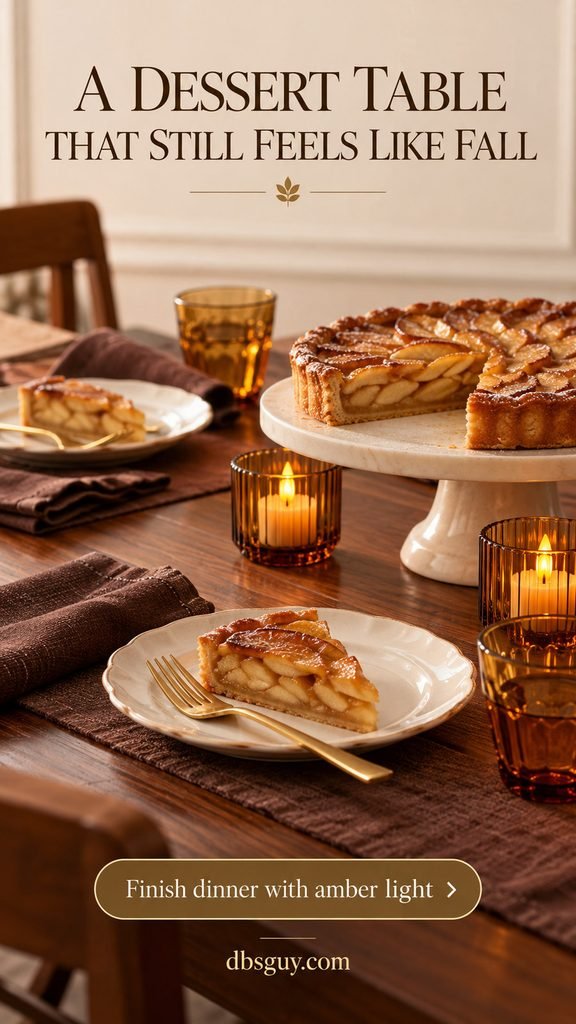
Choose a stand low enough to serve from comfortably, or keep it on the sideboard and plate the tart there. Leave space beside it for the serving utensil. Small amber glasses can continue the palette without bringing every dinner glass back. This is also a practical way to reuse the evening’s pieces for a separate dessert-and-coffee gathering: change the plates and serving piece while keeping the warm light.
Questions About Gold and Amber Fall Tables
How do I make an amber table look warm without making everything orange?
Keep amber in a few transparent pieces and use cream, pale stone, wood, navy, or olive for the larger surfaces. Warm gold metal adds a different texture, so you don’t need orange napkins as well. View the complete setting under the lights you’ll use at dinner; amber glass can look much darker in a dim room.
How many candles should I put on a dinner table?
Start with the space the meal leaves. One LED votive can suit a bistro table; a longer table can accommodate a few separated cups or one compact group. There is no required count. Put down plates, glasses, serving dishes, and candleholders together, then remove anything that makes reaching or talking awkward.
Can I use silver flatware with gold and amber decor?
Yes. Keep the silver utensils you use for dinner and concentrate the gold in the candleholders or one other detail. Repeating amber glass across the table gives the setting continuity without replacing useful pieces to match a metal finish.
Which ideas work best for a Thanksgiving dinner with lots of serving bowls?
Try the two-row arrangement in idea 1 only if your bowls fit comfortably between the rows. Otherwise, the removable tray in idea 15 is easier to clear before serving. The pear detail in idea 14 keeps most decoration at the seats. For a buffet meal, leave a modest candle arrangement in the center and serve the food elsewhere.
What should I buy first if I don’t own amber glass?
Choose the smallest addition that solves the look you want. A few amber LED candle cups can introduce the color without buying a full set of drinking glasses. If your table is already crowded, amber tumblers you actually use may be the better choice. Compare their size with your dishes before buying extras.
Choose the layout that fits the way you’ll serve dinner, then set one complete place and test the space around it. Once the plates, food, and guests have room, the amber glow can be the finishing detail.