Chicago in winter is worth the trip when you mix a few unforgettable outdoor moments with warm places you actually want to spend time. Think skyline skating, a holiday market with something hot to drink, a museum afternoon, and a dinner or show that makes the evening feel like part of the vacation.
December brings the strongest holiday atmosphere. January and February work better for a trip built around food, museums, live entertainment, and skating while the season remains open. The 15 experiences below explain what is worthwhile, when seasonal stops operate, and how to fit them into a sensible winter visit.
The visuals in this guide are AI-generated travel illustrations. Landmark layouts, weather, and seasonal decorations are conceptual rather than documentation of a particular visit.
Choose your winter dates before booking
The following dates and published prices were checked October 14, 2026 for the 2026–27 season. Recheck your exact date before buying tickets; visit lengths in this guide are editorial planning estimates.
- Christkindlmarket at Daley Plaza: November 20–December 24, 2026. Thanksgiving and Christmas Eve have shorter opening hours.
- Maggie Daley Park Skating Ribbon: its published reservation calendar covers November 13, 2026–March 7, 2027. Sessions are released in batches and outdoor conditions can affect operations.
- ZooLights: November 20, 2026–January 3, 2027, with selected closures and special-event nights.
- Christmas Around the World and Holidays of Light: November 7, 2026–January 3, 2027 at Griffin Museum of Science and Industry.
- Chicago Restaurant Week: January 22–February 7, 2027. Use the new season’s menus and participant list when they are released.
1. See Cloud Gate with its winter backdrop
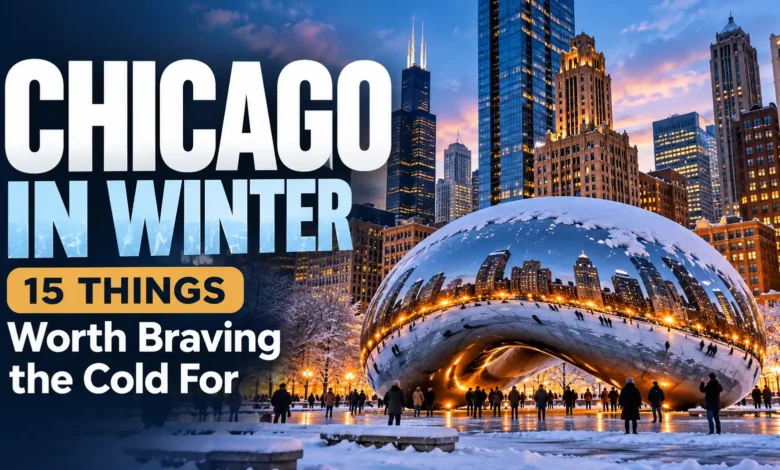
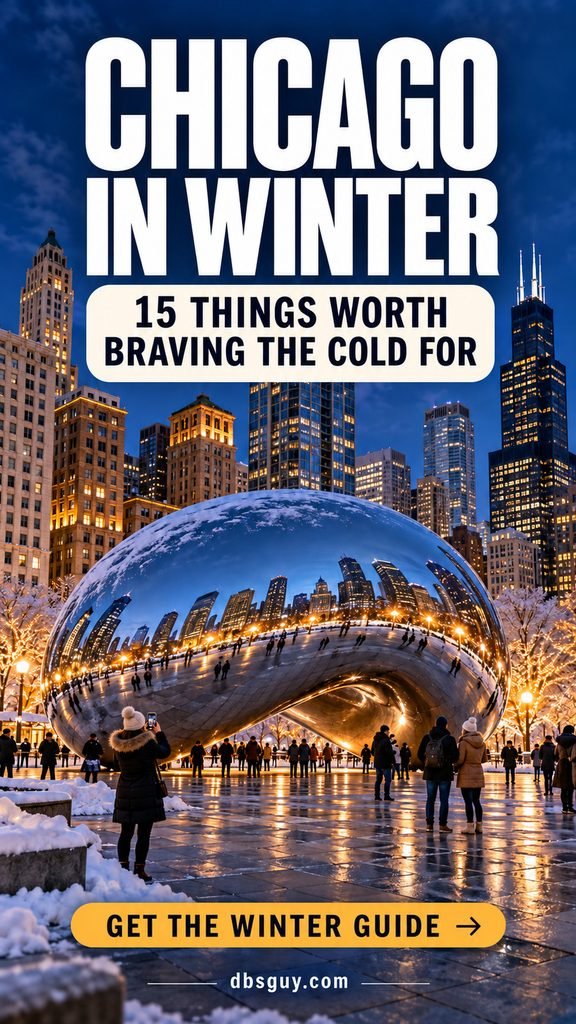
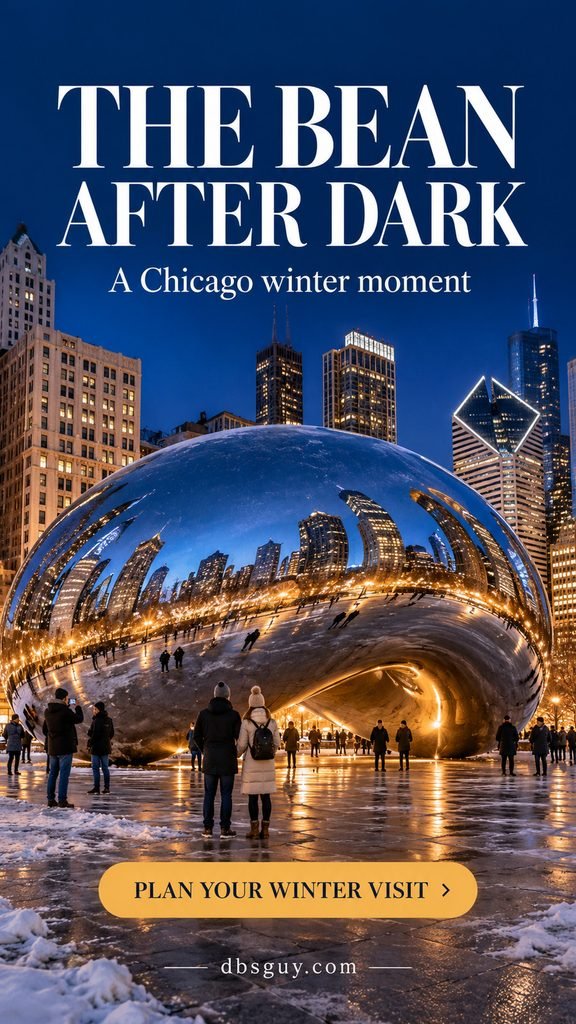
Cloud Gate—the Bean—earns its place even on a short trip. Its polished surface folds the surrounding buildings and passing visitors into the sculpture, giving you a view that changes as you walk around it.
Winter adds bare trees, bundled-up people, and sometimes snow around the plaza. Snow is a bonus rather than something to count on; a clear, dry winter day can be just as rewarding. Early evening is a good choice when you want the city lights in your photos.
Millennium Park has free admission, so you can keep this a short stop and return for different light. Allow roughly 15–30 minutes, adjusted for conditions, then head indoors. The Chicago Cultural Center and Art Institute are useful nearby partners.
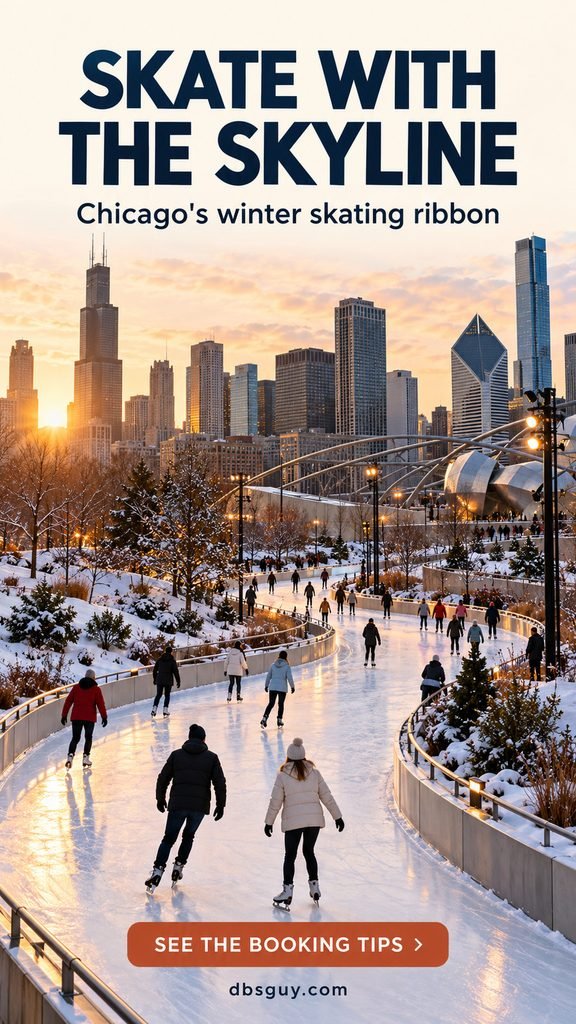
2. Follow the curves of Maggie Daley Park’s Skating Ribbon
A skating ribbon gives you a reason to keep moving. The path bends through the park, with downtown buildings providing the backdrop. It is a memorable choice for an active date or a family outing with travelers comfortable on skates.
Everyone needs a ticket for a specific session, including visitors bringing their own skates. Do not assume you can arrive on a busy evening and find space. The reservation schedule uses release dates, so a session that is not listed yet may simply be awaiting its release.
Published online skate-rental admission is $17 Monday–Thursday outside holiday periods and $21 Friday–Sunday, holidays, and the designated holiday season. Bringing your own skates has separate rules, including selected free sessions. Sessions last two hours; allow additional time for check-in and changing.
Leave your phone and bag off the ice. The park prohibits carrying them while skating, and lockers have an extra charge. Check the forecast before choosing your session.
3. Make Christkindlmarket a food stop with atmosphere
The Daley Plaza Christkindlmarket is a strong reason to choose a December trip. Wooden stalls, ornaments, seasonal treats, and something warm to drink make a downtown plaza feel like a festive destination.
Go with a small plan: browse the stalls, choose a meal or snack, and enjoy the setting. Buying food from every stand is not required for a good visit. A hot drink also cannot replace a warm coat when you are standing in a line.
The market finishes on December 24, so confirm that your travel dates overlap before making it the centerpiece of the trip. A weekday daytime visit is a sensible option to try when you want to avoid the busiest evening atmosphere, although queues vary. Allow about 45–90 minutes, with more time for a popular food stall.

Also read: Christmas in New York: 19 Magical Things to Do for another city break built around holiday atmosphere.
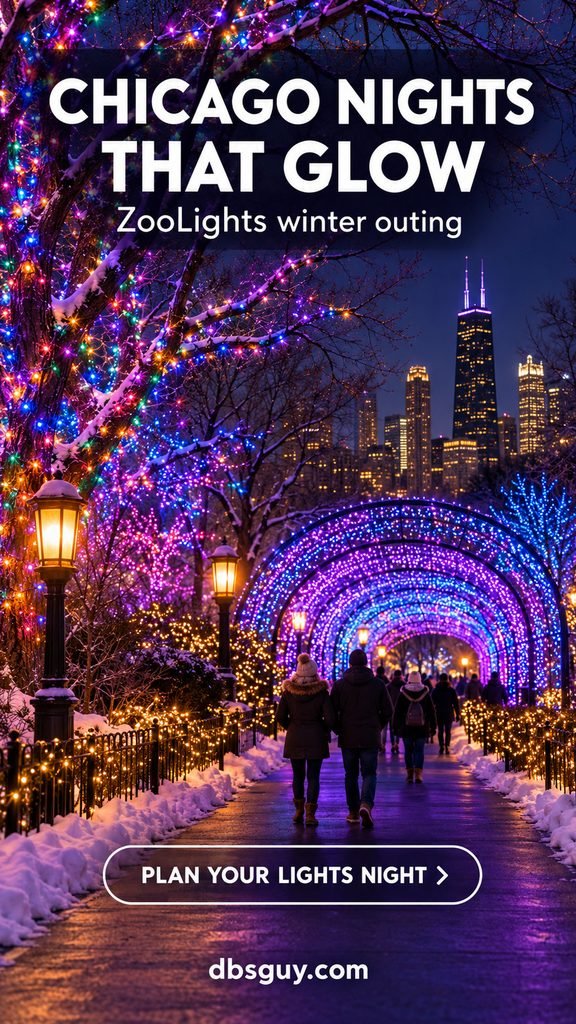
4. Give ZooLights its own evening
ZooLights works well when you want the winter outing to be the evening’s main event. Illuminated paths and displays give you something to explore at an easy pace, rather than simply passing decorations between attractions.
Lincoln Park Zoo’s regular daytime admission is free, but ZooLights has its own ticket system. Published advance fixed-date admission costs $7–$12, while same-day fixed-date admission costs $20. Selected free Mondays still require reservations and have their own ticket releases.
Check the calendar for closures and special-event nights. Plan around 60–90 minutes outside, with dinner nearby before or afterward. Dress for walking and waiting; a packed cross-city schedule will make this more tiring than it needs to be.
5. Give the Art Institute a proper winter afternoon
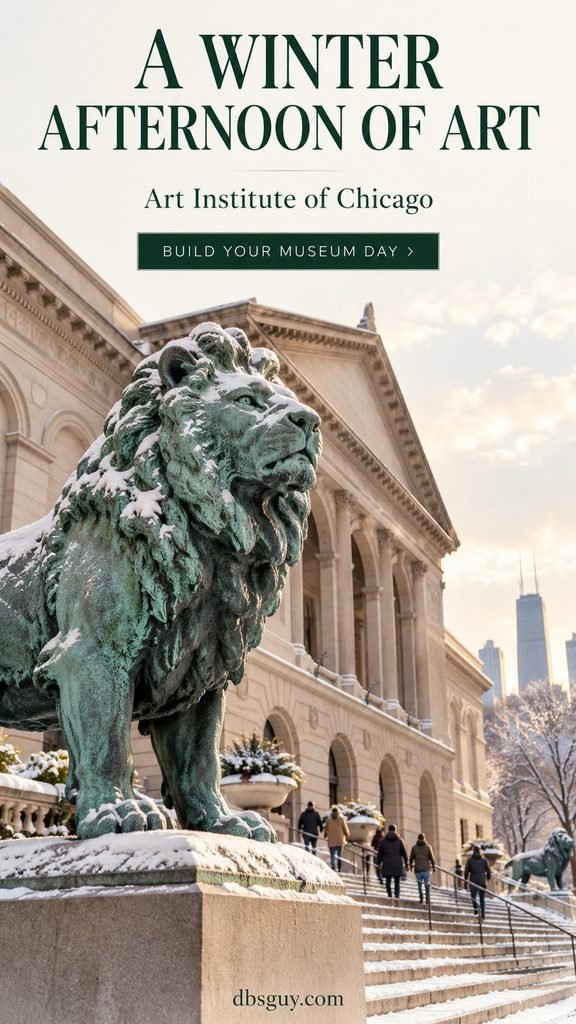
The Art Institute is an excellent place to spend the hours when being outside starts to feel like work. Choose a few parts of the collection that interest you instead of trying to see everything.
Edward Hopper’s Nighthawks is one famous starting point, but leave room for something you did not expect to enjoy. Check current gallery information when a particular work is your main reason for visiting; collection ownership does not guarantee that every work is on display during your visit.
This is an easy attraction to pair with Cloud Gate. See the park first while you are fresh, then give the museum two to three hours for a selective visit. Confirm the current opening schedule and ticket options, and check eligibility before relying on a free-admission offer.
Also read: NYC in Winter: 5-Day Itinerary Beyond Times Square if you enjoy winter city itineraries with neighborhood clusters and indoor stops.
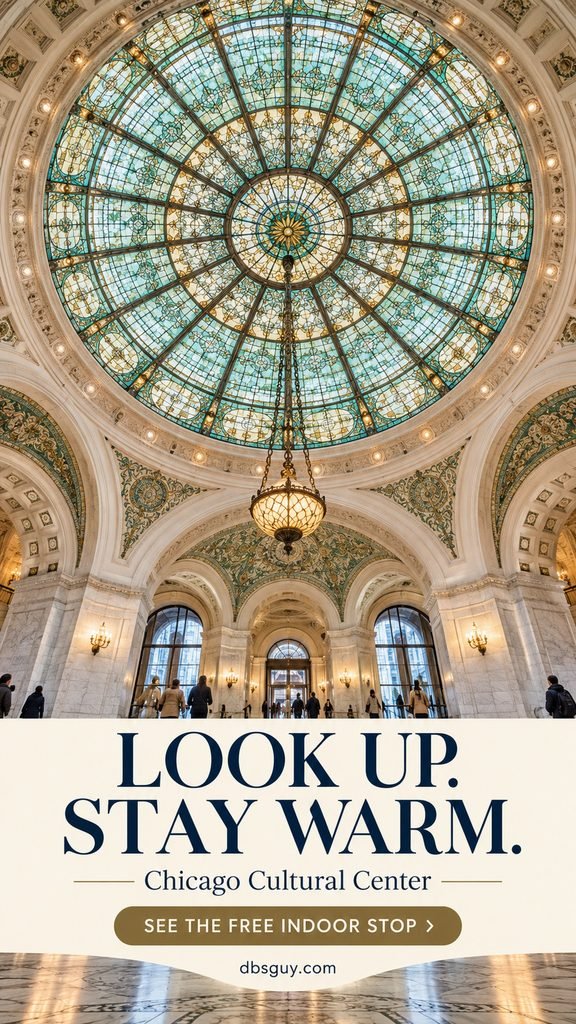
6. Look up inside the Chicago Cultural Center
You do not need an expensive ticket for an impressive Chicago interior. The Cultural Center offers ornate spaces, architectural detail, and Preston Bradley Hall’s Tiffany dome.
Its free exhibitions and public programming make it useful for both your itinerary and your budget. Give yourself time to look around instead of treating the building only as a place to escape the wind.
Allow about 30–60 minutes and check the day’s access before counting on a particular room, since events can affect availability. Its location near Millennium Park makes it a natural stop in a downtown morning.
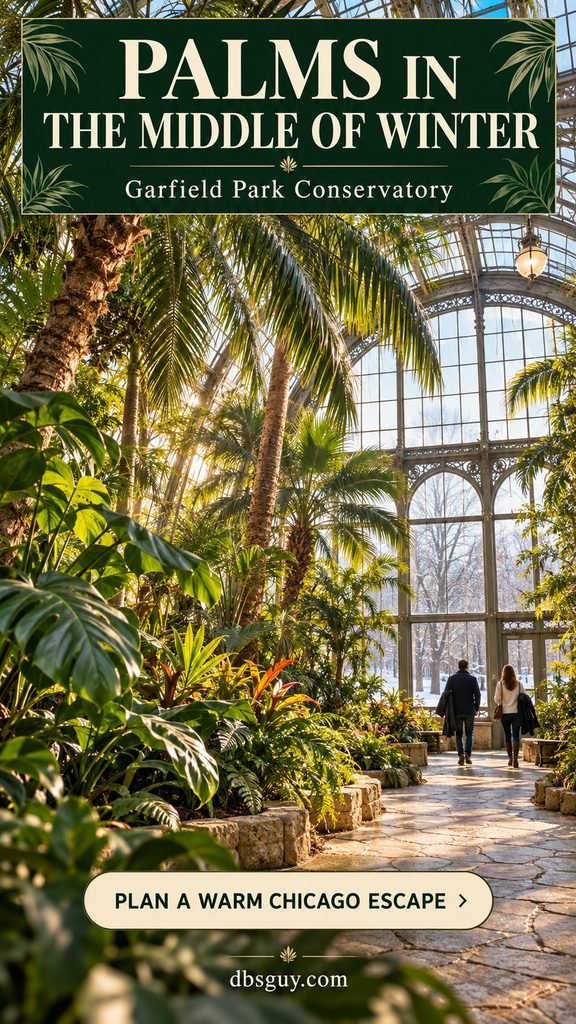
7. Trade winter gray for palms at Garfield Park Conservatory
After cold streets and bare trees, the conservatory provides a complete change of setting: lush foliage, glass overhead, and plenty of reasons to slow down. It is a worthwhile destination in its own right rather than a quick downtown detour.
Ticketed entry is required, and advance reservations are strongly recommended. Older guides may call admission free for everyone. Current admission is free for verified Chicago residents; adults ages 18–64 who live outside Chicago pay $10. Other groups have separate rates and eligibility rules.
The nearby Green Line conservatory stop provides a transit option. Plan 60–90 minutes inside plus travel, and check the calendar: the published regular schedule closes Monday and Tuesday. Layers you can remove make the change from street temperatures to indoor gardens more comfortable.
8. Choose Griffin Museum of Science and Industry for a substantial indoor day
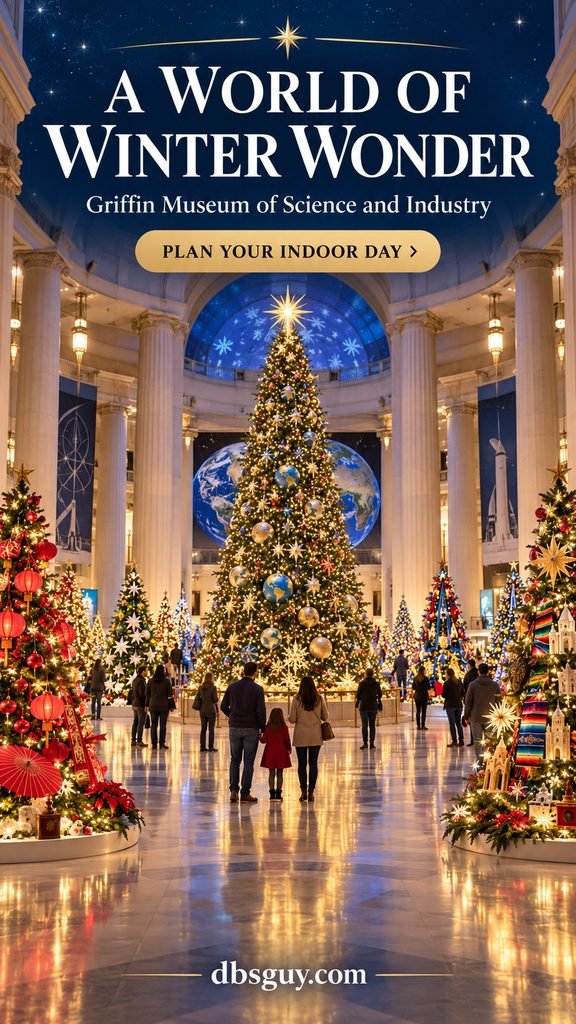
For a trip with children—or adults who enjoy exploring how things work—Griffin Museum of Science and Industry provides a strong indoor anchor. Its Hyde Park location deserves a separate transportation plan instead of being squeezed between several downtown stops.
During the holiday season, Christmas Around the World and Holidays of Light adds decorated trees and displays celebrating different traditions. The published seasonal run ends January 3, 2027. After that, the museum remains a winter option through its other exhibitions.
Check admission inclusions and any separately ticketed experiences before deciding what to see. Allow three to four hours for a selective visit, longer if your group likes to explore extensively. One substantial museum day often works better than several short, rushed museum visits.
9. Take in the skyline from a warm observation deck
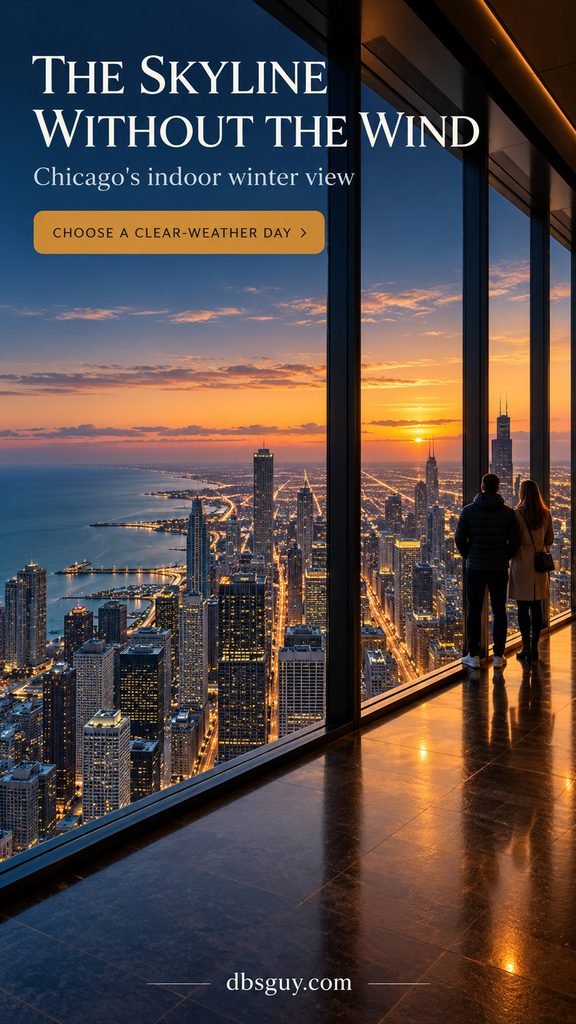
A winter skyline view can be spectacular when the air is clear. Watching buildings light up from indoors is also more comfortable than spending an entire evening on an exposed waterfront.
360 CHICAGO offers views from 875 North Michigan Avenue. Choose the ticket and experience that interest you; an extra attraction is useful only if you actually want it. Keep this stop flexible when possible because low cloud or fog can hide the view you are paying for.
If sunset is the goal, the venue recommends booking at least an hour before it so you have time to reach the deck. Most visitors spend about 45 minutes to an hour upstairs, with extra time needed for entry and queues. Confirm your reserved entry time rather than treating the ticket as an all-day arrival pass.
10. Understand the buildings at the Chicago Architecture Center
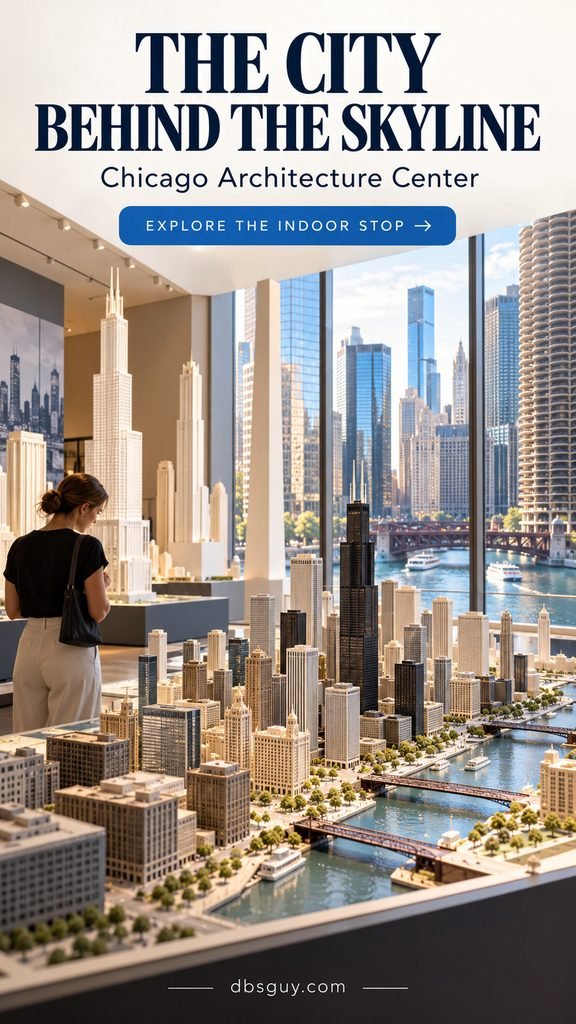
Chicago’s buildings become more interesting when you know what you are looking at. The Architecture Center connects the skyline outside with the design decisions and stories behind it.
At the 111 East Wacker Drive exhibition location, you can explore building models and the Chicago City Model Experience. Published adult center admission is $15; tours have separate prices and inclusions.
Allow around 60–90 minutes. This is an architecture experience that does not require a long outdoor tour. If conditions are comfortable, follow it with a brief street-level look at the river and surrounding buildings. Decide on that outdoor extension on the day instead of making a long winter walk mandatory.
11. Make time for a seated deep-dish dinner
Cold weather is an excellent excuse for a substantial, unhurried dinner. Chicago-style deep dish brings a tall crust, a generous filling, and tomato sauce on top—a meal that deserves a table and some time.
Lou Malnati’s River North is one established option. Choose the location that fits your route rather than crossing town only because another branch appeared in a photo. Let the server guide you on portions and preparation time.
Allow roughly 60–90 minutes for a seated meal, with more time for a busy service or waitlist. If your next stop has a fixed curtain time, build in a buffer; freshly baked deep dish is not a quick slice-and-go meal.

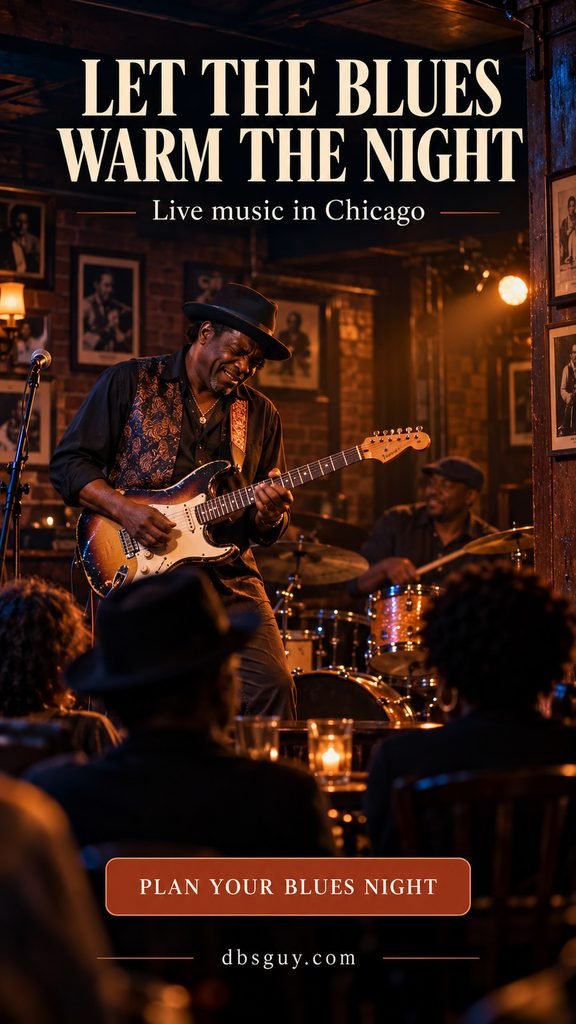
12. Spend the evening with live Chicago blues
Some winter memories have nothing to do with snow. A live blues set gives you a warm room, a reason to put your phone away, and an evening centered on something Chicago is known for.
Kingston Mines is a long-running Lincoln Park option. Check the current lineup, opening nights, cover charge, and admission requirements rather than relying on an old listing. Its published policies exclude minors, so it should not be your default family outing.
Choose a performance you can realistically reach after dinner. Staying for one or two sets can be enough; you do not need to remain until closing for the visit to count. Plan the return trip before the evening gets late.
13. Book an evening at The Second City
A comedy show gives the evening an anchor: somewhere warm to be at a specific time, with an experience that does not depend on perfect snow or a clear sky.
The Second City’s Chicago listings include different productions and performance formats. Read the selected show description so you know whether you are booking sketch, improv, or another kind of performance.
General venue guidance admits ages 13 and older, with an adult required for minors, but the content rating still matters. Choose for the people traveling with you. Follow the show’s listed duration, leave time for arrival, and keep dinner nearby when possible.

14. Use Chicago Restaurant Week to choose a meal you are excited about
If your trip falls in late January or early February, Restaurant Week offers another reason to enjoy Chicago after holiday decorations disappear. The 2027 event is scheduled for January 22 through February 7.
Participating restaurants offer special prix fixe menus, but a fixed menu is useful only if you want the dishes on it. Compare the released menu with normal offerings and check whether drinks, tax, gratuity, or supplements are extra.
Do not assume every menu is a bargain, and do not use last season’s participant list or prices as confirmation for this season. Reserve once the current menu and booking details are available, then make that meal a deliberate part of the trip rather than another appointment to rush through.

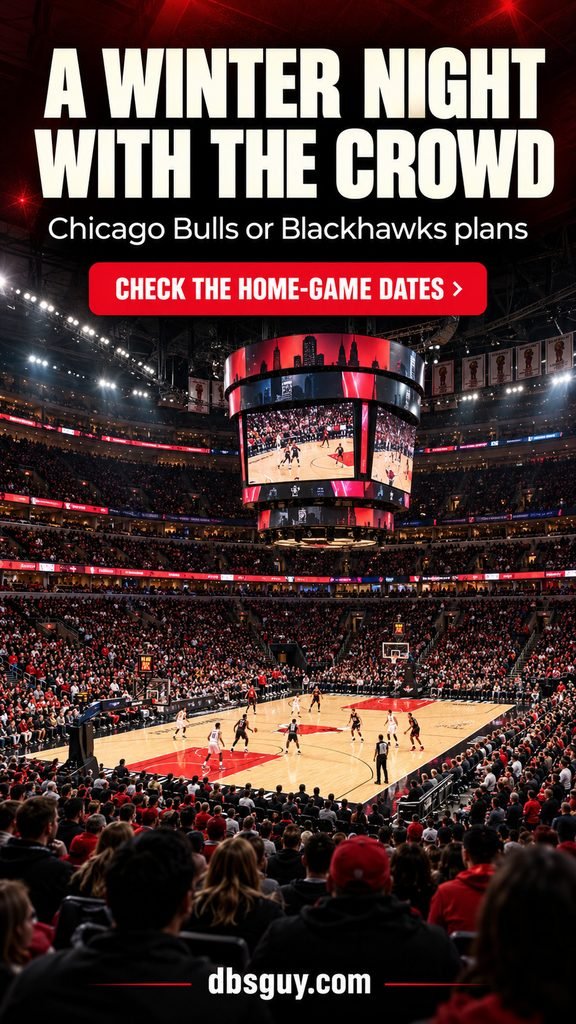
15. Join the crowd at a Bulls or Blackhawks home game
A home game offers a different kind of city energy: the introductions, the crowd, and the shared reaction to a big moment. Even travelers who are not devoted fans can enjoy making one evening about the event.
The United Center is home to the Bulls and Blackhawks. Start with the official event calendar to confirm that a home game overlaps your trip, then compare seats by the full checkout price rather than the first displayed amount.
Leave your day bag at the hotel. The current arena policy allows a small purse or personal bag up to 10 by 6 by 2 inches, with specified exceptions, and prohibits backpacks. It is also cashless. Keep the evening free and arrange your route home before arrival.
An easy two-day Chicago winter itinerary
Choose a handful of experiences instead of trying to collect all 15. Give each day one substantial indoor stop, group attractions geographically, and let the weather determine how much time you spend outdoors.
Day 1: Millennium Park, art, and a good dinner
Start with a short Cloud Gate visit and the Chicago Cultural Center during its open hours. Have lunch, then give the Art Institute the main part of your afternoon. Finish with deep dish.
If skating is your priority, reserve a Maggie Daley Park session and use it in place of part of the museum afternoon. A full art visit, two hours of skating, a market, and a fixed-time show will usually turn the day into a rush.
During the holiday season, Christkindlmarket can replace another stop. Daley Plaza is a separate walk from Millennium Park; use transit or a ride if the weather makes that walk uncomfortable.
Day 2: One destination and your chosen evening
Choose Garfield Park Conservatory or Griffin Museum of Science and Industry as the main outing. They are in different parts of the city, so visiting both requires more transportation than a downtown day.
Prefer staying central? Combine the Architecture Center with an observation-deck visit when visibility is good. Then choose one evening anchor: comedy, blues, or a home game. ZooLights can take that evening slot during its seasonal run.
Also read: 9 Easy Weekend Getaways From U.S. Cities Where You Don’t Need a Car for more trips planned around manageable transportation.
If the weather is unpleasant
Keep the museum or Architecture Center and your indoor evening. Shorten outdoor stops and reconsider a view hidden by cloud. Review ticket cancellation and transfer terms before booking; choosing not to attend because you feel cold does not automatically qualify you for a refund.
What to wear without overpacking
Start with a base layer, a sweater or fleece, and a warm coat that blocks wind. Add a hat covering your ears, gloves, and a scarf or neck covering. Use layers you can remove in museums, restaurants, and conservatories.
Water-resistant boots with traction are useful for slushy crossings and wet sidewalks. Make sure your socks fit comfortably inside them rather than forcing thick socks into tight footwear. Dress for standing and waiting at markets and light displays, not only for brisk walking.
Check wind chill along with the air temperature each morning. Snow is possible but not guaranteed, and actual weather can swing well above or below climate averages. Hand warmers and a charged power bank can be useful additions.
Also read: The Best Types of Coats for Winter and Best Winter Shoes to Keep Your Feet Warm and Dry when planning your cold-weather layers.
Getting around and keeping costs sensible
For a first visit, a Loop or River North base often makes it easier to group downtown attractions. Check the walk from the hotel entrance to the transit you expect to use; a convenient neighborhood name does not guarantee a short walk.
CTA currently lists a $5 one-day pass and a $15 three-day pass for unlimited CTA and Pace rides during the pass period. Compare with your expected rides and recheck fares before travel. These passes do not cover ordinary Metra trips. The Blue Line connects O’Hare with downtown, but baggage, station walks, and transfers still deserve time in the plan.
Budget for an occasional taxi or rideshare after a late event or during uncomfortable weather. Check current service alerts and arrival information before leaving a warm building.
Build the spending plan around your priorities. Cloud Gate and the Cultural Center can balance paid stops. Published examples include $10 conservatory admission for nonresident adults ages 18–64, $15 adult Architecture Center admission, $17–$21 online skating rental admission, and $7–$12 advance fixed-date ZooLights tickets. Add meals, applicable tax and tips, ticket fees, and transportation.
Also read: 12 Affordable Weekend Getaways in the USA That Feel Way More Expensive Than They Are for more ways to choose experiences that fit your budget.
For seasonal event changes and further planning, check Choose Chicago’s official winter holiday guide.
Chicago in winter: common questions
Is Chicago worth visiting in winter?
Yes, if you enjoy museums, food, live entertainment, and short outdoor experiences. It is a less comfortable match for a city break spent walking outside from morning until night. Choose activities that make you excited to leave the hotel, with warm stops between them.
Is December or January better?
December is the better choice for Christkindlmarket and holiday lights. January works well for an indoor-focused trip, skating while the season is operating, and Restaurant Week if dates overlap. Check each holiday event separately; some end at Christmas, while others continue briefly into January.
Can you do this trip without a car?
Yes. A carefully chosen base, CTA rides, and occasional taxis or rideshares can support this itinerary. Group distant attractions, check current service and accessibility, and give station walks and transfers enough time.
What is the best plan with children?
Choose a substantial indoor attraction such as Griffin Museum of Science and Industry, then add an age-appropriate outdoor outing when the weather allows. Check children’s admission and skating requirements. Save adult-only nightlife venues for another trip.
How many days do you need?
Two full days can cover a downtown cluster, one additional destination, and a couple of memorable meals or evenings. Three days give you more flexibility for weather and a farther museum visit. You do not need to fit every experience into one weekend.
Pick your first three must-dos before filling the rest of the itinerary. A skyline moment, an absorbing indoor afternoon, and an evening you are excited about can give Chicago in winter plenty of reason to stay on your travel list.