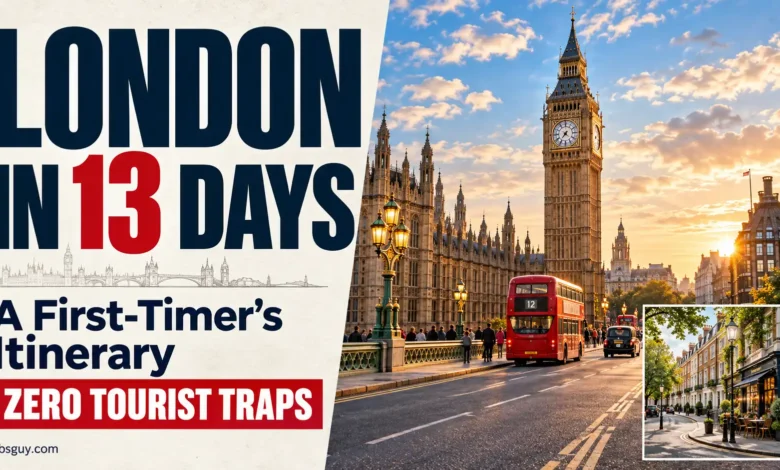
The best way to spend 13 days in London is to give each neighborhood its own day. See Westminster and the Tower, leave real time for the museums, then branch out to Greenwich, Hampstead, and Kew. You can keep one hotel, use public transportation, and enjoy the famous sights without filling every afternoon with paid attractions.
This London itinerary covers 13 calendar days in the city, including a light arrival day and a flexible departure day—usually 12 hotel nights. It assumes you arrive early enough for a short walk on Day 1. If you have 13 full sightseeing days instead, expand those two lighter days rather than adding more stops everywhere else.
“Zero tourist traps” is an editorial approach: skip pressure selling, unnecessary package upgrades, and meals chosen only because they face a landmark. Popular places can still be worth your time. The Tower of London earns a spot here; an expensive attraction bundle you will barely use does not.
Your 13-Day London Itinerary at a Glance
- Arrival: settle in and take a short South Bank walk.
- Westminster: the Abbey, St. James’s Park, and Buckingham Palace’s exterior.
- The Tower: the Tower of London, Tower Bridge, and Bermondsey.
- Bloomsbury: a focused British Museum visit and neighborhood wandering.
- The City: St. Paul’s, Leadenhall Market, and an optional skyline view.
- Kensington: the V&A and Kensington Gardens.
- Notting Hill: Portobello Road and Holland Park.
- Greenwich: maritime history, the market, and a hilltop view.
- East London: Columbia Road, Brick Lane, and Spitalfields.
- Hampstead: village streets, the Heath, and Kenwood.
- Camden: Regent’s Park, the canal, and a market lunch.
- Kew: a proper garden day, with Richmond only if you have energy.
- Departure: a short Covent Garden loop or an optional National Gallery visit.
Set the weekdays before you book: move Day 7 to a Saturday for Portobello’s full market, and Day 9 to a Sunday for Columbia Road. Keep Westminster Abbey sightseeing off Sunday. The other days can move around your tickets and the weather.
The visuals are AI-generated travel illustrations created for dbsguy.com. They are concepts, not photographs documenting a trip; architecture, weather, and crowd levels may differ in person.
Make the Trip Easy Before You Arrive
Choose a convenient base, then stay put
For this route, consider Bloomsbury, the South Bank near Waterloo, or a well-connected part of Kensington such as Earl’s Court. Those are different neighborhood styles, not a ranking of specific hotels. Compare the exact property’s station access, recent reviews, room size, elevator availability, and cancellation terms.
A cheaper room can lose its advantage if every day starts with a long commute. Look for a location you can comfortably walk back to from its station at the end of the evening. You do not need to switch hotels as the itinerary moves around London.
Use public transportation without paying twice
A compatible contactless card or mobile wallet is convenient for many adult visitors. Use the same physical card or the same device consistently; a phone, a watch, and the card linked to them are treated separately. Each traveler needs a separate way to pay. Check whether your American card charges foreign transaction fees, and keep a backup payment method.
Touch in and out on the Tube, DLR, and relevant rail services; touch in only on buses. Eligible pay-as-you-go journeys benefit from fare capping, with weekly capping running Monday through Sunday rather than any seven days you choose. River boats have separate fares, so do not treat a Thames ride as part of your ordinary Tube cap.
Use Transport for London’s official travel and fares information to check your actual journeys, current fares, service changes, and step-free routes. Weekend engineering work can change an otherwise straightforward plan.
For Heathrow, compare the Piccadilly line, Elizabeth line, and Heathrow Express against your hotel’s location. The Piccadilly line is a budget-oriented option; the Elizabeth line can be a convenient middle ground. Paying for the fastest airport train makes less sense if it leaves you with another awkward transfer. If you land elsewhere, plan that airport separately.
Book the few things that shape the itinerary
- Reserve ahead: Tower of London, Westminster Abbey sightseeing, a West End performance you care about, and Kew on your chosen date.
- Get free museum entry slots where offered: the British Museum recommends advance booking; the National Gallery offers free tickets with fast-track entry.
- Watch the Sky Garden booking window: its free public tickets are currently offered up to three weeks ahead. Check availability and visitor notices; a ticket is not a reason to schedule another rigid booking immediately afterward.
- Confirm entry requirements: most U.S. visitors traveling on a U.S. passport need a UK electronic travel authorization unless an exemption applies. Check your circumstances through the official GOV.UK service before travel; do not assume your flight booking includes it.
For a sightseeing-heavy day, one main reservation is usually enough. Keep meals and smaller walks flexible.
Also read: How To Organize Your Time On Vacation.
Day 1: Land, Settle In, and Walk the South Bank
Make your first London memory a river view, not a line you booked before knowing how tired you would be.
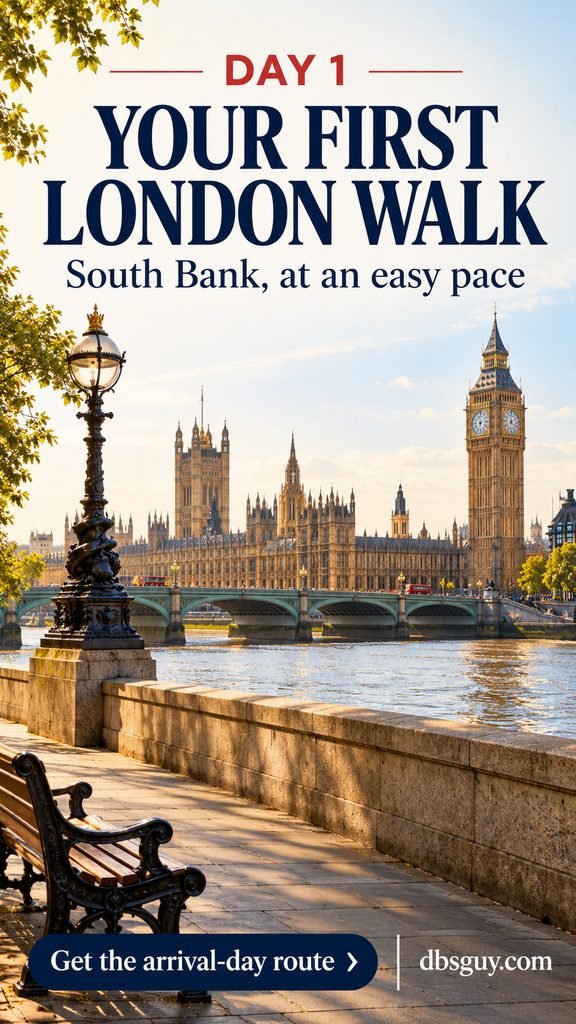
Route: Waterloo → Southbank Centre → riverside toward Westminster Bridge. Allow about 60–90 minutes for a short stroll with a coffee stop, plus your hotel and airport transfers.
Drop your bags first. From Waterloo, walk toward the Southbank Centre and follow the promenade west. You will get a view of Parliament and Elizabeth Tower—the tower that houses Big Ben—without buying a ticket. Turn around whenever your energy runs out; crossing Westminster Bridge is optional.
Eat an uncomplicated early dinner near your hotel. A displayed menu and a place to sit matter more tonight than an ambitious food itinerary. Do not extend this into the full river walk to Tower Bridge after an overnight flight.
If your flight lands late: replace the walk with dinner and sleep. The skyline is still there tomorrow. If it rains hard, a short café stop is enough; save an indoor attraction for a day when you can enjoy it.
Cost choice: the promenade is free. The London Eye is optional, not a required arrival-day purchase.
Day 2: Westminster and Royal London, at a Human Pace
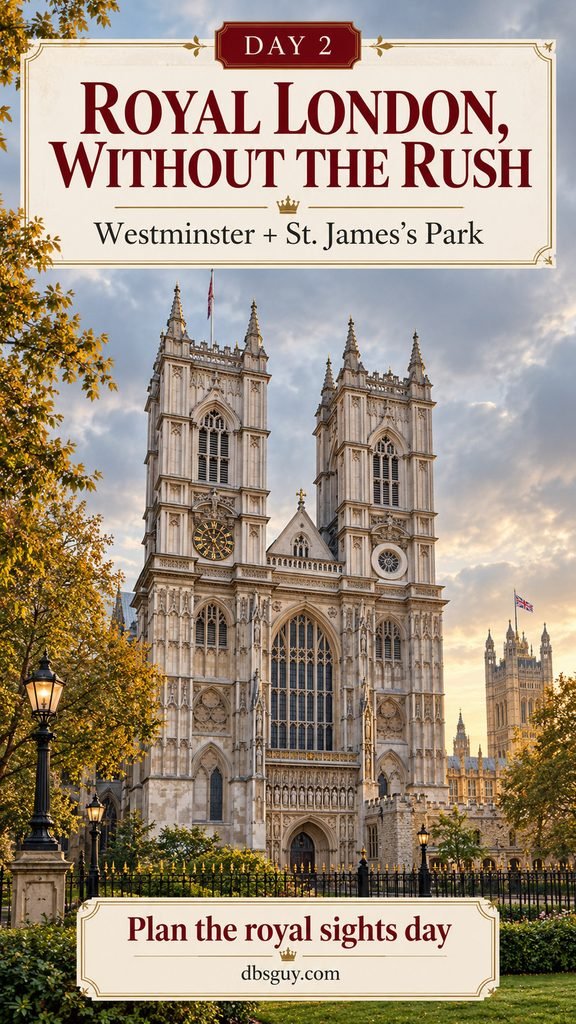
Start: Westminster station. Finish: Green Park or St. James’s Park station. Give the day about 5–6 hours, including lunch and sitting down.
Book Westminster Abbey near the beginning of your day and allow roughly two hours if its history and architecture interest you. This is a working church: sightseeing times change around services and events, and Sunday is for worship rather than the ordinary sightseeing route. Attending a service is not a substitute for a tour.
Afterward, walk through St. James’s Park toward Buckingham Palace. The lake and paths provide a useful break between the two major sights. See the palace exterior, then finish through Green Park. Buy State Rooms tickets only if that separate visit is a priority and they are open during your dates.
Changing the Guard is a bonus. Check the official schedule before reorganizing your day around it; it does not happen every day and can change. If you want to watch, leave enough time for the crowd and move your Abbey booking accordingly.
Keep the day balanced: skip adding the Churchill War Rooms and a palace tour on top of the Abbey. Choose one of those as a replacement if it matters more to you. For lunch, compare posted menus on nearby side streets instead of settling automatically for the closest landmark-facing table.
Day 3: Give the Tower of London a Proper Morning
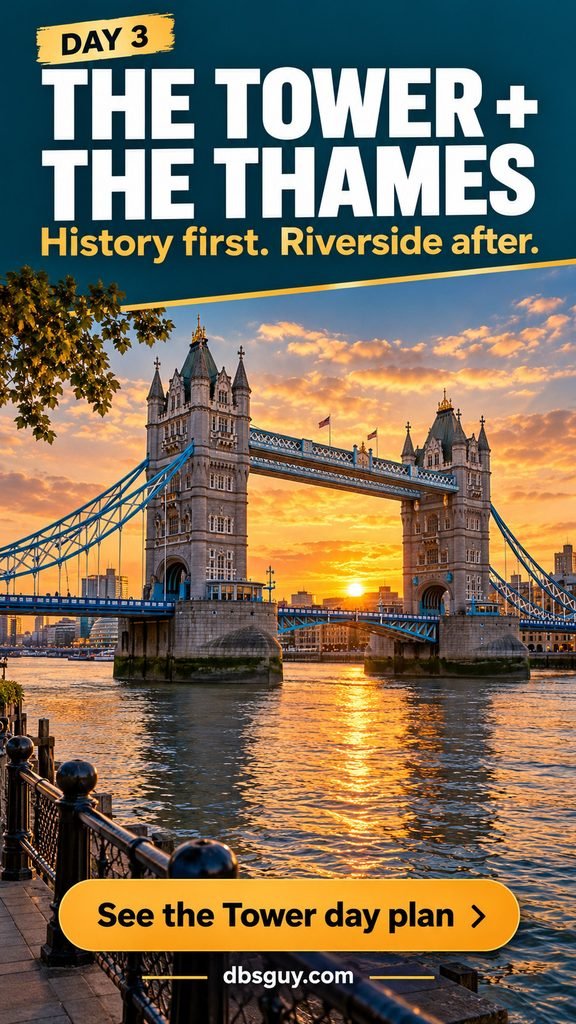
Route: Tower Hill → Tower of London → Tower Bridge → Potters Fields → Bermondsey Street. Plan about 6 hours, with roughly 3 hours reserved for the Tower itself.
The Tower of London is the main paid attraction today. Book directly with Historic Royal Palaces, check your date’s opening time, and prioritize the Crown Jewels if they are your must-see. An early start gives you more of the day to work with, but it does not guarantee a short queue.
Leave time for the White Tower, the grounds, and a Yeoman Warder tour if one fits the day’s program. Avoid treating the complex as a quick jewelry stop; the ticket makes more sense when you enjoy the fortress as well.
Then cross Tower Bridge using the public pedestrian pavement, which is free. The paid upper walkways and engine rooms are a separate experience. From Potters Fields, admire the bridge, then continue to Bermondsey Street for lunch or a café break.
Food adjustment: if you specifically want Borough Market, use it instead of the Bermondsey lunch stop and check its trading day. Do not add every nearby food destination just because a map makes them look close.
Easy way to avoid an upsell: buy the Tower ticket you need first. Add a boat, bridge exhibition, or package only after comparing the separate cost and the time you would actually use.
Day 4: The British Museum Without Museum Burnout
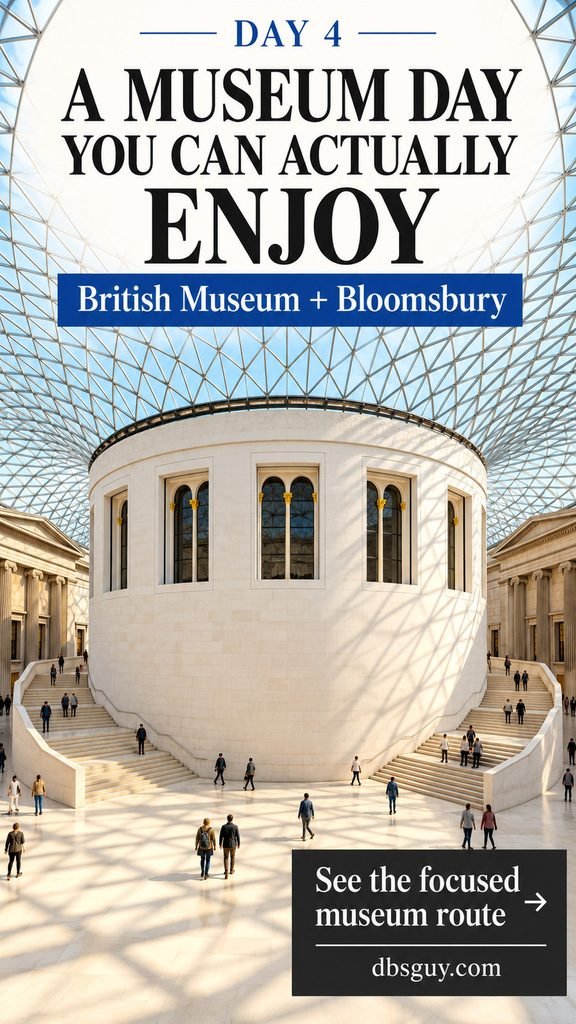
Base: Bloomsbury, using Russell Square or Tottenham Court Road. Allow 2–3 hours inside the museum, followed by a relaxed lunch and neighborhood walk.
The British Museum’s permanent collection is free to enter, and advance booking is recommended. Choose two or three interests before you arrive—perhaps ancient Egypt, Assyrian reliefs, and selected Greek galleries—then use the current museum map to connect them. You do not need to complete a famous-object checklist to have a good visit.
Pause in the Great Court and take a genuine break when your attention starts drifting. Special exhibitions can have separate admission charges, and individual objects or galleries may be unavailable. Avoid building your whole morning around a single display without checking first.
After lunch, walk through Russell Square and the surrounding Bloomsbury streets. Bookshops and small cafés are a better companion to this day than another enormous museum.
Optional evening: a West End show fits here if you keep the afternoon light. Buy through the theater, production, or a reputable established ticket seller, check the seat view and full price, and allow time for dinner before the performance.
Day 5: The City’s Old Streets and Modern Skyline
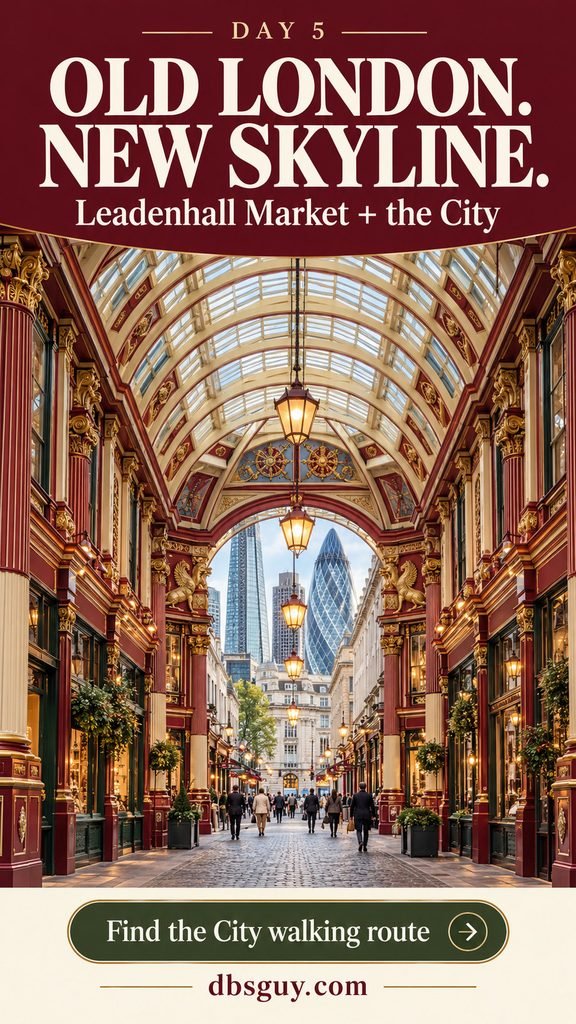
Route: St. Paul’s → the Bank area → Leadenhall Market → optional Sky Garden. Keep about 5–6 hours free; a cathedral interior visit adds a substantial stop.
Start with St. Paul’s Cathedral. Enjoy the exterior from the surrounding public streets, or make its paid sightseeing visit today’s main reservation. If you go inside and climb, shorten the later walk rather than racing it. Worship and sightseeing access are different, so check the cathedral’s schedule.
Continue through the City toward Leadenhall Market. Its red-and-cream ironwork gives this part of London a completely different feel from the royal sights. Weekdays generally give you more business activity; individual shops and restaurants may have reduced weekend hours. The architecture can be the reason to come even when shopping is not.
Sky Garden is an optional finish if you secured a free public ticket. The ordinary free visit does not require purchasing a restaurant meal. Check current booking terms and notices, including any lift disruption, and leave flexibility around your time slot.
If tickets are unavailable: keep the ground-level City walk. A skyline view is pleasant, but buying a costly dining reservation just to rescue this one stop is not necessary.
Day 6: One Kensington Museum, Then Green Space
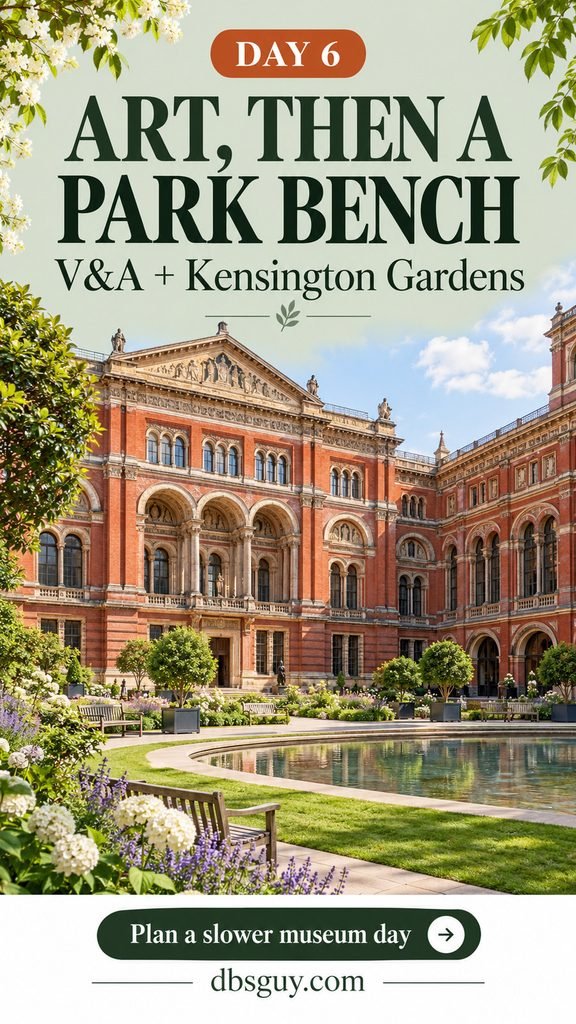
Route: South Kensington → V&A → Kensington Gardens. Expect about 5 hours, depending on how much of the museum you choose to see.
The V&A is a strong choice for design, decorative arts, fashion, and beautiful objects. General admission is free; some exhibitions and events cost extra. Pick a few galleries that interest you, then use the central garden or café as your halfway pause.
After lunch, head toward Kensington Gardens for a shorter walk by the Round Pond or farther toward the Serpentine if the weather is comfortable. You can enjoy the park without adding a Kensington Palace admission ticket.
If dinosaurs or science matter more to your group, substitute the Natural History Museum or Science Museum for the V&A and check that museum’s booking arrangements. Three nearby institutions do not make three major museum visits a relaxing day.
Rain plan: spend longer in your chosen museum and shorten the garden walk. For visitors who need step-free travel, check the route before using South Kensington station; do not assume that a close station has accessible platforms.
Day 7: Notting Hill Beyond the Photo Stop
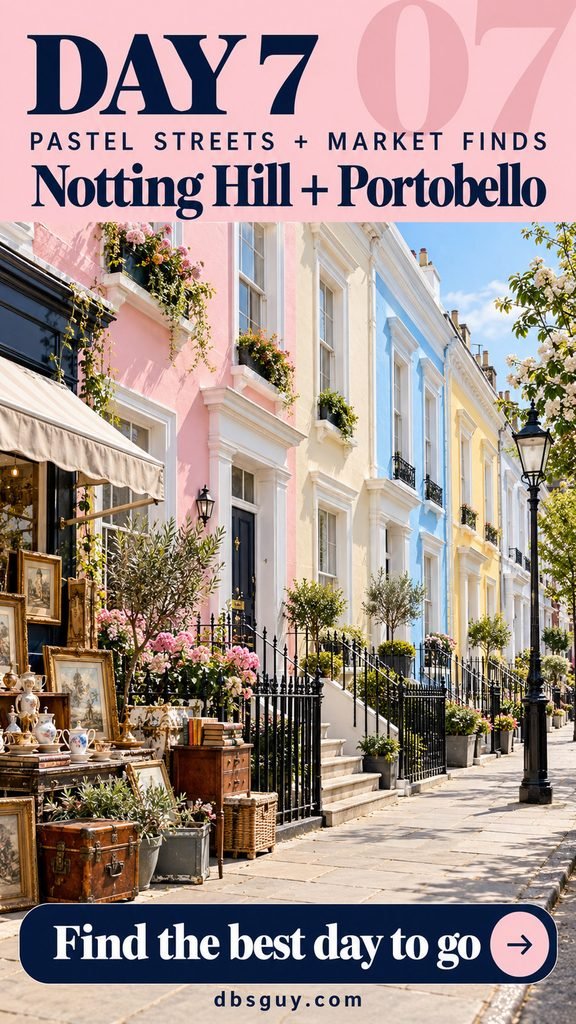
Route: Notting Hill Gate → Portobello Road → a neighborhood lunch → Holland Park. Allow 4–6 hours. Put this day on a Saturday if the full market is your priority.
Start with the pastel streets, then continue along Portobello Road. Saturday is the main full-market day and also its busiest. Friday is worth considering if vintage fashion and browsing suit you better; the mix of stalls changes by day. Check the market calendar around bank holidays.
Give yourself a purpose before you shop: one small antique, a vintage item you can inspect, or simply a wander. Compare condition and price, and remember the space left in your suitcase. A purchase is not required to make the morning worthwhile.
Move away from the busiest stretch for a seated lunch, then walk or take a short bus ride toward Holland Park. Its paths and Kyoto Garden can provide a calmer afternoon. This is a residential area as well as a visitor destination: stay off private steps, keep doorways clear, and take photographs from public space.
Skip the fragile plan: do not base the day on a single movie door or a viral pastry line. If the market crowd feels overwhelming, shorten the shopping and extend the park.
Day 8: Greenwich for History and a Different London View
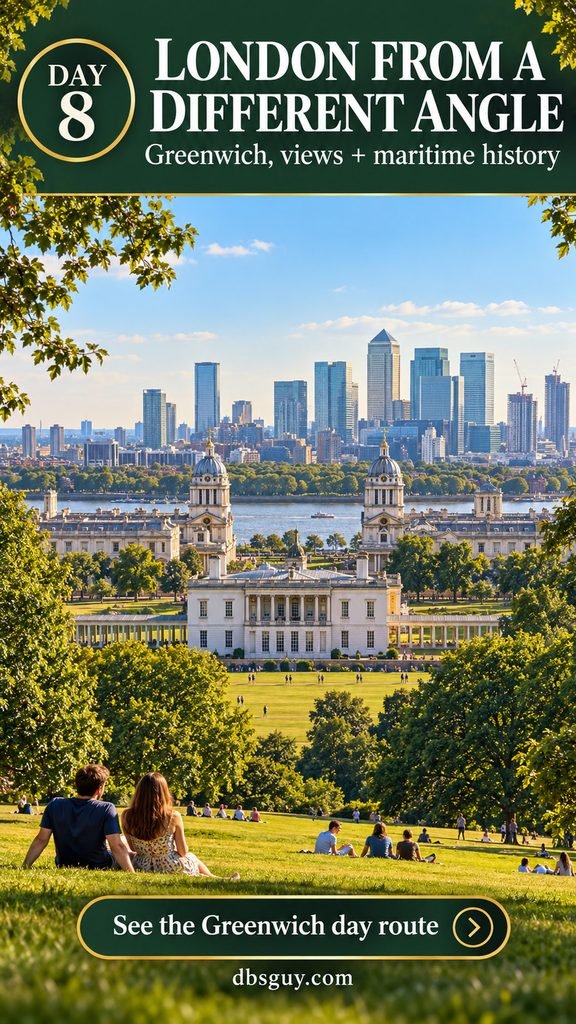
Route: Greenwich town center → market → Queen’s House or National Maritime Museum → Greenwich Park. Give it 5–6 hours, plus travel from your hotel.
Use rail or the DLR to reach historic Greenwich; check live station access before relying on Cutty Sark station, with Greenwich station as an alternative. North Greenwich is a different area by the O2, not the most direct arrival point for this route.
Browse Greenwich Market, have lunch, and choose either the Queen’s House or National Maritime Museum. Both offer free general entry, with booking available; special events or exhibitions may differ. One focused indoor visit leaves you time to enjoy the setting outside.
Walk uphill through Greenwich Park for the view toward the maritime buildings and Canary Wharf. The hill is a real climb. If it does not suit your mobility or energy, stay with the lower park and museum route.
The Royal Observatory’s ticketed visitor route and the Cutty Sark ship are optional paid additions. Pick the one that matches your interests instead of buying both automatically. A river boat back can be a scenic extra, but compare its separate fare and sailing schedule with rail before committing.
Day 9: Make Sunday Your East London Market Day
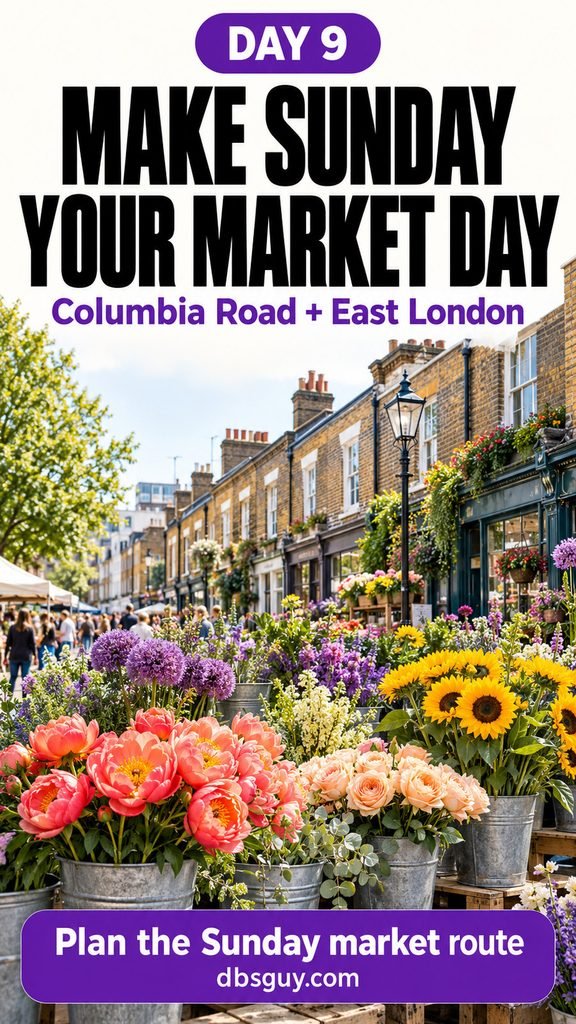
Sunday route: Columbia Road Flower Market → Brick Lane → Old Spitalfields Market. Allow about 5 hours, with extra time if you enjoy browsing.
Columbia Road’s flower market is a Sunday event, so move this day to whichever Sunday falls in your trip. Arriving earlier in the morning usually makes browsing more manageable, but this is still a popular market. You can enjoy the flower stalls without buying a bouquet you cannot take home.
Continue to Brick Lane for vintage browsing, street art, and a snack, then finish at Old Spitalfields Market. Look around before ordering lunch; choose a vendor for the food you actually want, not simply the loudest pitch or longest social-media line.
Street art changes, and shop hours vary. Treat the walk as a neighborhood visit rather than a hunt for an exact mural from a pin. If you want context, a well-reviewed history or street-art walk can replace part of the shopping.
On another weekday: omit the flower market and use Spitalfields, Brick Lane, and nearby streets as the core route. Do not travel to Columbia Road expecting Sunday stalls to be there every day.
Day 10: Hampstead, the Heath, and Kenwood
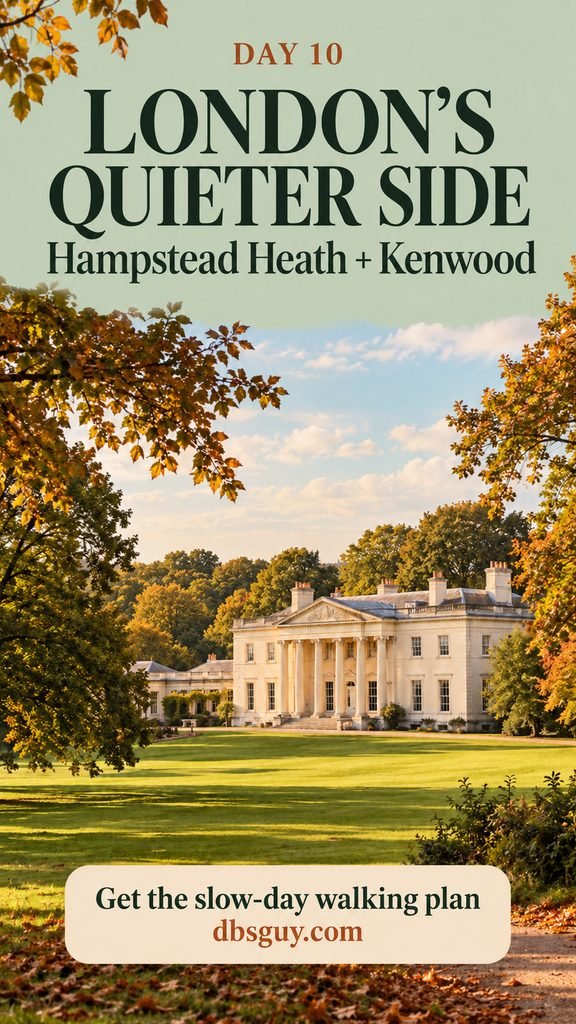
Start: Hampstead station for the village, then enter the Heath. This is a flexible 4–6-hour outdoor day, with hills and uneven paths rather than a flat central-London stroll.
Begin with breakfast or coffee in Hampstead, then explore the village streets before entering Hampstead Heath. Choose the walk to suit the forecast. Parliament Hill is a good destination if you mainly want open space and a city view.
If you want a longer outing, continue toward Kenwood on the northern side of the Heath. The house is free to visit, and English Heritage offers advance booking to guarantee entry. Give the paintings and interiors some attention; the building is more than a backdrop for a lawn photograph.
Choose the scale deliberately: the village, Parliament Hill, and Kenwood together make a substantial walking day. For a gentler version, do Hampstead plus a short Heath loop, or take a bus or taxi nearer Kenwood and focus on the house and grounds.
Wear shoes that can handle mud, download or save your route, and keep the outdoor portion in daylight. The swimming ponds are not an automatic itinerary add-on; they have their own access rules and conditions. In heavy rain, shorten the Heath walk rather than forcing the full route.
Day 11: Regent’s Park, Camden, and a Short Canal Walk
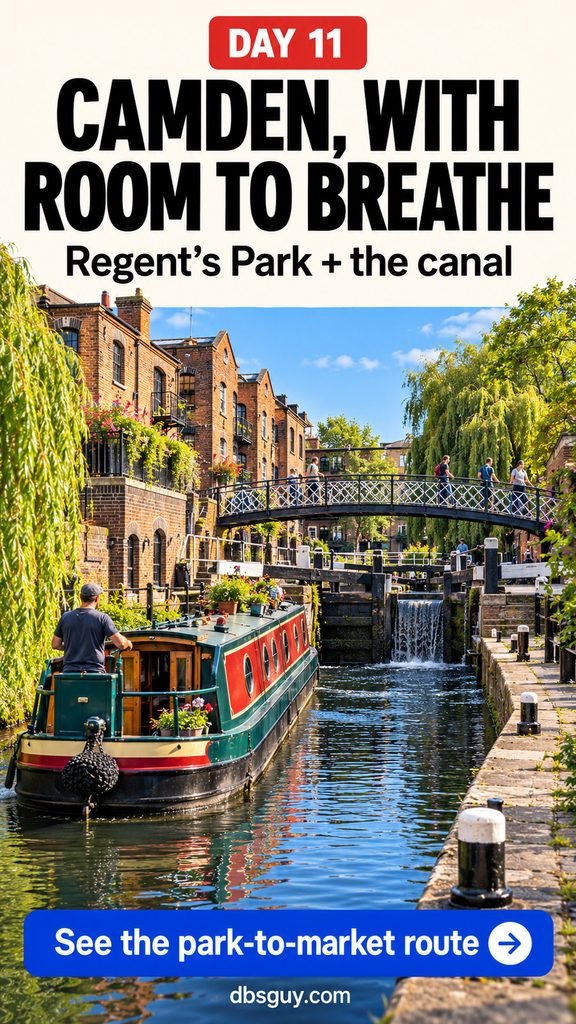
Route: Regent’s Park → the north end of the park → Camden Market area → a short Regent’s Canal stretch. Plan 4–6 hours; use a bus or the Tube to shorten the walking if needed.
Start in Regent’s Park with its paths and gardens. Choose one section rather than trying to circle the whole park. In warmer months, a bench break or picnic is a welcome change from restaurant-hopping; in winter, make this a shorter opening walk.
Continue toward Camden for lunch and browsing. Camden is busy and commercial, which does not automatically make it a bad stop. Make it work for you by choosing a meal after checking the options, then exploring the shops that match your interests.
Use the canal near the market for a short walk, following current closures and diversions. You do not need to walk all the way from Little Venice to earn the experience. Some towpath sections are narrow and shared with cyclists, so step aside carefully and keep the route manageable.
Budget choice: the park and towpath walk are free. The zoo, a canal boat, and multiple souvenirs are optional spending, not the definition of a complete day.
Day 12: Let Kew Gardens Be the Main Event
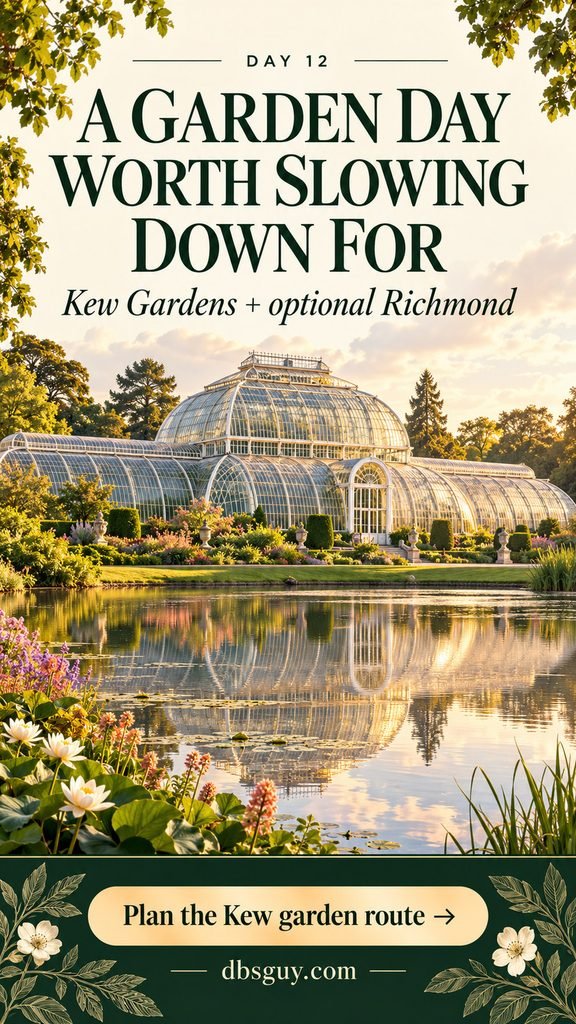
Start: Kew Gardens station for the Victoria Gate side of the gardens. Reserve about 4–5 hours inside Kew, plus travel; Richmond is an optional extension.
Kew is large enough to deserve a day of its own. Check the visitor notices and opening times before booking. Build a loose route around two or three areas—perhaps the Temperate House, a garden landscape, and one glasshouse that is open—rather than trying to visit every named attraction.
The Palm House is pictured in the illustration, but do not assume its interior will be available on a future trip. Kew currently plans a February 2027 closure for plant removal, a temporary empty-house reopening in summer, and a full renovation closure in autumn 2027. For later travel, check the latest plan and center your route on other open areas.
Have lunch or a proper snack inside the gardens, then continue at an unhurried pace. Glasshouses offer shelter from showers, but much of this visit is outdoors. Winter closing times are earlier, and individual attractions can close before the gardens.
If you still have energy after Kew, take a short onward trip to Richmond for a riverside stroll and dinner. Otherwise, return to your hotel. A no-ticket alternative is Richmond’s town center and riverside in place of Kew; it should be a replacement, not another large obligation.
Day 13: A Flexible Covent Garden Finish
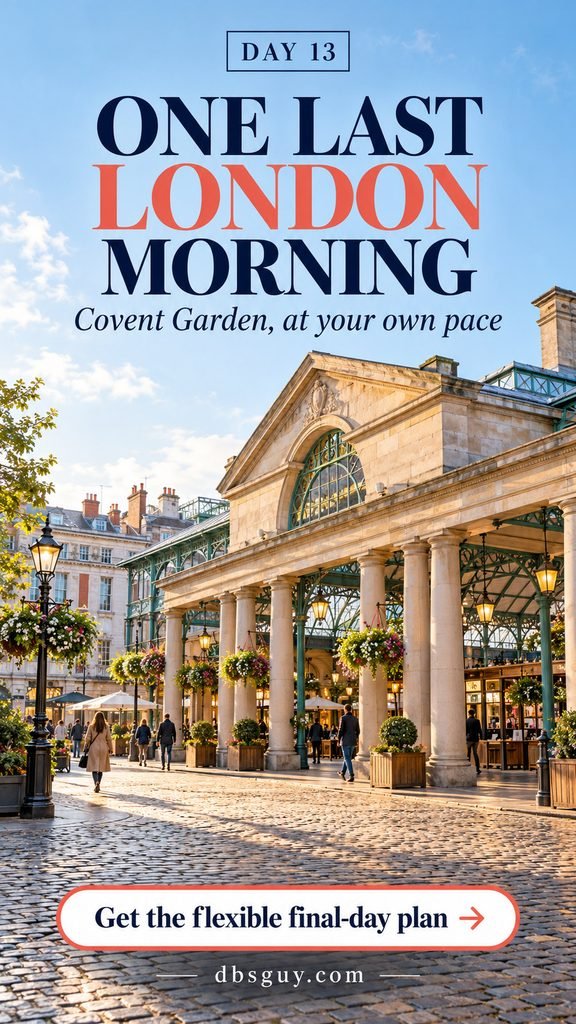
Choose this around your departure, not the other way around. If your flight is early, have breakfast near the hotel and go straight to the airport. This day is a buffer, not a promise that every traveler can fit in one last attraction.
For an evening departure, leave your luggage securely and take a short Covent Garden piazza and Seven Dials loop. Have breakfast, browse one or two shops when they open, and enjoy the streets without making a new reservation. Walking from Leicester Square can be easier than squeezing onto the Tube for the final short distance.
If you have plenty of time and prefer art, begin at the National Gallery when it opens, then walk to Covent Garden for lunch. The collection has free general admission, with optional advance tickets; use 60–90 minutes for a few paintings rather than attempting the entire gallery. Suitcases and wheeled luggage are not allowed, so sort storage first.
Work backward from your airline’s airport-arrival guidance. Include the hotel luggage pickup, the full airport journey, and a delay allowance. A last café stop is pleasant only when you are not watching the clock in panic.
If Day 13 is a full sightseeing day: extend the gallery and Covent Garden visits, and consider a West End performance that evening. Keep the following day’s departure clear.
What to Budget—and Where the Money Is Worth It
For an adult using this mix of free sights and selected paid visits, a useful planning allowance is roughly £700–£1,150 for 13 days, excluding hotels, flights, airport transfers, shopping, and travel authorization fees. This is an editorial estimate, not a package price or guaranteed quote.
- Food: £35–£55 a day. Think simple breakfasts, casual lunches, and ordinary sit-down dinners rather than fine dining or cocktails every night.
- Local transportation: roughly £110–£170 for the trip. Actual spending depends on walking, zones, weekly capping, and your payment method. This is an allowance, not a published fare cap.
- Paid sightseeing and one show: roughly £130–£220. Start with the Abbey, Tower, Kew, and a theater ticket, then check your dates, age concessions, and seat choice before buying.
Keep the money in pounds while planning, then convert using your current bank or card rate. Hotel costs vary too much by dates and room requirements to fold into a reliable universal total.
An attraction pass can make sense for a different trip, but this plan deliberately includes many free days. Add up only the paid places you intend to enter, check whether the pass includes them and their reservations, then compare. A discount on activities you would not otherwise choose is still extra spending.
For meals, compare menus before sitting down and ask about any unclear service charge. For afternoon tea, make one deliberate reservation if that experience matters to you; it does not need to become a daily expense. Famous cafés, pubs, and market stalls should earn your choice through their food, setting, or convenience.
Adjust the Route for Your Season and Energy
Spring and early fall: this mix of parks and indoor stops is adaptable, but neither season guarantees dry weather. Save outdoor days for the better forecast and keep museum days available to swap.
Summer: daylight gives you more flexibility, while popular sights and school-holiday dates can be busy. Book the visits that matter, carry water, and avoid turning the longer days into longer checklists. If you travel around U.S. school breaks, compare the UK holiday calendar too.
Late fall and winter: do the park walks before dark, shorten the canal and Heath routes, and check early garden closing times. Christmas and New Year can affect museums, transportation, restaurants, and markets. Seasonal lights are an optional evening addition, not a reason to skip checking closures.
Most full versions of these days can involve several miles of walking plus long periods standing. The lower-effort version is one main stop, a seated lunch, and a short walk. Use buses or taxis for awkward connections, and check both station and venue accessibility rather than judging by distance alone.
Pack comfortable broken-in shoes, a light rain layer, and clothes you can layer. Plan a laundry break midway through the trip instead of packing 13 completely separate outfits.
Also read: Airport Outfit Ideas: What To Wear When Traveling.
London in 13 Days: Frequently Asked Questions
Is 13 days too long for a first London trip?
No, if you enjoy museums, neighborhoods, parks, and time between activities. It is more time than you need for a quick highlights trip, which is precisely why you can stop rushing. If you prefer faster travel, shorten the stay or replace one later London day with a separately planned day trip.
Should I add Windsor, Oxford, or Bath?
Only if one is a real priority. Replace a day such as Hampstead or Camden instead of stacking a day trip onto an already full route. Check rail schedules, admission, and closures for that destination; this article’s transportation allowance does not include regional day-trip trains.
Can I follow the days in the exact order shown?
Use the order as a framework. Put Portobello on Saturday if you want the full market, Columbia Road on Sunday, and the Abbey on a sightseeing day. Then place your timed tickets and keep the outdoor days movable. Those adjustments matter more than preserving the numbering.
Do I need a car?
For this London route, no. Public transportation and occasional taxis cover the neighborhoods without adding parking and driving to the trip. Check step-free connections or other access needs before deciding which mode works for your group.
Are the free museums really free?
The general collections named here at the British Museum, V&A, National Gallery, National Maritime Museum, and Queen’s House have free entry. Some exhibitions, tours, events, and extras are paid. A free ticket can still be useful for arrival planning, and a donation is a separate choice.
What should I cut when I am tired?
Cut the optional second stop first: Richmond after Kew, a skyline visit after the City walk, another museum after your main museum, or shopping after the market lunch. Keep the experience you came for and remove the part added only to fill the afternoon.
Does avoiding tourist traps mean skipping famous attractions?
No. Judge each stop by what you want to see, its full cost, and the time it requires. A famous attraction can be a good purchase; a “hidden gem” can be an expensive detour. This route gives you room to decide without paying for everything in advance.
Also Read
For another trip built around easy transportation, try 9 Easy Weekend Getaways From U.S. Cities Where You Don’t Need a Car. If train scenery is what you enjoy most, browse 10 Scenic Train Trips in the USA With Views Worth Traveling For.