The most useful red-eye flight sleep plan starts before boarding: choose a seat that fits how you rest, put your sleep kit within reach, eat before the cabin meal if that suits you, and stop spending your short night on a screen. Once the crew permits it, settle your head and back, cover your eyes, and protect one uninterrupted stretch.
You may still sleep lightly. An economy seat is a small, upright space with announcements, neighbors, and a landing deadline. The aim is to remove avoidable interruptions and give yourself a reasonable chance to rest—then have a workable morning if sleep never comes.
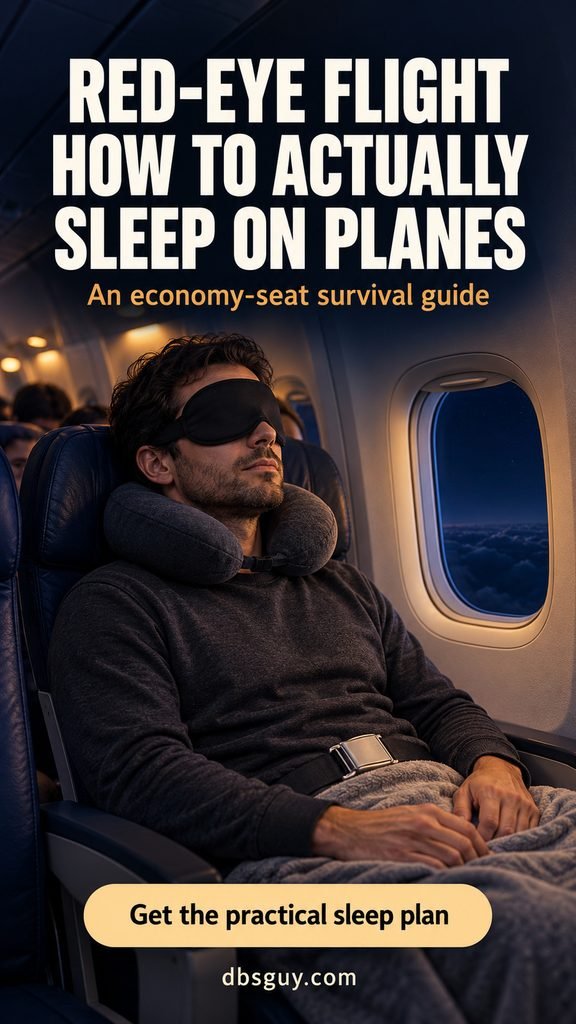
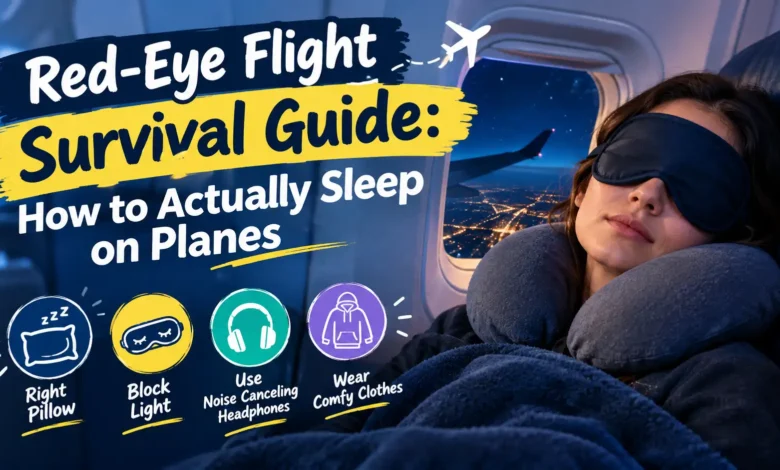
The visuals in this guide are AI-generated concepts illustrating travel setups, rather than photographs of a tested trip or specific airline cabin.
Your red-eye plan at a glance
- Before booking: compare the usable night and next-day costs, including a place to rest after landing.
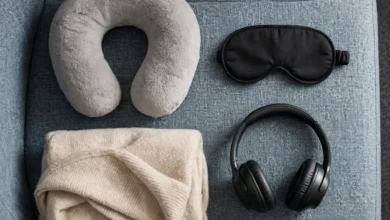
- Before leaving home: pack an eye mask, sound protection, comfortable neck support, and a removable layer.
- At the airport: finish food, bathroom, charging, and downloads before your boarding group is called.
- In your seat: follow the safety briefing, get comfortable when permitted, and let the movie wait.
- After landing: keep the first day flexible and arrange transportation you can use safely while tired.
1. Choose the flight and seat around your actual sleep window
A red-eye leaves at night and arrives the following morning. That description says little about how much sleep you will get. Look at the flight duration, departure time, connections, and arrival plans together.
For planning, imagine a five-hour flight where the first 45 minutes go to takeoff and settling in, and the last 45 minutes to descent preparations. That leaves roughly three and a half hours to attempt sleep. This is an example calculation, not a prediction of your airline’s service schedule or the sleep you will get.
If you have a choice, a nonstop avoids having to pack up and change planes in the middle of that window. A later departure may fit your normal bedtime better, but staying awake at the gate until 1 a.m. is not automatically worth it. Pick the itinerary you can manage, rather than the one with the most impressive overnight label.
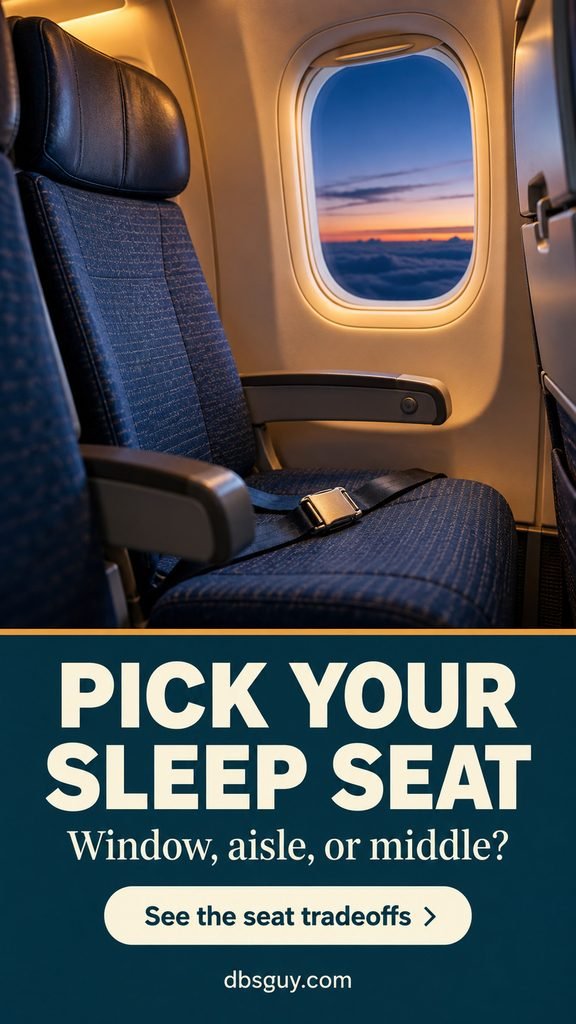
Window, aisle, or middle?
- Window: a practical choice if you prefer a side to rest toward and dislike standing up for seatmates. Use your own padding rather than putting your face against the window. You still need to be able to get out when necessary.
- Aisle: useful if you need easier bathroom access or expect to move frequently. Keep your knees, elbows, and pillow inside your space so passing people and carts do not catch them.
- Middle: plan for self-contained support. A pillow that supports your head without relying on a wall is more relevant than a window-sleep trick.
My editorial default: favor the window if fewer neighbor-related interruptions matter most; favor the aisle if getting up easily matters more. Neither is the universal healthiest or quietest seat.
Before paying a seat fee, check the seat map for the actual aircraft. Look for proximity to lavatories and galleys, possible recline restrictions, and whether your bag must be stored overhead. A bulkhead or extra-legroom seat can change where your kit goes. Exit-row seats come with responsibilities, so choose them only if you can and are willing to meet the airline’s requirements.
Count the morning as part of the ticket price
A cheap overnight fare can become less appealing if it requires a paid early hotel room, a long wait with luggage, or a taxi because the transit you planned to use is unavailable. Check the arrival time and your accommodation’s actual check-in arrangement. An early-check-in request is not a confirmed room.
If you need to give a presentation or drive a long distance that morning, consider a daytime flight or an additional night. No sleep accessory can make a short flight provide a full night in bed.
2. Pack a sleep kit you can reach without unpacking
Put your small sleep items in one pouch near the top of your personal item. The overhead bin is a frustrating place for the earplugs you remember after everyone has settled.

- Eye mask: try it at home while seated. Check that it blocks light without pressing uncomfortably on your eyes or sliding when you lean back.
- Earplugs or headphones: choose the option you find comfortable against a headrest. Over-ear headphones can be awkward with a bulky pillow; some earbuds become uncomfortable when pressed sideways. Keep them off for the safety briefing and remain responsive to crew instructions.
- Travel pillow: test the fit against a chair back. It should feel supportive without pushing your chin down, tipping your head backward, or feeling tight around your neck. Follow its instructions; a different orientation is not a universal fix.
- Removable layer: a cardigan, soft jacket, or light blanket lets you adjust without rebuilding your entire setup.
- Refillable water bottle: fill it after security where permitted and keep it secured. Sip normally instead of drinking a large amount just before you settle.
- Small comfort extras: lip balm, tissues, and any usual essentials you personally need. Keep glasses in a protective case rather than loose on the seat.
You do not need to buy a coordinated travel set. If you already have a comfortable mask, earplugs, and a layer that works, start there. Spend according to the problem you are trying to solve: slipping support, light around the nose, or sound that keeps pulling your attention back.
Wear clothes you can sit in for hours
Try the outfit while seated before travel. Check the waistband, seams, and anything bulky behind your neck. A breathable tee with a soft outer layer is easier to adjust than one heavy sweater. Keep walking shoes accessible, and avoid letting a scarf or hood interfere with your pillow.
Also read: Airport Outfit Ideas: What To Wear When Traveling for outfit inspiration you can adapt to an overnight trip.
3. Build a supported setup inside your own seat
The head bob is a useful clue: something in your current setup is not supporting you comfortably. Adjust one thing at a time rather than piling a pillow, hoodie, headphones, and blanket around your neck.
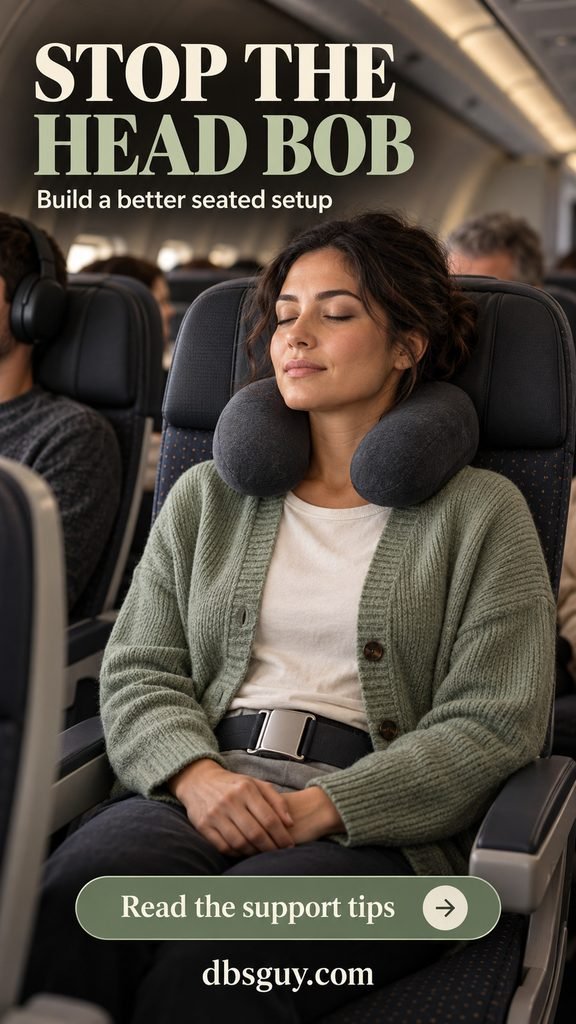
Start with your back against the seat and your feet supported on the floor where you can reach it comfortably. Once reclining is permitted, check behind you and recline gradually if that feels better. Keep your chin in a comfortable, neutral position. If the pillow makes you feel folded forward, loosen or reposition it according to its instructions, or use a different support.
A thin folded layer behind your lower back may feel useful; remove it if it makes the position worse. Your goal is a position you can relax in, not a posture you have to hold rigidly.
Adjust for your seat
At the window: use a small amount of your own soft padding if you rest toward the side, while keeping your body within your seat. Do not wedge your neck into the gap or assume you must lean sideways to sleep.
In the middle or aisle: keep support close to your body, with your head resting into the pillow or headrest rather than drifting into the next seat. If your headrest has adjustable wings, use them only as designed. A jacket rolled beside you may help with comfort, but it should not spill onto a neighbor’s armrest.
If you are tall: prioritize usable legroom over a bulky foot hammock or extra inflatable equipment. Check the airline’s rules before bringing anything that attaches to a seat. Keep the aisle and the space needed to exit clear.
Keep your seat belt fastened while seated, including when asleep. Position a blanket so the crew can see the belt, and return the seat and tray table to the required position whenever instructed.
When awake on a longer flight, move your ankles and calves and walk periodically when it is safe and permitted. If you have a history of blood clots or another reason for increased risk, discuss a travel plan and any compression-stockings advice with your clinician. Do not let a plan to sleep override your usual medical or mobility needs.
4. Use a simple 30-minute wind-down instead of waiting to feel sleepy
The following routine is a flexible planning example. Start the seated portion after the safety briefing and when cabin conditions and crew instructions allow. It is not a claim that you will fall asleep in 30 minutes.
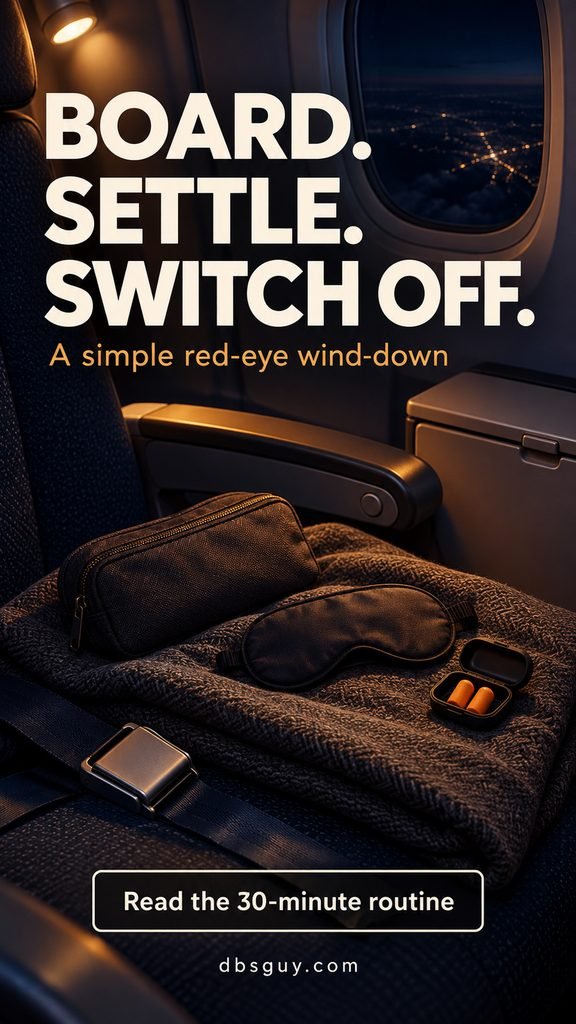
At the gate: remove the jobs that can wait until morning
Eat a familiar meal before boarding if you would rather sleep than wait for service. Leave yourself time to use the bathroom, refill your bottle, charge your phone, and download quiet audio. Once boarding starts, put the pouch somewhere you can retrieve it quickly.
Avoid turning the late departure into an excuse for a late coffee. NHLBI notes that caffeine’s effects can last up to eight hours. If you hope to sleep around midnight, consider an afternoon cutoff and adjust for your own sensitivity. Tea, energy drinks, and caffeinated soda count too.
First 10 minutes: finish your setup
Secure your belongings, put the mask and sound protection within reach, and check your pillow. If you want to skip a nonessential meal service, politely tell the crew when there is a convenient opportunity; do not assume a mask guarantees nobody will need to wake you.
Before starting a movie, decide whether you really want to spend that much of the available night watching it. On a short red-eye, choosing entertainment is also choosing a smaller sleep opportunity.
Next 10 minutes: lower the stimulation
Dim your own screen or put it away. If familiar, quiet audio helps you settle, queue it in advance and use a comfortable volume. Put on your layer and mask after the necessary safety instructions. Avoid experimenting with a complicated new app or a playlist you will keep skipping.
Final 10 minutes: stop managing the night
Let your shoulders relax, breathe normally, and give your attention one quiet place to return to: the feel of the seat, a familiar story, or the steady cabin sound. You do not need to count breaths perfectly or check whether a technique is working.
If you remain awake, make one practical adjustment—mask fit, pillow position, temperature—then stop troubleshooting for a while. Repeatedly checking the clock only gives you another task. Quiet rest is still a reasonable way to spend the flight, even though it does not replace sleep.
What about alcohol, melatonin, or sleeping pills?
Alcohol can make sleep more fragmented. Melatonin’s timing matters for jet lag, and taking it at the wrong time can shift your body clock the wrong way. Ask a clinician or pharmacist before using a sleep aid for travel, especially if you take other medicines. Do not combine sedatives with alcohol or improvise extra doses in the cabin.
Melatonin supplements can interact with medicines and vary in their labeled contents. A flight is a poor setting to discover how a new sedating product affects you. If you already have a prescribed travel plan, follow that plan rather than another passenger’s routine. Long-acting sedatives and sedating antihistamines can leave you impaired after arrival.
For route-specific timing, see the CDC’s jet lag guidance.
5. Make an arrival plan that still works after a bad night
Build your first morning around what is confirmed: where your bags can go, how you will get there, and whether you have a room. Keep confirmation details available offline so a tired brain is not also handling a dead phone or missing address.

If you slept a little
Leave room for breakfast, a change of clothes, and a low-demand first stop. A neighborhood walk or a relaxed café is easier to shorten than a prepaid all-day excursion. Keep any essential appointment as simple as possible, and save the ambitious itinerary for a day when you know how you feel.
If you barely slept
Use a taxi, rideshare, public transit, or a rested driver rather than driving while drowsy. Coffee does not make sleep-deprived driving reliably safe. If you cannot stay alert, prioritize a safe place to rest instead of trying to push through an activity.
When adjusting to a new time zone, aim meals and sleep toward local time. If you need a daytime nap, keep it brief—about 20–30 minutes—rather than sleeping through the afternoon. Daylight can help with adjustment, but the most useful timing depends on your route and body clock, particularly across many time zones.
Ask your hotel whether it can store luggage while you wait, and whether an early room or day room is available for your dates. If access matters, reserve and confirm it. Bring a compact change of clothes that you can reach without opening a suitcase in the lobby.
For a warm-weather arrival, choose a light base layer and keep the warmer cabin layer removable. Also read: 30 Hot Weather Airport Outfits That Looks Classy for ideas to adapt to the destination temperature.
Red-eye flight questions people actually need answered
Should I stay awake all day so I crash on the plane?
Avoid deliberately turning travel day into an endurance challenge. Keep a normal sleep opportunity the night before. A flight can be delayed, noisy, or shorter than expected; arriving at the gate exhausted does not guarantee you will sleep once you sit down.
Can I sleep on a plane without a travel pillow?
Yes, if the headrest and your own position feel comfortable. A small folded layer may be enough for some people. A pillow is useful when it solves a fit problem, not simply because it is on a packing list. Avoid improvised straps that attach your head to the seat.
What if the cabin lights stay on or my neighbor keeps moving?
Use the controls you have: a mask, comfortable sound protection, and support that stays within your seat. If an issue needs crew help, ask politely when they are available. A seat change may not be possible. Give yourself permission to rest without turning every interruption into a verdict on the whole trip.
Should I sleep as soon as I board an international flight?
Pay attention to the safety briefing first. Afterward, consider whether the intended sleep stretch matches nighttime at your destination. An international overnight departure does not automatically mean the entire journey should be spent asleep. For a large time change or a very short trip, use a personalized timing plan rather than a universal rule.
What is the first thing to improve if I can only change one thing?
Identify what usually stops you: light, noise, discomfort, or spending the available night awake by choice. Start with that problem. If you have no experience to go on, pack a comfortable eye mask and sound protection, then have them ready before you need them.
Before you leave: the quick red-eye checklist
- Check the actual aircraft seat map and your seat’s restrictions.
- Confirm transportation, bag storage, and any essential early room access.
- Put the mask, sound protection, and small essentials in one reachable pouch.
- Test your pillow and layers while seated.
- Download audio and save arrival details offline.
- Plan a quiet stretch after takeoff and a flexible first morning.
Prepare the parts you can control before boarding. Then give yourself space to rest, whether that becomes a few stretches of sleep or a quieter journey to your destination.