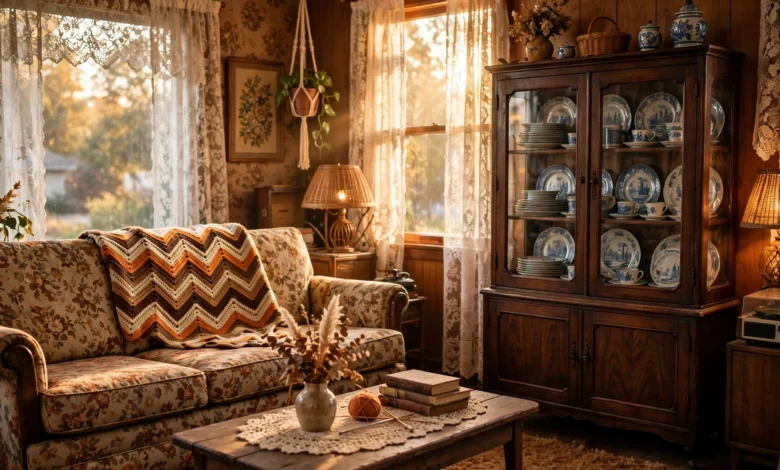
Every grandma had a house that felt like its own little world. The moment you walked in, you knew the rules without anyone saying them: the good towels were not for drying your hands, the glass cabinet was for looking and never for touching, and the cookie tin was almost certainly full of sewing supplies. These were not just random objects. They were the furniture of a whole generation of homes, and somehow, no matter whose grandma you visited, the same things kept showing up.
Maybe your grandma had the bird clock in the kitchen, or the plastic-covered sofa in the room nobody was allowed to sit in. Maybe she had the ceramic Christmas tree, or the cabinet that was slowly being taken over by plastic bags. Walk through this list and count how many of them you recognize. Chances are, you will be nodding along before you reach the end.
1. The Bird Clock That Never Quite Worked Right
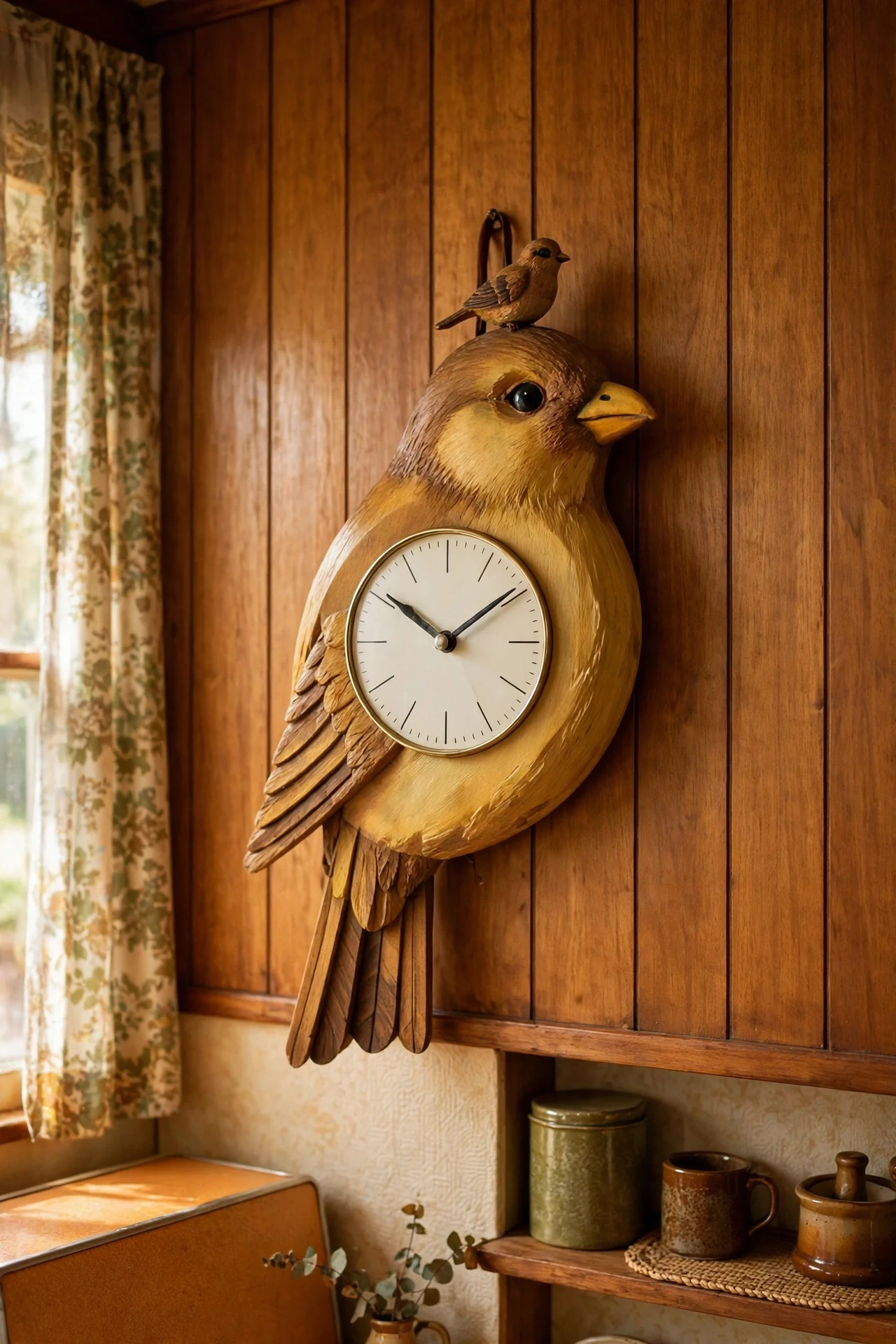
Somewhere in the kitchen or the basement, there was always a clock shaped like a bird. It was supposed to chirp or sing on the hour, but most of the time it just hung there, slightly crooked, with its hands stuck somewhere around ten past four. Nobody ever fixed it, and nobody ever took it down either.
That was the thing about grandma’s house. Objects did not have to work properly to earn their place on the wall. The bird clock was not really there to tell the time. It was there because it had always been there, and taking it down would have felt like erasing a small piece of the house itself.
2. The Giant Wooden Television That Weighed a Ton
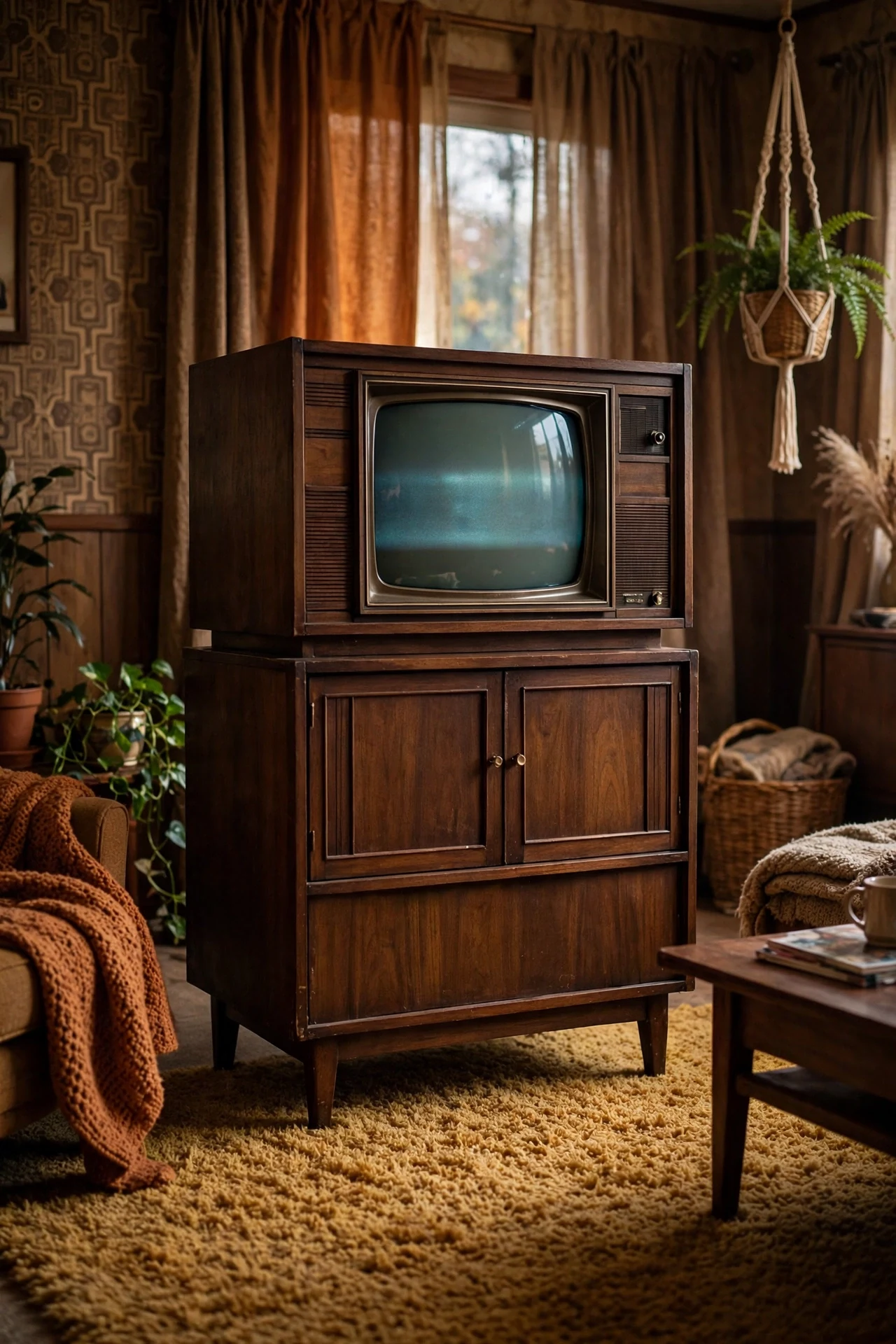
Before televisions were thin rectangles you could hang on a wall, they were pieces of furniture. Grandma’s television was a huge wooden cabinet that sat on the floor like a sideboard, with a small glowing screen set into the middle of it. Moving it took two people and a lot of planning, so it stayed in exactly the same spot for decades.
The picture was fuzzy, the sound was tinny, and changing the channel meant walking across the room and turning a stiff dial that clicked loudly with every stop. But when the family gathered around it after dinner, nobody complained. That heavy wooden box was the center of the living room, and everything else in the room was arranged around it.
3. The Electric Turkey Carver That Came Out Once a Year
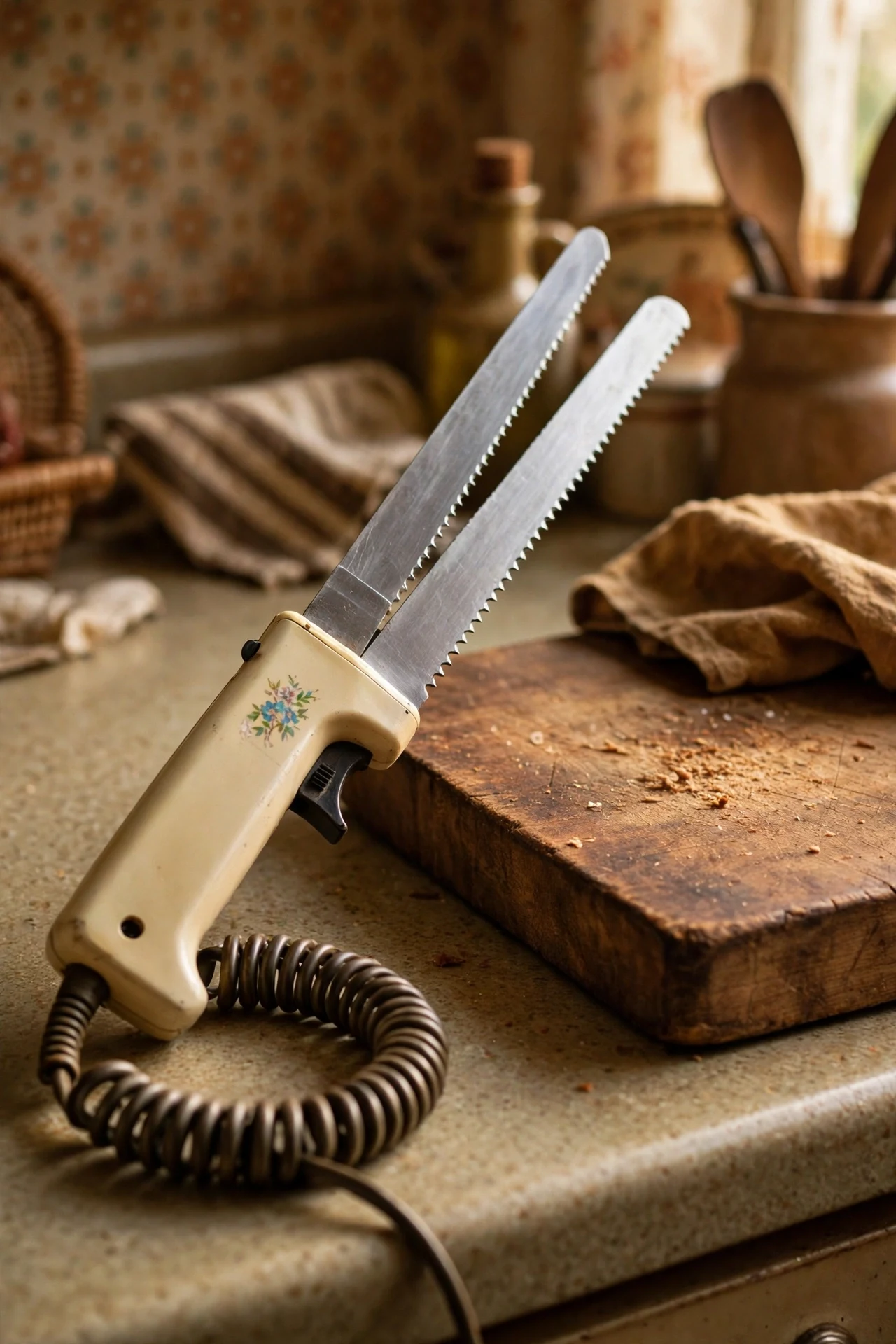
For eleven months of the year, the electric carving knife lived at the back of a drawer, tangled up in its own coiled cord. Then, on the one big holiday dinner of the year, it would appear on the table like a piece of ceremony, humming loudly as it sawed its way through the turkey.
It was never quite as smooth as the adverts promised, and it always seemed to need a second pair of hands to hold the meat steady. But grandma would not have carved the turkey any other way. That buzzing knife was part of the ritual, as much a sign that the holidays had arrived as the smell of roasting and the good tablecloth coming out.
4. The Strawberry Candies Only Grandmas Seemed to Buy
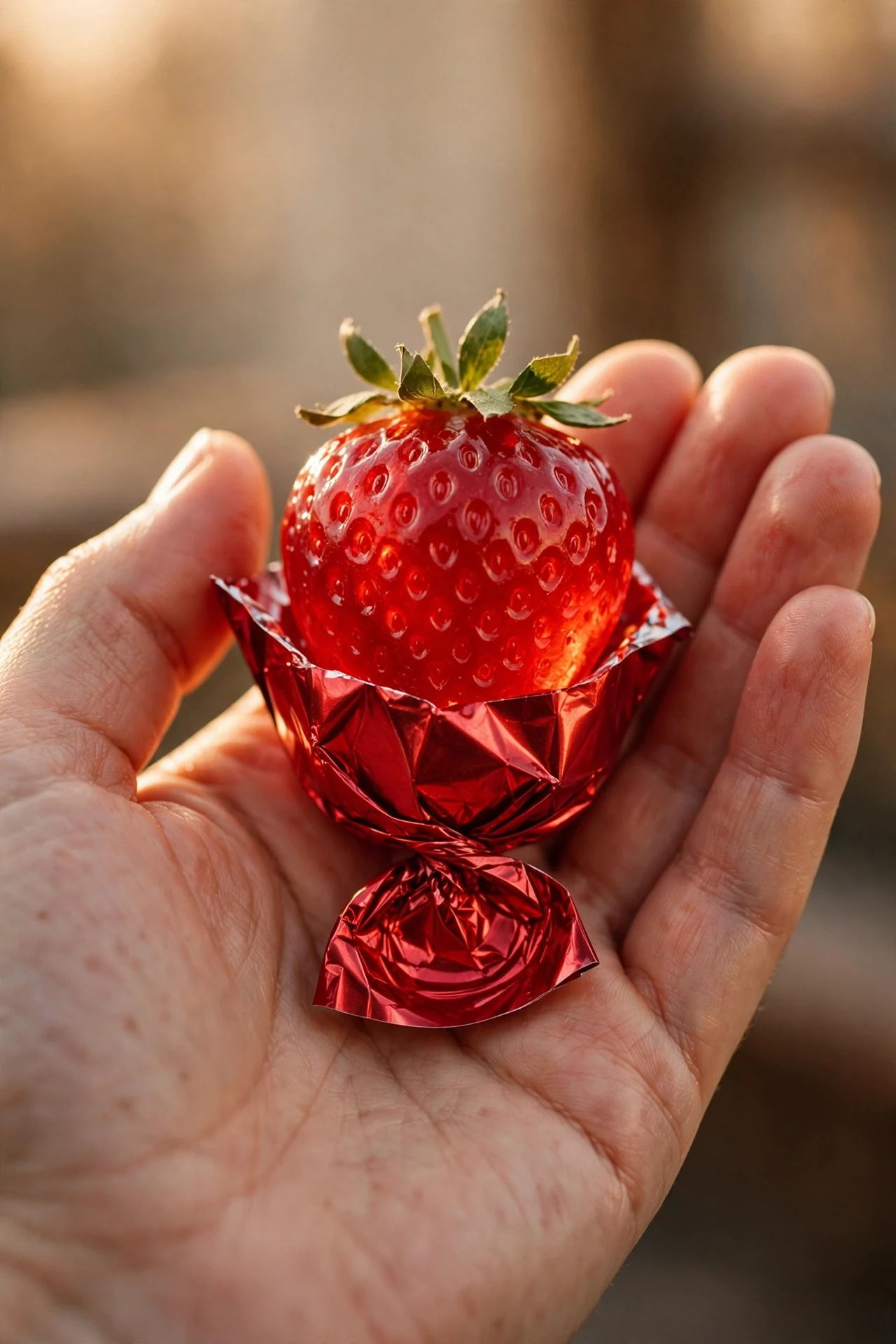
Somewhere in the house, usually in a dish or a handbag, there was always a strawberry-shaped hard candy. It came in a shiny red wrapper with a little green top, and it tasted like summer in a way no other sweet ever managed. The strange part was that nobody ever saw them for sale anywhere else.
Grandmas seemed to have a secret supply. You would find one at the bottom of a handbag, in a coat pocket, or offered with a smile after lunch. They were not the fanciest sweets in the world, but they were the ones you remembered. To this day, one glimpse of that red wrapper is enough to bring the whole house back.
5. The Glass Cabinet You Were Never Allowed to Touch
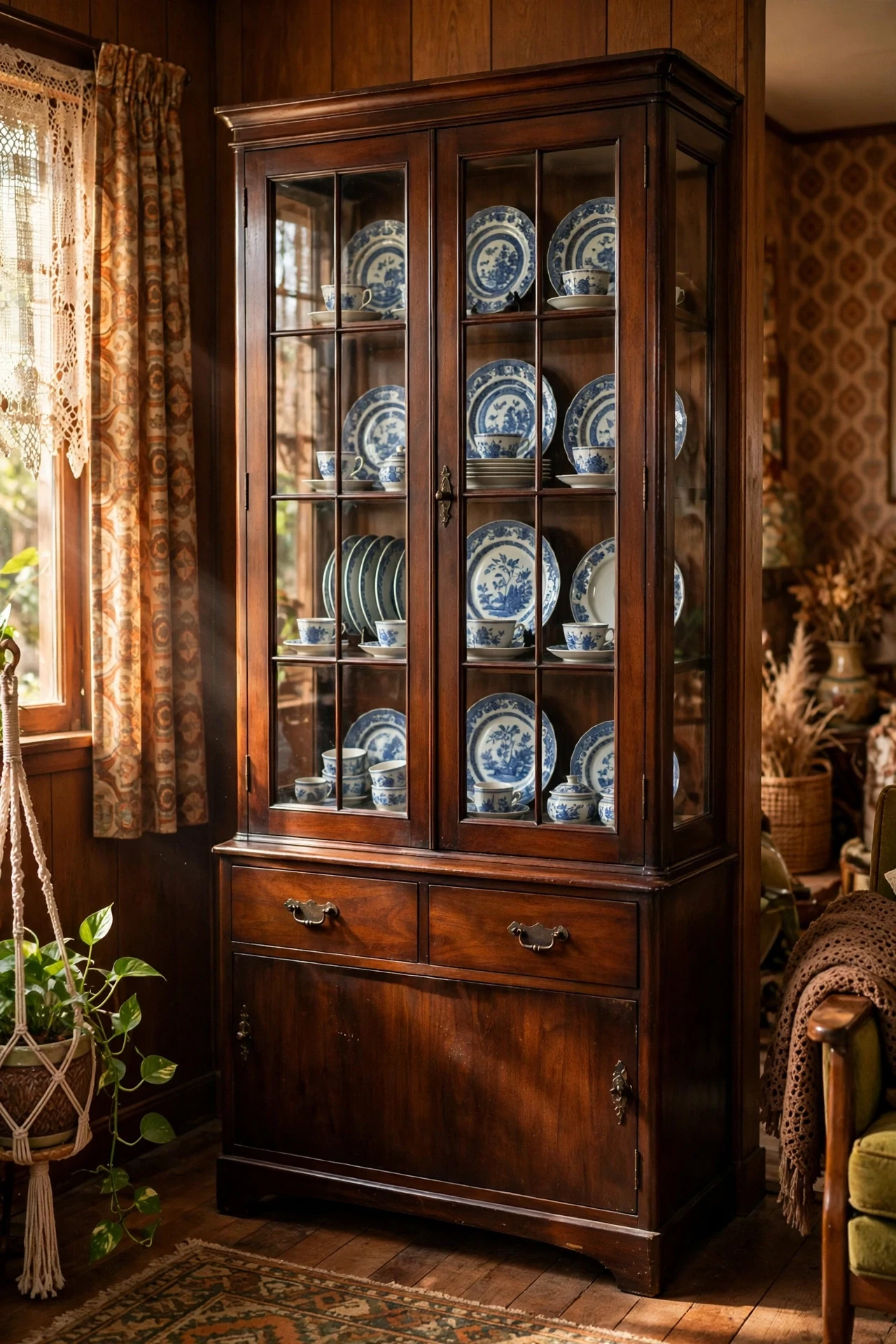
Every grandma’s house had a tall wooden cabinet with glass doors, filled with plates and cups that nobody was ever allowed to use. The china inside was for display only. It had been there for years, carefully arranged, and the idea of actually eating off it would have been unthinkable.
As a child, you learned to admire it from a safe distance. The glass doors were polished, the shelves were lined, and everything inside sat in perfect rows. It was a museum in the middle of the living room, and the most exciting thing about it was wondering whether anyone in the family had ever actually used a single piece.
6. The Crocheted Afghan Draped Over the Sofa
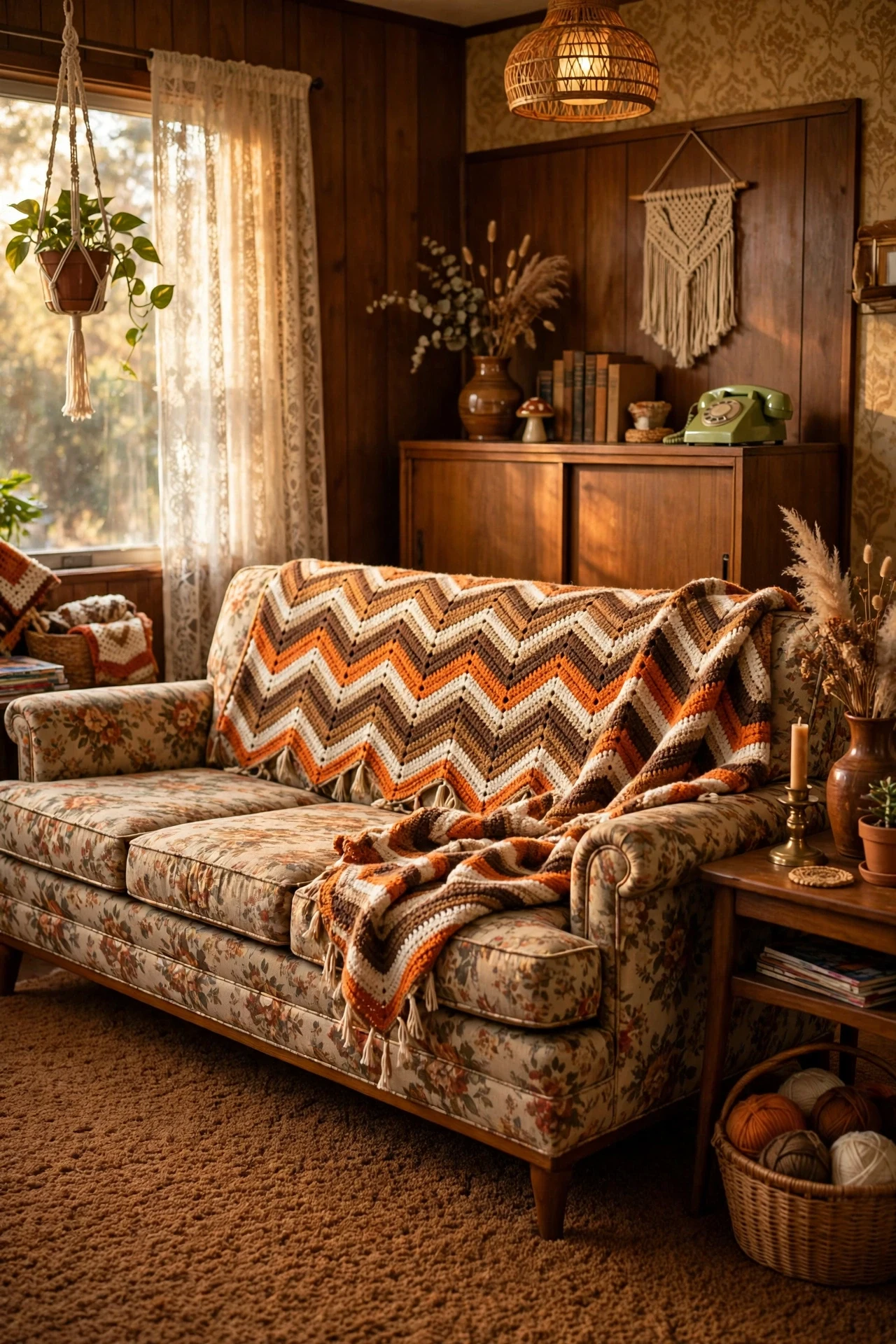
There was always a crocheted blanket draped over the back of the sofa, usually in a bold zigzag pattern of orange, brown, and cream. It was not folded neatly in a cupboard. It lived on the sofa, ready to be pulled over cold knees the moment anyone sat down.
That blanket had probably been made by hand, stitch by stitch, over many long evenings. It was heavier than it looked, warmer than any shop-bought throw, and it smelled faintly of the house itself. If you were lucky, you got to sit under it while the television murmured in the background.
7. The World’s Oldest Fridge
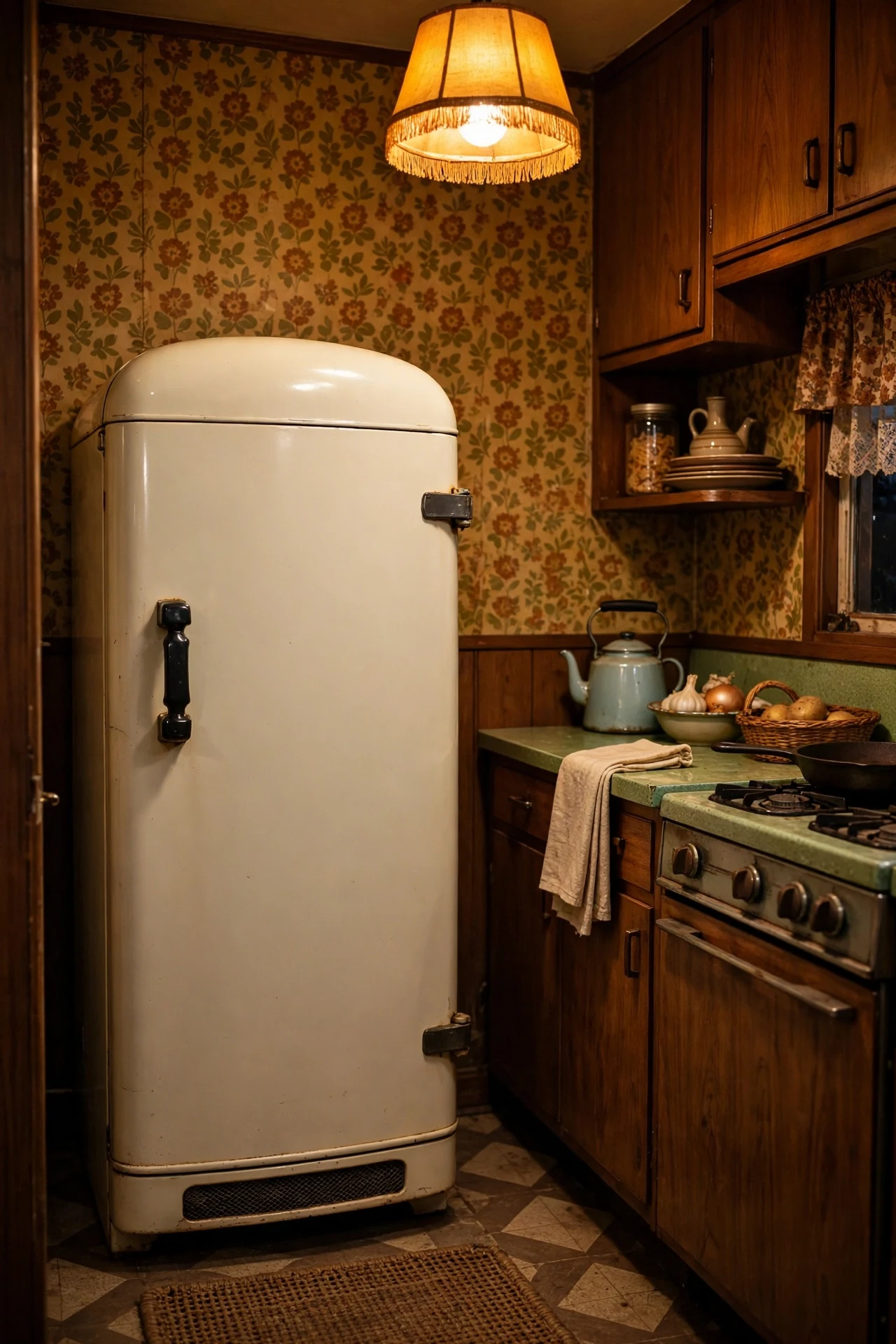
Grandma’s fridge was older than most of the people in the house. It was a big, rounded, humming box, probably in cream or pale green, with a handle that clunked when you pulled it. It ran louder than any modern fridge, rattling gently every time its motor kicked in.
Inside, everything had its place: the butter dish, the jars of jam, the leftovers wrapped in foil, and the fruit magnets holding up drawings and notes on the door. Nobody ever suggested replacing it. It had outlasted newer appliances by decades, and as far as anyone was concerned, it would probably outlast them all.
8. The Ribbon Candy in the Christmas Candy Dish
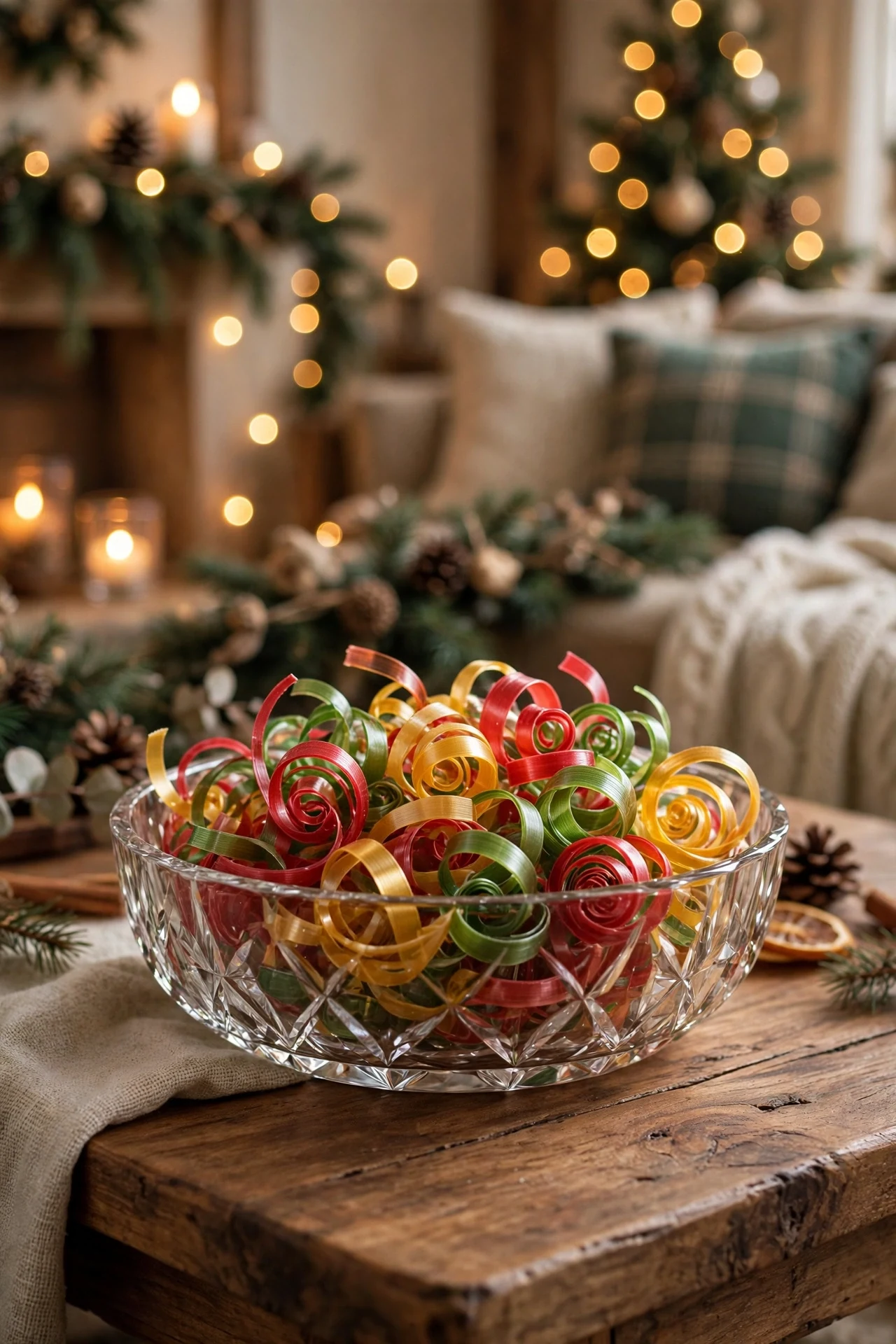
At Christmas, a glass dish would appear on the coffee table, filled with thin, curled ribbons of hard candy in red, green, and gold. They looked beautiful and festive, like edible decorations, and every child in the house would try at least one.
The problem was that ribbon candy is mostly for looking at. It stuck to your teeth, it was hard as glass, and it had probably been in that dish since the previous Christmas. But the dish came out every single year without fail, because Christmas at grandma’s simply was not Christmas without it.
9. The Little Fruit Magnets All Over the Fridge
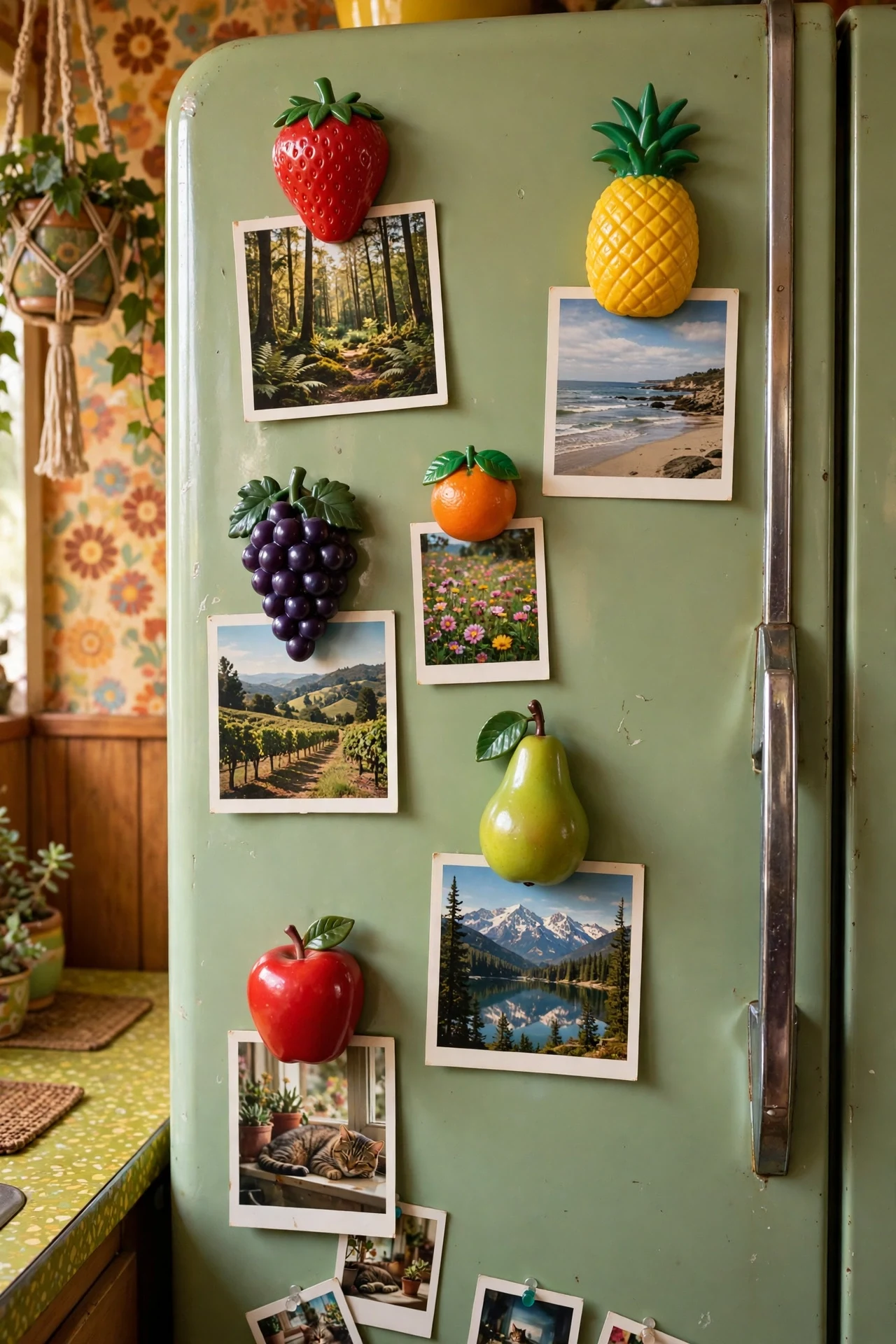
If the fridge itself was a landmark, the fruit magnets on its door were the decorations. Little plastic strawberries, pineapples, bunches of grapes, and pears clung to the metal, holding up shopping lists, school drawings, and photographs that had been there so long they had faded in the sun.
Every grandma seemed to collect them without ever really trying. They came from holidays, from markets, from friends who brought them as gifts. Individually they were tiny and silly, but together they turned the front of the fridge into a scrapbook of the whole family.
10. The Crocheted Blanket You Can Still Feel
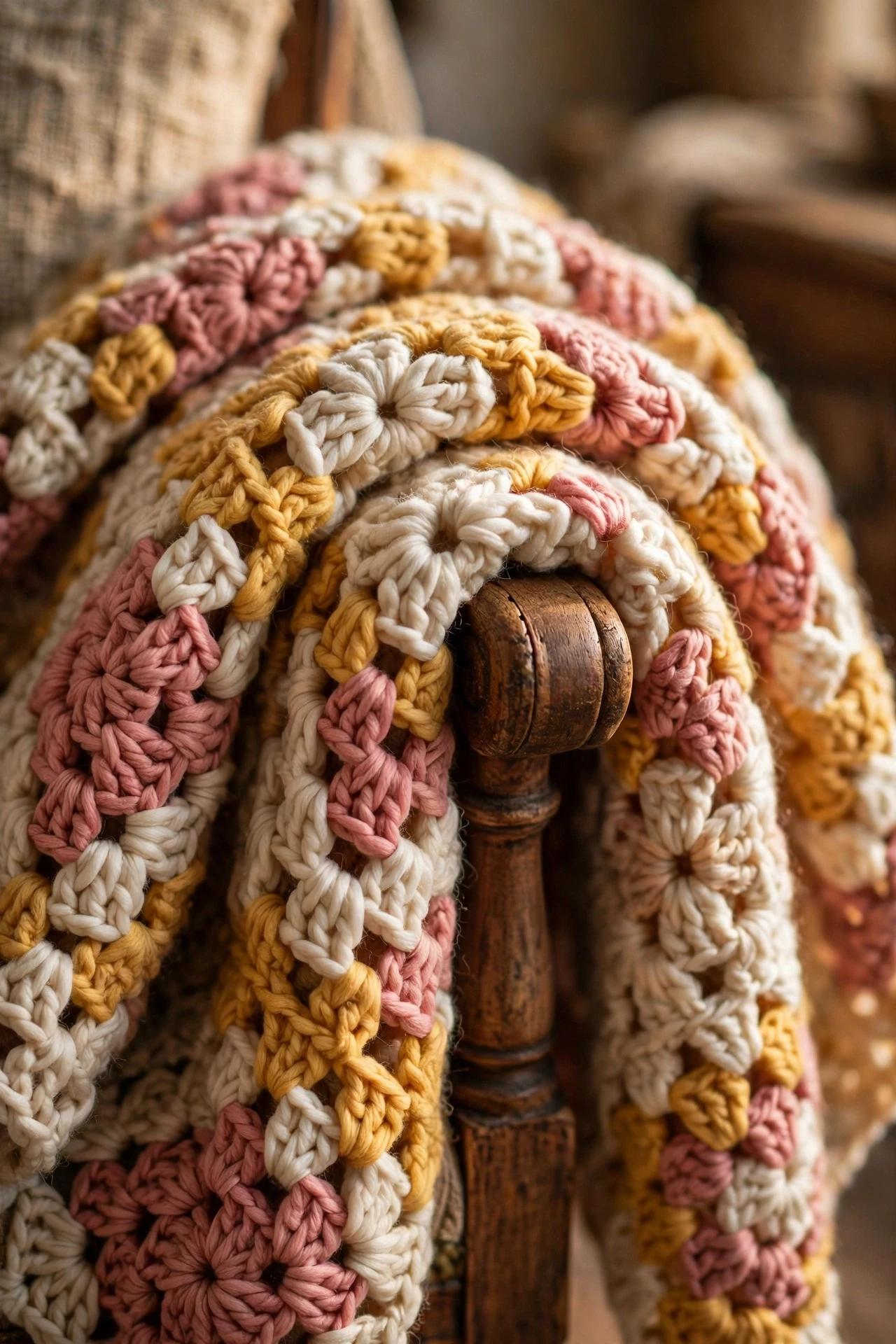
There was always a second blanket too, the one folded over the arm of a chair. You did not even have to see it to know it was there. You could feel it. The thick, nubby stitches, the slightly uneven edges, the weight of real yarn worked by hand — it was a texture you never forgot.
Shop blankets were smooth and light, but grandma’s blankets were solid. They had presence. Even now, years later, running your fingers over a crocheted blanket can bring back the feeling of sitting in her living room, wrapped up warm while the rain tapped at the window.
11. The Gorgeous Wooden End Table in the Living Room
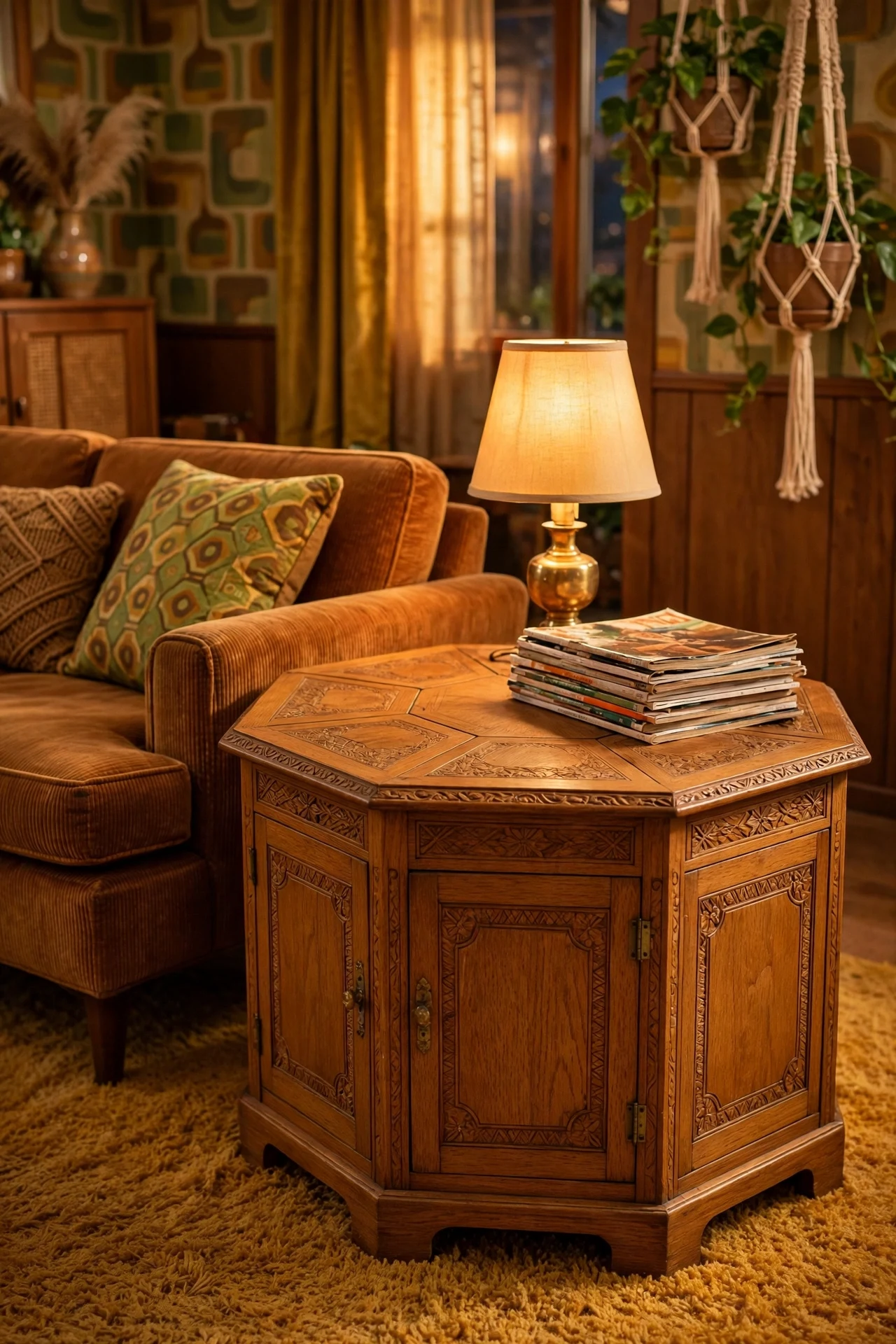
Next to the sofa stood a beautiful wooden end table, the kind of furniture that was built to last forever. It had a warm honey-colored finish, little doors or drawers, and a surface that held a lamp, a coaster, and usually a small stack of magazines that nobody ever read.
These tables were not flat-pack furniture. They were solid wood, heavy, and polished to a shine that caught the light. They had probably been bought decades earlier and looked after with the same care as everything else in the house. It was the kind of table you only truly appreciated once you tried to buy one like it yourself.
12. The Matching End Table on the Other Side of the Sofa
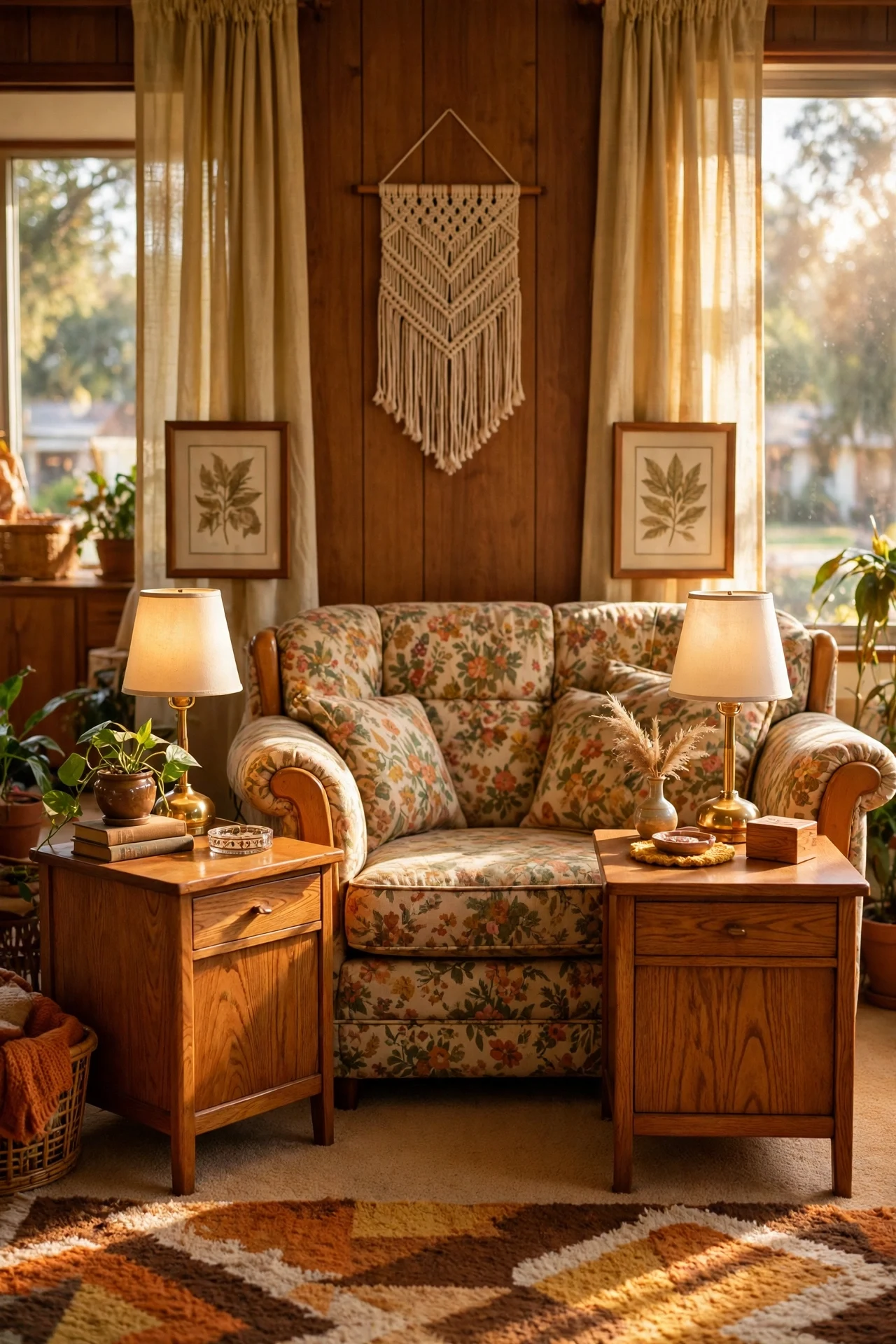
Of course, there was never just one. The end table always had a twin on the other side of the sofa, matching in wood, shape, and shine. Grandma’s living room was a place of pairs: two lamps, two tables, two coasters, everything balanced and symmetrical.
It was a style from a time when furniture was bought as a set and kept for life. The matching tables framed the sofa like bookends, and the whole room felt settled and complete because of them. Nobody rearranged that room. It had been arranged once, properly, and that was that.
13. The Stationary Bike in the Most Random Room
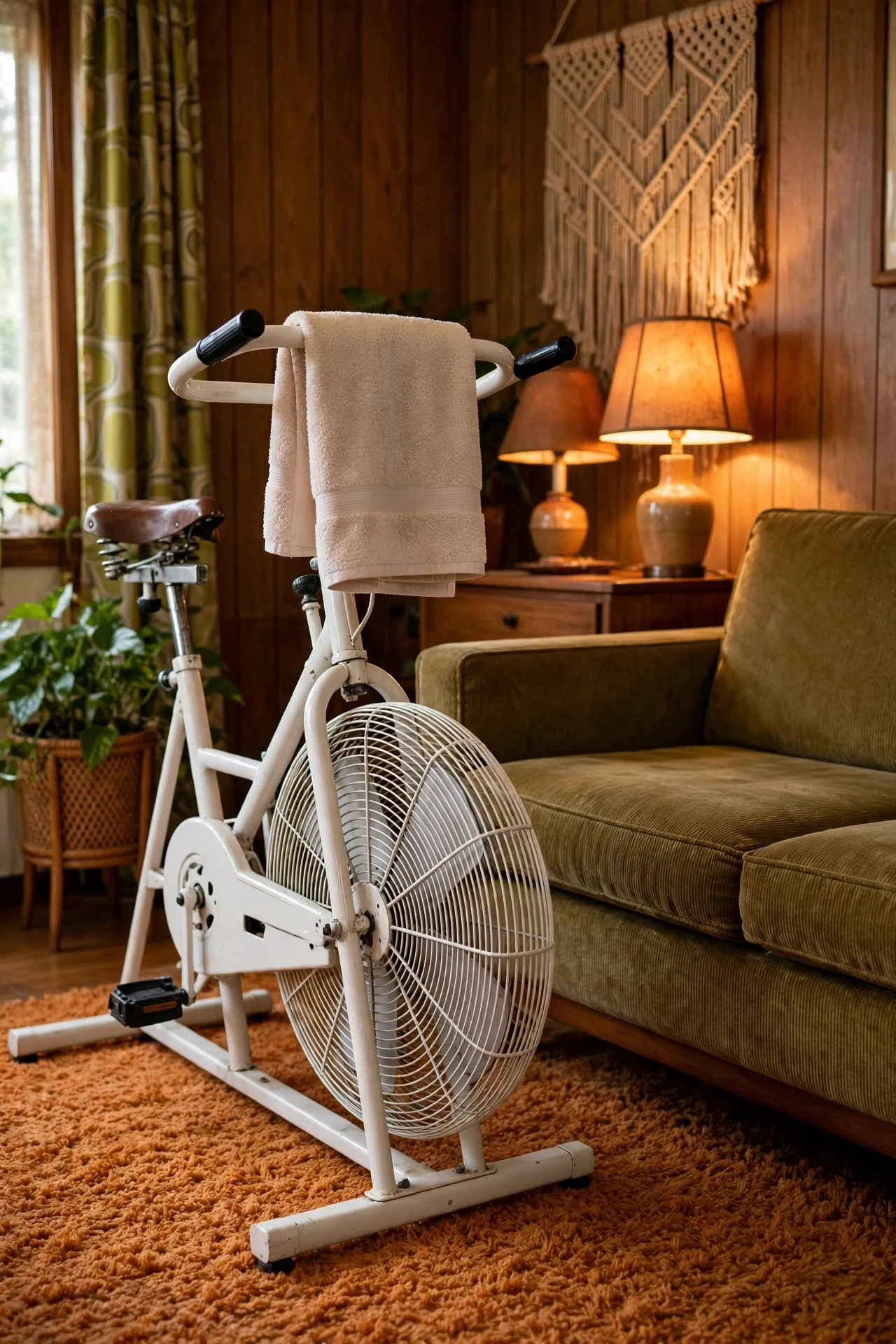
Somewhere in the house, usually in the most unexpected room, there was a stationary exercise bike. It was a big white machine with a fan wheel at the front, and it lived in a corner of the living room or the spare bedroom, often with a towel draped over its handlebars.
Whether anyone actually rode it was a different question. Most of the time it served as a clothes rack, a plant stand, or simply a piece of furniture that everyone had agreed to ignore. But it was always there, a hopeful reminder of good intentions, quietly gathering dust between uses.
14. The Wood-Paneled Walls
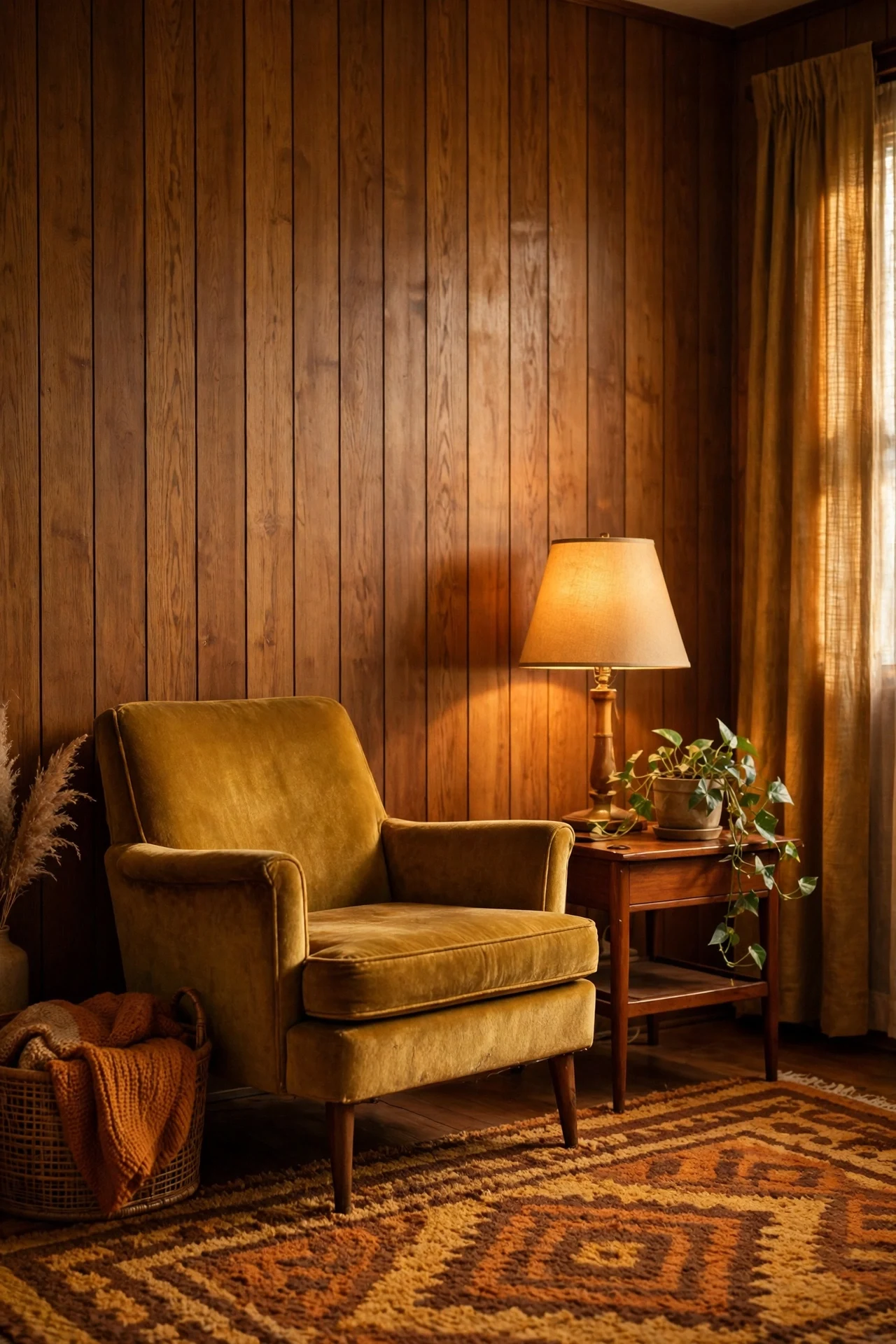
At least one room in grandma’s house had walls covered in wood paneling. It gave the room a warm, dark, cozy feeling, like being inside a cabin, even if the house was in the middle of a city. The panels had a shine to them, and the grain ran in long vertical lines from floor to ceiling.
Wood paneling was everywhere in its day, and grandma’s house kept it long after everyone else had painted over theirs. It made the room feel older and more settled, and it held the smell of the house in a way painted walls never could. For many of us, that paneled room is the room we picture when we think of home.
15. The Old Cloth Calendars From Decades Ago
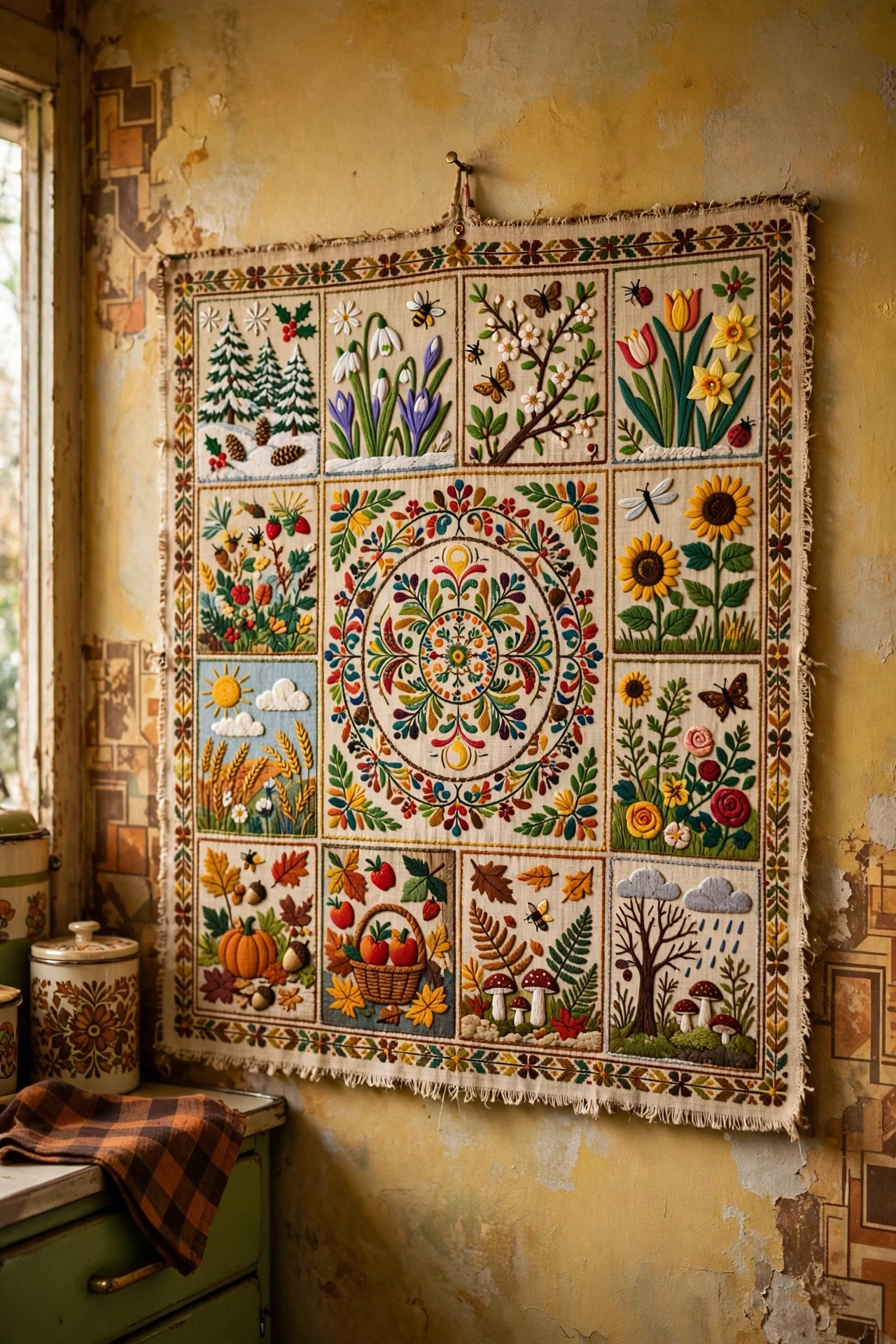
Hanging on the wall, often in the kitchen or the hallway, there was a cloth calendar. It was made of fabric, printed with a folksy picture and the months of the year, and it stayed up long after its year had passed. Some grandmas kept them for decades, one for every year, like a soft little archive.
They were never thrown away, because they were too pretty to throw away and too useful as decoration. Even when the dates were long out of date, the calendar stayed on its nail, a cheerful piece of wall art that had quietly outlived its original job.
16. The Tomato Pincushion by the Sewing Basket
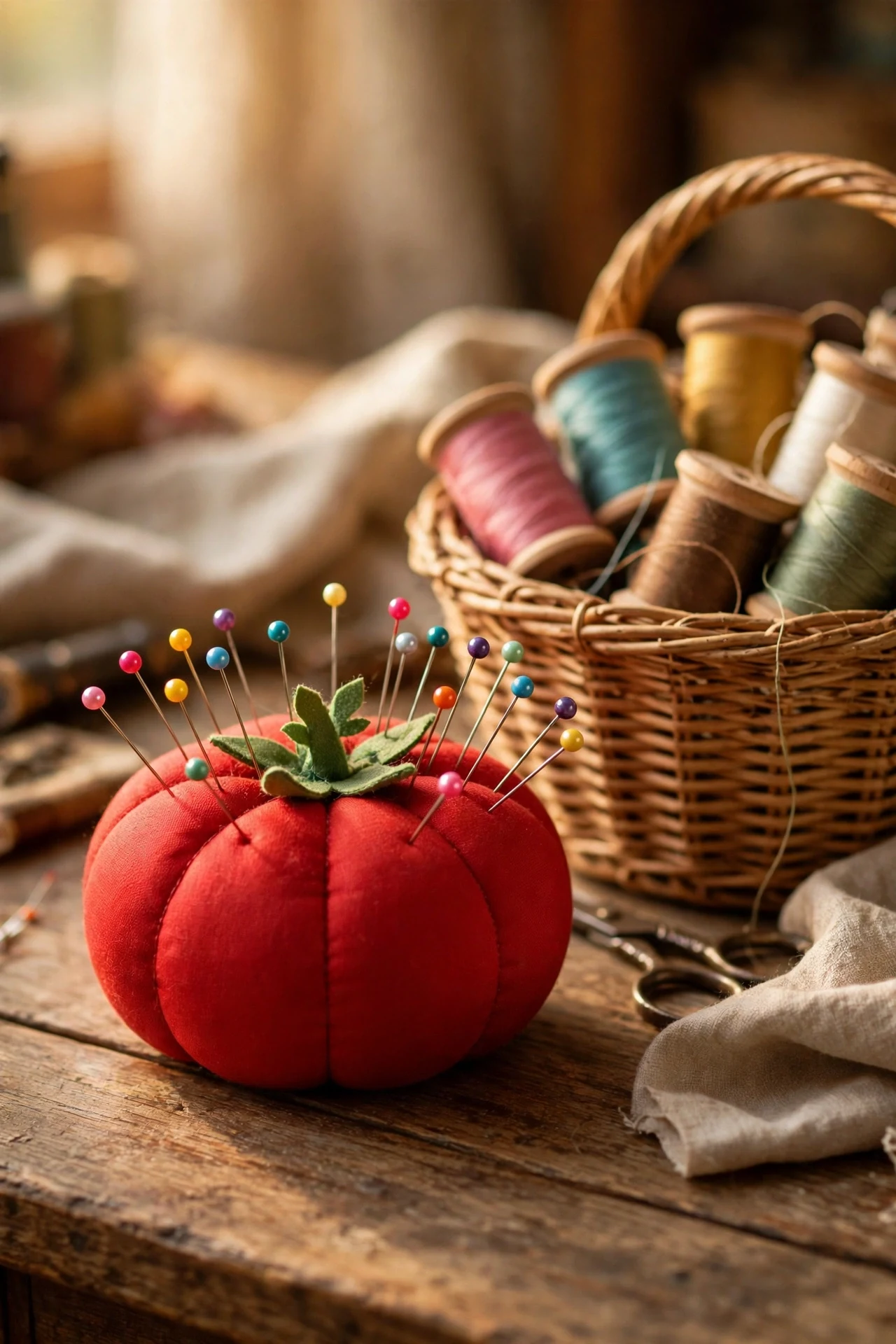
Near the sewing basket, or sometimes just sitting on a windowsill, there was a small red pincushion shaped like a tomato. It was bright, cheerful, and always full of pins and needles, their colored heads poking out like tiny flowers.
Every grandma who sewed had one, and children were somehow always allowed to play with it. It was one of the few things in the house that was not behind glass or covered in plastic. That little tomato was a working tool, and it was also a sign that this was a house where things were mended, not thrown away.
17. The Stained Casserole Dish
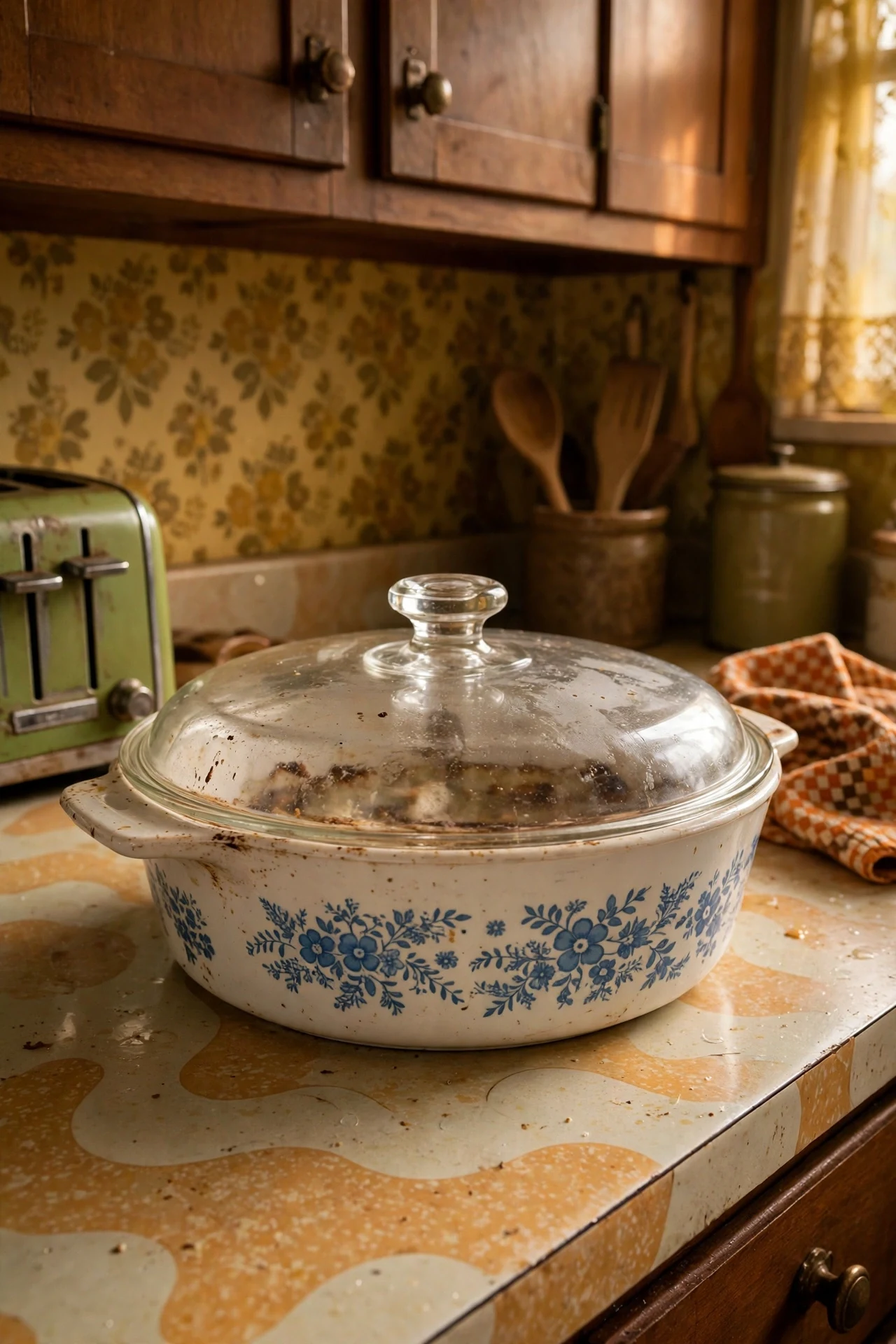
There was one casserole dish in grandma’s kitchen that had seen things. It was white, with a blue flower pattern, and it carried permanent stains from years of baked dinners. No amount of scrubbing would shift them, and nobody ever tried very hard.
Those stains were not a flaw. They were proof of a thousand family meals, of roasts and bakes and dishes that had fed everyone at the table. That casserole dish was the workhorse of the kitchen, and its marks were like a diary of every dinner it had ever held.
18. The Clear Carpet Protectors
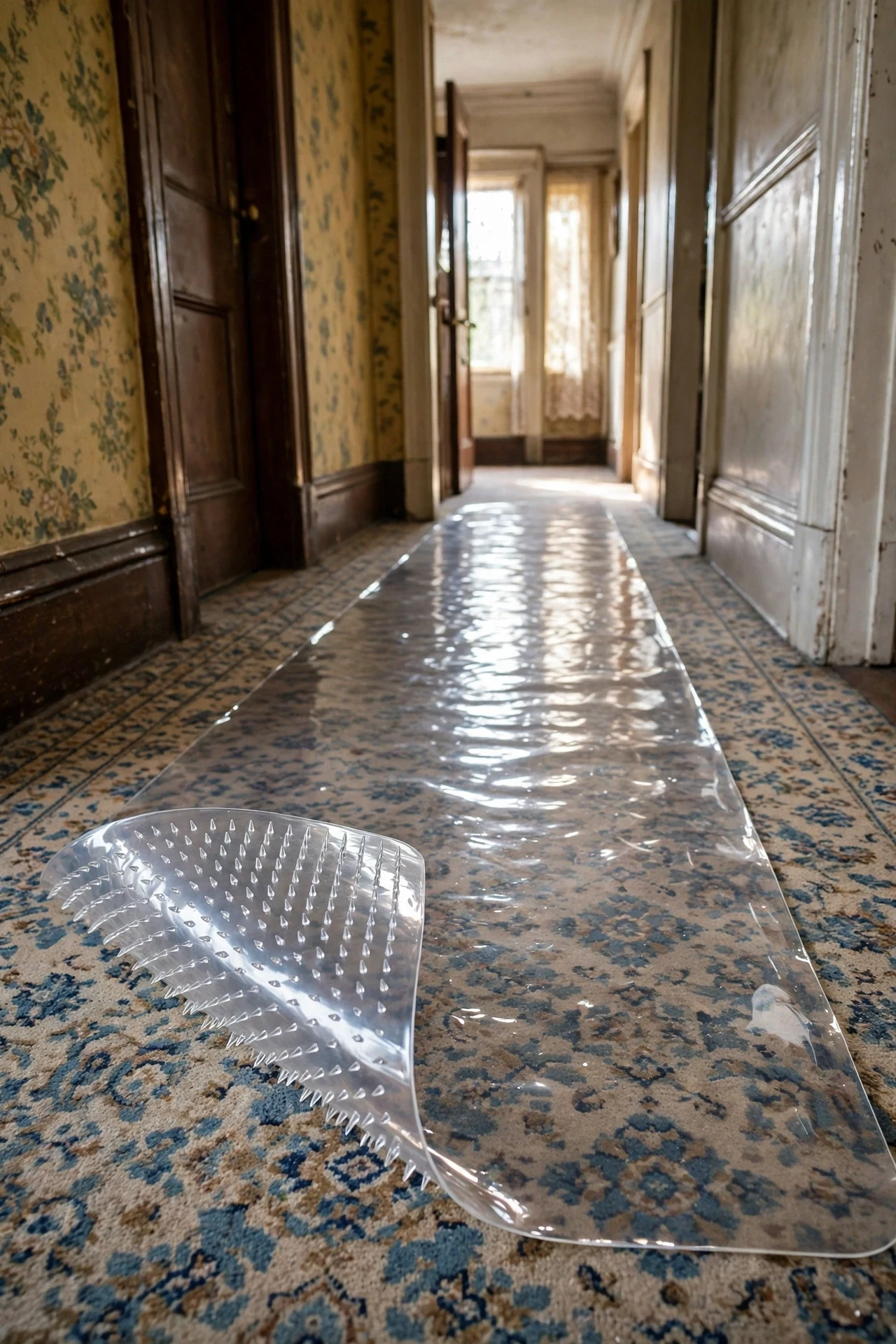
Grandma’s carpets were precious, and the clear plastic runners laid over them were the proof. These transparent strips, with their spiky undersides, covered the busiest paths through the house, protecting the carpet from feet, spills, and everything else life could throw at it.
Walking on them was an experience in itself. They crinkled underfoot, they caught the light, and on bare feet in summer they were oddly cold. But the carpet underneath stayed perfect for decades, which was exactly the point. In grandma’s house, protection always came first.
19. The Stack of Colorful Storage Bowls
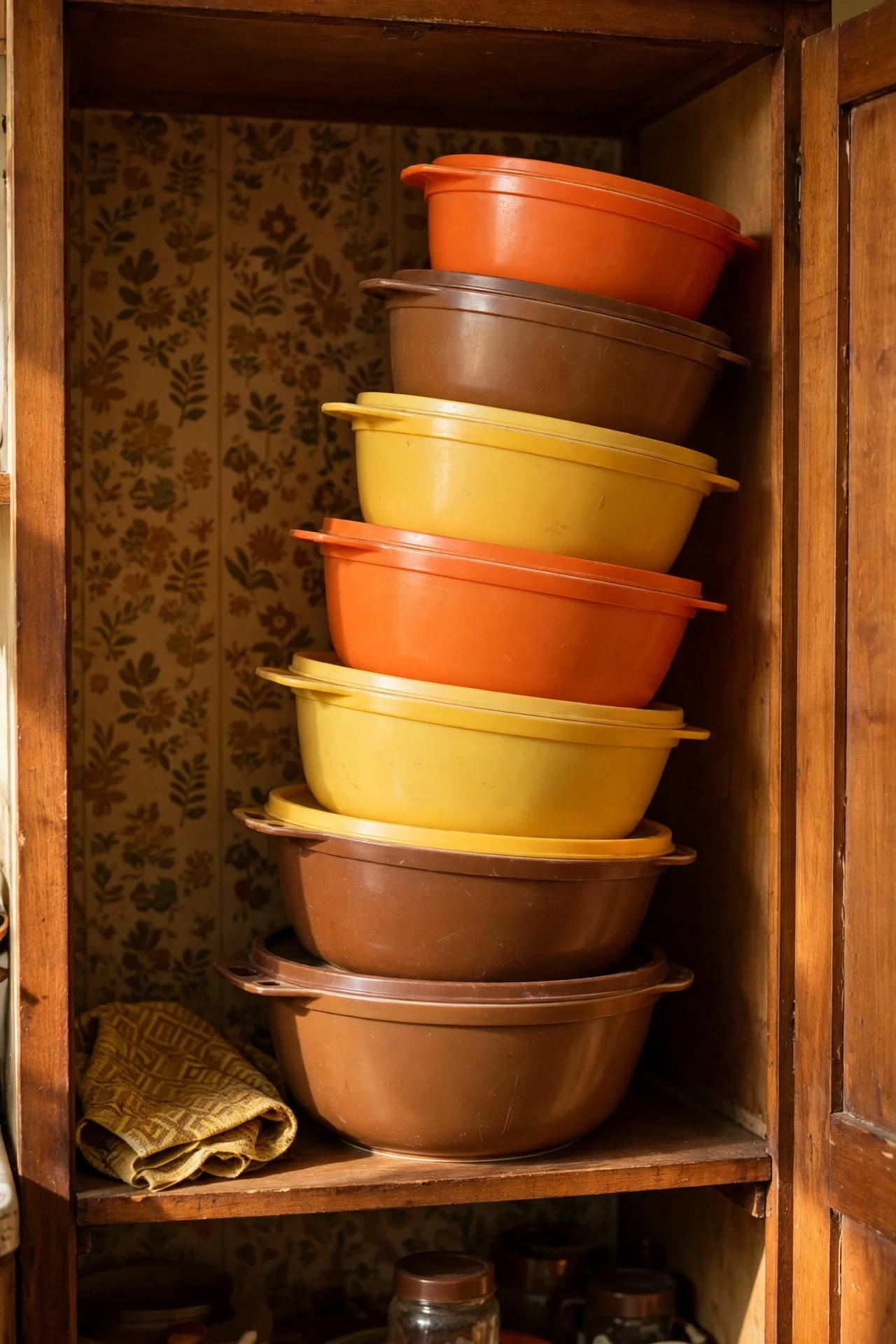
Open the right cupboard and you would find a leaning tower of plastic bowls in orange, yellow, and brown, each with its own lid that never quite matched. They were used for leftovers, for picnics, for sending food home with visitors, and they multiplied over the years like they were breeding in the dark.
Some of them had been around so long that their lids had gone missing, and some had lids with no bowls. It did not matter. They were the containers that held the family’s food, and every one of them had a story, even if the story was only that it had survived a hundred washes and a dozen house moves.
20. The Cookie Tin That Was Never Full of Cookies
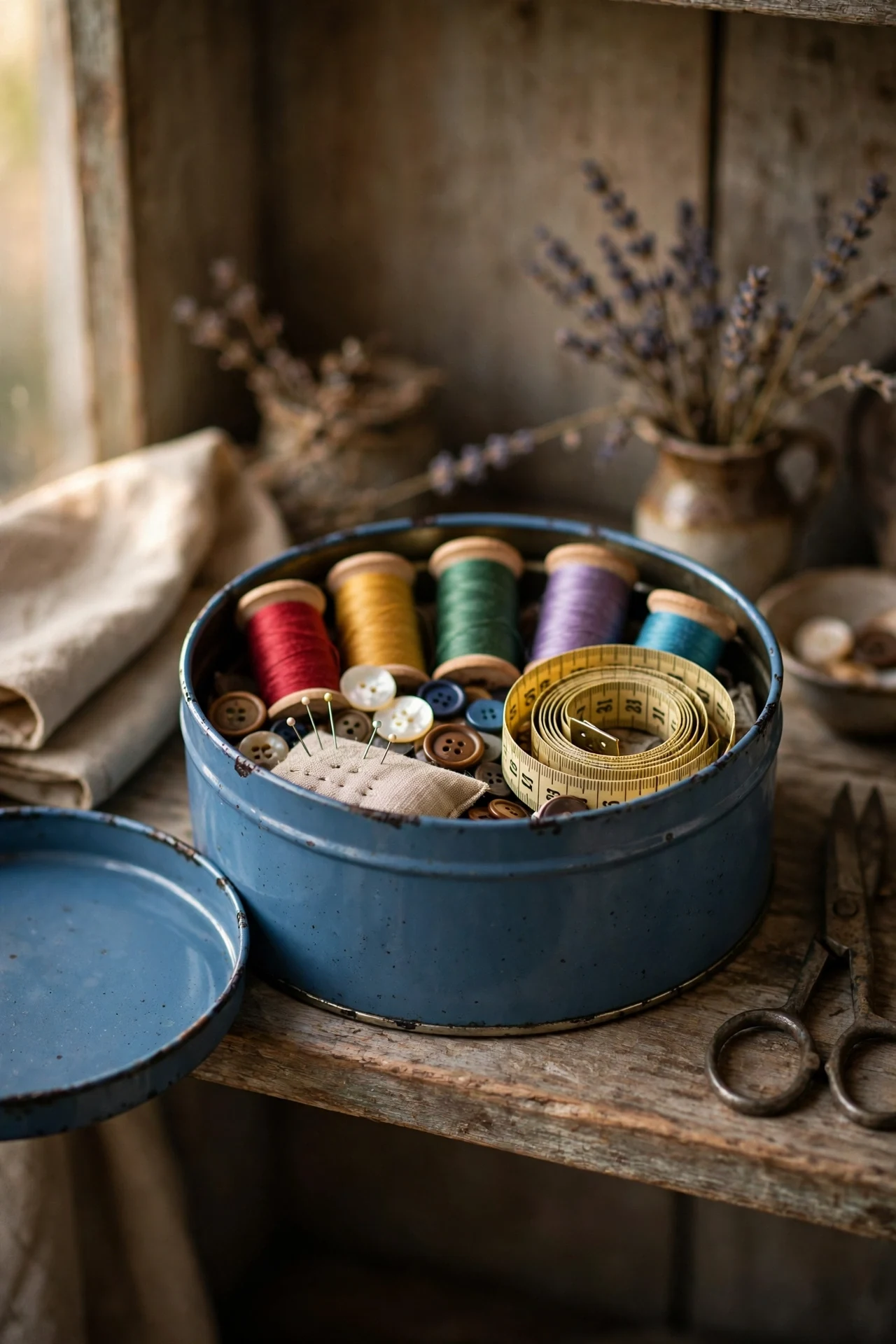
Every grandchild has lived through the same small heartbreak: opening the round blue cookie tin on the kitchen shelf, expecting butter cookies, and finding a sewing kit instead. Buttons, thread, needles, and a measuring tape, all neatly arranged where the cookies should have been.
It was the great trick of grandma’s house, and it worked on every generation. The tin was never really for cookies at all. It was the sewing box, and it had been the sewing box for as long as anyone could remember. The disappointment lasted about two seconds, and then you just accepted it as one of the house’s many unbreakable laws.
21. The Towels That Were for Decoration, Not Drying
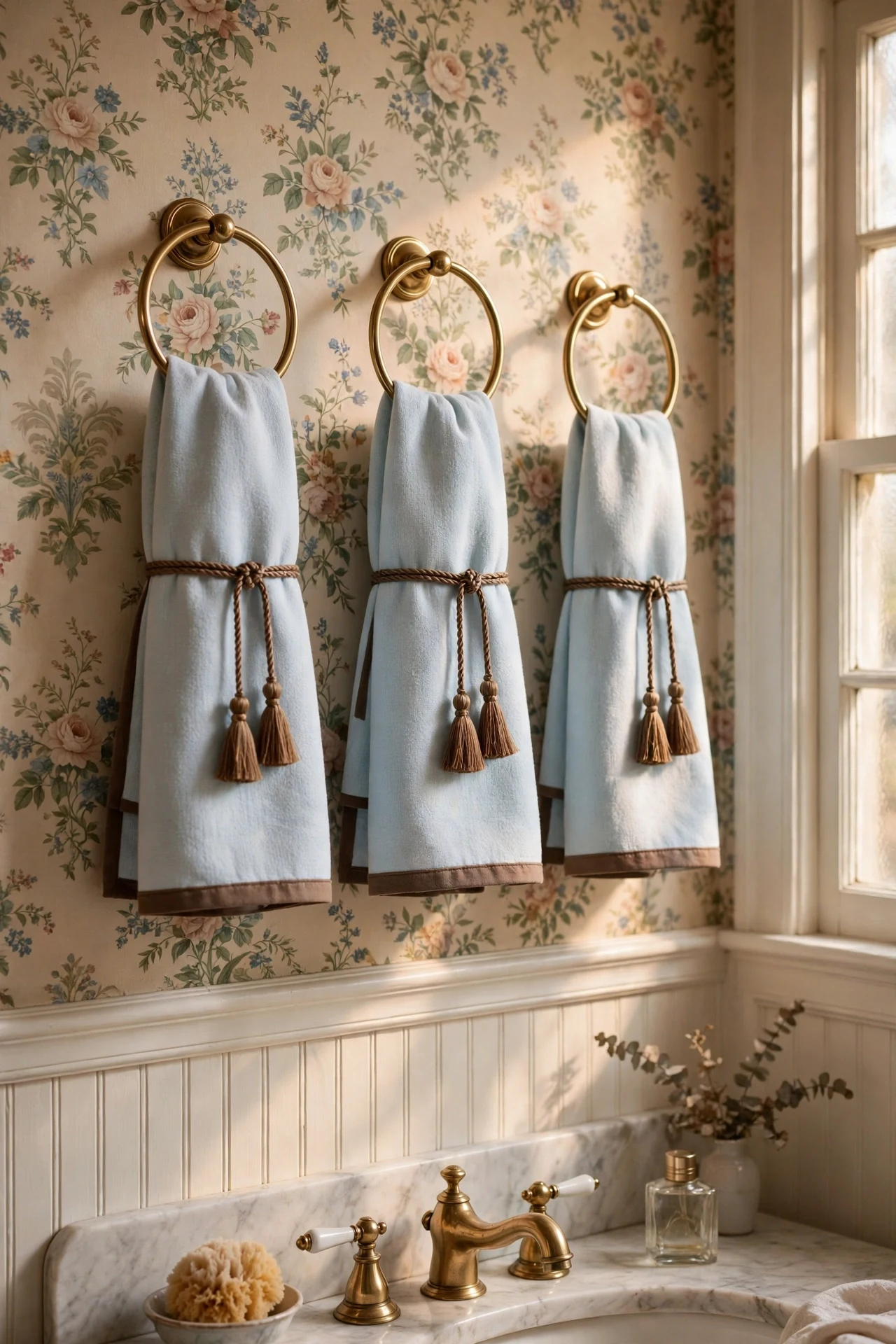
In the bathroom, there were towels that looked beautiful and felt wonderful, and you were absolutely not allowed to use them. They hung neatly on their rings, often tied with decorative cords and tassels, and they stayed clean and perfect for weeks at a time.
The towels you were actually allowed to use were somewhere else entirely, usually older and plainer. The decorative towels were for show, part of the bathroom’s decoration, like the matching soap dish and the little rug. Using one was a small crime, and grandma always noticed.
22. The Woven Trivets Under Every Hot Dish
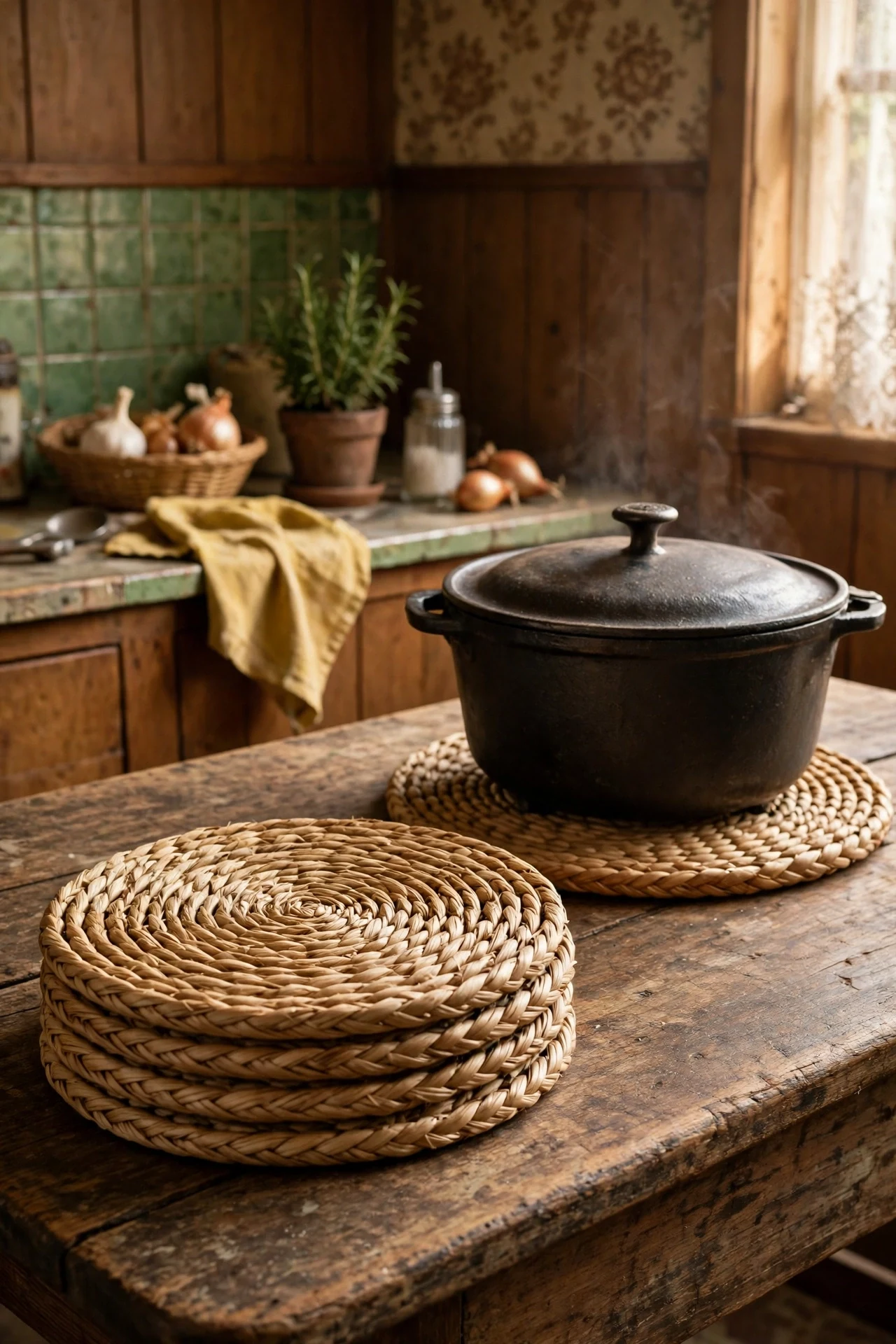
Nothing hot ever touched the table in grandma’s house without a trivet underneath it. These round, woven mats, made of wicker or straw, lived in a stack near the stove, ready to slide under a pot, a pan, or a casserole dish the moment it came off the heat.
They were simple, practical, and almost indestructible. A good trivet could last for years, picking up scorch marks and stains as it went. They were part of the rhythm of every meal: the dish came out of the oven, the trivet went down, and the table stayed safe.
23. The Ceramic Christmas Tree
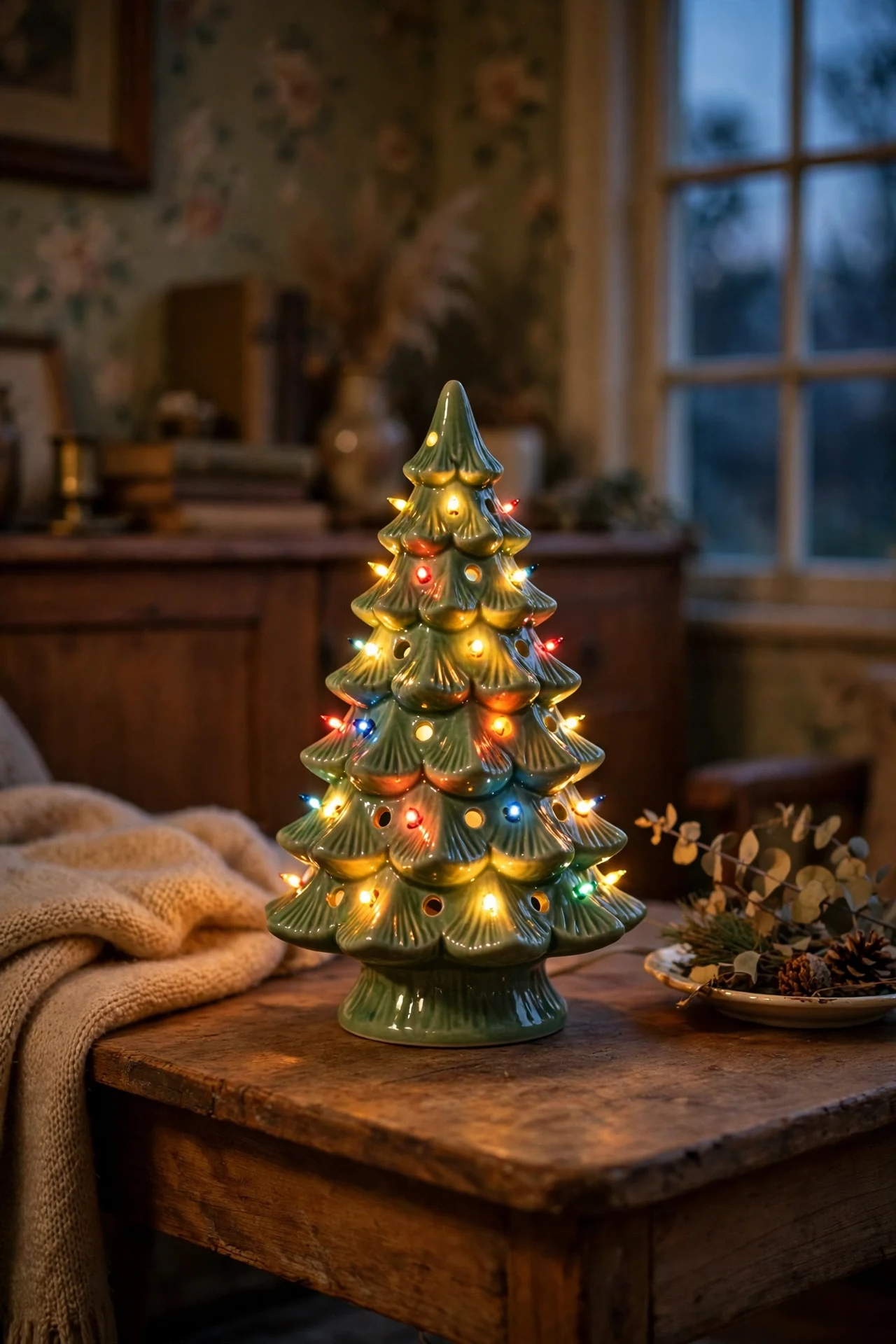
When December arrived, the ceramic Christmas tree came out of its box. It was a small green tree made of glazed ceramic, dotted with tiny colored lights that glowed when it was plugged in. It sat on a side table or a windowsill, quietly glowing in the corner of the room.
It was never the main tree. The big tree stood in the living room, but the ceramic one was the special one, the one that had been there for as long as anyone could remember. Turning its lights on was one of the first signs that Christmas had officially begun at grandma’s house.
24. The Fuzzy Toilet Covers
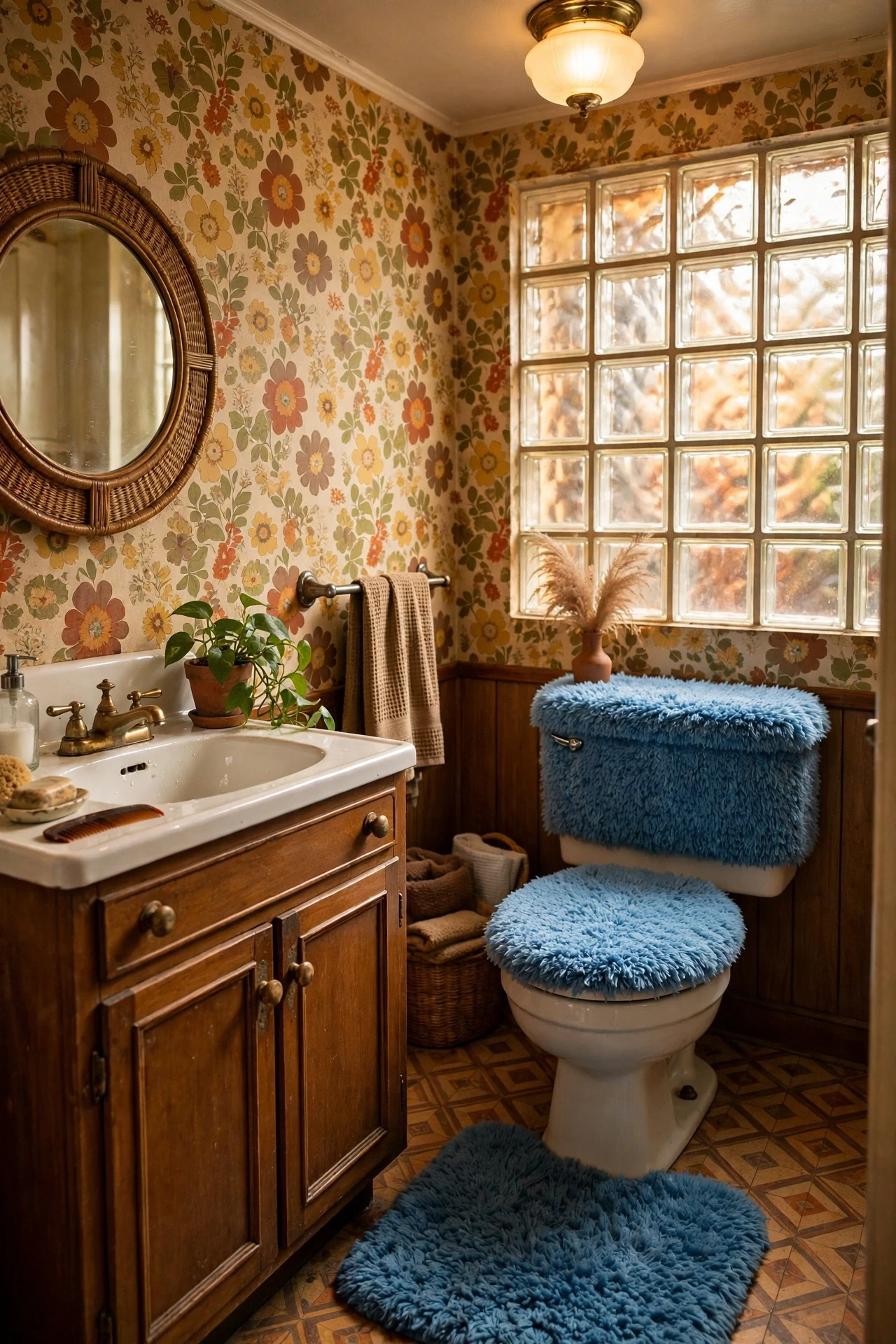
Few things sum up grandma’s house quite like the fuzzy toilet covers. A soft, shaggy cover on the tank lid, a matching one on the seat, usually in blue or pink, turning the bathroom’s hardest surfaces into something soft and fluffy.
They were not practical, and they were certainly not hygienic, but nobody said so. They were cozy, they matched the rug, and they were part of the bathroom’s look. Sitting down on a fuzzy toilet seat was a strange, warm, slightly confusing experience, and it was one that only grandma’s house could offer.
25. The Phone You Could Have Called a President On
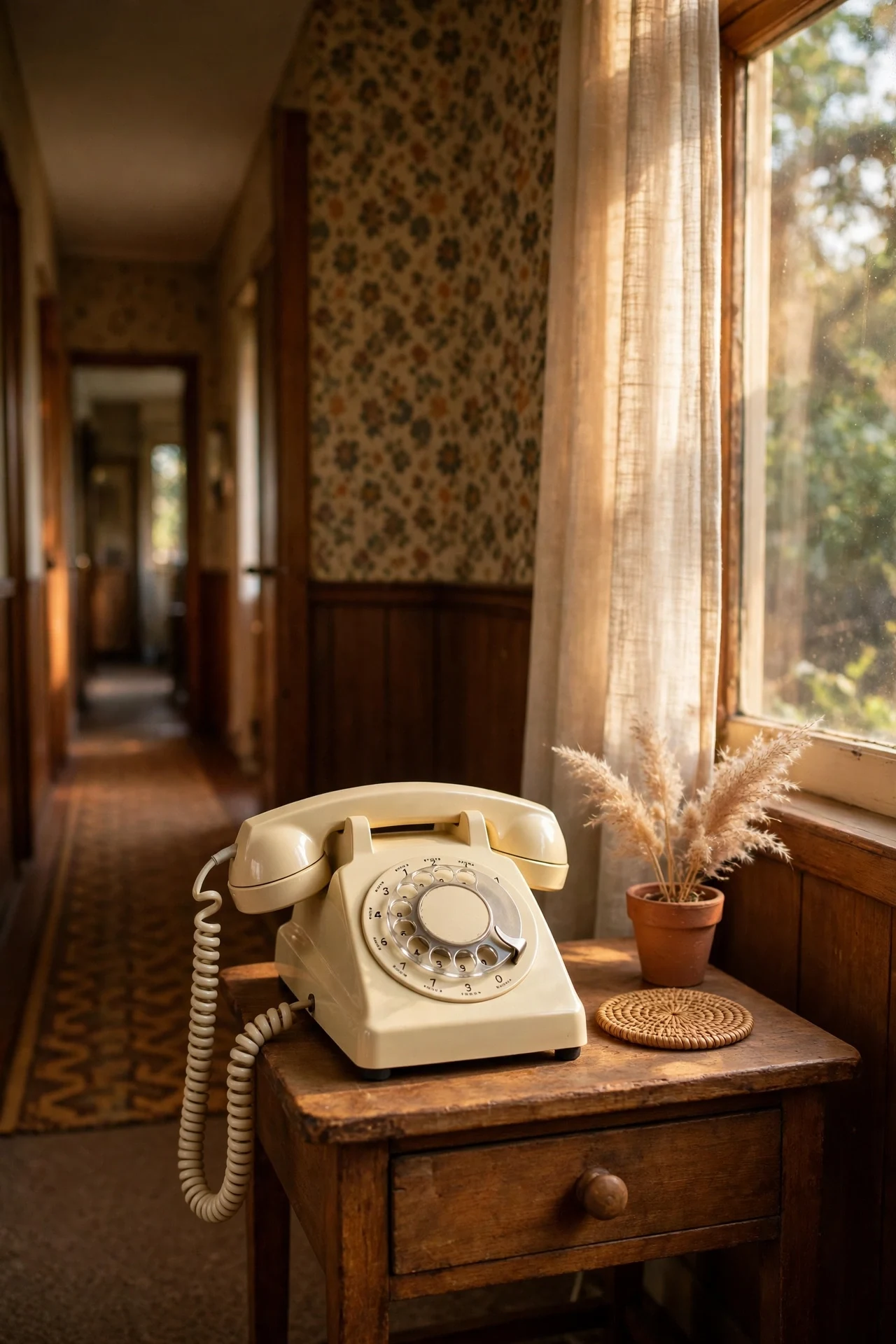
Grandma’s phone was a heavy thing, usually in cream or beige, with a rotary dial and a coiled cord that stretched just far enough to reach the kitchen doorway. It looked like it belonged in a different era, because it did. It had probably been installed when the house was new, and it had never been replaced.
Using it was a skill. You had to wait for the dial to spin back after every number, and if you made a mistake you had to start all over again. But it worked, and it worked for decades. In a world of phones that change every year, grandma’s phone was a reminder that some things are built to last.
26. The Room You Weren’t Allowed In
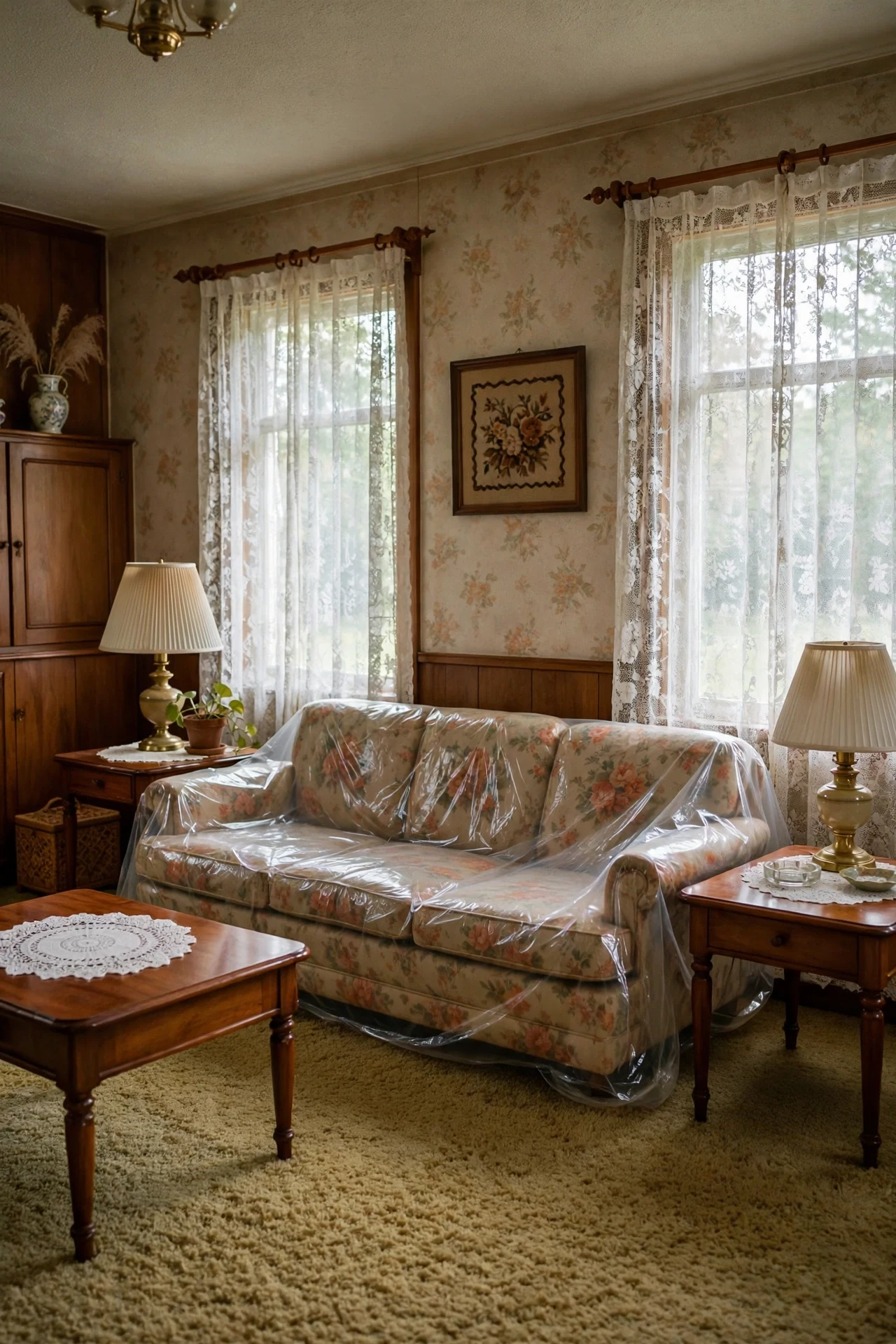
Every grandma’s house had one room that was more museum than living space. It was usually the front room, with the best furniture, the cleanest carpet, and a stillness that made children whisper. You were not allowed to play in there, and you certainly were not allowed to sit on the good sofa.
The room was kept for visitors, for holidays, for special occasions that rarely seemed to arrive. The rest of the house was for living in, but that room was for showing. It smelled faintly of polish and fresh air, and stepping into it felt like stepping into a different, quieter world.
27. The Plastic-Covered Furniture
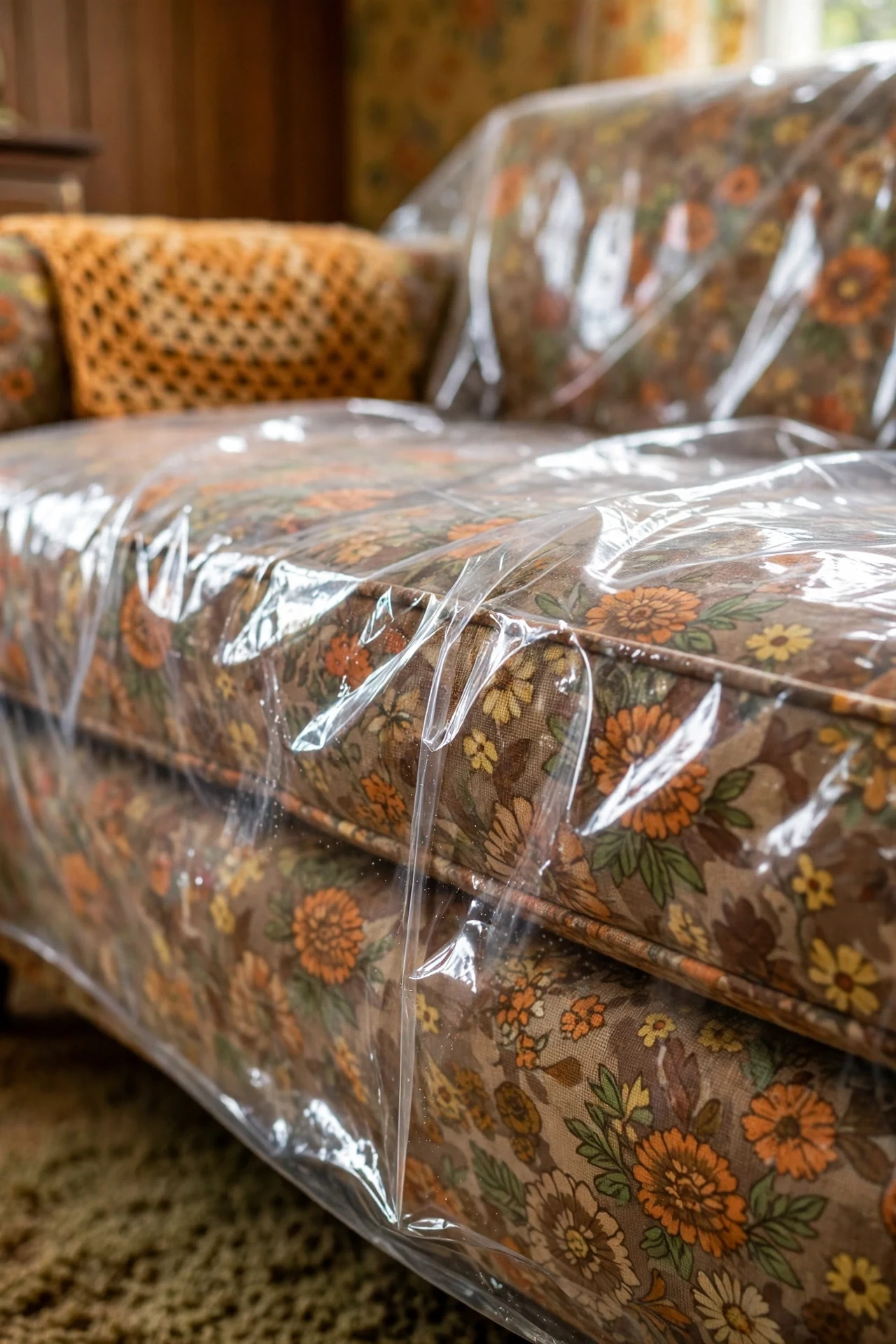
If the forbidden room had a signature feature, it was the plastic. The sofa and armchairs wore clear plastic slipcovers, fitted over the upholstery like a second skin. They crinkled when you sat down, they stuck to bare legs in summer, and they kept the furniture underneath in perfect condition.
To a child, the plastic covers were both fascinating and slightly terrifying. They made the furniture look shiny and untouchable, like it was wrapped for delivery and had never been unwrapped. But grandma knew exactly what she was doing. Underneath that crackling plastic, the floral fabric stayed as bright as the day it was bought.
28. The Alarm Clock With the Big Red Glow
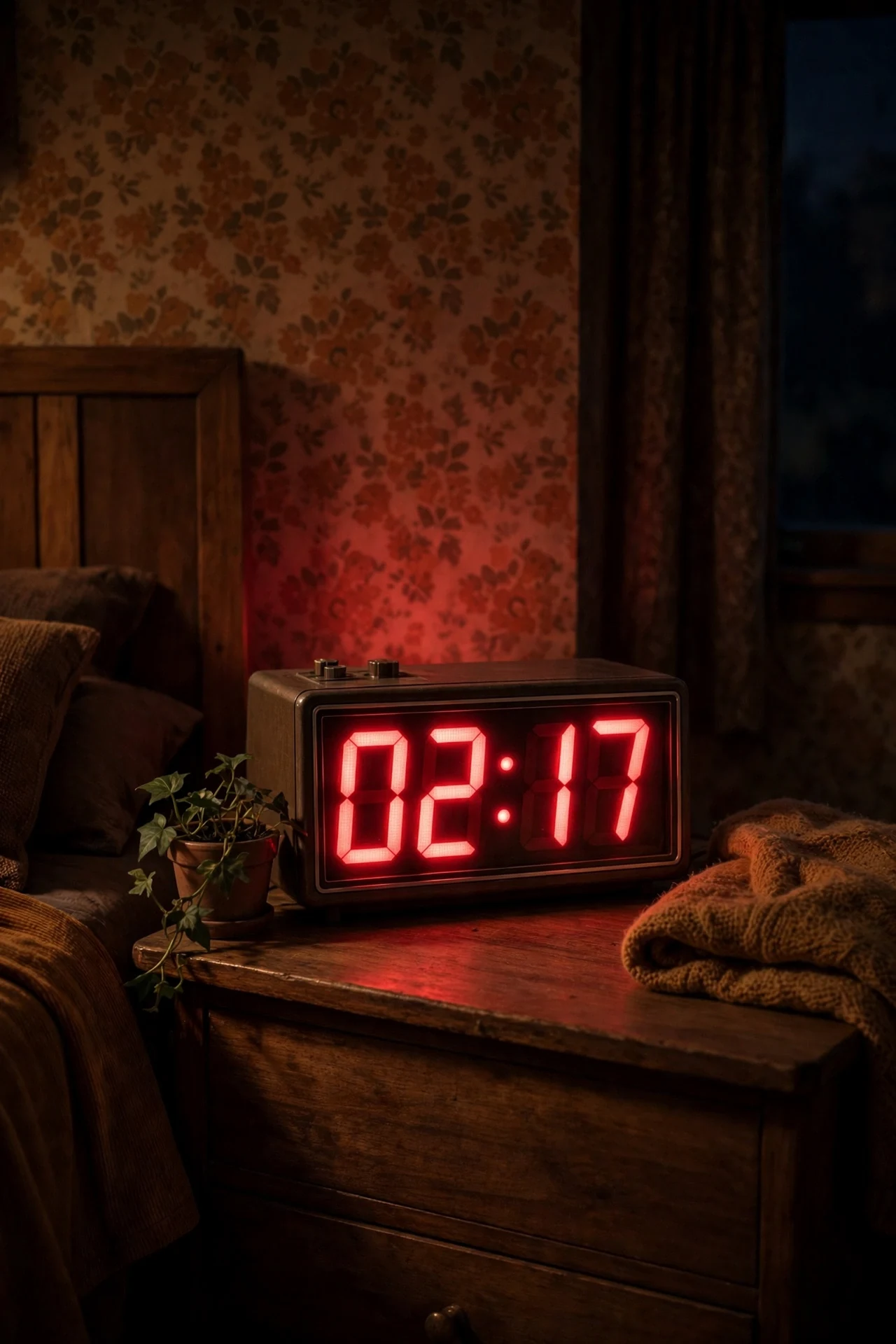
On the bedside table, there was an alarm clock with huge red numbers that glowed in the dark. You could read the time from across the room, and the whole bedroom had a faint red tint at night because of it. It buzzed loudly in the morning, loud enough to wake the whole house.
That clock was a fixture. It had been there for years, its red digits ticking over night after night, and it never needed replacing. Long before phones took over the job of waking us up, that glowing red clock was the thing that got grandma out of bed every morning.
29. The Coaster Set on the Coffee Table
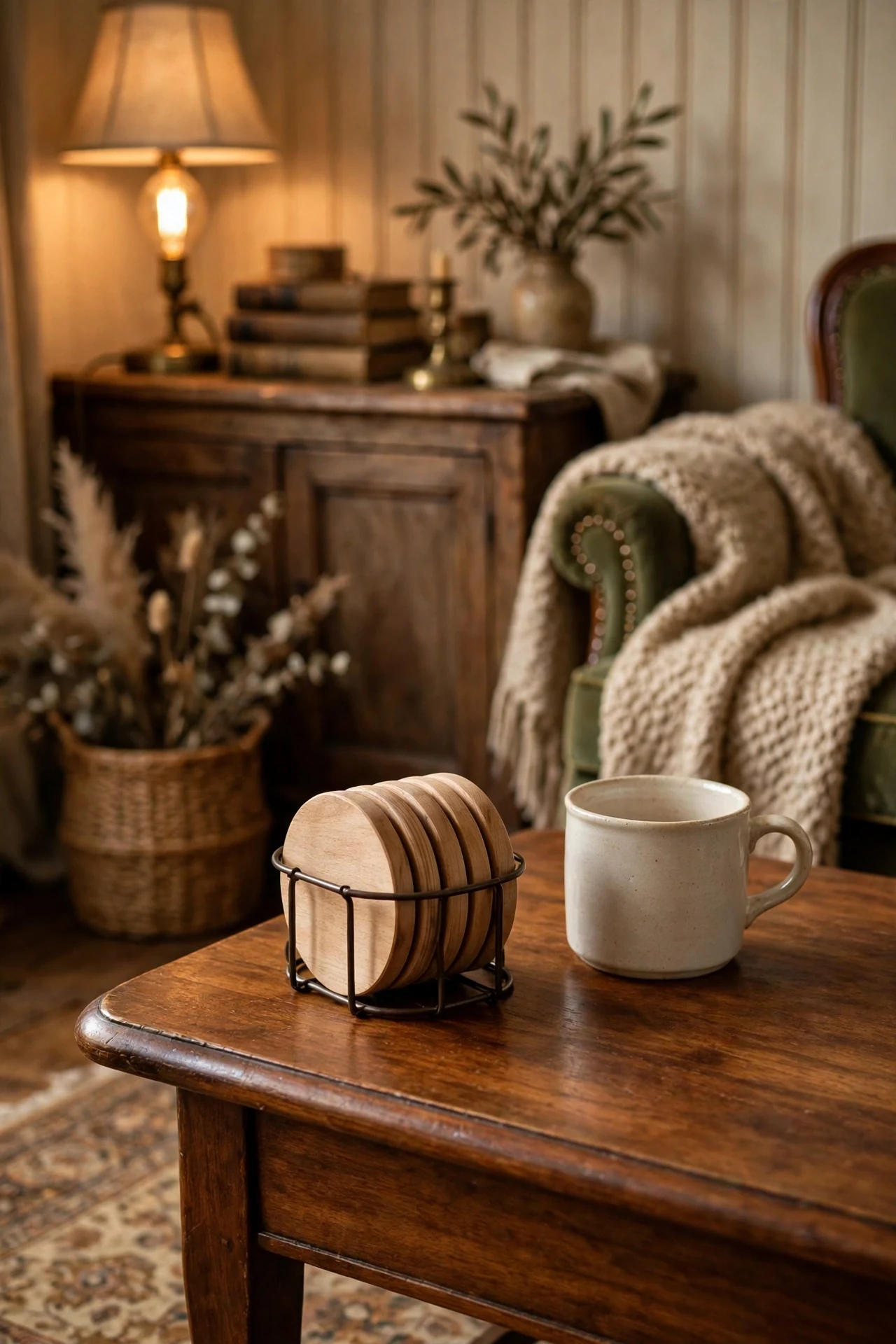
Nothing was ever put down on a table in grandma’s house without a coaster underneath it. There was always a set of them on the coffee table, usually wooden or cork, stacked neatly or fanned out in a little holder. Using one was not optional. It was the law.
Every ring mark on a wooden table was a small tragedy, and the coasters were the defense. They were part of the furniture’s care routine, as automatic as wiping your feet at the door. A guest who forgot to use one would be gently reminded, and they would never forget again.
30. The Kitchen Chair That Was Always in the Same Spot
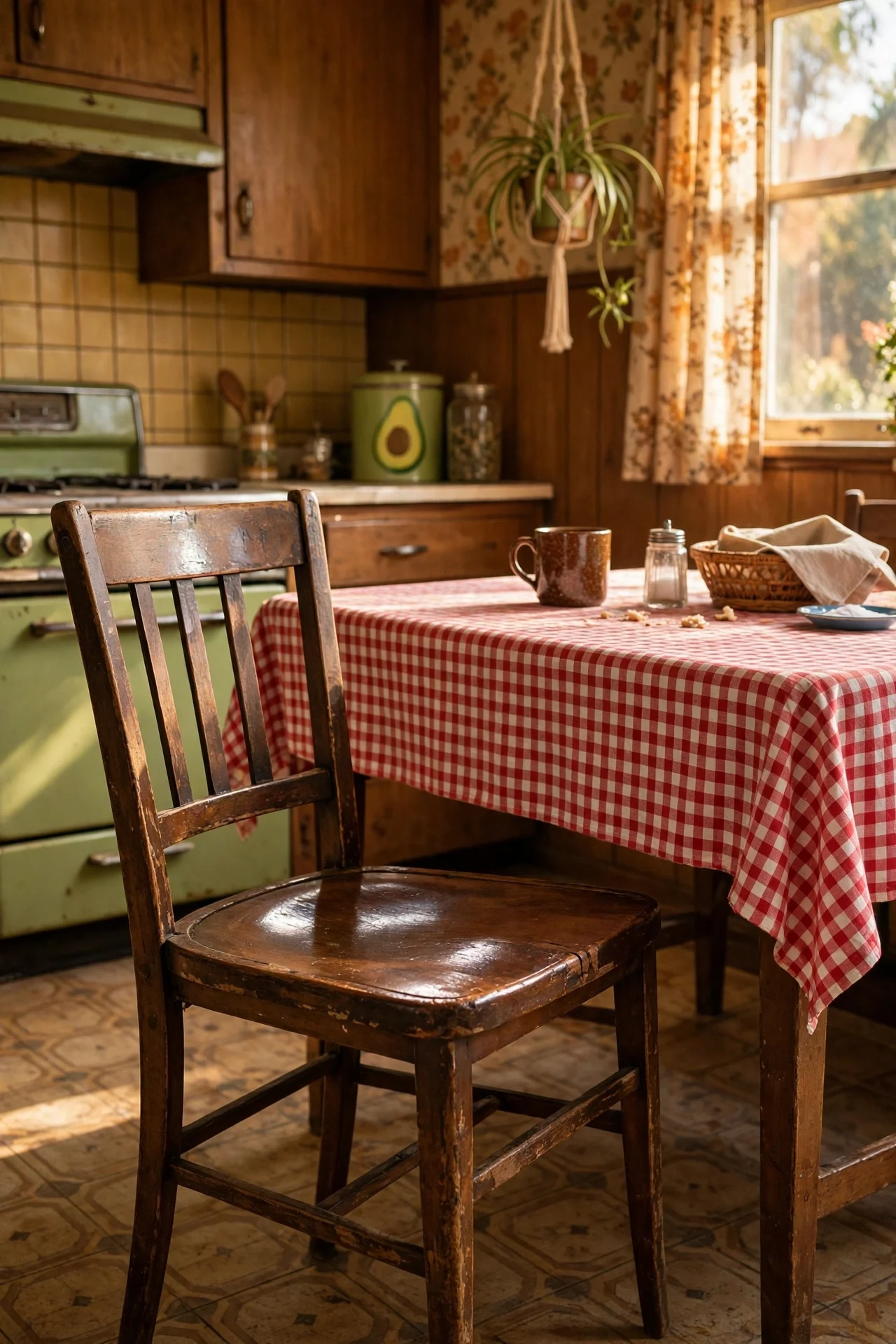
In the kitchen, there was one chair that belonged to grandma, and everyone knew it. It sat in the same spot, at the same end of the table, day after day. It was a simple wooden chair, probably older than the table itself, with a worn seat that had molded itself to years of use.
That chair was more than furniture. It was where grandma sat to peel vegetables, to drink her tea, to watch the world go by through the kitchen window. Nobody else sat in it without asking, not because there was a rule, but because everyone understood that the chair was hers.
31. The Old Car in the Driveway
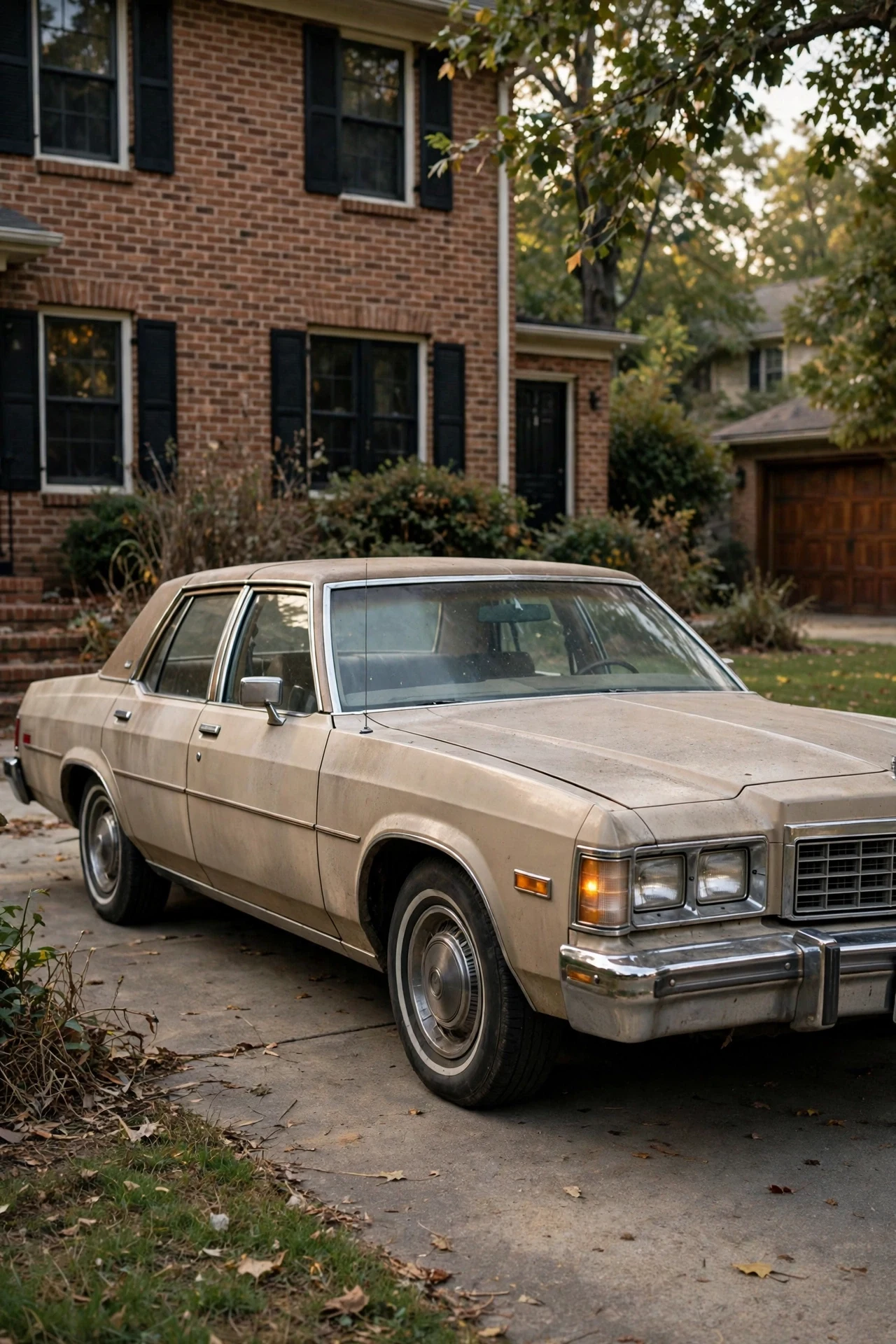
Out in the driveway sat grandma’s car, a big old sedan that had been there for as long as anyone could remember. It was not fast, it was not fancy, but it started every time and it had never let her down. The seats were soft, the dashboard was simple, and the whole car smelled faintly of the house.
That car had driven to church, to the shops, to school pickups, and to a thousand family visits. It had dents and scratches that nobody bothered to fix, because they were part of its history. In a world of cars that get replaced every few years, grandma’s old sedan was a loyal friend.
32. The Mixing Bowl Everyone Recognized
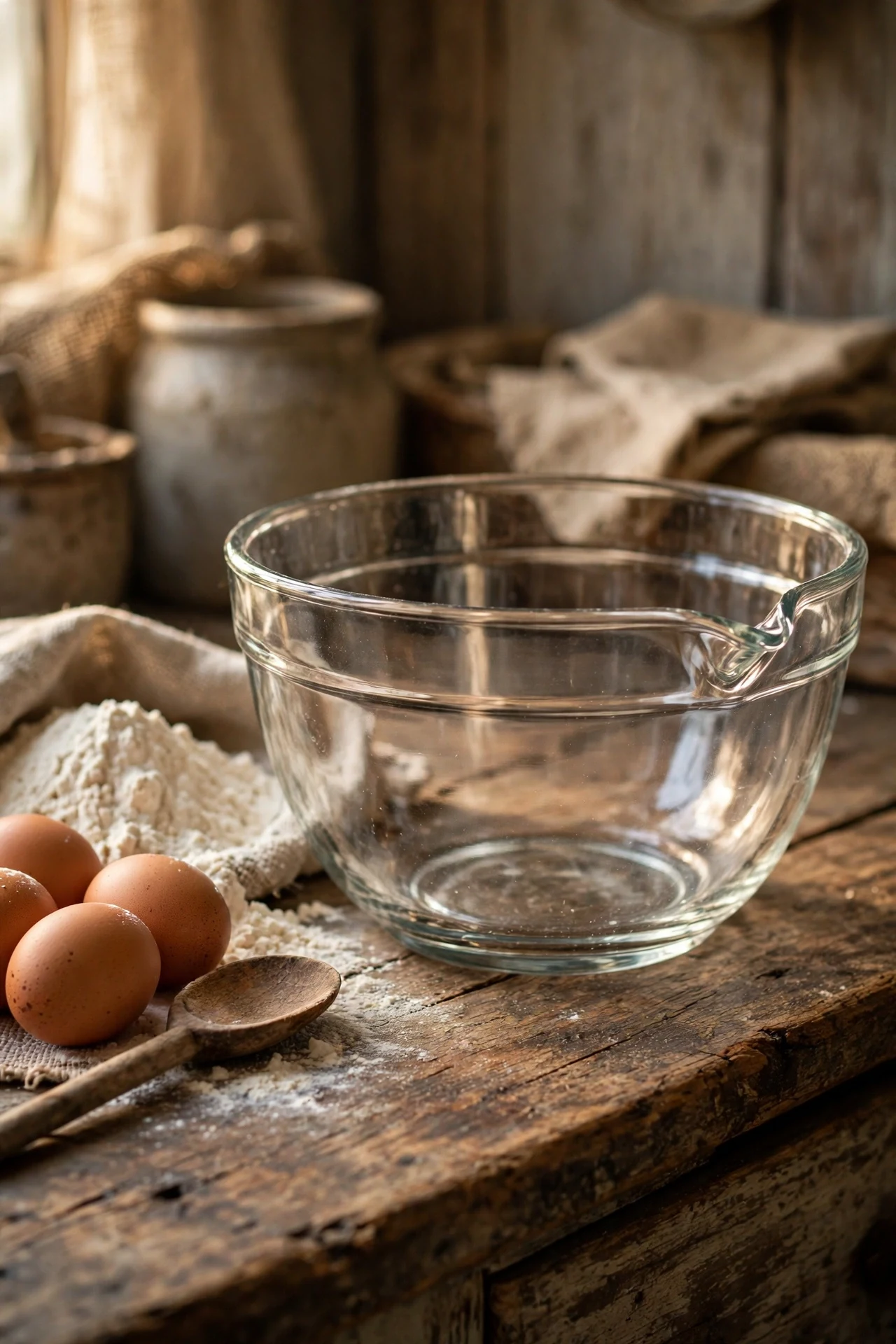
There was one mixing bowl in grandma’s kitchen that everyone recognized on sight. It was heavy, solid, and a little chipped around the rim, and it had mixed everything from cake batter to biscuit dough to the filling for a Sunday pie. It was the bowl that meant baking was happening.
Newer bowls came and went, but that one stayed. It was the right weight, the right size, and it had earned its place through decades of service. When grandma reached for it, the whole kitchen knew what was coming, and it usually smelled wonderful.
33. The Chairs That Sagged in the Middle
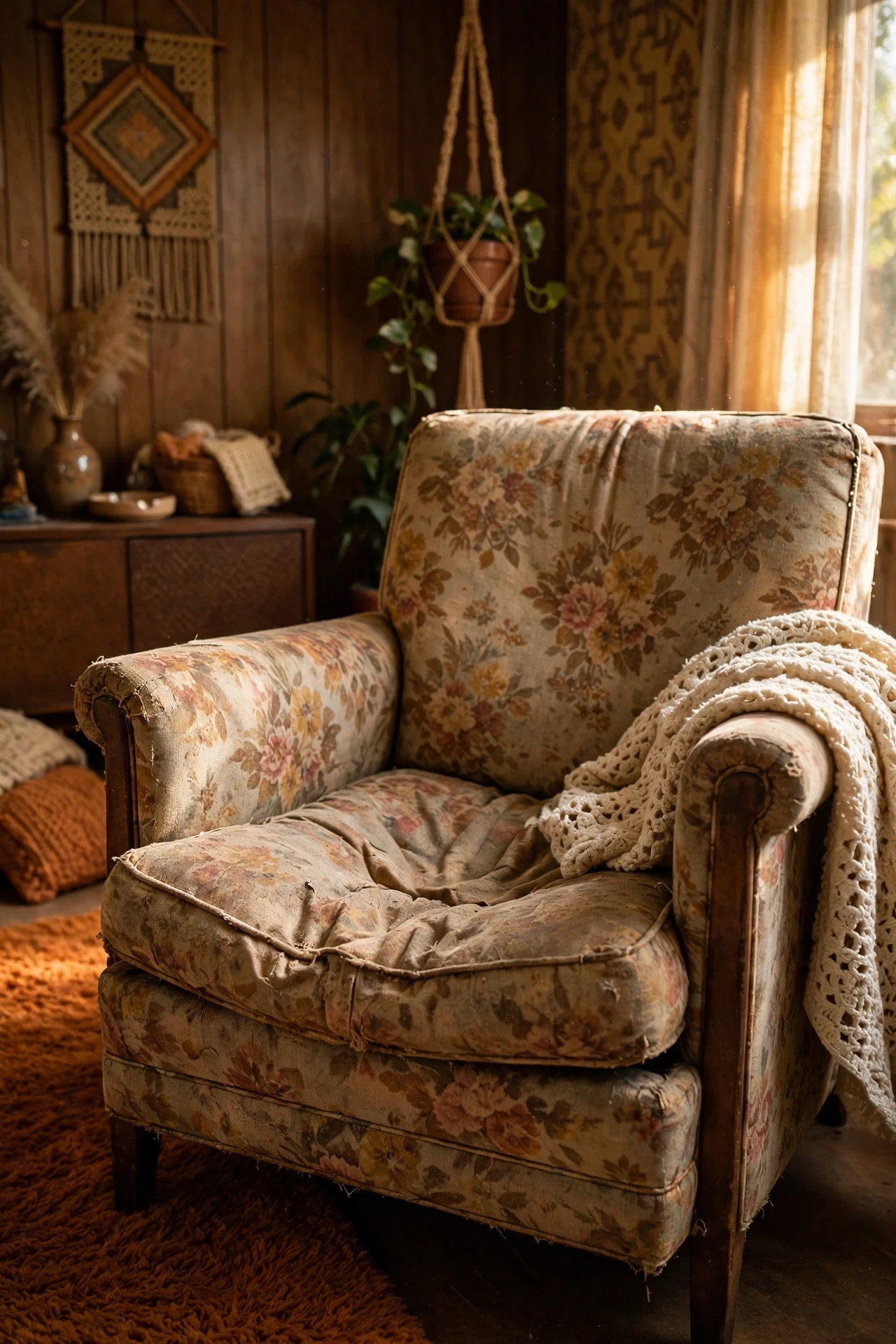
The armchairs in grandma’s living room had a particular shape: a gentle dip in the middle of the seat, worn in by years of sitting in exactly the same spot. They were not broken. They were loved into that shape, one evening at a time, over decades.
Sitting in one of those chairs was like sitting in a hug. The sag was where grandma always sat, and the chair remembered her. New chairs are firm and upright, but grandma’s chairs were soft, settled, and shaped by a lifetime of use. They were the most comfortable seats in the house.
34. The Cabinet Dedicated to Plastic Bags
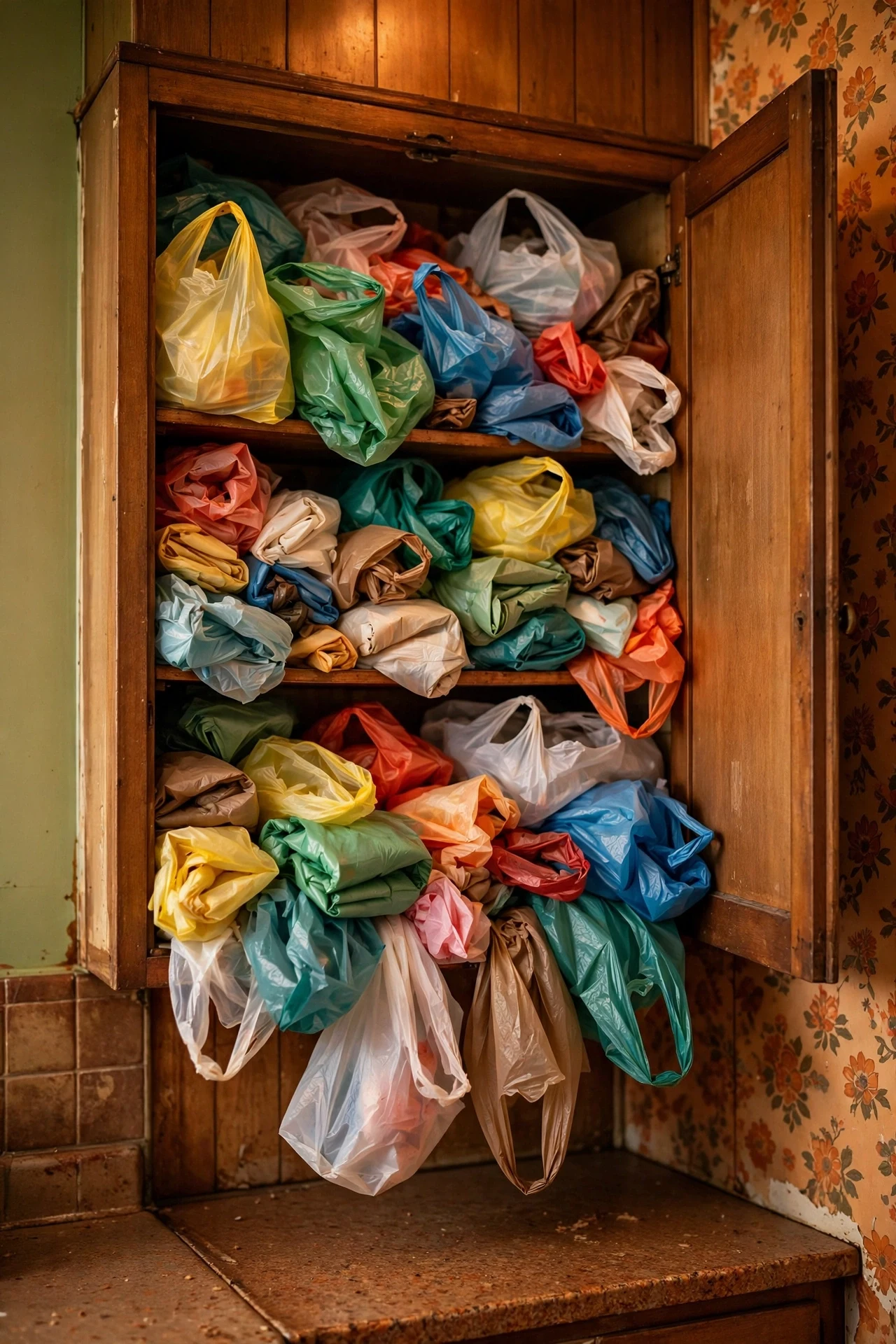
And finally, the cabinet. Open it, and a avalanche of plastic bags would tumble out. Every shopping bag that ever came into the house was folded, stuffed, or crammed into that one cupboard, which was slowly, steadily, getting out of control.
Grandma would never throw a bag away. A bag could always be useful: for rubbish, for wrapping, for carrying things, for lining a bin. The cabinet was a monument to thrift, a small museum of every shopping trip the family had ever taken. And if you ever needed a bag, you knew exactly where to find one.
That is the magic of grandma’s house. None of these things were expensive or fancy, but together they made a home that felt like nowhere else on earth. The bird clock, the plastic-covered sofa, the cookie tin full of sewing supplies — they were ordinary objects, made extraordinary by the person who kept them. If this list brought back a memory or two, then it has done its job. And if your grandma had all thirty-four of these things, then you already know: her house was one of a kind, and so was she.