“Hardly Anyone Seems To Care”: Scientists Are Sharing The Discoveries That Should Have Blown People’s Minds, But Garnered Zero Reaction, And We’re Doomed As A Society

Some scientific discoveries change the world overnight. Others change the world quietly — and nobody seems to notice at all. When scientists were asked online which discoveries should have blown everyone’s minds but somehow got almost no reaction, the answers poured in. And honestly? They had a point. From a particle made of pure force to a woman who treated her own cancer with a virus, these are 24 scientific discoveries that deserved a much bigger reaction than they got.
Here are 24 breakthroughs, cures, and cosmic revelations that mostly passed the world by — and why each one of them actually matters.
1. The Immune System’s Own Brakes

In 2025, the Nobel Prize in Medicine went to three researchers who figured out how the immune system stops itself from attacking its own body. It sounds technical, but the idea is simple: your immune system is powerful enough to destroy you, so it needs brakes. These scientists discovered the gene and the mechanism behind peripheral immune tolerance — the system that teaches immune cells to leave your own tissues alone. That matters for millions of people, because most autoimmune drugs today work by blunting the entire immune system, which leaves patients vulnerable to every infection going around. Understanding the brakes means future treatments could be far more targeted — calming only the part of the immune system that is misbehaving, instead of switching the whole thing off.
2. The Virologist Who Treated Her Own Cancer

After several rounds of cancer treatment and repeated relapses, a Croatian virologist decided to take matters into her own hands — literally. Her reasoning was elegant: viruses want healthy cells to infect, and cancer cells, which replicate endlessly, are ideal targets. She injected a weakened measles virus directly into the site of her breast cancer, later switching to a second virus when her immune system started clearing the first one too quickly. The viruses attacked the cancer cells and, in doing so, stripped away their camouflage so her own immune system could finally see them. Her case was published in a medical journal in 2024, and she went into remission. It is a single case, not a proven treatment — but it is a remarkable real-world example of oncolytic virus therapy, a field researchers are now studying seriously.
3. Spinal Muscular Atrophy — From Fatal To Treatable

Spinal muscular atrophy type 1 used to be one of the cruellest diagnoses a parent could hear. Babies born with it gradually lost the muscle strength to move, swallow, and eventually breathe, and most did not survive early childhood. Today, newborn screening can catch it within days of birth, and a single gene therapy can deliver a working copy of the missing gene. Children who would once have faded away are now running down hospital corridors. It is not a magic wand — the treatment works best when given early, before damage sets in — but the transformation from a death sentence to a treatable condition in the space of a few years is one of the great quiet triumphs of modern medicine.
4. Blue LEDs — The Tiny Invention That Lit The World

For most of the twentieth century, scientists could make red and green LEDs, but blue remained stubbornly out of reach — and without blue, there could be no white LED light. Then, in the 1990s, three researchers finally cracked it. The result changed everything: energy-efficient lighting, the screens on every phone, tablet, and television, and light sources that use a fraction of the electricity of old bulbs. The inventors won the Nobel Prize in Physics in 2014, but the discovery itself never got the front-page celebration it deserved. It quietly rebuilt the way the entire world sees at night.
5. Immunotherapy Is Changing Triple-Negative Breast Cancer

Triple-negative breast cancer is one of the hardest forms of the disease to treat, because it lacks the three receptors that most breast cancer drugs target. Only a few years ago, many patients were offered treatments that could extend life but not cure the disease. That has started to change. New immunotherapy drugs work by unmasking cancer cells that hide from the immune system, allowing the body’s own white blood cells to find and attack them. Combined with chemotherapy and radiation, these treatments are now helping some patients reach remission. It is still a tough diagnosis, and immunotherapy does not work for everyone — but for a cancer that once had so few options, it is a genuine turning point.
6. Trees Talk Through Underground Fungal Networks

For centuries, we walked through forests assuming trees were loners, each competing with its neighbours for sunlight and water. Underneath our feet, something very different was going on. Scientists discovered that fungi connect the roots of different trees into vast underground networks, allowing nutrients and chemical signals to move between them. Older trees appear to pass resources to younger seedlings, and trees under attack can warn their neighbours. Researchers are still debating how much of this is cooperation and how much is simply fungi doing business, but one thing is clear: a forest is far more connected than it looks from above.
7. The Glueball — A Particle Made Of Pure Force

Physics predicted it for nearly fifty years, but nobody had ever seen one: a particle made entirely of gluons, the particles that carry the strong force holding atomic nuclei together. Every other composite particle we know contains quarks. A glueball would contain none — just pure force, bound together. The BESIII experiment in Beijing has been chasing it for years, studying a particle called X(2370). In 2024, researchers measured its spin and parity and found them in complete agreement with predictions for a glueball, and the collaboration has since announced that the particle is dominated by the glueball state. It is one of the most exotic objects in nature, and it barely made the news.
8. The Mars Rock That Might Hold Signs Of Ancient Life

In September 2025, NASA announced that a rock collected by the Perseverance rover contained the strongest potential evidence yet of ancient microbial life on Mars. The rock, sampled from an ancient riverbed in Jezero Crater, contains patterns that on Earth are often associated with microbial activity — though they can also form without life. It was not a confirmation, and scientists are still studying the sample, but it was the closest we have ever come to an answer to one of humanity’s oldest questions: were we ever alone? The announcement barely made a ripple in the news cycle. One day, if that rock is ever brought back to Earth, it might be remembered as the most important stone ever collected.
9. AI Can Now Predict How Proteins Fold

For fifty years, one of biology’s greatest puzzles was deceptively simple: given a protein’s sequence, what shape will it fold into? The shape determines what the protein does, and working it out experimentally could take years for a single protein. Then artificial intelligence solved it. DeepMind’s AlphaFold system can predict protein structures with remarkable accuracy, and it has now mapped hundreds of millions of them — work that won the Nobel Prize in Chemistry in 2024. The practical payoff is enormous: faster drug discovery, new enzymes, and a deeper understanding of diseases. It is genuinely a moon-landing-level achievement in science, and most people have never heard of it.
10. Period Blood Could Replace Surgery For Endometriosis Diagnosis

Endometriosis affects roughly one in ten women, yet diagnosis has traditionally required invasive surgery — and many patients wait years for answers. Researchers are now finding that menstrual blood, long dismissed as waste, carries remarkable diagnostic information. Recent studies have shown it can be tested for signs of endometriosis, potentially replacing surgery for diagnosis, and it can also reveal exposure to lead and other heavy metals. Early research even suggests menstrual blood contains a type of stem cell that speeds up healing. It is a field still in its early days, but it could turn something stigmatised into a powerful, non-invasive diagnostic tool.
11. Crohn’s Disease — From A Life Sentence To A Monthly Injection

Crohn’s disease used to mean a slow, painful decline: the gut attacking itself, eating becoming agony, and surgery after surgery. Today, biologic drugs have transformed life for many patients. These medicines calm only the part of the immune system that attacks the gut, rather than suppressing the whole immune response, and many patients now manage the condition with a single self-injection once a month. The result is something that would have sounded impossible a generation ago: people with Crohn’s living normal, functional lives and eating what they like without pain. It is not a cure, and finding the right biologic can take time — but the change in quality of life is extraordinary.
12. 3D-Printed Corneas Could Restore Sight

Millions of people around the world are waiting for a cornea transplant, and there are nowhere near enough donor corneas to go around. That is why researchers are working on 3D-bioprinting corneal tissue from human cells. The idea is to print the clear, curved front layer of the eye — the part that focuses light — using a patient’s own cells, layer by layer, until it can be transplanted. It is still research, not routine treatment, but early results are promising. For people with conditions like advanced keratoconus, where the cornea thins and bulges, a lab-grown cornea could one day mean the difference between blindness and sight.
13. An Earth-Like Planet In The Perfect Spot For Liquid Water

Astronomers have now found planets sitting in the habitable zone of their stars — the narrow band where temperatures are just right for liquid water to exist on the surface. One such world, similar in size to Earth and orbiting at just the right distance, is considered among the most promising candidates ever found for hosting life. Until recently, every Earth-like planet we discovered had something wrong with it: too hot, too cold, too close, too far. Finding one where the conditions line up so neatly is a reminder of how much is still out there waiting to be found — and how close we are getting to answering whether life exists beyond Earth.
14. Flexible Artificial Lenses Could End Reading Glasses Forever

If you are old enough, you know it well: the slow loss of near vision that sends everyone over forty-five reaching for reading glasses. It is called presbyopia, and it happens because the natural lens inside the eye stiffens with age. Researchers are now developing artificial lenses that can replace the eye’s internal lens while staying flexible — flexing and changing focus the way a young eye does. The technology is on the cusp of human trials and improving rapidly. If it works, presbyopia could effectively be cured, and the reading glasses perched on millions of heads could become a thing of the past.
15. HIV — From A Death Sentence To A Manageable Condition

Forty years ago, an HIV diagnosis was a death sentence. Today, thanks to antiretroviral therapy, it is a chronic, manageable condition — and people living with HIV can expect a near-normal life expectancy. That transformation is one of the fastest and most complete medical revolutions in history, and it happened almost entirely within a single generation. The new frontier is no longer survival, but ageing: researchers are now studying how HIV and its treatments interact with getting older. The fact that this is now the question — not how to keep people alive, but how they age well — says everything about how far treatment has come.
16. You Can Order Custom DNA Online

Here is something that still surprises people outside the lab: you can go online, type in a DNA sequence — A, T, C, G — and a company will synthesise that exact strand and mail it to you in a tube. For scientists, ordering custom DNA is as routine as ordering stationery. It is how new genes are built, how vaccines are prototyped, and how synthetic biology experiments begin. The technology is tightly controlled — reputable companies screen orders for dangerous sequences — but the fact that the molecule of life itself can now be ordered like a parcel is genuinely mind-blowing, and most people have no idea it is even possible.
17. Hard Exercise May Help Fight Tumors

Research over the past few years has uncovered a surprising ally in the fight against cancer: vigorous exercise. Early studies in animals and small human trials suggest that high-intensity exercise can slow tumour growth, possibly by changing blood flow and activating immune cells that attack cancer. The effect is not a treatment on its own, and nobody is suggesting exercise replaces medicine — but the findings hint that what we do with our bodies can influence the disease in ways doctors are only beginning to understand. It is the kind of result that should have had oncologists and patients talking for weeks.
18. Dark Matter — The Universe’s Invisible Scaffolding

Everything we can see — every star, planet, and galaxy — makes up only about five percent of the universe. The rest is dark matter and dark energy, invisible substances we can only detect by their gravitational effects. Dark matter is the scaffolding that holds galaxies together and shaped the universe into the web of galaxies we see today. Without it, galaxies as we know them would never have formed. We have never directly observed a particle of it, and we still do not know what it is made of — yet it is arguably the biggest discovery in modern cosmology, and hardly anyone outside astronomy ever talks about it.
19. We Have Actual Photographs Of Black Holes Now

For centuries, black holes were pure theory — mathematical predictions of places where gravity is so strong that not even light can escape. Nobody had ever seen one. Then, in 2019, the Event Horizon Telescope — a planet-sized network of radio telescopes — produced the first actual image: a glowing orange ring of superheated gas around a perfectly dark circle, the shadow of the supermassive black hole at the centre of the galaxy M87. A second image, of the black hole at the centre of our own Milky Way, followed in 2022. Humanity had wondered what black holes looked like for hundreds of years, finally got a picture — and mostly just scrolled past it.
20. Skin Cells Reprogrammed Into Stem Cells

Take an ordinary skin cell, add four specific genes, and it rewinds into a stem cell — capable of becoming almost any cell in the body, including heart and nerve cells. The discovery of induced pluripotent stem cells won the Nobel Prize in 2012, and it changed regenerative medicine forever. Instead of relying on embryonic stem cells, researchers can now make patient-matched stem cells from a simple skin sample, growing replacement tissue that the body is far less likely to reject. Labs are already testing lab-grown heart cells, retinal cells, and neurons made this way. It is the kind of breakthrough that should be a household fact, and it mostly is not.
21. mRNA Vaccines — A Moon-Landing-Level Achievement
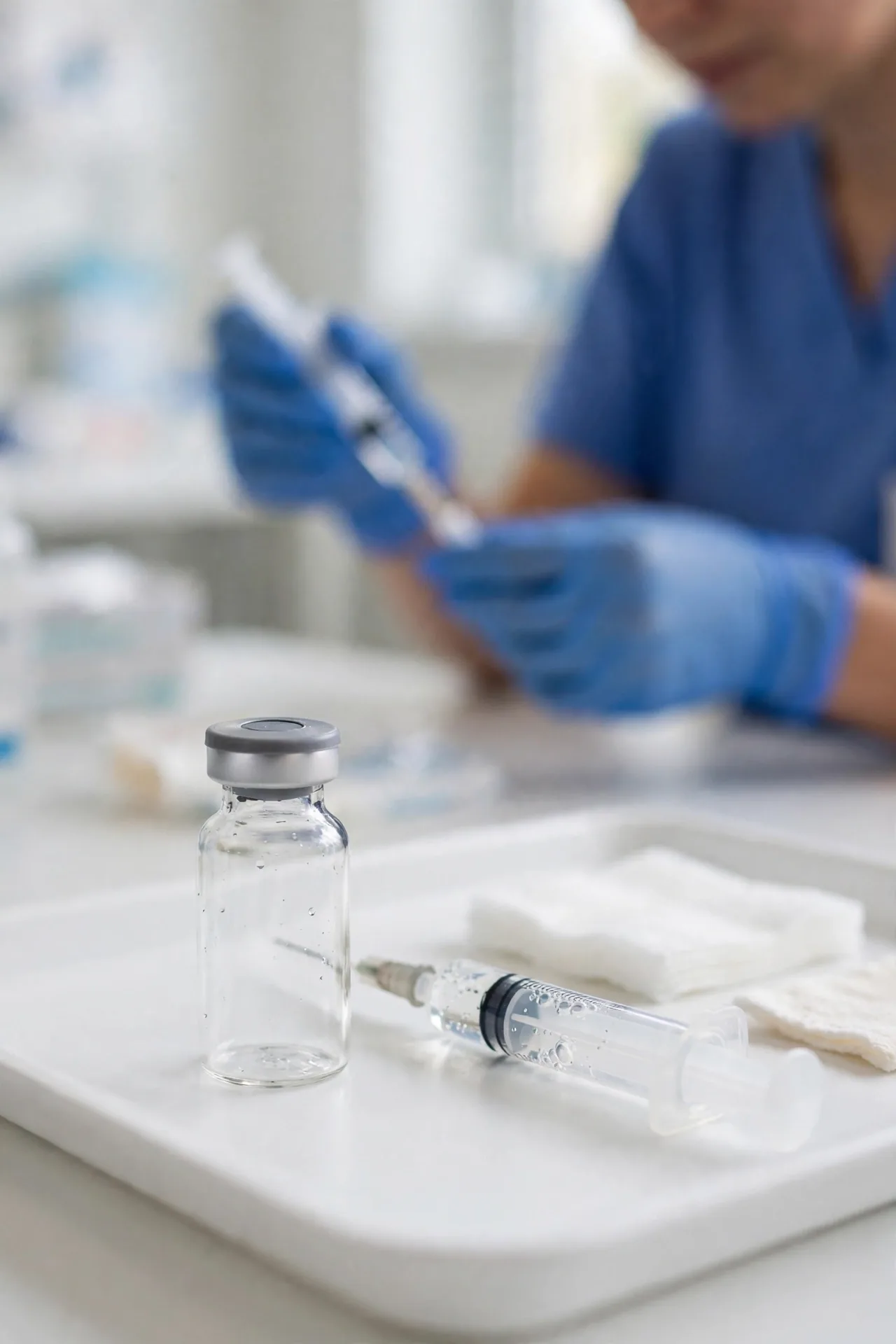
Before 2020, no mRNA vaccine had ever been approved for use in humans. Within a year, the technology behind the COVID-19 vaccines had been delivered to billions of people — an achievement built on decades of quiet, often unfunded research into how messenger RNA could be used to teach the immune system to recognise a threat. The platform is now being adapted for flu, RSV, and even personalised cancer vaccines that train the immune system to attack a patient’s own tumour. Whatever the debates around it, the science itself is a landmark: a whole new way of making vaccines, built in record time.
22. Cystic Fibrosis Treatment That Added Decades Of Life

Cystic fibrosis was once a fatal childhood disease. Even as recently as 2008, the median age at death in the United States was just 26 years. Then came a new class of drugs called CFTR modulators — most famously the triple therapy Trikafta, approved in 2019 — which fix the faulty protein at the root of the disease instead of merely treating its symptoms. By 2022, the median age at death had risen to 66 years, and children born with cystic fibrosis today can expect to live into their mid-sixties. The scientists behind the therapy won the Lasker Award, often called the American Nobel. A disease that once stole childhoods now allows full, long lives — and it barely registered outside the medical world.
23. Teeth That Regrow Themselves

Losing an adult tooth has always meant one thing: it is gone for good. Or is it? Researchers have discovered that blocking a single protein, known as USAG-1, can wake up the dormant tooth buds that humans carry in their jaws — the same structures that grow our teeth in the first place. In animal studies, the treatment regrew fully formed teeth, and human trials of the antibody drug began in Japan in 2024. If it works in people, dentures and implants could one day be replaced by simply growing a new tooth. It sounds like science fiction, and it is quietly moving toward reality.
24. Enzymes That Eat Plastic

Plastic pollution is one of the defining problems of our time — and the solution may come from enzymes. Scientists have discovered and engineered enzymes that break down PET, the plastic in bottles and food packaging, into its original building blocks. Those blocks can then be used to make brand-new plastic, creating a genuinely closed loop instead of the downgrading that most recycling involves today. The enzymes work faster with every new version researchers develop, and the dream is a future where plastic waste becomes raw material rather than landfill. It is a discovery with the potential to change how the world handles its waste — and almost nobody is talking about it.
So there they are: 24 discoveries that should have stopped the world in its tracks, from cures and particles to planets and plastic-eating enzymes. The science is moving faster than the headlines can keep up with — and the most mind-blowing part is how much of it is happening right now, mostly unnoticed. Which one surprised you the most?