What to Wear for Chinese New Year: Traditional and Modern Outfit Options

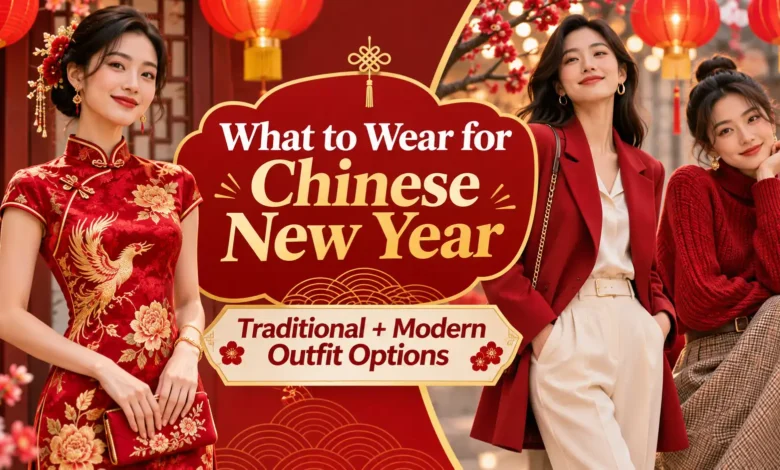
For Chinese New Year, choose an outfit that fits the gathering: a red knit and tailored pants for a relaxed family visit, a qipao or Chinese-style jacket when you want traditional details, or a modern red dress for a dressier dinner. For an outdoor celebration, start with warm layers and put the festive color where your coat will leave it visible.
Check the invitation before you shop. A home visit, a restaurant banquet, and a street parade can call for very different clothes. Traditional dress is one option, and your host’s preferences matter more than a generic dress-code list.
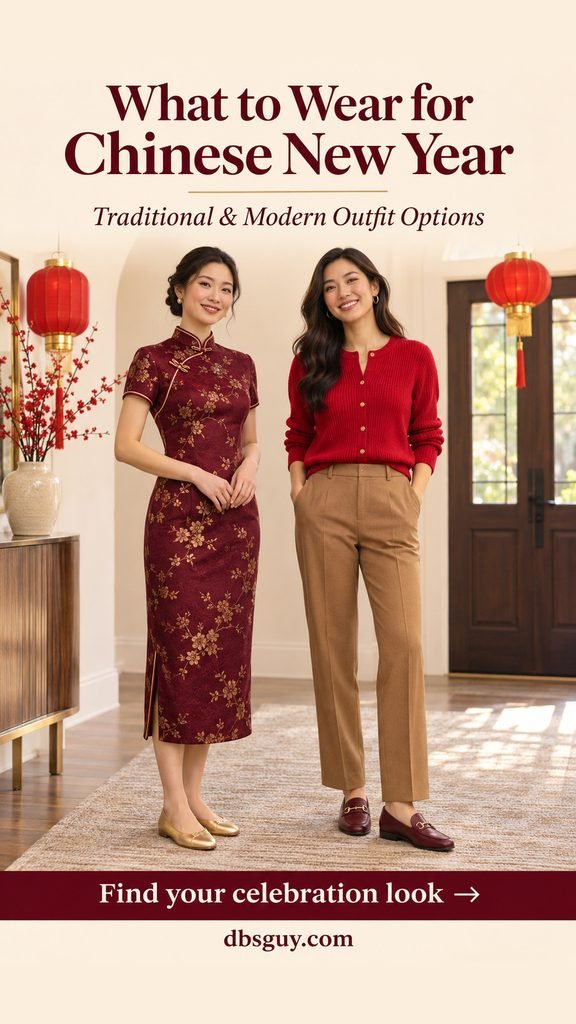
The images are AI-generated styling concepts. They illustrate outfit combinations rather than specific products or documented celebrations.
Start With the Celebration You’re Attending
- A family visit or reunion meal: Aim for clothes you can sit, eat, and move comfortably in. Ask whether everyone is dressing up and whether the household has color preferences.
- A restaurant dinner or banquet: Use the invitation’s level of formality. A tailored dress or jacket may fit a smart dinner; a gala with a stated formal dress code needs more than a festive color.
- A workplace celebration: Keep your usual professional standard and add a red garment or accessory. Check whether the event is part of the workday or a separate evening function.
- A parade or community festival: Plan for the forecast, time spent standing, and the walk to transit. Comfortable shoes and an outer layer will make more difference than an elaborate outfit underneath.
This guide focuses on Chinese New Year celebrations. A broader Lunar New Year invitation may reflect another community’s clothing traditions, so follow that event’s guidance.
Understand the Color and New-Clothes Customs
Red is closely associated with celebration and auspicious wishes in Chinese New Year traditions. You can make it the main color of your outfit or use a smaller accent, such as a scarf. Neither approach needs a matching set of red accessories.
Buying new clothes is also a familiar part of preparing for the holiday. The Asian Art Museum’s Lunar New Year overview includes new, brightly colored clothing among common preparations. If your family follows that tradition, you might save one new piece for the occasion. As a guest, check expectations before assuming you need a completely new outfit.
Black and white can carry mourning associations, and some families avoid them for New Year visits. Other households take a more relaxed approach. If you are unsure, ask, “Are there any colors you’d like guests to wear or avoid?” A black winter coat or white shirt should be considered in the context of that particular gathering.
For styling, gold-tone jewelry works well with red because it adds a small point of light. Pink, green, and other bright colors are alternatives if your host has no specific preference. These are outfit suggestions; wearing a color does not determine your luck.
Traditional Details and Modern Outfits to Consider
The six options below give you different ways to dress for the occasion. Choose the one that suits your plans, then check the fit with the shoes and layers you will actually wear.
1. A Qipao With Comfortable Flats for a Family Dinner
A burgundy qipao with a standing collar, diagonal fastenings, and a restrained floral pattern makes the dress the focus. Pair a mid-calf version with low gold flats and small earrings. The deeper red is an alternative if you like festive color but prefer it less bright.
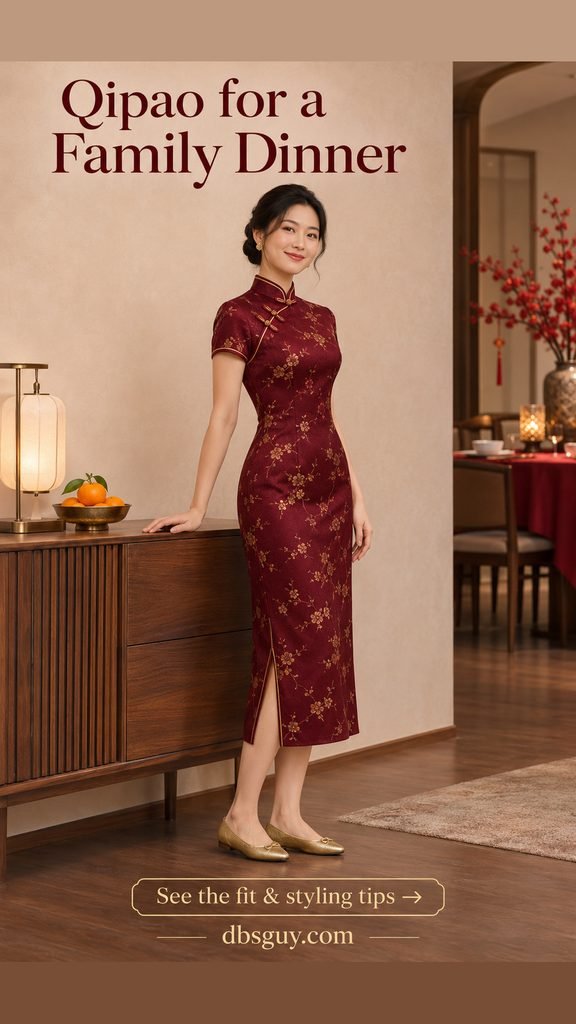
Qipao and cheongsam commonly refer to this dress in English, using names from Mandarin and Cantonese respectively. Its shape has evolved over time; the familiar fitted silhouette is not a single unchanged ancient style.
For a long meal, test more than the standing fit. Sit fully in a chair, reach forward, and take a few steps. The collar should feel comfortable, the fastenings should lie smoothly, and the skirt opening should give you enough movement and coverage. If you want alterations, tell the tailor that sitting comfort and slit height are priorities. A roomier cut may serve you better than a close-fitting version in stiff fabric.
2. A Modern Tang Jacket With Plain Trousers
A crimson Tang-style jacket gives a simple pair of navy trousers a clear festive detail. Look for a standing collar and knot-and-loop fastenings, then keep the trousers and shoes quiet. Black leather loafers work for a smart indoor dinner; choose footwear suited to the route if you will be walking outside.
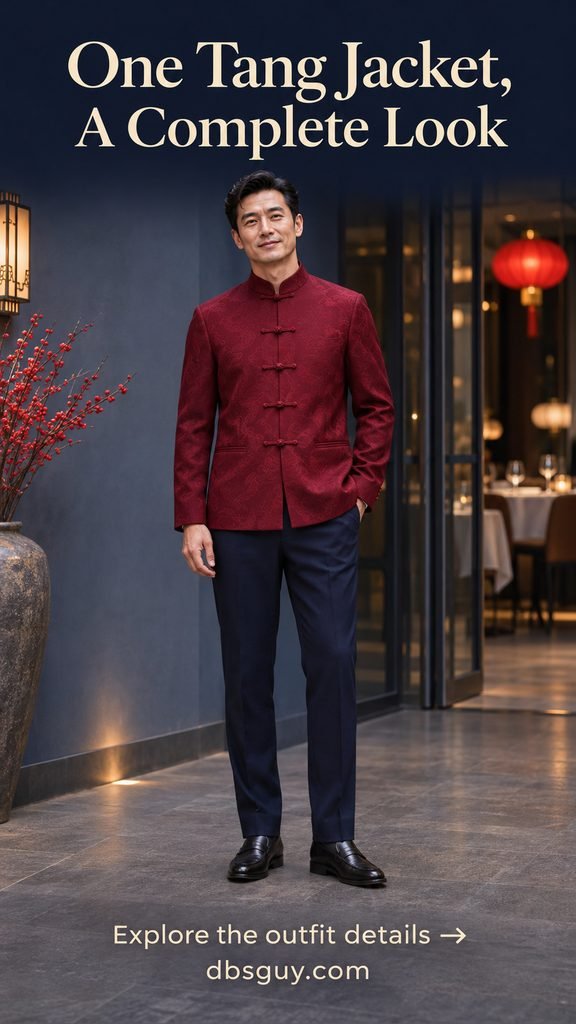
The modern Tang suit, or tangzhuang, brings traditional Chinese details into modern tailoring. It should not be understood as a reproduction of Tang-dynasty dress. A jacket can be worn with separate trousers, so you do not have to find an entire matching set.
Check the shoulder and upper-arm fit by reaching forward with both hands. The collar should close without pressing against your throat, and the front fastenings should stay flat. If you need an underlayer, try a thin crewneck that sits below the collar. A bulky shirt collar can crowd that space. The same jacket-and-trouser approach can work across different cuts and sizes; choose the fit you prefer.
3. A Mamianqun Skirt With a Simple Modern Knit
For a combination of traditional clothing and familiar separates, try a deep-red mamianqun with a fitted dusty-rose sweater. The skirt has a broad, flat overlapping front panel and pleated sections at the sides. A gold woven border brings attention to that construction without needing a patterned top.
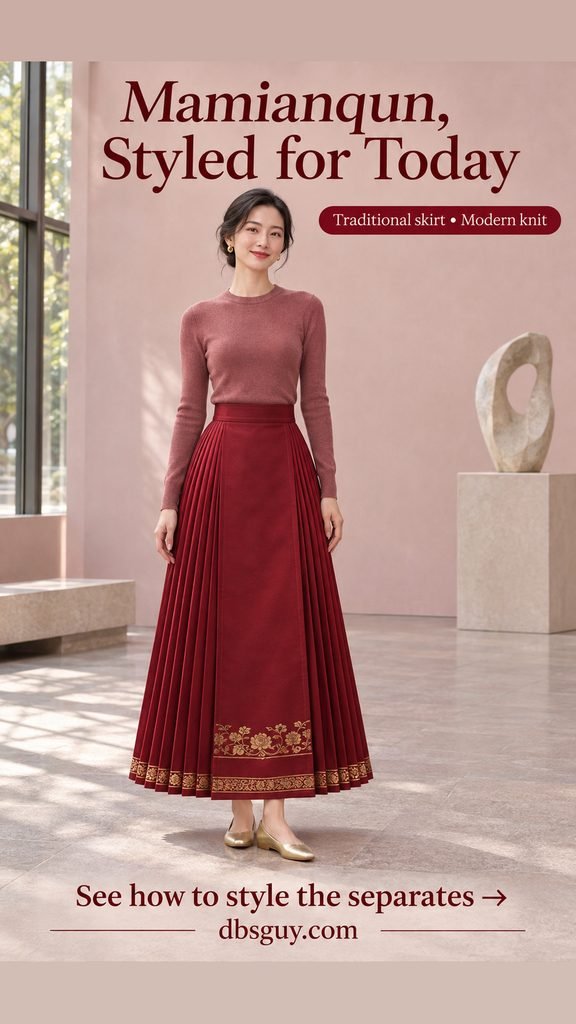
Mamianqun belongs to Han Chinese clothing traditions often discussed under hanfu. Hanfu encompasses different historical styles and their contemporary revival; it is not another name for qipao or for every Chinese community’s traditional clothing.
This pairing is a contemporary way to style the skirt. Ask the maker how its waist and overlapping panels are meant to sit, then check that the front stays flat when you move. A thin, tucked-in knit keeps bulk away from the fastening. Choose the hem with your actual flats on, leaving it clear of the floor. If you are ordering online, look for front, side, and back views so you can see the panel arrangement before buying.
4. A Red Cardigan and Camel Pants for a Relaxed Visit
A cherry-red cardigan, camel straight-leg trousers, and burgundy loafers make an easy outfit for an informal visit. The cardigan supplies most of the color, while the soft knit is comfortable for an afternoon that moves from conversation to a meal.
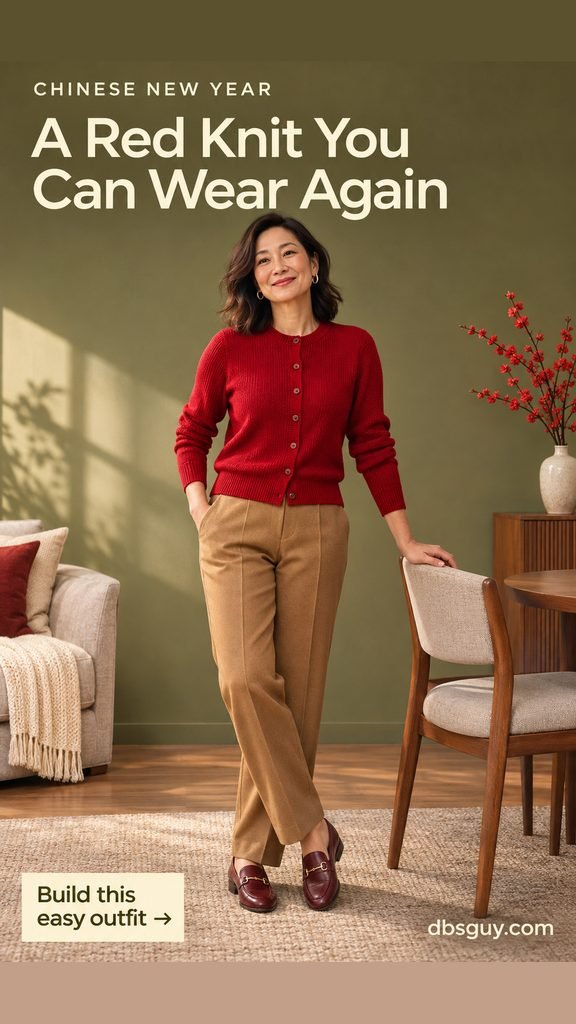
Start with the trousers you already like wearing. A cardigan that finishes near the top of the hip keeps their shape visible; a longer one can be worn open over a light base layer. If you wear it buttoned, check that the front lies smoothly when you sit. Sizing for comfort through the chest is more useful than trying to close every button on a tight knit.
For a workplace gathering, use your usual office trousers and shoes with the same cardigan. For a home visit, ask whether guests remove their shoes and choose socks you are comfortable wearing indoors. The outfit should still feel complete once the loafers come off.
5. A Modern Red Midi Dress for a Dinner Out
A red A-line midi with a square neckline offers a dressy option without borrowing the construction of a qipao. Full sleeves and opaque crepe give it a simple outline. Gold low block heels, small earrings, and a compact burgundy bag are enough to finish it.

Choose the fabric and fit for the meal you have planned. A matte finish keeps the color prominent without adding shine everywhere. Check that the waist feels comfortable while seated and that the neckline stays where you want it when you lean forward. If you will help serve food, sleeves that end at the wrist are easier to manage than long, loose cuffs.
Look at the invitation before deciding this is formal enough. It can suit a dressy restaurant gathering, but a black-tie event may call for a different level of eveningwear. A warm coat over the dress is a practical addition for the journey, even when the restaurant itself is heated.
Also Read: 15 Gold Jewelry Ideas for the Holidays
6. A Red Scarf and Warm Layers for a Parade
If your coat will stay on, make the visible layers the outfit. A red scarf against a camel coat gives a forest-green sweater and dark jeans a festive accent. Sturdy brown ankle boots suit a day that includes walking and standing.
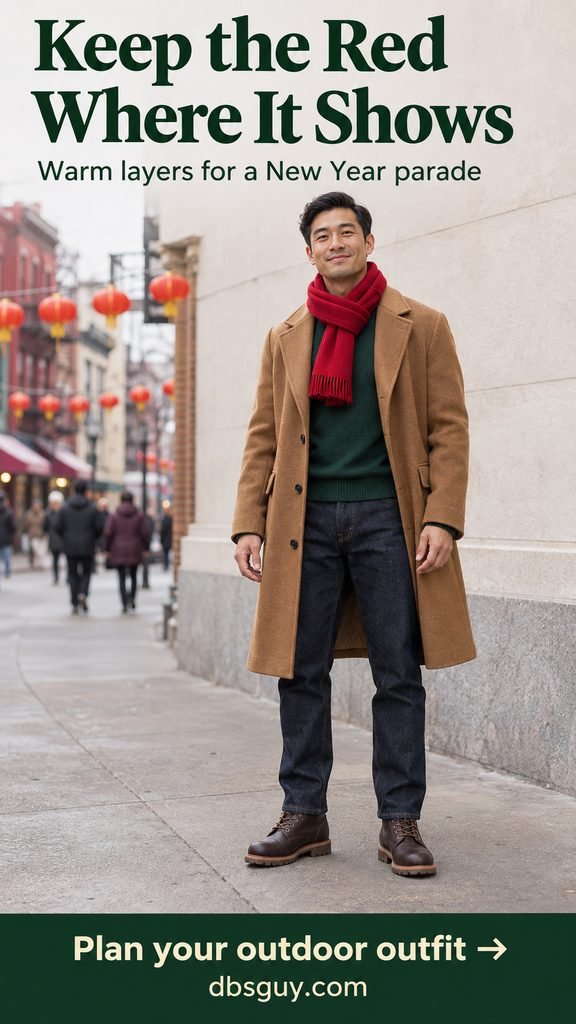
Check the local forecast and the event’s actual start time before choosing the coat. Daytime sunshine can give way to a colder evening, and standing along a route feels different from a brisk walk. Add a base layer, hat, or gloves according to the conditions; a red sweater hidden under a closed coat does not have to do all the visual work.
Keep trouser hems off the ground and choose shoes with soles suited to the surface. The pictured wool-coat combination is a styling starting point, not a substitute for rainwear if wet weather is expected. If you will head to a meal afterward, keep the sweater neat enough to wear once you remove the outer layers.
Also Read: Winter Outfits for Women: 25 Chic & Cozy Looks You’ll Want to Try This Season
Check the Whole Outfit Before You Leave
Try on the clothes, underlayers, coat, and shoes together. Sit down as you would at dinner, raise your arms, and walk up a step. Look for a pulling collar, a shifting neckline, a skirt opening that needs adjusting, or a hem that only works with different shoes.
When buying a qipao, jacket, or skirt online, use the maker’s measurements and fastening instructions rather than relying only on a familiar size label. Ask about alterations and returns before ordering, especially if the garment is made to measure. Leave time for a fitting instead of planning around an unverified delivery date.
If children are joining you, coordinate with a shared color if you like, then choose each child’s clothes for movement and the weather. Check waistbands, closures, and hems while they sit and walk. They do not need an adult outfit reproduced in miniature to take part.
Questions About What to Wear for Chinese New Year
Do I have to wear red or traditional Chinese clothing?
Follow any dress guidance from the host or organizer. For a gathering without a requested traditional outfit, a modern look with a red garment or accessory is a practical choice. If your family enjoys traditional clothing, choose a style you understand and feel comfortable wearing.
Can I wear black pants or a black coat?
Ask if you do not know the household’s customs. Some families avoid black clothing during New Year celebrations; others are comfortable with dark trousers, shoes, or winter outerwear. If a host requests bright colors, follow that preference rather than assuming a red accessory overrides it.
What should a non-Chinese guest wear?
Start with the invitation and ask how dressed up people will be. A neat modern outfit with a red accent is a straightforward choice. If you want to wear a Chinese garment, ask the host whether it fits the occasion, learn its name, and wear it as clothing with care. There is no single answer that represents every host or community.
Are jeans suitable?
Neat jeans can work for a casual visit or outdoor community event when the dress code allows them. Tailored trousers are the easier choice for a smart restaurant dinner. If you are uncertain about distressed denim, choose an undamaged pair or ask the host.
Do all my clothes need to be new?
New clothing is a meaningful holiday custom for many families, but check what your household or host actually expects. You can build the styling combinations here around suitable clothes you already own. If you are choosing one new item, make it something that works with the rest of your wardrobe.