
Every society runs on a long list of rules that nobody ever wrote down. You are supposed to answer the phone quickly, smile when told to, send a card for every occasion, and pretend that every opinion deserves respect. Most of us follow most of them most of the time, usually without thinking about it — and then there is the rule that makes you stop and think, “No. Not this one. I am not doing that anymore.”
That quiet refusal is more common than the rule-followers like to admit. Ask a large group of people which unspoken rule they have privately stopped obeying, and the answers come flooding in: the reply-all email chain, the outfit that must never be seen twice, the tip that feels less like gratitude and more like a tax. None of these rebellions are dramatic. Nobody is chaining themselves to a fence. They are small, everyday decisions — and that is exactly why they are so relatable.
What follows is a list of 24 unspoken social rules that plenty of people have simply stopped following, along with the very reasonable thinking behind each refusal. If you enjoy this kind of honest look at everyday life, you will also like our roundup of 15 things people thought everyone did — until they found out they absolutely don’t — and our 21 societal shifts no one really talks about, according to older folks covers the bigger changes behind some of these small rebellions.
1. Not Replying to Texts and Calls Right Away

There was a time when a missed call meant you would find out about it hours later, when you happened to check the machine. Nobody assumed you were ignoring them, and nobody assumed something terrible had happened. Then phones learned to report exactly when you were online, and suddenly a slow reply became a statement. Plenty of people have quietly opted out of that expectation. They see the message, they finish what they are doing, and they answer when they have something to say. It is not rudeness — it is the belief that a phone is a tool for communication, not a leash. A reply that comes an hour late but is thoughtful beats an instant reply that says nothing at all, and most reasonable people understand that once it is explained.
2. Reply-All Congratulatory Email Chains

Someone gets a promotion, and within minutes the inbox fills with dozens of identical messages: congratulations, well done, so deserved, adding the whole team for visibility. The intention is kind, but the result is a flood of notifications that bury actual work. Some people have decided they simply will not add to the pile. They will congratulate the person directly, in person or in a private message, and leave the chain alone. The warmth is the same; the noise is gone. There is nothing unkind about refusing to perform enthusiasm for an audience of forty colleagues. A sincere word said once, to the right person, is worth far more than a public chorus of copy-and-paste praise.
3. Taking the Last Bite Off a Shared Plate

Every group has done the dance: one last slice, one last dumpling, one last chip sitting alone on the plate while everyone politely insists that someone else should have it. The food gets cold, the waiter hovers, and eventually the plate is cleared with the best bite still on it. Some people have decided to end the ritual by simply eating it. If nobody else has claimed it, and nobody has said they want it, then taking it is not greedy — it is practical. The alternative is genuinely worse: good food thrown away so that everyone can feel virtuous. Politeness that ends in waste is not politeness at all. Next time, if you want it, take it, and let the table move on to dessert.
4. Wearing the Same Outfit to Different Events

Somewhere along the way, an odd rule took hold: an outfit, once photographed at one event, must never appear at another — especially a wedding, and especially if the same guests will be there. The rule is expensive, wasteful, and oddly joyless. A dress you love, that fits well and makes you feel good, deserves more than a single outing. Plenty of people now wear their favourite outfit as many times as they like, to as many events as they like. Most guests genuinely do not care, and honestly do not remember what anyone wore last time. The ones who keep score are not worth dressing for. A good outfit is an investment, and investments are meant to be used.
5. Pretending to Respect an Opinion You Know Is Nonsense

We are often told to respect every opinion, as if respect were a default setting rather than something earned. But there is a difference between respecting a person’s right to hold a view and pretending a view has merit when it plainly does not. Some people have stopped performing that pretence. They stay polite, they do not raise their voice, but they will not nod along to something they know is wrong just to keep the peace. It is not about winning arguments; it is about intellectual honesty. You can be kind to a person and still be honest about their idea. The two are not opposites, and pretending otherwise helps nobody — least of all the person whose nonsense goes unchallenged.
6. Refusing to Help Friends Move House

Helping a friend move is one of those favours that sounds small and turns out to be an entire lost weekend: heavy furniture, narrow staircases, a van that is always one trip short. Plenty of people have drawn a firm line here, and their reasoning is refreshingly honest. They will help a friend in almost any other way — money, advice, a lift, a meal — but they hire movers for themselves and expect others to do the same. It is not selfishness; it is knowing your limits and refusing to trade a friendship for a sore back. Professional movers exist for exactly this reason. A friendship survives far better when nobody is silently resenting the third flight of stairs.
7. The Lone “Hi” in a Work Chat

It is a small modern annoyance with a surprisingly large following: a colleague messages “Hi” on the work chat — and then nothing. They wait for a reply before revealing the actual question, turning a ten-second exchange into a drawn-out ritual. Some people have stopped playing along entirely. If the message contains only a greeting, they do not answer it. They are not being rude; they are asking, silently, for the question itself. A message that reads “Hi, how do I reset the shared drive password?” respects everyone’s time, including the sender’s. The greeting is not the problem — the suspense is. Work chat is a tool, and like any tool, it works best when people get to the point.
8. Giving Cash Instead of a Physical Gift

Cash has a reputation problem. Give someone money and some people act as if you could not be bothered, while a gift chosen at random — the wrong size, the wrong colour, the third scented candle this year — counts as thoughtful. Plenty of people have stopped accepting that logic. Cash is useful every single time: it becomes exactly what the person wants, in the right size, without a return queue. Unless you happen to have access to something the person could not get themselves, like free tickets through work, a physical gift is a gamble and cash is a sure thing. Generosity is measured by what the other person can actually use, not by how nicely it photographs under a tree.
9. Saying No to Food — and Meaning It

Food is love in many families, and refusing it can feel like refusing the person. But there is a particular frustration that plenty of people have stopped tolerating: saying no politely, clearly, and then having the plate put in front of them anyway. At that point, eating just to be nice is not kindness — it is letting someone else override a boundary you already stated. Some people simply leave the food untouched, without apology and without a scene. They are not ungrateful. They said no, they meant no, and a host who truly cares about a guest will respect that the first time. Generosity that ignores the word no is not generosity; it is insistence wearing a friendly face.
10. The One-Time “No, I’ll Pay” Rule

The ritual is familiar to everyone: the bill arrives, someone offers to pay, the other person insists on splitting or paying instead, and the two of them volley politely back and forth while the server waits. Some people have adopted a simple personal policy that ends the game in one move. They decline exactly once. If the other person insists a second time, they accept graciously and say thank you. No second round, no third, no theatrical wrestling over the bill folder. It saves time, it saves awkwardness, and it still leaves room for generosity — the person who offers gets to be generous, and the person who accepts gets to be grateful. Everyone wins, and the server gets to go home on time.
11. Ignoring the Loud Sigh Meant to Get Your Attention

There is a particular kind of office theatre that everyone recognises: a colleague sighs loudly, shifts in their chair, maybe mutters something under their breath — all designed to make someone ask, “Is everything okay?” It is a bid for attention dressed up as a mood. Plenty of people have stopped taking the bait. They hear the sigh, they keep working, and they wait for the person to use actual words if they actually need something. It sounds cold, but it is arguably the kinder approach: it treats adults like adults and keeps the workplace running on clear communication instead of guesswork. If something is wrong, saying so works far better than sighing about it.
12. Not Smiling Just Because a Stranger Tells You To

Few instructions are as small and as irritating as a stranger telling a woman to smile. It usually comes from someone who has no business managing her face, and it carries an unspoken assumption: that her expression exists for other people’s comfort. Plenty of women have stopped complying, full stop. Their face is not public property, and a neutral expression is not a problem that needs fixing. The refusal is not about being unfriendly — it is about a boundary. A smile is a gift, not a duty, and it is worth considerably more when it is given freely. The next time a stranger issues the order, the best response is no response at all.
13. Inviting Distant Relatives to Your Wedding

Weddings come with a guest list that seems to write itself: every cousin, every great-aunt, every relative you have not spoken to in years, all invited because they are family. The result is a room full of strangers, a bill that doubles, and a day that feels less like a celebration and more like a reunion you never asked for. Plenty of couples now invite only the people who are actually part of their lives. Family is a relationship, not a mailing list, and a wedding is not the place to repair ten years of silence with a seating chart. The people who love you will understand. The people who only show up for the cake were never really guests in the first place.
14. Being Waved Through When You Have the Right of Way

It looks like kindness: a driver stops and waves you through, even though the rules say they should go first. But on the road, kindness and predictability are not the same thing, and plenty of drivers have stopped accepting the wave. A good driver is a predictable driver — someone who does what the rules say, so everyone else can plan around it. When one driver improvises generosity, the other drivers, the cyclists, and the pedestrians are all left guessing. The wave creates exactly the confusion it was meant to avoid. So some people now simply wait, shake their head politely, and let the other driver take their turn. The road is safer when everyone follows the same script.
15. The Endless Thank-You Card Expectation

A thank-you is a lovely thing. A thank-you that must be delivered in triplicate — said in person, then texted, then written on a card and posted — starts to feel less like gratitude and more like paperwork. Some families treat the card as a non-negotiable duty, with real consequences if it does not arrive. Plenty of people have quietly stopped feeding that machine. They say thank you warmly, sincerely, and once — and they consider the matter closed. Gratitude is a feeling, not a filing system. A heartfelt thanks spoken face to face carries far more weight than a card written out of fear, and anyone who counts the formats instead of the feeling has missed the point entirely.
16. Skipping the Gender Reveal Party

Gender reveal parties arrived quickly and, for many people, overstayed their welcome. The coloured smoke, the elaborate cake, the crowd holding its breath over a detail that will not matter to anyone within a year — plenty of parents-to-be have decided they want no part of it. Some decline to attend them, and some decline to host one for their own child, preferring a simple announcement or nothing at all. It is not a rejection of celebration; it is a preference for a quieter one. A baby is worth celebrating without turning it into a staged production. The people who truly care will be just as happy to hear the news over coffee as they would be watching a balloon pop.
17. Starting the Meeting Without the Latecomer

Every workplace has one: the person who is late to every meeting, and the unspoken rule that everyone else must wait for them. The meeting starts ten minutes late, the agenda gets compressed, and the punctual people are quietly punished for being on time. Plenty of people have stopped waiting. The meeting starts at the stated time, with whoever is in the room, and the latecomer catches up afterwards — or does not. It is not rudeness; it is respect for the people who showed up when asked. Punctuality is a form of consideration, and a schedule only works if someone enforces it. Starting on time, every time, is the fastest way to teach a room that the clock means something.
18. Saying Nothing When Someone Sneezes

“Bless you” is one of those automatic phrases that most of us say without thinking — and a surprising number of people have thought about it and stopped. Their reasoning is simple: a sneeze is a bodily reflex, not a social event, and it does not require commentary from strangers. They sneeze, they say excuse me, and they carry on; when someone else sneezes, they carry on too. Nobody is harmed, nobody is offended, and the world keeps turning. It is a tiny rebellion, but it reveals something interesting: how many of our daily rituals run on autopilot. Once you notice one, you start noticing them all — and deciding, one by one, which ones are actually yours.
19. Greeting Cards That Cost More Than the Gift
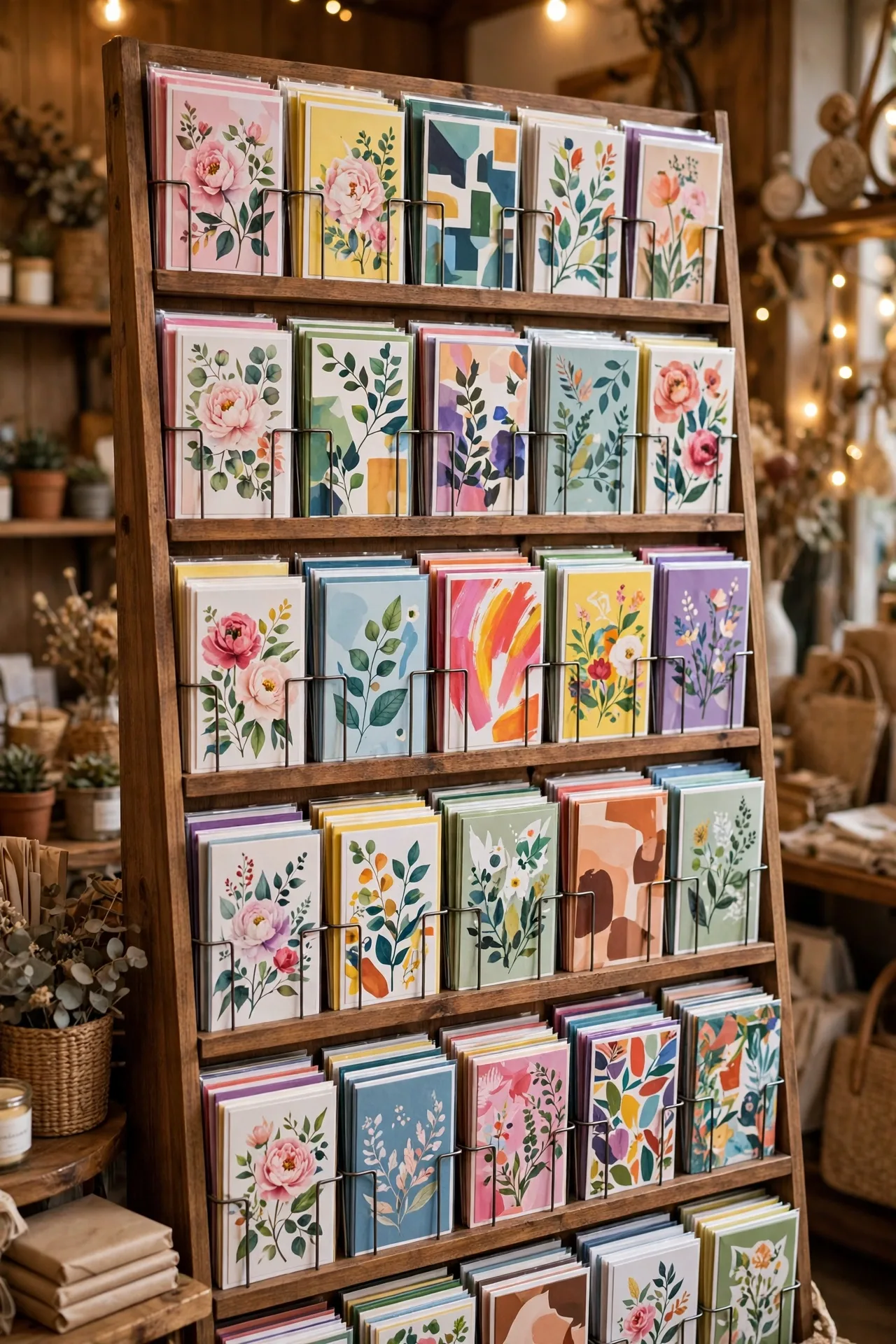
A greeting card is a folded piece of paper with a few printed words inside, and yet the price on the rack can rival the gift it accompanies. Plenty of people have done the maths and opted out. The card is read in five seconds, admired for about as long, and then recycled — while the money could have gone into the gift itself, or into a donation, or simply stayed in the wallet. Some people write a heartfelt note on plain paper instead; others skip the card entirely and put the thought into the present. The sentiment is what matters, and sentiment does not need a glossy finish and a premium price tag. A few honest sentences beat a rhyming verse printed by a stranger.
20. The “Fifteen Minutes Early or You’re Late” Rule

Some people live by a strict personal doctrine: if you are not fifteen minutes early, you are late. They apply it to themselves with pride, and then, often, to everyone else. But plenty of people have rejected the premise entirely. If an invitation says five o’clock, then five o’clock is the time — not four forty-five, and not a test of devotion. Arriving when asked is not lateness; it is literacy. The early-or-late rule quietly moves the goalposts and then blames guests for missing a target they were never told about. If you want people there at four forty-five, invite them for four forty-five. Otherwise, accept that on time is, by definition, on time.
21. Not Answering the Door for Unexpected Visitors

There was a time when a knock at the door could be anyone: a neighbour, a friend, a delivery. These days, the people who knock unannounced are almost always selling something, collecting something, or preaching something. Plenty of people have stopped answering altogether. Their friends and family know to text first, and everyone else can leave a note. It is not antisocial — it is the same boundary as an unlisted number or a locked gate. Home is a private space, and the doorbell is not a summons. If it matters, they will call. If it does not, the sofa is comfortable and the afternoon is short.
22. Refusing to Wait for Someone Filming Content in Public

Once upon a time, waiting for someone to take a photograph was a two-second courtesy: pause, click, done. Now a public pavement can be a film set, with a tripod, a ring light, and twenty minutes of retakes while a queue of strangers waits politely behind an invisible rope. Plenty of people have stopped waiting. They walk through the shot, carry on with their day, and let the creator deal with it. Public space is shared space, and one person’s content does not outrank everyone else’s errand. A quick photo deserves a quick pause; a production deserves a permit. The pavement belongs to everyone, including the people who are just trying to get to the shop.
23. Cutting Off Bad Behaviour Just Because It’s Family

Family loyalty is a powerful idea, and for a long time it came with an unspoken condition: put up with bad behaviour, because they are family. Plenty of people have decided that the condition is void. Being related to someone does not buy them unlimited patience, and it does not excuse cruelty, manipulation, or disrespect. Some have stepped back from relatives who treat them badly, not with drama but with a calm, final distance. It is one of the hardest rules to break, because the pressure to comply comes from the people closest to you. But a boundary is not a betrayal. The family members worth keeping are the ones who respect it.
24. Opting Out of Tipping Culture

Tipping started as a reward for good service. Over time it became an expectation, then an obligation, and then a maze of suggested percentages that appears before the service has even happened. Plenty of people have stopped playing along — not out of stinginess, but out of principle. They believe workers should be paid a proper wage by their employer, not by the generosity of strangers at the till. The anger, they say, belongs with the system, not with the customer or the server. It is a position that invites debate, and that is the point: a custom that cannot survive being questioned is a custom worth questioning. Pay people properly, and the tip can go back to being what it was — a thank-you, freely given.
None of these refusals are about being difficult. They are about noticing which rules serve a purpose and which ones survive only because nobody has questioned them. The reply-all chain, the unworn outfit, the forced smile — each one costs a little time, money, or dignity, and each one falls apart the moment someone asks why it exists. That is the quiet power of a small rebellion: it does not need an audience, and it does not need permission. It just needs one person willing to say, politely and firmly, “Not this one.”
And if this list made you rethink a few rules of your own, there is more where it came from: our 27 things people brag about that are actually big red flags looks at the social habits that deserve a second look, and our 22 normal things that can kill you in seconds is a reminder that not every everyday habit is harmless. Some rules are worth breaking — and some habits are worth breaking too.