
The easiest winter college outfit starts with a warm coat, a layer you can comfortably wear in class, full-length bottoms, and shoes chosen for the sidewalk. Build around those four pieces, then add a hat, gloves, and coverage at your neck and ankles.
These 17 winter college outfits give you different ways to do that, from an early-morning sweats set to presentation-day trousers. Choose for your forecast and your longest stretch outdoors: a quick walk on a dry campus calls for a different setup than a slushy commute with a bus wait.

The images are AI-generated outfit concepts, not photographs of tested clothing. Coats are often shown open so you can see the layers; fasten them for the walk when conditions call for it.
Choose Your Layers Before Your Accessories
Check the temperature, wind chill, precipitation, and campus alerts before leaving. No outfit has a universal temperature rating, and these combinations are styling starting points. During dangerous cold or a winter storm, follow local guidance and campus travel instructions.
- Next to your skin: Start with a comfortable top. For a brisk walk that makes you sweat, a moisture-wicking synthetic or merino base layer is a useful choice.
- In the middle: Add a sweater, sweatshirt, or fleece that fits beneath your coat without squeezing your shoulders.
- On the outside: Choose insulation for the cold and appropriate protection from wind or precipitation. A rain shell alone does not replace an insulating layer.
- At your feet: Choose footwear made for the conditions. A chunky-looking sole does not establish ice grip, and a fleece lining does not make a boot waterproof.
The National Weather Service recommends loose-fitting layers and staying dry, with adjustments to avoid sweating. On campus, that means unzipping or removing a layer when you reach a warm building instead of sitting through class in your outdoor setup.
1. A Long Puffer, Straight Jeans, and Lace-Up Boots
Put it together: Black long puffer, ivory crewneck sweater, straight indigo jeans, warm socks, taupe lace-up boots, and a black beanie and gloves.
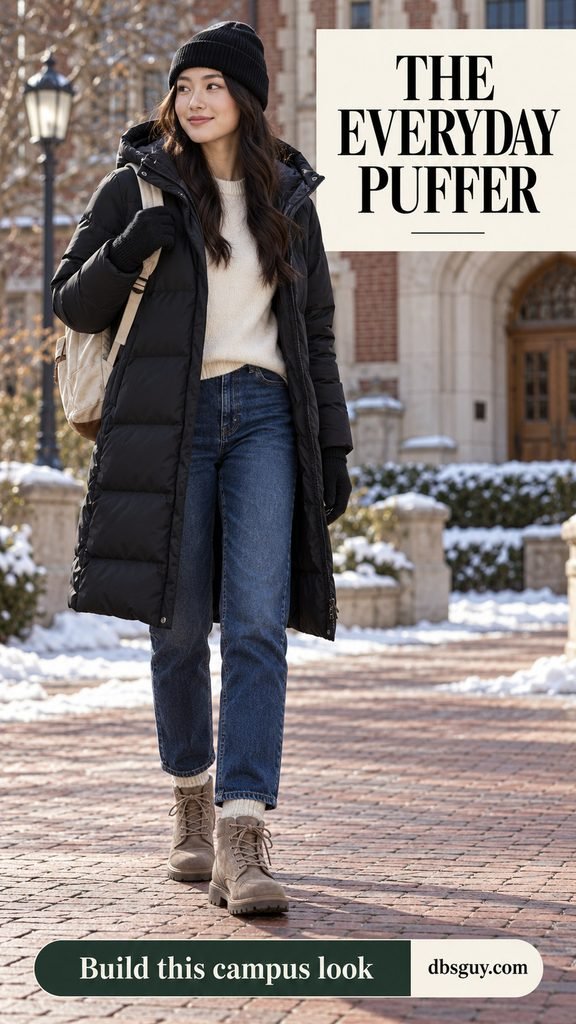
This is a useful starting outfit when you want to wear ordinary jeans to class. Keep the sweater smooth enough that your backpack straps sit comfortably, and choose jeans with room for thin thermal bottoms when you need them. Sit down while trying the layers on; a waistband that feels fine standing can become restrictive at a lecture desk.
Let your socks bridge the space between jeans and boots. For wet weather, use boots with verified waterproof construction rather than choosing by their hiking-inspired appearance.
2. Matching Sweats Under an Olive Parka
A charcoal sweatshirt and cuffed joggers make an early class easier to dress for. An olive parka gives the set a finished outer layer, while a cream beanie, mittens, and brown winter boots break up the dark base.

Check how the jogger cuff sits with your socks: it should not leave a strip of ankle uncovered when you climb stairs. Keep the sweatshirt hood out of the equation if your coat already has a bulky hood; a crewneck makes the collar area simpler.
Cotton-rich sweats work as comfortable everyday clothes, but they are not rainwear. Keep them protected on wet walks and change out of damp layers when you can.
3. A Burgundy Fleece, Lined Leggings, and a Long Puffer
Choose opaque fleece-lined leggings, a burgundy half-zip fleece, and a long navy puffer when you want stretch without building the outfit around a thin workout set. Gray socks, tall black winter boots, and matching cold-weather accessories finish it.
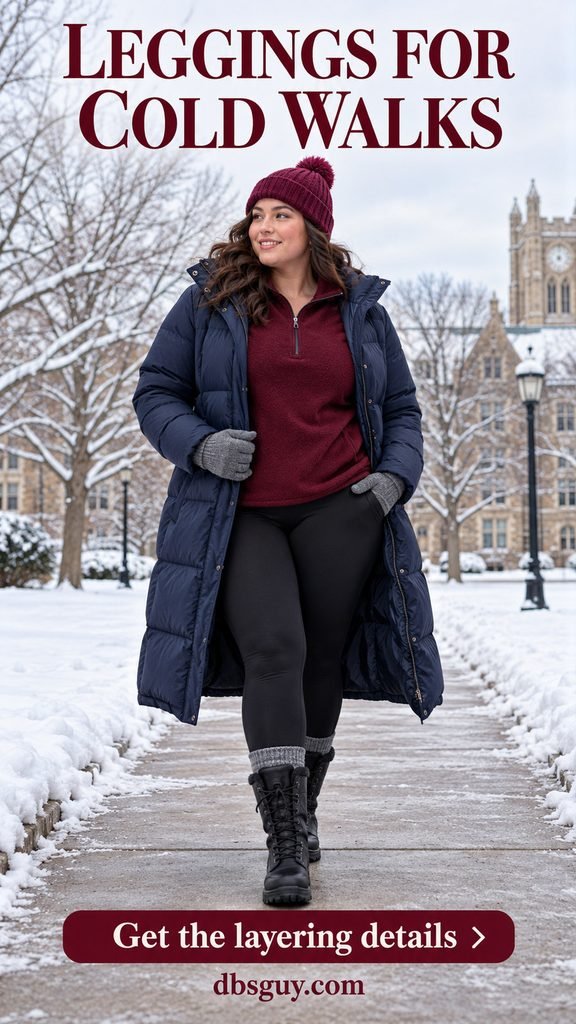
The long coat adds coverage over your seat and upper legs. Check the leggings in daylight and in a seated position before class; lining and opacity vary. If they feel too light for the weather, switch to warmer trousers rather than trying to solve everything with a thicker top.
Use the fleece zipper to adjust your neckline indoors. A base layer you are comfortable showing also lets you take the fleece off if the room is especially warm.
4. Chocolate Corduroy With a Cream Knit and Camel Coat
For a dry winter day, pair straight chocolate corduroys with a cream cable-knit sweater, a camel wool coat, and brown lace-up boots. The different textures make a simple brown-and-cream outfit feel considered without extra accessories.

Try the coat over the actual sweater before committing to the combination. Reach forward as if you are putting on your backpack; the upper sleeves should not bind. A finer knit can replace the cable sweater if the coat fits closely.
Keep the corduroy hems clear of the ground. This is a dry-route option; switch to your weather-protective outerwear and footwear when rain or slush moves in.
5. Dark Academia With Checked Trousers
A black turtleneck, small-check straight trousers, and a long charcoal coat give you a darker academic look with room to walk. Black lace-up boots, a beanie, gloves, and a scarf keep the outfit visually quiet; a burgundy backpack adds one softer color.
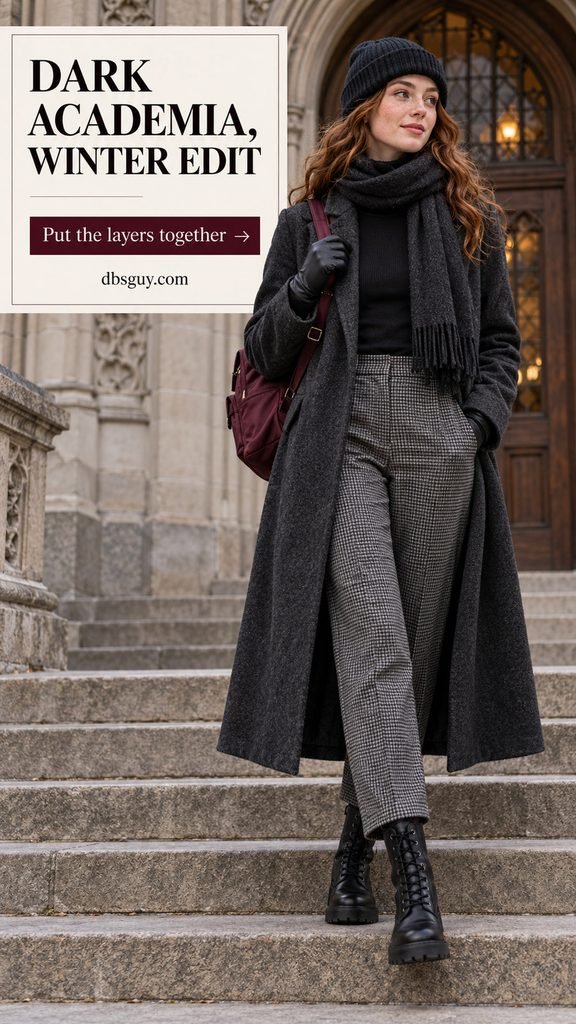
Choose trousers with enough room through the thigh for sitting and, when needed, a thin underlayer. A small check is easier to combine with a textured coat than several competing patterns.
Keep the scarf ends contained beneath the coat. For a longer or wetter route, carry the same turtleneck-and-trouser outfit into a more protective parka rather than treating the wool coat as compulsory.
Also read: 25 Winter Outfits for Women That Are Cozy and Stylish.
6. A Rain Shell Over Fleece and Straight Outdoor Pants
For a chilly rainy walk, layer a slate-blue waterproof shell over a sage full-zip fleece and a dark base top. Add black synthetic outdoor pants, waterproof walking boots, gloves suited to the rain, and a beanie that fits beneath your hood.
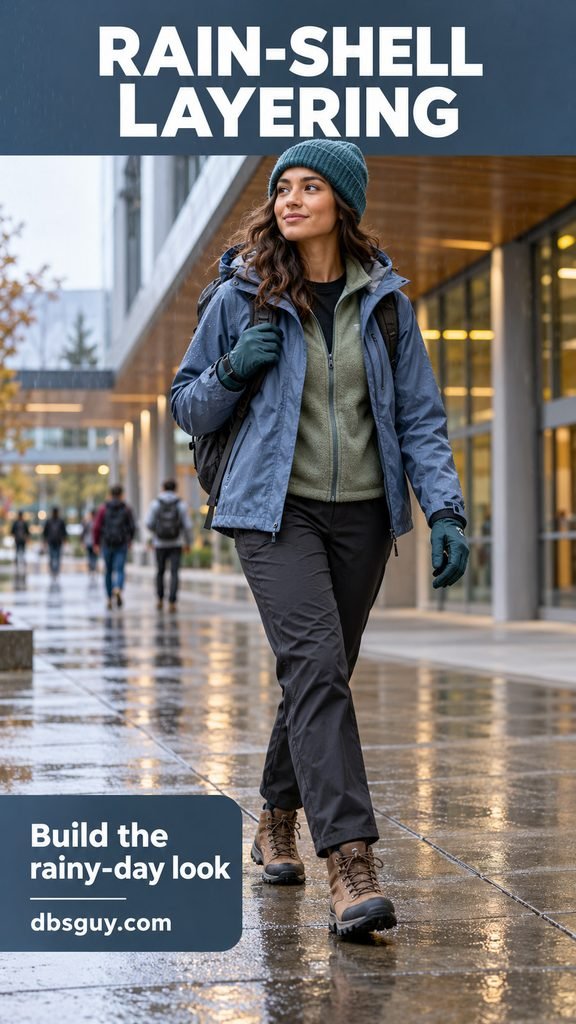
The fleece supplies insulation; the shell addresses wind and rain. Check the jacket’s stated waterproof construction and hood adjustment, not just whether water beads on the fabric in a picture. Choose pants with appropriate rain protection or add rain pants for sustained wet exposure.
A shell with usable vents helps you adjust during an uphill walk. Once inside, hang the wet shell where it will not soak your notebook or the clothing in your backpack.
7. A Quarter-Zip With Stone Trousers and a Navy Jacket
A gray quarter-zip knit over a black base top looks tidy with stone straight-leg trousers. Finish with a navy insulated jacket, brown walking boots, and gray knit accessories. Save the light trousers for a clear route if you would rather avoid visible slush marks.
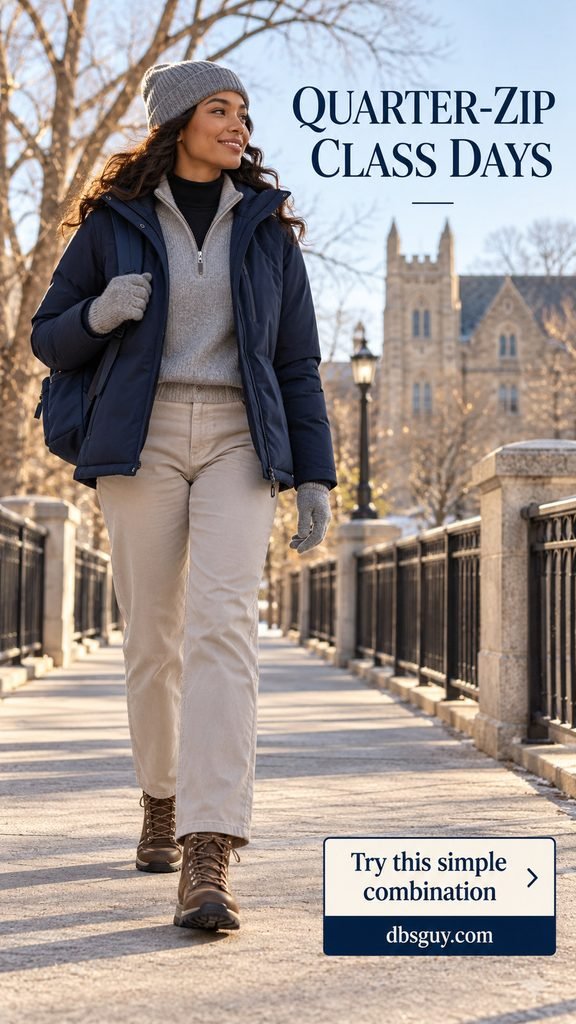
This combination gives you a collar you can open in class without removing a pullover. Keep the knit reasonably fine so the jacket can close comfortably over it.
Look for trousers that cover your socks while standing but do not bunch heavily over your boots. Try taking a large step before leaving; the hem should not catch under your heel.
8. A Rain Parka, Striped Knit, and Slush-Friendly Boots
Build this wet-weather outfit with a charcoal insulated rain parka, cream-and-navy striped turtleneck, black ponte pants, warm socks, and insulated waterproof boots. A molded rubber lower section is a useful feature to investigate, but check the whole boot’s construction and care instructions.
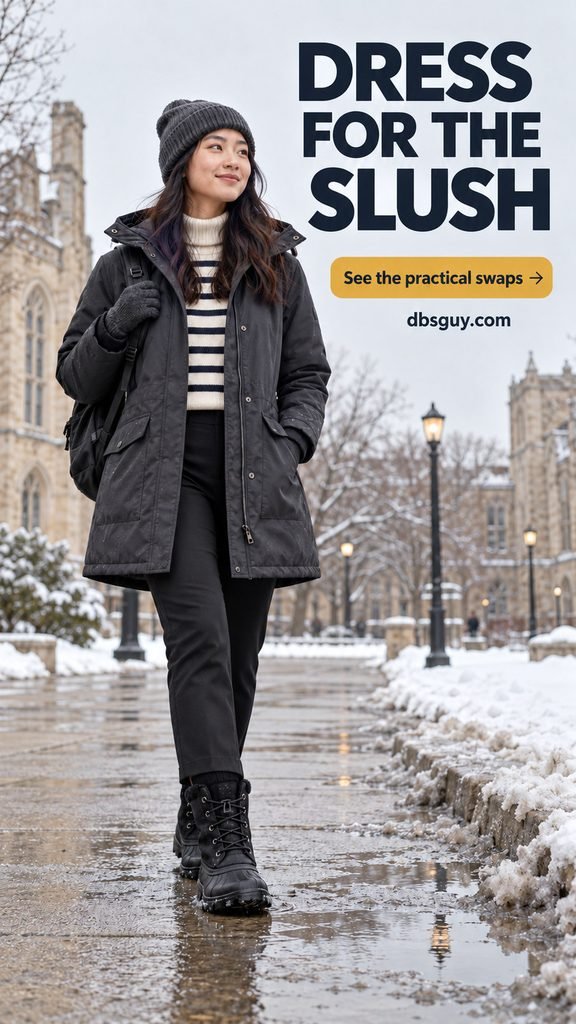
Slim, full-length pants keep less fabric near a dirty curb puddle. Wear socks tall enough to cover the ankle when you stride, and keep the pant hem above standing water. If your route is very wet, use rain-resistant or waterproof pants instead of relying on ponte fabric.
Choose the cleared route even if it is less direct. Footwear cannot make an icy shortcut reliably safe.
9. A Sweater Dress With Opaque Tights and Flat Tall Boots
For a milder, dry day with short walks, wear a rust sweater dress beneath a charcoal coat. Opaque thermal tights, flat knee-high boots, gloves, and a rust beanie make the dress easier to carry into winter.
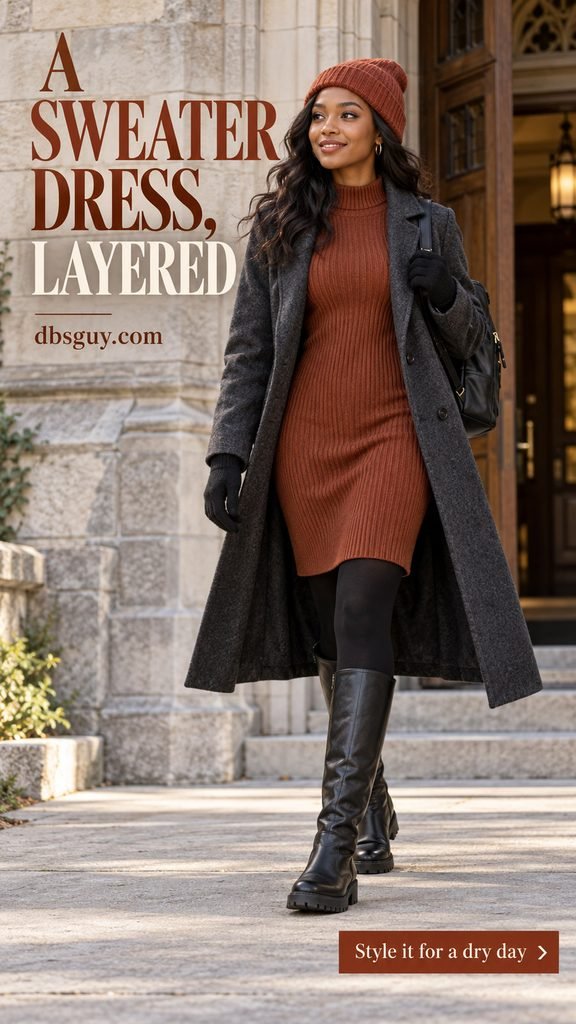
A knee-length dress is easier to manage under a long coat than a hem that drags. Check that the tights are comfortable under the dress waistband and inside the boots; avoid cramming extra sock layers into a close-fitting shaft.
This is an option for days when the weather allows it, not your default for a long freezing commute. Choose pants and more protective outerwear when your legs still feel cold or the forecast worsens.
10. A Plaid Midi Skirt With Covered Legs
A brown-and-navy plaid midi skirt works with a cream mockneck sweater and a long navy coat. Wear opaque warm tights and tall flat boots underneath, with a navy beanie and cream gloves.
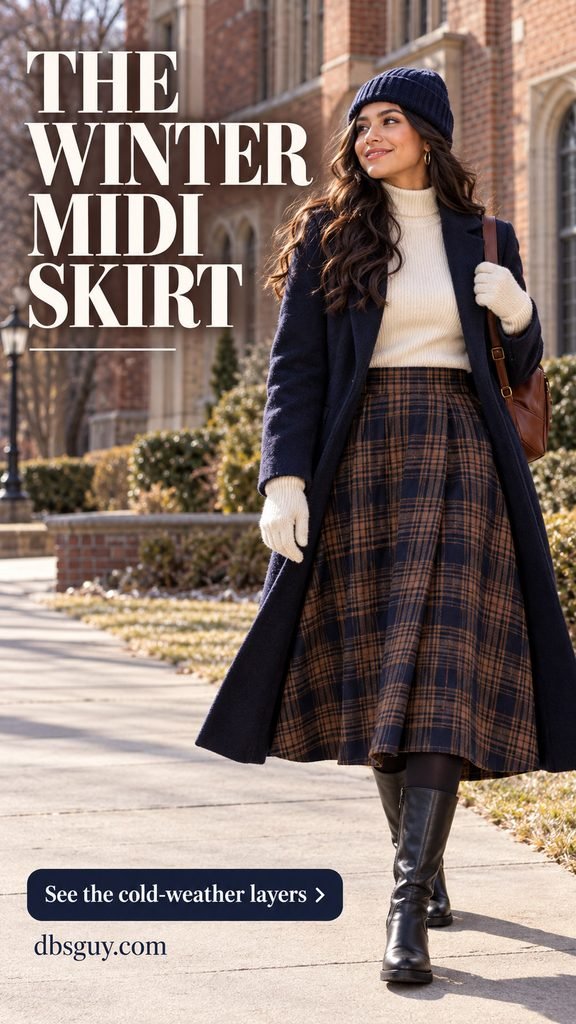
The skirt gives you a different silhouette from jeans while keeping the palette easy to repeat. Choose a hem you can climb stairs in without holding it up, and check that your boots and tights keep the lower leg covered when you sit.
Keep this one for a dry, milder forecast and manageable walks. A skirt can move in the wind, so thermal tights alone do not make it equivalent to insulated pants.
11. A Sweater Vest Over a Button-Down and Thin Base Layer
Layer a cream sweater vest over a light-blue button-down, with a thin black thermal mockneck beneath. Dark straight jeans, brown lace-up boots, and a navy coat, hat, and gloves turn the preppy indoor outfit into a dry-day campus combination.

Keep the shirt smooth through the shoulders so three layers do not collect beneath your coat sleeves. If the collar feels crowded, use a crewneck thermal beneath the button-down instead.
The vest gives you an easy layer to remove between classes. Start with a shirt you already own and check the combination in a mirror before buying a matching set of pieces.
12. Lined Flares With an Oatmeal Sweatshirt
Pair black fleece-lined flares with an oatmeal sweatshirt, a plum insulated puffer, cream boots, and matching knit accessories. The flared hem changes the shape of a sweatshirt outfit without adding another layer to carry.
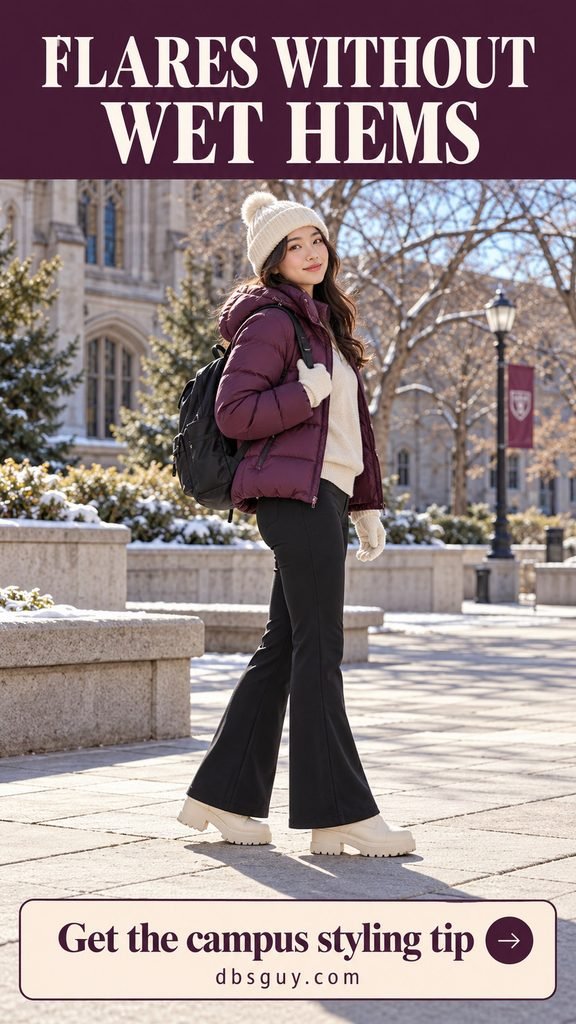
The important detail is length: put on the exact boots you plan to wear and check that the flares clear the pavement while walking. Do not judge the hem barefoot in your dorm room.
Use this combination on a dry route. For slush, switch to straight or cuffed pants that are easier to keep away from water. A platform or chunky boot appearance is a styling detail, not proof of winter traction.
13. Presentation-Day Trousers With a Blazer Under Your Coat
Wear a cream fine-gauge mockneck with navy tailored trousers and a charcoal blazer. A camel coat, warm accessories, winter boots, and a simple backpack handle the trip across campus; the blazer gives you a complete classroom outfit after the coat comes off.
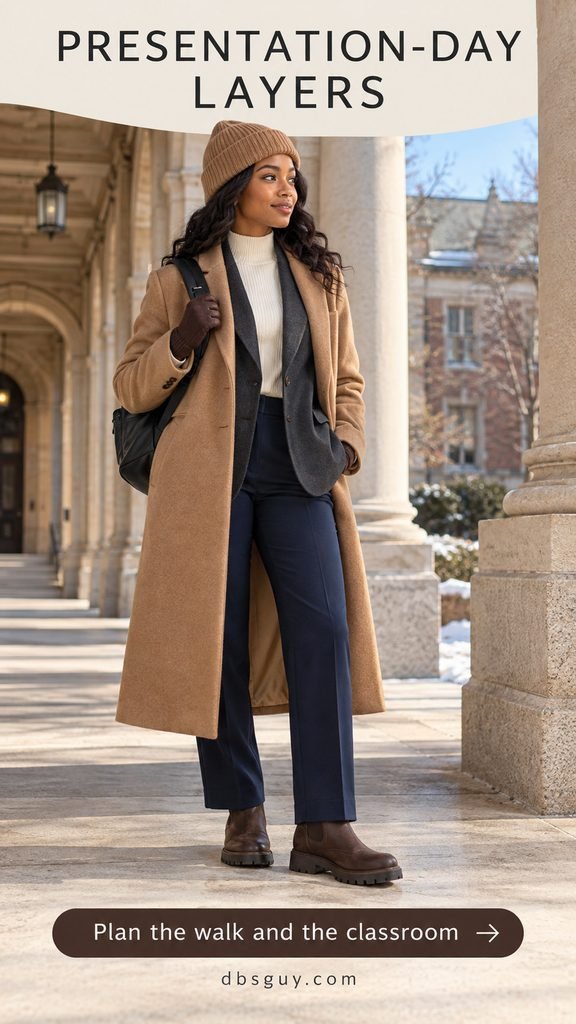
Check that the coat fits over the blazer without pulling at the shoulders. If both are structured, choose a thinner knit rather than forcing a chunky sweater between them.
Where your presentation has a specific dress requirement, pack suitable indoor shoes in a separate bag and change after the walk. Do not make smooth-soled dress shoes your outdoor plan simply to match the blazer.
Also read: Freshman Year: The Complete Survival Guide.
14. Cargo Pants With Orange Fleece and a Navy Parka
Forest-green cargo pants, a burnt-orange fleece, and a navy parka give a practical outfit more color without adding delicate pieces. Wear a thin black base layer, brown walking boots, a coordinating beanie, and gloves.
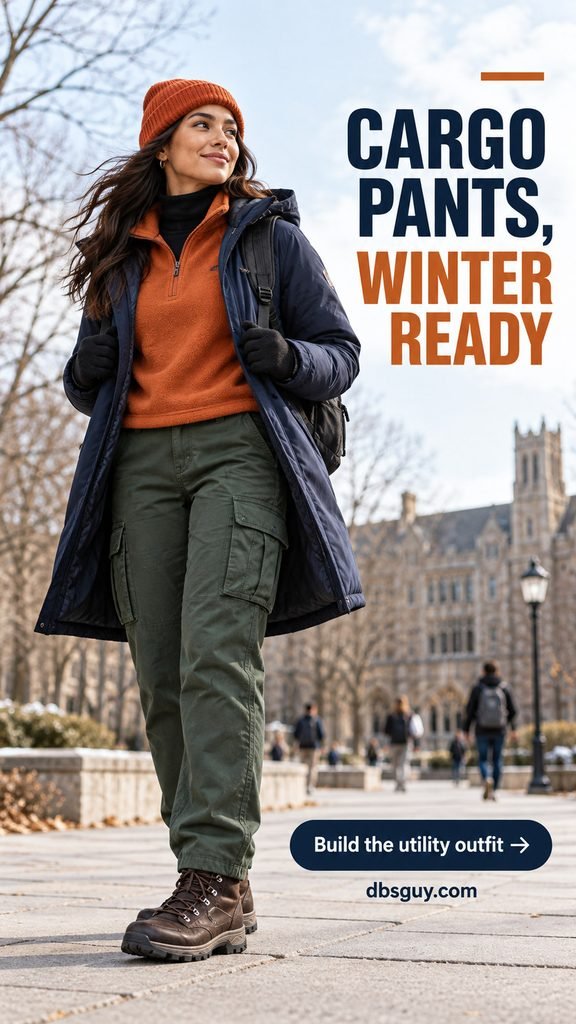
Choose straight cargo pants with enough room for a thermal layer if needed. Cotton cargos are an everyday dry-weather option; select a more weather-protective fabric when your route is wet.
Keep bulky items out of the thigh pockets when you will be seated for a long lecture. A phone, wallet, or charger may be more comfortable in an accessible backpack pocket than pressed against your leg.
15. A Button-Front Cardigan for Overheated Classrooms
A beige cardigan over a fine black merino mockneck gives you two presentable indoor layers. Add charcoal straight jeans, tan lace-up boots, and a chocolate coat for a dry-day outfit with softer contrast than all black.
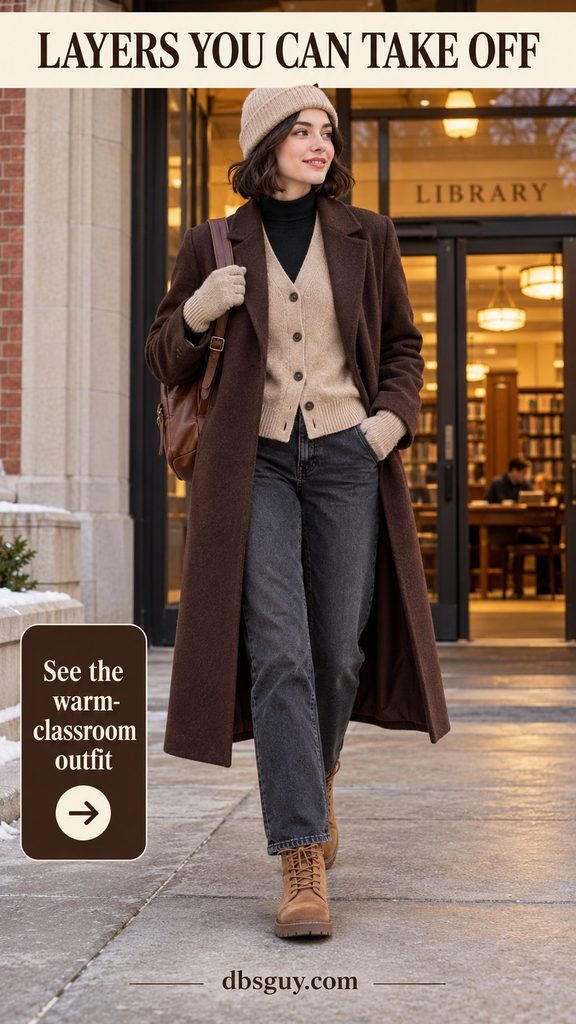
A button front lets you loosen or remove the middle layer without pulling it over your head. Make sure the base top feels comfortable on its own so you can actually use that option.
Leave a little bag space for the cardigan. If you usually end up holding your coat, scarf, and notebook at once, keeping the middle layer compact is more useful than choosing the thickest knit you own.
16. A Red Puffer Over an All-Black Base
A red insulated puffer makes a black knit, black straight jeans, and black winter boots feel like a deliberate outfit. Keep the hat, gloves, and backpack black so the coat stays the main color.
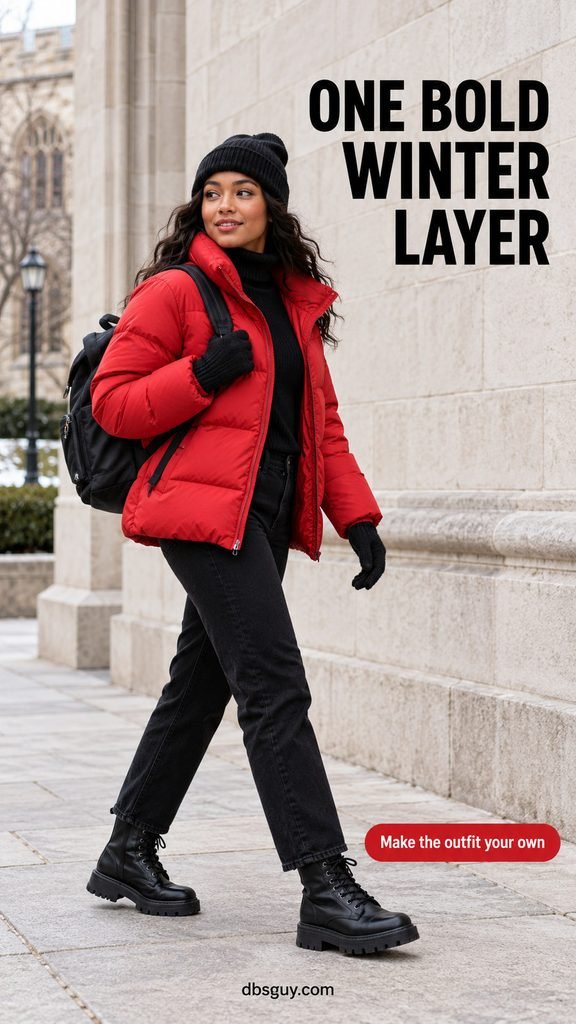
This is an easy way to use a bright coat you already own: you do not need separate accessories in the same shade of red. Check the jacket’s coverage when you raise your arms or put on your backpack; a hip-length style should still meet your waistband.
Use a longer coat when the walk calls for more coverage. The color formula works with that change just as well.
17. A Hooded Parka and Insulated Pants for a Longer Cold Walk
For a colder route with more time outdoors, build around a long hooded insulated parka, a moisture-managing base layer, an insulating middle layer, and insulated pants. Finish with warm socks, insulated winter boots, a beanie, mittens, and a neck gaiter when you need more coverage.
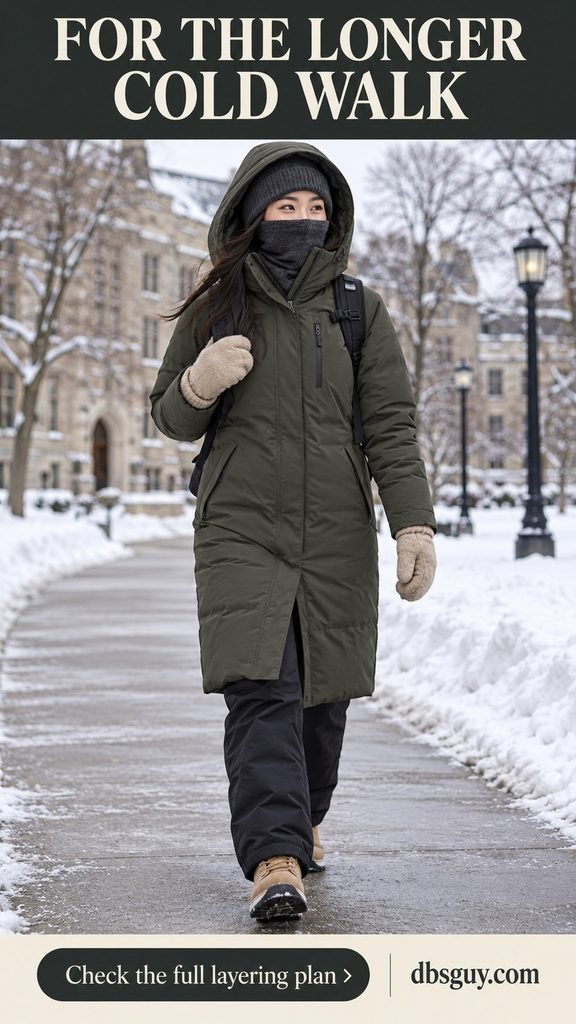
If you wear removable snow pants over classroom trousers, check that you can take them off easily and have somewhere to put them. A gaiter should fit comfortably and leave your vision clear; adjust the hood with your backpack on before setting out.
More clothing is not permission to ignore dangerous weather. Check campus alerts and transportation options, and reduce outdoor exposure when conditions are unsafe.
Make These Outfits Work With a Small College Closet
You do not need 17 coats. Repeat the coat and boots that suit your campus, then borrow the indoor formulas: sweater and jeans, fleece and leggings, cardigan and trousers. Keep a second pair of dry socks available if wet walks are common.
Before buying another fashion piece, try on your existing coat with your heaviest useful layer, backpack, and winter shoes. Check your stride, sleeve movement, and ability to sit. Spend on a missing function, such as appropriate wet-weather footwear, before adding a duplicate sweater.
Winter College Outfit Questions
Can I wear jeans to college in winter?
Yes, when they suit the conditions. Choose a comfortable full-length pair, add thermal bottoms if needed, and keep the hems dry. For wet snow or a long cold walk, weather-protective or insulated pants may be the more practical choice.
Are fleece-lined leggings enough for walking to class?
That depends on the leggings, weather, exposure time, and your comfort. They are not all equally warm or wind-resistant. Use a longer coat and covered ankles, then choose warmer pants if your legs are still cold. Do not treat the word “fleece-lined” as a temperature guarantee.
What shoes should I wear on a snowy campus?
Look for footwear intended for your conditions, with appropriate insulation, verified water protection, and an outsole designed for winter use. Fit it with your actual socks. Avoid assuming that leather, a thick sole, or a cozy lining means a boot is waterproof or secure on ice.
How do I stay comfortable when classrooms are hot?
Wear an indoor base you are happy to show, put removable insulation over it, and open or remove outer layers once inside. A cardigan, full-zip fleece, or quarter-zip gives you adjustments that a thick turtleneck alone cannot.
Set out tomorrow’s outfit with the forecast open: coat, indoor layers, bottoms, socks, shoes, and cold-weather accessories. That small check makes it easier to leave for class with the pieces you actually need.
Also read: First Week of College: The Freshman Survival Guide (Orientation to First Friday).