19 Cute January and February Nails for the Cozy Stretch Between Holidays


For the stretch between New Year’s and Valentine’s Day, try toasted oat shimmer, flannel-blue gloss tips, or a sheer raspberry jelly. They look right beside a winter coat and still feel fresh once February starts. If you want a little romance, go for the dusty rose heart window or the tiny forest-green bow.
These 19 January and February nail ideas cover everyday neutrals, deep winter shades, small Valentine details, and playful finishes for later in the season. They’re shown on short nails, with placement notes to help you adapt the art to your usual length.

The images are AI-generated manicure concepts for dbsguy.com. Use them as references for color, finish, and placement.
Soft, Cozy Nails for Everyday Wear
Start here if you want a manicure that works with a winter wardrobe on an ordinary Tuesday. The detail comes from a change in finish, a painted edge, or two small lines.
1. Toasted Oat Shimmer
If pale winter polishes tend to look cool on you, swatch a creamy beige with a warm undertone. Fine champagne particles add a little depth in daylight. Hold the swatch beside your hand before picking it, since the difference between oat and a pink-beige can be subtle on the display tip.

Keep the shimmer the same on every nail. A short squoval shape gives the soft sheen a little extra room to show near the free edge.
2. Flannel-Blue Gloss Tips
Dusty denim blue is the entire palette here. The French line shows up when the light hits the glossy edge. A muted blue gives you more contrast between the finishes than a very pale one, especially under soft indoor light.

If you’re using regular polish, let the blue dry according to its directions, apply a matte top coat, then paint a narrow band of glossy top coat at each tip once the matte layer is dry. At the salon, show the effect from a side angle so it’s clear how subtle you want the line.
3. Caramel Corner Dip
Put a warm caramel wedge across one corner of a sheer peach-beige nail. The diagonal boundary gives a short nail a graphic shape that shows from arm’s length. On a rounded free edge, bring the wedge just far enough in to read as a triangle.

For regular polish, OPI’s stencil method calls for a dry base color, a stencil edge pressed flat, and a light application of color so it doesn’t seep underneath. Lift the stencil while the new lacquer is still slightly wet. Leave the other nails sheer if you want the accent to stand out.
4. Pistachio Scallop Tips
A grayed-down pistachio keeps this playful French tip easy to wear with ivory, camel, and gray. Ask for soft green tips with a scalloped inner edge so the little curves face the sheer nail bed.
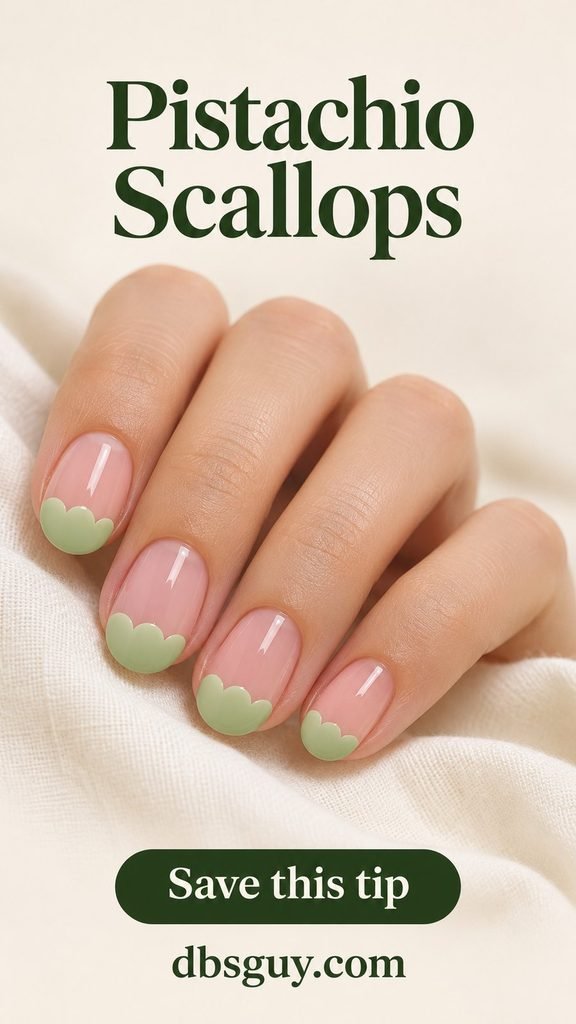
If your nails are very short, ask for two or three wider curves on an accent nail. You’ll still see the scallop shape without taking up half the nail with green.
5. Lilac Pinstripes
A dusty lilac base gives thin ivory lines more definition than a pale, milky purple would. Use two straight pinstripes down one accent nail. An off-center pair leaves a wider block of lilac visible beside the lines.

For a very narrow nail, one line gives much the same effect. If you’re painting it yourself, test the brush on a spare swatch and check how wide a mark you get with light pressure.
Also Read January Nail Art Ideas to Try When You’re Tired of All-Over Color
Rich Winter Colors for January and February
Copper warms up navy, a jelly lets light through raspberry, and a softly magnetic finish gives deep greens a little movement. Start with the dark shade you’d be happy wearing on its own.
6. Midnight Navy and Copper Foil
Glossy midnight navy makes the copper easy to spot, even when the foil takes up little room. Keep the diagonal broken and irregular for a metallic glint. A continuous, perfectly straight stripe gives a different, more graphic effect.

Ask your nail artist for one narrow foil trail on each ring nail. On a short nail, the copper can start around the middle and run toward a corner so the navy still fills most of the nail.
7. Raspberry Jam Jelly
Raspberry jelly is an easy pick if you want February color with zero artwork. Look for a cool berry tint you can see through at the edge. You can get a deeper, more saturated berry from an opaque polish.

Ask to see the shade at the intended coverage, ideally on a tip held over your natural nail. Go a little deeper for a jammy look or keep the tint light if you like the free edge to show.
8. Spruce Green Velvet
If you want green after the holidays, try a spruce shade with a soft magnetic reflection. Under side light, the brighter green should spread across the dark base like the sheen on velvet.

Ask for a broad, diffused velvet effect and look at the swatch straight on as well as from the side. The same green can read almost black in one position and much brighter in another.
9. Blackberry With a Lilac Moon
A single lilac crescent brings out the purple in a glossy blackberry polish. Center it on one nail so the moon sits away from the cuticle and free edge. The sharp little points are what make this look like a crescent from a few feet away.

Use the widest nail if your ring nail feels too narrow. Ask for a pale lilac with enough coverage to stay visible over a deep plum base.
10. Midnight Teal With a Silver Dot
Choose a blue-leaning teal that still reads green in daylight. Set a dot of metallic silver polish in the center of one accent nail. Its placement leaves an even border of dark color, which makes the silver read clearly on a small nail.

If you like the look of a stud but want a smooth surface, ask for a painted metallic dot. Check the dot size on one nail before adding any more.
Also Read 17 Winter Nail Art Ideas for January That Feel Cozy, Icy or Both
Little Valentine Details You Can Wear Early
Start with the pink, cranberry, or sheer base you’d happily wear in January. Then pick one detail that feels right for February, from a bow to a hint of lace.
11. Cranberry Button Dots
Two warm ivory dots on one cranberry nail can be enough to make a plain red manicure feel playful. Place them in a short vertical row toward one side. Leave a visible gap so the pair reads as two buttons.

If you paint with a fine dotting tool, dab it on a swatch first. Start with a dot small enough that the cranberry still takes up most of the accent nail.
12. Ivory Lace Edge
A few ivory peaks with open eyelets give you the look of lace on sheer beige. Put the detail along the free edge of an accent nail. Choose the most open pattern you like, since closely spaced marks can read as a solid band from a distance.

If the design looks crowded at your length, show your artist just the part of the picture you like and ask for a smaller repeat. A narrow lace decal is another way to get the pattern at home.
13. Sheer Heart Window
For an understated Valentine manicure, leave a heart-shaped patch sheer on a dusty rose accent nail. On a short oval nail, set the heart near the middle so its point and curves are easy to see. For stronger contrast, swatch the dusty rose next to your sheer base first.

At the salon, point to the center of the heart in the reference and ask to keep that part translucent. That’s the detail that makes a window look different from a painted heart.
14. Pink and Forest-Green Bow
Forest green gives this pale pink set the depth of a winter manicure. A small bow near the tip leaves plenty of pink visible. Keep the two loops open and the tails short if the nail is narrow.

For a sticker version, hold the decal beside your nail before applying it. If the tails are too wide, choose a smaller decal or put the bow on your thumb where there’s more room.
15. Berry Cuff Nails
If you like burgundy in small doses, follow the curve near the cuticle with a thin crescent. A sheer base makes that narrow arc easier to see. Keep a small margin between the polish and skin.
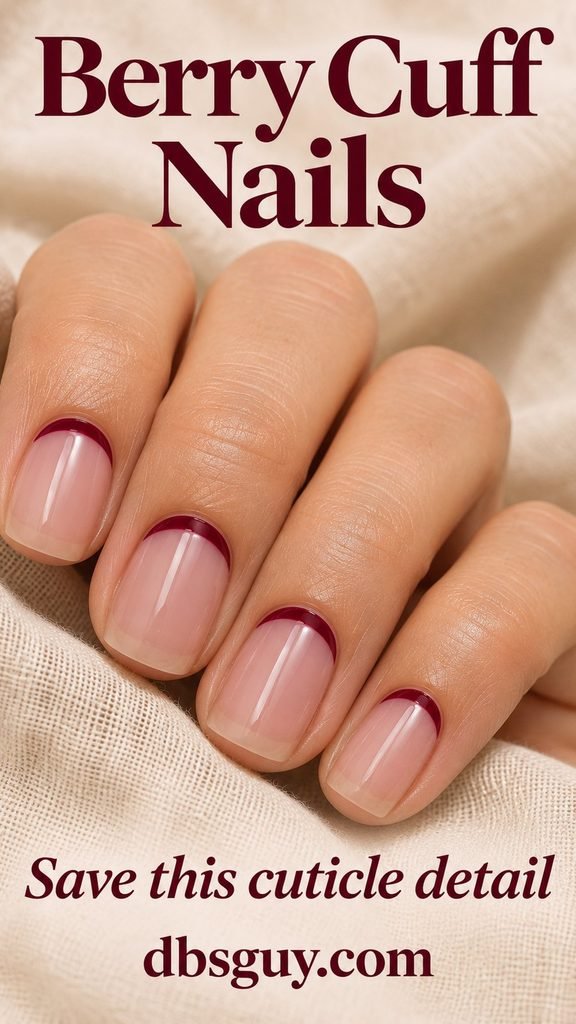
Decide how wide you want that curve on your shortest nail first. A deep arc can look like a half-moon color block. A shallow arc keeps the effect closer to a delicate cuff.
Also Read End-of-January Nail Designs for the Weeks Between Snowflakes and Hearts
Playful Finish Changes for Late Winter
A dusting of shine, one small flower, or a wash of color can be plenty when you want a change from your usual winter set.
16. Champagne Confetti Tips
A peach-beige base makes the tiniest gold particles look warmer. Ask for most of the sparkle along the free edge, then let the flecks thin toward the center. Keeping the cuticle area clear gives it a lighter look than all-over glitter.

If you’re doing the look with regular polish, start with a fine glitter topper. Use a lightly loaded brush for the faded portion, then add a little more at the edge where you want the shine concentrated.
17. Peach and Petal Pink Split
Try a muted apricot against petal pink if you want something warmer as February approaches. Hold both colors side by side on a swatch first. Two very pale shades can blend together even when the diagonal is sharp.

On a small nail, let the diagonal cross the middle so each color has a broad enough area to show. Use petal pink for the rest of the nails to keep the accent easy to read.
18. Denim Daisy
One tiny daisy makes a gray denim-blue manicure feel a little brighter. Start with an ochre center and give the petals room to show. The denim color still reads as winter even with a flower on it.
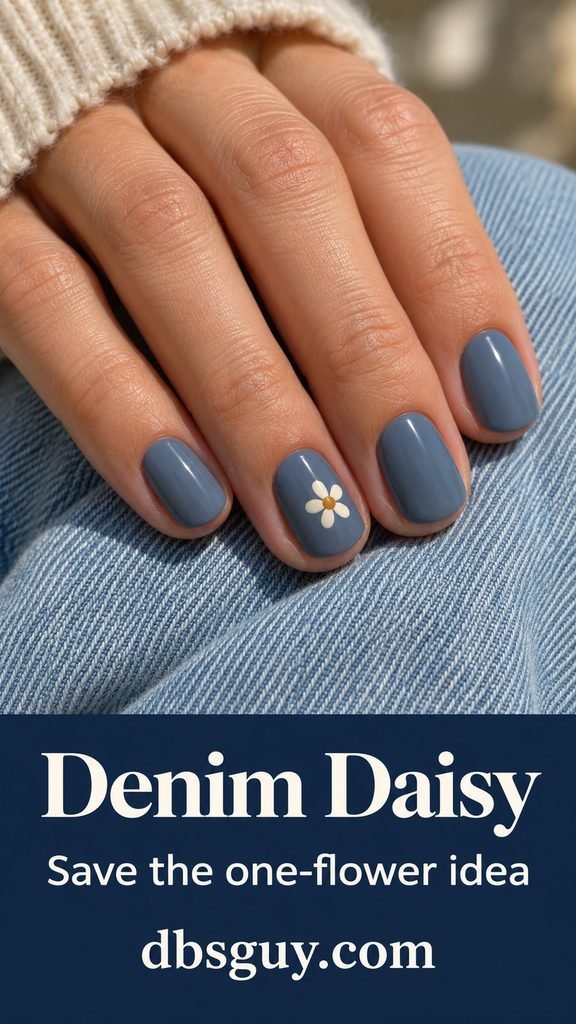
For a small nail, test the petal placement on a swatch so you can see how much blue will show around the flower. A tiny white daisy decal also works if you want to skip painting the petals.
19. Rosewater Wash
If you like blush polish but want the finish to have some movement, ask for a soft, uneven wash of warm rose. The color can drift a little differently on each nail, with some of the pink-beige base visible around it.

Show the swatch in indirect daylight and look for soft edges. If the pink forms a solid circle with a hard border, ask for a less defined wash to get the watercolor effect.
Also Read 13 Cute, Easy February Nails to Try With Dots, Stickers and a Little Glitter
Questions About January and February Nails
Which of these designs works on very short nails?
Try toasted oat shimmer, raspberry jelly, or cranberry button dots. Solid color uses the whole nail well, while the tiny dots need very little room. With lace or a bow, start with one accent nail and scale the artwork before repeating it.
What nails work for both January and February?
Flannel blue, spruce green, and sheer raspberry all work across both months. If you want a Valentine detail that still feels at home in January, pick a small rose heart window or a forest-green bow over milky pink.
Can I recreate these with regular polish?
Yes for the flat dots, simple color blocks, pinstripes, and sheer colors. For a velvet look, look for a magnetic regular lacquer if you prefer an air-dry formula, and follow its magnet and drying instructions. Show your salon both the color and the reflection if that finish is the reason you saved the design.
Also Read 19 Nail Colors for February and March That Ease You From Winter Into Spring