The easiest way to make a thrifted college outfit look fresh is to start with a piece in good condition, give it enough room to fit comfortably, and pair it with clothes you already know how to wear. A crisp blue shirt with cream jeans can do more than a cart full of interesting finds that need expensive repairs.
These 13 thrifted college outfit formulas give you a shopping target and a way to style it. You can thrift the main piece and use your own basics, bag, and shoes. “Brand new” is the styling goal here: clean fabric, intentional proportions, and clothes that feel ready for your day. Washing cannot reverse every stain, stretched neckline, or worn-through patch.

The visuals are AI-generated styling concepts, not photographs of actual thrift-store finds or available products.
1. Blue Oxford Shirt + White Tee + Ecru Jeans
The formula: an open pale-blue Oxford shirt, a white crewneck tee, ecru straight-leg jeans, and white sneakers.
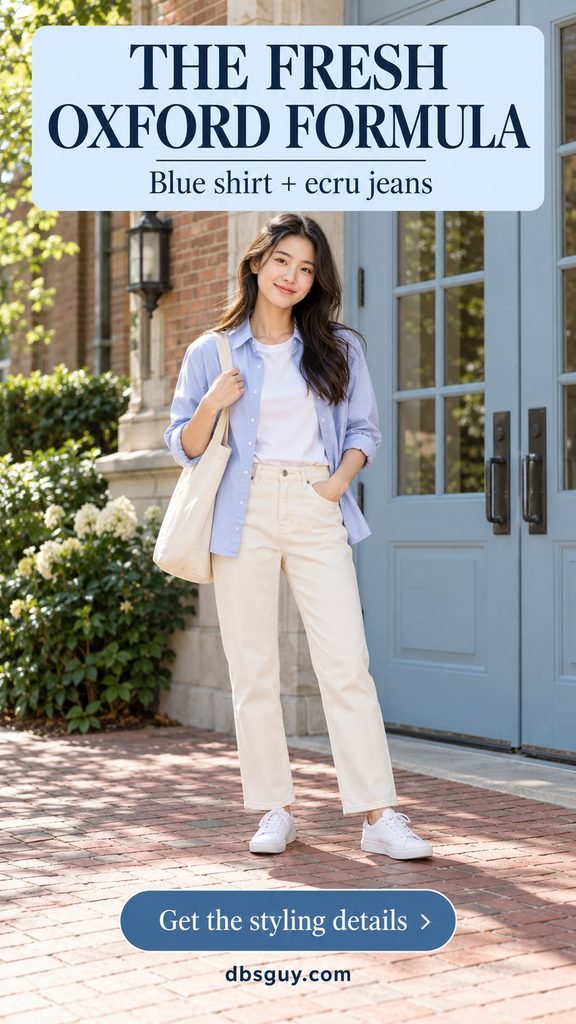
This is a useful first thrifted outfit because the shirt does most of the styling. The blue adds color, while the white tee and cream denim keep the combination light. Roll the cuffs neatly and tuck a small section of the tee into the jeans if you want the waistband to show.
Browse button-downs across departments. Look for a collar that still holds its shape, intact underarm fabric, and cuffs without fraying. Try the shirt over your tee and reach forward as though you are picking up a backpack; the upper back should not pull tight.
If pale jeans are hard to find in good condition, use a clean medium-blue pair you already own. Keep the shirt as the one item on your shopping list rather than buying a second pair of jeans just to match the picture.
2. Navy Blazer + Straight Jeans + Brown Loafers
The formula: a navy blazer over a plain white tee, straight blue jeans, a brown belt, and brown loafers.
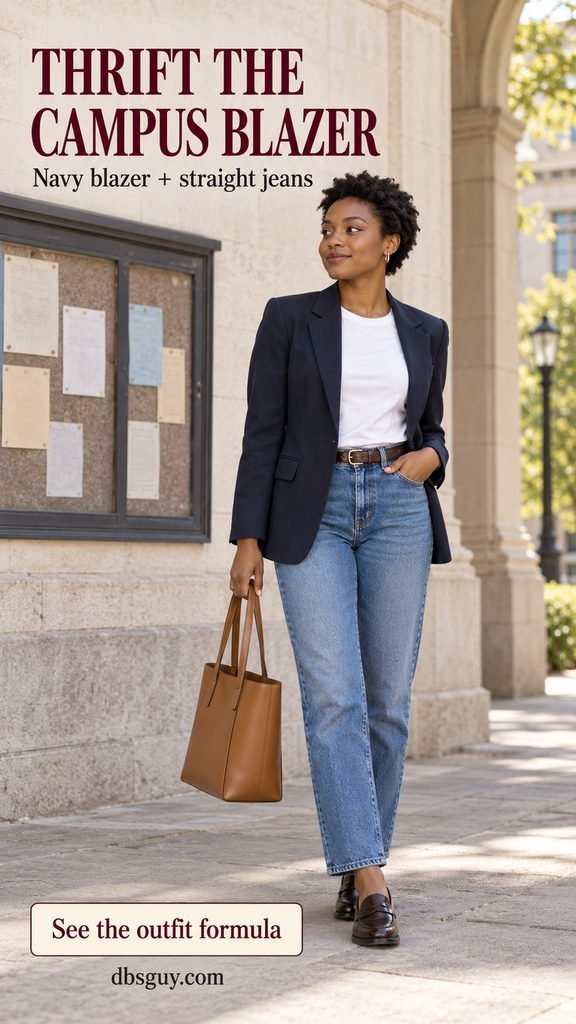
A blazer gives ordinary class clothes a little structure. Wear it open for a club meeting, an office-hours visit, or a presentation day when your class has no more formal dress requirement. Let the tee stay simple so the jacket can be the main detail.
Fit the blazer at the shoulders first. Its collar should sit against your neck rather than stand away from it, and the sleeves should leave your hands free. Check the lining inside both armholes and test the pockets. A jacket that needs major shoulder work is a poor starting point for a quick, low-cost outfit.
Loafers work only if they are comfortable for your route across campus. Your own clean sneakers make a practical substitute; the blazer still supplies the structure.
3. Oatmeal Cardigan + Black Tee + Wide-Leg Trousers
The formula: an oatmeal cardigan worn open, a black tee, black wide-leg trousers, and black sneakers.
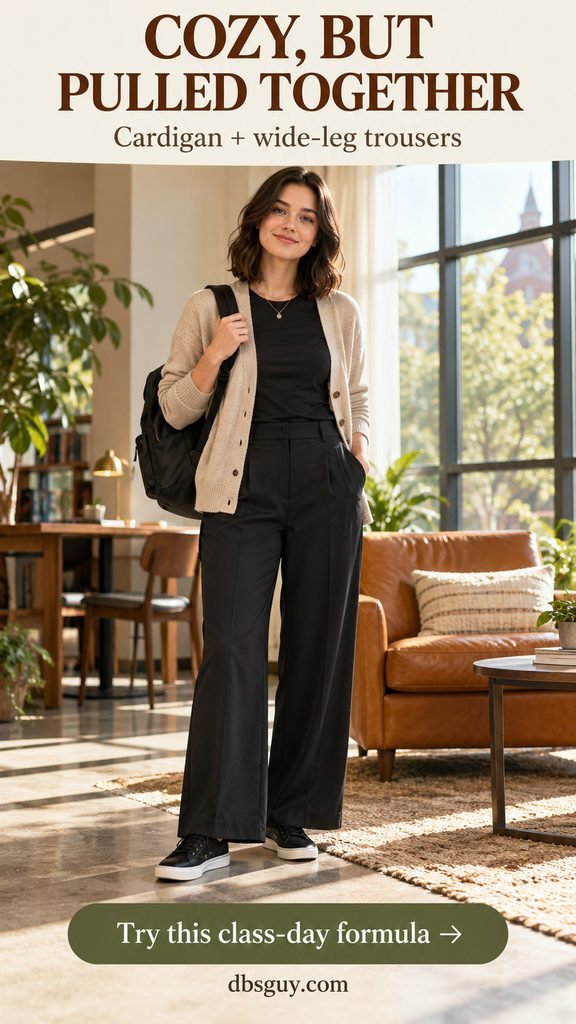
Use this for a long lecture day when you want a removable layer without reaching for a hoodie. A cardigan that ends near the top of your hips leaves more of the trousers visible. A longer one can work too; try it open so the dark base remains a clear line through the outfit.
Check the cardigan’s neckline, buttonholes, and elbows. A little surface fuzz and actual thinning are different problems. Hold a questionable patch up to the light: if you can see a weakened area or several holes, leave it unless you already want a repair project.
Sit in the trousers before buying them. The waistband should feel comfortable at a desk, and the hems should clear the ground in the shoes you plan to wear. Deep navy trousers are an easy substitute if the black pair on the rack is badly faded.
Also Read: How to Build a Wardrobe on a Tight Budget Without Buying Cheap Clothes
4. Sweater Vest + White Shirt + Olive Midi Skirt
The formula: a cream V-neck sweater vest, a white button-down, an olive A-line midi skirt, and black loafers.
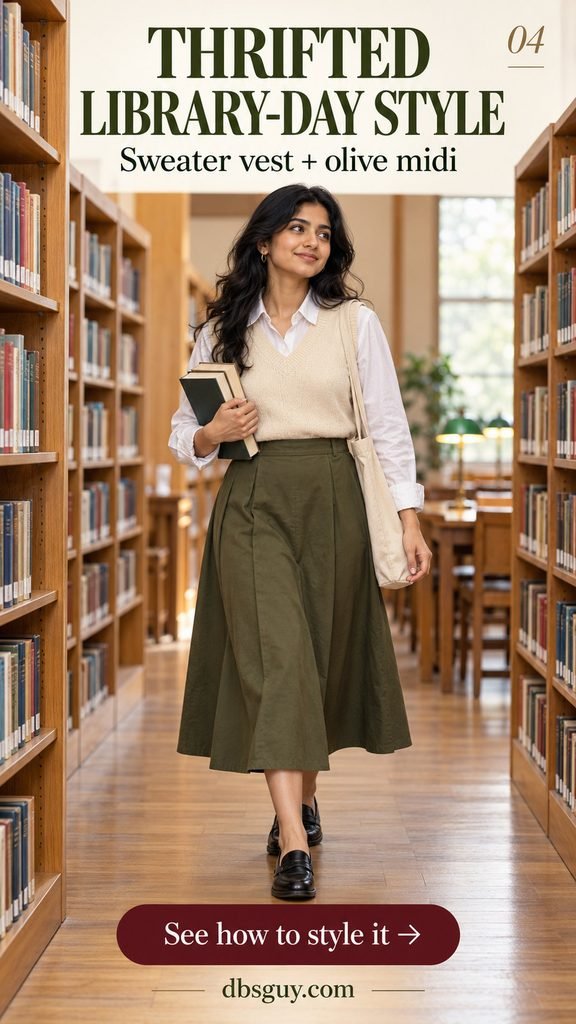
This is the library-day option for someone who likes academic style but wants room to move. Let the shirt collar show above the vest and keep the shirt hem tucked if it bunches beneath the knit. The skirt’s gentle A-line shape gives the layered top some breathing room.
Try the vest over an actual shirt. Armholes that look generous on a hanger can still pinch once sleeves are underneath. For the skirt, check that the zip closes smoothly and that the waistband stays comfortable when you sit.
An olive skirt is a target, not a requirement. Brown, charcoal, or navy gives you the same basic outfit. Walk with your normal stride in the fitting room; a skirt that restricts it will be frustrating on stairs.
5. Faded Graphic Tee + Black Satin Midi Skirt
The formula: a charcoal graphic tee, a black satin midi skirt, and white low-top sneakers.
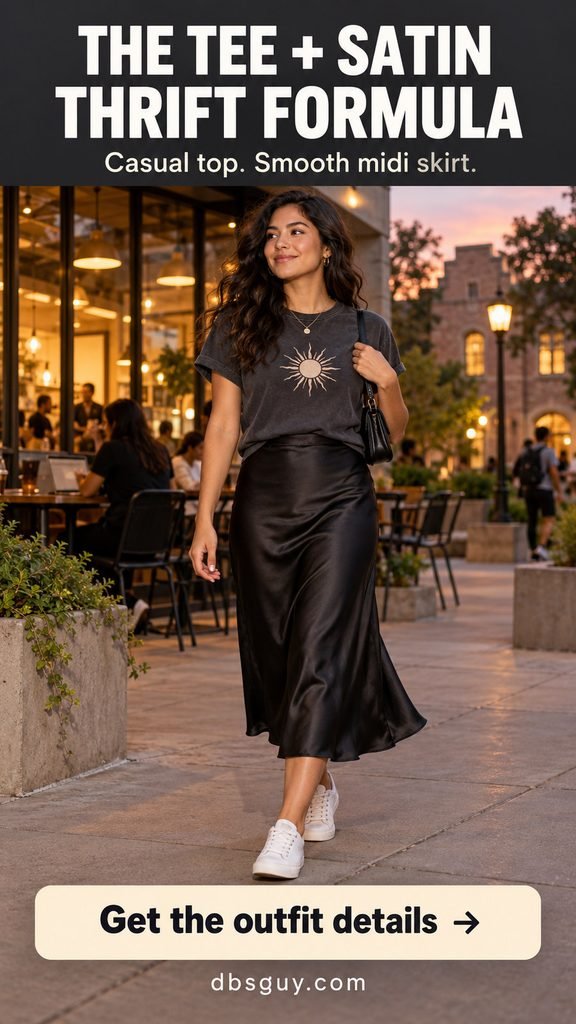
Here, the contrast between a casual tee and a smooth skirt makes the outfit. Choose one readable graphic rather than adding several competing accessories. A small front tuck can keep an oversized tee from covering the skirt’s entire shape.
The tee can be faded on purpose; its neck opening should still sit neatly. Inspect the skirt in bright light for pulls, tiny holes, and marks across the seat. Check the care label rather than assuming this skirt can go through your usual wash cycle.
Before you buy, sit down and check how the skirt moves over your hips. If a clingy version needs extra layers you do not want to wear, look for a lined skirt or a slightly roomier cut. This should be an easy dinner-after-class outfit.
6. Striped Tee + Dark Denim Skirt + Red Flats
The formula: a navy-and-white striped tee, a dark denim A-line midi skirt, and red flats.
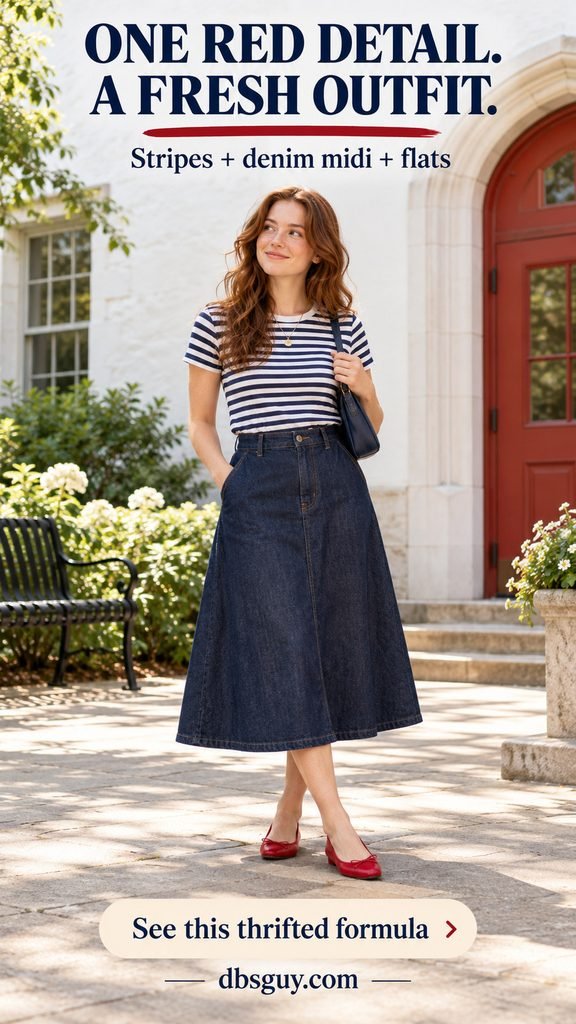
The red shoes give two familiar basics a distinct finish. A dark, evenly colored skirt keeps the stripe from feeling too busy, and the A-line cut gives you walking room without relying on a high slit.
Look closely at the skirt’s pocket corners, waistband, and hem. Denim can look sturdy while being thin in a few heavily worn spots. Check that the tee’s side seams hang comfortably rather than twisting around your body.
You do not need to thrift the flats. Use a pair that already works for your feet, or swap in white sneakers and carry a red bag you own. Keep the color accent small enough that the striped top remains easy to combine with other clothes.
7. Plaid Overshirt + White Tank + Black Jeans
The formula: a muted rust-and-navy plaid overshirt, a white tank, black straight-leg jeans, and black flat ankle boots.
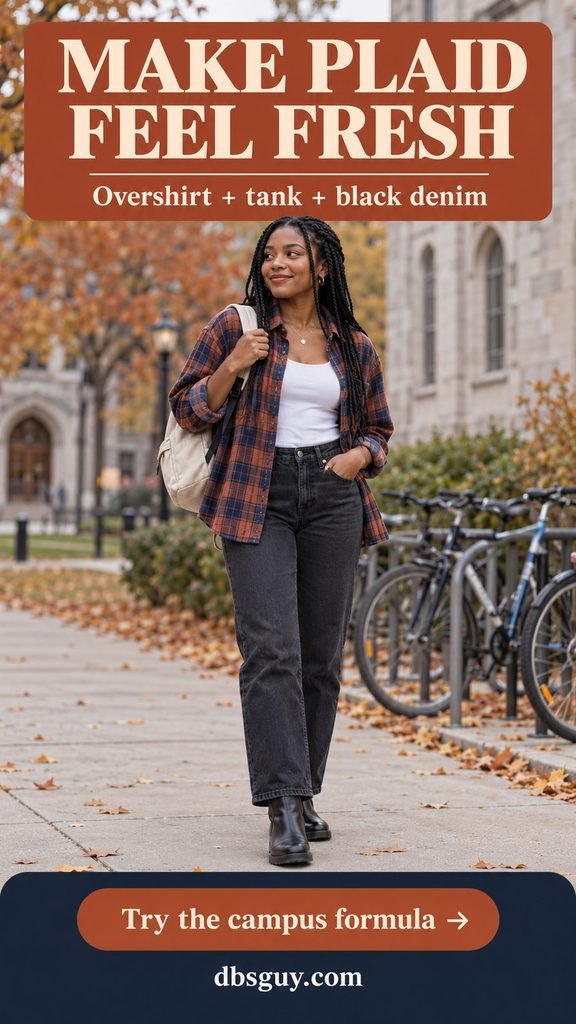
A plaid overshirt gives you a casual layer you can take off indoors. Wear it open so the white tank breaks up the darker pieces. Choose a tank length and neckline that you are comfortable wearing on its own when the classroom gets warm.
For a fresh finish, pay attention to the black jeans. Compare the knees with the upper legs in good light; an even washed-black color works, while patchy fading may be harder to style the way you want. Check the inner thighs and the fabric around the fly.
With the overshirt, look for sleeves you can roll without creating a thick bundle. If the plaid is brighter than the example, keep the rest of the outfit plain. This is a good place to wear one distinctive thrift find without needing several more.
Also Read: How to Build a Wardrobe Around One Color (And Why It Doubles Your Outfits)
8. Denim Jacket + Small-Floral Midi Dress + Sneakers
The formula: a medium-blue denim jacket, a dark small-floral midi dress, and white sneakers.
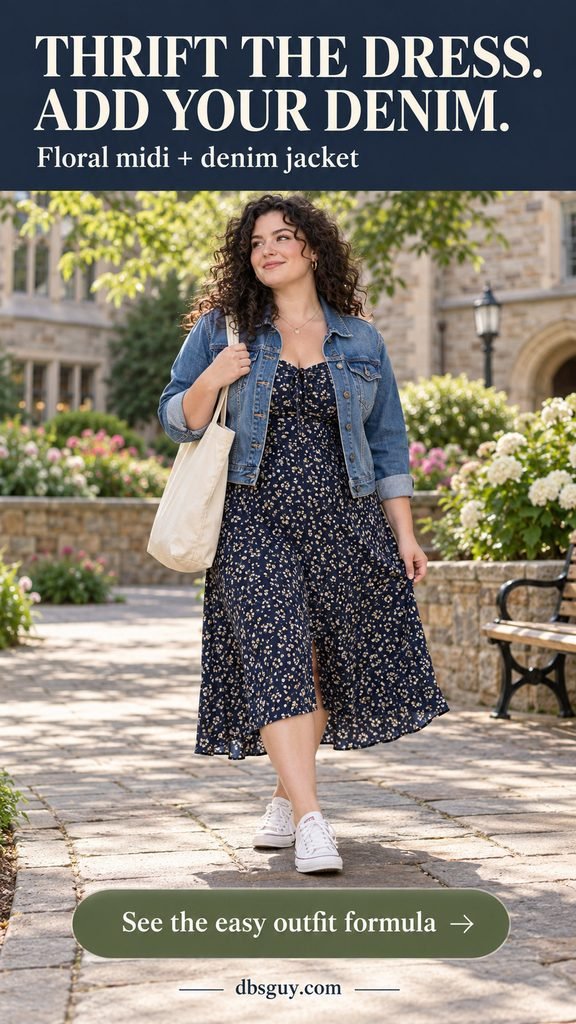
A dress solves the top-and-bottom decision, while the jacket makes the outfit useful for a mild morning or a cool indoor space. Look for a jacket that ends near your waist or upper hip so the dress’s shape is still visible underneath.
The dress needs to work without the jacket too. Check the neckline while leaning forward, the armholes while reaching, and any buttons while sitting. A pretty print does not compensate for a bodice you have to keep adjusting.
Inspect the jacket’s cuffs and underarms, then make sure it closes over the dress if you want that option. A solid dark midi dress gives you the same outfit when the right floral print is not available.
9. Tan Trench + Black Turtleneck + Chocolate Trousers
The formula: a tan trench coat over a black lightweight turtleneck, chocolate pleated trousers, and black flat ankle boots.
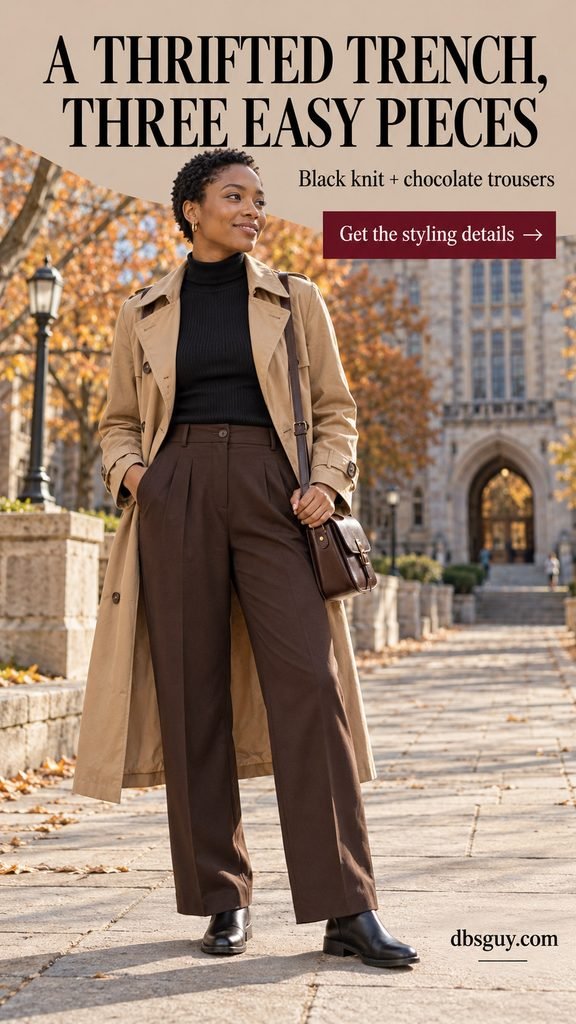
This combination suits a cool, dry day when you want a longer outer layer. Black, brown, and tan give the separate pieces something in common without making you hunt for an exact matching set.
Try the trench with a layer underneath and cross your arms. Check the shoulder movement, underarm lining, belt loops, and every fastening. A missing belt is fine if you are happy wearing it open; a missing button matters more if you need to close the coat.
Choose trousers whose pleats lie comfortably when standing and sitting. If they pull open because the hips are too tight, try another pair. The pictured trench is a styling layer; choose weather protection separately for heavy rain or freezing conditions.
10. Cobalt Sweater + White Tee + Stone Chinos
The formula: a cobalt crewneck sweater over a white tee, stone-colored chinos, and white sneakers.

A strong sweater color can make a familiar neutral wardrobe feel different without requiring printed pants or statement shoes. Let a little of the white tee show at the neckline, and keep the sweater hem loose rather than forcing a thick knit into the waistband.
Check that the sweater’s neck and sleeve cuffs recover after you gently stretch them. Look for holes at the underarms and uneven wear along the elbows. Choose a care routine you can manage in your dorm or apartment; an appealing sweater can become an expensive inconvenience if its cleaning needs do not fit your week.
Stone chinos are the example, but khaki or cream trousers also work. Try a single cuff only if it stays put and feels comfortable; otherwise, leave a clean hem.
Also Read: How to Find the Real Gaps in Your Wardrobe (Not the Ones You Think)
11. Printed Blouse + Black Jeans + Loafers
The formula: a rust-red printed blouse, black straight-leg jeans, and black loafers.
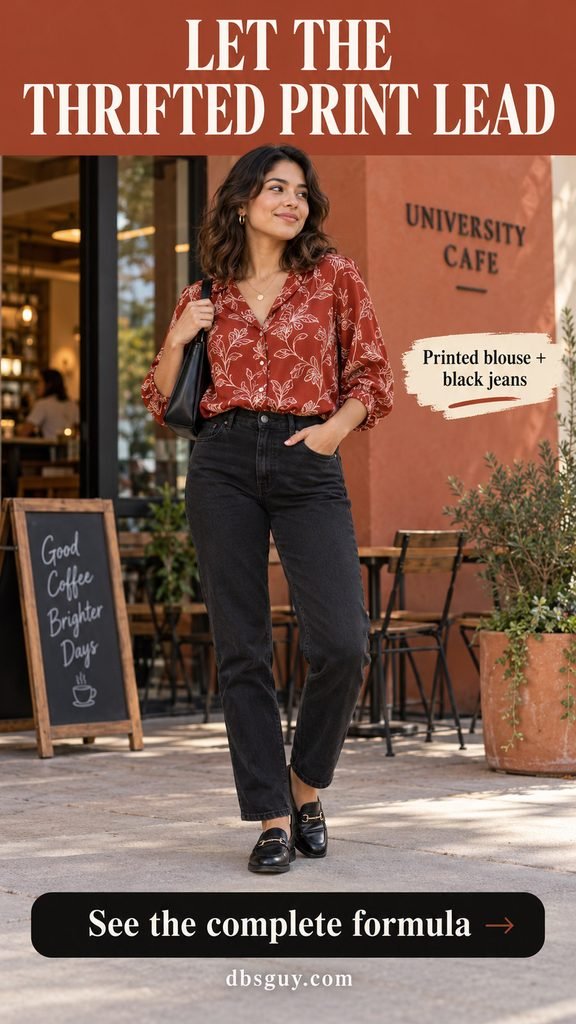
This is a useful route for a thrift-store blouse with an interesting print but an otherwise simple cut. Tuck it loosely into the jeans and leave the accessories quiet. The dark bottom gives the pattern room to stand out.
Button the blouse fully in the fitting room, then sit and reach forward. Check for gaps at the chest, strain across the back, and sleeves that pull. A low price will not make a blouse more comfortable during a two-hour seminar.
Look at the underarms and collar in daylight if possible, especially on a patterned fabric that can hide discoloration. If this blouse is your first statement piece, choose a print containing a color already in your wardrobe so you can wear it beyond this one formula.
12. Olive Utility Jacket + Cream Trousers + Brown Boots
The formula: an olive utility jacket over a white tee, cream wide-leg trousers, and brown flat ankle boots.
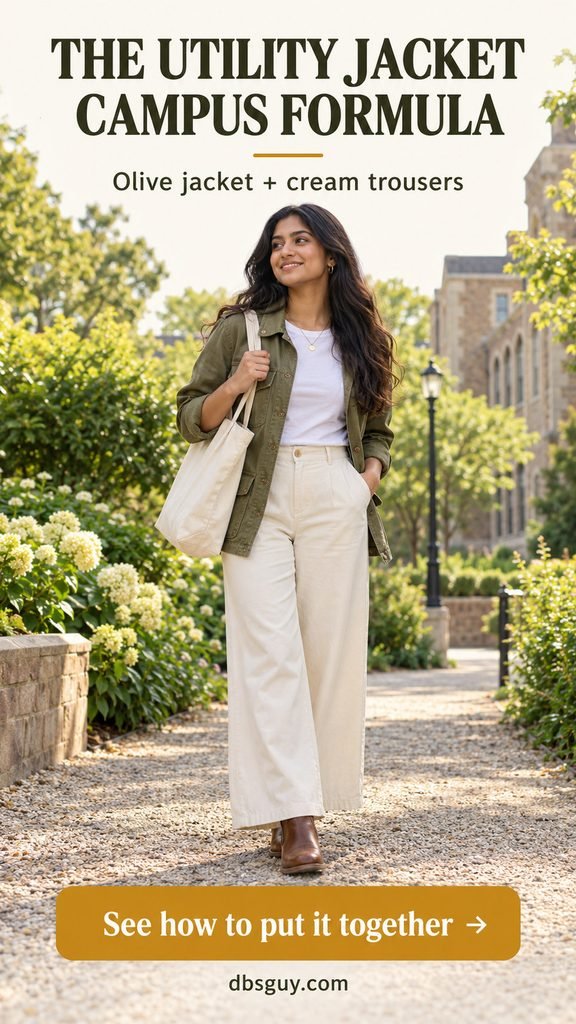
The utility jacket brings pockets and a relaxed shape; cream trousers make the whole outfit feel lighter. Keep the jacket open so the tee separates it from the waistband. A plain canvas bag fits the practical feel without adding another strong detail.
Test the zip and snaps before buying the jacket. Reach into the pockets and check their linings for holes. If the sleeves cover your hands, see whether a simple cuff works before assuming you will pay to alter them.
For the trousers, inspect pale fabric in bright light and check the seat, pocket bags, and hems. Use darker tan trousers on a muddy campus day, and pick boots you already trust for the walk. This formula is about making a useful jacket work with your closet.
13. Linen Shirt + Navy Tailored Shorts + Flat Sandals
The formula: a white linen or linen-blend shirt, navy tailored shorts, and tan flat sandals.
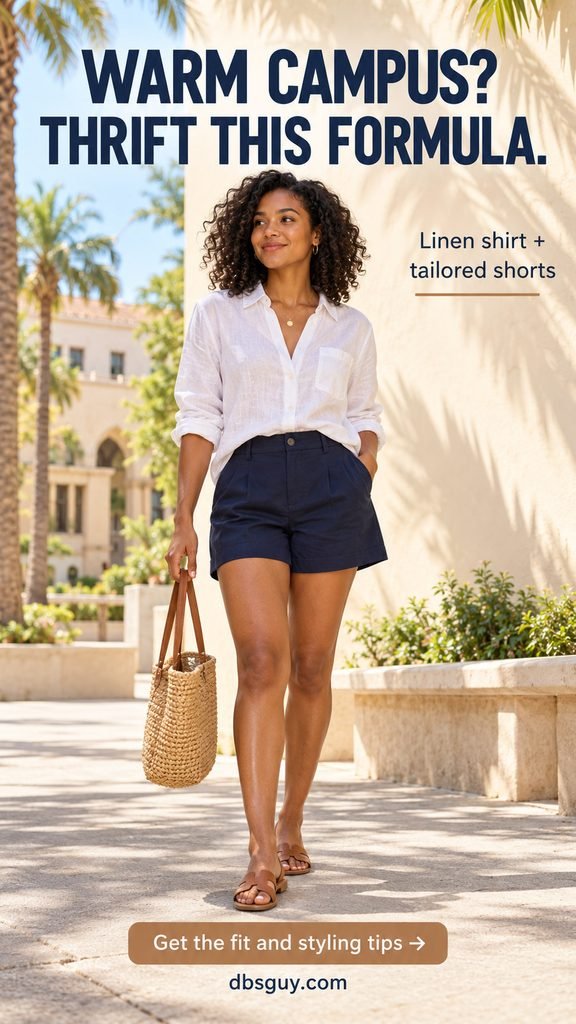
For a warm campus, a loose shirt gives you an alternative to another tee-and-shorts outfit. Push the sleeves up gently and tuck the front if you want a visible waist. Some natural wrinkling suits linen; set-in stains and badly worn cuffs are a separate issue.
Try the shorts sitting down and walking. Choose an inseam that feels comfortable for your day rather than copying the image exactly, and make sure the pockets do not pull open. On the shirt, check whether the fabric is more sheer than you want in daylight.
Wear sneakers if your route or class calls for closed-toe shoes. For a lab or studio, follow that space’s clothing requirements and choose a different formula if shorts or loose sleeves are unsuitable.
Make Your Thrift List Before You Go
Pick two formulas that match your actual week, then lay out the pieces you already own. Write down only the missing items. “Olive jacket that fits over my white tee” is a more useful target than “cute fall clothes.”
Save measurements from a garment that fits you well: waistband, rise, inseam, or shirt width, depending on what you are shopping for. Compare the same measurements on a secondhand item rather than trusting a size tag alone. If there is no fitting room, use those comparisons and check the store’s current return policy before paying.
Decide your total spending limit, including any necessary cleaning or alterations. Prices and stock vary by store, location, and item. Before committing to a repair, ask for a quote; replacing a button and rebuilding a jacket’s shoulders are very different projects.
Also Read: 21 Thrift-Flip Ideas So Good You’ll Start Looking At Old Clothes Differently
The Condition Check That Matters More Than a Brand Label
- Check the high-wear areas: collars, underarms, cuffs, elbows, inner thighs, pocket corners, and hems.
- Test the working parts: open and close zippers, fasten buttons and snaps, and check pocket linings.
- Look for expensive uncertainty: widespread thinning, peeling surfaces, persistent odors, damaged linings, or stains you would need a professional to assess.
- Move before deciding: sit, walk, reach, and try the item with the layer it needs. A garment should fit your body and your day.
Clean secondhand clothes before wearing them, using the garment’s instructions. The FTC’s care-label guidance explains why washing, drying, ironing, and warnings belong to the individual garment. If the label is missing and you cannot identify a suitable method, ask a professional cleaner before experimenting.
Once an item is clean, remove loose lint and check whether its care instructions allow pressing. Do not assume a steamer, hot wash, or dryer is suitable for every fabric. A neat finish helps, but starting with sound fabric saves you from expecting cleaning to fix permanent wear.
FAQs About Thrifted College Outfits
Does every piece in the outfit need to be thrifted?
No. Start with one secondhand piece and combine it with your own basics. A thrifted blazer, skirt, or colorful sweater can change several outfits without requiring a whole new wardrobe.
What should I buy first if I am new to thrifting?
Choose the missing item from a formula you can otherwise wear immediately. A shirt, cardigan, or simple jacket is a useful starting point if you can assess its fit and condition. Leave projects for later unless repairing clothes is part of the appeal for you.
Can thrifted shoes work for walking around campus?
They can, but condition and fit need careful attention. Check the sole wear, interior, closures, and any separation between the upper and sole. Try both shoes and walk in them. If they feel uncomfortable or need uncertain repairs, use shoes you already own instead.
How do I stop thrifted outfits from feeling like a costume?
Build around one distinctive find and keep the surrounding pieces familiar. A patterned blouse with plain jeans is an easy example. You can add more vintage details later if you enjoy them; there is no need to assemble an entire era at once.
Should I buy something that almost fits and alter it?
Only when you know what needs changing and are comfortable with the full cost. Get an alteration quote before committing to substantial work. For an everyday college outfit, an item that fits now is often the more practical choice.
Start with the formula that uses the most of what is already in your closet. Find its missing piece, check it carefully, and make one complete outfit before shopping for the next.