21 Thrift-Flip Ideas So Good You’ll Start Looking At Old Clothes Differently

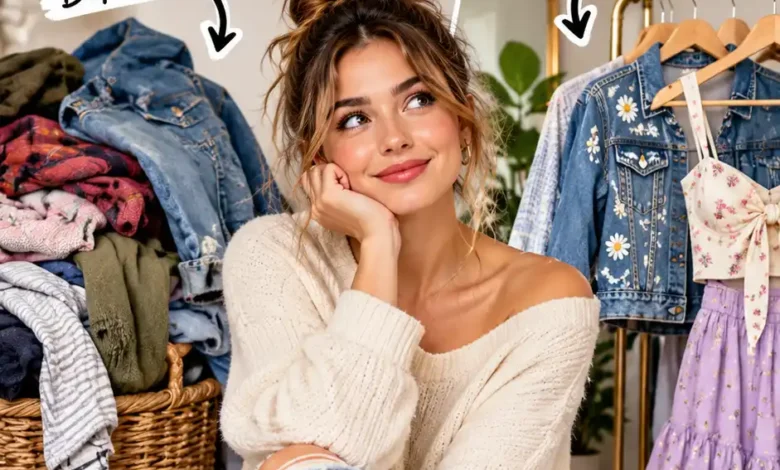
That oversized shirt you keep ignoring might not be ugly. It might just be one pair of scissors, a few stitches, and one surprisingly good idea away from becoming the thing everyone asks you about.
There is a very specific kind of regret that happens when you donate something, forget about it, and then see somebody on the internet turn the exact same kind of piece into something you suddenly want.
An old cardigan becomes a fitted cropped top. A tired pair of jeans comes back with visible stitching that somehow makes the damage look intentional. A boxy men’s shirt gets a shaped back and starts looking like it belonged in a boutique all along.
And right now, people seem especially interested in that kind of second life. Pinterest’s 2026 Hobbies Trend Report calls the movement “Secondhand Sidequest” and reports searches for “thrift flip ideas” up 610%, alongside sharp growth for sashiko, crochet upcycling, corset-back blouses, button-up upcycles and other repair-and-remake techniques. Source: Pinterest 2026 Hobbies Trend Report.
The best part is that a good thrift flip does not have to look like a craft project. The goal is not to attach fourteen things to a shirt until it begs for mercy. Sometimes the smartest change is also the smallest: a better hem, a shaped waist, new buttons, one contrast panel, or a repair you decide to show off instead of hide.
So before you decide that something in your closet is “done,” give it one more look. Here are 21 thrift-flip ideas that might make you slightly suspicious of every donation bag from now on.
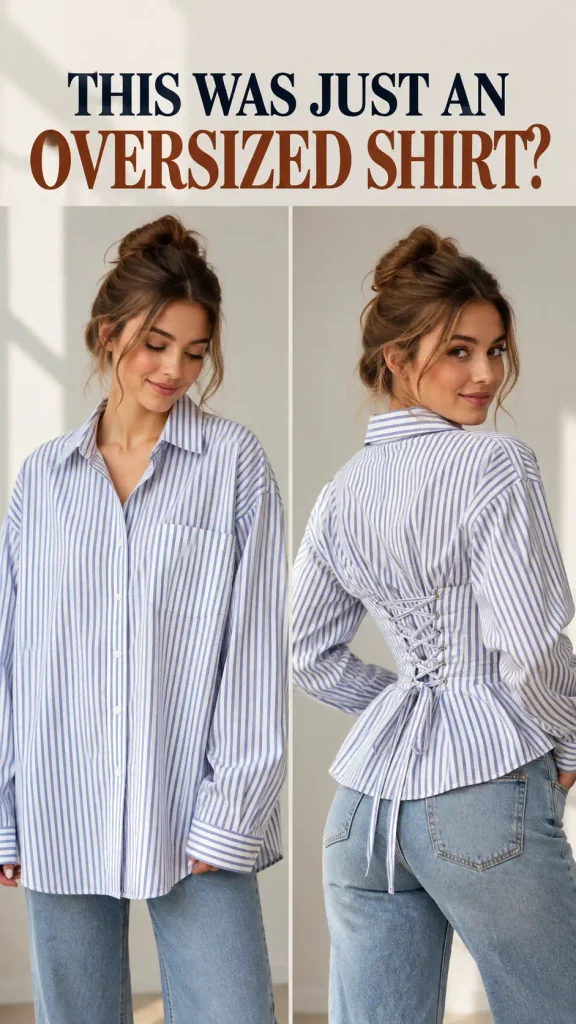
1. Turn An Oversized Button-Up Into A Corset-Back Blouse
A giant button-up can look hopeless on a hanger because all you see is fabric. That is exactly why it is such a good starting point.
Keep the front fairly simple, then reshape the back with two narrow fabric channels, loops, or eyelets and lace it inward. Suddenly the same shirt has a defined waist without losing the relaxed sleeves and oversized feel that made it comfortable in the first place.
The nicest versions do not overdo the corset effect. Think “subtle shape from behind,” not “Victorian emergency.” If the shirt has stripes, checks, or crisp cotton, the contrast between a classic fabric and a more sculpted silhouette is especially satisfying.
Best for: oversized cotton or poplin shirts
Skill level: Intermediate
Small tip: pin the shape first and move around in it before cutting anything permanent.
2. Make Ripped Jeans Look Better By Repairing Them On Purpose
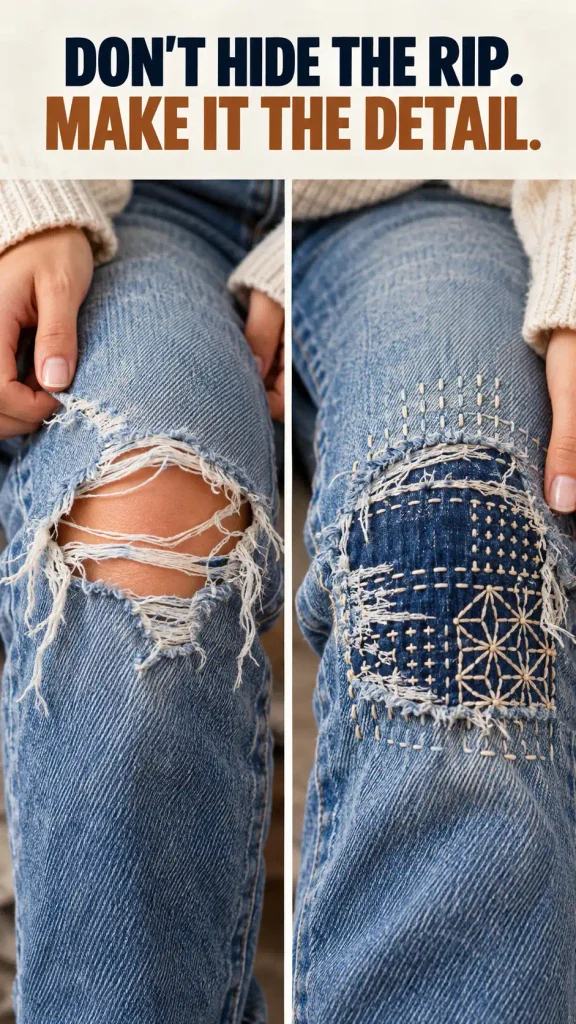
If your jeans have reached the stage where one knee is technically more air than denim, there are two options: pretend the hole is still fashionable, or make the repair part of the design.
Visible mending works because it stops trying to fool anyone. Contrast thread, repeated running stitches, and a fabric patch underneath can turn wear into texture. Sashiko is a Japanese stitching tradition strongly associated with decorative visible repair, and it is worth treating with a little more respect than simply calling every white stitch on blue denim “sashiko.” The V&A describes sashiko as a Japanese form of decorative stitch repair.
For a beginner version, use a sturdy patch behind the weak area and build simple parallel or crossed running stitches across it. Perfectly even stitches are optional. Strength is not.
Best for: worn knees, thigh thinning, pocket tears
Skill level: Beginner to confident beginner
Small tip: reinforce beyond the visible hole because the surrounding denim may already be weak.
3. Crop A Tired Cardigan And Give It Better Buttons
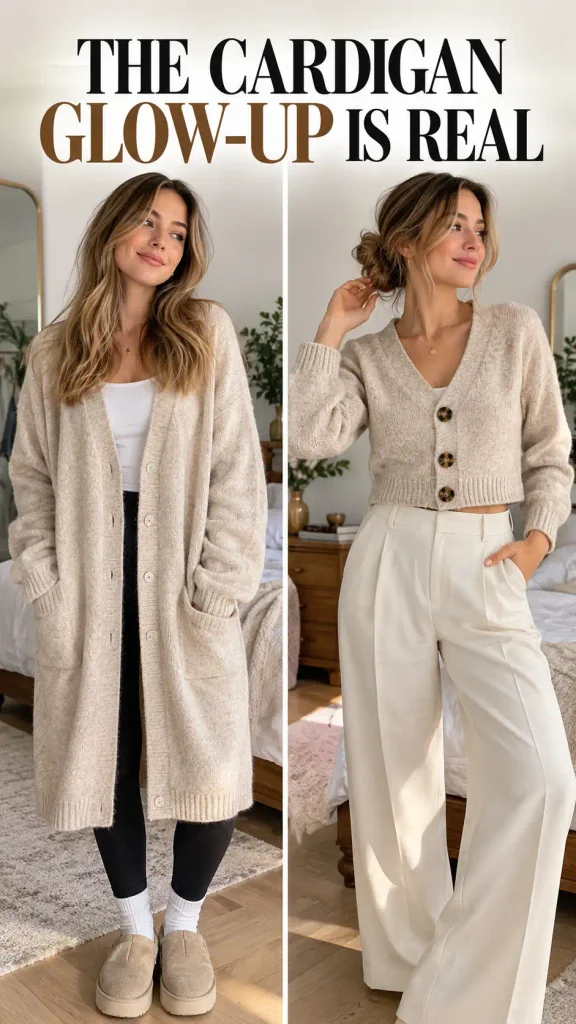
Some cardigans are not bad. They are just stuck in an awkward relationship with their own length.
A cardigan that hits at the least flattering part of your hips can feel instantly sharper after a careful crop. Finish the edge cleanly, then swap dull plastic buttons for pearl, shell, metal, wood, or contrast buttons that actually look deliberate.
This is a good reminder that upcycling does not always need to involve a dramatic transformation. If the knit already feels nice and the shoulders fit, changing the proportion and one small detail can do most of the work.
Best for: cardigans that fit at the shoulders but feel dated
Skill level: Intermediate for knits
Small tip: stabilize the knit before cutting so it does not unravel into a tiny emotional crisis.
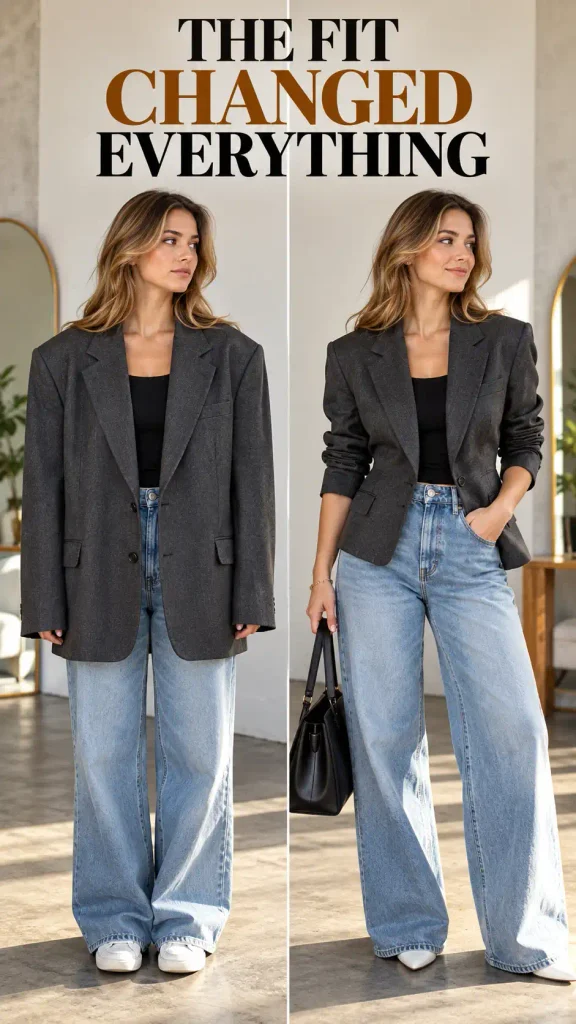
4. Give A Boxy Blazer A Waist Instead Of Giving It Away
Thrift stores are full of blazers that have great fabric, great shoulders, and absolutely no opinion about the human waist.
If the shoulders fit well, that is a promising start. Strategic back darts or subtle side shaping can transform a rectangular silhouette without destroying what made the blazer worth saving. If you want something more dramatic, a slightly cropped hem can shift the entire proportion.
This is one of those flips where restraint usually wins. Good tailoring should make people think, “That blazer fits perfectly,” not, “Somebody fought that blazer with a sewing machine.”
Best for: wool-blend, linen, or structured vintage blazers
Skill level: Intermediate
Small tip: do not resize the shoulders unless you actually know tailoring; work with a blazer whose shoulder line already fits.
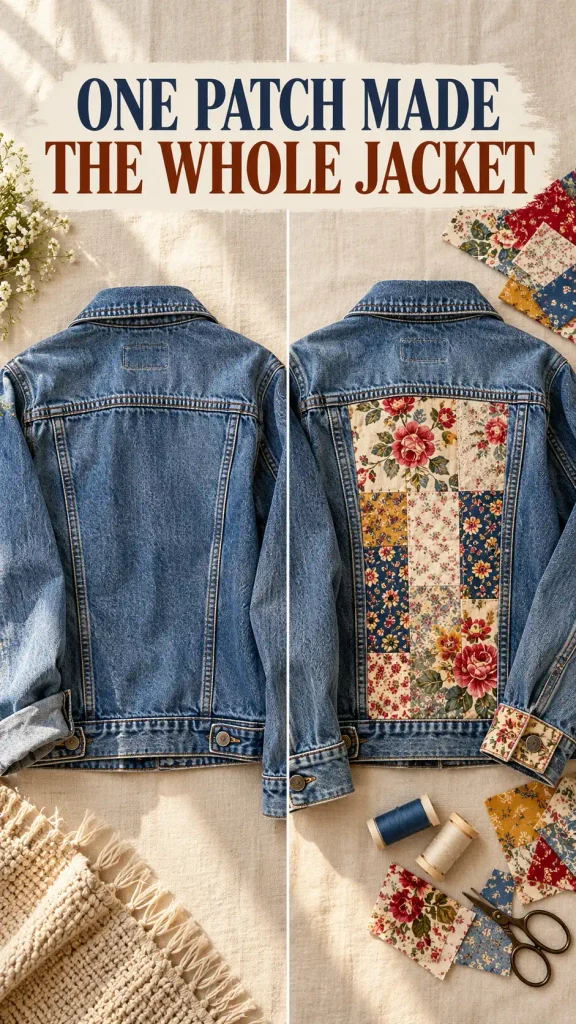
5. Use Fabric Scraps To Turn A Plain Denim Jacket Into A One-Off Piece
A basic denim jacket is useful. A denim jacket with one beautifully placed patchwork panel can become the item that quietly steals the entire outfit.
The key phrase is one beautifully placed. You do not need to cover every available centimeter. Try the center back panel, one shoulder, a pocket, or the lower yoke. Old floral cotton, plaid, bandana fabric, worn workwear, or leftover denim in a different wash can all work.
Repeat one small piece of the same fabric somewhere else—maybe on a cuff or pocket—to make the design look intentional rather than accidental.
Best for: plain denim jackets with good structure
Skill level: Confident beginner
Small tip: wash scrap fabric first so it does not shrink differently from the jacket later.
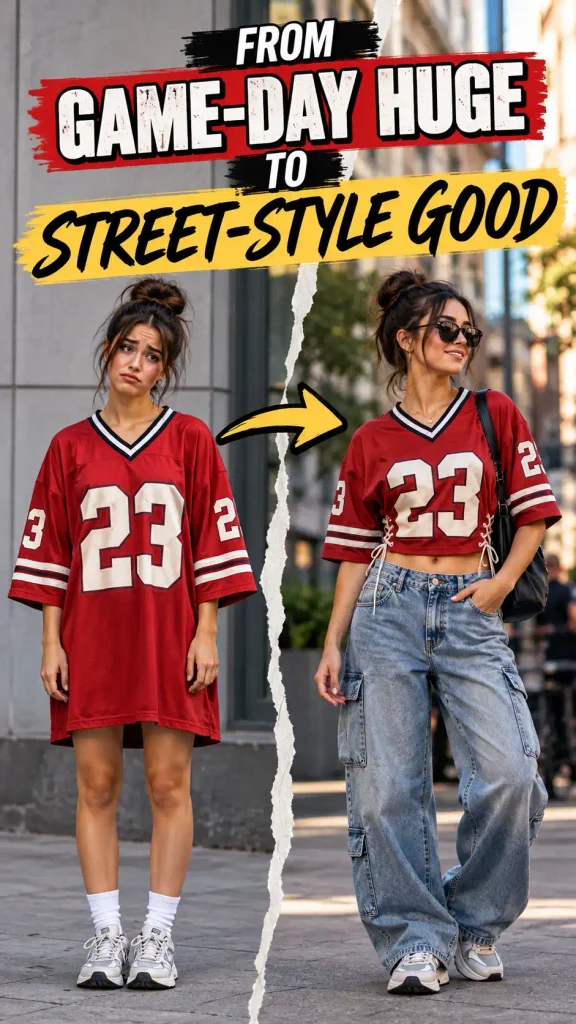
6. Turn An Oversized Sports Jersey Into Something You’d Actually Style
A huge jersey can look fantastic when oversized is the point. But if yours feels less “off-duty cool” and more “I borrowed this during an emergency,” a few changes can give it direction.
Try shortening the length, adding a clean side lace-up detail, or lightly shaping the body while keeping the original graphics intact. The trick is to work around the thing that makes the jersey interesting instead of chopping through it.
Pinterest’s summer trend report also highlighted jerseys and DIY denim as part of a broader off-duty sportswear moment, so this flip sits neatly between secondhand culture and current styling. Source: Pinterest Summer 2026 Trend Report.
Best for: oversized football, basketball, baseball, or vintage sports jerseys
Skill level: Confident beginner
Small tip: protect numbers, logos, and original graphics when deciding where to cut or seam.
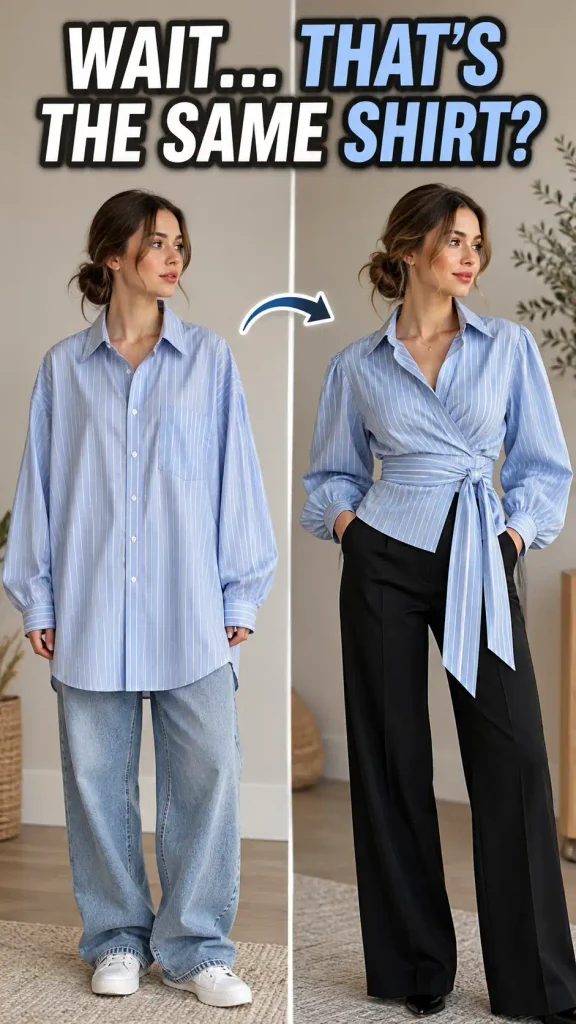
7. Turn A Long Button-Down Into A Wrap Top
Sometimes the easiest way to make an old shirt feel completely different is to stop asking it to behave like a shirt.
A long button-down has enough fabric to become a wrap-style top with a shaped waist and long ties. You can keep the collar for a sharper look or remove it for something softer. The sleeves can stay full and dramatic while the body becomes much more fitted.
This flip works especially well with striped shirts because the direction of the stripes makes every seam and overlap look more architectural.
Best for: oversized long button-downs
Skill level: Intermediate
Small tip: make the ties longer than you think you need; short wrap ties have ruined many otherwise excellent ideas.
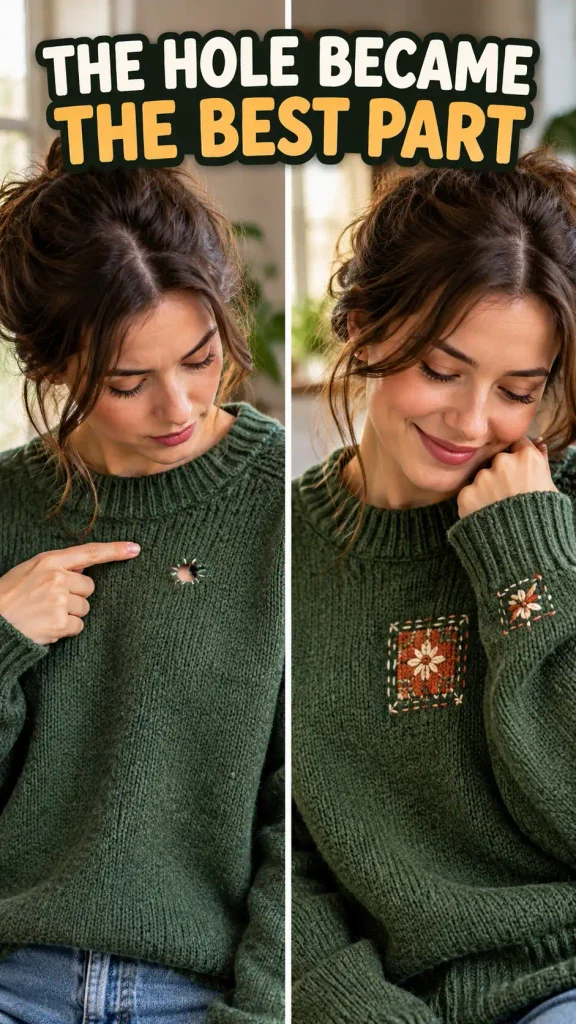
8. Rescue A Sweater By Turning The Damage Into A Contrast Feature
A small moth hole has an annoying talent for making an otherwise perfect sweater feel unusable.
Instead of trying to make the repair invisible, place a contrast knit patch, embroidered motif, or neat darn directly over the damaged area. If the hole is somewhere awkward, repeat a smaller version of the repair elsewhere so the first one looks intentional.
A visible repair has one major psychological advantage: you no longer need to make it disappear. The standard changes from “Can anyone tell?” to “Does this look good?”
Best for: wool or sturdy knit sweaters with localized damage
Skill level: Beginner to intermediate
Small tip: secure loose fibers around the hole before decorating over it.
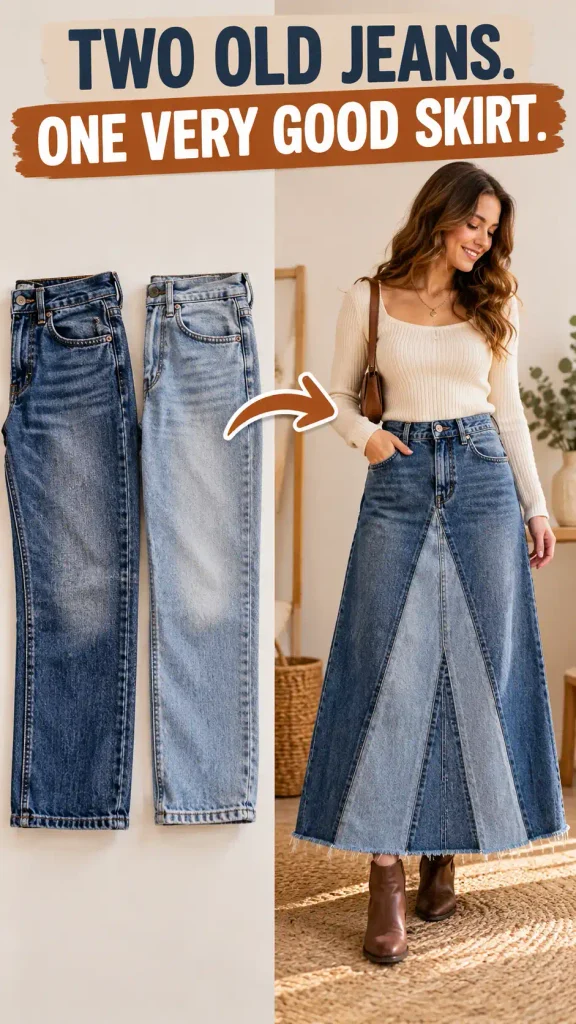
9. Turn Old Jeans Into A Denim Maxi Skirt
Two worn pairs of jeans can sometimes make a better skirt than either pair ever made as trousers.
The familiar version opens the inner leg seams and fills the gap with denim panels, creating a long A-line or straight skirt. Using denim in a slightly different wash makes the construction part of the look rather than something you are trying to disguise.
The result can feel surprisingly polished, especially if you keep the original waistband, pockets, fly, and some of the old seam lines. You are basically borrowing all the hard parts that somebody already sewed correctly.
Best for: jeans that fit at the waist but no longer work as jeans
Skill level: Intermediate
Small tip: use a longer stitch and a denim needle; multiple seam layers get thick quickly.
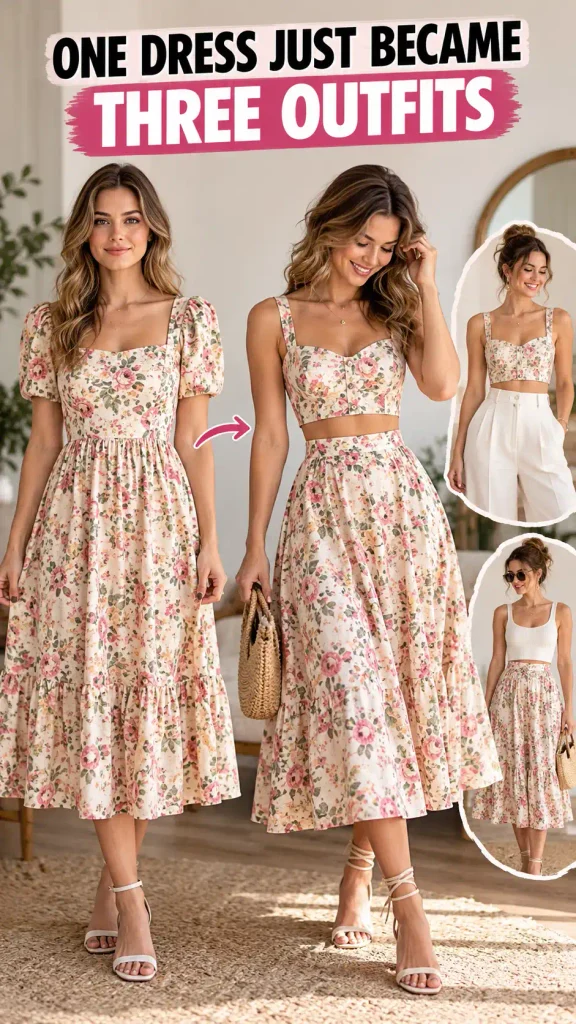
10. Turn A Forgotten Dress Into A Two-Piece Set
Some dresses are almost right. You like the fabric. You like the color. You simply never want to wear the entire thing at once.
That is where a matching set makes sense. Separate the bodice and skirt, finish both edges properly, and suddenly you have three outfit options: the top alone, the skirt alone, or both together.
This works best when the original dress has enough length and a fairly simple waist construction. Complicated zippers and fitted linings can turn an easy-looking project into a very long afternoon.
Best for: simple midi or maxi dresses with fabric you love
Skill level: Intermediate
Small tip: decide the finished length of both pieces before cutting; the seam allowances need fabric too.
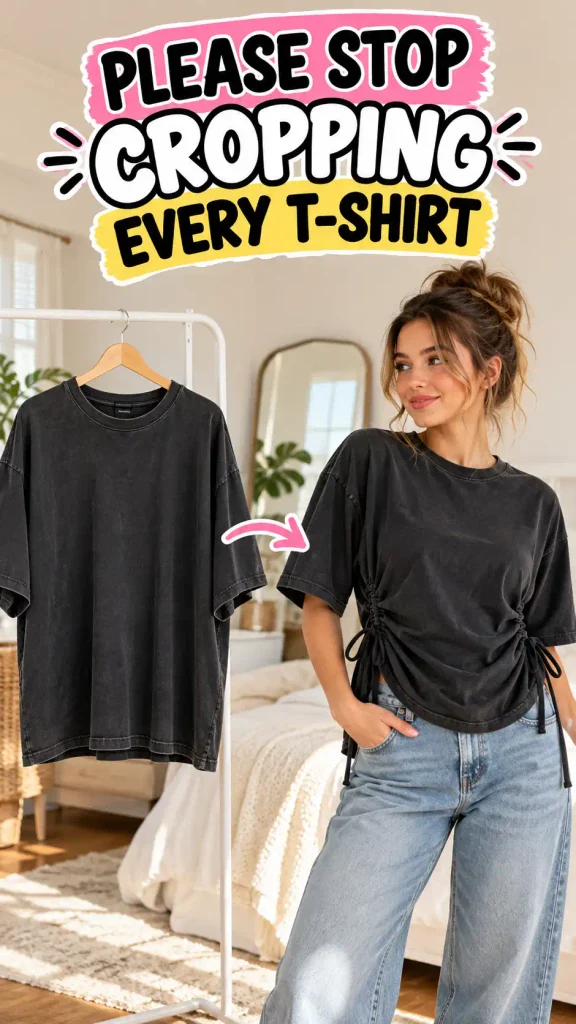
11. Ruche A Giant T-Shirt Instead Of Cutting It Into Another Crop Top
There are only so many cropped T-shirts one closet can absorb.
If you have an oversized tee with a color or graphic you still like, try adding side ruching instead. A channel sewn along each side seam with ties running through it lets you control the length and shape instead of committing to one permanent crop.
Leave it longer one day. Pull it up the next. The shirt gets more interesting without losing the reason you kept it.
Best for: oversized cotton tees and simple graphic shirts
Skill level: Confident beginner
Small tip: test the ruching placement with safety pins before sewing the channels.
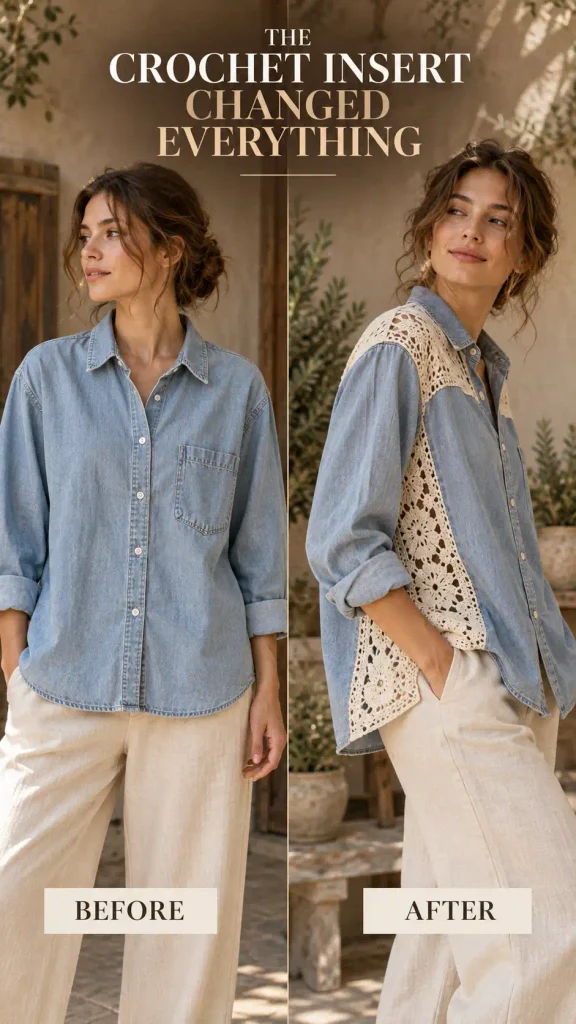
12. Add Crochet Panels To A Shirt That Feels Too Plain
If you crochet—or know somebody who does—small handmade panels can completely change a basic shirt without requiring you to remake the whole garment.
A crochet insert along the side seams, across the back yoke, or at the lower hem adds texture and a bit of breathing room. Cream crochet against blue denim or white cotton is an easy combination, but brighter scrap yarn can make the piece feel more playful.
Pinterest reports “crochet upcycle” searches up 523% in its 2026 Hobbies Trend Report, which makes sense: it combines the satisfaction of making something with the immediate reward of actually wearing it. Source: Pinterest.
Best for: denim shirts, cotton blouses, simple boxy tops
Skill level: Intermediate
Small tip: use crochet with enough structure to survive wear and washing.
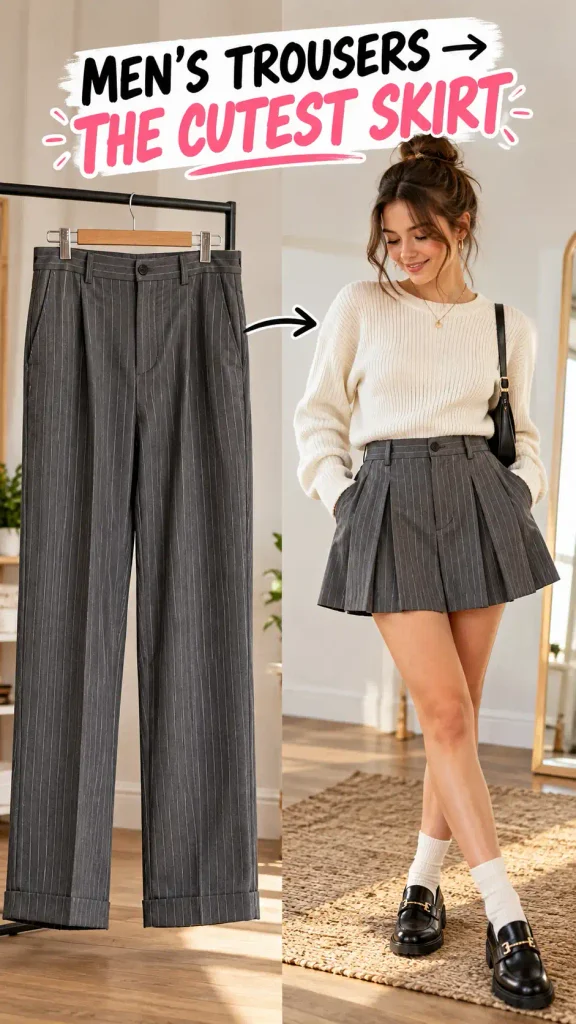
13. Turn Men’s Trousers Into A Pleated Mini Skirt
Men’s trousers often have exactly what a good mini skirt needs: decent fabric, useful pockets, and more material than you know what to do with.
Keep the waistband if it fits, shorten the legs dramatically, then use part of the leftover fabric to create pleats or extra width through the skirt. A pinstripe or subtle check can make the finished piece look surprisingly tailored.
And please keep the pockets if humanly possible. Women’s clothing has suffered enough.
Best for: roomy wool-blend or cotton trousers
Skill level: Intermediate
Small tip: make sure the waistband works before investing time in everything below it.
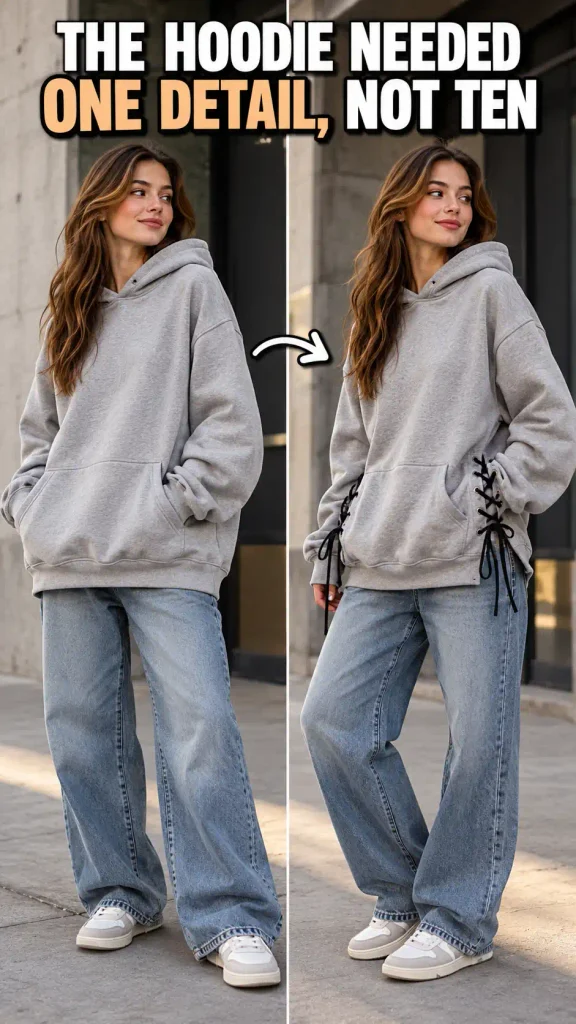
14. Give A Plain Hoodie A Lace-Up Side Detail
A hoodie does not need rhinestones, giant patches, seven zippers, and a personal manifesto to feel customized.
One side detail can be enough. Open a short section of the side seam, finish the edges, add evenly spaced loops or eyelets, and lace the section back together with cord or ribbon.
You get shape, texture, and adjustability without sacrificing the thing the hoodie was doing correctly in the first place: being comfortable.
Best for: oversized fleece hoodies with simple side seams
Skill level: Intermediate
Small tip: reinforce any eyelets or loops because fleece can stretch under tension.
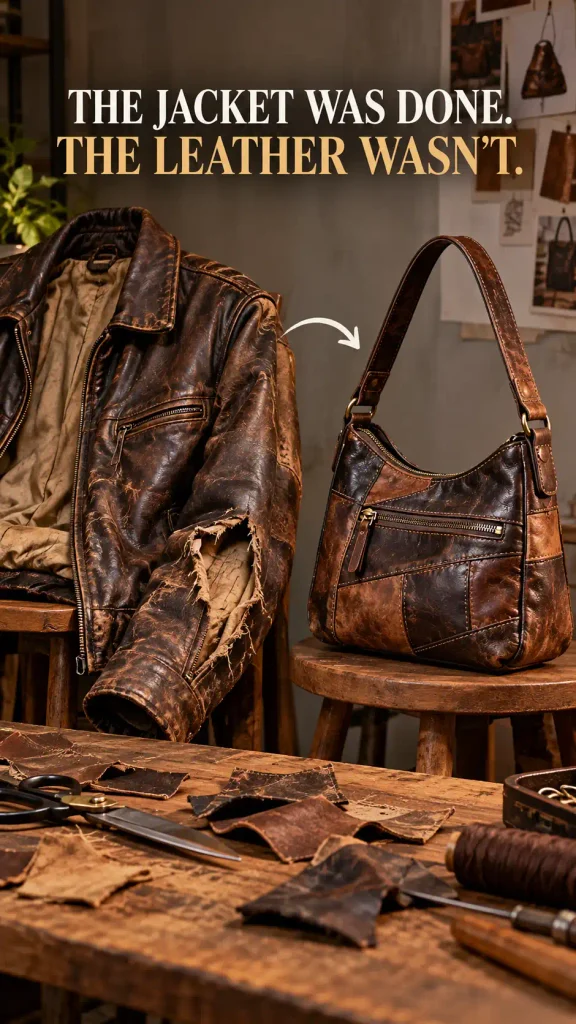
15. Turn A Damaged Leather Jacket Into A Patchwork Bag
Sometimes a garment is too far gone to remain a garment.
A leather jacket with torn sleeves, damaged lining, or an impossible fit can still contain large sections of perfectly usable material. Those panels can become a small shoulder bag, pouch, card holder, or patchwork tote.
The existing seams, pockets, and wear marks are not necessarily flaws. Used carefully, they give the new piece the exact character you would have paid extra for if a brand had done it first.
Best for: genuinely damaged leather or faux-leather garments that are no longer wearable
Skill level: Intermediate to advanced
Small tip: use clips rather than pins when possible; holes in leather do not politely disappear.
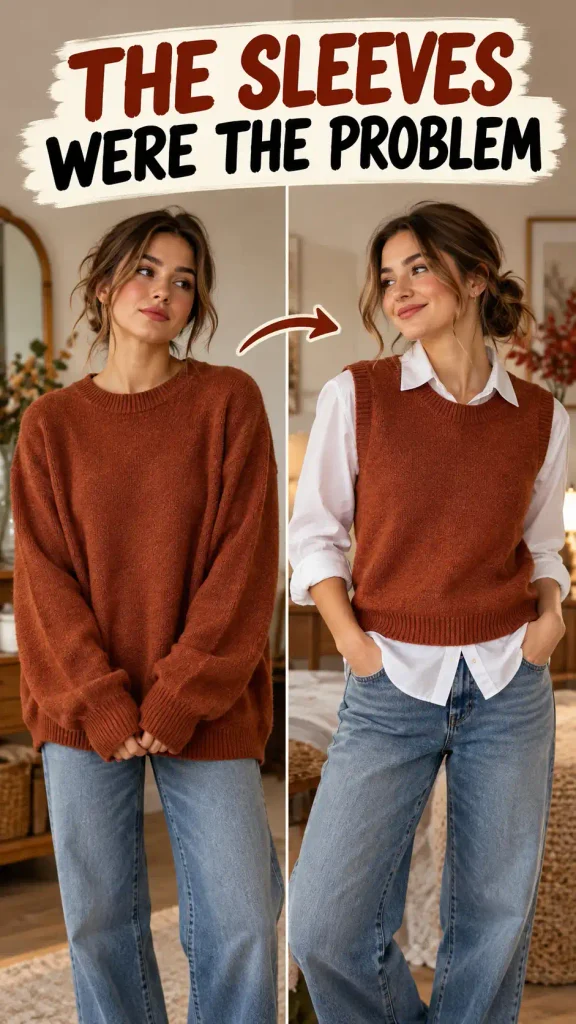
16. Make A Sweater Vest From The Sweater You Never Reach For
Maybe the body fits. Maybe the knit is nice. Maybe the sleeves just make the whole thing feel wrong.
A sweater-to-vest conversion can be surprisingly effective because it changes how the piece layers. Worn over a crisp shirt or long-sleeve tee, a knit you ignored for years suddenly has a job again.
The hard part is finishing the armholes so they look intentional. Depending on the knit, that might mean binding, ribbing, or carefully securing the cut edge before it has a chance to unravel.
Best for: sturdy knits with a body shape you already like
Skill level: Intermediate
Small tip: practice finishing on the removed sleeve fabric first.
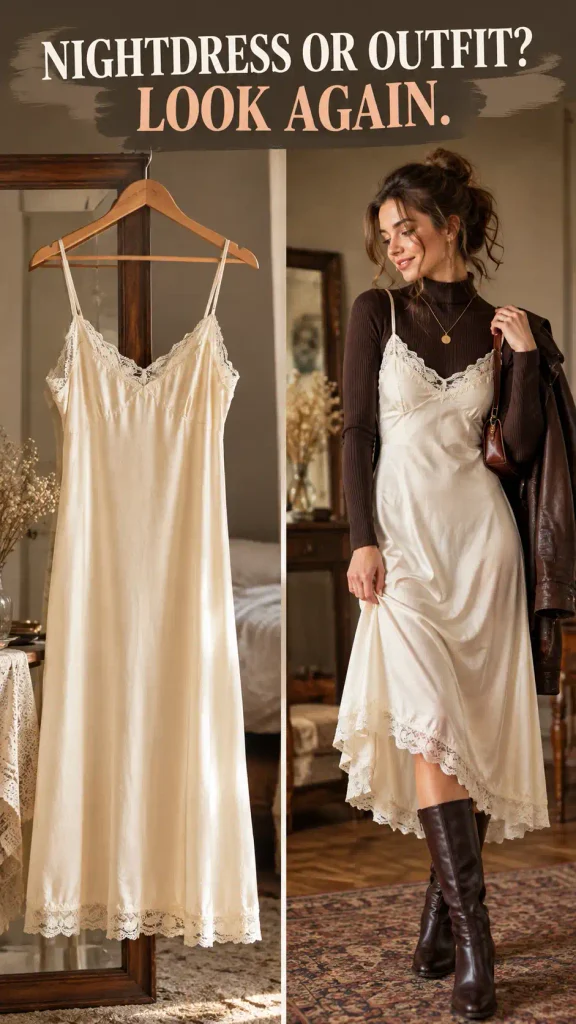
17. Turn A Vintage Slip Or Nightdress Into A Layering Piece
The difference between “old nightdress” and “romantic layering dress” is sometimes mostly styling—and sometimes one careful alteration.
If the fabric is in good condition, adjust the straps, refine the length, and consider adding a subtle lace insert or side split. Layer it over a fitted tee, fine knit, or under an oversized jacket so it reads like a deliberate dress instead of something you accidentally wore to answer the door.
This one is less about rebuilding and more about editing.
Best for: vintage slips and simple nightdresses in good fabric
Skill level: Beginner to intermediate
Small tip: inspect old lace and seams closely; delicate vintage fabric can tear under new stress.
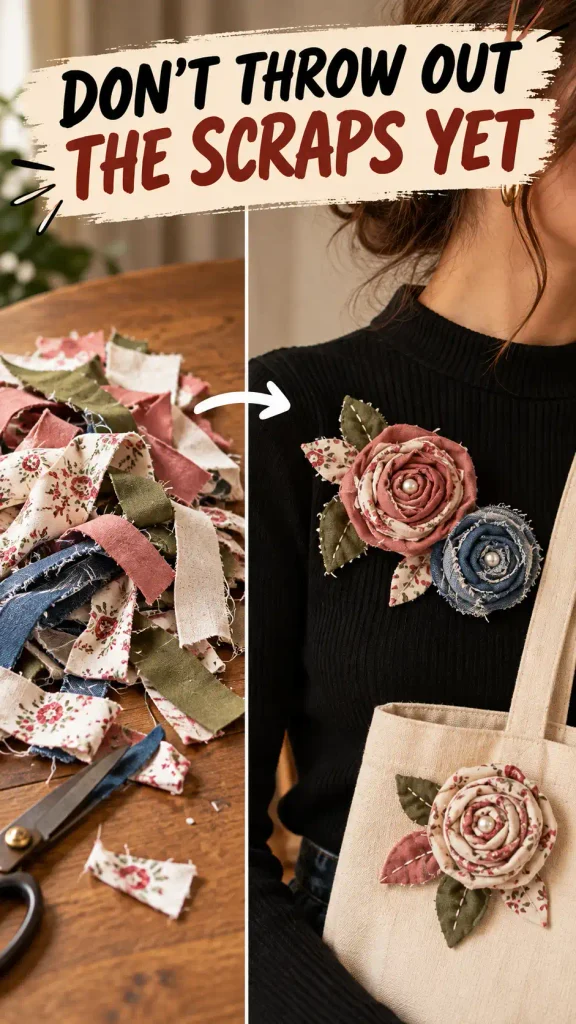
18. Use Tiny Fabric Scraps To Make Rosettes Instead Of Throwing Them Away
The scraps left after a bigger flip are usually too small to become clothing and too guilt-inducing to throw away immediately.
Fabric rosettes solve this suspiciously specific problem.
Twist or gather narrow strips into flowers and stitch them onto a plain tee, neckline, bag, choker, cardigan, or removable pin. Using the same fabric as your earlier project creates a nice little visual echo.
The smartest version is removable. Sew the rosette onto a pin back or brooch base and one scrap can move between several outfits instead of being permanently trapped on one shirt.
Best for: leftover cotton, satin, denim, jersey, or ribbon-like scraps
Skill level: Beginner
Small tip: make three different sizes and group them unevenly for a less craft-store-perfect look.
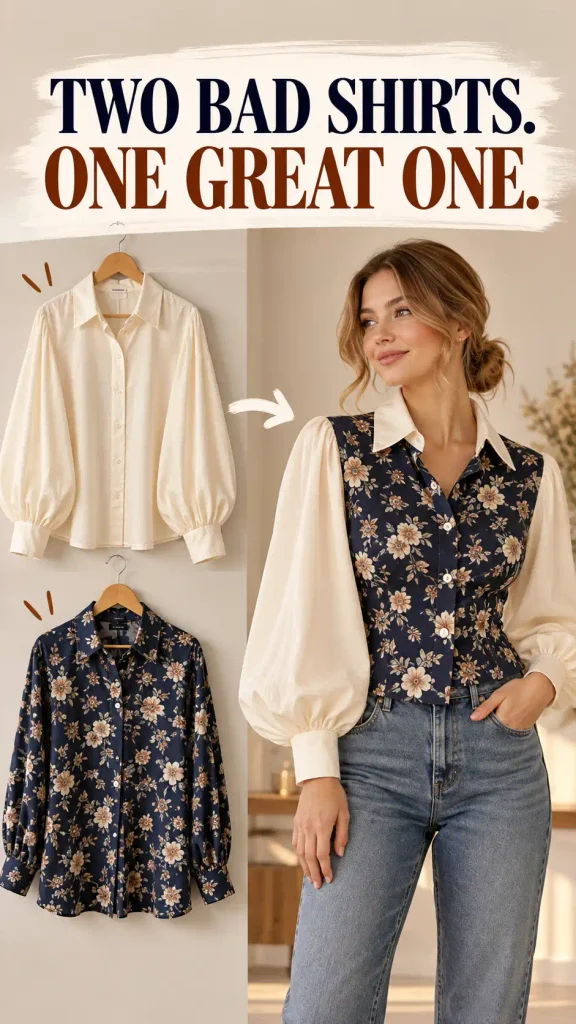
19. Combine Two “Almost” Shirts Into One You Actually Want
One shirt has the perfect sleeves but a boring body. Another has a great print but a fit that has never made sense.
You see where this is going.
Hybrid garments can look incredibly intentional when the fabrics share at least one thing: a color, weight, pattern scale, or overall mood. Keep one shirt as the structural base and use the second for sleeves, collar, pocket, side panels, or a back section.
The goal is not to prove that two shirts were involved. The goal is to make people wonder where you bought the finished one.
Best for: two woven shirts of similar fabric weight
Skill level: Intermediate
Small tip: use the better-fitting garment as the base; fitting problems multiply when you combine them.
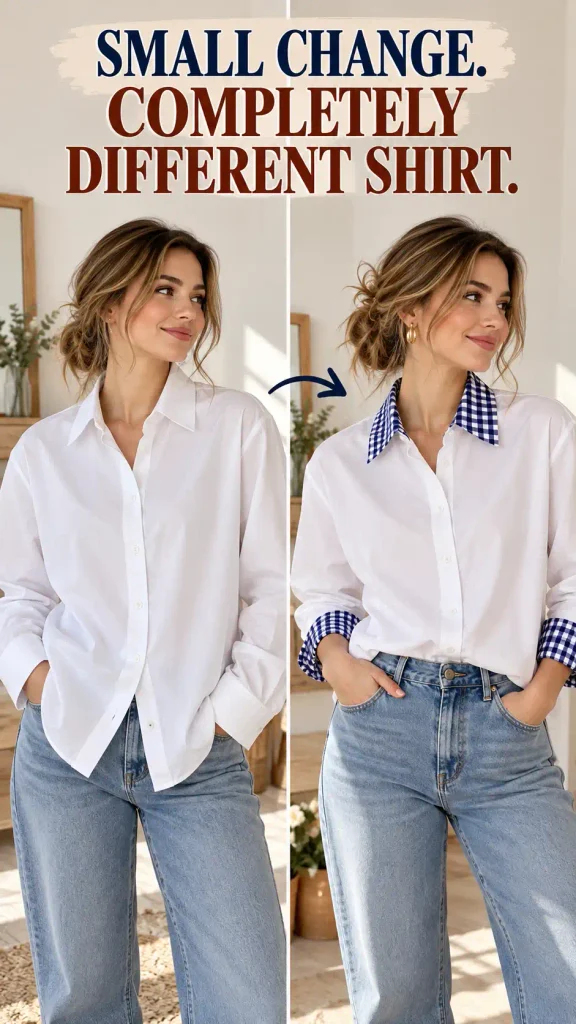
20. Add Contrast Cuffs And A Collar To A Basic Shirt
If you like your shirt but it feels painfully ordinary, replacing the collar and cuffs can change more than you would expect.
A white shirt with gingham cuffs. A chambray shirt with floral collar points. A black blouse with cream contrast pieces. These are small areas, which means you can use fabric scraps that would never be large enough for a full garment.
It is also one of the cleaner ways to experiment with pattern because the original shirt still does most of the visual work.
Best for: plain button-ups with sound construction
Skill level: Intermediate
Small tip: trace the original collar/cuff pieces before unpicking them so you have a reliable pattern.
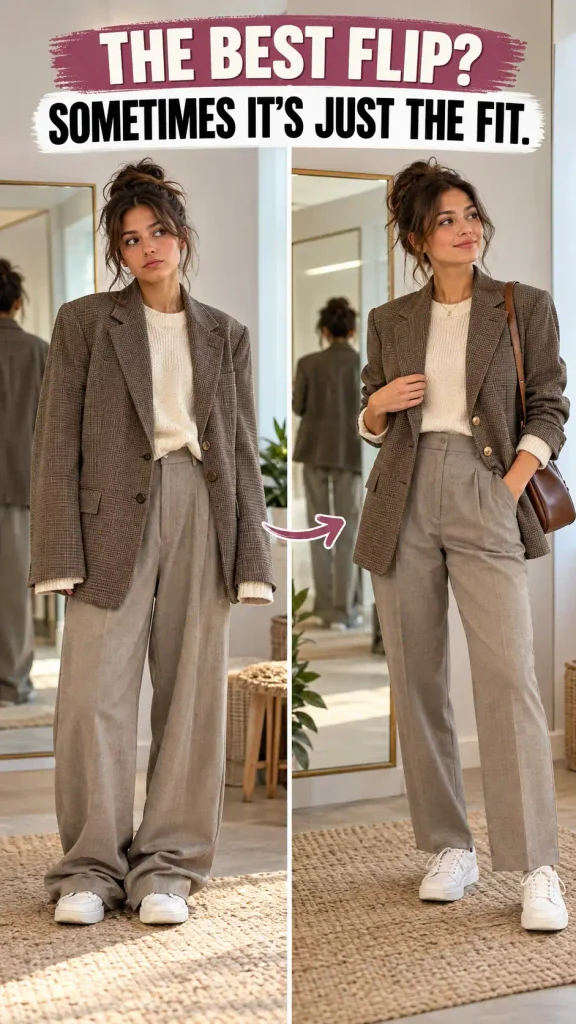
21. Before You Cut Anything, Try The Boring Flip: Make It Fit Properly
This is probably the least dramatic idea on the list, which is exactly why it deserves to be here.
Not every old piece needs to become a new species of clothing.
Sometimes the transformation is hemming trousers to the right break. Shortening sleeves by an inch. Moving a button so a shirt sits correctly. Taking in a side seam. Replacing cheap buttons. Fixing a dragging lining. Pressing the garment properly for the first time in its adult life.
It will not produce the wildest before-and-after video. It may produce the thing you wear most.
And in a way, that is the entire point. Repairing, remaking, and keeping clothes in use longer are central ideas in circular fashion; the Ellen MacArthur Foundation specifically identifies repair, resale, rental, and remaking as ways to keep existing products in use rather than treating new production as the only answer. Source: Ellen MacArthur Foundation.
So if something in your wardrobe is “almost right,” maybe do not start with scissors.
Start with a mirror.
Best for: literally anything you like but rarely wear because the fit annoys you
Skill level: Beginner to professional, depending on the alteration
Small tip: the best thrift flip is the one that gets worn, not necessarily the one that changed the most.
The dangerous thing about learning to thrift-flip is that eventually you stop seeing old clothes as finished objects.
A bad hem becomes extra fabric. A rip becomes a design decision. An oversized shirt becomes raw material. That weird cardigan at the back of the closet starts looking less like a mistake and more like a project.
And suddenly the question is not, “Would I wear this?”
It is, “What could this become?”
Which of these 21 flips would make you rescue something from your closet instead of getting rid of it?