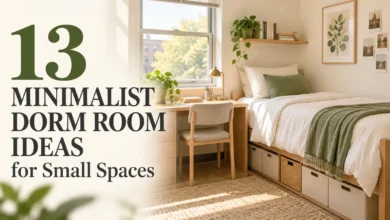
A cottagecore dorm room can start with a rose-print quilt, a little worn-looking wood, and a lamp that makes your desk feel inviting after dark. You can get that vintage, romantic mood through things you take home at the end of the semester, even when the walls and furniture belong to the school.
These 13 cottagecore dorm room ideas range from five different bedding directions to useful changes for your desk, storage, and shared space. Choose one bed look, then borrow the smaller ideas your room actually needs. There is no shopping list to complete.

The visuals are AI-generated design concepts, not photographs of completed dorm rooms. Use them for styling inspiration and adapt every arrangement to your measurements and residence hall rules.
Choose Your Starting Point Before You Shop
For a romantic room, start with the rose sprigs in idea 1. If you prefer a country-house feel, try sage gingham or blue toile. If patterned bedding feels too busy, the ivory textures in idea 4 give you the same softness with much less print.
Check your assigned mattress dimensions before ordering sheets, and measure the desk, dresser, and usable under-bed space. Keep the supplied furniture finish in your palette: honey oak works with faded greens, while darker wood gives cream and blue more contrast.
Read your own housing rules before buying wall decor, adhesives, extra furniture, or lighting. Policies differ: Columbia Housing’s decorating guidelines, for example, prohibit added curtains and fabric wall hangings. A product described as removable does not make it permitted in your building. Keep exits, windows, heaters, vents, and fire equipment clear.
1. Start With Tiny Rose Sprigs on Cream Bedding
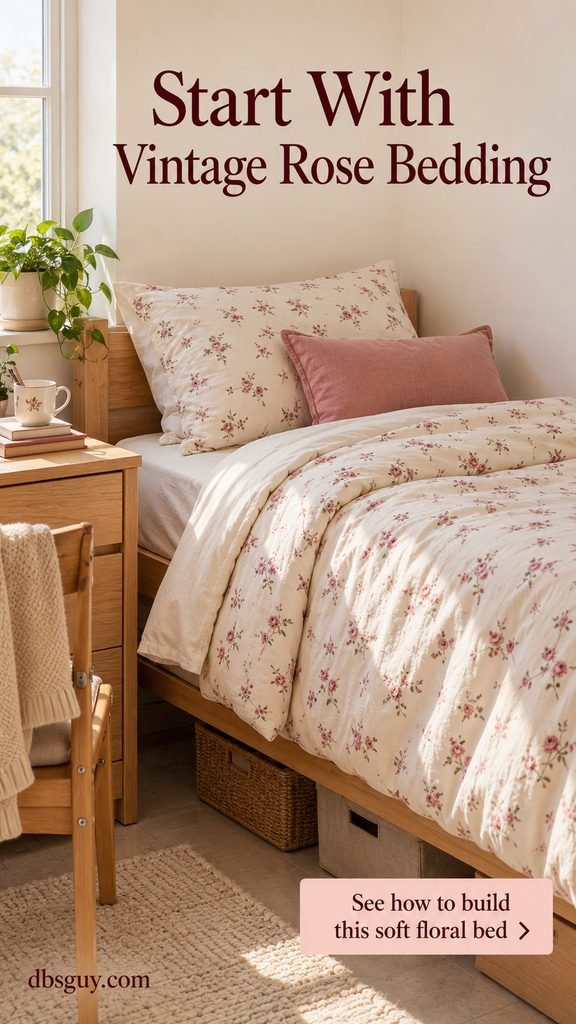
A small rose print makes the bed feel like something borrowed from an old guest room rather than a matching dorm bundle. Look for dusty pink flowers with a little green on an ivory background. The empty space between the sprigs is what keeps the pattern gentle.
Let the duvet or quilt carry the print, turn back a plain cream sheet, and add one solid rose cushion if you want more color. You can use a matching sleeping pillowcase, as shown, without adding another decorative pillow. Leave some of the existing wood frame visible to balance the sweetness.
If you already own neutral bedding, start with a floral pillowcase or a narrow folded quilt instead. Our pink dorm room ideas offer more ways to pair dusty rose with the furniture you already have.
2. Give Sage Gingham One Small Floral Partner
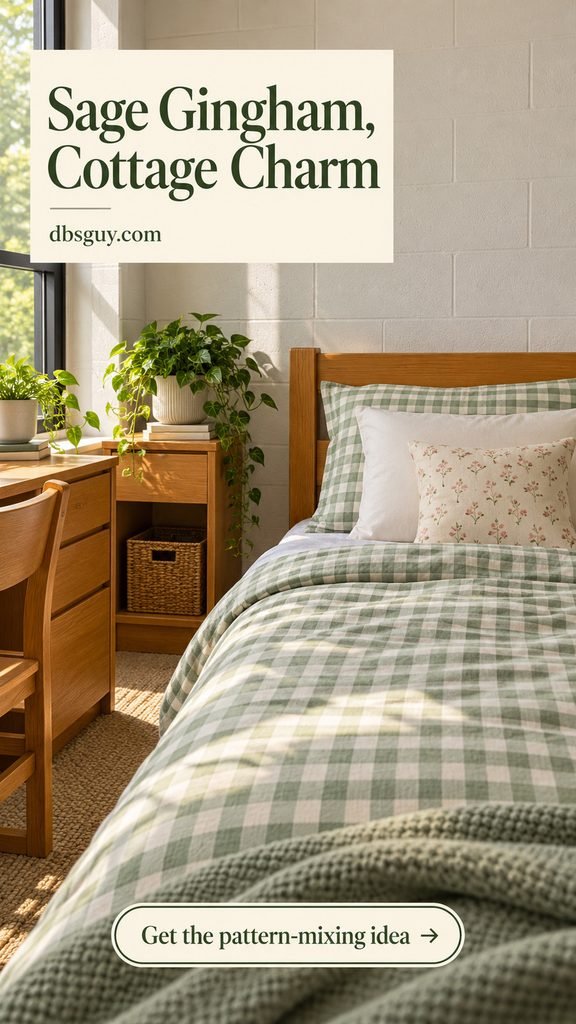
Gingham brings a clearer, more orderly pattern to cottagecore. A sage-and-cream checked duvet feels especially comfortable beside honey-colored dorm furniture. Use cream for the sleeping pillow so the checks have a quiet edge.
To mix in a floral, keep it smaller than the gingham: one little flower-print cushion is enough. A large botanical print competing with equally large checks can make a narrow bed look crowded. Compare the fabrics together rather than assuming two items labeled “sage” will match.
This is a useful choice if you want countryside character without a room full of roses. Keep the duvet as the main patterned surface and use plain desk accessories or storage nearby.
3. Choose Blue Toile for a Romantic Country-House Look

Toile uses detailed scenic illustrations, often in one color on a light ground. On a dorm bed, a faded blue pastoral print gives you a vintage focal point without adding objects to the floor or desk.
Pair the illustrated duvet with ivory pillows and a plain blue throw. A narrow blue edge on a pillow can connect the pieces without introducing another print. Let the little trees and landscape scenes stay visible; a pile of cushions would hide the feature you chose the bedding for.
Choose this version when you like a cooler palette or want to work with dark wood furniture. For a cleaner blue alternative, compare the textile combinations in our blue dorm room ideas.
4. Build a Soft Ivory Bed With Crochet and Embroidery
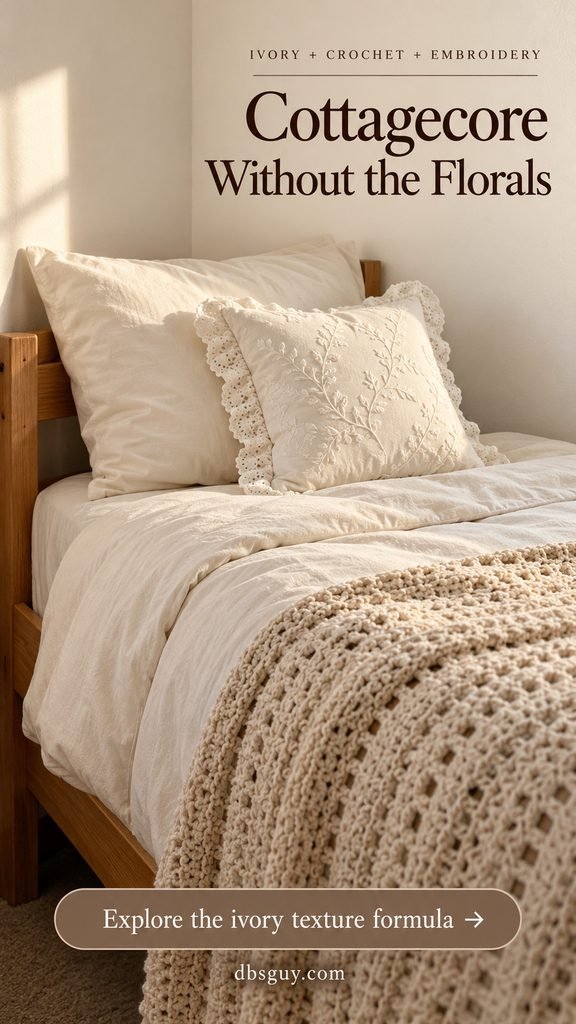
You do not need floral prints to make a dorm feel cottagecore. A plain ivory duvet, an embroidered cushion, and a small crochet throw can supply the handmade-looking detail through texture instead.
Keep the cotton duvet as the largest surface. Fold the crochet across the lower part of the bed, where its open stitches show against the plain fabric, and choose an embroidered cushion with a modest eyelet edge. The different surfaces keep the cream palette from looking flat.
Check care labels before combining delicate trim with everyday bedding. An open-stitch throw may catch on jewelry or bag hardware, so store it away from your backpack. If regular machine washing is a priority, choose pieces whose care instructions fit that routine.
5. Make a Patchwork Quilt the Whole Color Plan

A patchwork quilt gives you several little fabric stories in one piece: a washed green square, a faded rose print, a touch of butter yellow. It works particularly well when the rest of your bedding is plain.
Use the quilt to choose your few supporting colors. Pick one shade for a pillowcase or notebook and let the other colors stay in the patchwork. You do not need a separate accessory for every square. White or cream sleeping pillows give the quilt a simple stopping point at the top of the bed.
The heirloom effect can come from a new quilt or one you already own. Before bringing a family piece, check its condition and care needs; a fragile keepsake may be better enjoyed at home. For secondhand textiles, inspect seams, staining, and odors and make sure you can clean the item appropriately before use.
6. Put a Small Botanical Gallery on a Corkboard

Vintage-style plant illustrations bring the garden indoors without requiring a trailing vine around the room. Gather a few botanical postcards, small sketches, or prints you have permission to reproduce. Cream paper and muted greens connect them even when the flowers differ.
Use your room’s existing bulletin board if it has one. The concept shows a compact freestanding corkboard with five cards and visible cork between them. A desktop version needs a stable stand and enough desk depth to leave your actual work area open.
Arrange the cards before pinning anything, and store spare pins in a closed container. If the desk is shallow, use fewer cards on the supplied board rather than buying a larger display. Keep this idea small enough that your room can collect real photos and memories as the semester goes on.
7. Turn the Supplied Desk Into a Cottage Writing Spot
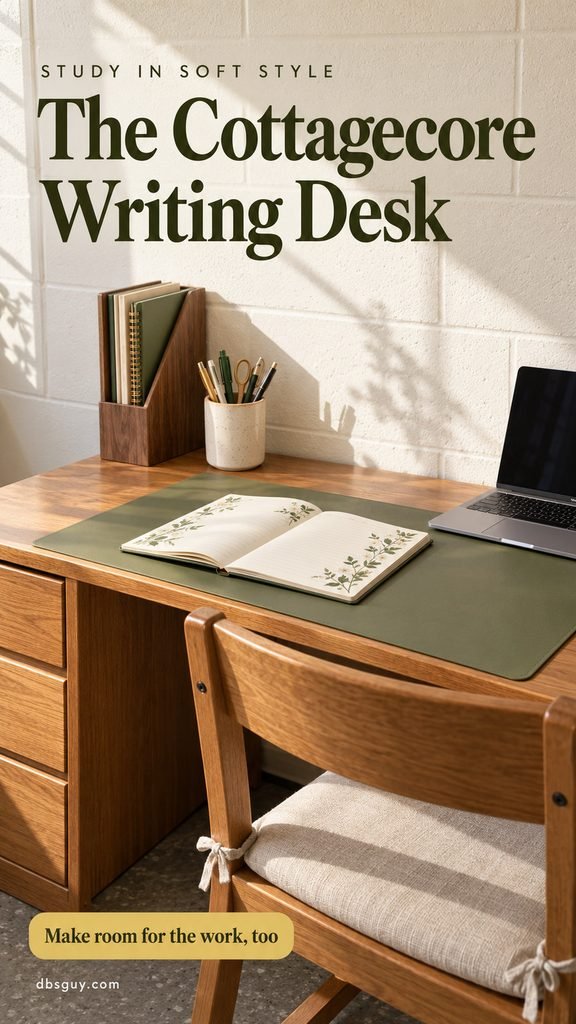
Let the desk’s existing wood do some of the decorating. A muted olive desk mat, a cream pen cup, and a botanical notebook can make a standard study station feel connected to the bedding while still looking like somewhere work happens.
Set down your laptop and open your largest notebook first. Add the mat and organizer around that working footprint, checking that drawers still open and the chair can pull out. Keep a single upright file holder at the back for papers that would otherwise spread across the surface.
A chair cushion can soften the look, provided it fits securely and does not make sitting at the desk awkward. Skip a decorative runner across the desktop: it creates another thing to straighten whenever you need a flat writing surface.
8. Add a Vintage-Inspired Lamp for Evening Light

A compact brass-tone lamp with an ivory shade adds a vintage detail even when it is switched off. The scalloped edge in this concept gives the corner a little romance without needing a new piece of furniture.
Choose a modern lamp and compatible LED bulb that meet your housing rules and the manufacturer’s specifications. A warm-white light is a good starting point for the soft evening effect shown here. Check the glow in your room if you can; shade material and nearby surfaces change how it looks.
Measure the base and shade as well as the height. Leave space to reach the switch, keep fabric away from the lamp, and route its cord where furniture will not pinch it and nobody will walk over it. Use suitable task lighting for reading, and agree on evening light with your roommate. You do not need to buy an old electrical fixture to get an old-fashioned shape.
9. Repeat Woven Texture in Useful Under-Bed Storage
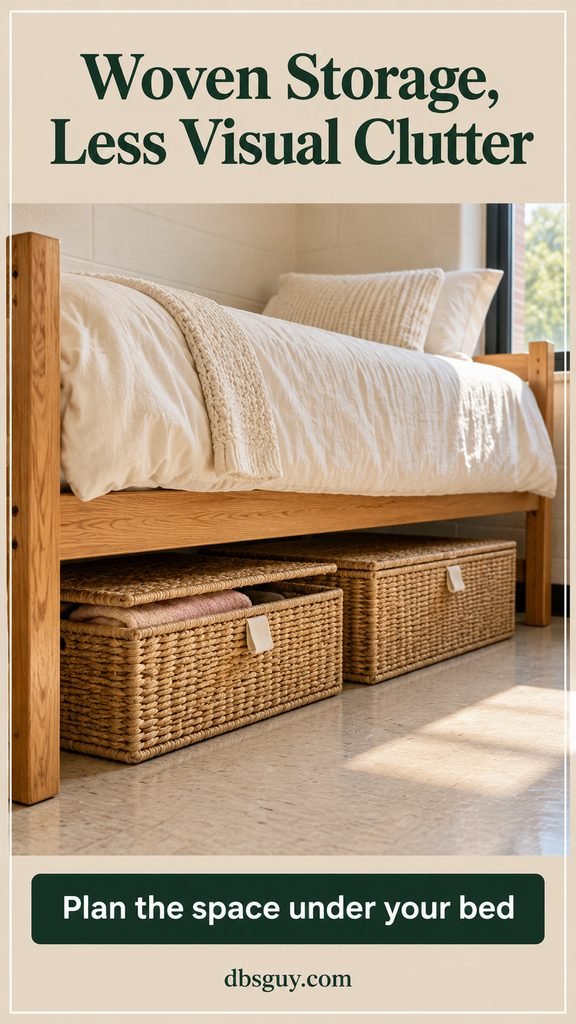
Low woven boxes make exposed under-bed storage part of the room’s palette. Their warm texture sits comfortably with wood furniture and cream bedding, while lids keep spare linens or off-season clothes visually contained.
Measure from the floor to the lowest brace, then check the full box height with its lid and handles. Measure the space between the legs and the floor area needed to pull a box out, too. The two boxes shown are an example; buy the number that fits your bed and belongings.
For delicate clothing, choose a smooth lining or use an appropriate inner bag so rough fibers do not snag fabric. Put everyday items nearest the accessible side. Work with the bed’s approved setup rather than adding improvised risers to accommodate a taller basket.
10. Give the Dresser One Oval Tabletop Mirror

An oval mirror with a brass-tone frame creates a small vintage vanity area on the furniture you already have. Choose a tabletop model with its own stable stand, then add a little floral dish for jewelry or hair ties.
Check the stand’s full depth and how it behaves when you open the drawers. A mirror that fits only by balancing near the edge is too large for that dresser. The compact mirror in this concept leaves most of the surface available for everyday use.
Look at the reflection from both the bed and your chair. Turn the mirror if it directs distracting glare toward either spot. A small new vintage-style piece can give you the shape you want without the weight and installation needs of a large antique wall mirror.
11. Let a Faded Floral Rug Bring Pattern to the Floor

If you want plain bedding, put the meadow pattern beside the bed instead. A faded floral runner in dusty pink, sage, and parchment adds cottage character without covering your duvet in flowers.
Map the footprint on the actual floor before ordering. Focus on the area where your feet land, with door swings, drawers, the walking route, and your chair fully usable. A smaller rug that lies flat is more useful than one that bunches under the desk or catches every time the door opens.
Choose a low-pile construction and a floor-compatible backing or pad allowed by your hall. Read the cleaning instructions: “washable” does not tell you whether the rug fits your available laundry machine. Keep cords off the rug and avoid running them underneath it.
12. Add a Tiny Meadow Arrangement to the Dresser

A few artificial daisy stems in a short ceramic vase can provide the garden detail without a roomful of plants. In the concept, three compact stems sit in one cream bud vase, leaving plenty of useful surface around them.
Choose a vase with a stable base and arrange the stems so they do not reach across a lamp, laptop, or drawer opening. Keep the arrangement low enough to see over from your usual seat. If your school restricts artificial greenery or decorative materials, use a botanical illustration from idea 6 instead.
A small arrangement is easy to pack away, and you can use a vase you already own. Dust the leaves when you clean the dresser. For broader styling inspiration, our cottagecore bedroom ideas explore the same gentle palette; borrow the portable details that fit college housing.
13. Connect Two Different Beds With a Shared Cream Base
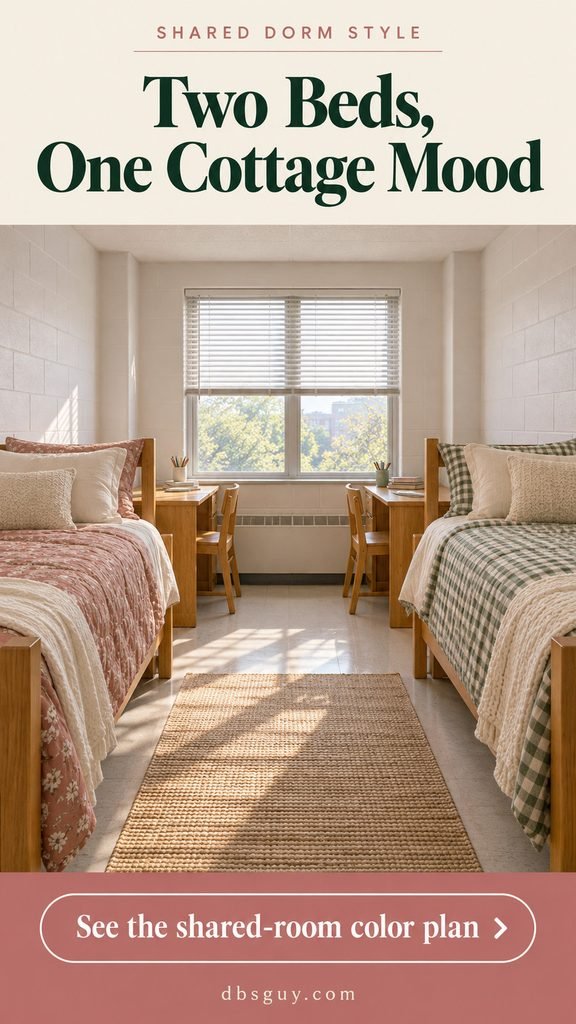
A shared cottagecore room can look coordinated while each roommate keeps a different pattern. Let one bed carry faded rose florals and the other sage gingham. Cream pillows and the matching supplied wood furniture give them a connection.
Share fabric photos before buying so the cream and green tones feel comfortable together. Then agree on purchases you actually share, who pays for them, and who takes them home. Keep individual accessories on each side, and decide together before placing anything in the middle of the room.
The center aisle needs to work when drawers are open and somebody is getting ready. If your roommate prefers another style, keep cottagecore within your own bedding and desk; matching beds are optional. Coordinating a few colors should make living together easier, not turn decorating into another assignment.
Put Together a Look You Can Live With
Choose one of the five bed directions, then solve one practical problem. A rose bed could use woven storage; an ivory bed might need the botanical board to bring in a garden reference. Add a lamp only if the room needs another light, and wait on a rug until you have seen the actual floor space.
Make a short list of what you already own before browsing. Spend first on things that need to fit or work correctly, such as sheets, storage, and lighting. Leave the small decorative purchase until after move-in. One piece you enjoy using is a better finish than a collection that leaves nowhere to put your books.
Cottagecore Dorm Room FAQs
How can I get the look on a small budget?
Keep your current bedding and change one visible layer: a floral pillowcase, a quilt from home, or a textured throw. Use existing wood furniture and repurpose a clean dish as a catchall. Make a spending cap before shopping, and buy storage only after measuring what it needs to hold.
Can I decorate without hanging anything on the walls?
Yes. Bedding, a permitted lamp, woven boxes, a tabletop mirror, and a small vase can carry the style. If tabletop space is limited, prioritize bedding and storage. A freestanding display is an option only when its stand leaves enough space to use the surface underneath.
What if my dorm has cinder-block walls or orange-toned wood?
Use the existing finishes as your starting samples. Ivory softens a plain wall; dusty rose, sage, and faded blue are worth comparing beside warm wood. Check the actual fabrics in daylight and lamplight before committing to several pieces. Leave the wall finish alone and introduce the palette through portable items.
Do I need vintage furniture or real plants?
No. A small-scale floral, crochet detail, wood finish, and botanical illustration can suggest the style. The school furniture can stay central to the room. Choose real plants only if permitted and suited to your light and care routine; they are a separate responsibility, not a requirement for cottagecore.
Can I use peel-and-stick wallpaper, hooks, or a canopy?
Only when your own residence hall explicitly allows the specific product and installation. Rules for adhesives, textiles, and overhead decorations vary, and removable products can still leave damage. None of these 13 ideas requires wallpaper, a canopy, or ceiling attachments, so you can start with portable pieces while checking permission.