This post contains affiliate links. If you buy through them, I may earn a small commission at no extra cost to you.
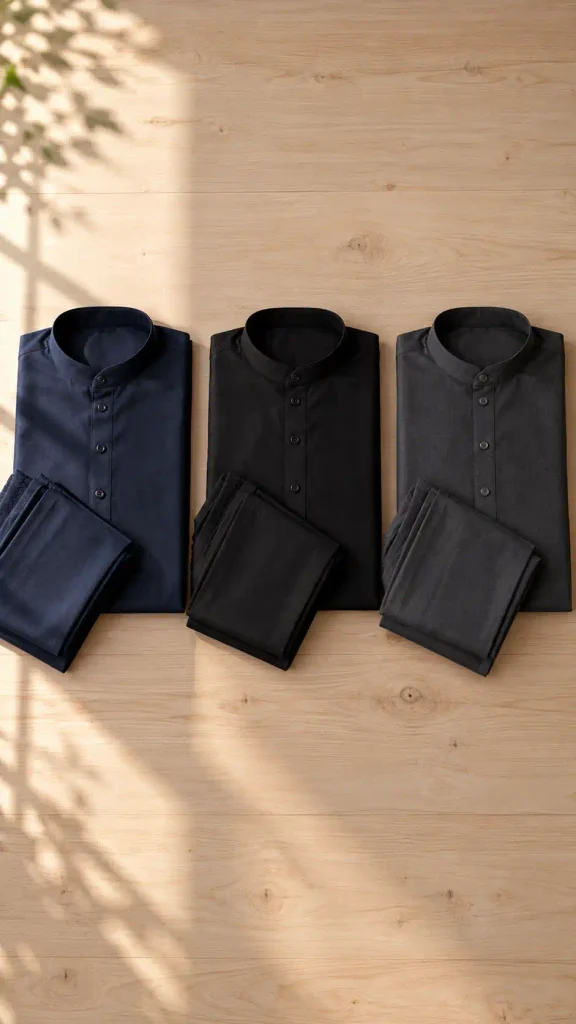
There’s usually no law about what you wear to court. There are, in some courts, real consequences for getting it wrong.
The Northern District of Florida warns that jurors dressed inappropriately will be sent home and ordered to appear on a future date. Many courthouses post signs — no shorts, no tank tops, no hats. And individual judges set their own standards, which vary.
Which makes the first step checking the specific court’s website, not reading a general guide.
Beyond that, the standard is consistent and it isn’t about looking good. It’s about looking like you’re taking it seriously.
What the Rules Actually Are

Where they come from, and how much they vary.
There’s no federal law mandating courtroom attire in the US. Individual courts and judges set their own standards — which means the requirement genuinely differs between a federal court, a state court and a traffic court in the same city.
What’s commonly posted:
No shorts. No tank tops. No hats.
And frequently no flip-flops, no mini-skirts, and nothing with offensive text or images.
And some courts state a positive standard.
The U.S. District Court for the Central District of California, for instance, states that business attire is strongly suggested for jurors.
And some enforce it.
Being sent home and rescheduled is a real outcome in some jurisdictions — which is a wasted day and, if you’re a party, potentially worse.
Which produces the only reliable first step:
Check the court’s own website.
Most publish their expectations. It takes two minutes and it supersedes everything else here.
And if you have a lawyer, ask them.
They know the specific judge, the specific court and the specific proceeding — and this is exactly the kind of small question lawyers are used to being asked. Guessing when you have access to someone who knows is the avoidable error.
The Standard
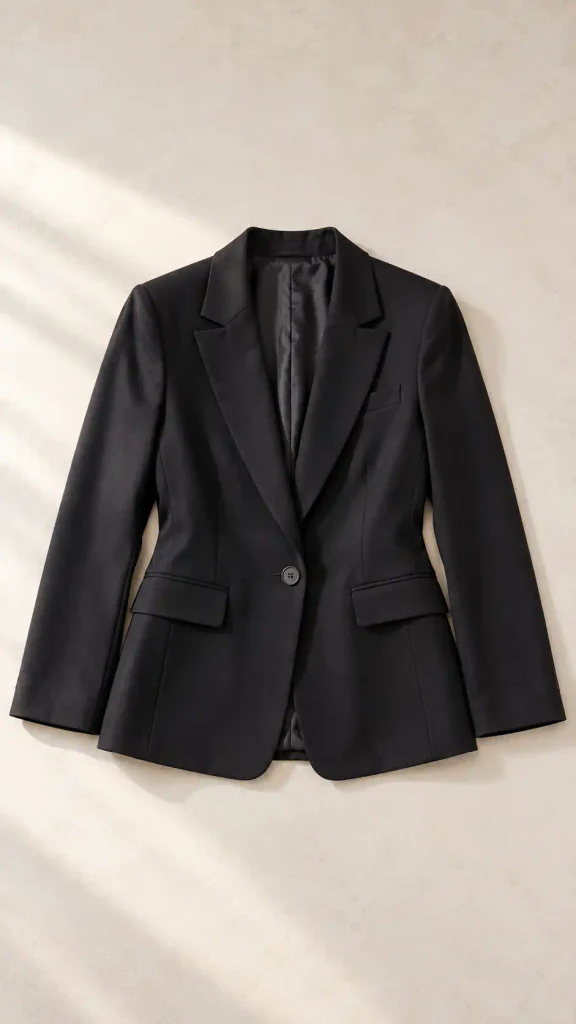
Business formal at the top, business casual as the floor.
The safest choice:
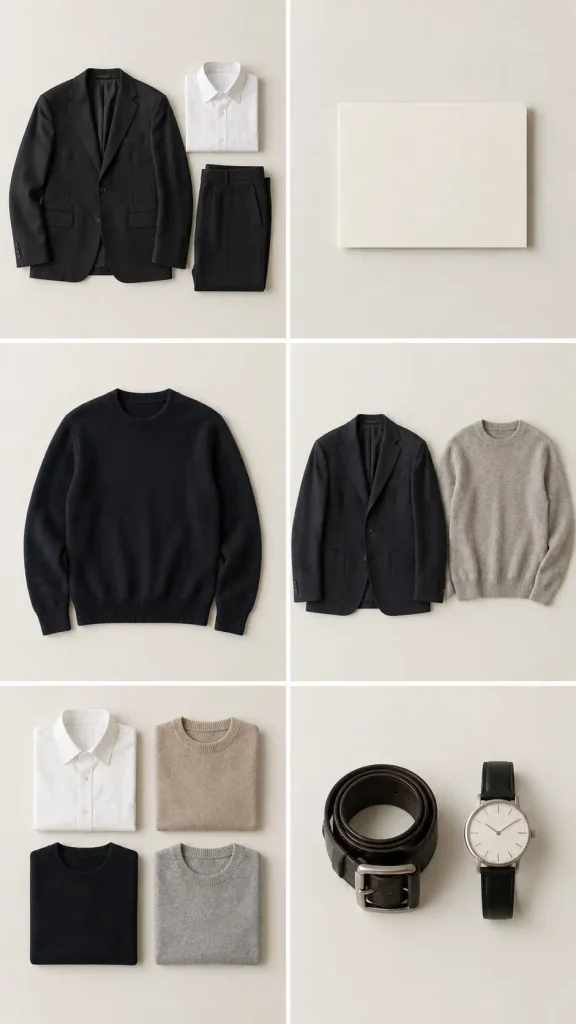
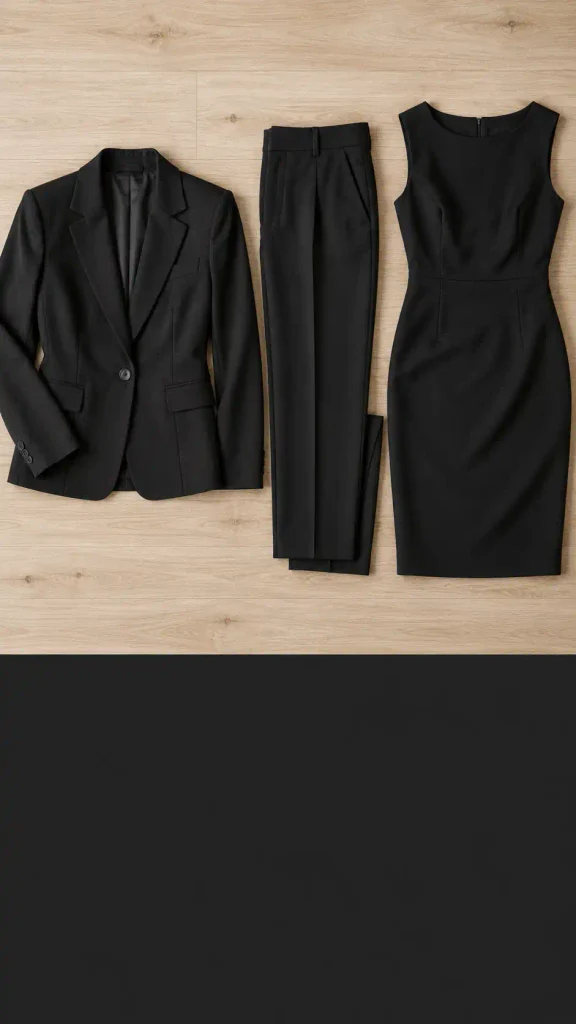
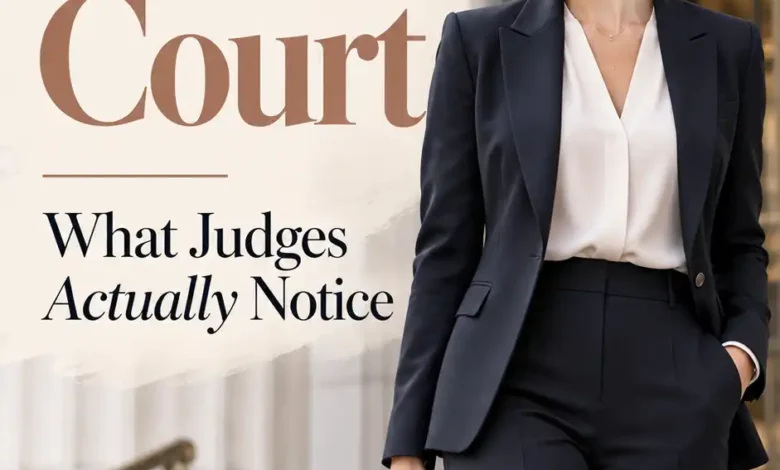
A dark suit — navy or charcoal — with a light collared shirt, a subdued tie if you wear one, and closed-toe leather shoes.
Or the equivalent: a dark suit, a tailored dress, or a skirt or trousers with a jacket.
The minimum:
Dress trousers or a skirt in a neutral color, with a collared shirt or a blouse, tucked in and pressed.
And clean closed-toe shoes.
And the guiding phrase attorneys use:
Dress as though you’re interviewing for a job you badly want. Which sets the level accurately — serious, conservative, and not attempting to make an impression beyond competence.
What to avoid:
Jeans, shorts, athletic wear, trainers, sandals and flip-flops.
Hats indoors.
Anything with a logo, a slogan or a graphic.
Bright colors, loud patterns, and anything that draws the eye.
And heavy fragrance, which is a genuine consideration in a small enclosed courtroom.
And the principle underneath all of it:
Nothing should be memorable.
The aim is that nobody in the room could describe what you were wearing afterward.
Does It Actually Matter
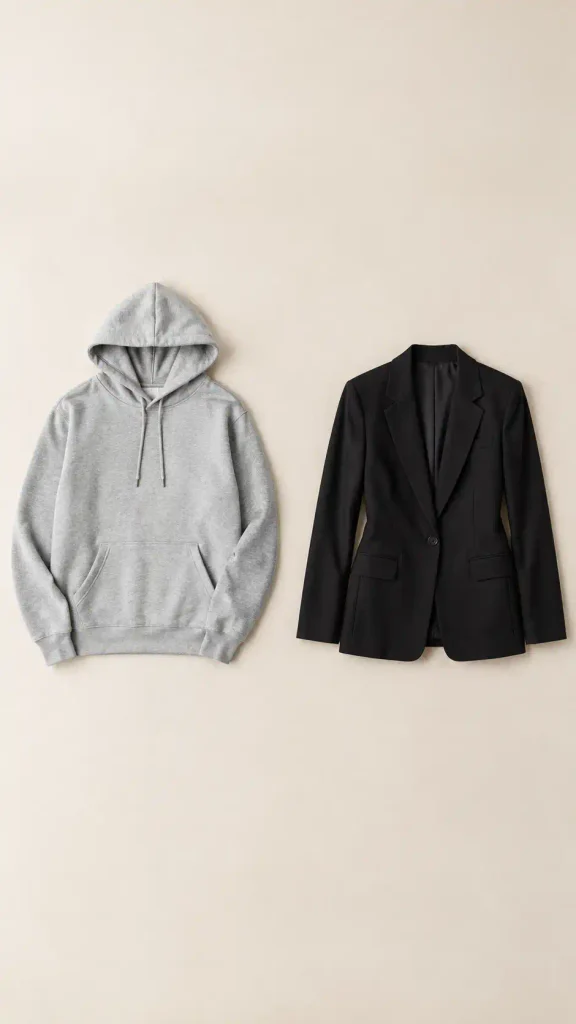
An honest answer.
Judges are required to be impartial and take that seriously. They are also people, in a room, forming an impression before anyone speaks. Attorneys consistently advise clients to dress in a way that communicates that they’re taking the proceedings seriously — and judges themselves say the same thing openly.
One trial judge’s version, quoted widely:
Not the fashion police — but dress professionally and appropriately.
Which is roughly the whole of it.
And where it plausibly matters most:
Anywhere discretion is involved.
Bail decisions, sentencing considerations, family court assessments, small claims — situations where a human being is forming a judgment about reliability and seriousness.
And in front of a jury.
Where you’re being observed for an extended period by people forming impressions from everything available.
And the honest caveat:
Clothing doesn’t win cases.
The facts, the law and the arguments do — and no outfit compensates for a weak case or rescues a bad one.
What it does is avoid an unnecessary negative.
Which is a modest claim and a real one — there is a downside to looking careless and essentially no downside to looking serious.
And the point that matters most:
A former municipal court judge put it well: courts aim to include people, not exclude them for lack of wardrobe. Nobody expects you to own a suit. What’s noticed is attire that reads as disrespectful — and clean, plain, covered clothing clears that bar entirely.
If You Don’t Own Formal Clothes
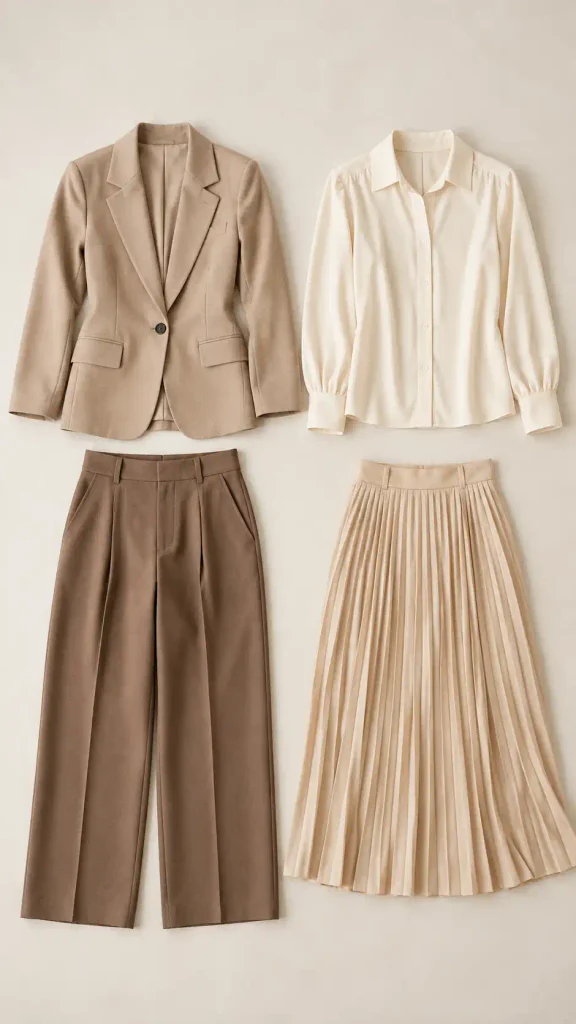
Which is a common and entirely manageable situation.
What clears the bar without a suit:
Plain dark trousers or a plain skirt.
A collared shirt or a plain blouse.
A sweater or cardigan over it, if you have one.
Clean closed-toe shoes — plain dark ones, not trainers.
And everything clean and pressed.
Condition does more here than formality. Neat plain clothes read as respectful. A suit that’s creased, ill-fitting and covered in lint reads as careless — and careless is the only thing that actually registers negatively.
What Actually Matters in Clothing, in Order
And where to get something if you need it:
Borrow.
Charity shops, which are full of suiting — and secondhand tailoring is the best value in secondhand clothing. The Secondhand Market: What Things Actually Cost
And there are organizations in many areas that provide interview and court clothing free — which is worth asking a lawyer, a caseworker or a local advice service about.
And the practical note on fit:
Something that fits and is plain beats something formal that doesn’t.
A borrowed suit two sizes too big is more conspicuous than plain trousers and a shirt — and conspicuous is what you’re avoiding. When to See a Tailor
The Practical Details Nobody Mentions
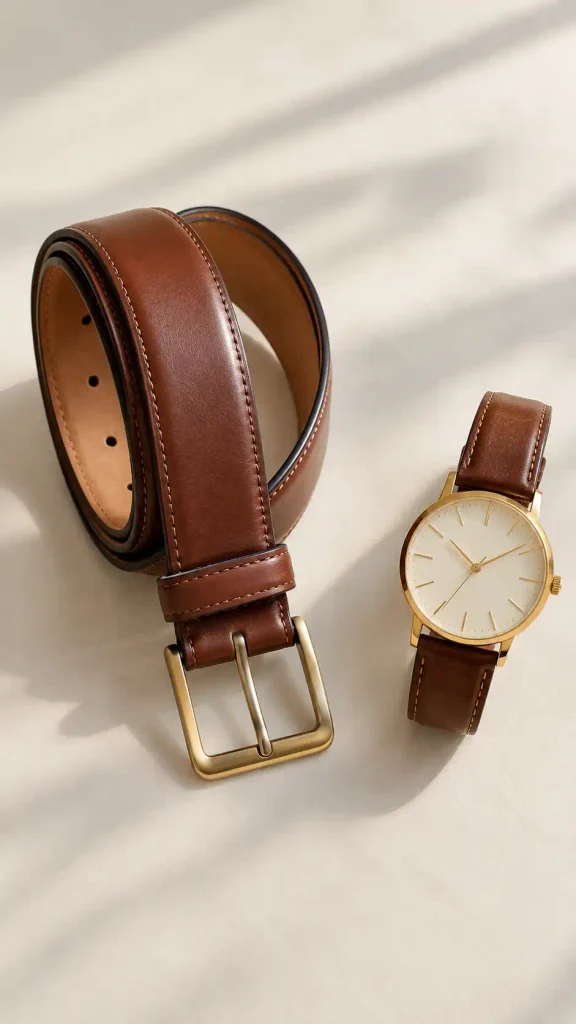
Small things that make the day work.
You’ll go through a metal detector.
Which makes a large belt buckle, heavy jewelry and anything with substantial metal an unnecessary delay at exactly the moment you don’t want one. Keep it minimal — and empty your pockets before you’re in the queue.
You’ll be there a long time.
Court schedules run late, and waiting is the default. Which means comfort matters more than it appears to.
Courtrooms are cold, and waiting areas vary.
A layer is worth having.
Take off your hat and sunglasses before entering.
And phones are frequently restricted — sometimes surrendered, sometimes prohibited entirely. Check.
And on visible tattoos, piercings and hair:
Courts vary and so do judges.
Covering a visible tattoo with a long sleeve costs nothing. Removing a facial piercing for a few hours costs nothing.
Whether that’s fair is a separate question — and if the goal is to avoid unnecessary negatives, it’s the practical answer.
And religious dress:
Head coverings and religious dress worn for genuine religious reasons are generally accommodated — and if you have any concern about it, raising it with the court or your lawyer in advance is the right route.
Video and Remote Appearances
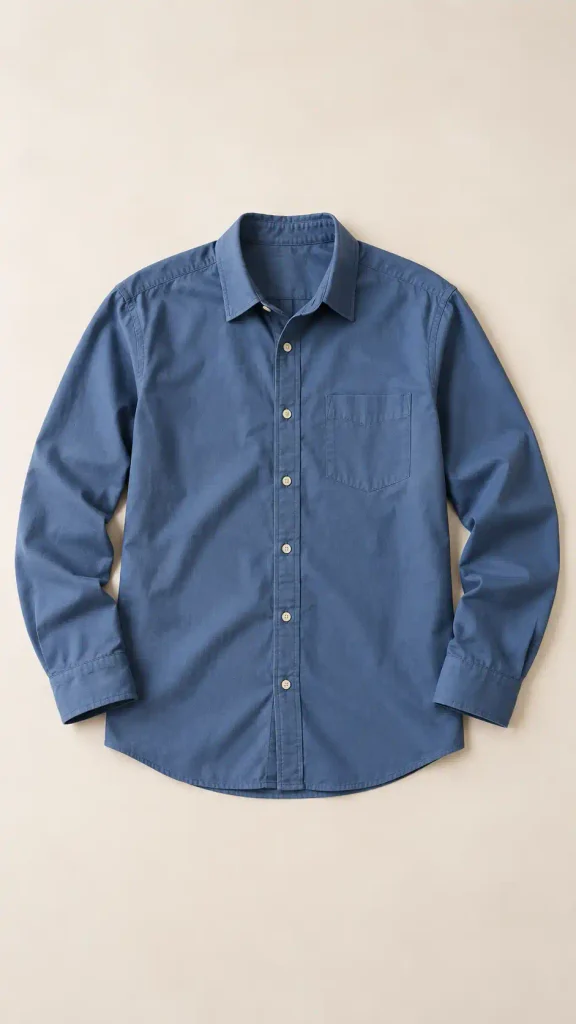
Increasingly common, and treated just as seriously.
Dress as if you were physically present.
Judges and attorneys take video appearances seriously — and the informality of being at home is exactly the trap.
And the video-specific adjustments:
Solid colors over patterns.
Fine patterns and stripes can shimmer badly on video.
Pale blue or cream over pure white.
White can blow out under camera exposure and make your face darker.
A neutral, uncluttered background.
And frame yourself from the chest up, with the camera at roughly eye level.
And the thing people get caught by:
Dress fully, not just the top half. You will stand up at some point — to reach something, to let someone in, because you were asked to. And the resulting moment is exactly the kind that gets remembered in a courtroom.
And two more:
Sit rather than stand, which keeps you steady in frame.
And test the setup beforehand — lighting, sound, and what’s visible behind you.
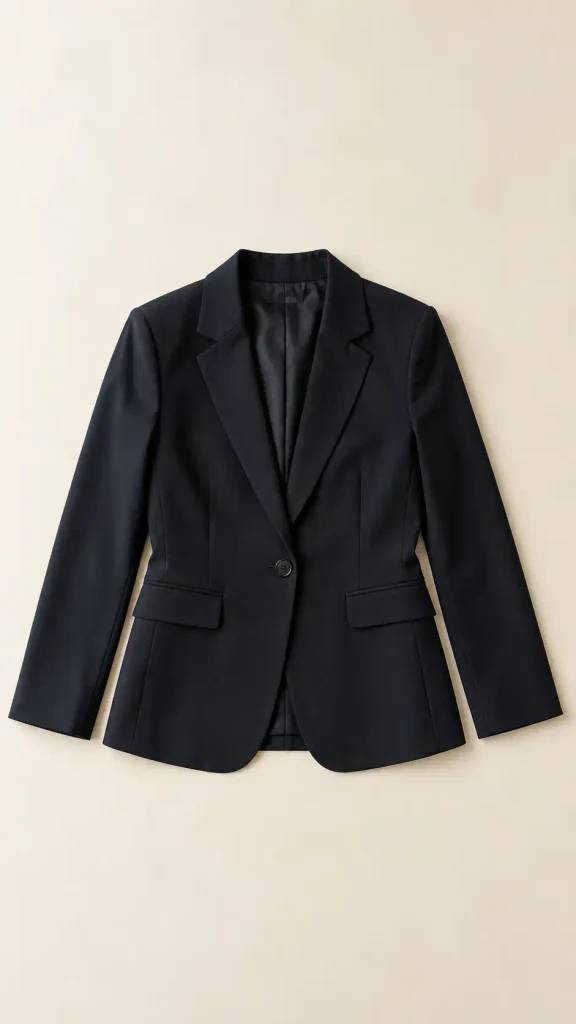
👉 Shop Now — Plain Dark Wool Blazer
By Role
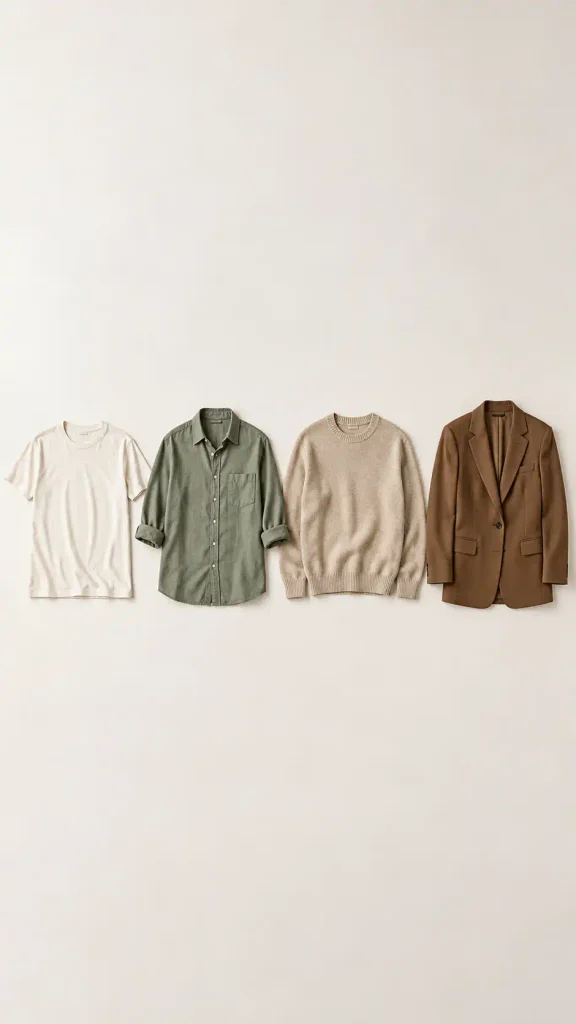
The standard shifts slightly.
If you’re a party — plaintiff or defendant:
The highest standard. A suit if you have one, or a jacket with a collared shirt and dress trousers at minimum.
And this applies at every appearance, including brief procedural ones.
If you’re a witness:
Business formal to smart business casual. You’re being observed while speaking, and credibility is being assessed.
And nothing distracting — no fragrance, no jangling jewelry, nothing that pulls attention while you’re testifying.
If you’re on a jury:
Business casual is the general floor.
Check the specific court’s guidance, because some are considerably stricter than others.
And dress for a long cold day — assembly rooms are notoriously chilly and the day can run eight hours or more. How Layering Actually Works
And if you’re a spectator:
The same posted rules apply — no shorts, no tank tops, no hats.
And smart casual is the sensible level.
And the general rule across all of them:
When in doubt, one level more formal.
Being slightly overdressed in a courtroom is invisible. Being underdressed isn’t — which makes the asymmetry clear.
The Short Version
Check the specific court’s website first. There’s usually no law, but individual courts set standards — and some send people home and reschedule them.
Dress as though interviewing for a job you badly want. Dark, plain, covered, closed-toe shoes — and nothing anyone could describe afterward.
You don’t need a suit. Courts aim to include people, not exclude them for lack of wardrobe — clean plain clothes clear the bar, and condition matters more than formality.
Keep metal minimal. You’ll go through a detector — a large buckle or heavy jewelry is a delay at the worst moment.
And on video, dress fully. You will stand up at some point — and solid colors, cream over white, and a neutral background handle the rest.