
Sports travel insurance needs to match the activities you will actually do. Before paying for a rafting trip, dive vacation, mountain trek, or ski break, confirm that your policy covers that activity at the planned difficulty level. Then check emergency medical treatment, evacuation, and search and rescue separately. A large benefit limit does little for an activity the policy excludes.
A darecation is a vacation built around adventure and a personal challenge. For insurance purposes, the useful details are more specific: the river grade, highest altitude, dive depth, route, equipment, and whether you will have a guide. This guide focuses on recreational travelers, especially U.S. residents; people entering races, competing, or working as instructors need those circumstances checked explicitly.

The visuals in this guide are AI-generated concepts, not photographs of actual trips, emergencies, or insurance claims.
Match the insurance to your exact adventure
“Sports travel insurance,” “adventure travel insurance,” and “extreme sports coverage” are useful shopping terms. They do not mean every policy includes the same activities. You might find suitable coverage in a standard plan, an optional sports add-on, or a specialist policy.
Start with your itinerary, including the activities you might book after arrival. A quiet hiking vacation can become a different insurance question if you add a technical climb or a tandem skydive.
Get the details that can change the answer
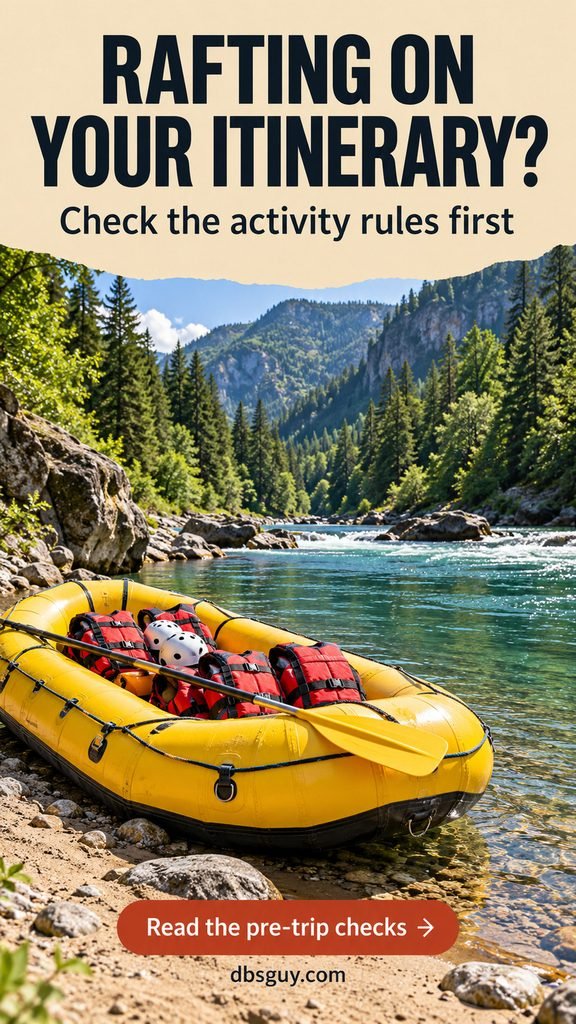
- Rafting and kayaking: Ask the operator for the river name, expected rapid classification, and whether the outing is guided. Give those details to the insurer instead of describing it only as a water activity.
- Hiking and climbing: Record the route’s highest elevation in feet and meters, not just the altitude of your hotel. Explain whether the route involves ropes, scrambling, glacier travel, or technical climbing.
- Scuba diving: Check the planned maximum depth, your certification, supervision, and whether the dive involves caves, wreck penetration, or technical equipment. Ask specifically about treatment for diving injuries, including hyperbaric chamber treatment.
- Skiing and snowboarding: Clarify marked runs, off-piste terrain, resort boundaries, backcountry touring, and helicopter access. Do not assume those descriptions are interchangeable.
- Racing, motorized sports, and aerial activities: Name the actual activity. Explain any competition, training, paid participation, vehicle use, licensing, or guide arrangements.
These are questions to resolve, not universal exclusions. Two insurers can treat the same activity differently. The activity list, definitions, exclusions, and any endorsement all need to agree with your plans.
A useful example: You book guided rafting, but the operator may switch to a harder stretch of river if conditions change. Ask whether your coverage still applies to that alternate route. Confirmation for the original excursion is not confirmation for every possible substitute.
For a destination with lots of tempting add-on adventures, use our New Zealand travel tips to start an activity shortlist before requesting insurance quotes.
Do not treat an operator’s insurance as your policy
If a booking page says “insurance included,” ask for the document and find out who is insured and what it pays for. Do not assume an operator’s liability insurance covers your medical bills, lost trip costs, or transport home. A signed waiver also tells you nothing about the benefits in your personal travel policy.
Separate medical care, evacuation, rescue, and trip costs
Adventure coverage is easier to assess when you separate the bills an incident could create. A medical expense benefit and an emergency transportation benefit answer different questions, even when they appear in the same package.
Emergency medical treatment
This benefit can help pay eligible treatment expenses for a covered illness or injury. Check the maximum benefit, deductible, exclusions, and whether you must claim through another health insurer first. Ask whether the assistance team can arrange direct payment to a hospital or whether you may need to pay and seek reimbursement.
For overseas trips, ask your existing health insurer what it actually covers abroad. The U.S. Department of State’s travel insurance guidance recommends checking medical coverage and considering evacuation insurance where medical care is limited. It also makes clear that the U.S. government does not pay travelers’ medical bills.
Medical evacuation and transport home
Medical evacuation generally concerns medically necessary transport to appropriate care when local treatment is inadequate. It does not automatically mean a flight to your preferred hospital in the United States. Medical repatriation or transport home may have separate conditions.
Ask who chooses the destination facility, who authorizes the transport, and whether road, air, or sea transfers are included. An assistance provider may need to approve and arrange an evacuation; do not assume you can book any service and recover the cost.
Search and rescue
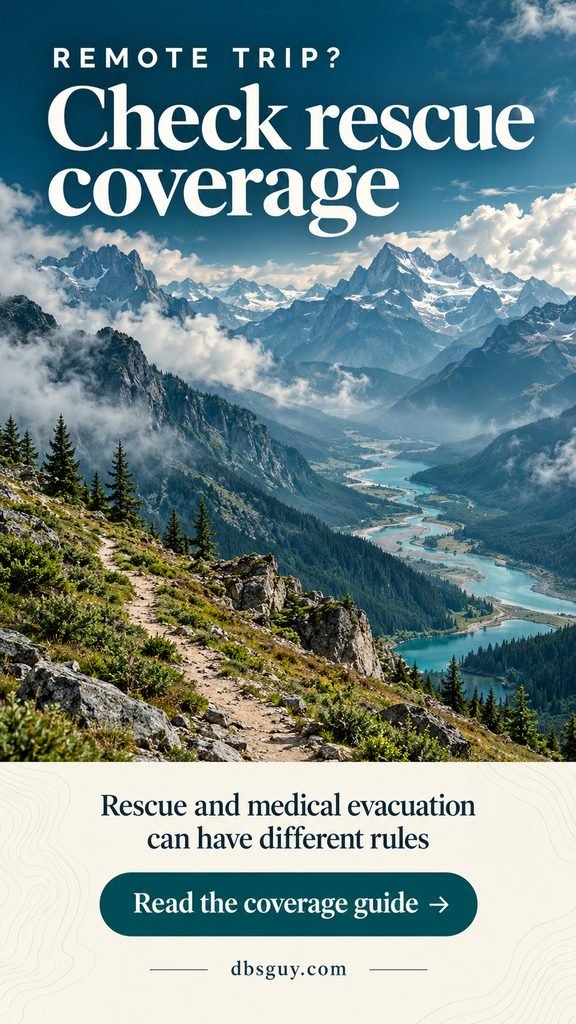
Finding a missing traveler or extracting someone from difficult terrain can fall under different rules from transporting a patient for medical treatment. Some policies exclude search-and-rescue missions even when they include emergency evacuation.
For a remote outing, ask: “Does this plan cover locating me and getting me off the route? What if I am stranded but not injured?” Check any separate rescue limit, trigger, and service-area restriction. A hotline or membership service is not, by itself, proof that every rescue bill is insured.
Cancellation, interruption, and equipment
Trip cancellation usually addresses eligible prepaid, nonrefundable costs when you cancel before departure for a covered reason. Trip interruption addresses specified losses when a covered event disrupts an ongoing trip. Include prepaid tours and activity bookings when discussing the trip cost with your provider.
A canceled rafting session, closed ski lift, or rainy forecast does not automatically make the whole trip a covered cancellation. Check both the operator’s refund policy and the insurance wording before assuming reimbursement.
For equipment, compare the total baggage allowance with the per-item limit and any special sports-gear restrictions. Theft, transit damage, rental replacement costs, and damage while using the equipment can receive different treatment. Some plans specifically exclude sports equipment damaged in use.
Imagine a remote hiking injury: locating you, bringing you to a trailhead, transporting you to a suitable hospital, treating you, and changing your flight are separate expenses. Ask where each would fall in the policy instead of relying on one large “evacuation” number.
Compare policies before you commit to the trip
Compare two or three quotes using the same travelers, dates, destinations, activities, and prepaid trip costs. Otherwise, a cheaper quote may simply leave out a benefit you expected.

Your buying checklist
- Eligibility and dates: Confirm your country and state of residence, age eligibility, destinations, full travel dates, and any maximum trip duration. Check minimum distance-from-home rules for domestic trips.
- Activity wording: Find the specific activity and any required upgrade. Save the relevant policy pages and endorsement, including altitude, depth, supervision, or equipment conditions.
- Separate benefit limits: Write down emergency medical, evacuation, rescue if available, cancellation, and equipment limits. Also note deductibles and whether limits apply per person, trip, or policy period.
- Existing health conditions: Read the definition and look-back rules for pre-existing conditions. Ask whether a waiver is available and what purchase timing, trip-cost, or medical eligibility requirements apply.
- Exclusions that fit your itinerary: Check competition, alcohol or drug-related incidents, travel against medical advice, and any destination or government-advisory restrictions relevant to your trip.
- Assistance and claims: Find the emergency number, approval requirements, documents needed, reporting deadlines, and how to contact the provider from abroad.
There is no single coverage amount that is right for every darecation. A remote expedition and a guided day trip near a major hospital have different logistics. Ask a licensed insurance professional to help assess the limits against your route, operator’s requirements, existing coverage, and potential transport needs.
A message you can send to the insurer
“I am a resident of [state/country], traveling to [destination] from [dates]. I plan to do [activity and route] with [operator], reaching [altitude/depth/river grade], with [guide or certification details]. Does this exact plan cover injuries and medically necessary evacuation arising from this activity? Is search and rescue included? Please identify the relevant policy wording, exclusions, limits, and any endorsement I need.”
Save the reply with the policy. Written clarification helps document your question, but it does not replace or amend the contract unless the insurer issues the necessary policy change.
Buy early enough for the benefits you want
Once you make the first trip payment, check time-sensitive benefits promptly. Some pre-existing-condition waivers and optional Cancel For Any Reason benefits have purchase deadlines tied to that payment. A last-minute purchase may miss those options.
Cancel For Any Reason is about cancellation flexibility. Where available, it commonly reimburses only part of eligible nonrefundable costs and has its own eligibility and cancellation deadlines. It does not make an excluded sport medically covered.
For U.S. travelers planning winter sports, include any side trips beyond the resort in your initial questions. For a summer rafting or hiking vacation, do the same for alternate routes and optional activities. The destination’s season matters more than the season at home.
Our guide to organizing your time on vacation can help you turn a loose wish list into an itinerary you can accurately describe to an insurer.
Prepare for an emergency before you leave
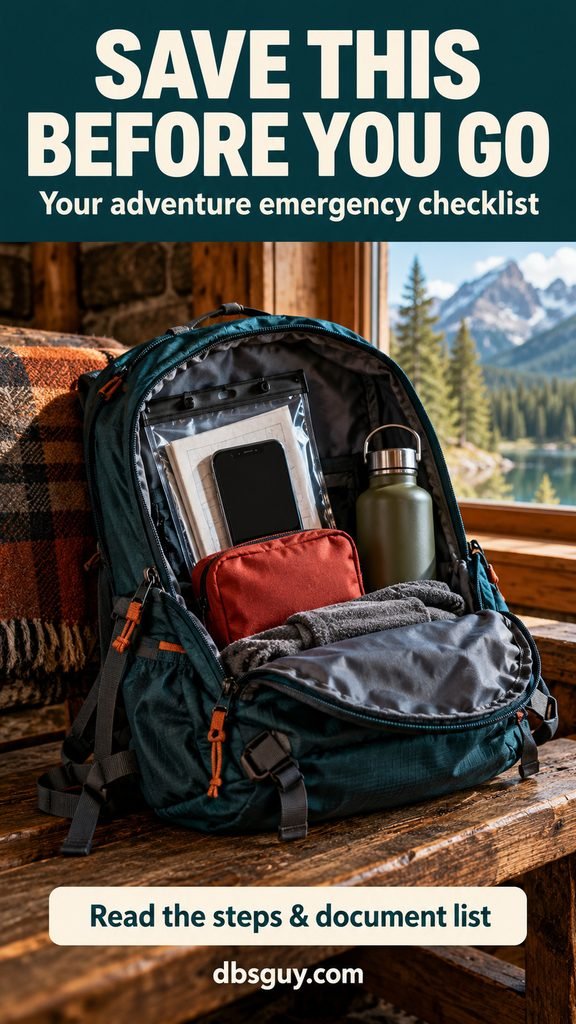
Make the important information available offline. A policy stored only in an email account is less useful when you have no signal or cannot access your phone.
Keep these details with your travel documents
- Your policy number, benefit summary, full policy, and activity endorsements.
- The insurer’s assistance number and an international dialing option.
- The local emergency number, operator’s contact, and your route or activity booking.
- A trusted contact’s details and a copy of your itinerary shared with them.
- Proof of activity qualifications or guide arrangements if the policy requires them.
Keep a paper contact card somewhere accessible as well as a protected digital copy. Your guide or travel companion should know where to find the emergency information.
If an incident happens
- Get emergency help first. Contact local emergency services or your guide and seek urgent care. Do not delay necessary help while trying to obtain an insurance decision.
- Contact the assistance team as soon as reasonably possible. Give your location, policy number, activity, and treating facility. For nonurgent transfers, follow the policy’s authorization and arrangement requirements.
- Document what happened. Keep medical records, itemized bills, receipts, payment evidence, booking confirmations, and relevant incident or baggage reports. Record the assistance case number and important instructions.
- File through the insurer’s process. Meet its notice and submission deadlines, answer requests accurately, and retain copies. If a claim is declined, request the written reason and the policy provision used before reviewing the appeal options.
Travel Guard’s published claims checklist illustrates why good records matter: different claim types need different supporting documents. Your own insurer’s checklist is the one to follow.
Sports travel insurance FAQs
Is an adventure add-on always necessary?
No. Some plans include your activity already, others require an upgrade, and others exclude it. Check the exact plan sold for your residence and your version of the activity before buying.
Can I add coverage after booking or after leaving home?
Sometimes, but availability, waiting periods, effective dates, and permitted changes vary. Ask before taking part. A new purchase cannot be assumed to cover an incident that has already happened, and it may not restore time-sensitive benefits you missed.
Will a credit card’s travel benefits be enough?
Do not assume so. Review the current benefits guide for your specific card, including payment requirements, eligible travelers, sports exclusions, and whether it includes medical treatment or evacuation. Compare each benefit with the gaps your adventure creates.
Does a rescue membership replace travel insurance?
Check its service agreement. Memberships can provide useful assistance, but their services, eligibility, transport destinations, and payment obligations differ. You still need to establish who pays treatment bills, rescue charges, and lost trip costs.
What if I am only taking an adventure trip within the U.S.?
Check your health plan’s out-of-area treatment rules, the travel policy’s domestic eligibility, and the activity terms. Staying in the country does not answer whether remote extraction, equipment, or prepaid trip costs are covered.
Before booking the adventure: get an answer for the activity, an answer for the rescue arrangements, and an answer for the costs you would otherwise have to pay yourself. Keep those answers with the actual policy documents.
This guide is general educational information, not an individualized insurance recommendation. Coverage is governed by the issued policy and endorsements. Resolve questions about your circumstances with the insurer or a licensed insurance professional.
Also Read
- My Best New Zealand Travel Tips 2026 — for building your destination and activity shortlist.
- How To Organize Your Time On Vacation — for planning the bookings and travel days around your adventures.
- 10 Cozy Mountain Getaways in the USA That Make You Want to Stay All Weekend — for a gentler mountain escape or downtime after an active trip.