What to Wear for Lunar New Year: Outfit Choices and Cultural Traditions

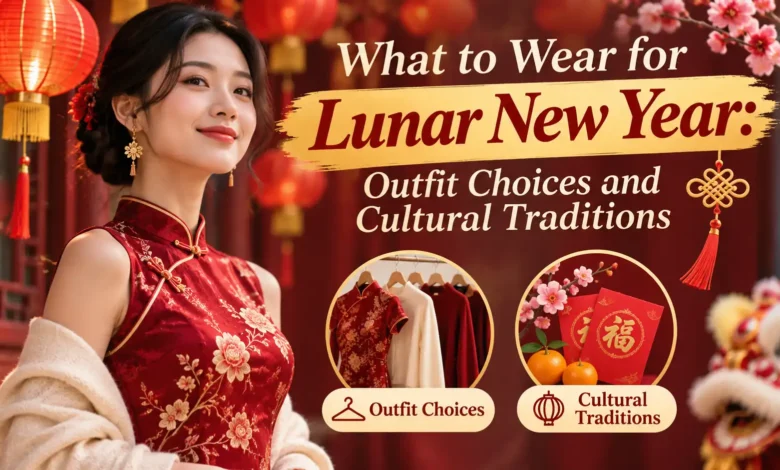
Invited to a Chinese New Year dinner at someone’s home? A red cardigan, navy trousers, and slip-on loafers make an easy outfit. If the invitation is for Korean Seollal or Vietnamese Tết, ask what the family usually wears. The answer might be a favorite sweater, a hanbok, or an áo dài borrowed just for the day.
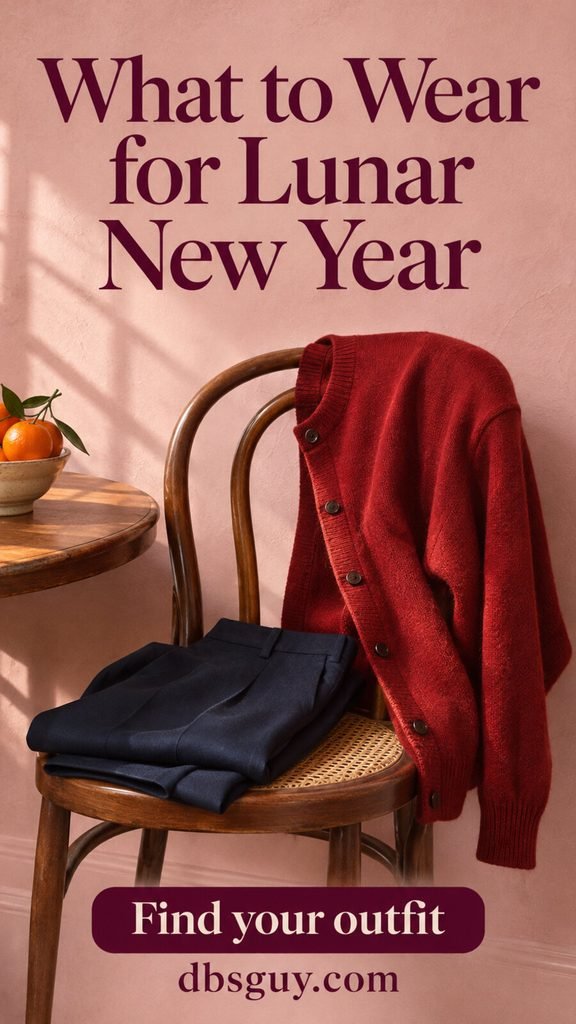
If it’s your first time joining the family, try asking, “I’m looking forward to coming. What are you wearing this year?” You’ll learn more from how your host answers than from trying to decode “festive” on an invitation.
1. A red cardigan for a Chinese New Year family dinner
Button a cherry-red cardigan over a thin tee, then add straight navy trousers and brown loafers. When the serving dishes start making their way around the table, you’ll appreciate cuffs that stay at your wrists. If the family leaves shoes at the door, wear socks you like and check that your trouser hems clear the floor in stocking feet.
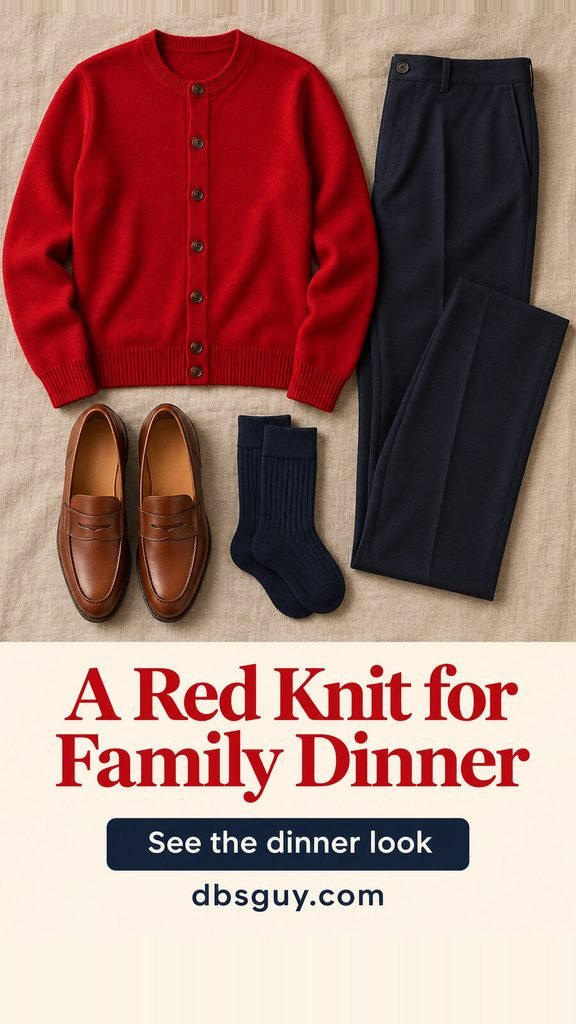
Red has long been associated with happiness and celebration in Chinese culture. If bright red feels like a lot, wear your usual dinner clothes and add a red scarf or a small brooch. The Smithsonian’s National Museum of Asian Art explores the meaning behind the color in its guide to red.
2. A plum qipao for a dressy Chinese banquet
If you own a qipao, also called a cheongsam, or your host has invited you to wear one, a restaurant banquet is a lovely occasion to bring it out. This plum version has a stand collar, side fastening, and woven flowers that catch the light. Low bronze pumps pick up a little of that shine. With a collar this detailed, a pair of small earrings is plenty.
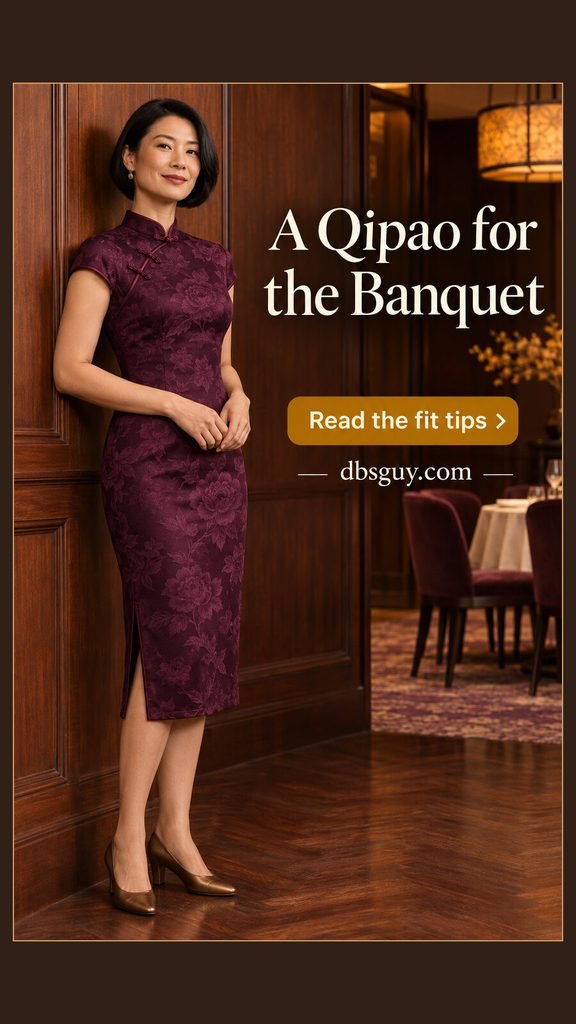
Try a dining-chair test before you leave. Sit all the way back, turn your head as if you’re talking to your neighbor, and reach forward for a dish. The collar should feel comfortable and the side slit should sit where you want it while seated. If you’d prefer separates, a plum jacket over a fine knit and matching dress trousers gives you a dressy option for the same table.
3. A hanbok for a Korean Seollal visit
In a family that wears hanbok for Seollal, getting dressed can be part of the visit itself. The sage-green jeogori (jacket) in this look ends high above a full peach chima (skirt). The plum ribbon, or goreum, fastens the jacket. If someone lends you a set, leave a few minutes for them to show you how the ribbon sits.
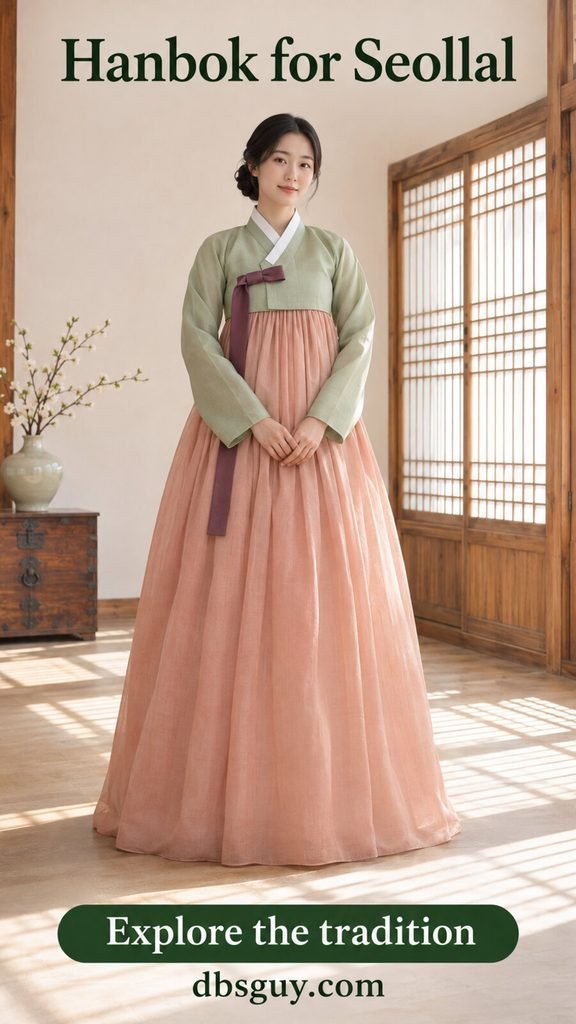
Ask whether the family will take photos in hanbok or spend the day in everyday clothes. For a more casual visit, a soft sweater and trousers with room at the knees are a good choice. Some families observe sebae, the formal New Year’s bow to elders. If you’ll be joining in, try kneeling and standing in your outfit at home, and let the family show you the gesture when you arrive.
4. A red áo dài for Vietnamese Tết visits
If your Tết plans include dressing up for family visits or portraits, an áo dài gives you a beautiful combination of color and movement. The long tunic opens at the sides and is worn over trousers. Here, ivory wide-leg pants show between the coral-red panels with each step. Red is one traditional Tết choice associated with good fortune.
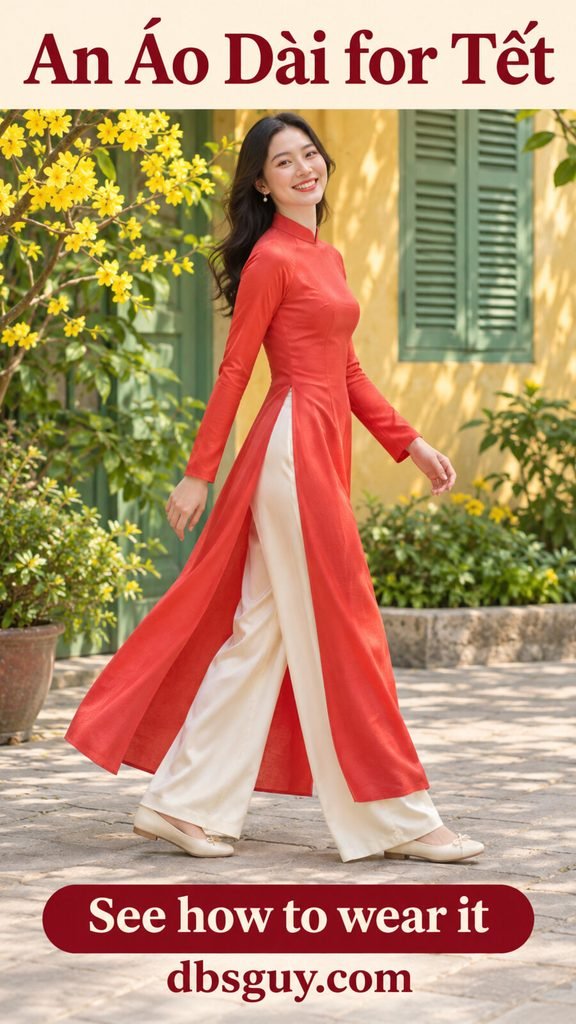
Borrowing an áo dài? Try the tunic and trousers together with the shoes you’ll wear. Take a few steps and try a staircase. You want the pants to clear your heels and the panels to fall freely. Before sitting, smooth the back panel down behind you. If everyone is coming in everyday clothes, dress for the visit as you normally would and let a favorite bright blouse supply the color.
5. A warm jacket and visible color for a winter parade
For a chilly parade, plan around the time you’ll spend standing at the curb. A navy quilted jacket, straight jeans, and broken-in lace-up boots make a good starting point. Put the red scarf where you’ll actually see it once your coat is zipped. If you’re heading straight to dinner afterward, wear your dinner shirt underneath and choose a scarf you can tuck into a coat pocket.
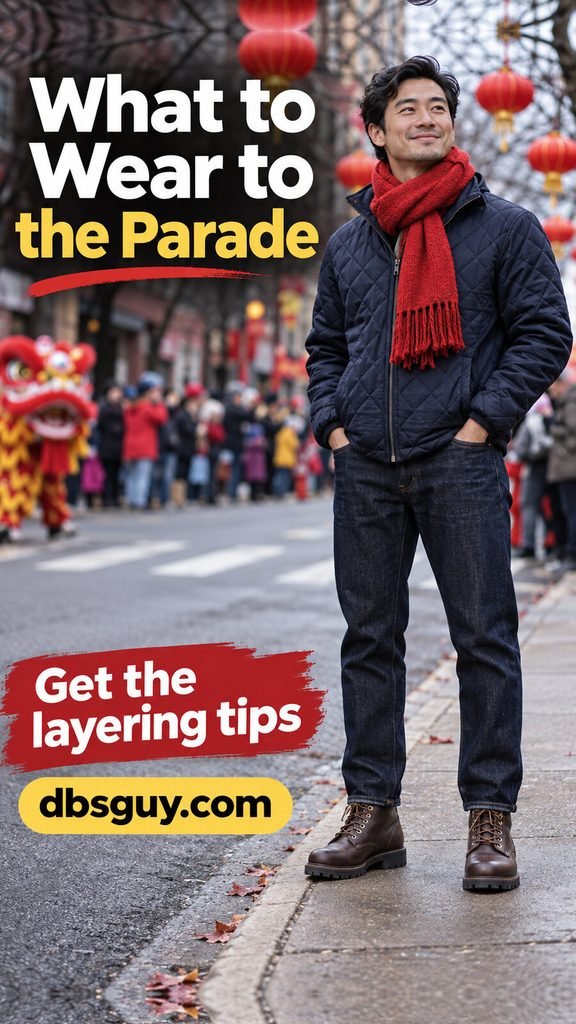
Check the forecast for the hour you’ll be outdoors. In slush, choose water-resistant boots with tread and hems that stay above the wet pavement. On a mild afternoon, a light jacket and familiar walking shoes may be all you need. For different conditions, compare the rain and snow styles in DBSGuy’s winter boots guide.
Two questions guests often have
Can I wear black or white for Lunar New Year?
Some Chinese families avoid an all-black or all-white outfit for New Year because those colors can carry associations with mourning. If you don’t know your host’s preference, try navy trousers and a colorful top. For a Seollal or Tết invitation, take your cue from that family’s custom. The ivory trousers in the áo dài look are a good example of how a color can work differently in a particular outfit.
Do I need to buy something new?
Wearing new clothes can mark a fresh start at Chinese New Year. Korea also has a New Year clothing tradition called seolbim, the clothes prepared for Seollal. As a guest, you can dress thoughtfully with things you own. If the family is coordinating for a photo, find out whether they have a color or a garment in mind before you shop.
Also Read
15 Gold Jewelry Ideas for the Holidays offers ways to pair earrings, necklaces, and bracelets with the neckline and sleeves of your dinner outfit.