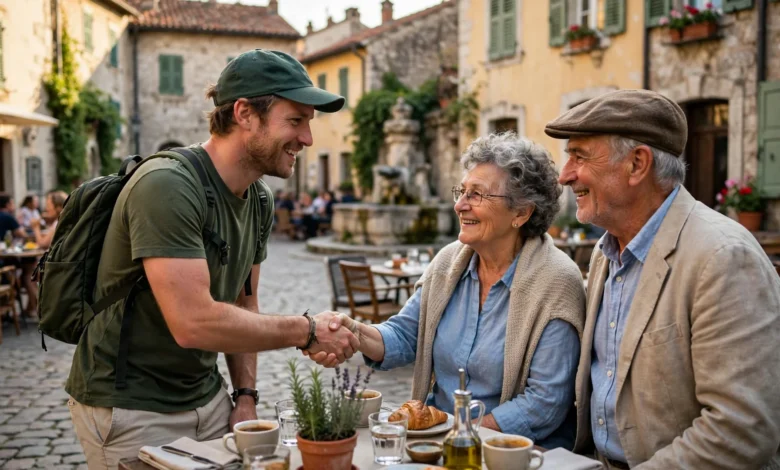
Most of us travel with the best intentions. We smile, we say please and thank you, we tip well, and we try to be the kind of guest any host would be happy to have. The tricky part is that “polite” is not the same everywhere. A habit that reads as warm and friendly at home can land very differently on the other side of the world, and the last thing you want is to offend someone while trying to be nice.
That is what this guide is for. Below are 16 everyday American habits that can come off as rude abroad, and what to do instead. None of them require a crash course in a new language, just a little awareness before you go. Pair this with a little trip prep — like these tips that actually calm nervous flyers and these hotel check-in secrets front desks won’t tell you — and you will arrive a lot more relaxed, and a lot less likely to put your foot in it.
1. Tipping Generously
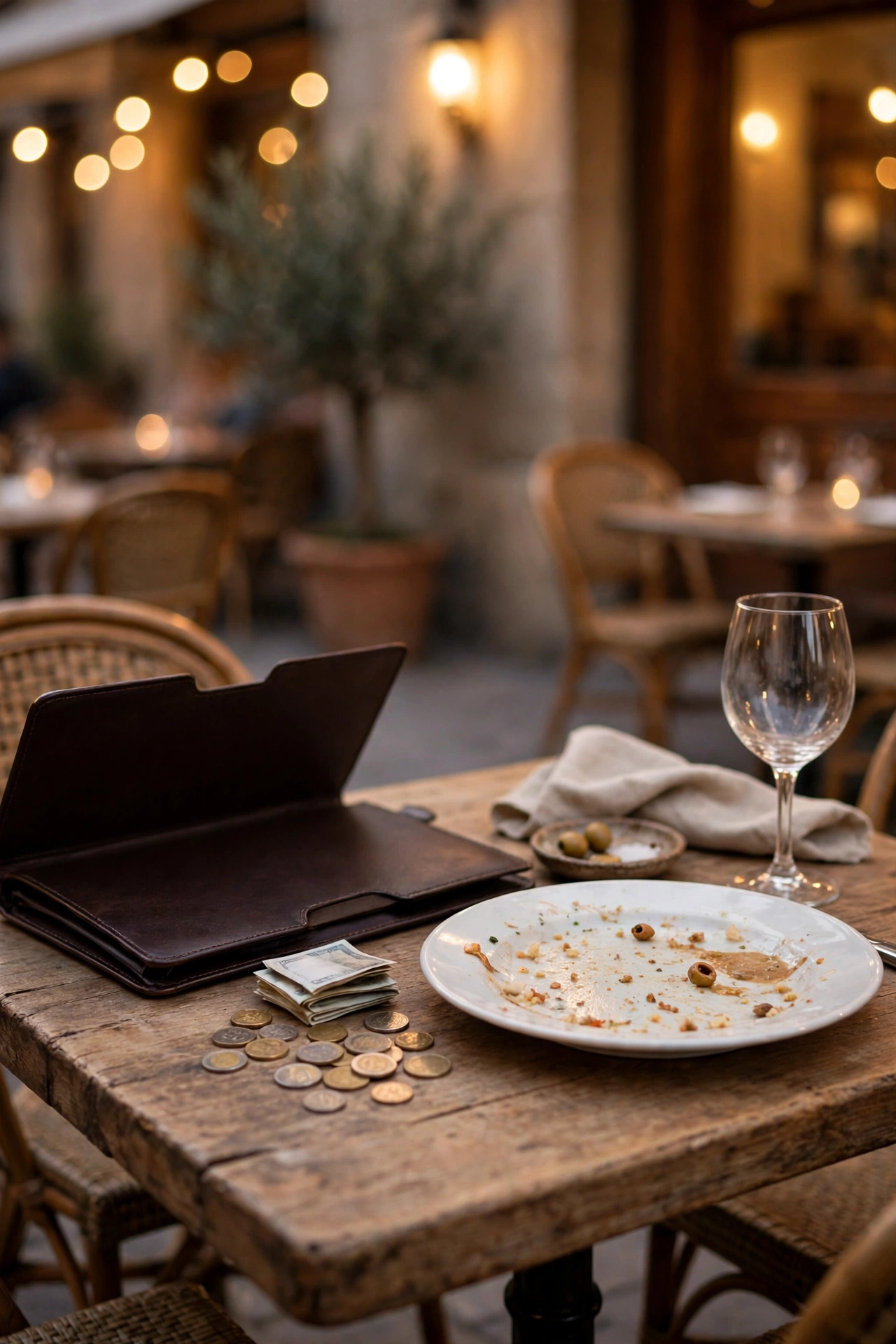
In the United States, leaving 15 to 20 percent at a restaurant or a cash tip for hotel staff is basic decency, a way of saying thank you for good service. The problem is that the rest of the world does not always see it that way. In Japan and South Korea, tipping is not typically expected at all, and a tip can confuse staff or be politely refused. In some places, leaving a large tip, or any tip at all, can even come across as rude or insulting, as if you are suggesting the person needs charity or is not paid properly.
The fix is simple and takes about two minutes before your trip. Look up the tipping culture of the place you are visiting. In many parts of Europe, service is often included in the bill, so check the receipt first and round up or leave a small amount if you want to show appreciation. A little research keeps a kind gesture from turning into an awkward moment.
2. Making The “OK” Sign — And Other Familiar Gestures

Hands talk, and they do not always say what you think they are saying. The OK sign, thumb and index finger in a circle, is a friendly “all good” in the United States, but in Brazil it can be deeply offensive. A thumbs up is rude in parts of the Middle East and West Africa. Beckoning someone with a curled index finger is insulting in the Philippines and much of Asia, where that gesture is used for calling animals. Pointing at people with an index finger comes across as rude across much of Asia, the Middle East, and Africa.
The same goes for which hand you use. In India and the Middle East, eating or handing something over with your left hand can offend, since the left hand is traditionally considered unclean. When you need to give directions, describe them in words instead of pointing — “look toward 12 o’clock” works better than jabbing a finger across the square. Keep your hands calm and your gestures small until you know the local rules.
3. Asking “How Are You?”

In the United States, “how are you?” is not really a question. It is a greeting, and the expected answer is a breezy “I’m doing well, thank you, how about you?” before the conversation moves on. Nobody expects a real account of your health, your traffic, or your week. But in Germany, Russia, and Central European countries like the Czech Republic and Slovakia, the question invites a genuine answer, and a visitor who asks it and keeps walking can seem insincere or superficial.
It works the other way too. In German, Russian, or Polish, the question can be taken far more literally, so a breezy “fine, you?” can sound dismissive, and you may be surprised to receive an honest answer in return. When you are abroad, treat the question as a real one unless you are sure it is not. A short, honest answer and a real pause beat a reflex greeting every time.
4. Arriving Exactly On Time To Someone’s Home

Punctuality is a courtesy at home, and most Americans would feel rude showing up late to dinner. But for dinner at someone’s house in Latin America, arriving exactly on the dot can be the awkward move, because the host may still be getting ready and your early arrival can feel like pressure rather than politeness. A little after the stated time is often the gracious choice, and the evening runs on a gentler clock than the one on your phone.
This is one of those rules with clear limits, though. It does not apply to guided tours, transit, or business meetings, where being on time is still expected and respected. The trick is knowing which kind of occasion you are walking into. For a social evening at someone’s home, relax the schedule a little. For anything with a departure time, be early.
5. Using First Names Early On

Americans are famously casual with names. We use first names the moment we meet someone, and it feels friendly and equal. In more formal cultures, that can feel presumptuous, as if you are claiming a closeness you have not earned yet. Most European languages draw a line between a formal and an informal “you,” like Sie and du in German, vous and tu in French, usted and tú in Spanish, Lei and tu in Italian, u and jij in Dutch, and siz and sen in Turkish. In Poland, people are addressed as Pan or Pani plus a title, and in Turkey, Bey or Hanım follows a first name.
Jumping straight to a first name can land badly in Germany, Austria, the Czech Republic, Japan, Korea, and much of Latin America. The safest habit is to err on the side of formality and use a title or honorific until the other person invites you to do otherwise. It costs nothing, and it reads as respect in every language.
6. Giving Hearty Physical Greetings

A bear hug, a back slap, and a firm, pumping handshake all say warmth in the United States. In Japan, Korea, and much of Southeast Asia, they can feel invasive, and a lighter handshake or a slight bow shows far more respect. Even the handshake itself is not universal. In some countries, a woman may not exchange a handshake at all, so a little homework before you go is the best move.
The reverse is just as true. In Latin America, a cheek kiss, the beso, is a normal greeting, and stiffening up or offering a handshake when someone leans in can come across as cold. The rule that covers both cases is simple: follow the other person’s lead. Let them set the distance and the gesture, and match it.
7. Making Direct Or Prolonged Eye Contact

American children are often taught to maintain eye contact when talking with adults. It is associated with confidence, attentiveness, and respect, and looking away can feel shifty or disinterested. But in certain communities in Ghana, Nigeria, and other African countries, children are taught to lower their gaze when speaking with elders, particularly when being corrected, and direct or prolonged eye contact in those moments can come off as challenging authority rather than showing respect.
It is not only about children, either. In Japan, sustained eye contact can sometimes be perceived as confrontational or uncomfortable, and similar attitudes exist in some Caribbean communities. None of this means you should stare at the floor. It means you should soften your gaze and read the room. Respect is not always eye to eye.
8. Saying “Let’s Get Together Sometime”

“We should get lunch sometime” is one of the friendliest sentences in American English, and it means almost nothing. It is a warm sign-off, not a plan, and nobody expects a calendar invite to follow. But in places where people mean what they say more literally, like Germany or the Netherlands, an invitation with no follow-up can come across as insincere. In parts of Europe, Latin America, and Asia, people hear it as an actual invitation, and when no plan follows, you can look like someone who breaks promises.
The easy fix is to close conversations without making a promise you do not intend to keep. A simple “nice to meet you” or “I enjoyed visiting with you, have a wonderful afternoon” ends things warmly and honestly. And if you do mean it, say so properly: pick a day, name a place, and follow up.
9. Smiling At Strangers

Americans smile constantly, at cashiers, at neighbors, at total strangers on the street, and it feels like basic friendliness. In some countries, like Finland, Norway, Sweden, and Germany, people tend to be more reserved with strangers, so a big smile at someone you have never met might seem unusual or off-putting. In Russia, smiling without an obvious reason can read as insincere or even foolish, and there is a proverb that translates roughly as laughing for no reason is a sign of a fool.
Similar attitudes exist in parts of Germany, Poland, and Scandinavia, where friendliness is shown more through reliability than through outward cheer. None of this means you should walk around looking miserable. It means a small, brief smile travels better than a wide grin, and that being on time and keeping your word will say more about you than your expression does.
10. Asking “What Do You Do?” When First Meeting Someone

For Americans, small talk about work feels safe. It is neutral, easy, and gives both people something to say. But in France and other European countries, asking someone about their job the moment you meet can feel intrusive, as if you are sizing them up or sorting them by status before you know anything else about them. What feels like polite curiosity at home can sound like a job interview abroad.
If you are meeting someone for the first time overseas, steer toward topics that do not rank people. Local food, travel, art, history, music, and sports all make for easy conversation, and they tell you far more interesting things about a person than their job title does. Save the work question for later, if it comes up naturally.
11. Giving A Tour Of Your Home

In the United States and Canada, giving a tour of your home is welcoming. It says make yourself at home, this is who we are, and guests expect the little walk from room to room. But it may seem polite at home and strange somewhere else. In much of Latin America, offering a tour of your home can feel odd to guests, or even like showing off, and a visitor may wonder why the host is parading their belongings.
Before you play tour guide for guests from another country, check the cultural norms and understand what is expected. Often the living room, a comfortable seat, and a drink are welcome enough. Let the guest ask to see more, rather than assuming the grand tour is part of the hospitality.
12. Cleaning Your Plate
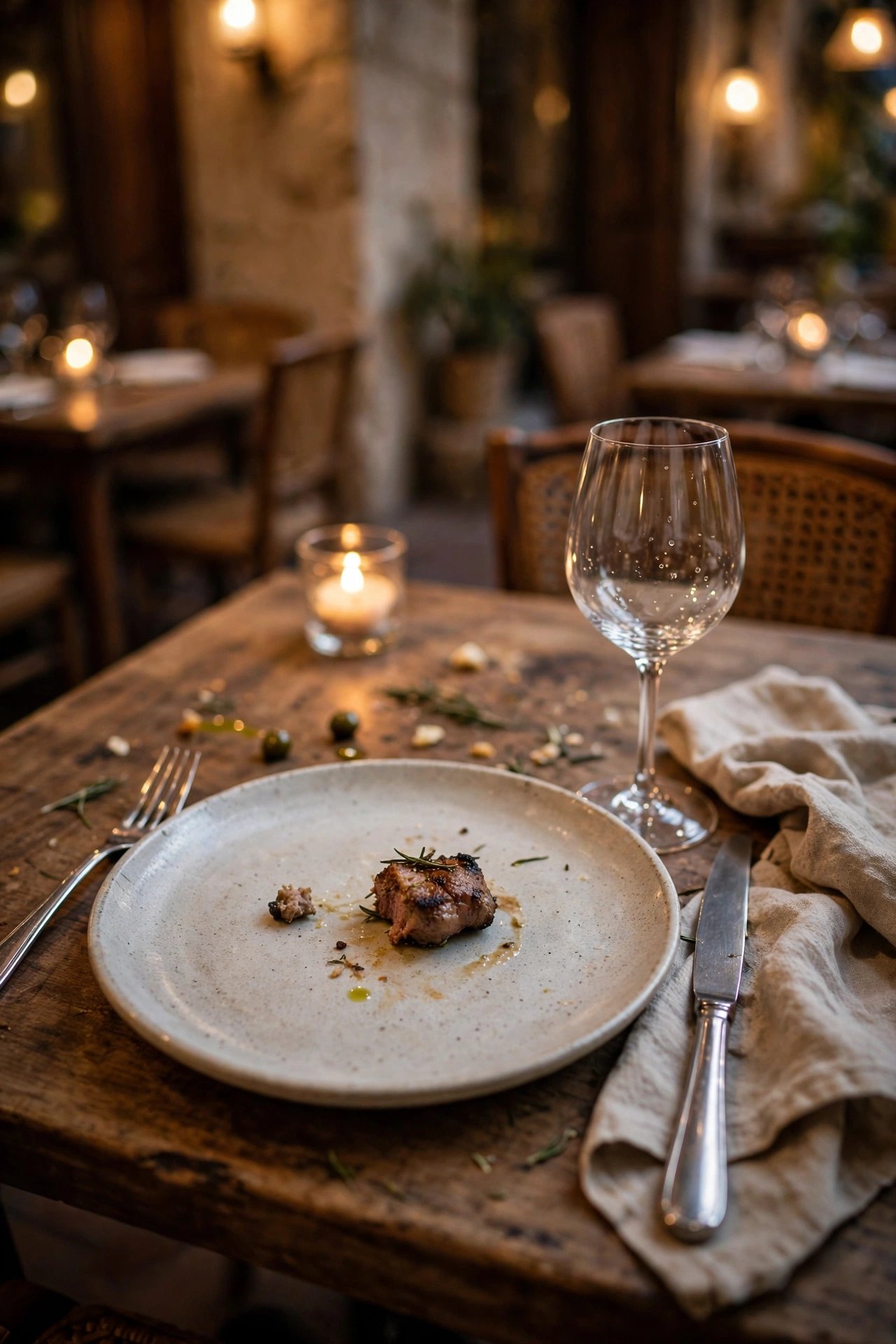
American children are taught to clean their plates, and as adults we still treat a spotless plate as a compliment to the cook. It says the food was wonderful and you enjoyed every bite. But in China, an empty plate can send the opposite message. It can signal that the host did not serve enough, and that the guest is still hungry, which is embarrassing for the person who cooked.
So you might want to leave a tiny bit of food behind. These expectations can vary depending on context and region, and they are not the same in every household, so the smartest move is to watch what others at the table do. When in doubt, a small bite left on the plate is a quiet way of saying you were served plenty.
13. Offering Overly Enthusiastic Praise

Words like “awesome” and “amazing” are everyday currency in American English, and we hand them out freely. But they carry less weight in cultures such as Germany, the Netherlands, and the Nordic countries, where understatement and directness are the norm. Even if you genuinely enjoyed something, proclaiming “I loved it!” can dent your credibility, because the praise sounds bigger than the feeling behind it.
Measured, specific compliments land far better. Instead of a superlative, name what was good and why. A sentence like “your coq au vin is rich and savory, thank you for preparing our meal” says more than a dozen “amazings” ever could, and it tells the cook you were actually paying attention.
14. Sticking To Small Talk, Or Chatting Up Strangers In Public

Small talk works differently depending on where you are standing. In the United States, people ease into conversation with light small talk before getting personal. In Latin America, it is common for someone you have just met to jump right in with questions like where you are from, how you know your host, or whether you are married or have kids. To North Americans that can feel personal, but people are simply trying to get to know you, and answering openly builds connection quickly. Being guarded or vague can come across as cold.
On the other hand, striking up small talk with strangers in public, whether it is an Uber driver or someone on the train, might feel less pleasant in other countries, and loud conversations in public spaces like trains, restaurants, or stores stand out badly, particularly in Japan and Finland. When you are on public transportation in Japan, silence is golden. Keep your voice down, keep it brief, and let the locals set the volume.
15. Politely Declining Food

If you are offered food or drinks in America and you are not interested, a polite “no thanks, I’m fine” is honest and considerate, and nobody thinks twice about it. But in Brazil, the host may feel they were not hospitable enough if you refuse, and they might be put off by your formality, because offering food is an important way of showing affection and generosity. Saying no so you do not impose can read as rejecting someone’s hospitality, especially in a family home.
The graceful move is to try a bit of what you are offered, or to give a courteous reason for refusing, like that you just finished eating or have an allergy or dietary restriction. Taking a small portion and complimenting the cook goes a long way. You do not have to eat everything, but a small taste says you appreciate the gesture.
16. Opening Gifts Right Away

When Americans receive a gift, it is common to excitedly open it right away and show everyone what is inside. The enthusiasm is the point. It tells the giver you are delighted and grateful. But that is not the standard etiquette in other cultures. In Japan, people often set a gift aside to open in private, so the giver does not lose face if the gift disappoints, and tearing into it on the spot can feel rushed or unseemly.
When you are handed a gift abroad, watch the room before you reach for the ribbon. If nobody else is opening theirs, set yours aside with a warm thank you and open it later. The gratitude lands just as well, and you will not accidentally put your host in an awkward spot.
Manners travel with you, and a little homework before a trip goes a long way. If you are planning your next journey, take a look at this red-eye flight survival guide for the journey there, and this first-passport guide if the trip is your first big one abroad.
You May Also Like
If you want to travel a little smoother, take a look at Flight Anxiety: 17 Tips That Actually Calm Nervous Flyers for calmer takeoffs, Red-Eye Flight Survival Guide: How to Actually Sleep on Planes for real rest at 35,000 feet, Hotel Lobby Check-In Secrets: 19 Things Front Desks Won’t Tell You for a smoother arrival, and First Passport at 30: A Guy’s Guide to Getting It Done Fast for first-time passport help.