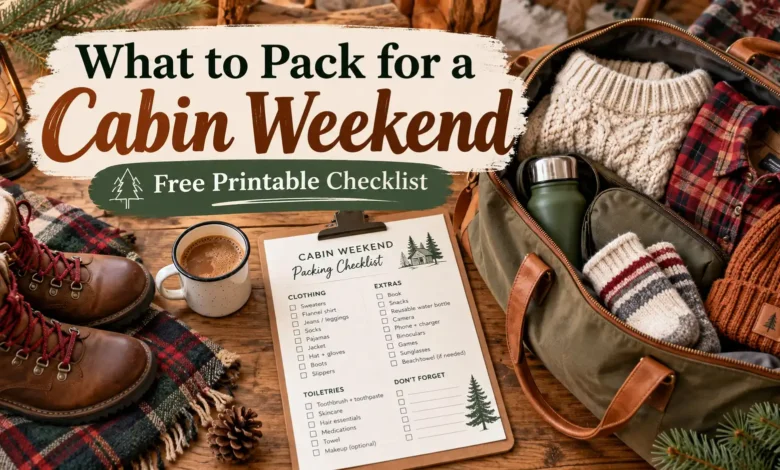
The easiest thing to forget on a cabin weekend is often the smallest: the right coffee filters, the door code, or a dry pair of socks. A bag full of cozy sweaters will not cover those gaps.
For a two-night cabin stay, pack comfortable layers, walking shoes, pajamas, toiletries, personal medications, a charger, a light, food for the meals you plan to eat, and any supplies the host does not provide. Add weather and activity gear after checking your actual destination.
This guide starts with a free, two-page printable checklist, then explains quantities, a simple meal plan and what you can leave at home. The baseline is a drive-to rental with a bathroom, electricity and a usable kitchen.
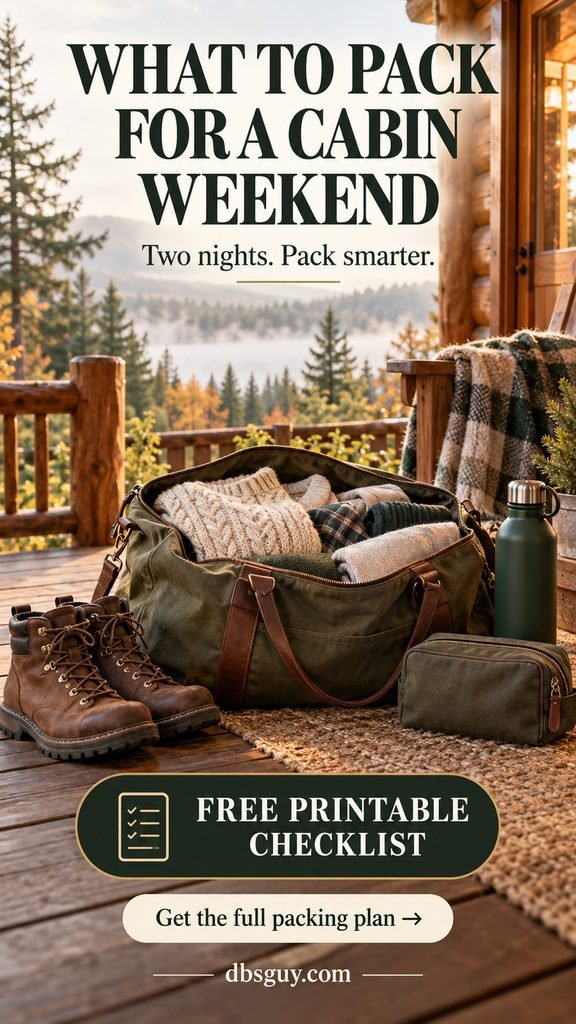
Your Free Printable Cabin Weekend Checklist
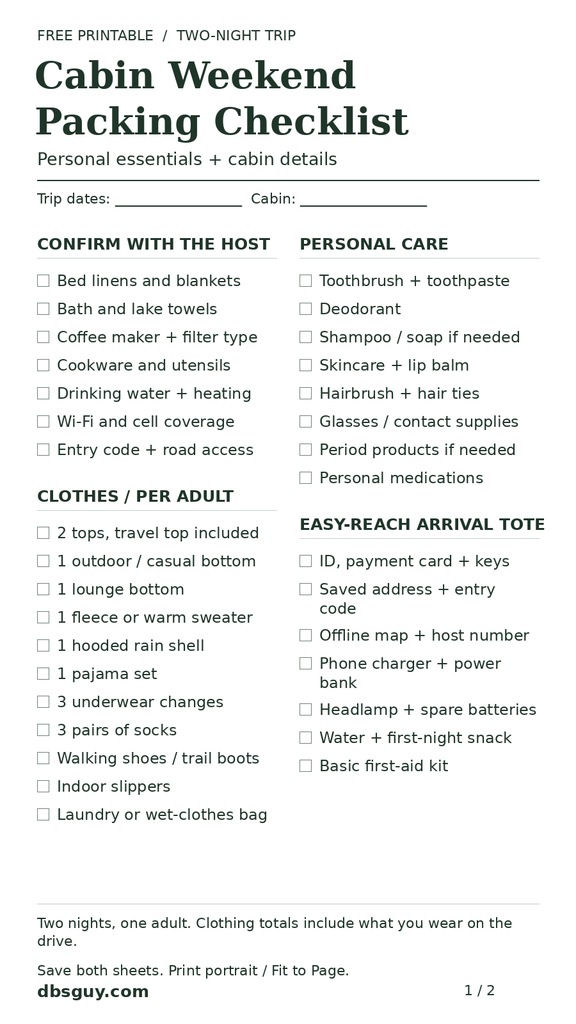
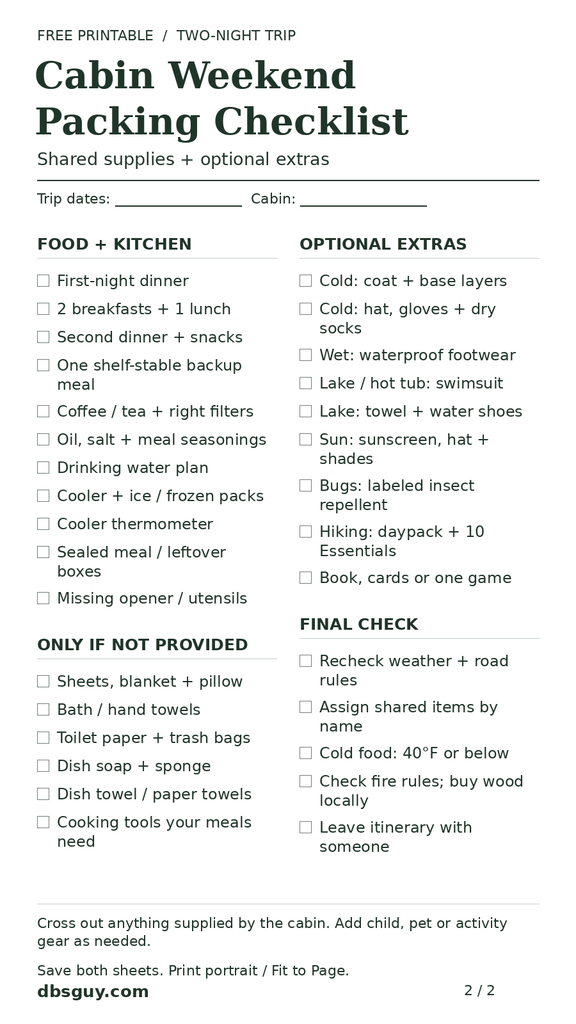
No signup needed. Save both full-size checklist images below: right-click and choose Save Image As on a computer, or touch and hold the image on a phone and use the available save option. Print each saved sheet in portrait orientation with Fit to Page on US Letter or A4 paper. Turn off photo cropping or borderless fill so the edges stay visible.
Page one is for each traveler. Page two covers the group’s food, shared supplies and optional extras. Cross out anything the host provides, circle what still needs to be bought, and write a person’s name beside shared items. Clothing quantities include what you wear on the drive.
Before You Pack, Confirm What the Cabin Provides
“Fully equipped” does not tell you whether the coffee maker uses pods, whether lake towels are included, or whether a grill has usable fuel. Read the listing and ask about the details that affect your plans.
- Sleep and bath: Are sheets, pillows, blankets, bath towels and hand towels included? Are extra blankets available?
- Kitchen: What cooking appliances, pots, pans, utensils and openers are there? Which coffee maker and filters or pods does it use?
- Basics: Is the tap water safe to drink? Are toilet paper, trash bags, dish soap and a sponge supplied for the whole stay or only as starter amounts?
- Access and comfort: Save the address, entry instructions and host’s phone number. Confirm heating or cooling, cell coverage and any current road requirements.
- Outdoor amenities: Check fire restrictions, approved firewood sources, grill rules, hot-tub towel policies and activity equipment before packing for them.
If the cabin lacks drinking water, a bathroom, heat or cooking facilities, use its property-specific equipment list as well. A rustic or off-grid stay can require substantially more preparation.
Pack Clothes for Two Nights, With Room for the Weather
Start with what you will do: a walk, relaxed meals and time indoors. Two tops that work with the same outdoor pants are usually more useful than three complete outfits with different shoes.

A Practical Clothing Baseline for One Adult
- 2 tops total: Count the shirt you wear on the drive. Choose short or long sleeves to suit the forecast.
- 2 bottoms total: One pair for walking or going into town, plus one pair of lounge pants.
- 1 warm midlayer: A fleece, sweater or sweatshirt you can wear more than once.
- 1 hooded rain shell: Add insulation separately if cold weather calls for it.
- 1 pajama set, 3 underwear changes and 3 pairs of socks: Add more dry socks if wet trails or snow are likely.
- Walking shoes or suitable trail boots, plus indoor slippers: Wear the bulkier pair while traveling.
- 1 laundry bag: Keep worn clothes separate; bring a washable wet bag if you expect soaked gear.
These quantities are an editorial starting point for a relaxed two-night trip. Add a fresh top for a sweaty hike, a spare outfit for children, or a dressier outfit if dinner reservations actually call for one. Pack for the cabin’s overnight temperatures and elevation, rather than the weather at home.
Bring a Small Food Plan and the Missing Kitchen Basics
Plan the meals first. It makes the grocery bag smaller and exposes the equipment you need: wraps require very little; pancakes need a suitable pan or griddle.
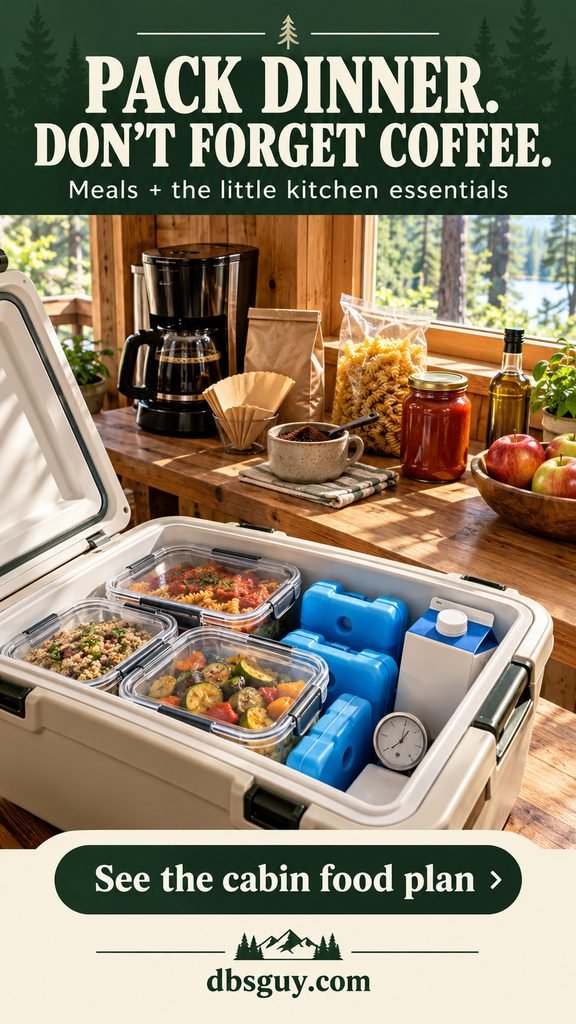
A Simple Friday-to-Sunday Meal Plan
If you arrive before Friday dinner and leave after Sunday breakfast, you have five meals to cover. Adjust the list for restaurant meals, arrival time and dietary needs.
- Friday dinner: Prepared grain bowls with vegetables and a protein you enjoy. Bring them chilled and use the cabin’s confirmed reheating equipment if needed.
- Saturday breakfast: Oatmeal, fruit and coffee or tea.
- Saturday lunch: Hummus or deli wraps with crunchy vegetables.
- Saturday dinner: Pasta with a jarred sauce and salad. Confirm there is a pot and a way to drain it.
- Sunday breakfast: Use the remaining oatmeal and fruit, with toast if a toaster is available.
For two adults, start with two servings of each planned meal and enough drinks and snacks for your actual appetite. Scale by the people eating, then add one easy shelf-stable backup meal, such as ready-to-eat soup that fits the available cooking setup. Keep it unopened unless you need it.
The Small Kitchen Items Worth Checking
Bring coffee or tea and the correct filters or pods, a small amount of oil, and the seasonings your meals need. Pack leakproof food containers. Add a can opener, tongs, a dish towel, dish soap, a sponge or trash bags only when the cabin is missing them. If you bring a knife for a driving trip, protect the blade with a proper cover.
Keep cold food cold during the drive. Pack perishables with ice or frozen packs and check a cooler thermometer: the target is 40°F or below. Put groceries into the refrigerator when you arrive. USDA advises refrigerating perishables within two hours, or one hour when the surrounding temperature is above 90°F; discard food that has exceeded those limits without temperature control. See the USDA food safety guidance.
If drinking water is not confirmed, agree on the property’s recommended water plan before departure. Include water for cooking and cleaning as well as drinking.
Pack Toiletries and an Easy-to-Reach Arrival Tote
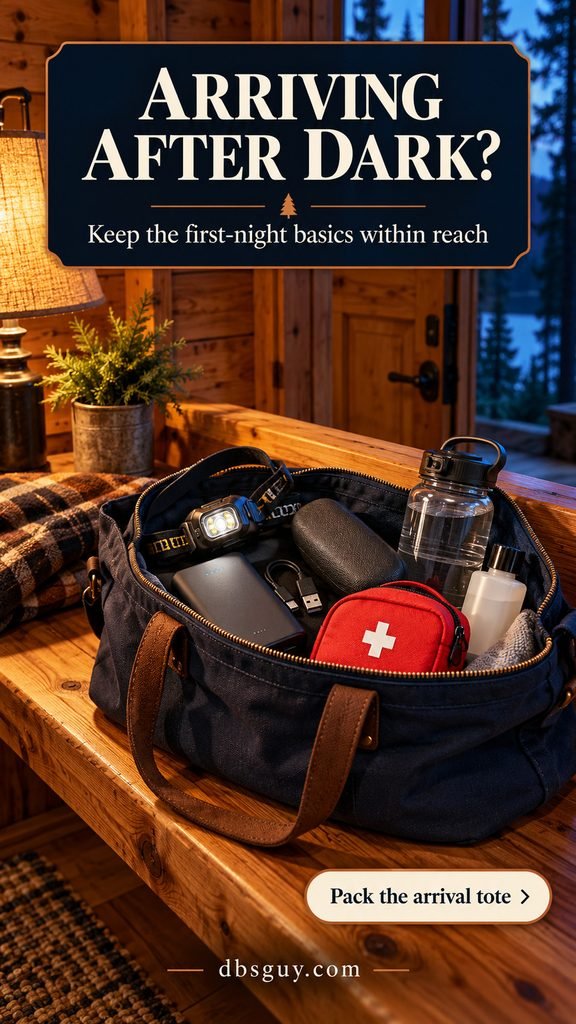
Put your first-night essentials where you can reach them without unpacking the car in the dark. Keep medications accessible and stored according to their instructions.
Personal Care Without the Whole Bathroom Cabinet
A toothbrush, toothpaste, deodorant, your usual skincare, lip balm, a hairbrush and any needed period products cover the basics. Add shampoo, conditioner and soap if the host does not supply what you use. Remember glasses or contact-lens supplies, prescriptions and any personal medical equipment.
What Goes in the Arrival Tote
- ID, payment card, keys and the saved entry code.
- The cabin address, host number and an offline route you checked before leaving.
- A phone charger, charged power bank and the correct cable.
- A working headlamp or flashlight, with spare batteries or a charging plan.
- A water bottle, a simple snack and a basic first-aid kit.
The light is useful for carrying bags along an unfamiliar path; the downloaded directions help when reception is patchy. Save the entry instructions themselves, too—an offline map does not contain your door code.
Add Extras for Your Season and Actual Plans
Choose the extras that fit the forecast and activities. A lake stay in August and a snowy mountain cabin in January need different adjustments, even if both trips last two nights.
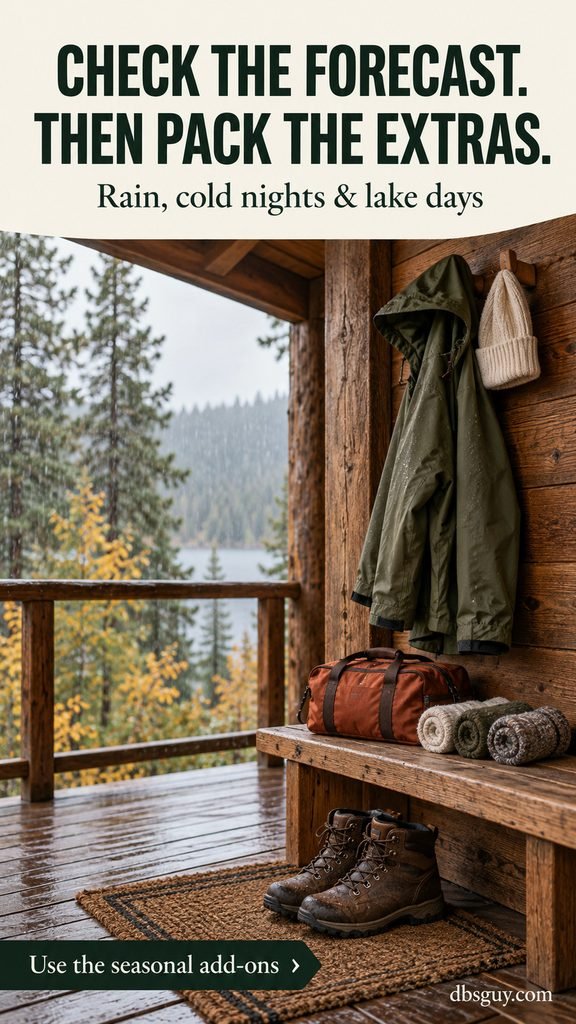
Fall or Cold-Weather Cabin Weekend
Add a warmer coat, base layers, a hat, gloves and spare dry socks when temperatures call for them. For snow, bring suitable boots and check the host’s current road-access instructions and local traction requirements. Confirm the heating arrangements before assuming the cabin will be warm when you arrive.
Summer, Lake or Hot-Tub Stay
Add a swimsuit, a separate towel if needed, sunscreen, sunglasses and a sun hat. Water shoes may be useful for the specific shoreline. If boating is planned, confirm suitable life jackets and activity requirements with the operator or property. Pack insect repellent as needed and follow its label.
Rainy Spring Weekend or Hiking Plans
For wet weather, add waterproof footwear and extra dry clothes. A daypack keeps water, snacks and a spare layer with you. For hikes, build your pack around the National Park Service’s Ten Essentials, including navigation, illumination, first aid, extra food and water, weather protection and emergency shelter. The cabin arrival tote is not a complete hiking kit.
If a fire is part of the plan, confirm it is permitted and buy approved wood near the destination. USDA APHIS recommends buying firewood where you burn it to help avoid moving invasive pests. Follow the property and local rules.
Divide Shared Supplies Before Everyone Packs
For a group trip, assign categories by name: one person handles breakfast and coffee, one brings dinner groceries and the cooler, and one covers the missing household supplies. Check those assignments before leaving rather than assuming someone else packed the ice.
Give each traveler their own personal checklist. Keep one shared page for the groceries and rental gaps. Families should add child-specific sleep, feeding and spare-clothing supplies; pet owners should confirm pet permission and bring food, bowls, a leash, cleanup bags and required bedding.
What You Can Leave at Home
Skip extra blankets and towels once the host confirms enough are provided. Leave bulky appliances unless your meals need them and the cabin lacks them. One book, a deck of cards or a favorite compact game is enough for downtime; you do not need an entire entertainment bag.
On departure day, recheck the weather, save the entry instructions, charge your light and power bank, then pack chilled groceries last. Keep the arrival tote on top and your first dinner easy to reach.
Cabin Weekend Packing FAQs
Do I Need to Bring Bedding and Towels?
Only when the host requires them, supplies too few, or you need separate lake or hot-tub towels. Confirm exactly what is included. If linens are not provided, ask for bed sizes before packing sheets.
How Much Clothing Do I Need for Two Nights?
Use two tops, an outdoor bottom, a lounge bottom, a warm layer, a rain shell, sleepwear and fresh underwear and socks as a starting point, counting your travel clothes. Add pieces for weather, messy activities and your personal needs.
Should I Bring Food If the Cabin Has a Full Kitchen?
Yes, unless you plan to eat out or the booking explicitly includes meals. A kitchen describes equipment, not a stocked pantry. Check coffee supplies, seasonings and the nearest grocery stop before you leave.
Can I Use This Checklist for a Longer Stay?
Yes. Increase underwear, socks, toiletries and meal quantities for the extra days. Keep reusable layers and shared tools at the quantities you actually need, and adjust for any laundry facilities.
The lifestyle visuals are AI-generated packing concepts. The printable checklist sheets are typeset for accurate, readable text.