
The NYC aesthetic changes from block to block: steel bridge cables at sunrise, pale SoHo facades under cloudy skies, elm trees turning gold, and neon reflected on a damp sidewalk. The best photo stop depends on the kind of picture you want—not simply which landmark is closest.
These 21 photogenic NYC spots cover classic skyline views, romantic park scenes, architectural details, and neighborhood streets. Each includes where to go, a useful angle, and a suggested light window. The list is an editorial selection, not a measured ranking of the city’s most photographed places.
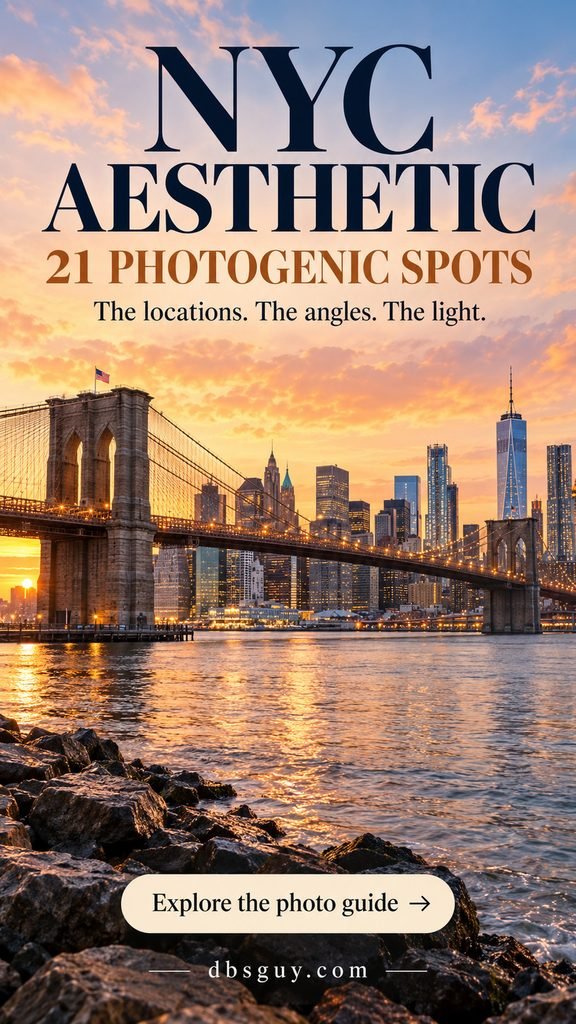
Pick your NYC photo mood first
- First-trip icons: Washington Street in DUMBO, the Brooklyn Bridge, and Top of the Rock.
- Soft, romantic scenes: Bow Bridge, Bethesda Terrace Arcade, and the Mall.
- Street-style backgrounds: SoHo’s Greene Street and Grove and Bedford in the West Village.
- Clean architectural lines: the library exterior, the Oculus, and the High Line’s 10th Avenue Square.
- Waterfront breathing room: Pebble Beach, Brooklyn Heights Promenade, Gantry Plaza, and Domino Park.
Budget note: Top of the Rock is the paid attraction on this list. The other stops are public streets, parks, or public-access spaces you can ordinarily visit without an admission ticket. Meals, transit, special events, and organized or commercial shoots can add costs or require permission.
The images are AI-generated editorial concepts inspired by these locations, not documentary photographs or exact previews of today’s conditions. Architecture, skyline placement, foliage, light, and crowds may differ in person. Use the location descriptions to plan your visit.
Brooklyn Bridge and the nearby waterfront
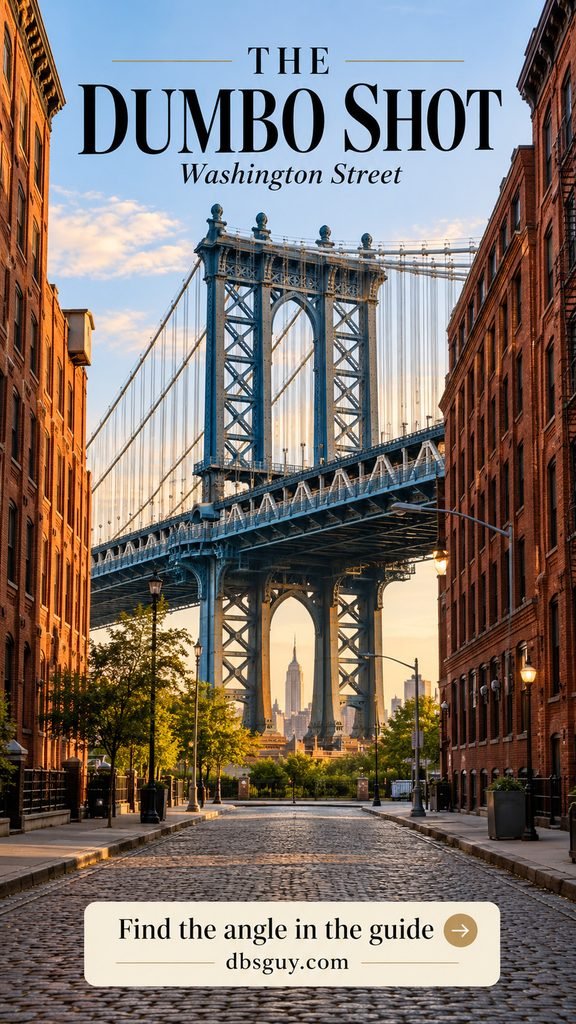
1. Washington Street in DUMBO
Find it: Washington Street around the block between Front and Water Streets, Brooklyn. Photo mood: brick warehouses, cobblestones, and the Manhattan Bridge.
This is the blue steel bridge framed by old warehouse buildings—the Manhattan Bridge, even though many visitors come here while planning a Brooklyn Bridge walk. Start near Water Street and look north along Washington Street. The surrounding brick gives the bridge scale, so include some of the buildings instead of zooming in immediately.
An early weekday morning is a sensible first choice for fewer interruptions, although an empty street is never guaranteed. From a safe sidewalk position, try your phone’s normal lens, then a modest optical zoom if available. The distant Empire State Building can appear within the bridge opening from the right alignment, but it should be a bonus rather than the whole reason for your shot.
Keep the roadway clear and let deliveries and pedestrians pass. This is a working neighborhood, not a closed photo set.
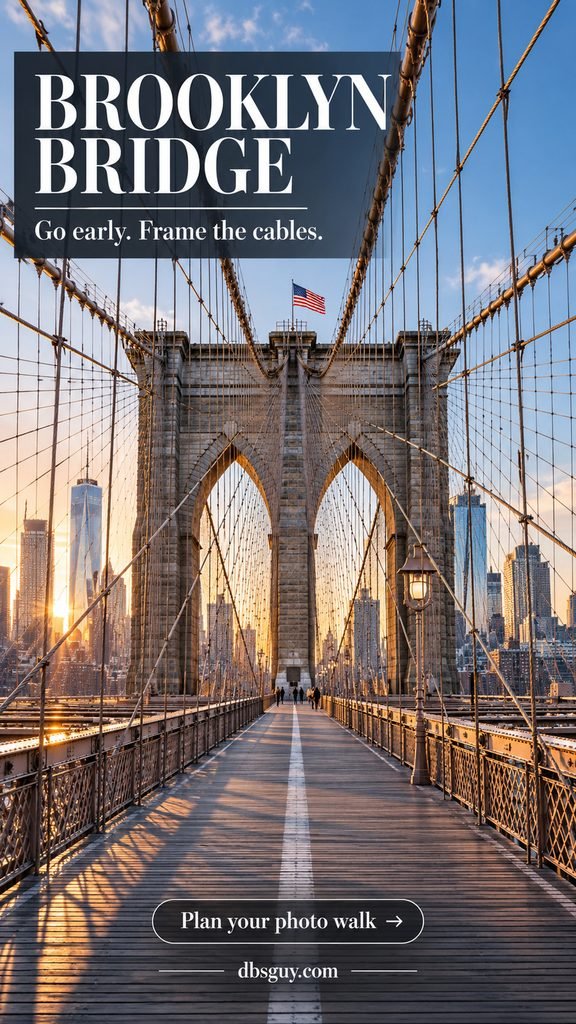
2. The Brooklyn Bridge pedestrian promenade
Find it: the elevated pedestrian walkway across the Brooklyn Bridge. Photo mood: stone towers, suspension cables, and strong leading lines.
The bridge walk creates a different picture from Washington Street. Here, the structure surrounds you. Frame a stone tower and let the cable lines lead toward it; a slightly lower camera position can give the wooden walkway more presence without requiring you to crouch in everyone’s path.
Go early if a cleaner composition matters most. For skyline context, take a few frames facing Manhattan as well as closer architectural shots. You do not need to complete the entire crossing to come away with useful pictures.
Expect wind, changing light, and steady foot traffic. Make each stop brief, stay to the side, and leave space for people moving behind you. A small person in the distance can help show scale; removing every passerby is not necessary.
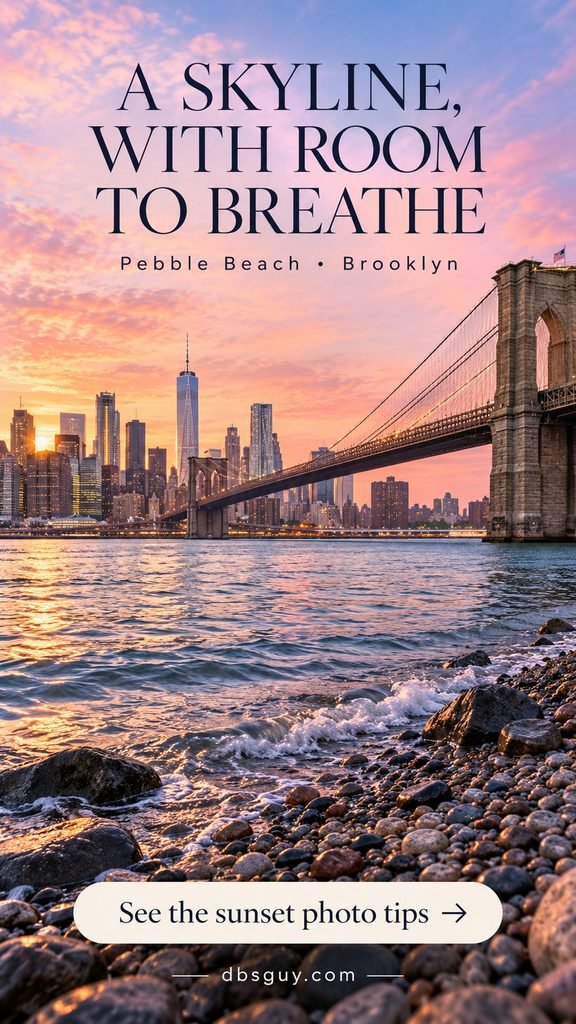
3. Pebble Beach in Brooklyn Bridge Park
Find it: the Main Street area of Brooklyn Bridge Park, close to DUMBO. Photo mood: open water, bridge structure, and Lower Manhattan.
Use Pebble Beach when you want the skyline to feel spacious. Compared with a tight street frame, the water gives your image a calmer foreground. Include a little shoreline, then keep the bridge and buildings comfortably above it.
Late afternoon through sunset can be rewarding, but the light changes with season, cloud cover, and your position. A bright sky behind the buildings may produce silhouettes rather than glowing facades. Tap on the skyline and lower your exposure slightly if the sky is losing its color.
You can photograph the scene from the paved waterfront edge; stepping onto uneven or slippery stones is optional and unnecessary. Choose this stop after Washington Street if you want two clearly different DUMBO pictures.
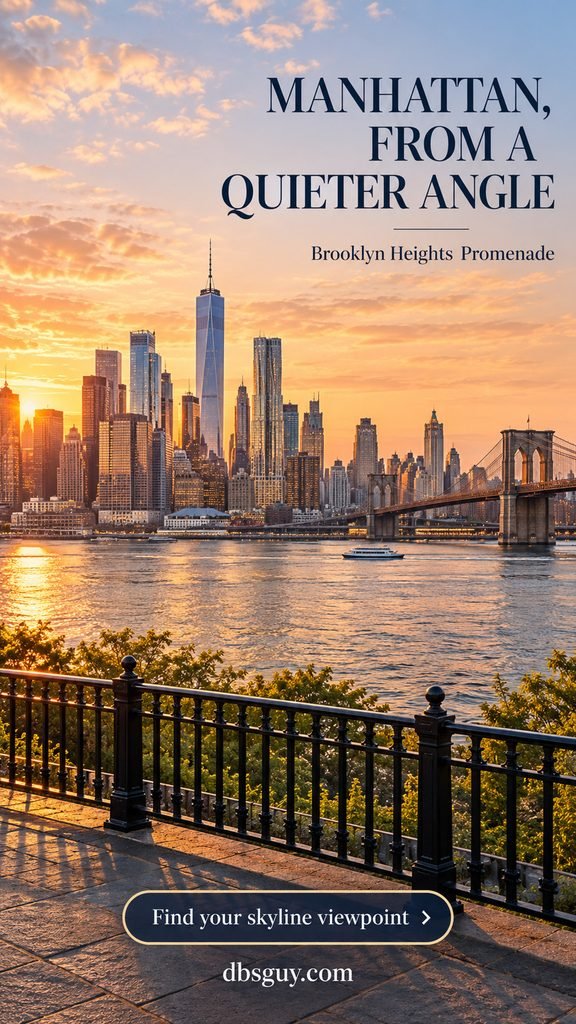
4. Brooklyn Heights Promenade
Find it: the elevated public promenade along the western edge of Brooklyn Heights. Photo mood: a broad Manhattan panorama with neighborhood quiet.
The Promenade raises your viewpoint above the waterfront. That extra height changes the relationship between the river, buildings, and foreground, so it earns its own place alongside Pebble Beach.
Take a clean skyline frame first, then include a small amount of railing or a bench for context. Keep the railing low in the picture; a large dark foreground can overwhelm the view. Late afternoon is a useful starting point, with sunset offering a more dramatic silhouette when conditions cooperate.
Pair it with a slow walk through the nearby residential blocks rather than racing straight back to Manhattan. In cold weather, make this the shorter outdoor stretch of your day. Our NYC winter itinerary shows how to combine the Brooklyn waterfront with warmer neighborhood stops.
Three different Central Park frames
5. Bow Bridge
Find it: mid-park around 74th Street, crossing the Lake. Photo mood: an elegant white bridge, water reflections, and leafy surroundings.
The bridge’s shallow curve is the feature worth keeping in your composition. For a full profile, use a nearby lakeside path and photograph across the water. A picture taken only from the middle of the bridge captures the railing but loses much of its distinctive shape.
Early light and calm water are a lovely combination when you get them. Spring and summer make the setting lush; autumn adds color; bare winter branches reveal more of the surrounding city. Foliage timing varies, so treat a fall image as inspiration rather than a promise for a particular week.
If you include someone in the picture, keep them small enough that the bridge still reads clearly. Do not block the crossing while arranging a long portrait session.

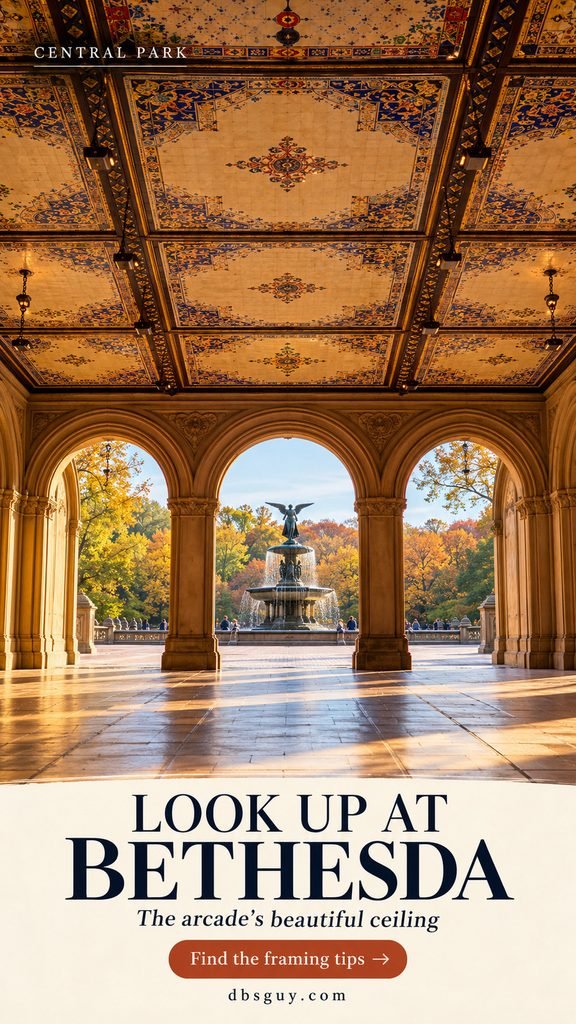
6. Bethesda Terrace Arcade
Find it: the lower-level arcade at Bethesda Terrace, near the middle of Central Park around 72nd Street. Photo mood: warm stone, repeated arches, and an ornate tiled ceiling.
For this stop, look up. The Minton tile ceiling and the rhythm of the arches give you a more architectural image than a standard fountain portrait. Stand where the ceiling and a bright opening both fit, then straighten your phone before taking the shot.
The arcade offers shade, which can help when the park outside is harshly lit. Expose for the stone and check the preview: if the exterior turns completely white, try a second frame with a lower exposure. A close ceiling detail is another useful option when the wider space is busy.
Leave room for visitors and performers. The sheltered setting is convenient during a passing shower, but it does not replace an indoor plan for a long rainy day.
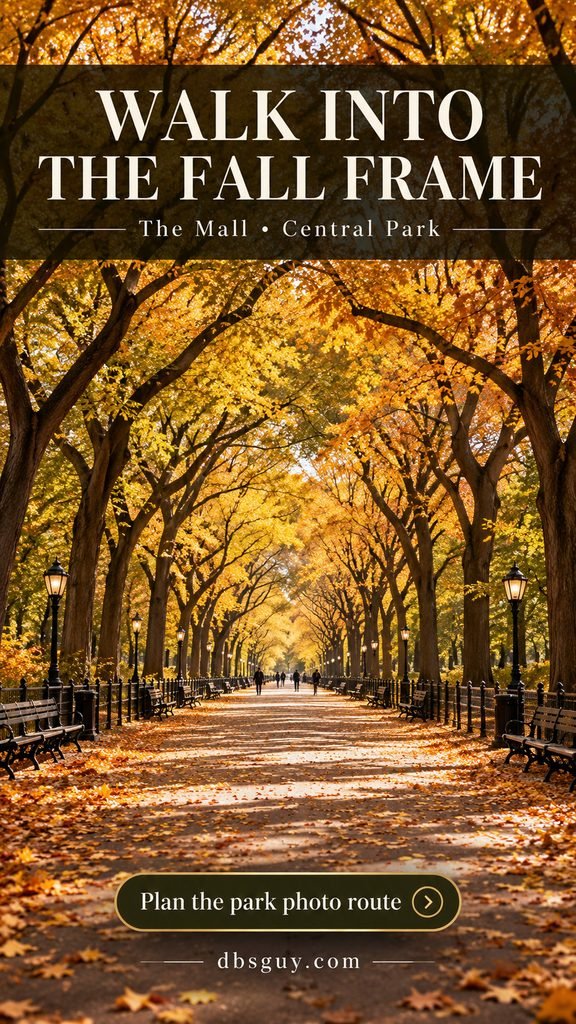
7. The Mall and Literary Walk
Find it: the broad central walkway running north from the Literary Walk area near 66th Street toward Bethesda Terrace. Photo mood: an elm canopy, repeating benches, and seasonal color.
The Mall is about the path pulling your eye into the distance. Hold your phone level and line up the walkway without turning your photo stop into an obstacle. If someone is posing, have them move naturally along the side of the path rather than occupy its busiest center.
Overcast light makes the leaves easier to photograph evenly. Side light can add sparkle, but deep patches of shade may make a portrait harder to expose. In fall, include a little leaf-covered ground; in summer, let the green canopy dominate.
The Mall, Bethesda, and Bow Bridge work well as one park outing. Allow time to wander between them instead of expecting three empty locations in quick succession.
Midtown icons, interiors, and city light
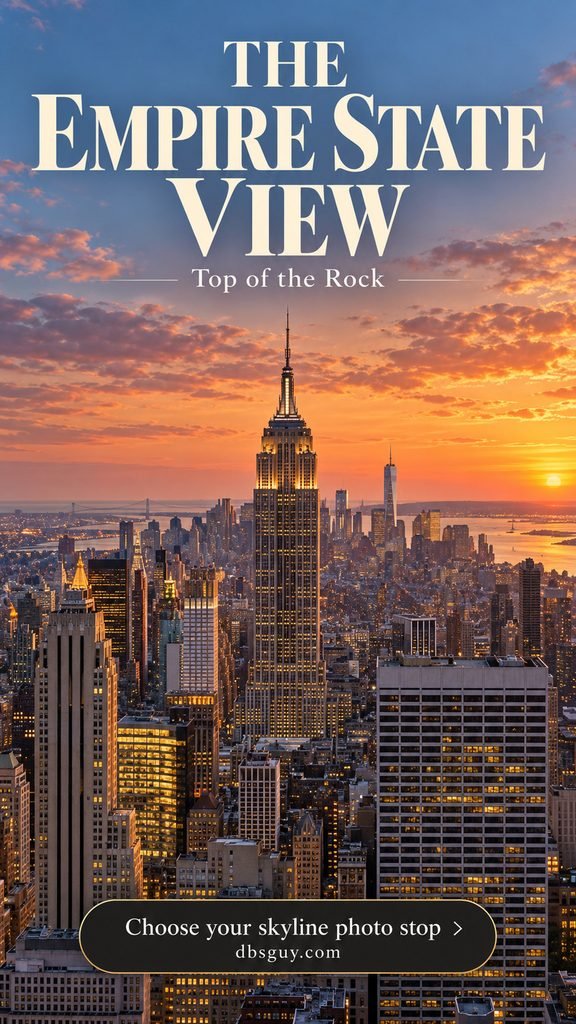
8. Top of the Rock
Find it: Rockefeller Center, with entry at 30 Rockefeller Plaza on West 50th Street. Photo mood: the Empire State Building inside a layered Manhattan skyline.
Choose Top of the Rock if the Empire State Building itself belongs in your skyline photo. Facing south places that familiar tower in the view, rather than beneath your feet. Start with a vertical image that includes surrounding buildings; then try a tighter frame if your camera has a useful optical zoom.
This is the deliberate splurge in an otherwise mostly free location list. Check Top of the Rock’s official tickets and visitor information before choosing a time. Admission options, sunset pricing, hours, and equipment rules can change.
Booking around sunset gives you a chance to see changing light, but clouds, queues, and crowded railings affect the result. Leave a generous arrival buffer and avoid committing your whole photo plan to one exact minute.
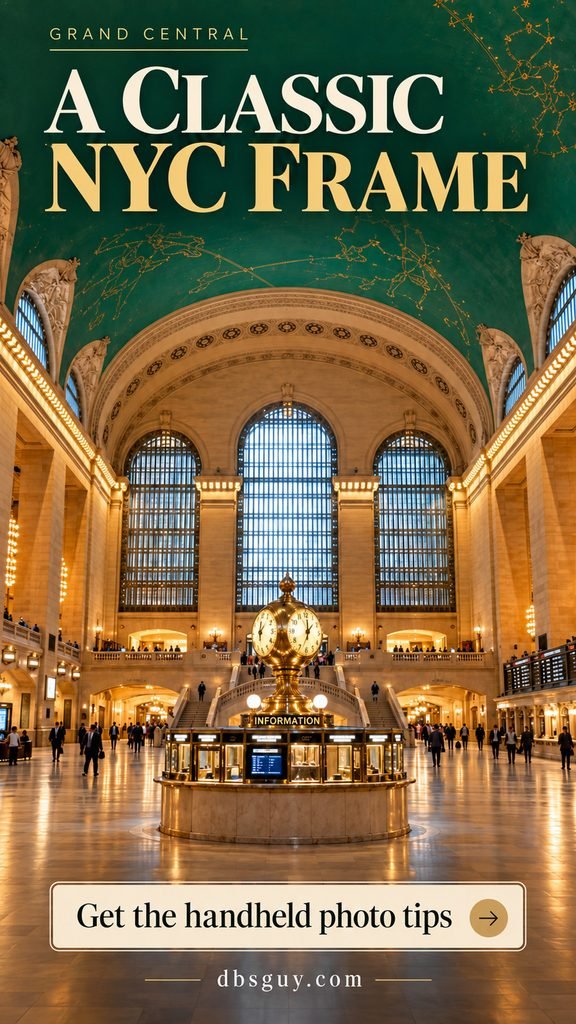
9. Grand Central Terminal’s Main Concourse
Find it: Grand Central Terminal at 89 East 42nd Street. Photo mood: a celestial ceiling, warm stone, and the famous information-booth clock.
Grand Central is a strong choice when you want an indoor architectural frame. Photograph the clock with some ceiling above it, or move to a public edge of the concourse for a wider composition. The people below are part of the scene; a small amount of motion can make the terminal feel alive.
Personal, noncommercial pictures with a phone or handheld consumer camera are allowed without a permit or fee. Professional equipment such as a tripod, light, or stabilizer—and commercial use—requires the terminal’s location agreement or permit process.
Avoid weekday commuting peaks where practical, keep flash off, and do not lean into a thoroughfare for symmetry. A handheld picture from the side is a better experience for everyone than a blocked staircase.
10. The New York Public Library exterior
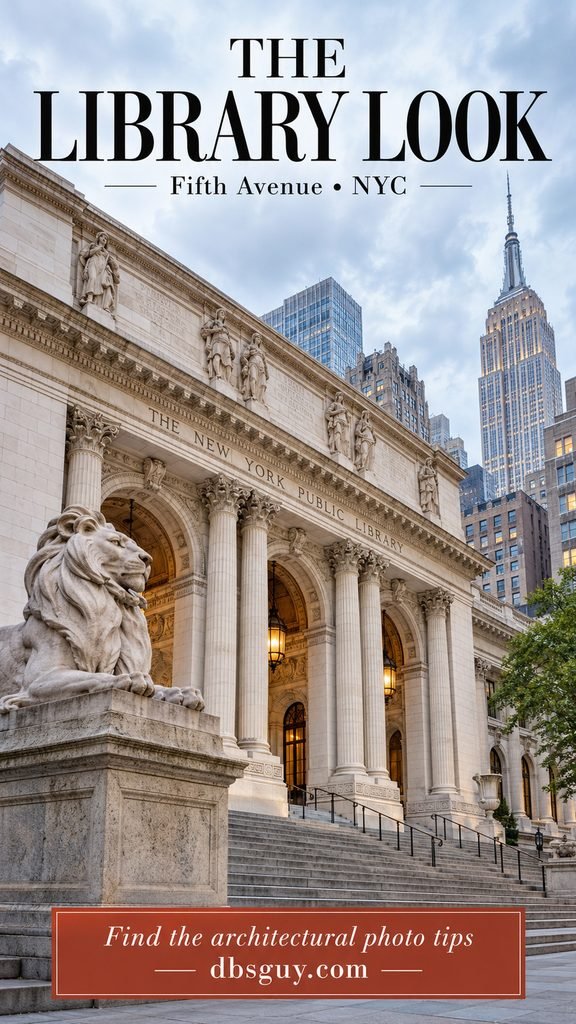
Find it: the Stephen A. Schwarzman Building on Fifth Avenue at 42nd Street. Photo mood: pale marble, columns, broad steps, and the library lions.
Begin outside. The Fifth Avenue facade and the lions, Patience and Fortitude, deliver the library look without depending on access to a particular interior room. A three-quarter angle can place one lion in the foreground and the building behind it.
Cloudy weather is useful here: the pale stone is easier to expose without stark shadows. Keep your phone reasonably level, or step back and crop later, to reduce the appearance of columns leaning inward.
Leave the entrance and stairs usable, and respect barriers or maintenance work. If you decide to go inside, follow the library’s current visitor and photography guidance; an exterior stop does not imply unrestricted access to reading rooms.
11. Tudor City Overpass
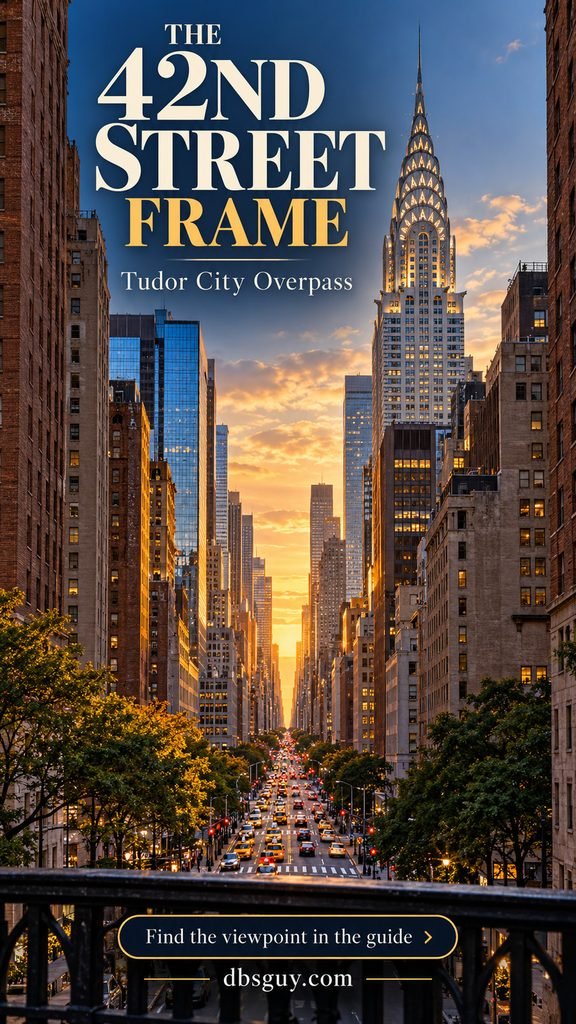
Find it: Tudor City Place where it crosses above East 42nd Street. Photo mood: a long avenue canyon and the Chrysler Building’s silver crown.
Look west along 42nd Street from the overpass sidewalk. The street provides the main line through the frame, while the Chrysler Building rises off the avenue’s axis. Let the actual buildings guide your framing instead of expecting every tower to sit perfectly in the middle.
Late afternoon can add warmth, while early evening brings window lights and traffic color. The famous sun-aligned Manhattanhenge look happens only around particular dates and conditions; it is not an everyday sunset view.
The sidewalk is narrow and popular with photographers. Keep your equipment compact, make room for passersby, and use the railing only as a boundary—not as something to climb or reach over.
12. Times Square at blue hour
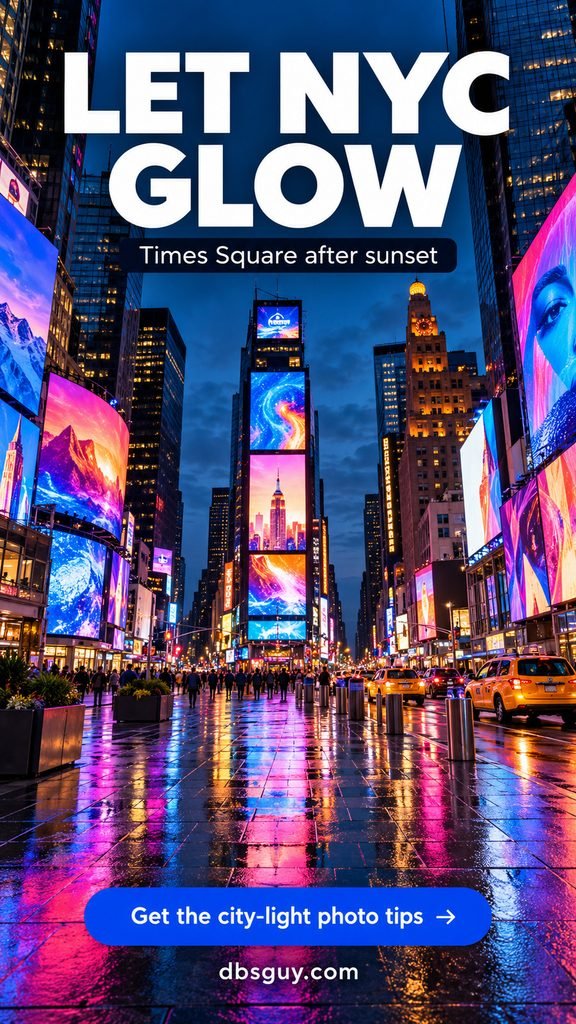
Find it: the pedestrian plazas around Broadway and Seventh Avenue in the West 40s. Photo mood: saturated signs, crowds, and city-night energy.
Times Square works best when you embrace its visual noise. Blue hour—the period of twilight after sunset—can balance the bright screens with some remaining color in the sky. Once it is fully dark, protect the billboard highlights rather than trying to brighten everything.
For a phone portrait, face your subject toward a bright screen and test the skin tone before taking several frames. Colored signage can turn a face magenta or green. For architecture, keep one large sign or building dominant so the picture has a clear subject.
Rain-damp paving may add reflections, but never step into traffic to chase them. Stay in the pedestrian space. If your visit is holiday-focused, our Christmas in New York guide helps you add festive stops to the wider trip.
Flatiron, SoHo, and village streets
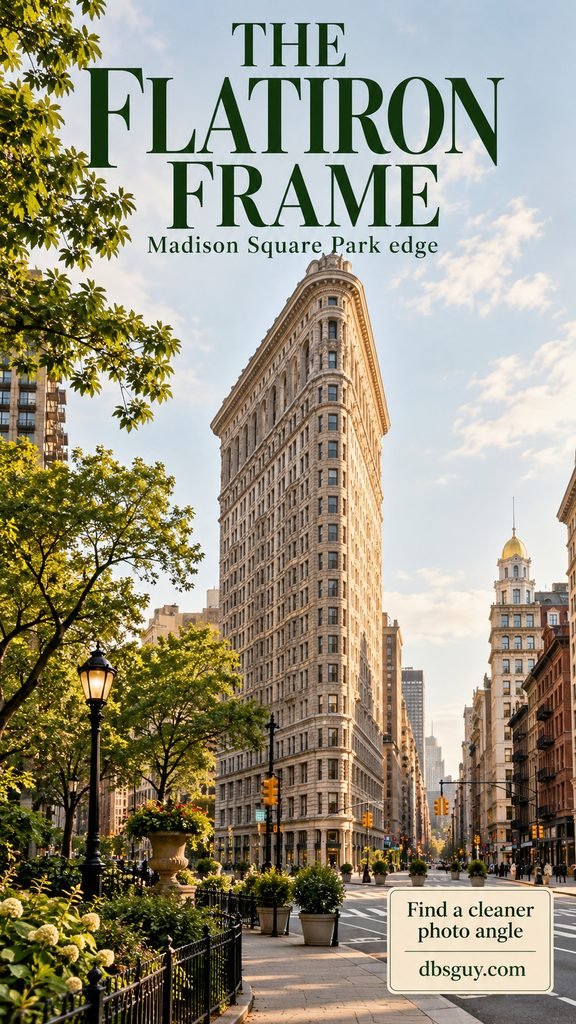
13. The Flatiron Building from the Madison Square Park edge
Find it: the area around Broadway, Fifth Avenue, and East 23rd Street. Photo mood: a distinctive wedge-shaped building and classic New York street geometry.
Approach from the public pedestrian space or park edge north of the building and look south. That position makes the narrow prow easier to recognize. Include enough of the adjacent streets to show the triangular shape instead of photographing only a wall of windows.
Soft morning light or a cloudy day keeps the pale facade readable. Scaffolding, construction, street furniture, and temporary barriers can change the cleanest angle, so look at the scene before choosing where to stand.
If the full-building frame is obstructed, make a tighter architectural detail your goal. Keep crossings brief and legal; the geometry is visible without standing in the intersection.
14. Greene Street’s cast-iron facades in SoHo
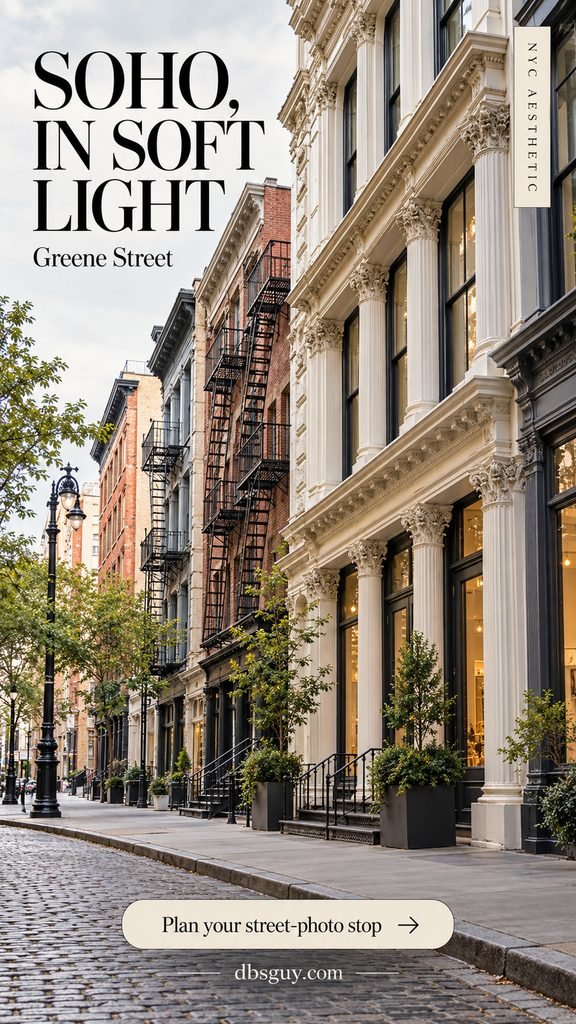
Find it: Greene Street around Broome and Spring Streets. Photo mood: loft windows, cast-iron columns, and a polished street-style backdrop.
SoHo is especially useful for portraits because the building details offer texture without needing a huge landmark in every picture. Walk a block, notice where the light is even, and choose a facade with a clear stretch of public sidewalk.
Overcast conditions often suit the pale buildings. For a person in the frame, a normal or modest telephoto lens usually keeps proportions more natural than an ultra-wide shot taken close to their face. Include a little sidewalk and one repeating row of windows for context.
A shop doorway is an entrance, not a reserved backdrop. Keep it open, avoid private steps, and move on when foot traffic increases. A nearby block can be just as effective as the first popular corner you find.
15. Grove and Bedford in the West Village
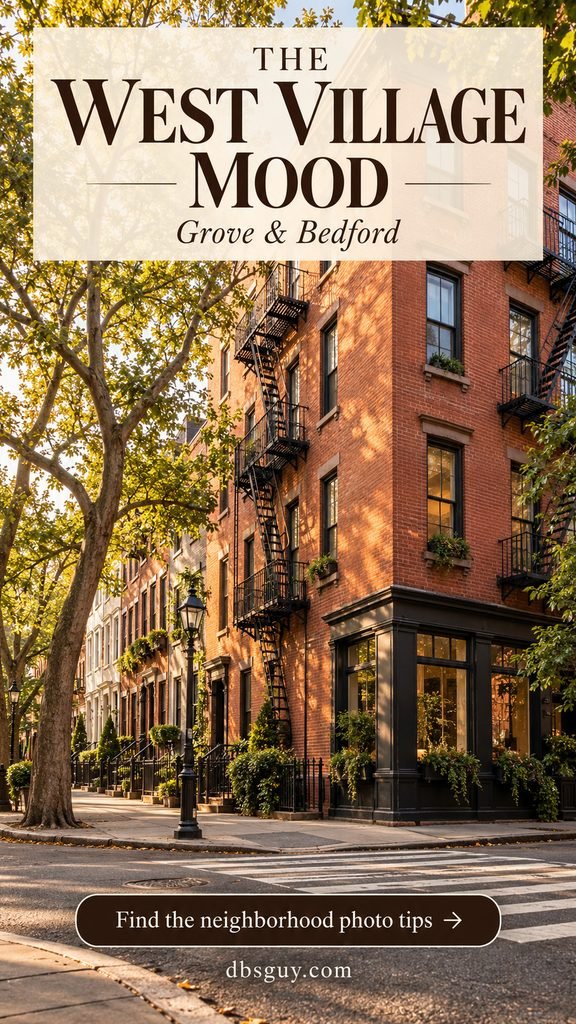
Find it: the intersection of Grove Street and Bedford Street. Photo mood: warm brick, fire escapes, street trees, and a lived-in neighborhood.
Use this corner for a softer street picture than SoHo’s bright facades. Photograph from the opposite public sidewalk when safe, allowing the corner building and the side street to work together. A small amount of tree canopy adds depth without requiring elaborate styling.
Morning or late-afternoon light may be appealing, but buildings can put the street into shade. Look for even light on your subject rather than following a clock blindly.
Keep homes, doorways, and residents’ routines in mind. For an autumn photo walk, choose shoes and layers you can comfortably wear between stops; our October NYC outfit ideas offer practical ways to dress for a day outdoors.
16. Washington Square Arch
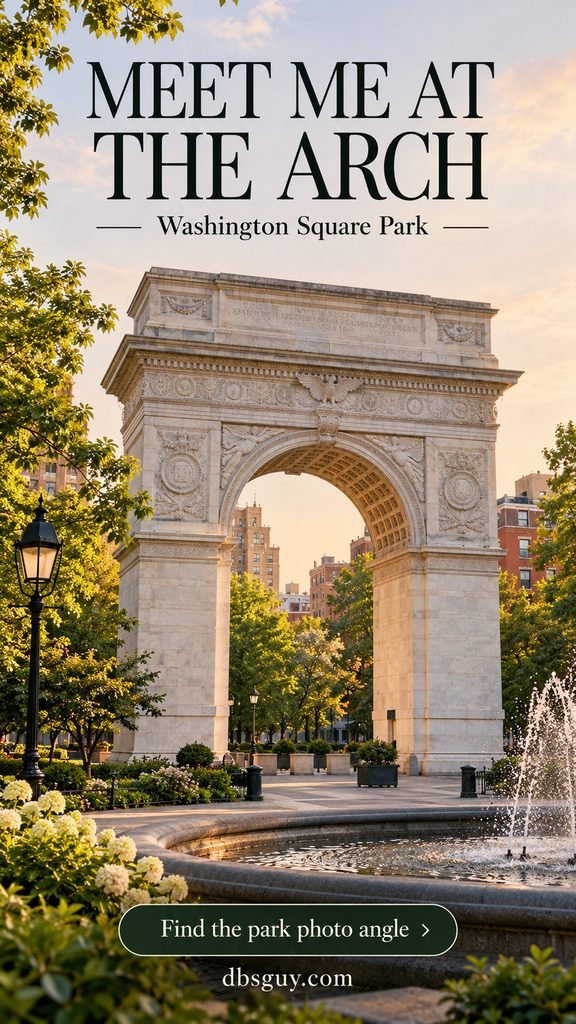
Find it: the north side of Washington Square Park, where Fifth Avenue meets Washington Square North. Photo mood: a pale stone arch against a lively village park.
Start inside the park and face north toward the arch. A straight-on picture emphasizes symmetry; a slight side angle gives the stone more depth. Including a little fountain area or nearby greenery can make the image feel like a park visit rather than a catalog of monuments.
Go early for a quieter scene, or later if you want musicians, chess players, and ordinary park life around the edges. Neither choice requires an empty background to work.
The fountain’s operation and seasonal planting vary. Build your composition around the arch first, then use whatever foreground is actually there. Leave entrances and seating accessible to other visitors.
Chelsea design and Downtown architecture
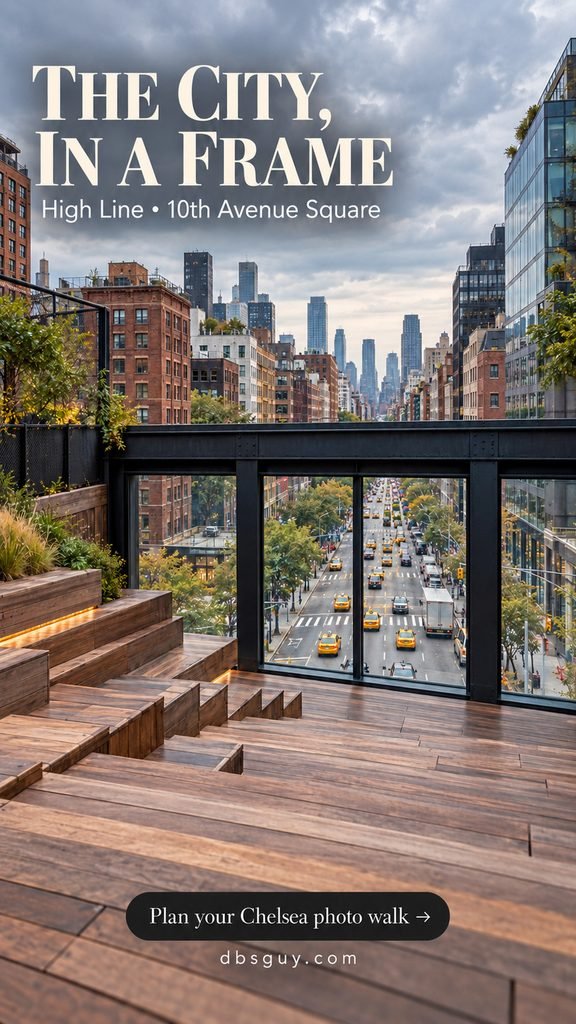
17. The High Line’s 10th Avenue Square
Find it: on the High Line at West 17th Street, above 10th Avenue. Photo mood: stepped wooden seating and a city view framed by glass.
Instead of trying to photograph the entire High Line, give this small amphitheater your attention. The seating descends toward windows overlooking the avenue, turning ordinary traffic into part of the picture. Shoot from the seating area and use the steps as leading lines.
Cloudy light reduces the difference between the shaded seating and the bright street beyond. Check for glare on the glass and shift slightly if reflections hide the view. You can also make a closer composition using the repeated wooden lines.
Check current park access and elevator status if stairs are a concern. Keep benches available, and plan this as part of a Chelsea walk rather than a quick cross-city detour.
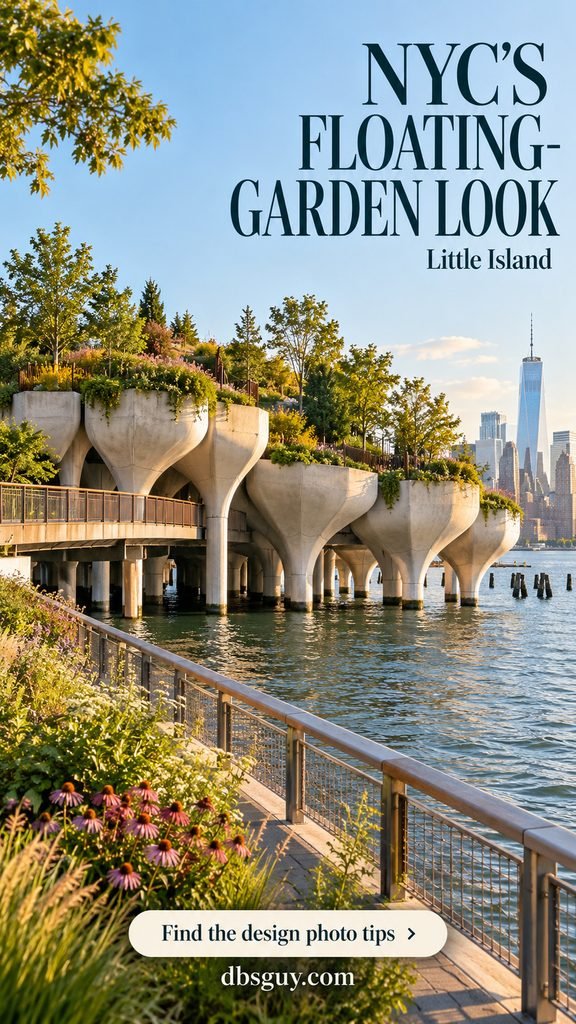
18. Little Island
Find it: Pier 55 in Hudson River Park, near West 13th Street. Photo mood: sculptural white supports beneath a planted riverside park.
Little Island offers two different approaches within one stop. From the adjacent public waterfront, emphasize the tulip-like concrete supports and the park’s changing height. Once inside, photograph planting, curved paths, and river views from designated walkways.
The exterior is especially useful if you want the design itself to be recognizable. Soft morning light can keep the white structure readable. A wider frame may work better than zooming so tightly that the supports lose their relationship to the park above.
Ordinary park entry is free; separately programmed performances can have different ticket arrangements. Follow current hours and photo rules, stay out of planted areas, and keep the entry bridges moving.
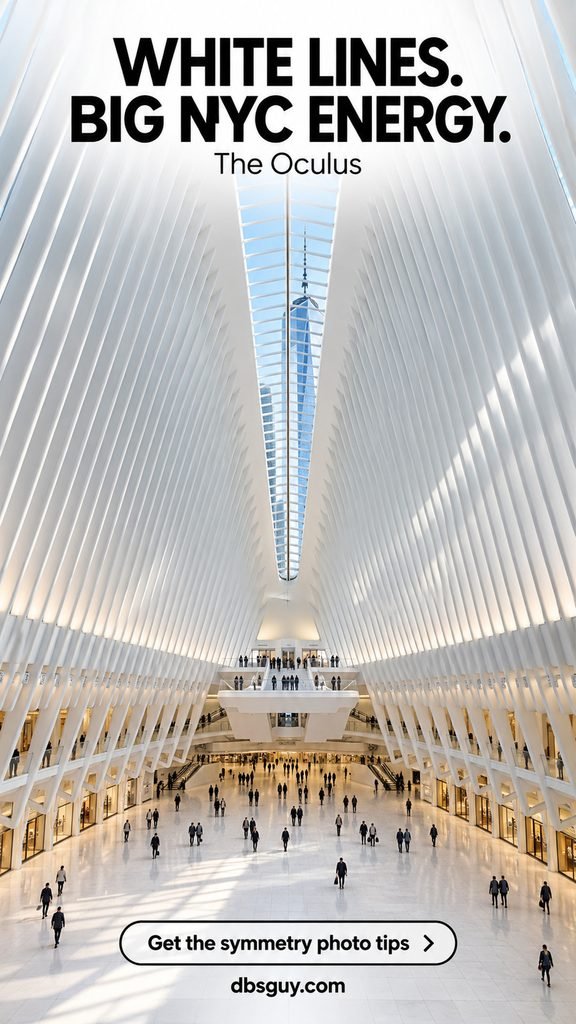
19. The Oculus
Find it: the World Trade Center transportation hub in Lower Manhattan. Photo mood: repeating white ribs, height, and luminous symmetry.
The Oculus suits a clean, graphic photo set. From an accessible public concourse edge or balcony, look for a position that shows the ribbed structure and the long skylight together. Keep the phone centered and level, then take a second picture from a slight angle for a less formal result.
Daylight is helpful because the bright interior can otherwise look flat or overly processed. Reduce exposure a little if the white structure is losing detail. Tiny people below can provide scale without becoming the subject.
This is a transit and shopping space. Follow security instructions, avoid blocked areas, and keep your camera setup handheld unless you have checked permission for more equipment. Do not assume every balcony or stair is open at all times.
Two waterfront alternatives beyond the usual circuit
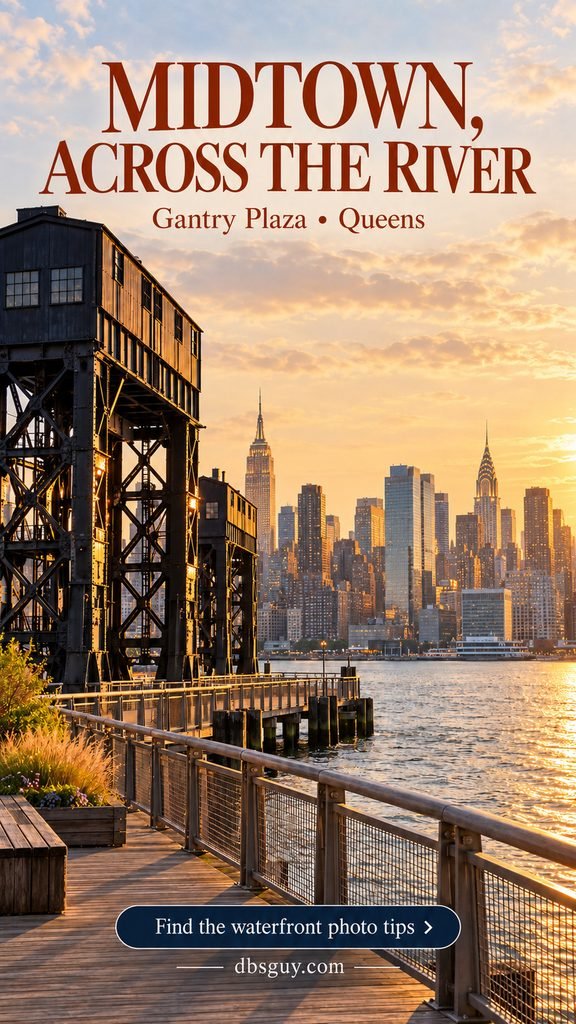
20. Gantry Plaza State Park in Long Island City
Find it: the East River waterfront around 47th Road in Long Island City, Queens. Photo mood: Midtown across the river with industrial gantries in the foreground.
Gantry Plaza changes the skyline from Lower Manhattan to Midtown. Use the restored gantries to frame the view, or step along a public pier for a simpler skyline picture. The industrial structures make the image recognizable as Queens rather than a generic river view.
Late afternoon can be beautiful here; on a sunny day, the skyline may become a silhouette as the light shifts behind Manhattan. Try both a wider frame with a gantry and a tighter skyline crop before deciding which mood you prefer.
Check current park hours and signage rather than assuming late-night access. The state’s visitor page currently lists dawn-to-dusk hours. Wedding and organized photo sessions have separate permit arrangements, so treat a casual visit differently from a planned shoot.
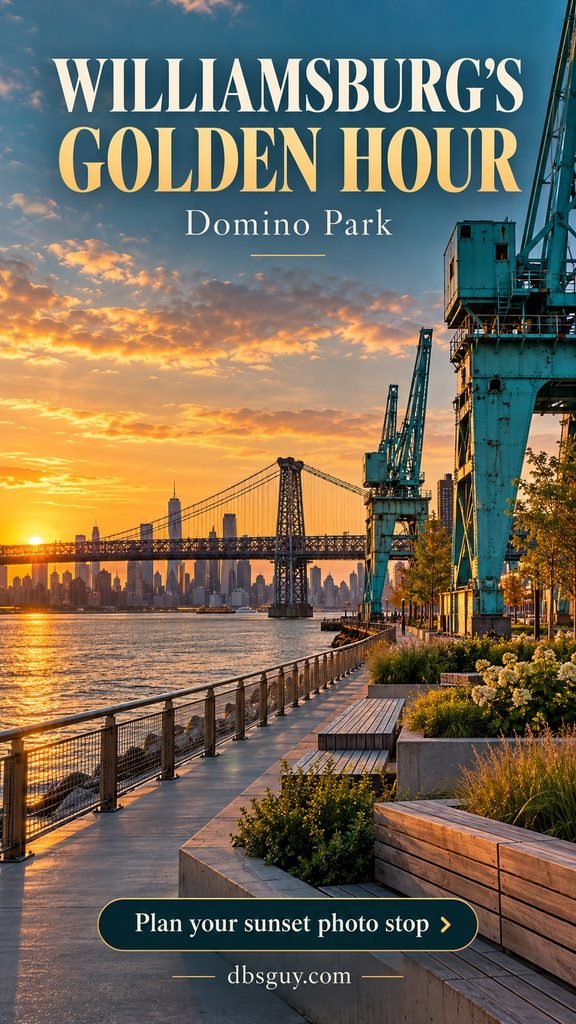
21. Domino Park in Williamsburg
Find it: the Williamsburg waterfront around River Street, by the former Domino Sugar refinery. Photo mood: industrial details, landscaping, and a broad East River view.
Domino Park gives you a more contemporary waterfront setting than the Brooklyn Heights Promenade. Use a section of the public walkway or preserved industrial equipment in the foreground, then let the river and Manhattan finish the picture. Depending on where you stand, the Williamsburg Bridge can add another line through the scene.
Late afternoon and sunset are good starting points for changing color. If the sky is bright, expose for it and allow the foreground to become moodier. A skyline-only image and a wider industrial-park frame will feel noticeably different.
Make this a separate Williamsburg outing rather than adding it automatically to your DUMBO walk. Leave time for the neighborhood, keep recreation areas clear, and check current park hours before staying after sunset.
Turn the list into a photo route you can enjoy
You do not need all 21 stops in one trip. Pick a neighborhood group and decide which picture matters most; let that stop set your timing. The time ranges below are planning allowances for walking and casual photos, not timed or tested tours.
- Brooklyn icons, about 3–4 hours: start with Washington Street early, continue to Pebble Beach, then choose either a bridge walk or Brooklyn Heights Promenade. Adding both makes it a longer outing.
- Central Park, about 2–3 hours: walk the Mall, explore Bethesda Terrace Arcade, then continue to Bow Bridge. Pause for wider park views between the landmarks.
- Midtown architecture, about 2–3 hours without an observation deck: begin at the library, walk east to Grand Central, and continue toward Tudor City if the weather suits. Treat Top of the Rock or Times Square as a separate later stop.
- Village and SoHo, about 2–3 hours: combine Grove and Bedford, Washington Square Arch, and Greene Street, allowing for food and street browsing.
- Chelsea design, about 1.5–2.5 hours: pair Little Island with the High Line’s 10th Avenue Square. Use an accessible entrance that suits your needs and current elevator availability.
The Oculus, Gantry Plaza, and Domino Park can each anchor another neighborhood outing. Check transit service for your actual dates instead of assuming the fastest route will be the same every day.
Small choices that improve NYC phone photos
- Clean the lens before the first stop. Fingerprints become especially noticeable around night lights.
- Use the grid to level buildings and water. Keep the phone upright when you can; tilting it sharply upward exaggerates leaning facades.
- Start with the normal lens. Ultra-wide lenses can be useful for interiors, but people near the edges may look stretched.
- Save the bright areas. Tap on the sky, pale stone, or illuminated sign and lower exposure if detail is disappearing. Take a second version for comparison.
- Leave room around the subject. A loose frame gives you more options for a later vertical crop.
- Dress for the walk. Comfortable shoes, forecast-appropriate layers, and a compact bag help more than a second outfit you cannot easily carry.
Suggested light windows are starting points. On arrival, notice which side of a building is lit, where shade falls, and whether wind or crowds make a different composition more practical. Stay on public paths, keep entrances clear, and ask before making a stranger the main subject of a close portrait.
NYC aesthetic photo questions
Which spots should I choose if I only have one morning?
For classic New York, choose Washington Street and Pebble Beach, then add a short Brooklyn Bridge walk if you have time. For a softer park mood, choose the Mall, Bethesda Terrace Arcade, and Bow Bridge. Staying in one area gives you more time to make pictures and less time in transit.
Where can I take aesthetic NYC photos for free?
Public street views, the listed parks, the Brooklyn Bridge promenade, the library exterior, and ordinary public access to Grand Central and the Oculus do not ordinarily require admission tickets. Free entry does not mean unrestricted permission for commercial photography, professional equipment, events, or private interiors.
Do I need a professional camera?
No. A phone can handle neighborhood streets, park views, and most architectural scenes well. Choose the light and composition first. For distant skyline details, a camera or phone with useful optical zoom gives you more flexibility than heavy digital zoom.
What season gives NYC the prettiest aesthetic?
Choose the look you want: spring and summer for greenery, fall for warm park color, or winter for bare branches and a more graphic skyline. Bloom and foliage dates vary each year. Snow, wet streets, and unusually colorful sunsets are weather conditions, not guaranteed seasonal features.
What works on a rainy day?
Grand Central and the Oculus are practical indoor options during ordinary public access. A light shower may make street reflections interesting, but wind-driven rain is a good reason to shorten the outdoor plan. Bethesda’s arcade offers shelter for a pause, not an all-day indoor itinerary.
Do casual photo stops require a permit?
There is no single rule for every location. A quick personal handheld picture differs from a wedding session, commercial shoot, tripod setup, or group production. Grand Central explicitly allows personal noncommercial phone and handheld consumer-camera photography while requiring arrangements for professional equipment and commercial use. Check the operator’s current rules whenever your setup goes beyond a simple visit.
Choose a few places that fit the mood you actually like. Give the scene time, notice what is happening around the landmark, and keep one frame that feels like your visit—even if it includes a passing taxi or someone walking through the distance.