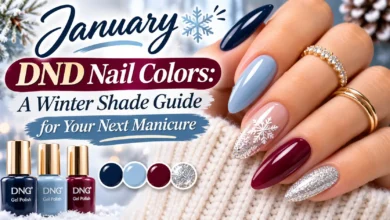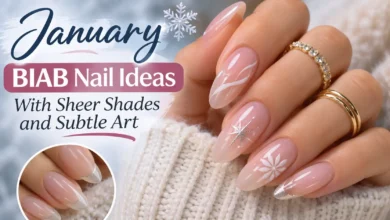
Burgundy is a useful January nail color if you live in black and gray; cocoa brown suits camel and cream; icy blue gives navy and denim a lighter finish. If your clothes lean toward soft pinks and lilacs, start with dusty mauve. If your outfits change color every day, try a sheer rose that leaves some of your natural nail visible.
Your winter wardrobe gives you something concrete to work with: the sleeve beside your hand, the coat you wear most mornings, and the bag you carry. Choose your January manicure around those pieces and you can stop wondering whether a color will work beyond the inspiration photo.

The images are AI-generated styling concepts. They illustrate color pairings rather than completed salon work or product tests. The pairings are editorial suggestions; compare the actual polish against your own hand and clothes.
Start With Three Outfits You Actually Wear
Pull out an ordinary weekday outfit, a casual weekend outfit, and something you wear when you want to feel a little more dressed up. Include the layers people will see indoors. A manicure chosen only for your coat may feel less connected once you take it off.
Look for the colors that repeat. Perhaps you have three gray sweaters, even though the bright green one gets all the attention in your closet. Or your outfits vary, but your brown bag and camel coat turn up almost every day. Those repeating pieces are the strongest starting point.
- To blend: choose a polish in a similar color family, with enough difference in depth to keep the nail visible beside your sleeve.
- To add contrast: pair a light nail with a dark outfit, or a richer nail with pale clothing.
- To connect mixed outfits: repeat a recurring accessory color, or keep the manicure sheer.
You only need one of these approaches for a single manicure. Once the color feels right, details such as length and shape are easier to settle. For help with those decisions, see January Nails: How to Choose Your First Manicure of the Year.
Black and Charcoal: Choose a Burgundy You Can Still See as Red
A wine-red manicure introduces color beside a black coat or gray sweater while keeping the overall palette deep. It is a good starting point if a pale manicure would feel too noticeable, but another almost-black shade would disappear into your outfit.

Compare burgundy swatches next to a black sleeve. Look for one with a visible red or berry cast in ordinary room light. If the sample reads black as soon as you step away from the window, move a little lighter within the wine family.
For a practical outfit example, picture a charcoal sweater, black jeans, and black boots. Solid glossy burgundy provides the color; you can leave the rest of the manicure plain. Short squoval or rounded nails give you plenty of room to show the shade without adding length for the sake of the reference.
At the salon, ask: “A glossy wine red that still looks burgundy indoors, with full coverage and no glitter.” That description is more useful than asking for a winter red, which could mean anything from bright scarlet to near-black plum.
Camel, Oatmeal, and Cream: Give Cocoa Brown Some Separation
With warm neutral clothing, a medium cocoa manicure repeats the brown family while standing out against pale knitwear. Think of a camel coat over an oatmeal sweater, with the nails a little deeper than either fabric.
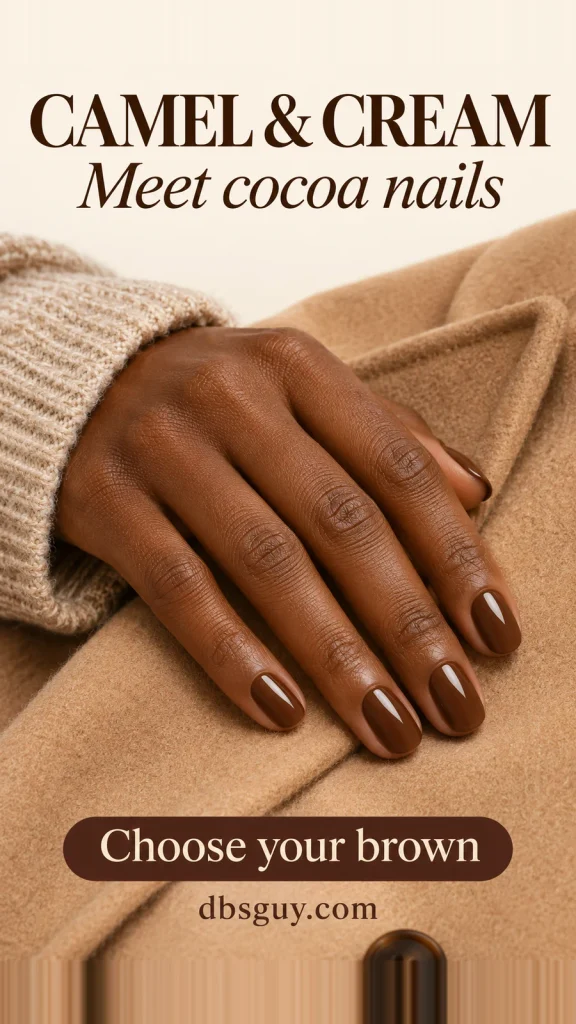
The useful choice here is how much separation you want. A light latte shade may sit quietly beside cream. A medium cocoa draws a clearer outline. Start with the medium shade if you like your nails to register when your hand rests on your sleeve.
Check the brown against both your skin and your clothing. If a yellowish caramel feels too close to your camel coat, compare it with a more neutral cocoa. If a gray-brown feels dull to you, try a warmer sample. “Brown” covers enough variation that the bottle name alone cannot settle this.
Keep the finish a plain glossy cream if you want the color comparison to be easy. At the appointment, you could say: “A solid medium cocoa, visibly deeper than this coat, without shimmer.” Bring the coat or a clear photo of it, then check the actual sample on your hand.
Navy and Denim: Use Icy Blue for a Lighter Contrast
If most of your January outfits involve dark jeans, navy sweaters, or a blue wool coat, a pale icy blue gives you a lighter version of a color you already wear. The connection comes from the blue family; the contrast comes from the difference between the light nails and dark clothes.

Choose a softly muted powder blue if you want a gentle effect. Compare it with a clearer, more white-based blue if you prefer a crisp contrast. Hold both beside your denim: the one that looks appealing on a white salon display may feel much brighter against dark fabric.
An opaque, glossy blue is the reference for this pairing. Ask to see the coverage on a swatch so you can distinguish it from a sheer blue wash. You can keep the color on short oval nails; it does not require a long extension or a chrome finish to look intentional.
If you prefer your manicure to stay dark, the same wardrobe can support a deeper blue. For variations after you have chosen the pale direction, explore 17 Light Blue January Nail Ideas for a Frosty, Airy Finish.
Blush, Lilac, and Soft Gray: Try Dusty Mauve
Dusty mauve sits between pink and purple, with a muted quality that makes it a useful starting point beside softer winter colors. Try it with a blush cardigan, gray trousers, and a lilac scarf when a deep wine manicure feels heavier than you want.
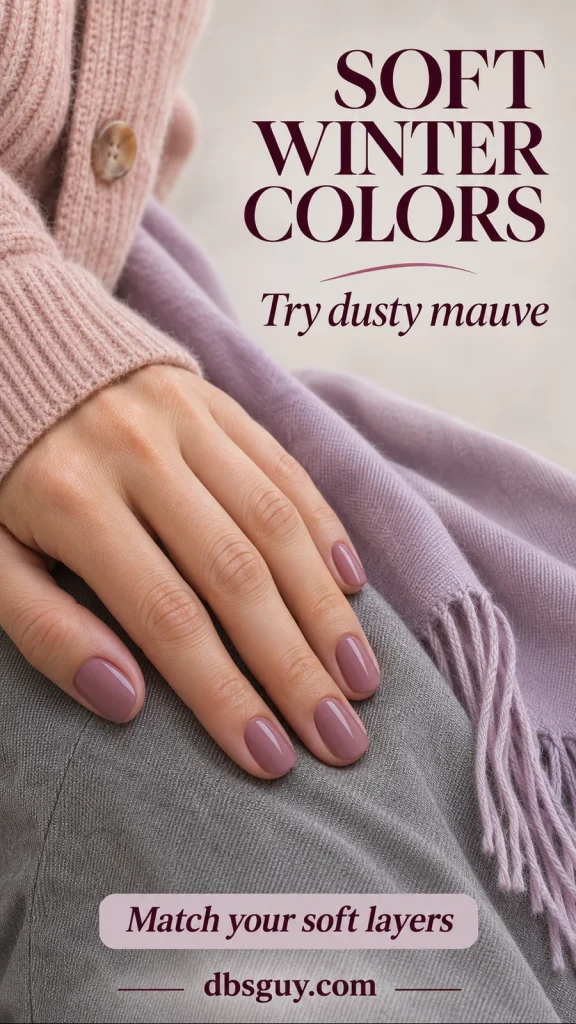
Choose a rose-leaning mauve if you want the pink to be obvious. Compare a more purple-leaning sample if lilac appears often in your clothes. The goal is to find a shade that belongs comfortably among your usual colors without needing an exact match to one sweater.
Pay attention to depth as well as hue. A very pale mauve can look close to your light knitwear; a medium dusty shade gives your nails a more defined presence. You can change that depth without changing the whole color family.
A useful salon request is: “A muted rosy mauve, medium depth, glossy and solid.” Check the sample beside your most-worn cuff before committing. That last comparison helps you avoid choosing a much brighter pink than the soft wardrobe pairing you had in mind.
Prints and Changing Colors: Keep Sheer Rose in the Running
Perhaps Monday means a green sweater, Wednesday means a burgundy plaid, and the weekend brings a brightly patterned scarf. A sheer rose is worth trying when you want the clothes to carry most of the color. Some of your natural nail remains visible, so the manicure has a softer presence than an opaque pink.
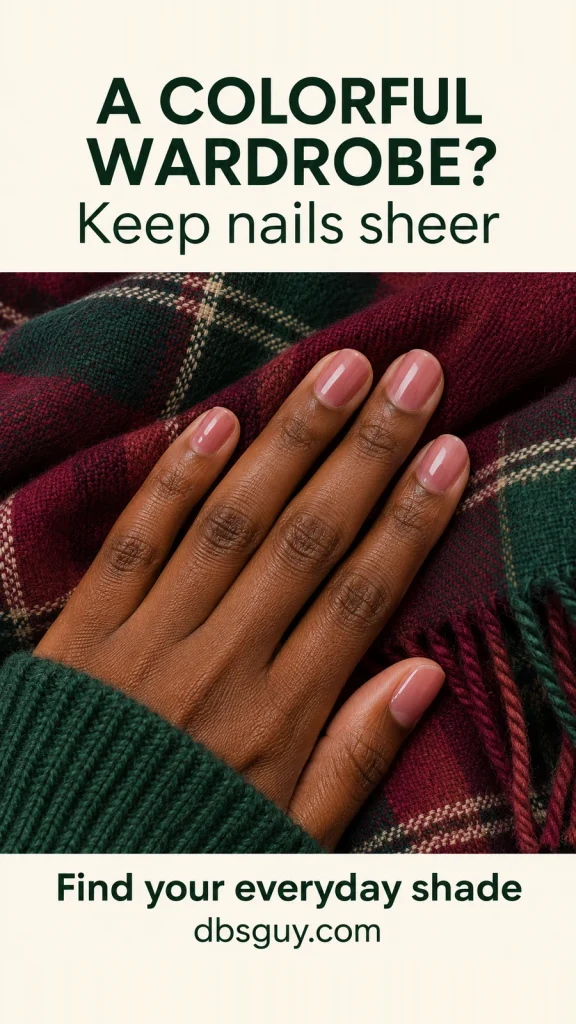
For a concrete finish reference, Essie describes Ballet Slippers as a pale pink with a sheer finish. Use that description to explain the effect you want; the best-looking sheer on your hand may have a different tint.
Ask to compare rose, peach, and beige-rose samples over your nail. A sheer shade can look different over different nail beds, and a polish that looks delicate in a bottle may appear milkier once applied. Decide how much of the natural nail line you want to see.
You can also pull one recurring color from a print if you want a stronger manicure. For example, a burgundy thread that appears in both your scarf and your bag gives you a repeatable reference. If you would rather keep the color subtle and add a small detail later, browse January Nail Art for When Your Winter Outfit Needs a Small Detail.
Check the Finalist on Your Hand Before You Commit
Once you have a color family, compare two close options instead of reopening the entire display. Hold the swatch over a nail, beside your usual sleeve, with the jewelry you normally wear. Try ordinary indoor light as well as daylight by a window.
Ask yourself three specific questions:
- Can I see the color I chose? Check that burgundy still reads red and icy blue still reads blue.
- Do I like the amount of contrast? A pale polish beside black sleeves will stand out more than a dark one. Decide whether that is the effect you want.
- Would I wear it with my other two outfits? Give your everyday clothes more weight than one special-occasion look.
Compare similar finishes while deciding. A glossy cream and a reflective shimmer can make the same general color feel quite different. Choose the color first, then add a finish only if you want that extra visual effect.
Skin-tone labels can offer a starting suggestion, but your own comparison is more useful than ruling out a color before trying it. You can adjust warmth, depth, and transparency within the same shade family.
Questions About January Nail Colors
Do January nails have to be dark?
No. Icy blue, muted mauve, and sheer rose all give you lighter options. Choose the depth by the effect you want beside your clothes. Pale blue against navy creates a visible contrast; burgundy against charcoal keeps the whole look deeper.
What January nail color works with the most outfits?
If you want a quiet manicure across very different outfits, start by trying a sheer rose. If you prefer full coverage, choose from the color that repeats most often in your wardrobe. There is no single opaque shade you have to like with every outfit.
Should my nails match my coat or my sweater?
Begin with the piece you wear most often and see closest to your hands. Your sweater cuff may be the better reference for an indoor workday. Your coat and bag may matter more if you spend much of the day moving between places.
Can I keep wearing red after the holidays?
Yes. A solid burgundy manicure can stand on its own with January clothes. If you want a simpler look after festive nail art, keep the wine-red color and choose a plain glossy finish.
Before your next appointment, save one photo of an everyday outfit and write a short request: the color family, the depth, and the finish. “Medium cocoa, deeper than my camel coat, glossy” gives you and your nail artist a clear place to begin.