
Your first glimpse of the skyline deserves a place on the list. So does a warm bagel, a theater curtain rising, and an afternoon in a neighborhood you almost skipped.
This New York City bucket list gives you 41 distinct experiences across the five boroughs, with practical timing, booking pointers, and nearby pairings. Pick the ones that sound like your kind of trip: you do not need to turn a vacation into a race to finish everything.
Start here for a first visit: Central Park, the Brooklyn Bridge, one skyline observation deck, a Broadway show, one major museum, and a neighborhood food stop. Add the Statue of Liberty and Ellis Island if you can give them a generous half-day.
Visual note: Images are AI-generated travel concepts, not documentary photographs. Architecture, displays, foliage, and access conditions may differ during your visit.

1. Take a real walk through Central Park
Manhattan · Free to explore · Allow 1–2 hours
Start with the Mall, step beneath Bethesda Terrace’s tiled arcade, then continue toward the Lake and Bow Bridge. This compact route gives you architecture, trees, water, and a break from the street grid without trying to cover the entire park.
Go in the morning if a calmer walk matters more than afternoon people-watching. The Central Park Conservancy currently notes that Bethesda Fountain is turned off for restoration while the terrace remains open; check its alerts before expecting flowing water. Pair the park with the Met or a nearby bagel breakfast.

2. Walk across the Brooklyn Bridge
Manhattan–Brooklyn · Free · Allow 45–60 minutes with photo stops
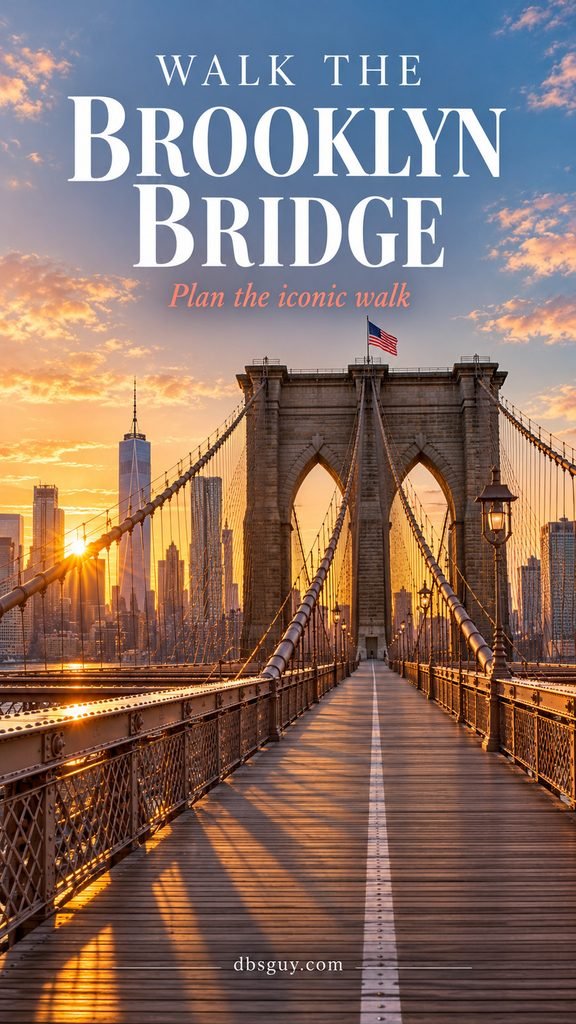
The stone towers and web of cables feel much bigger when you are walking beneath them. Choose your direction around the day you want: Manhattan to Brooklyn works well for a DUMBO afternoon; Brooklyn to Manhattan keeps the downtown skyline ahead of you.
Use the pedestrian entrances and keep moving space clear when you stop for pictures. Early morning is a sensible choice for a less crowded walk, while sunset offers changing light and more company. Leave room for the approaches at both ends, and check weather before committing to this exposed crossing.
3. See the skyline from Top of the Rock
Midtown Manhattan · Paid timed entry · Allow 1–1.5 hours
For a classic skyline composition, Top of the Rock puts the Empire State Building in the view. That makes it an appealing first observation deck if the recognizable city skyline is what you came to see.
Book through the official site and compare the available ticket options before adding extras. If sunset matters, allow time to enter and reach the viewing areas before the light changes; check the forecast for visibility. One well-chosen deck leaves more money and time for the rest of your list.

4. Visit the Statue of Liberty and Ellis Island
New York Harbor · Paid ferry · Reserve a generous half-day
Seeing Liberty from the water is memorable; landing on the islands adds the museum experience and Ellis Island’s immigration stories. Give both stops space in your schedule instead of treating the ferry as a quick photo excursion.
The National Park Service identifies Statue City Cruises as the only authorized ferry provider permitted to land passengers on the islands. Follow the official booking link, select the access you actually want, and confirm pedestal or crown availability separately. Security and boarding take time. The free Staten Island Ferry offers a distant view but does not visit these islands.

5. Experience Times Square after dark
Midtown Manhattan · Free to walk through · Allow 20–40 minutes
Times Square delivers its full effect after the billboards become the brightest thing on the block. Give yourself a short window to stand in the pedestrian plaza, look up, and take in the scale before moving on.
Pair it with Broadway rather than planning an entire evening around the intersection. Keep belongings secure in the crowd, and ask about a price before agreeing to a costumed-character photo. If noise and dense crowds wear you out, a brief early-evening visit can still satisfy the curiosity.

6. Watch a Broadway show
Theater District · Paid ticket · Allow the full show plus arrival time
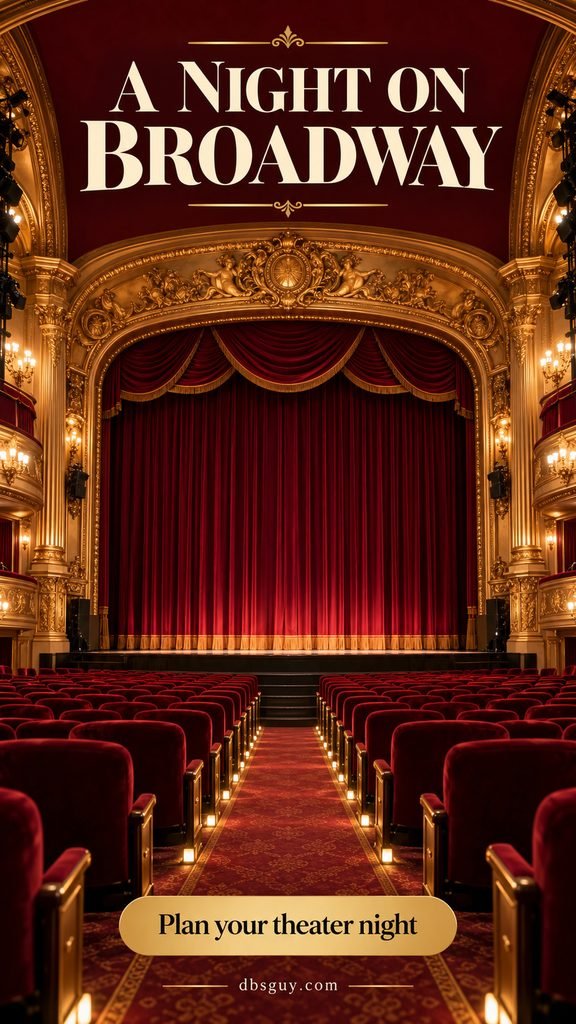
The moment the house lights dim is its own New York experience. Choose a show for its story, music, or performance style, then check the running time, age guidance, and whether the seat has a restricted view.
Use Broadway.org to find current productions and their official ticket links. Flexible visitors can check TKTS for participating same-day performances and next-day matinees; a particular show or seat is never guaranteed. Build a comfortable dinner buffer around the curtain time, and save photos for when the theater permits them.
7. Look up inside Grand Central Terminal
Midtown East · Concourse visit is free · Allow 30–45 minutes
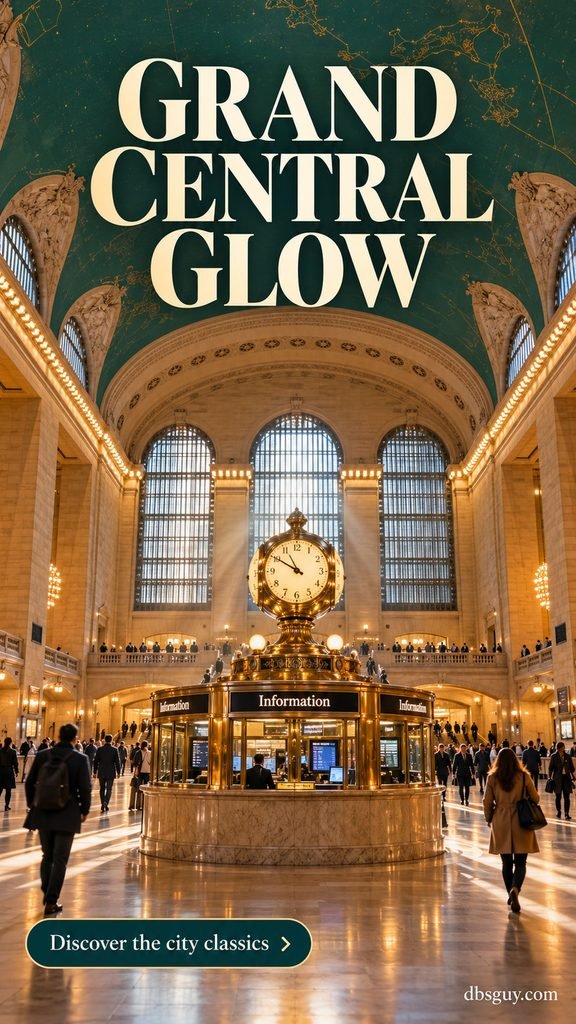
The four-faced clock gives you a focal point; the celestial ceiling gives you a reason to linger. Stand to the side of commuter traffic and notice how the light moves through the tall windows in the main concourse.
Grand Central Terminal is still a working station, so a quieter sightseeing visit is easier outside the busiest commuting periods. Architecture lovers can look into an official tour for more context. Pair this stop with the public library and Bryant Park, leaving yourself time to enjoy the buildings rather than just their exteriors.
8. Choose your own highlights at the Met
Upper East Side · Paid admission for most visitors · Allow 2–3 hours
Decide on two or three interests before entering the Metropolitan Museum of Art: Egyptian art, armor, European painting, or another collection that catches your attention. A focused visit lets you enjoy a few galleries without museum fatigue.
Check the Met’s admission rules, hours, and gallery closures. Pay-what-you-wish admission is limited to eligible New York State residents and qualifying students; it is not a general tourist discount. The museum currently lists its roof garden among renovation closures, so do not build your visit around it without rechecking. Central Park is an easy companion stop.

9. Spend an afternoon with modern art at MoMA
Midtown Manhattan · Paid admission for most visitors · Allow 2–3 hours
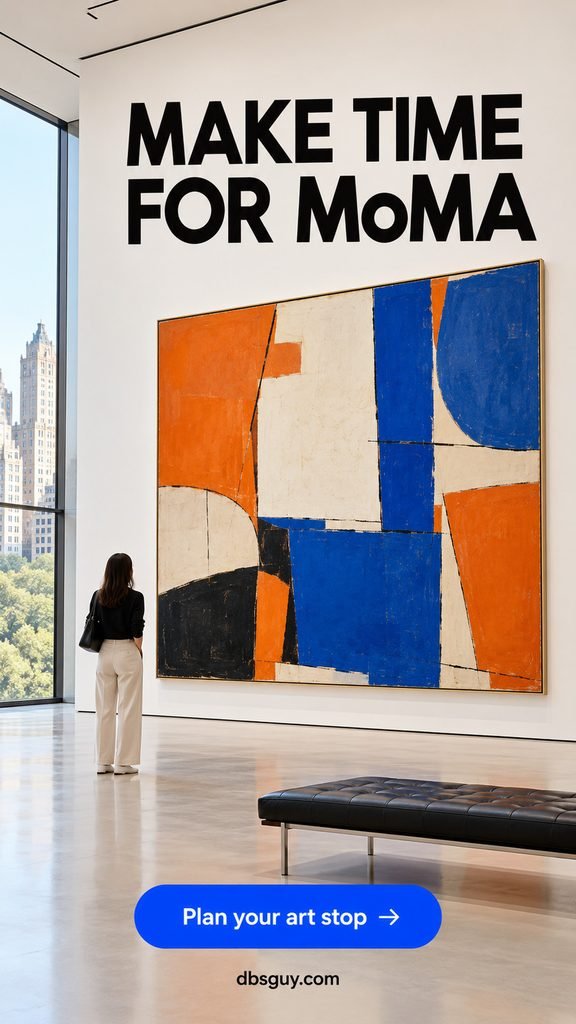
If modern painting, photography, film, or design is your interest, give MoMA a dedicated window. Pick a small set of works or exhibitions you want to see and leave space for something unfamiliar.
The official visitor page lists current hours and admission programs. Its Friday-evening free admission is for New York State residents and requires advance reservation; visitors from elsewhere should budget for their own eligible ticket. The image here is a gallery-inspired concept with original abstract art, not a record of a current exhibition. Pair MoMA with Rockefeller Center.
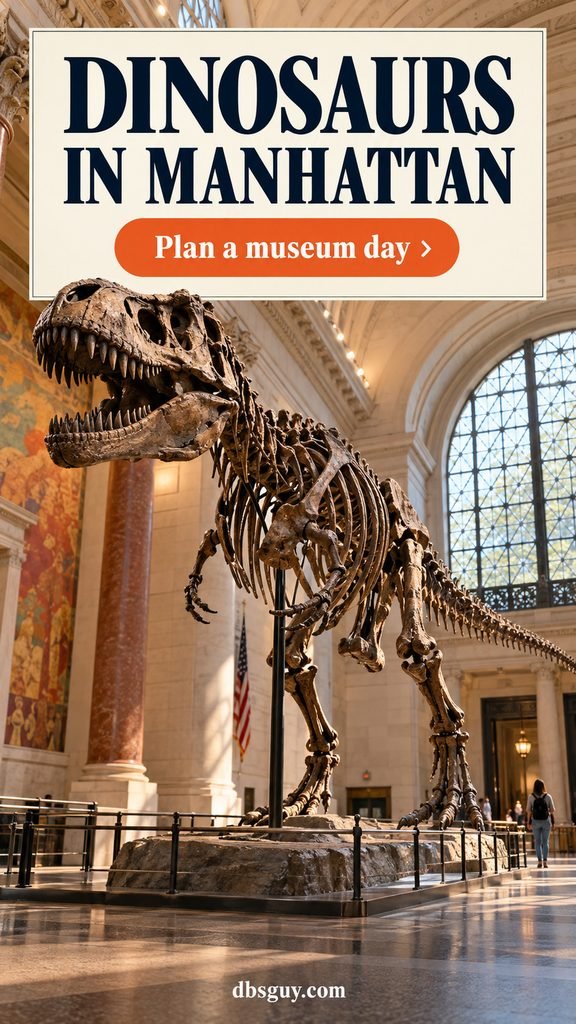
10. Meet the dinosaurs at the American Museum of Natural History
Upper West Side · Paid admission for most visitors · Allow 2–4 hours
Dinosaur fossils are an excellent starting point, especially for a family trip. Choose a few halls that fit your interests, then decide whether a planetarium show or other ticketed experience is worth adding.
Use the American Museum of Natural History’s booking page to compare what each ticket includes. Its pay-what-you-wish option applies to New York State residents with qualifying identification for general admission; special ticketed exhibitions are separate. Plan food and rest breaks, because this is a substantial museum. An Upper West Side lunch or Central Park walk makes a comfortable follow-up.
11. Explore the New York Public Library’s treasures
Midtown Manhattan · Free public exhibitions · Allow 45–60 minutes
Begin with the marble lions outside the Stephen A. Schwarzman Building, then head inside for its public exhibition spaces and architecture. It is a satisfying cultural stop even when you have only a short Midtown window.
The Rose Main Reading Room is a working research space with separate sightseeing arrangements. Check NYPL’s current tour and visiting-hour guidance rather than assuming you can wander in at any time. Continue into Bryant Park afterward; a coffee and a seat are a good way to let this quieter part of the day last.

12. Pause at the 9/11 Memorial
Lower Manhattan · Outdoor memorial is free · Allow 30–60 minutes
The two reflecting pools invite a slower, more attentive visit. Take time to read, listen to the water, and understand the purpose of the space. Approach it as a place of remembrance.
The 9/11 Memorial & Museum distinguishes the free outdoor memorial from the separately ticketed museum. If you choose the museum, reserve additional time and consider the emotional weight of its content when planning the rest of your day. Keep voices and photography respectful, and avoid crowding people who are there to remember someone.

13. Walk the High Line above the streets
Manhattan’s West Side · Free park walk · Allow 45–90 minutes
The High Line changes the usual city perspective: planted beds, traces of rail infrastructure, public art, and windows at eye level replace the street below. Enter at a convenient access point and walk a section instead of feeling obligated to cover every inch.
Check the park’s current hours and elevator status if you need step-free access. Morning is a useful choice for a quieter stroll; exposed stretches can feel hot in summer. A southbound walk pairs naturally with Chelsea Market, followed by Little Island and the Hudson waterfront.

14. Eat your way through Chelsea Market
Chelsea · Free to enter; food costs extra · Allow 45–75 minutes
Walk through the hall once before ordering. Choosing one main dish and a shared snack makes this a more interesting stop than grabbing the first thing you see, especially if you are traveling with people who want different foods.
The Chelsea Market directory is useful for checking vendors and their individual hours. Expect a busy indoor atmosphere at popular meal times and be flexible about seating. It also makes a practical weather break during a West Side day. Leave space in your bag if you plan to browse the shops.

15. Explore Little Island’s sculptural park
Hudson River waterfront · Free park entry; events may be ticketed · Allow 30–60 minutes
Little Island is small enough for an unhurried loop and distinctive enough to feel like a destination. Its planted slopes and sculptural support columns give you a different waterfront experience from a straight promenade.
Hudson River Park describes it as a free public park; check Little Island’s own site for visitor notices and separately ticketed performances. Wear comfortable shoes for the paths and gradients, and keep performance tickets separate from a general park visit in your planning. Chelsea Market and the High Line are nearby.

16. Watch sunset along the Hudson River
Manhattan’s West Side · Free · Allow 45–60 minutes
Choose a pier or promenade in Hudson River Park, find a seat, and let the light change over the water. This is a particularly good evening when you want a memorable view without another admission ticket.
From the Manhattan shoreline, you are looking across toward New Jersey; the setting sun is the attraction. Check Hudson River Park’s visitor information for open areas and facilities. Bring a light layer for waterfront wind and a snack if you want to linger. It is an easy finish to a Chelsea or Greenwich Village day.

17. Ride the free Staten Island Ferry
Lower Manhattan–Staten Island · Free · Allow 60–90 minutes for a round trip
This is a useful choice when you want harbor air and skyline views without paying for a sightseeing cruise. The Statue of Liberty appears at a distance, so treat it as part of the panorama.
NYC DOT confirms the ferry is free and runs year-round between Lower Manhattan and Staten Island. Use Whitehall Terminal in Manhattan, follow crew instructions, and allow for the return boarding process; do not assume you can stay on the same boat. It does not stop at Liberty or Ellis Island, and it is separate from the paid NYC Ferry network.

18. Take the Roosevelt Island Tram
Midtown East–Roosevelt Island · Transit fare · Allow 45–90 minutes with an island walk
Gliding above the East River turns a short transit ride into a change of perspective. Board in Manhattan at East 60th Street and Second Avenue, then use the island-side arrival as the start of a waterfront stroll.
RIOC’s tram page confirms standard MTA fares and OMNY tap-to-pay acceptance. Check service notices and leave room for a queue. Visit outside commuter rush periods when possible; this is regular transportation for island residents. You can enjoy the skyline without crowding a window or rushing straight back.

19. Take a slower afternoon on Governors Island
New York Harbor · Ferry fare varies · Allow 2–4 hours
Trade Manhattan’s traffic for lawns, harbor views, and space to wander. Bring a simple picnic, choose a route toward the Hills, and give yourself time to sit rather than making every viewpoint a deadline.
Governors Island is open year-round, but island hours, ferry routes, food options, and activities vary by season. Check the operator and return schedule before booking; Governors Island Ferry and NYC Ferry use separate ticket systems. A warm-weather afternoon is an appealing fit for the image shown, while an off-season visit needs a more weather-aware plan.

20. Find the famous DUMBO bridge view
Brooklyn · Free street view · Allow 20–30 minutes
At Washington Street near Water Street, brick warehouses frame the Manhattan Bridge’s blue steel structure. The view is recognizable even if you do not get an empty street or the precise photograph you saved.
Go early for a calmer moment, stay aware of traffic, and avoid standing in the roadway for a picture. Then put the camera away and explore the surrounding blocks. This stop works well after a Brooklyn Bridge crossing, but remember that the bridge in the DUMBO view is the Manhattan Bridge. Brooklyn Bridge Park is an easy next stop.

21. Have a skyline picnic in Brooklyn Bridge Park
Brooklyn waterfront · Free park entry; bring food · Allow 1–2 hours
A sandwich, a blanket, and the skyline can be the whole plan. Choose a lawn or seating area in Brooklyn Bridge Park that fits your group, then let boats and changing light provide the entertainment.
Check the park’s notices and rules before choosing a spot, and keep access paths open. A small carry-in picnic is easier than a complicated setup; take your trash with you. DUMBO’s streets are lively, while the waterfront lets you slow down. Leave time for an after-picnic walk instead of rushing back to Manhattan.

22. See what is blooming at Brooklyn Botanic Garden
Brooklyn · Paid admission · Allow 1.5–3 hours
Cherry blossoms are a beautiful reason to visit, but the garden offers more than one spring photo. Follow the Japanese Hill-and-Pond Garden paths, then choose another collection that matches what is blooming during your dates.
Use Brooklyn Botanic Garden’s seasonal highlights and visitor information to plan around real conditions. Blossom timing varies with weather, so avoid booking a trip around a guaranteed bloom date. Check the garden’s food rules before bringing a picnic; nearby Prospect Park is the better place to plan one. Expect popular spring weekends to be busy.

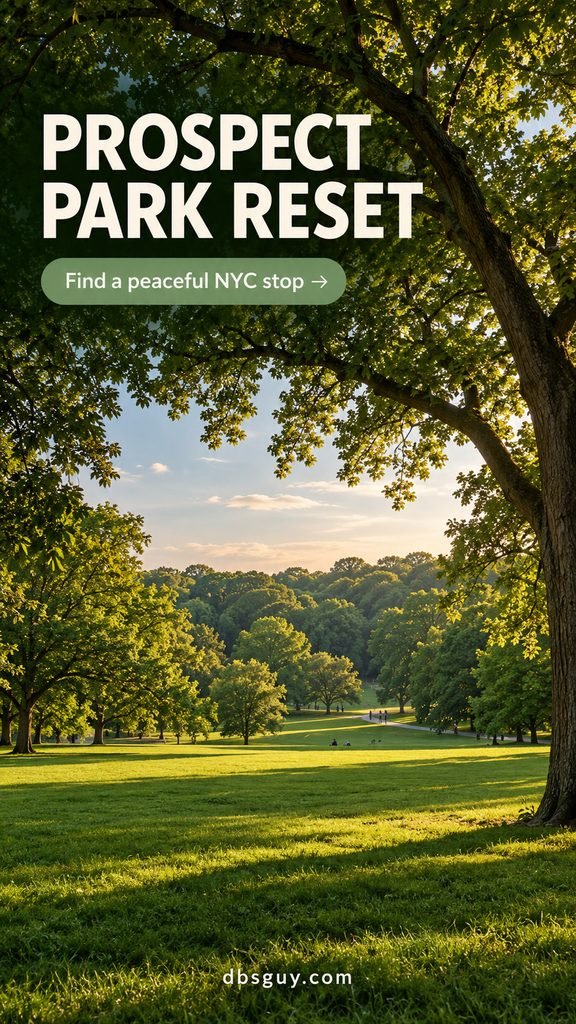
23. Spend an unhurried hour in Prospect Park
Brooklyn · Free to explore · Allow 1–2 hours
Prospect Park gives you a different Brooklyn rhythm from the waterfront. Choose the Long Meadow for open space, or follow a modest loop toward the lake if you want more walking.
Check Prospect Park Alliance for a map, visitor notices, and events before choosing your route. A bakery stop before the park and a relaxed bench break afterward can be enough. Pair it with Brooklyn Botanic Garden if you want a green-space day, keeping the garden’s ticket and entry schedule as your only fixed commitment.
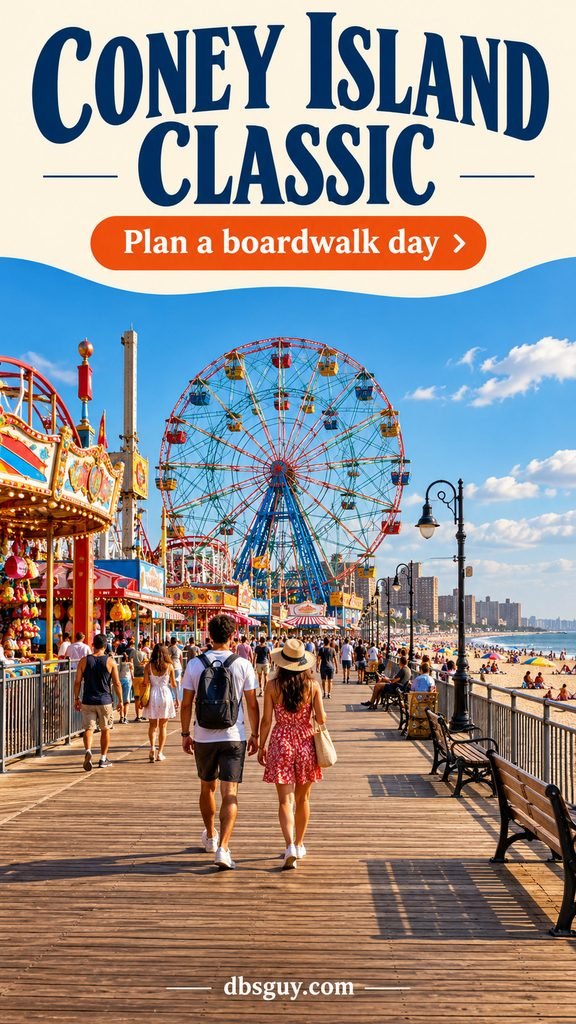
24. Walk the Coney Island boardwalk
Southern Brooklyn · Boardwalk is free; rides and food cost extra · Allow a half-day
Ocean air, wooden boards, and amusement-park silhouettes make Coney Island feel unlike the Manhattan portion of your trip. Walk first, then decide whether you want a ride, beach time, or a casual meal.
Check the official NYC visitor guide and each attraction’s operating calendar before traveling. The boardwalk experience and the amusement season are different things: do not expect every ride to run year-round. Give yourself a realistic transit buffer from Midtown. If swimming is part of the plan, check current beach opening and lifeguard information.
25. Plan a family day at the Bronx Zoo
Bronx · Paid admission · Allow a half-day or longer
The Bronx Zoo is large enough that a good route matters. Choose a few priority exhibits, build in food and rest breaks, and accept that animals may be resting or out of view.
Use the official zoo planner to check the map, tickets, exhibit availability, and seasonal operations. Compare included attractions before choosing a ticket, especially if your family has one specific experience in mind. Avoid stacking the zoo, the botanical garden, and a full food crawl into one rushed day; one main attraction plus a relaxed meal is a more comfortable plan.

26. Explore the New York Botanical Garden
Bronx · Paid admission; ticket coverage varies · Allow 2–4 hours
The Enid A. Haupt Conservatory is a striking anchor for a visit, but leave time for the outdoor collections too. Seasonal flowers, trees, and exhibitions make the experience change throughout the year.
Check NYBG’s ticket options to confirm access to the conservatory and any special exhibition you want. Use its map to choose a manageable route rather than crossing the grounds repeatedly. Spring and fall suit a long outdoor wander; colder dates call for checking which indoor spaces are open. Arthur Avenue can be a separate food stop if your timing and transit work.

27. Catch a baseball game at Yankee Stadium
Bronx · Paid ticket · Allow the game plus arrival and exit time
A ballpark afternoon offers crowd energy, food, and a reason to stay in one place for a while. You do not need to know every statistic to enjoy following a few innings and joining the rhythm of the stadium.
Check the official Yankees ticket page for home-game availability. Compare seat views, then verify stadium bag rules and entry guidance. Schedule, weather, and game length determine the plan, so avoid a tightly timed reservation afterward.

28. Eat around Arthur Avenue in the Bronx
Belmont, Bronx · Food purchases · Allow 1.5–2.5 hours
Build this stop around Italian delis, bakeries, and a meal you actually have room for. A crusty loaf, fresh mozzarella, or a pastry can be just as satisfying as committing to a long restaurant lunch.
The official Bronx neighborhood guide highlights Arthur Avenue and its Little Italy. Check individual shop hours before choosing a route; there is no single schedule for the neighborhood. Go hungry, ask about portions, and leave flexibility for a counter that catches your eye. Pair it with one Bronx attraction if the timing is comfortable.

29. Make a small food crawl through Flushing
Queens · Food purchases · Allow 2–3 hours
Pick two or three foods rather than trying to sample an entire neighborhood: dumplings, a noodle dish, and tea or dessert make a manageable starting point. Share portions if you want more variety.
NYC’s official Queens guide points visitors toward Flushing at the Main Street end of the 7 train. Check current transit service, bring a payment backup, and ask vendors about ingredients if you have dietary needs. Food courts and busy sidewalks can be part of the appeal; a sit-down stop gives you a chance to rest between tastes.

30. Spend an evening at Queens Night Market
Queens · Seasonal event; admission policy and food costs vary · Allow 1.5–3 hours
This is an evening for wandering between food stalls and trying something unfamiliar. Decide on a few dishes, share when practical, and leave time to enjoy the atmosphere between queues.
Check Queens Night Market’s current calendar, location, entry rules, and weather updates before going. It is seasonal, not an every-night market, and opening events may have different ticket arrangements from regular dates. Bring a payment backup and be patient with busy vendors. Although both are Queens food experiences, this park-based evening event is a different outing from a Flushing neighborhood crawl.

31. Explore movie-making in Astoria
Queens · Museum admission · Allow 1.5–3 hours
The Museum of the Moving Image suits anyone curious about how screen stories are made. Give yourself time for the exhibits instead of treating the museum as a quick detour between meals.
Check its current hours, admission, and screening schedule. Gallery admission and a particular film or event may need separate planning. The museum currently lists free gallery hours on Thursday afternoons, so confirm that program for your date if budget matters. Follow your visit with an Astoria meal; choose the restaurant’s location deliberately, because the neighborhood covers more ground than one short block.

32. Hear live jazz in Harlem
Manhattan · Cover, tickets, or minimums may apply · Allow one full set
Choose a set you can settle into. Hearing a piano phrase turn into a conversation with the bass and drums is more rewarding when you give the music your full attention.
Start with a venue’s own calendar, such as Minton’s Playhouse, then check reservations, set times, age rules, and any food or drink minimum. Arrive early enough to get seated without disrupting a performance, and keep conversation low during the set. Dinner and music make a strong Harlem evening, provided the restaurant timing leaves you a comfortable arrival window.

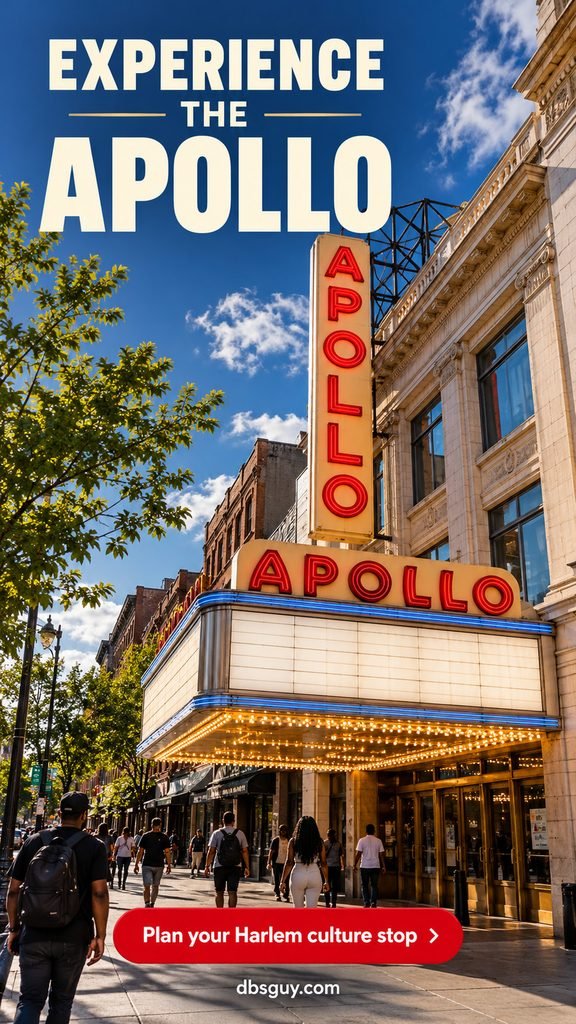
33. Connect with the Apollo’s performing-arts legacy
Harlem · Tour or performance ticket · Timing depends on the event
The Apollo adds a different cultural stop to a Harlem visit: a chance to learn about an institution central to Black performance and creativity. Choose an official legacy tour or a performance that genuinely interests you.
The Apollo currently says its Historic Theater is closed for renovation, with reopening expected in late 2026. Check its current tour format and confirm the exact event venue; programming continues at other Apollo spaces. Do not book around an assumed reopening date or expect unrestricted access to the historic auditorium.
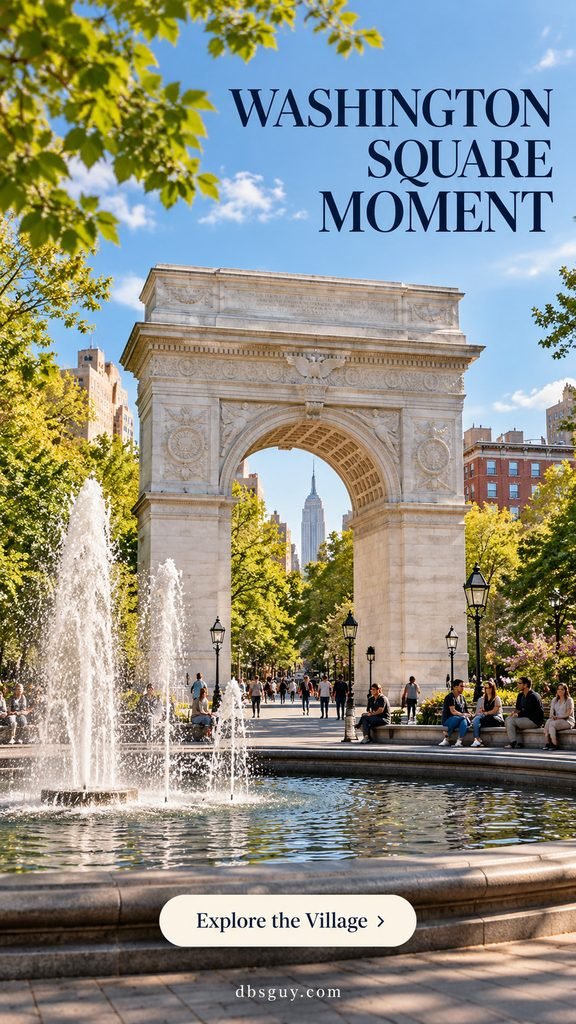
34. People-watch in Washington Square Park
Greenwich Village · Free · Allow 30–60 minutes
Let the arch, benches, and everyday park activity be enough for a while. This is a good place to pause between Greenwich Village streets rather than adding another ticketed attraction.
Notice the music if performers are present, keep paths clear, and ask before making a close portrait of a stranger. The fountain and programming depend on the season, so the visit does not need to revolve around either. Pair the park with a Village pizza stop and a walk through neighboring streets. You can make the afternoon as relaxed as your schedule allows.
35. Take a Tenement Museum tour on the Lower East Side
Manhattan · Paid guided tour · Allow the tour plus arrival time
Choose a tour for the story it tells. The Tenement Museum uses specific lives and homes to make immigration and neighborhood history feel concrete, adding context to the streets outside.
Check the official museum site for the current tour selection, ticket availability, meeting point, and accessibility details. Apartment tours and neighborhood walks offer different experiences; neither should be treated as an unrestricted wander through a historic building. Leave time to arrive before your booked start. A Lower East Side food stop afterward gives you a natural pause to think about what you learned.

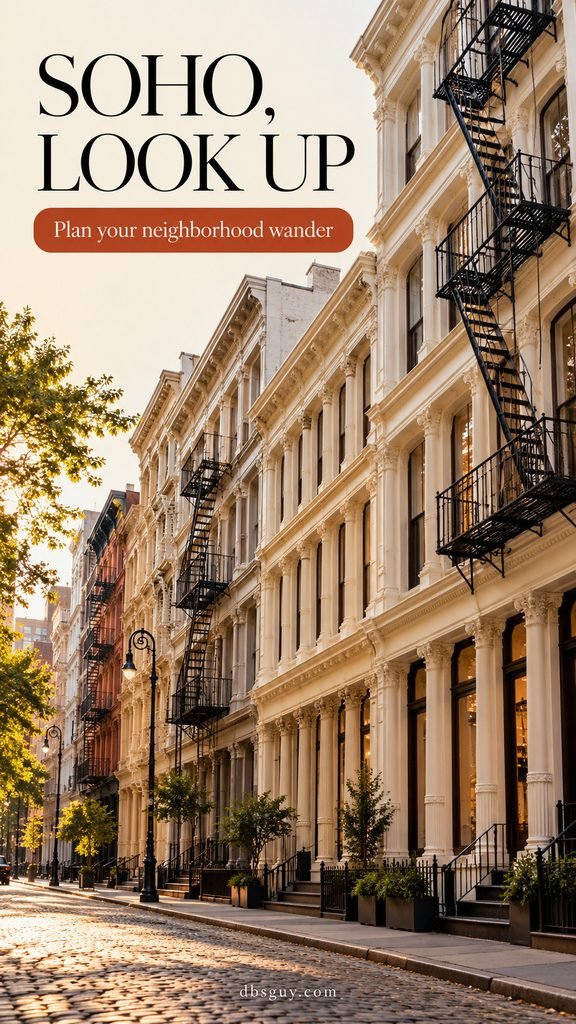
36. Look up at SoHo’s cast-iron architecture
Manhattan · Free neighborhood walk · Allow 45–90 minutes
Start around Greene Street and take in the repeated columns, tall windows, and fire escapes. The architectural details make this a worthwhile walk even if shopping is not on your agenda.
Stay on the sidewalk, cross at appropriate points, and step aside when you stop to photograph a facade. Early in the day is a useful choice if you want to notice the buildings with fewer distractions. Browse a shop or gallery only if it fits your interests, then continue toward the Village or Lower East Side. SoHo rewards a slower look upward.
37. Order a New York bagel breakfast
Various neighborhoods · Food purchase · Allow 20–45 minutes plus any queue
Choose a bagel and a filling you actually enjoy. An everything bagel with cream cheese is an easy starting point; smoked salmon, onion, and capers turn it into a more substantial breakfast.
Use a shop’s own location information, such as Ess-a-Bagel, to pick a stop near your morning route. Check ingredients for allergies and dietary restrictions rather than assuming every spread or topping is suitable. Expect popular counters to have queues, and order simply when it is busy. One good breakfast can replace a complicated hunt across the city.

38. Try a classic New York pizza slice
Various neighborhoods · Food purchase · Allow 15–30 minutes plus any queue
A cheese slice is a useful starting point: crisp underneath, flexible enough to fold, and easy to eat during a neighborhood day. Let it cool briefly before the first bite.
A longtime slice shop such as Joe’s Pizza gives you a concrete option; verify the location you intend to use rather than following a look-alike name. The Village pairs well with this stop. Try one slice first and decide whether you want another. Comparing a few shops over several days is more enjoyable than forcing multiple full pizza meals into one afternoon.

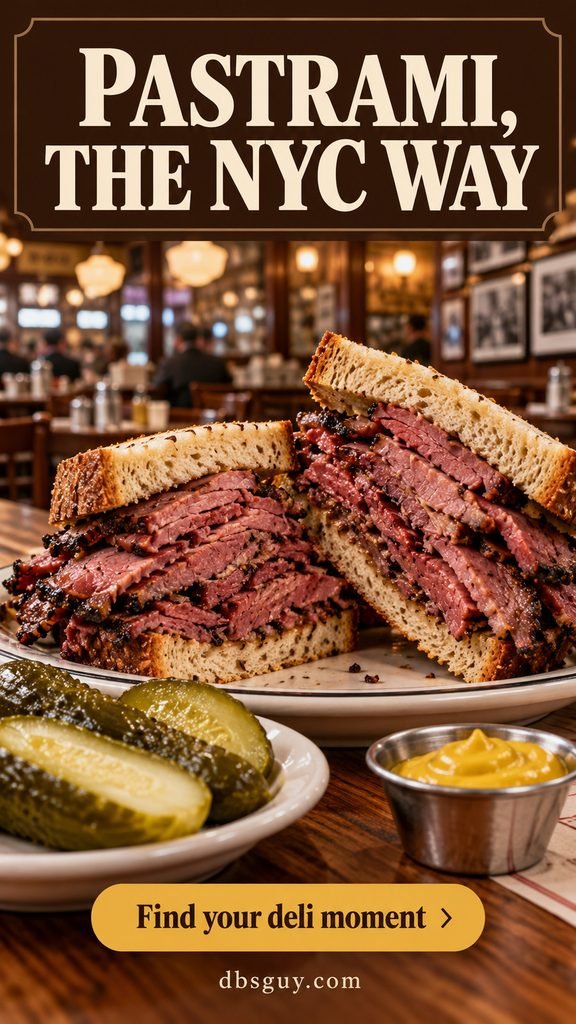
39. Order a pastrami sandwich at Katz’s
Lower East Side · Food purchase · Allow 45–90 minutes depending on queues
Hand-cut pastrami on rye gives this deli stop its particular appeal. Decide whether you want a full sandwich or to share, then add pickles and mustard according to your preference.
Check Katz’s official site for its menu and hours. Follow the staff’s ordering and payment instructions, and keep any ticket they hand you until checkout. A busy deli is easier to enjoy when you are not racing a timed reservation. Pair it with a Lower East Side walk or a Tenement Museum tour, leaving a generous meal buffer.
40. Spend an evening on a skyline rooftop
Manhattan · Food, drinks, cover, or minimums may apply · Allow 1–2 hours
A rooftop can give you city lights, a comfortable seat, and time to talk after a walking-heavy day. Choose it for the actual view and atmosphere, and check whether you are booking an outdoor table or indoor space.
A venue such as 230 Fifth provides a concrete starting point for skyline planning. Confirm reservations, age policy, minimums, weather arrangements, and whether the view fits your expectations. An alcohol-free drink can be part of the plan, but venue age rules still apply. Budget for the full visit, including applicable tax and gratuity.

41. Skate at Rockefeller Center in winter
Midtown Manhattan · Seasonal paid skating session · Check the session length
The rink, Art Deco buildings, and city lights make this a distinctly seasonal bucket-list moment. Go for the experience, whether that means steady laps or a careful first skate.
Use the Rink’s official booking page to check season dates, availability, skate rentals, and the exact session rules. Holiday decorations have their own calendar, so a skating ticket does not guarantee the tree will be up during your visit. Bring gloves and choose clothing that lets you move comfortably. If skating is not for you, watching from a public viewing area can still make a lovely Midtown stop.

How to turn your NYC bucket list into a trip
Build your days around nearby stops
Choose one major commitment per half-day, then add nearby walks and food. These are flexible pairings, not promises that every attraction will be open on the same date:
- Midtown: Grand Central → NYPL and Bryant Park → Top of the Rock or MoMA → Broadway and Times Square. Choose one substantial paid daytime stop.
- Downtown and Brooklyn waterfront: 9/11 Memorial → Brooklyn Bridge → DUMBO → Brooklyn Bridge Park. A full Liberty and Ellis Island visit deserves its own generous time window.
- West Side: High Line → Chelsea Market → Little Island → Hudson River sunset. Reverse the walk if it better fits your starting point.
- Green Brooklyn: Brooklyn Botanic Garden → Prospect Park → a neighborhood meal.
- Bronx: Bronx Zoo or NYBG → Arthur Avenue if time allows. Check the route before assuming a short walk between stops.
- Queens: Make Flushing, Astoria, or Queens Night Market your main outing. They are not interchangeable stops next door to one another.
- Harlem: an Apollo tour or cultural stop → dinner → a jazz set, after confirming event locations and times.
Keep room in the budget
Balance one paid headline attraction with free walks, parks, and neighborhood time. Central Park, the Brooklyn Bridge, Times Square, the High Line, Little Island, the outdoor 9/11 Memorial, and the Staten Island Ferry can anchor a lower-cost visit. Food, transport, rentals, and special events remain separate expenses.
Before buying an attraction pass, price only the places you would actually visit and confirm reservation requirements. Use official attraction links to check current costs rather than treating an old blog’s price as your budget.
Choose the season that fits your list
Spring suits gardens, but bloom dates vary. Summer supports beach and outdoor-event plans, with heat and thunderstorms to account for. Fall offers pleasant walking opportunities and changing foliage, while winter brings skating and holiday displays alongside shorter daylight and waterfront cold.
Build a rain alternative around a museum, public exhibition, or food hall. Check seasonal event calendars before booking travel around baseball, amusement rides, a night market, or skating.
Make getting around part of the plan
Use the subway and walking for many cross-city days, but check MTA service updates before a timed booking. Use the same payment card or device for your own OMNY trips if you want them counted together under the current fare-cap rules; a physical card and its phone-wallet version are treated as different payment methods.
Waterfronts, bridges, old buildings, and gardens have different access conditions. Check an attraction’s accessibility page and current elevator notices when step-free travel matters. The visit durations in this guide are editorial planning estimates, not official limits; add time for transit, lines, meals, and breaks.
New York City bucket-list FAQs
How many days do you need for a first NYC visit?
Four or five full days is a useful editorial starting point for a mix of major sights and neighborhood time. With a weekend, choose a smaller set in two or three nearby areas. Completing all 41 experiences is a project for several visits, especially because some are seasonal.
What should you book in advance?
Prioritize the experiences with a fixed date or limited access: your preferred Broadway show, Statue of Liberty island access, a Tenement Museum tour, a baseball home game, a particular performance, and a winter skating session. Follow each attraction’s current booking policy, and leave flexible walks around those commitments.
Which NYC bucket-list experiences are free?
Several of the strongest outdoor stops are free: Central Park, the Brooklyn Bridge, Times Square, the High Line, Little Island’s general park visit, Prospect Park, Brooklyn Bridge Park, and the outdoor 9/11 Memorial. The Staten Island Ferry is also free. Museum discounts have specific eligibility rules, so check them individually.
Can you see the Statue of Liberty without visiting Liberty Island?
Yes. The Staten Island Ferry provides a distant view from the harbor, but it does not stop at the statue or Ellis Island. Choose the authorized island ferry when landing and visiting the museums are part of your goal.
Is this list suitable for families?
Choose by age, interests, stamina, and venue rules. Central Park, a ferry ride, the natural-history museum, and the Bronx Zoo offer useful starting points. Check show age guidance, museum ticket coverage, animal-exhibit availability, and rooftop or music-venue policies before committing.
Save the experiences you care about most, book the few that need a fixed time, and leave space for a good meal or an unexpected street. The city becomes more memorable when you have time to notice it.
Visitor guidance checked October 11, 2026. Follow the linked official pages for changes to admission, schedules, and access.