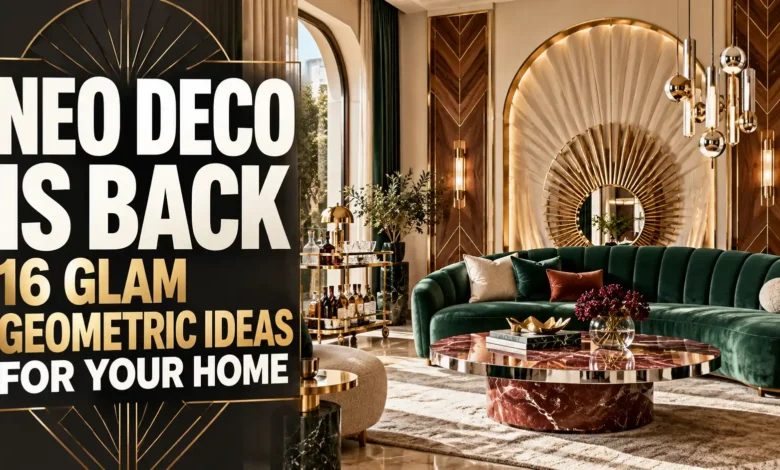
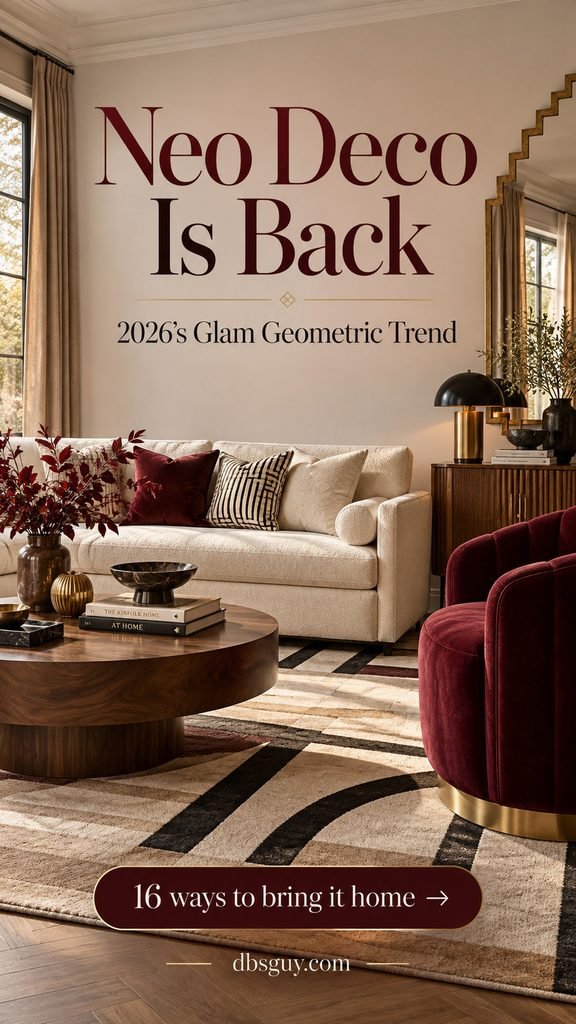
You can bring Neo Deco home with one strong geometric shape, one rich material, and a little shine. A stepped mirror over a plain console, a burgundy velvet chair beside an ivory sofa, or a fan-pattern wall behind simple bedding can establish the look without replacing everything you own.
These 16 ideas range from a pillow-cover swap to more involved lighting and flooring projects. Pick the feature your room is missing, then let your existing pieces provide the quieter background.
The images in this guide are AI-generated design concepts, created to illustrate the styling ideas rather than document completed homes.
What Is Neo Deco—and Why Is It a 2027 Trend?
Neo Deco is a contemporary take on Art Deco’s geometric glamour. Think fan shapes, stepped edges, repeating lines, rich wood, and reflective metal, mixed with comfortable furniture and space to breathe. Pinterest’s official Neo Deco forecast for 2027 identifies chevrons, fan arches, chrome, and brass as part of the look. That is a trend forecast, not a reason every room needs a makeover.
The practical approach used here is to choose one focal feature, one supporting texture, and one repeated finish. For example, combine a geometric rug with velvet upholstery and a brass lamp. This is an editorial styling suggestion, not a fixed design rule. You can also keep the palette light: ivory, walnut, and small metallic accents work beautifully without dark walls.
1. Frame the Room with a Stepped Mirror
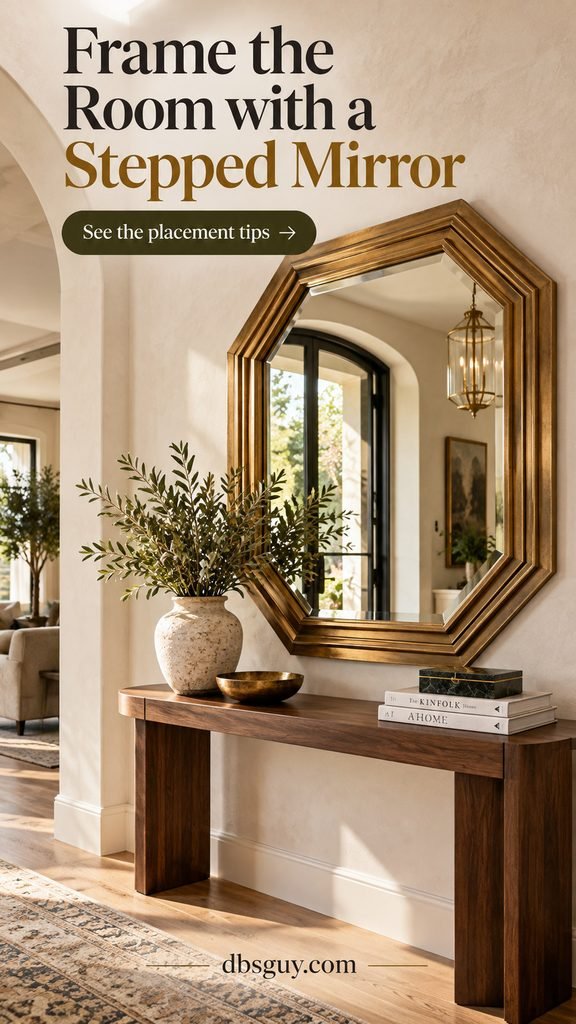
A mirror with an octagonal outline and a frame built in layered steps gives an entryway a clear Deco reference. The brass version shown here works especially well against pale plaster and a simple walnut console; its geometry supplies the detail that the furniture leaves out.
Before buying, tape the mirror’s outline on the wall and check it from the doorway. Leave visible wall space around the frame, and keep the mirror narrower than the console for a composed arrangement. Also check what it reflects: a window or an uncluttered wall is usually a better view than a crowded coat rack.
A small stepped mirror can do the same job over a dresser. Mount it using hardware appropriate to its weight and your wall construction, following the maker’s instructions.
2. Try a Fan-Pattern Accent Wall
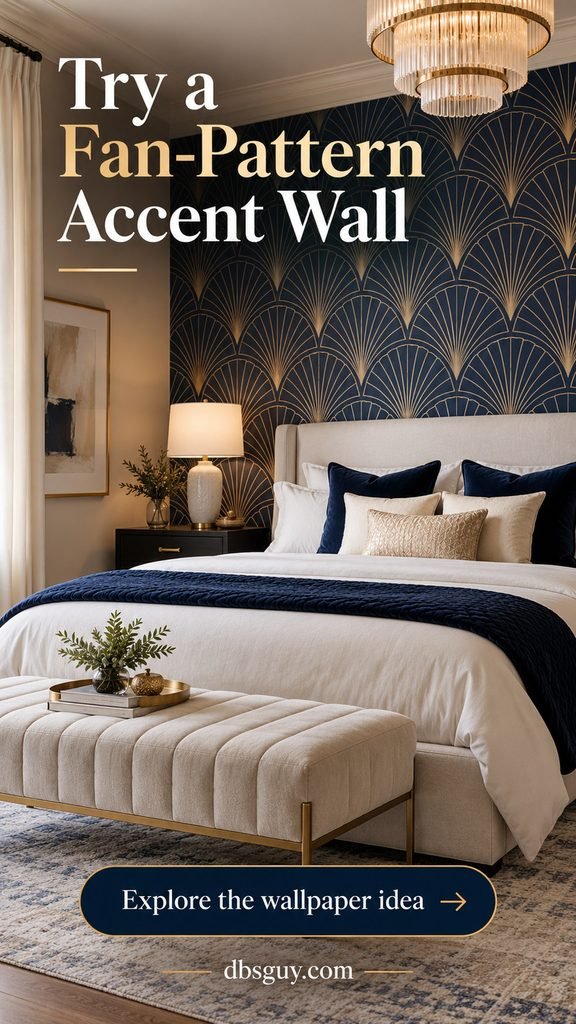
Repeating fans create rhythm without needing several decorative objects. Navy wallpaper with fine champagne-colored lines makes a bedroom feel enveloping, while an ivory headboard keeps the pattern easy to read. Use the wall behind the bed as the focal surface and let adjacent walls stay quiet.
Order a sample first. Small motifs can look busy across a large wall, and metallic ink may appear different in daylight and lamplight. Measure the wall and check the manufacturer’s pattern repeat and matching instructions before calculating rolls.
For renters, removable wallpaper is an option only if your lease and the product’s surface requirements allow it; removable does not guarantee damage-free removal. If you want this motif in a powder room, our bathroom wallpaper ideas offer room-specific inspiration. Choose wallpaper suitable for the actual moisture conditions.
3. Anchor the Sofa with a Geometric Rug
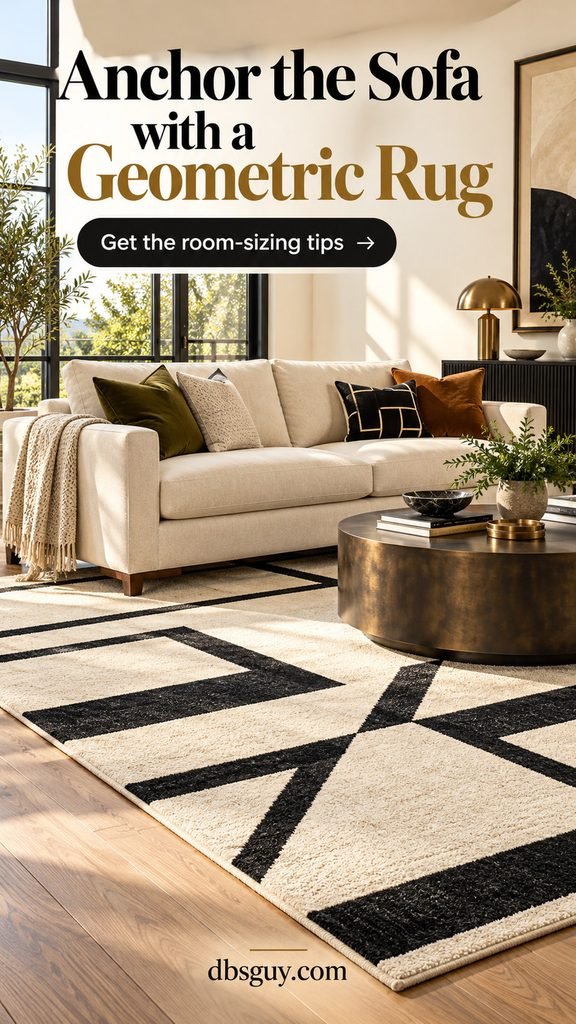
A cream rug crossed with black angular lines puts the geometric statement on the floor. This is useful when you want to keep your walls and sofa neutral. Larger, simpler shapes read clearly under a coffee table; a tiny repeated motif can disappear beneath the furniture.
For a typical living-room arrangement, start by testing a size that puts the sofa’s front legs and the front legs of nearby chairs on the rug. Tape the proposed boundary on the floor before ordering. An 8-by-10-foot or 9-by-12-foot rug may suit some seating groups, but your furniture footprint matters more than the label.
Keep nearby textiles mostly solid so the floor has room to be the main pattern. For seating shapes that work with that calmer background, browse our living-room sofa design ideas.
4. Bring In Burgundy Velvet
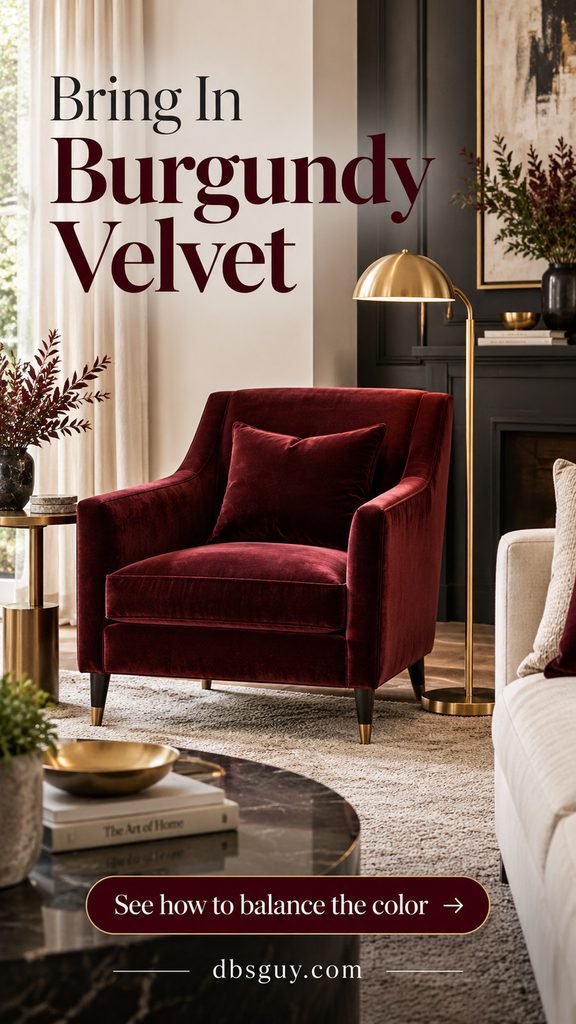
A burgundy velvet armchair introduces both saturated color and a plush surface. Choose a defined silhouette—such as a chair with angular arms—so the piece brings structure as well as softness. Ivory upholstery nearby and a little brass keep the color from feeling heavy.
This is an appealing fall and winter refresh for a US home, but the chair can stay all year. In brighter months, lighten the surrounding accessories instead of replacing the focal piece. A burgundy pillow cover offers a smaller commitment if new furniture is not in the budget.
View an upholstery swatch in your room before ordering; velvet’s pile changes how the color catches light. For a frequently used chair, check the specific fabric’s care instructions and suitability for your household.
5. Make Chrome Your Cool Accent
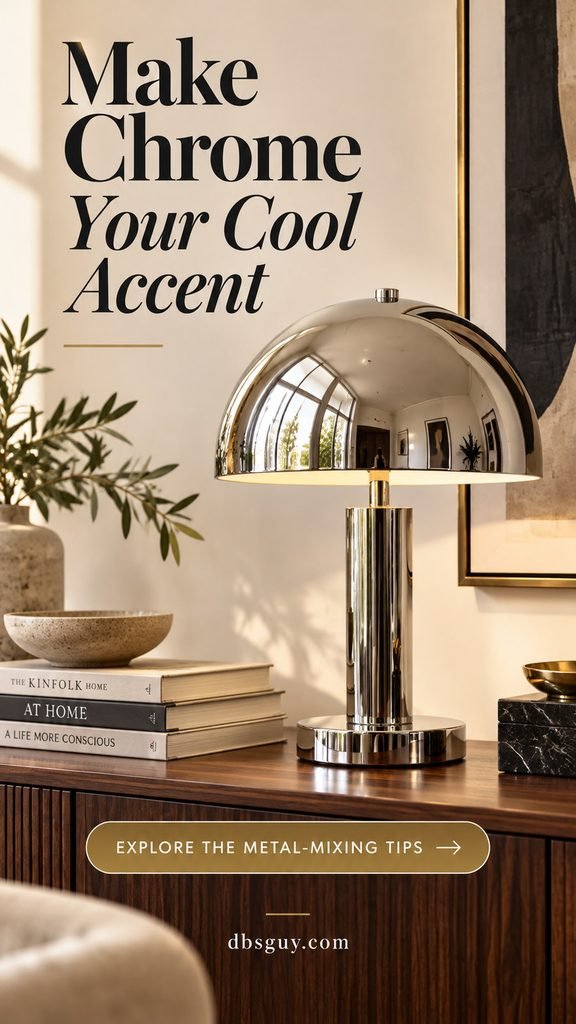
A polished chrome dome lamp adds a crisp reflective shape to a warm room. Walnut beneath it and cream behind it keep the result inviting. The contrast is particularly useful if your room already contains plenty of brown wood and needs a sharper accent.
You do not need to replace every brass object. Let one metal remain dominant and use the other as a deliberate accent—for example, chrome on the lamp and brass on a nearby frame. Repeating a finish elsewhere can make the mix feel connected, but avoid scattering many unrelated shiny objects across the room.
Check the lamp’s height beside the furniture and the shade’s position from your usual seated view. The glow should feel comfortable rather than putting an exposed bulb directly in your sightline.
6. Add a Fluted Walnut Cabinet
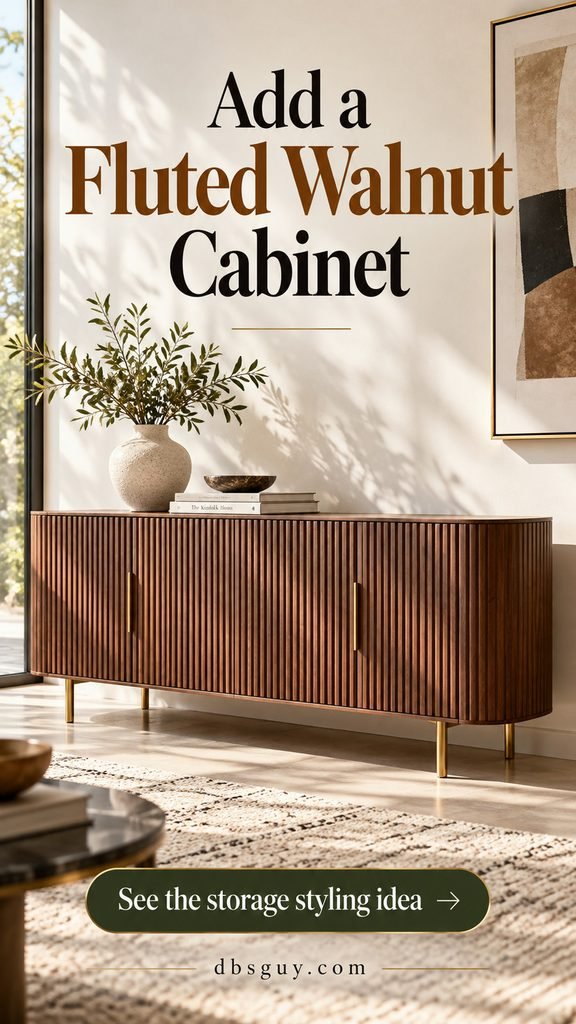
Vertical grooves turn a storage cabinet into a subtle geometric feature. Walnut adds warmth, while slim brass legs and handles provide a small amount of shine. This is a good choice when an open-plan room needs useful storage more than another decorative surface.
Check door swing, drawer clearance, and the route the cabinet must travel into your home. Keep the top arrangement spare: a tall vase at one end and a low bowl or a short book stack nearby let the fluting remain visible.
For a lower-cost approach, look for secondhand cabinets with reeded fronts rather than buying a whole matching furniture set. Inspect the condition and construction, and use any required anti-tip hardware according to the furniture instructions.
7. Let a Pendant Set the Geometry
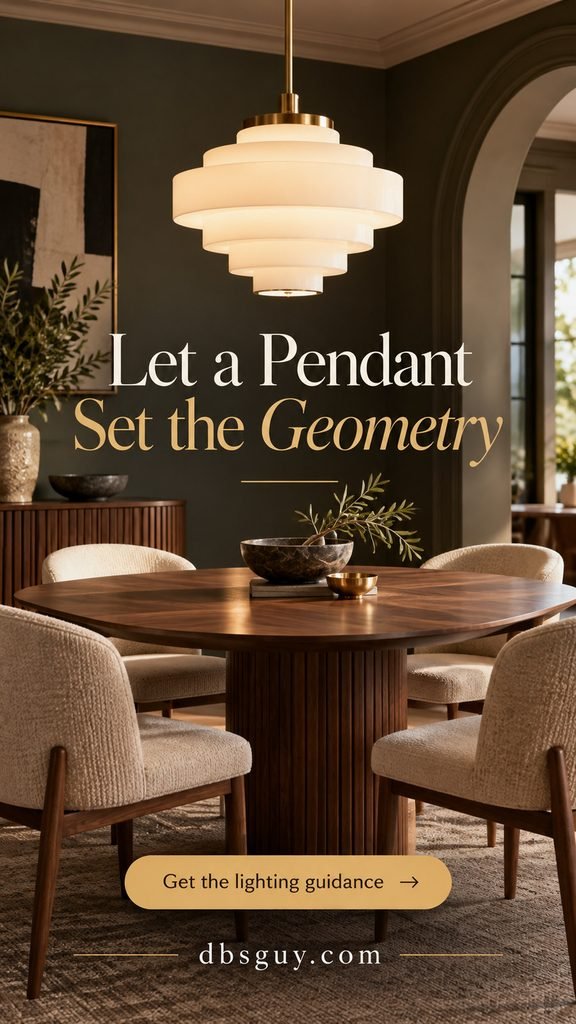
A stepped opal-glass pendant makes geometry visible above the dining table. Its tiered outline can carry the theme even when the table and chairs are simple. In the concept shown here, warm wood and softly textured chairs balance the more formal overhead shape.
Choose the fixture around the table’s size and the ceiling height, rather than choosing the biggest statement available. Ask your installer to confirm hanging height, sightlines, mounting support, and electrical compatibility. A fixture that blocks conversation across the table has lost its purpose, however beautiful it is.
If you want dimming, verify that the fixture, bulbs, and dimmer are compatible. Keep other lighting available so the pendant does not have to handle every task in the room.
8. Outline a Wall with Paint
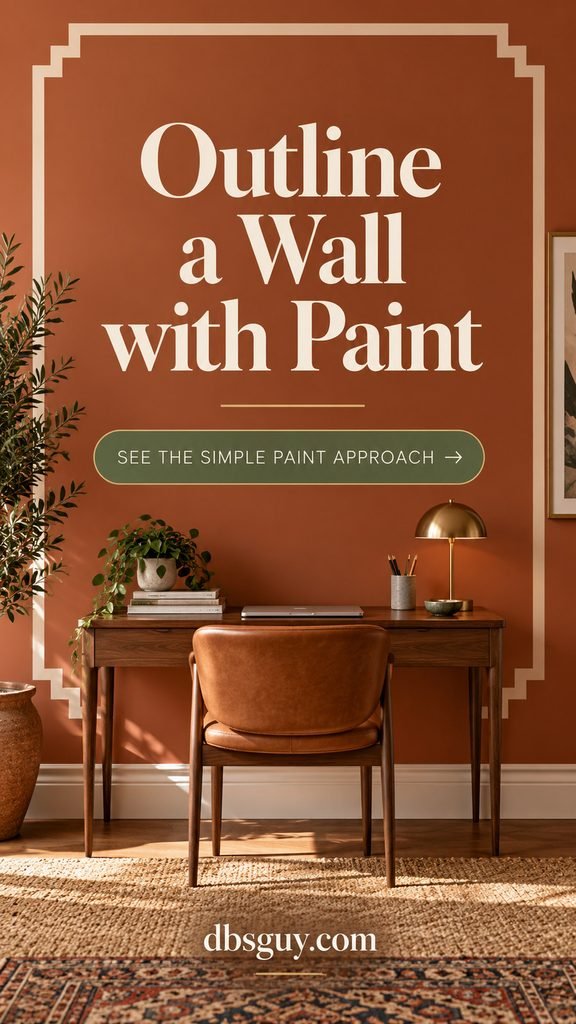
A painted rectangle with stepped corners gives a plain wall architectural-looking detail. The terracotta and cream office concept uses a single outline behind the desk, making the workspace feel intentional without a heavily patterned wall.
Sketch the shape on paper, then mark a level outline on the wall. A border around 1 to 2 inches wide is a useful starting point to test, not a mandatory measurement. Keep it clear of outlets and leave enough room around furniture so the corners remain visible.
Use painter’s tape suited to your surface and follow its application and removal directions. Test the paint and tape in an inconspicuous area first. If painting is off the table, a large framed print with stepped geometry offers a movable alternative.
9. Use Checkerboard in a Small Zone
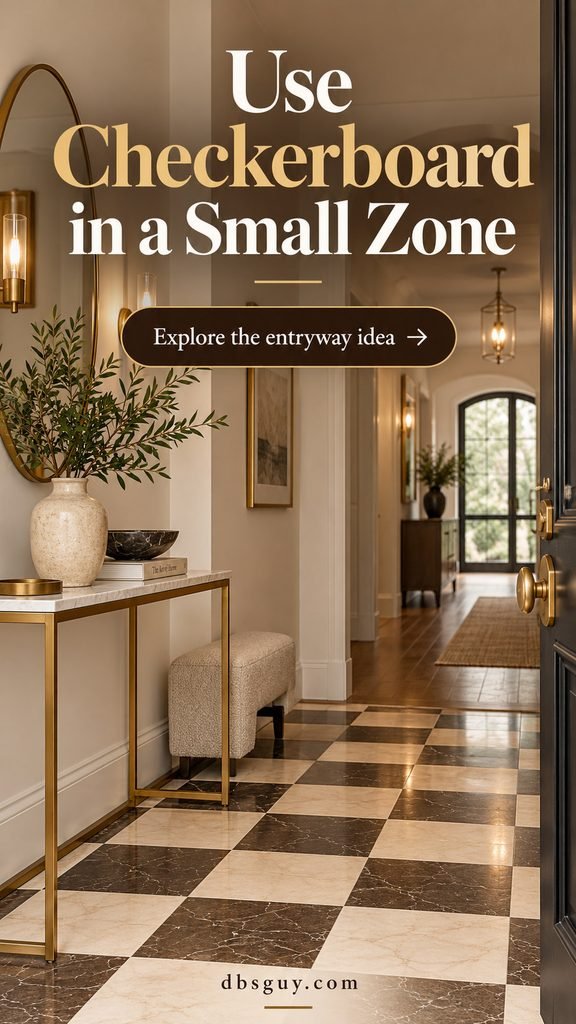
Chocolate and ivory checkerboard makes a strong entrance without the starkness of black and white. Using it in a hallway or small entry zone keeps the pattern contained; plain walls and slim furniture let the floor do the work.
Lay out samples before committing. The square size changes the effect, and a balanced layout at the threshold matters more than squeezing in the most repeats. For a permanent floor, ask your installer about substrate preparation, transitions, and whether the selected tile is appropriate for the location.
You can test the look with a checkerboard runner before renovating. If the idea is headed into a bathroom, our bathroom tile ideas offer additional combinations; separately confirm your chosen product’s suitability for wet areas.
10. Give the Bed a Fan-Shaped Headboard
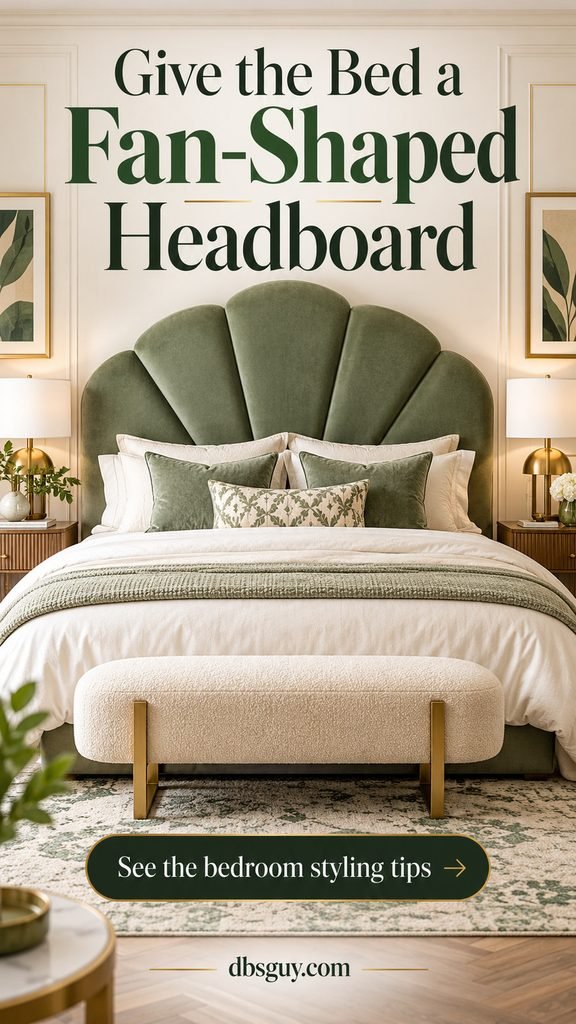
A headboard with radiating upholstered panels brings the fan motif into the furniture itself. The sage-green concept softens the silhouette with ivory bedding and warm wood, creating a lighter version of Neo Deco than navy wallpaper or burgundy upholstery.
Check the headboard’s width against the bed frame, and measure the visible height above your pillows. A dramatic outline needs room to show. Plain bedding works especially well here because it does not compete with the radiating panels.
If commissioning an upholstered piece, ask for a drawing that shows the overall shape, panel seams, fabric direction, and attachment method. A simpler channel-tufted headboard can suggest the same orderly rhythm if a fan shape feels too theatrical.
11. Make a Bar Cart Feel Collected
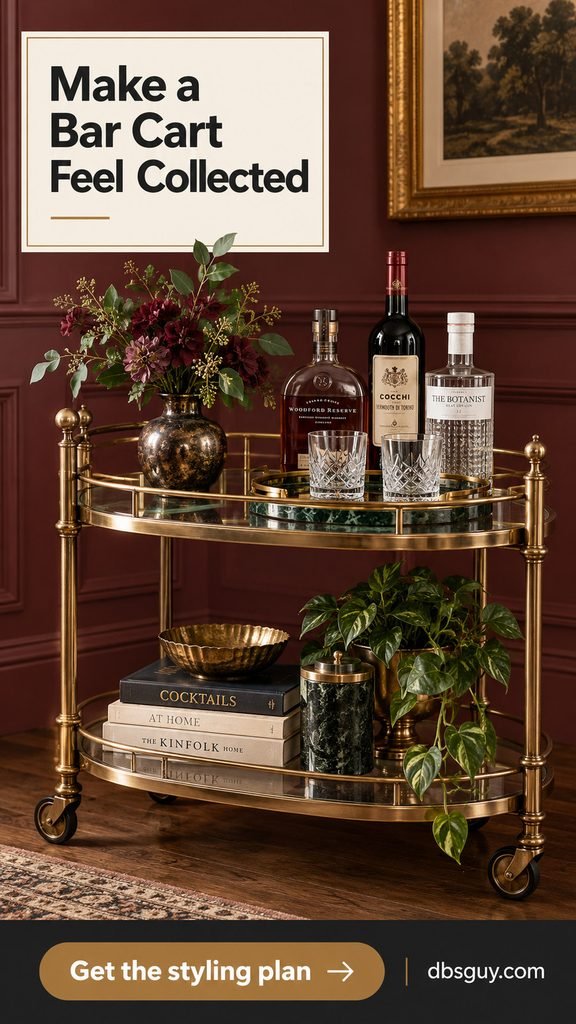
A brass cart with glass shelves introduces vintage character in a small footprint. The concept uses three bottles and two glasses on the top shelf, with books and decorative pieces below. That restrained selection lets the cart’s frame remain visible.
Group your essentials on a tray or in one compact arrangement and leave enough free surface to use the cart. If alcohol is not part of your home, style it with sparkling water, attractive glasses, and coffee supplies instead.
Place it beside a dining area or in a living-room corner where it will not obstruct a walkway. With vintage finds, inspect shelf condition, stability, and casters before loading them. You are looking for a functional piece with character, not a shelf packed edge to edge.
12. Pair Two Sculptural Sconces
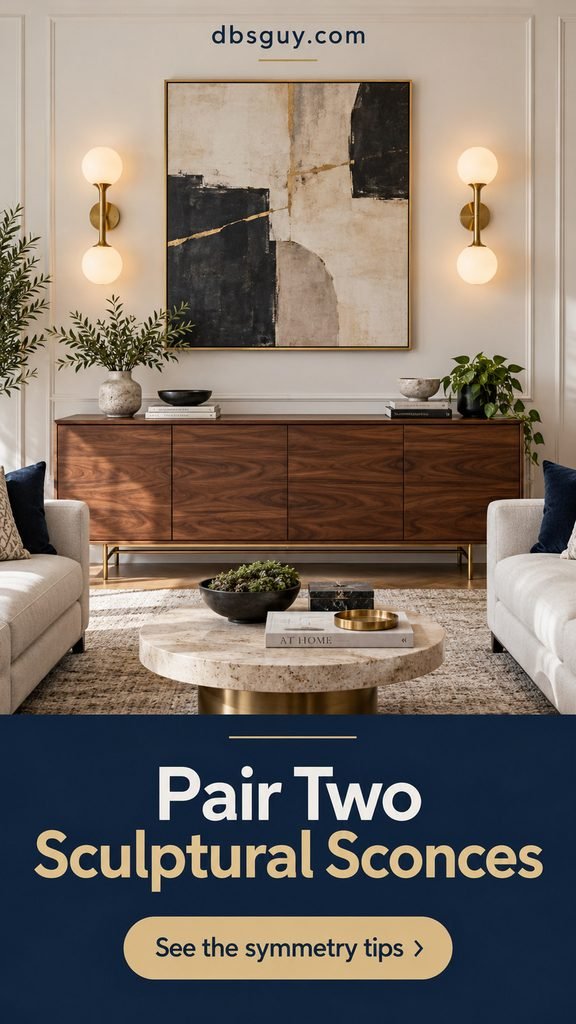
Two matching sconces bring symmetry to a wall that otherwise feels unfinished. Brass fittings with opal globes can flank one artwork above a credenza, producing an orderly composition without adding more small pictures.
Plan the art, furniture, and lights as one arrangement. Mark their positions with paper templates and check the layout from the room’s entrance. Keep enough separation that the sconces do not crowd the frame, and confirm that opening cabinet doors will not interfere with cords.
Plug-in models can simplify the project when appropriate outlets are available. For hardwired fixtures, have a qualified electrician confirm installation requirements. These are accent lights; keep reading or task lighting where you actually need it.
13. Style a Red-Marble Accent
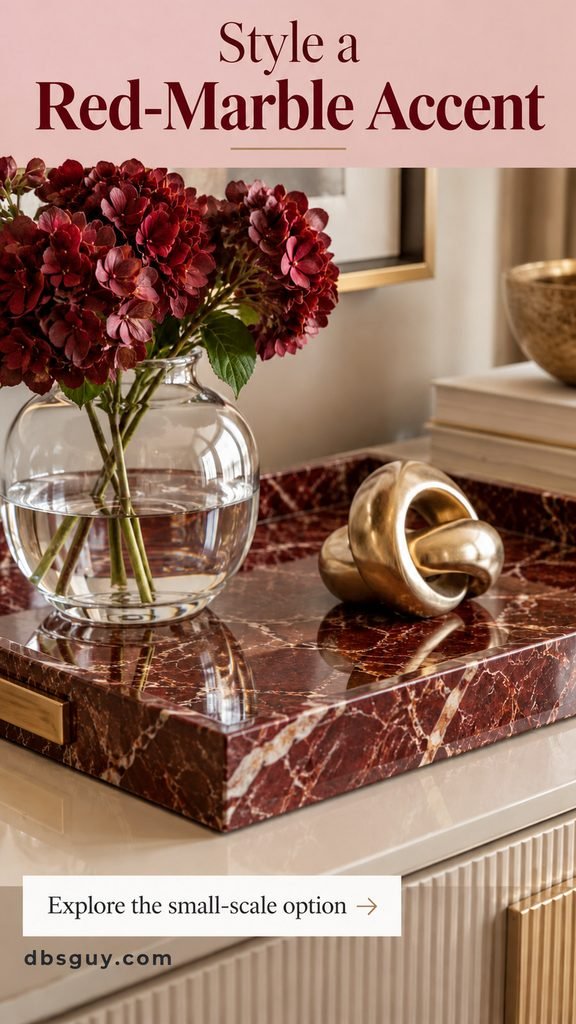
You do not need a red-marble bathroom to enjoy the material’s dramatic effect. A burgundy marble tray with pale veining offers a compact version on a console. The clear vase and small metallic sculpture shown here leave the stone’s pattern visible.
Keep the surrounding surface light and choose only a few objects for the tray. If everything on top is richly patterned too, the marble becomes background noise. A marble-look ceramic piece is another option; check the actual material description rather than assuming a printed finish is stone.
For natural stone, follow the supplier’s care and sealing guidance, and protect it from spills and scratching objects. Moveable accents are a sensible way to test a bold material before committing to counters or tile.
14. Create a Leather Banquette Corner
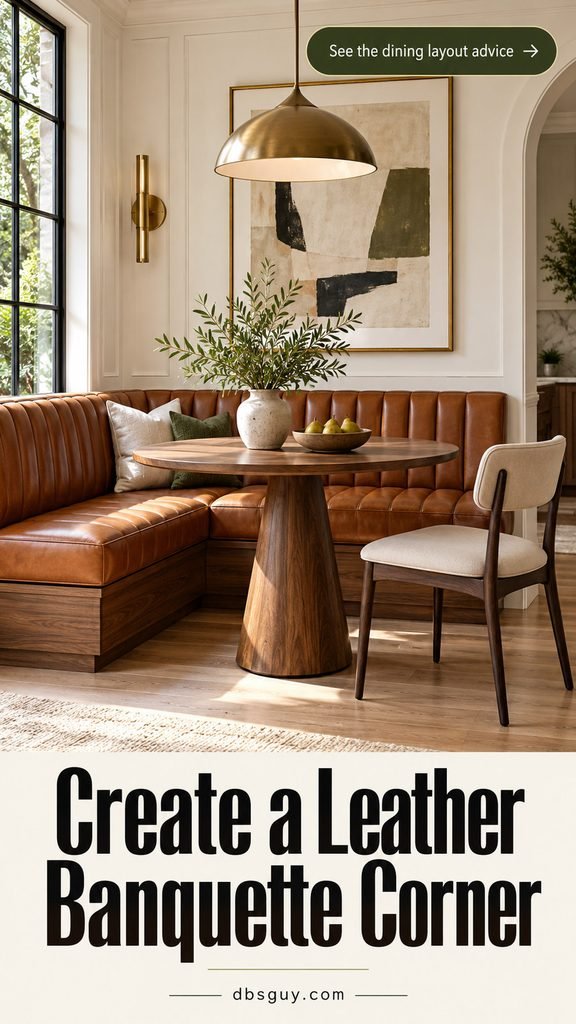
Cognac leather and orderly upholstered channels can turn a breakfast corner into a tailored seating area. A round pedestal table makes the arrangement feel less rigid and leaves the base visually simple. Pale walls keep the leather from weighing down the nook.
Before buying or building, tape the table footprint on the floor and test the seating with actual chairs. Check access to the bench, knee room, and whether the freestanding chair can pull out without blocking a doorway.
For a custom banquette, give your builder the table dimensions and ask for a drawing showing seat height, depth, back angle, and any storage access. Choose upholstery around real use and care needs. A freestanding upholstered bench is a more flexible alternative for a rented home.
15. Choose One Bold Geometric Artwork
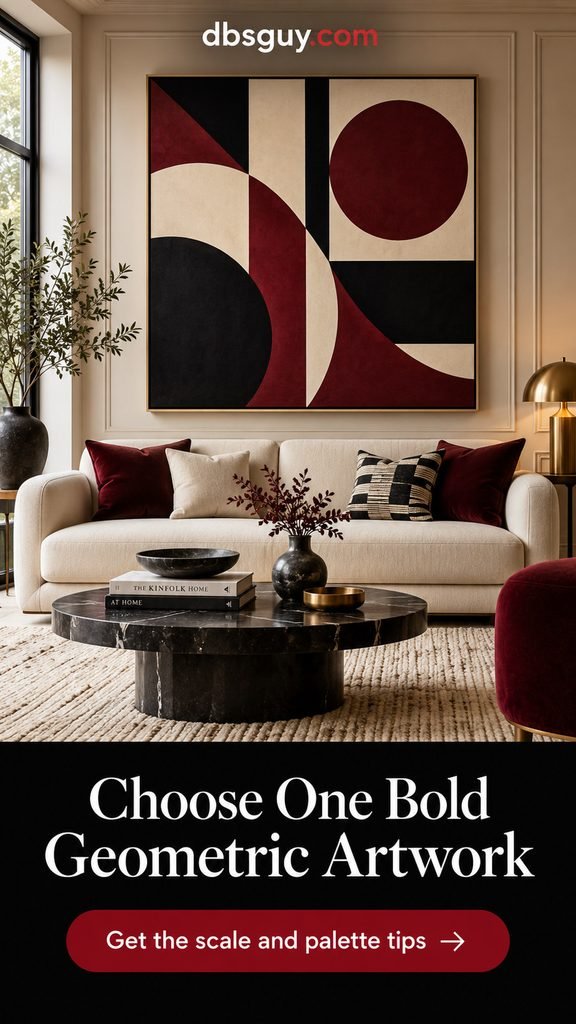
A single large piece with circles, diagonals, and rectangular blocks can establish the entire palette. In this concept, burgundy, black, and ivory connect the artwork to the upholstery and small accessories below it. The result feels cohesive because the colors repeat, not because every object matches.
Try a paper template over the sofa before ordering. A frame roughly two-thirds of the sofa’s width is one starting point to assess, but nearby doors, windows, and ceiling height may call for something different. Leave space between the sofa back and frame so the picture feels connected to the seating.
A poster in a well-chosen frame can serve the same purpose as an original painting. Choose art you enjoy looking at; the geometric subject is the useful link to Neo Deco.
16. Finish with a Geometric Textile
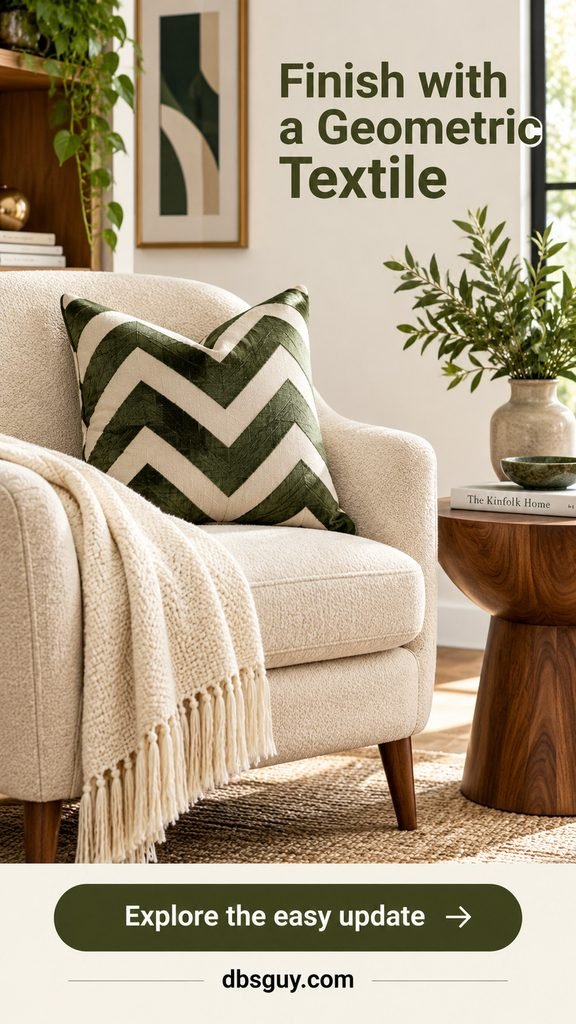
A green-and-ivory chevron cushion is an easy way to introduce a crisp repeating shape. Against a plain cream chair, the pattern stays readable without taking over the room. A soft throw and warm wood nearby keep the angular lines comfortable.
Choose one patterned cushion first, then repeat its color in a small existing accessory if the room needs a connection. If the rug or wallpaper is already geometric, use a different scale of pattern—or keep the cushion solid instead.
This works well in a compact seating corner. Our reading-nook ideas for small spaces can help you plan the chair, lighting, and usable layout before adding the decorative layer. Check that the cushion cover fits your insert and can be cleaned as needed.
How to Choose Your First Neo Deco Update
Start with the part of the room that feels unfinished. A blank wall may need a mirror or artwork. A flat-looking seating group may need a rug or richer upholstery. A dining area with little character may benefit most from a pendant.
- Smallest commitment: a cushion cover, framed print, or decorative tray.
- Useful furniture investment: a storage cabinet, comfortable chair, or headboard.
- Plan before installing: wallpaper, painted outlines, flooring, hardwired lights, or built-in seating.
Try the main feature before adding supporting pieces. Leave some plain surfaces, retain furniture you already like, and repeat a finish or color thoughtfully. You do not need all 16 ideas in one home.
Neo Deco Decorating FAQs
How is Neo Deco different from a full Art Deco room?
Neo Deco borrows recognizable shapes and glamorous materials while mixing them with contemporary furniture and everyday comfort. Rather than recreating a period room, you might add a stepped mirror and brass lamp to a sofa you already own.
Can Neo Deco work in a small apartment?
Yes. A single geometric artwork, a compact metal lamp, or a patterned cushion can communicate the look without consuming floor space. Check furniture dimensions and movement through the room before choosing larger statement pieces.
Do I need gold finishes and dark walls?
No. Chrome, ivory, sage, warm wood, and soft brown can create a lighter interpretation. Geometry and intentional material contrast do more of the work than any one mandatory color.
Can I mix Neo Deco with my current decor?
Use a shared color or material as the bridge. In a warm wood room, try a walnut cabinet with grooved fronts. With a simple neutral sofa, introduce geometric art or a rug. Add one feature and reassess before buying a collection of matching pieces.
What makes the look feel overdone?
Several strong patterns at the same scale, many competing metallic objects, and too many focal points can make a room feel crowded. Keep one feature dominant and give it quieter neighbors. The aim is a home that feels considered and comfortable.