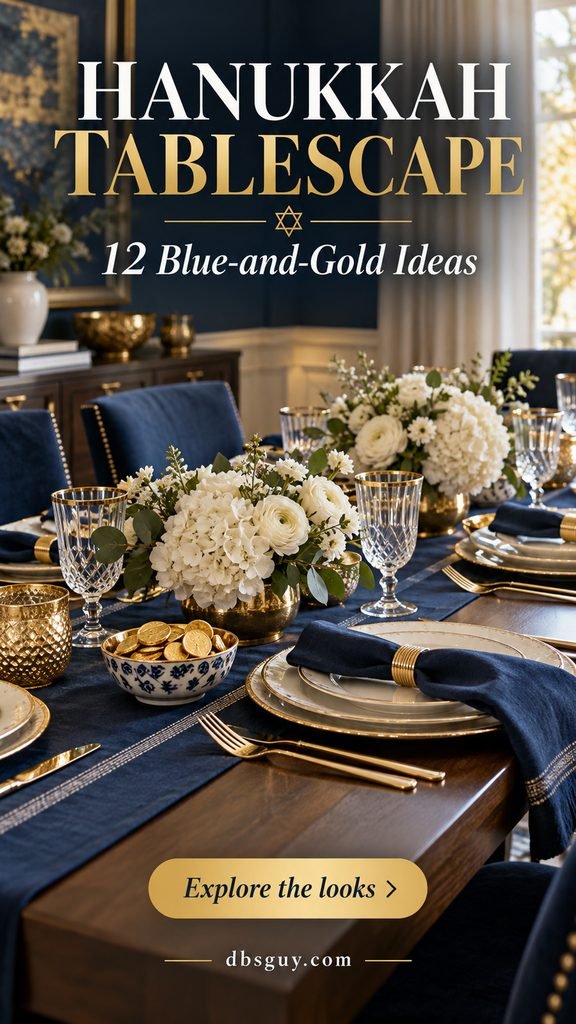
A blue-and-gold Hanukkah table works best when each color has a clear job: blue supplies the fabric or dishes, gold catches the light, and white gives both some breathing room. Start with the plates you own, choose one feature from the ideas below, and add a detail that belongs to your celebration—gelt, a dreidel, a Star of David place card, or a family serving piece.
These 12 ideas range from a single dressed-up plate to a complete dinner layout. You can combine a place-setting idea with a centerpiece, but leave room for the meal before adding anything else.
The images are AI-generated styling concepts, not photographs of completed or tested table arrangements.
Decide What the Table Needs to Do
For a plated dinner, the middle can hold a small floral arrangement. For a meal with shared platters, concentrate the decoration at each seat. If you will play dreidel afterward, choose pieces that can move to a sideboard without dismantling the whole table.
Set one place completely before repeating it. Pull out the chair, pick up the glass, and check whether the napkin decoration has somewhere to go when dinner starts. Look at your blue fabric beside the plates under your evening lights; a navy that looks rich in daylight can almost disappear in a dark room.
Plan the menorah separately from the styling. A Hanukkah menorah, or hanukkiah, has eight holiday lights and a distinct ninth light, the shamash. It is not interchangeable with a seven-branched menorah. Follow your household’s lighting customs, and do not rely on the ritual lights to illuminate dinner. The layouts below leave ritual lighting out of the dining arrangements so you can choose an appropriate location before decorating.
For any real candles, use sturdy holders on an uncluttered surface, keep them at least 12 inches from things that can burn, and never leave them unattended. A decorative tray does not make nearby linen or paper safe. If the dining table cannot accommodate that clearance, use decorative LED lighting there and plan ritual lighting in a suitable supervised location. See the NFPA candle safety guide.
1. Frame a Navy Napkin With a Gold Charger
This is the dressier option when your everyday white dishes need a little ceremony. A matte gold charger creates a visible border beneath the dinner plate, while the navy napkin provides the strongest color. A plain ring keeps the folded fabric compact.

Make the napkin rectangle narrower than the plate so the white remains visible on either side. Slip the ring over the center and loosen it enough to remove easily. Repeat the gold finish in flatware if you own it; otherwise, keep your usual utensils and let the charger do the work.
Try the layers at every seat before setting the whole table. If chargers push glasses or utensils into a neighbor’s space, remove them and keep the napkin-and-ring combination. The look still reads clearly.
2. Leave Serving Gaps Along a Navy Runner
For a long table, treat the runner as a background that connects the meal rather than a strip to fill from end to end. Here, small white vases punctuate the navy fabric, and the serving dishes become part of the arrangement.
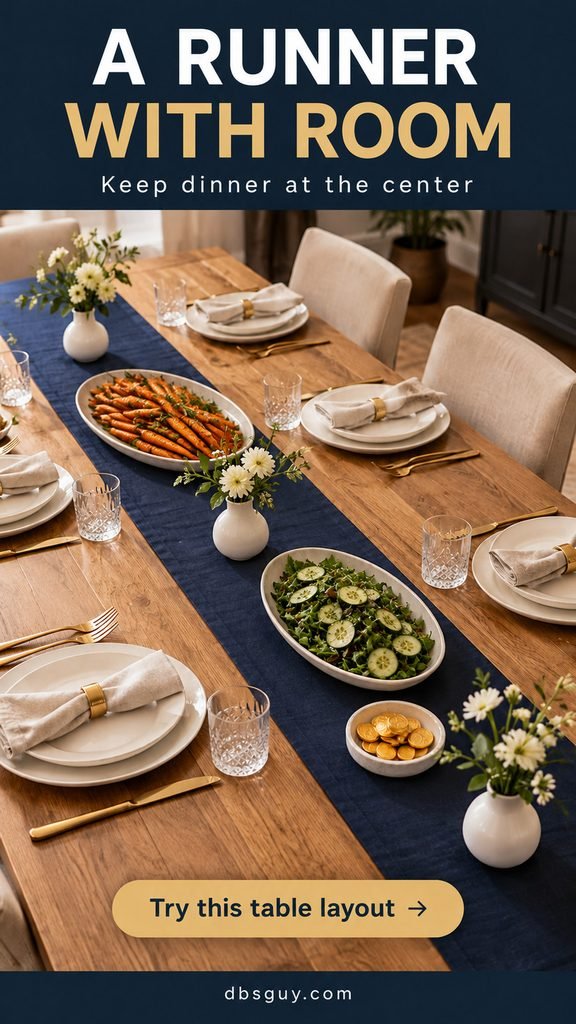
Lay out your largest platters first, including their serving utensils. Place the vases in the remaining intervals and use fewer if the table is shorter. Keep the fabric flat beneath the dishes, with no decorative folds where a bowl needs to sit steadily.
White napkins make sense here because the blue is already concentrated down the middle. Gold rings or flatware provide the metallic accent. Use suitable trivets under hot dishes; the runner itself is not heat protection. Bring a spare vase to the sideboard if an extra dish arrives.
3. Use Powder Blue for a Softer Table
If navy feels too heavy in your dining room, move the main color into a powder-blue cloth. Ivory dishes and warm gold details give it a softer finish, especially for an afternoon meal or a room with pale wood furniture.
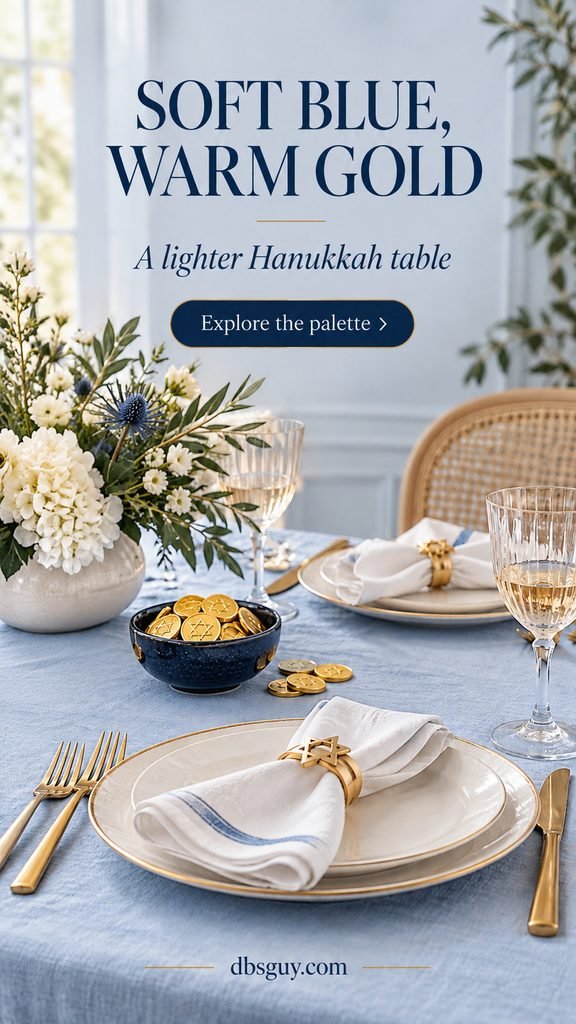
Use a white napkin so the plate does not disappear into another pale-blue layer. The concept adds gold Star of David rings and a dark bowl of gelt to give the light palette a stronger focal point. A plain gold ring works too if you prefer the holiday detail elsewhere.
Check the cloth against your actual dishes before buying matching accessories. A cool, icy blue and a very yellow cream can pull in different directions; a white napkin between them helps bridge the contrast. Keep flowers low and away from serving paths.
4. Make Blue-and-White China the Pattern
One patterned plate can carry more character than several new decorations. Use blue-and-white china you already enjoy, then surround it with quiet pieces: a white dinner plate, cream linen, and a solid navy napkin.
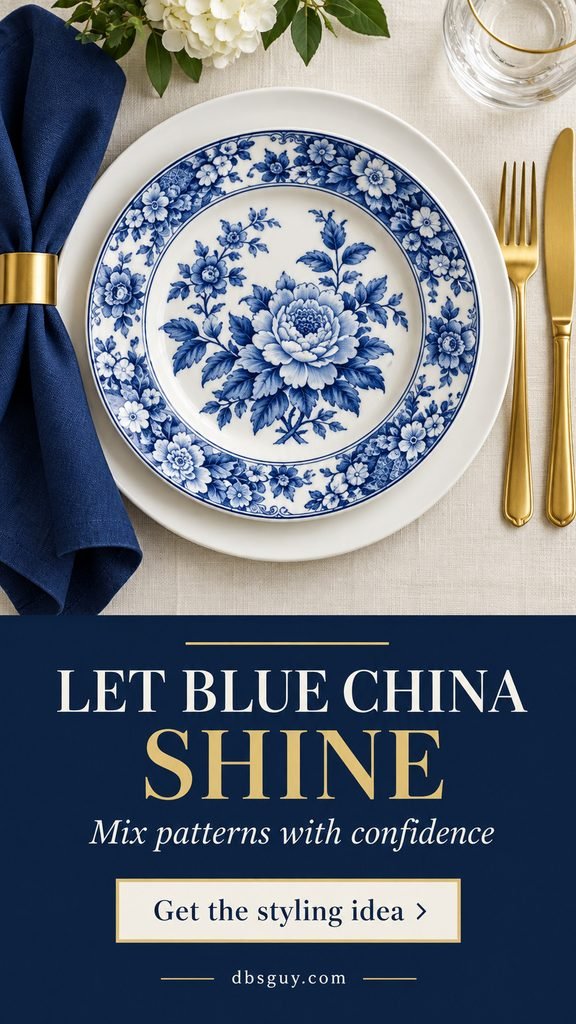
If your china is a mixed collection, compare the blues rather than trying to match every flower or border. A shared cobalt tone helps different patterns sit comfortably together. Leave the napkin beside the plate when you want the central design visible.
Keep gold to a slim ring or the flatware; a heavily patterned metallic charger would compete with the china. Add a Hanukkah detail from idea 6 or 8 so the table feels connected to the occasion. The china itself does not need a holiday motif to be useful.
5. Group Low White Flowers in Cobalt Vases
Choose this centerpiece when you want flowers without a tall bouquet between guests. Three squat cobalt vases make small clusters of white blooms feel deliberate. The gold tray supplies a single metallic line beneath them.

Start with the containers close together, then trim a few stems for each so the blooms sit just above the rims. Stop before the flowers merge into one wide hedge. Check the arrangement from a seated position on both sides, and shorten any stems that interrupt faces.
Use watertight vessels and dry their bases before placing them on the tray. A small table may need only one vase. Leave the tray’s edges accessible so it can move before serving, and choose its landing spot in advance. The woven mats shown here are optional; they soften the polished blue ceramic.
6. Give Each Guest a Little Bowl of Gelt
Gold-wrapped chocolate gelt brings the metallic color directly to each place setting. A tiny blue dish makes it feel like a welcome gift instead of loose table scatter, and it gives guests something easy to lift off their plate.

The image uses three coins as a styling example, not a required quantity. Set the bowl on the folded napkin and tuck a readable name card beside it. Before dinner, guests can move the bowl above their plate or take it to the game area.
Check the actual chocolate packaging for ingredients and any kosher certification your guests require; gold foil tells you neither. Keep the packaging available rather than guessing about an unmarked coin. For a guest who cannot eat the chocolate, use an equally considered nonfood place card instead.
7. Make a Dreidel Tray That Moves With the Evening
A dreidel tray works especially well for a gathering that moves from dinner into games. The navy base, wooden tops, and gold wrappers provide texture while giving the activity a visible home.

Put the dreidels and playing pieces together on a shallow tray, then leave a smooth area beside it. A textured runner is an attractive backdrop, but not a useful spinning surface. After the plates are cleared, move the tray within comfortable reach and remove glasses from the playing area.
Use actual playable dreidels with their proper markings rather than decorative shapes. Keep small game pieces and loose wrappers away from very young children. You do not need a trail of coins across the whole table; containing them makes the transition from eating to playing much easier.
8. Make Navy Star of David Place Cards
Paper place cards add a personal detail without taking up the center of the table. The gold six-point Star of David stands out against navy cardstock, while white lettering stays easy to read.
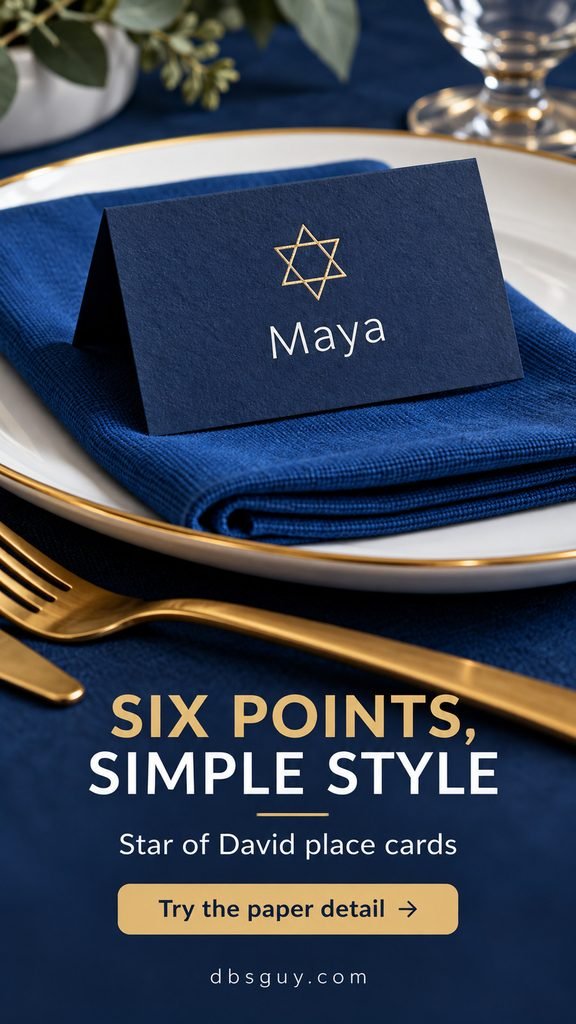
- Cut a rectangle of navy cardstock about 4 by 3 inches. This is a suggested starting size; adjust it to your names and plates.
- Fold it across the middle to make a tent approximately 4 inches wide and 1½ inches tall.
- Add a small gold Star of David sticker or stencil above the name, leaving room for clear white lettering.
- Let ink dry fully, then stand the card on a flat-folded napkin or just above the plate.
Use the six-point symbol formed by two overlapping triangles, not a five-point star. Skip loose glitter near food. Make one card first to check the contrast and whether longer names fit before cutting the rest.
9. Give a Round Table One Small Center
A small round table benefits from repetition around the edge. Four navy napkins provide the blue, the flatware supplies gold, and one compact tray gathers the little bit of decoration in the middle.

Skip chargers for this version. Place the plates and glasses first, then choose a tray that fits the remaining space. A small gelt bowl and a slim vase may be enough; remove the vase if it makes the tray crowded.
This arrangement suits a plated meal particularly well. If you serve several shared dishes, move the tray off the table before bringing them out. Do not enlarge the centerpiece just because the table is round—the reach to a water glass matters more than filling the circle.
10. Add Warm LED Light in Blue Glass
For an evening meal, a little warm light can keep navy fabric from looking flat. Two compact battery-powered lights in blue glass cups create a contained glow, and the gold tray reflects it back into the setting.
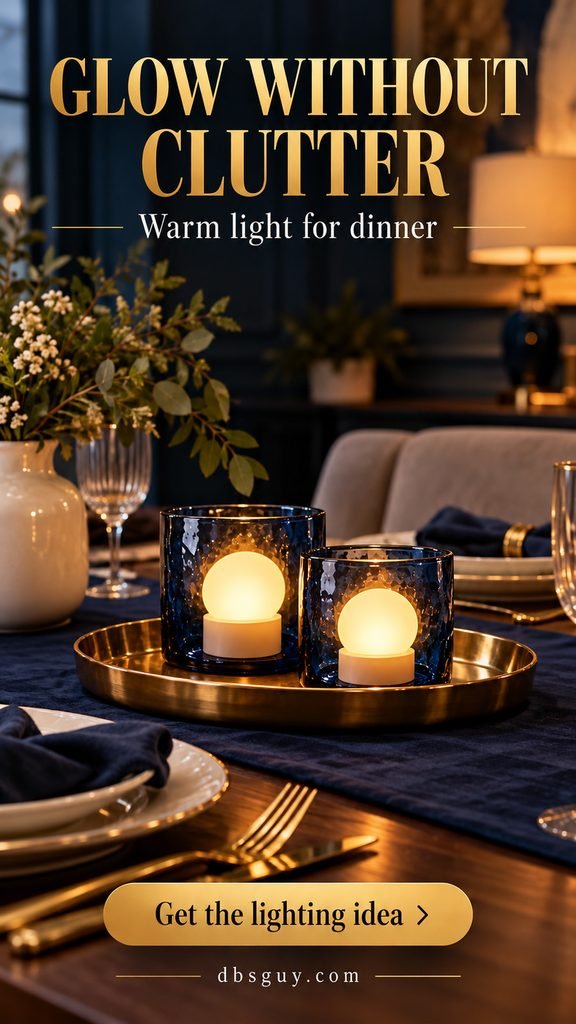
Choose LED units intended for decorative tabletop use, with secure battery compartments, and follow their instructions about covering or enclosing them. Test the complete arrangement in the evening: very dark glass may hide a weak light, while a bright cool-white LED can make the gold look harsh.
Keep enough room lighting to see food and faces comfortably. These lights are decorative dinner lighting, not a substitute for the ritual menorah. Keep any batteries inaccessible to children, and avoid adding loose greenery or paper inside the cups.
11. Let the Dessert Station Carry the Color
If the dinner table is full, let a nearby dessert station finish the blue-and-gold story. A white stand lifts the doughnuts into view, while navy fabric underneath and gold dessert forks repeat the dining palette.

Put the stand toward the back of the counter with plates and utensils beside it, leaving clear space at the front for serving. Use a low stack of doughnuts that guests can take from without disturbing the whole display. Keep the bowl of wrapped gelt separate from the pastries.
Use a food-safe serving surface, add serving tongs, and keep fabric and decorative finishes out of contact with food. Choose the pastries and chocolate around your guests’ dietary and kosher needs, including whether the meal is meat or dairy. This is a styling idea, not a tested doughnut recipe.
12. Build the Table Around a Family Serving Piece
A serving piece with a family connection gives you a more personal starting point than a matched shopping list. The concept shows a blue-and-white platter with a Star of David; your piece might have a completely different pattern or history.
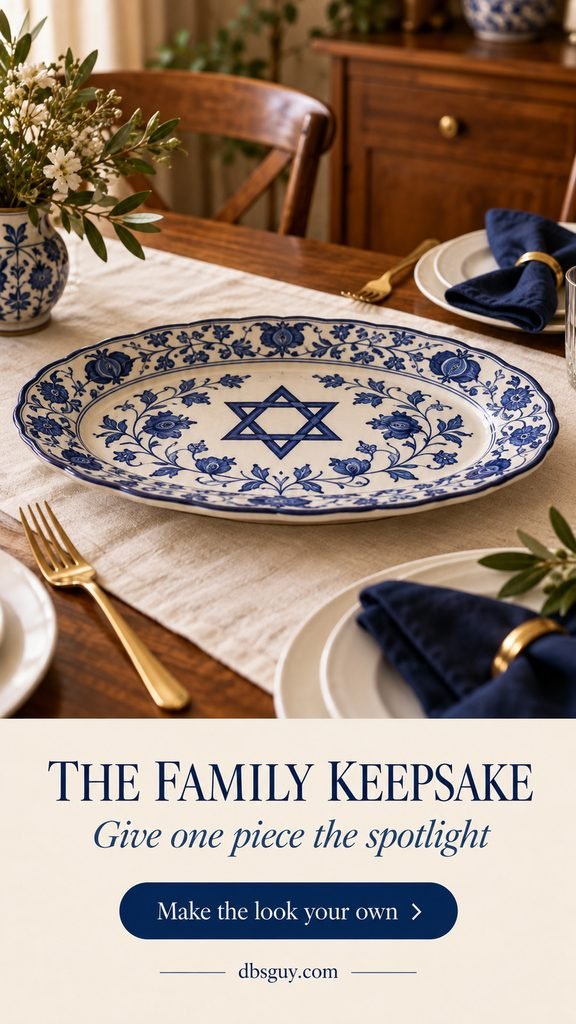
Pull one blue from the piece into the napkins, then keep the surrounding plates plain. Gold rings or flatware add warmth without asking the heirloom to match every finish. Give it a practical place in the meal if it is suitable for food use, rather than burying its pattern under decorations.
If a vintage piece’s food safety is unknown, display it empty on a nearby surface and use a known food-safe dish for serving. Do not polish, paint, or alter a treasured item just to make it fit this palette. Let its existing character guide the table.
Set It Up in an Order That Saves Rearranging
- Confirm the meal and guest needs. Choose plates, utensils, serving pieces, and any food favors accordingly.
- Choose the lighting location. Make the ritual-lighting plan before placing cloth, flowers, or paper decorations.
- Lay the fabric and repeat the place settings. Put the blue where it will stay useful through dinner.
- Add one main feature. Choose flowers, a game tray, or a small light arrangement; avoid stacking all three into a narrow center.
- Do a seated check. Make sure guests can see each other, lift glasses, and pass food. Move anything that gets in the way.
Questions Before You Set the Table
Do I need gold flatware?
No. Keep the utensils you have and bring gold in through a napkin ring, a tray, or wrapped gelt. One repeated accent usually feels more considered than several slightly different metallic purchases.
Can I mix navy and lighter blue?
Yes. Give one shade the larger surface and use the other in smaller pieces. Powder-blue linen with a navy bowl is easier to balance than equal amounts of several unrelated blue patterns.
Should the menorah be the dinner centerpiece?
It does not have to be. Decide its location according to your household’s practice and safe lighting conditions. A crowded dining table with passing dishes may not be suitable. Keep decorative dinner lighting separate from the ritual lights.
How can I keep the table affordable?
Start with your existing dishes and buy only the missing color detail. Navy paper place cards or a small supply of gelt may do more for the setting than a new set of chargers. Set one sample place before buying enough for everyone.
Does the table need to change for all eight nights?
No. Keep the same fabric and dishes, then reset only what needs cleaning or replenishing. A new name card or a different serving piece can change the emphasis without rebuilding the table.
Choose the idea that solves your biggest constraint first: space, an everyday dish set, or a room that needs a warmer glow. Once the table works for dinner, the blue and gold have done their job.
Also Read
For more ways to reuse tableware and plan a comfortable layout, these related DBSGuy guides offer styling techniques you can adapt. Their seasonal decorations are for their named holidays.
- 23 Olive Green Simple Fall Tablescape Ideas — more approaches to everyday dishes and a focused color palette.
- 15 Small Christmas Table Decor Ideas That Still Leave Room for Dinner — useful layouts for limited serving space.
- 15 Blue and White Christmas Table Decor Ideas for a Winter Wonderland Feel — additional ways to style blue-and-white pieces.