
Choose the kind of evening you want before you choose the decorations. A small dinner gives everyone time to talk; a game night gives guests something to do; a dance party needs open floor space more than a crowded buffet.
These 20 New Year’s party ideas cover quiet gatherings, hands-on activities, family celebrations, and nights built around music. Pick one as your main plan. The suggested group sizes are starting points for planning, not room-capacity limits; your seating, layout, and guests’ access needs come first.

The visuals in this post are AI-generated concepts to help you picture each setup. They do not document real parties or tested recipes.
Find a Party That Fits Your Plans
- For a conversation-filled evening: try the seated dinner (1), takeout tasting (3), or listening lounge (12).
- For guests who like an activity: choose pizza making (4), board games (8), trivia (9), or vision boards (10).
- For a flexible invitation: consider the open house (5), early family party (15), or New Year’s Day brunch (16).
- For a lively countdown: build the night around karaoke (11), a living room disco (17), or a beginner dance session (18).
Tell guests whether you are serving dinner, snacks, or dessert, and whether the gathering runs through midnight. That one line prevents hungry arrivals and awkward departures.
1. Host a Small, Candlelit Dinner

A seated dinner suits a group that would rather catch up than compete with loud music. Start with the number of places you can comfortably set—six is a useful planning example—and keep the centerpiece low enough for people to see across it.
Build the meal around one main dish you already know how to make, such as baked pasta, with a green salad and bread. Serve dessert from the kitchen or a sideboard so the dining table stays usable. Cream linens, burgundy napkins, and flameless candles can make everyday plates feel occasion-ready.
On the invitation, give a seating time as well as an arrival time: “Come at 7; dinner at 7:45.” After dinner, move to comfortable chairs for conversation and the countdown rather than adding another course you have to manage.
2. Share the Cooking With a Soup Potluck

Make a cozy supper out of two soups, bread, and a simple dessert. For an illustrative group of eight, assign one person a hearty bean soup, another a tomato soup, and others bread, salad, or sweets. Ask each soup maker how many main-dish portions their recipe provides before you finalize quantities.
Have contributors bring ingredient lists and their own ladles. Put bread away from the hot-serving area so everyone is not reaching across a cooker. Check outlets and equipment before promising space for several appliances.
Cookers need to maintain safe holding temperatures; a glowing “warm” light does not verify the food temperature. Follow the serving guidance later in this post. Make this an early supper if your group wants a gathering without the late finish.
3. Turn Takeout Into a Tasting Dinner

Order a small selection of dishes from one restaurant and serve them family-style with tasting-size plates. A dumpling dish, noodles, a vegetable side, and a more substantial entrée can give four to six friends something to compare without turning dinner into a cooking project.
Ask for dietary requirements before ordering, then check ingredients with the restaurant. Agree on the total spend and how you will split it before placing the order. Keep any dietary orders clearly identified when transferring food to serving dishes.
Give everyone a card with three prompts: favorite bite, most surprising flavor, and order-again choice. Reveal the answers over dessert. Confirm the restaurant’s holiday hours, pickup time, and ordering arrangements directly; ordinary hours may not apply.
4. Set Up a Personal-Pizza Workshop

For a group of four to eight, use small prebaked flatbreads so the activity centers on toppings. Set out tomato sauce, shredded cheese, cooked mushrooms, and sliced peppers in separate bowls, with a spoon for each. Keep chilled ingredients refrigerated until assembly and replenish small portions as needed.
Check how many flatbreads fit on your baking trays before guests arrive. Have people build in batches, mark each tray’s positions on a scrap of paper, and follow the base package’s baking instructions. Offer salad while the first batch cooks.
Keep the toppings modest: heavily loaded bases are harder to heat evenly and carry. Plan one flatbread per person as a first round, with extra bases available according to their size and your guests’ appetites. Avoid making everyone wait for one overloaded oven.
5. Open Your Home for an Appetizer Gathering

An open house works when friends have several stops to make. Give it a definite window, such as 5–8 p.m., and say “appetizers and drinks” on the invitation. Decide whether guests can drop in freely or should choose an arrival window to keep a small room comfortable.
Put plates at the start of the food table and drinks somewhere else. Choose a few bites you can replenish in small batches, including a substantial savory option and something guests with different dietary needs can actually eat.
Keep coats out of the serving route. Reserve seats for anyone who needs them, even if most guests will stand and chat. For food you can build the menu around, browse 21 Easy New Year’s Eve Appetizers, From Warm Dips to Bite-Size Snacks.
6. Invite Friends for Dessert and Coffee

A late dessert party lets you host after everyone has eaten dinner elsewhere. Start around 9:30 p.m. for a midnight gathering, and make the invitation explicit: “Join us after dinner for dessert, coffee, and the countdown.”
Choose three contrasting sweets—brownie squares, cookies, and a small cake, for example. Slice and portion them before guests arrive. Set mugs and spoons beside the drinks, with decaf coffee, tea, and water available alongside any regular coffee.
Bring out refrigerated desserts in small portions close to serving time. Add a savory snack such as pretzels for guests who do not want another sweet bite. Move everyone toward the countdown area before midnight so the host is not still refilling a carafe during the final minute.
7. Make a Zero-Proof Tasting the Main Event

Build an alcohol-free evening around two contrasting drinks: a cranberry-lime soda and a cucumber-citrus spritz, for instance. Use familiar recipes or packaged mixers, and offer small first pours so guests can taste both before choosing a full glass.
Set out matching tasting glasses, ingredient cards, a water pitcher, and a place for used glasses. Mix carbonated drinks near serving time. Keep garnishes chilled until needed, and use separate utensils for each ingredient.
Give everyone a simple tasting card with “tart,” “sweet,” and “refreshing” to circle. This works well for six to ten people who enjoy discussing flavors. If a guest needs to avoid alcohol completely, check every ingredient with them, including bitters and products marketed as nonalcoholic; naming a drink “zero-proof” does not verify its contents.
8. Run a Board-Game Rotation

Choose two short games with different styles, such as a cooperative word game and a light card game. Check their player counts and typical duration before inviting more people than can join. For eight guests, two tables of four may work better than one oversized group.
Allow time to explain each game, then rotate tables between completed rounds. Choose games that finish comfortably before the countdown rather than interrupting a long strategy game at 11:55.
Put snacks on a side table to protect cards and pieces, and keep enough light for everyone to read. Leave a conversation area available for someone who wants to sit out. You can give the evening a friendly structure without making participation compulsory or keeping a running championship score.
9. Write a Trivia Quiz About Your Group’s Year
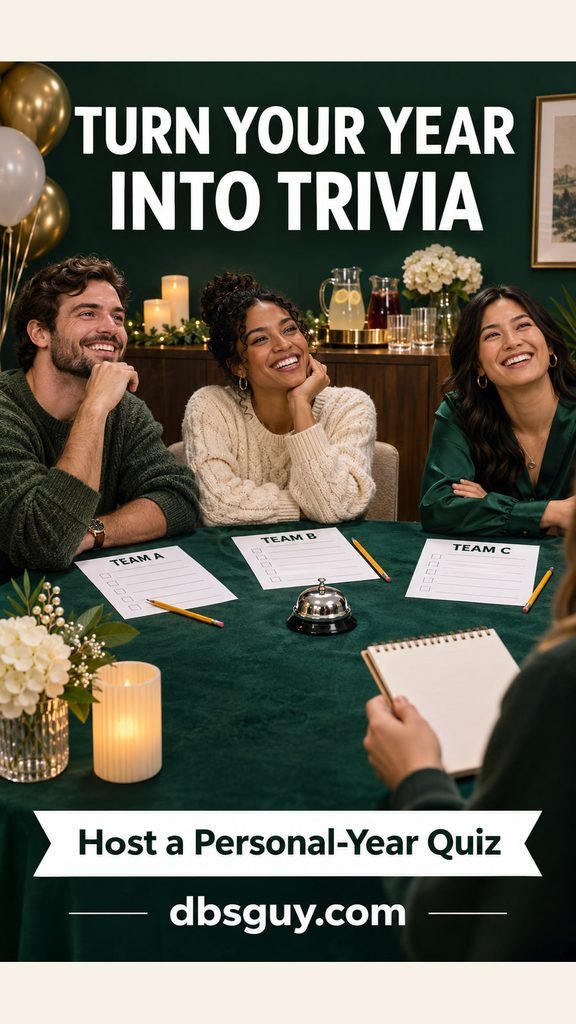
Ask each guest to send you one lighthearted fact before the party: a new hobby, a memorable meal, or a place they visited. Get permission to use it. Turn those details into a personal-year quiz that rewards listening rather than knowledge of celebrity headlines.
For six to twelve people, form small teams and prepare three rounds of five questions. Mix formats: match a hobby to a person, identify a cropped vacation photo, or put three shared events in order. Make an answer key from the information contributors supplied.
Award one point per answer and save a lighthearted tie-breaker, such as estimating how many photos are in the party’s shared album. Keep sensitive milestones, private relationships, and embarrassing stories out. Finish the quiz early enough for people to talk about the answers.
10. Hold a Vision-Board Studio Party

This is a good daytime or early-evening choice for friends who enjoy making something while they talk. Set one poster board at each seat, then share magazines, colored paper, glue sticks, scissors, and printed pictures down the middle of the table.
Offer a manageable prompt: choose one thing you want to make time for, one place you want to enjoy, and one feeling you want your home or week to have. Guests can make a small collage without declaring an entire life plan.
Allow roughly an hour as a planning estimate, with an optional show-and-tell at the end. Keep drinks away from the paper supplies. Invite each person to write one practical first step on the back; New Year Goals: How to Turn Your Priorities Into a Realistic Plan can help them develop that step afterward.
11. Give Karaoke Its Own Living Room Stage

Make the singing area obvious without building a stage: place the lyric screen where seated guests can see it and keep the floor in front clear. Test your microphone, speaker connection, lyric source, and any subscription requirements before the party.
Open with a duet or small-group song so one person does not have to break the ice alone. Use a queue with one song per turn, and let guests add another after they have sung. Choose shorter versions when the queue grows.
Six to twelve people gives most home setups room for singers and an audience, depending on the layout. Keep volume considerate of neighbors and agree on a finishing time. Listening and cheering count as joining in; nobody needs to perform to earn a place at the party.
12. Create an Album-Listening Lounge

For friends who love music but prefer a quieter room, plan an intentional listening session. Ask guests to nominate an album or a few tracks in advance, then choose a selection that fits the time you have. A record player is optional; a familiar digital setup works too.
Arrange comfortable seats where everyone can hear, and let a host introduce each selection with one short reason they chose it. Listen to a short set, then pause for conversation instead of expecting silence all evening.
Four to eight guests makes it easier for everyone to contribute. Have tea and simple snacks ready before playback begins. If you will stay until midnight, finish the final listening segment with time to put on the countdown rather than cutting a favorite song off halfway through.
13. Make a Walk-Through Memory Gallery

Ask everyone to send two photos and a short caption from the past year. Print a small selection and arrange it along one wall with removable clips or display stands. Check permission before displaying photos of other people, particularly children.
Unlike a seated slideshow, the gallery lets guests browse and tell stories in small groups. Put blank cards beside it for people to add a favorite detail. Include ordinary moments—an excellent lunch or a finished project can start a conversation as easily as a big vacation.
This works especially well for friends or relatives who have not gathered recently. Keep the display clear of doorways, and ask separately before sharing the pictures online. At the end, let guests take their own prints home or collect them in a shared keepsake envelope.
14. Host a Pajama Movie Countdown

Make the invitation comfortable from the start: pajamas welcome, a seat for everyone, and no pressure to dress up. Pick one movie the group agrees on rather than spending the first hour scrolling through options.
Check the runtime and playback access beforehand. If you want a 15-minute break before midnight, count backward from 11:45 p.m. to choose the start time, allowing extra time for any planned intermission. Have the countdown source ready on a separate tab or input.
Use individual popcorn bowls and put drinks within reach on side tables. A sofa plus supportive chairs works better than assuming everyone is comfortable on the floor. If some guests want an early night, make leaving after the movie an easy option.
15. Throw an Early Family Countdown

Choose an early celebration time, such as 7 p.m., and tell children it is your family’s special countdown. You can make the moment exciting without pretending it is actual midnight or relying on a live broadcast from another time zone.
Try a short sequence: decorate paper crowns, eat an easy dinner, play two favorite songs, then count down together. Large paper stars create a cheerful backdrop without covering the floor in confetti.
Keep the group small enough for adults to supervise comfortably. Use age-appropriate craft materials, reusable cups, and activities that fit the children attending. Tell parents the end time in advance so bedtime and transportation are straightforward. Adults who want to celebrate again later can do that after the family gathering ends.
16. Welcome the Year With a Brunch

If late nights do not suit your group, move the celebration to New Year’s Day. Give brunch a defined start, such as 10:30 a.m., and let guests know whether they should arrive together for a seated meal or within a short serving window.
Choose a main you already make confidently, such as a baked egg casserole, with bread and fruit. Check dietary needs before settling on an egg- or dairy-heavy menu. Put coffee, tea, and water on a separate surface so people refilling drinks do not interrupt food service.
Prepare the table and serving pieces the day before. Six to ten people is a useful starting example for a home brunch with enough seats. Keep perishable dishes under temperature control rather than leaving breakfast on display throughout an open-ended afternoon.
17. Turn the Living Room Into a Disco

For a freeform dance night, start by removing the coffee table and checking the walking route to seats, drinks, and the exit. Put chairs around the edge so people can rest without leaving the gathering.
A securely installed mirror ball or steady colored lights can define the dance space. You do not need a collection of effects. Keep equipment stable, cords out of the route, and drinks off the dance floor.
Build a playlist that starts with familiar, welcoming songs and leaves room for guests’ requests. Test it at a sensible volume before the night. Keep water available and arrange a safe way home if alcohol is served. Choose the guest count based on the clear floor area you actually have, not how many invitations you hope to send.
18. Learn One Simple Dance Together

Make learning a shared activity before opening the floor. Ask a willing friend to lead a short beginner session, or preview an appropriate tutorial and check that its pace suits your group. Choose steps people can adapt to their balance, mobility, and comfort.
For an original, simple practice pattern, try four gentle step-touches: step right and bring the left foot beside it, then step left and bring the right foot beside it; repeat. Practice slowly without music, then add a comfortable track. Keep the movement small and let guests remain seated or observe.
Stop the lesson after about 15 minutes as a planning guide, then let people dance freely. This suits a group that likes an easy shared start more than walking straight onto an empty dance floor.
19. Plan a Headphone Dance Party

A shared headphone setup gives guests the same music without a room speaker. It can suit an apartment gathering, although footfalls, voices, and cheering still travel. Keep the same courtesy and building rules you would for any party.
Use a compatible system designed to send audio to multiple headsets, with enough charged units for the group. Check current rental or purchase details directly, including headset count, transmitter compatibility, battery duration, and return terms. Do not assume an ordinary Bluetooth connection will serve a whole room.
Test every headset with the intended music source before guests arrive. Keep a well-lit rest area where people can remove headphones and talk, and invite guests to choose a comfortable listening level. If the equipment is outside your budget, the regular living room dance party is the simpler choice.
20. Share a Dinner-to-Dance Party Between Two Hosts

Two nearby households can divide the evening: one hosts dinner and the other hosts dancing and dessert. This changes the setting halfway through and spreads the preparation between people who want to contribute different things.
Keep the same manageable guest list for both homes and check seating, bathrooms, and step-free access where needed. A sample plan is dinner at 7 p.m., departure at 9:15, and dancing from 9:30. Share both addresses and the transfer plan before the night.
Use a short walk only when the route, weather, and guests’ mobility make it suitable. Otherwise arrange safe transportation in advance. Decide who handles leftovers before everyone leaves the first home, and keep one home as the fallback if conditions make the move impractical.
Keep Food Service Manageable All Evening
A long party does not mean the same tray should sit out all night. Follow FoodSafety.gov’s food-handling guidance: hold hot food at 140°F or above and cold food at 40°F or below, checking with a food thermometer.
Refrigerate perishable food within two hours when it is not kept under safe hot or cold temperature control, or within one hour if the surroundings are above 90°F. Discard food that exceeds those limits. Use small serving dishes, keep backups properly stored, and place eligible leftovers in shallow containers for prompt refrigeration.
Before shopping, ask about allergies and dietary needs. Keep ingredient information available and serving utensils separate. Agree on suitable options with guests rather than assuming that a label such as “vegetarian” answers every dietary question.
Questions That Help You Choose
What is the easiest New Year’s party to host at the last minute?
A takeout tasting or dessert-and-coffee gathering reduces the cooking. Pick the one that fits the time of day, confirm what you can obtain, and make the food promise clear on the invitation. Use plates, lamps, and decorations you already own.
Which idea works best in a small apartment?
A seated dinner, listening lounge, or movie night is easier to fit around existing furniture. Invite only as many people as you can comfortably accommodate. A headphone setup reduces speaker sound but does not create more space or remove other party noise.
How do you plan the midnight moment?
Choose one host to gather everyone, stop games or music shortly beforehand, and have drinks ready. Check your clock and countdown source in advance. A streamed broadcast can be delayed, so use a checked local clock if matching local midnight matters to your group.
Can a New Year’s party end before midnight?
Yes. Give it a clear end time and its own closing moment: a toast, one final song, or the early family countdown. Guests can enjoy a complete gathering and still make other plans or go home to bed.