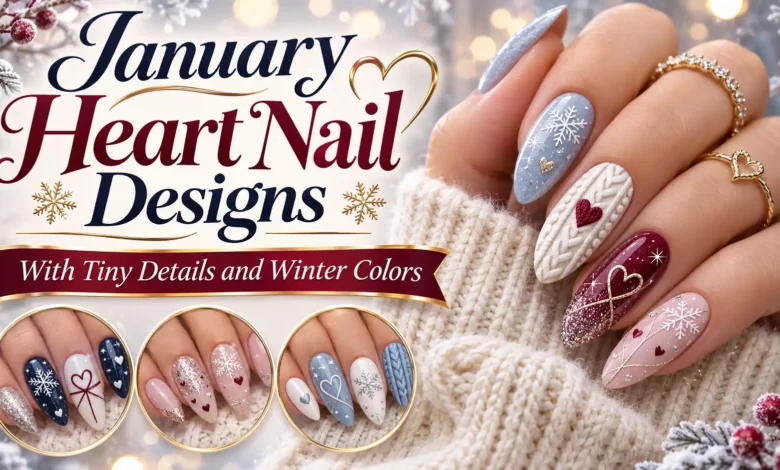
For January heart nail designs with a winter feel, try an ivory heart on slate blue, a white heart beside two tiny dots on gray, or one icy-blue heart against garnet. The base color does most of the work; the heart can stay small enough to notice only when you reach for your coffee.
These five designs pair a specific heart placement with one extra detail—or a deliberate lack of one. Choose the reference you like, then use the salon wording and short-nail adjustments below to make it fit your own hands.
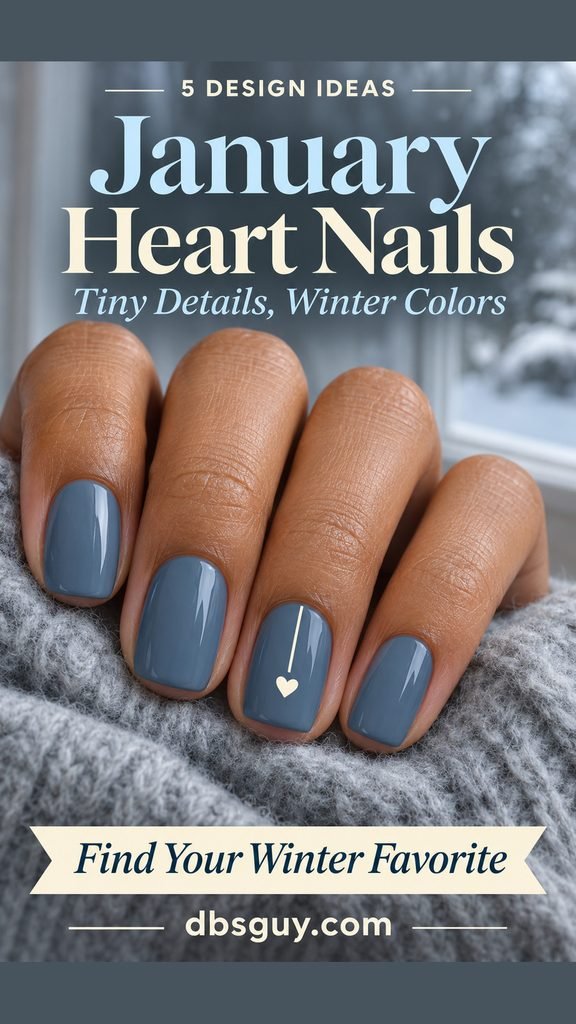
The images are AI-generated nail-art concepts for dbsguy.com. They illustrate suggested colors and placement, rather than real salon work or tested polish results.
Choose the Detail Before You Choose the Polish
A tiny heart needs a clear shape more than it needs a lot of space. Look for two readable lobes and a point, with enough plain polish around the motif to separate it from the nail edge.
- For a crisp, drawn detail: choose the slate-blue heart and pinstripe.
- For a playful accent on short nails: try the dove-gray heart and dots.
- For the strongest color contrast: compare garnet with icy blue.
- For a warm neutral manicure: choose the cream-and-cocoa stitched outline.
- For a small metallic accent: save the midnight-blue silver-heart crescent.
The winter associations here are styling suggestions. You can wear hearts in any month, and you do not have to replace a favorite warm shade with blue just because it is January.
1. Slate-Blue Nails With an Ivory Heart and Pinstripe
This design gives a single accent nail two different marks: a small filled heart near the base and a fine line running above it toward the tip. The gap between them matters. It lets you read the heart and stripe separately instead of seeing one long symbol.
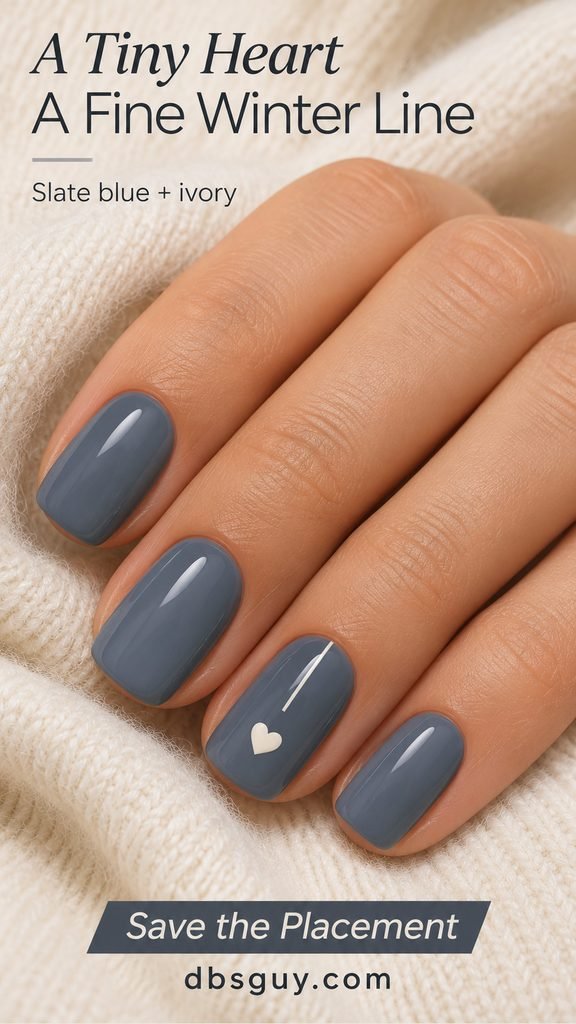
Use a muted blue with visible gray in it, then choose ivory with enough coverage to stand out. Keep the remaining nails plain. That uninterrupted blue is what makes the narrow stripe noticeable.
Salon brief: “Glossy slate blue, with one ivory heart low on each ring nail and a slim vertical ivory line above it. Please leave blue between the two marks and keep the artwork clear of the skin.”
On extra-short nails, shorten the stripe first. A small heart plus a short dash keeps the arrangement recognizable without needing more length. If the line becomes as wide as the heart, ask for a finer stroke rather than making the heart larger.
Also Read: January Nail Art for Short Nails With Small but Noticeable Details.
2. Dove Gray With a White Heart and Two Snow Dots
A little cluster at the tip-side corner gives gray nails a softer finish. Put the heart closest to the corner, then let two separate white dots trail inward on a diagonal. They suggest a few specks of snow without requiring a detailed snowflake.
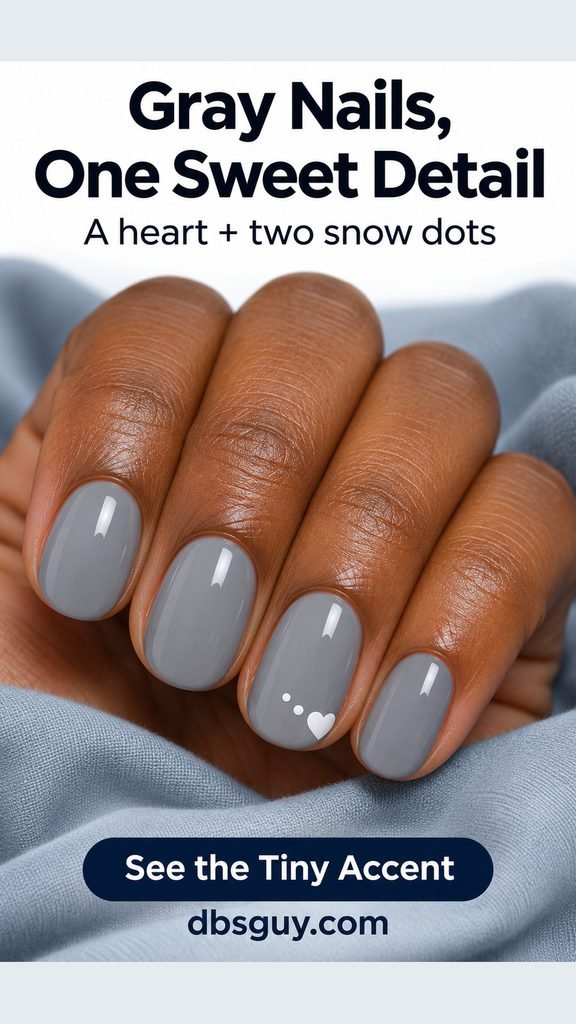
The heart should be larger than either dot. If all three marks are similar in size, the accent can start to look like scattered polka dots. Ask for a visible gray border beside the heart, even if that means moving the whole cluster slightly toward the center.
This is a useful reference for short oval nails because the artwork uses one corner rather than a full-length pattern. Choose a gray that is dark enough for white to show clearly; a nearly white base would soften the contrast considerably.
For a home adaptation, compare a small flat white heart decal with the width of your actual nail before applying it. Leave room for the two dots instead of choosing a decal that fills the corner. Follow the decal and polish instructions for placement and finishing.
Also Read: Easy Nail Art for January Using Dots, Lines and a Little Shimmer.
3. Garnet Nails With One Icy-Blue Corner Heart
Deep wine red and pale blue make a sharper pairing than two neighboring pastels. The garnet gives the manicure depth, while one blue heart adds a cool spot of color. There is no need for glitter, an outline, or another accent nail.
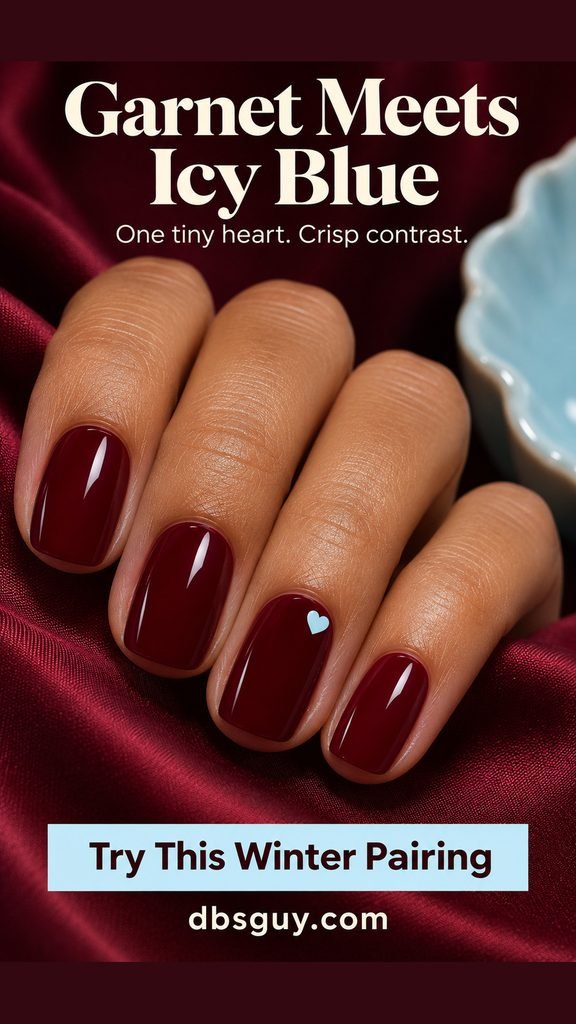
Place the heart near the ring nail’s tip-side corner, leaving wine red around its entire outline. The reference uses a rounded-square shape, but the placement can move inward on a narrow oval nail. A heart squeezed against the side edge can lose one of its lobes.
Check the two colors together on a finished swatch. Choose a garnet that still shows its red tone in ordinary indoor light and a pale blue that reads as blue beside it. A very sheer blue may not give the clear contrast shown in the concept.
Ask for: “Deep garnet on every nail, with one small, opaque icy-blue heart toward the outer tip of each ring nail.” If you already wear burgundy often, this is a small design change that lets you keep the color you enjoy.
Also Read: What Nail Color Works for January? Start With Your Winter Wardrobe.
4. Cream Nails With a Cocoa Stitched Heart
Here, the detail comes from the broken outline. Short cocoa-colored dashes form a heart on a creamy base, with cream showing through its center. The stitched effect is painted flat; the reference does not call for thread, raised gel, or a sweater-texture finish.
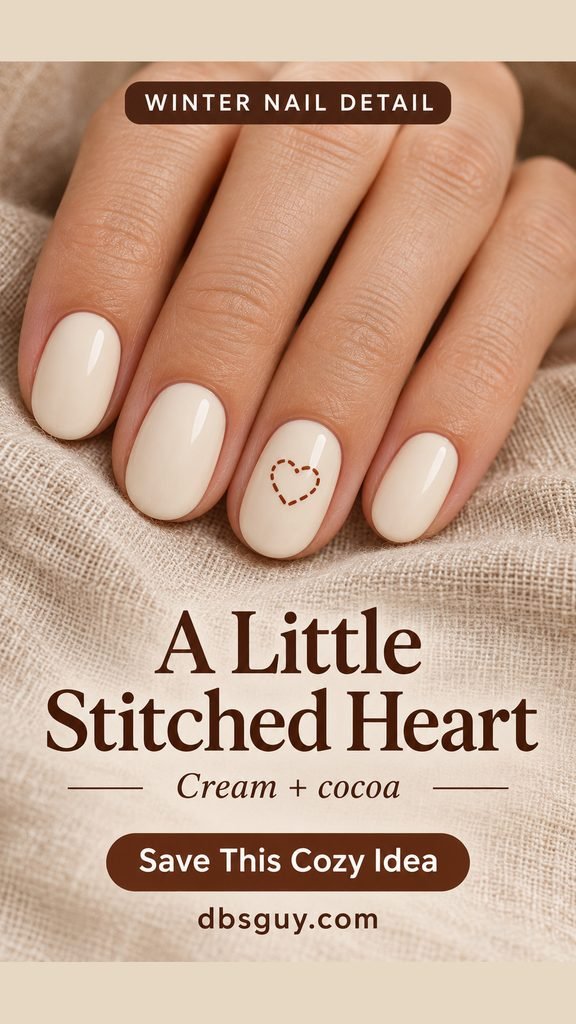
Choose this if you like warm neutrals but want something more specific than a plain accent nail. The slightly irregular dash lengths can give the outline a drawn quality, provided the overall heart shape stays clear.
Show your artist the gaps between the stitches. A continuous brown outline would create a different look, and thick dashes can close those gaps. Keep the rest of the nails undecorated so the small outline remains the only pattern.
This is the most detailed linework in the group. On a very small nail, ask whether fewer, clearly separated dashes would fit better. Making each mark microscopic can turn the heart into an unreadable brown patch. A suitably sized flat dashed-heart decal is another option if you find one that follows your nail’s curve.
Also Read: January Nail Color Ideas for When You’re Torn Between Soft and Moody.
5. Midnight Blue With a Tiny Silver-Heart Crescent
Three little silver hearts follow a shallow curve across the lower part of one ring nail. The dark base separates the shapes and makes their metallic finish easy to see. Keep a band of navy between the hearts and the cuticle.
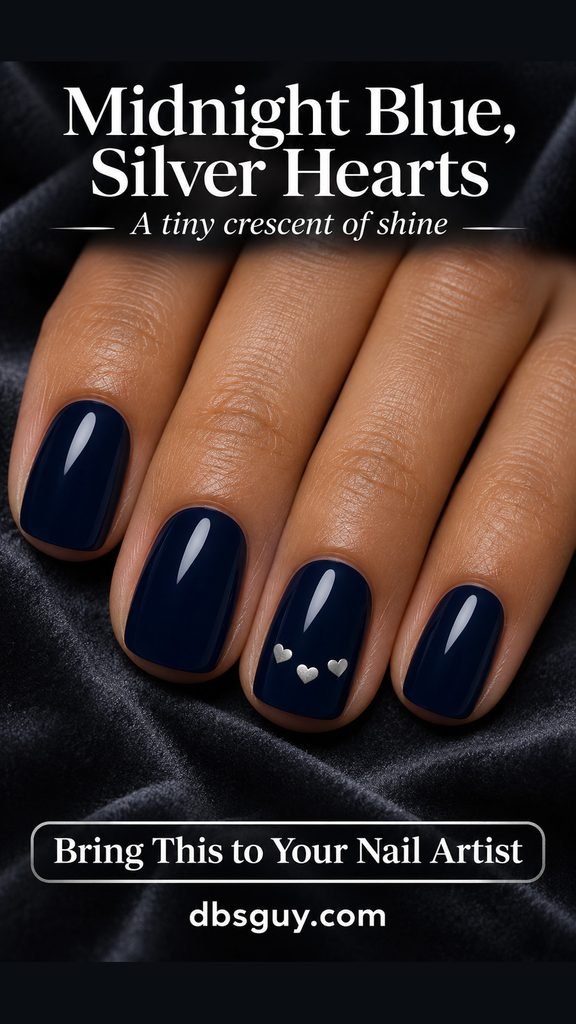
The reference shows a flat metallic appearance. Look for thin nail-art decals if you want that effect; raised heart charms would change both the profile and the look of the manicure. Check that all three shapes fit entirely on the polished nail with space between them.
Before committing to the arrangement, compare the decal sizes against your ring nail. If three hearts look crowded, use two smaller hearts or one central heart. Keep the shallow curved placement rather than stacking them up the length of the nail.
Ask to see the navy next to black if you want a distinctly blue result. The silver can stay bright against either, but the base color will change the overall palette. Leave the other nails plain so the crescent remains a small accent.
Also Read: January Heart Nails That Feel Sweet Before Valentine’s Day.
Take a Clear Reference to Your Appointment
Save the design that answers your main preference: a line, a corner cluster, a contrasting color, a dashed outline, or metallic shine. Then tell your artist which details matter most.
- Your usual length and shape: the design can be adapted to those rather than copying the model’s proportions exactly.
- The decorated nail: these concepts concentrate the artwork on one ring nail per hand.
- The placement: say “near the tip-side corner,” “low on the nail,” or “centered,” and point to the reference.
- The finish: specify glossy color and flat artwork if you want the appearance shown.
Approve the real polish colors before the artwork begins. A concept image communicates an idea; lighting, coverage, and the polish itself can make the finished colors look different.
Keep the Small Details Clear
For an air-dry lacquer version, follow the directions for your base, color, decals, and top coat. Apply thin color layers and let them dry as directed before adding artwork. There is no single drying time that fits every polish, and extra coats can obscure a delicate design.
Keep artwork on the nail rather than extending it onto surrounding skin. The American Academy of Dermatology’s nail-care guidance advises leaving cuticles intact, moisturizing after handwashing, and wearing gloves for dishwashing or cleaning.
January Heart Nail Questions
Which design is the simplest starting point?
The garnet-and-blue design has only one motif to place. A correctly sized filled-heart decal avoids drawing the shape by hand. The stitched outline requires more detailed spacing, while the slate-blue design adds a line that needs a steady stroke.
Can these ideas work with regular nail polish?
Yes—the color pairings and flat painted details do not depend on a magnetic or sculpted effect. Look for suitable air-dry colors and compatible nail-art products. If your salon proposes gel, ask about that service separately; the reference describes the appearance, not a required product system.
How small should a tiny heart be?
Small enough to leave plain color around it, but large enough that you can distinguish its lobes and point on your own nail. Compare the shape at normal viewing distance. If it reads as a dot, improve the contrast or simplify the surrounding detail before shrinking it further.
What makes heart nails feel wintry instead of strongly Valentine-themed?
In these concepts, slate, gray, garnet, cream, and midnight blue set the palette, while the hearts occupy a small part of the manicure. You can keep that balance through January, then add more pink or red later if you want a brighter February look.