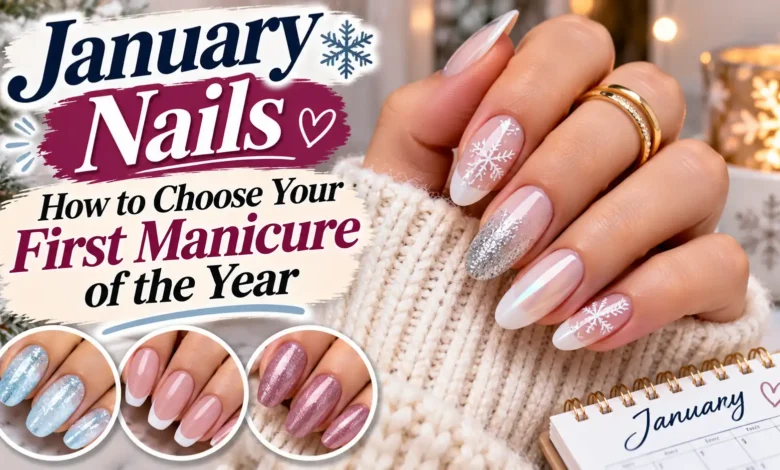
Your first January manicure is easier to choose when you settle three things first: the length you can comfortably wear, how you want to change or remove the polish, and the color you would enjoy seeing through an ordinary week. Then decide whether the set needs any nail art.
If you feel stuck, a short shape close to the one you already wear, a sheer rose polish, and a glossy finish make a useful starting point. Prefer a stronger color? Keep the same practical length and choose deep berry. A fresh start can still look like you.

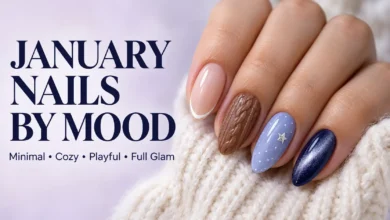
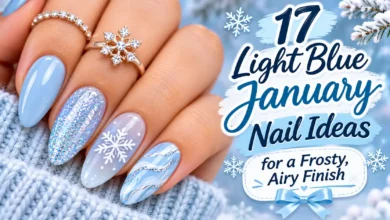
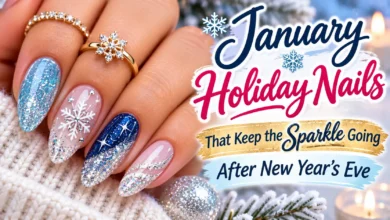
The images are AI-generated manicure concepts. They illustrate color, shape, and finish; they do not document salon work or wear tests. The cover swatches are color references, not a guide to how long your nails should be.
Start With the Week You Actually Have
Think about the days after your appointment: returning to a keyboard, fastening a child’s coat, putting on gloves, working out, or getting ready for a dinner. Which of those activities already feels awkward when your nails get longer?
Use that answer to set your limit before browsing more pictures. If your current length works, keep it for this appointment and make the change through color. If you want extra length, ask to see the proposed length on one nail before committing to the whole set.
Check any workplace or activity requirements that apply to you, too. A reference image cannot tell you whether that shape or service fits your routine.
- You want to repaint whenever you feel like it: start by considering regular nail polish.
- You want a subtle change: choose a sheer color with a soft transition into your natural nail.
- You want one visible winter detail: consider a narrow powder-blue French edge.
- You want noticeable color without artwork: try a solid berry shade in your usual length.
Set the Length, Then Describe the Shape
“Short” means different things to different people. Show your artist where you want the nail to end relative to your fingertip. Mention a task that matters to you, such as comfortable typing, instead of relying on the word alone.
For the outline, a squoval keeps a gently squared end with rounded corners. A short oval has a more continuously rounded tip. A soft square preserves a clearer straight edge while taking the sharpness off the corners. The examples below show these differences at everyday lengths.
Your available nail length and natural outline affect what can be shaped comfortably. Ask what is realistic on your nails now. If a saved almond set is much longer than you want, you can borrow its color without copying the entire silhouette.
Choose a Polish Service You Can Maintain
A glossy pink nail in a picture does not reveal which products created it. Choose the service separately from the look, and ask how it will be removed before it goes on.
- Regular polish: a useful option if you like changing colors at home. Allow the drying time directed by the formula; avoid scheduling a manicure immediately before an activity that puts pressure on fresh polish.
- Gel polish: a lamp-cured service worth discussing if you want to keep one color and can arrange proper removal. Ask which system the salon uses and what its aftercare involves.
- An overlay or extensions: discuss these when you specifically want added structure or length. Ask what the service includes, how maintenance works, and whether your nails are suitable for it.
There is no single wear-time promise that fits every product, application, and person’s hands. Build the removal or maintenance appointment into your plans rather than choosing a service only because a picture looks shiny.
If you already know you want extensions, these almond Gel-X designs with icy tips and soft shimmer offer more specific references to discuss with your artist.
Narrow the Color Down Beside Your Own Hand
Pick two swatches and hold them beside your fingers near a window. Include the sleeve of a coat or sweater you wear often. A color can feel very different against camel wool than it does against a bright salon display.
For sheer pinks, compare how rosy, peachy, or milky each sample looks against your nail bed. You do not need a perfect skin-tone match. You need to like the amount of contrast. Ask how many coats are on the display swatch, since another coat can change the coverage.
For a dark shade, check that you can still see the color you want. If berry reads almost black to you, choose a lighter red-purple sample. For blue tips, compare the blue against the intended base so you can judge the whole combination.
These are styling choices, not rules about which colors belong on particular skin tones. Your own hand and the lighting you live in are more useful references than a shade name.
Use One Reference to Make a Complete Request
The three examples below put length, shape, color, and finish together. Choose the one closest to your needs, then change the part that does not fit. Each request is a design brief; confirm the polish service separately.
Sheer Rose on Short Squoval Nails
This is a useful choice if you want softly defined nails without a strong block of color. The reference leaves a faint natural edge visible through the rose tint. Its gently squared tips have rounded corners, with only a little length beyond the fingertips.

What to ask for: “Please keep my nails short and squoval, with softened corners. I’d like a translucent rose pink with a little natural nail still visible, finished glossy. Can we check the coverage on one nail first?”
If your priority is a subtle grow-out line, compare the base color closely with your own nail bed. A sheer shade may make the contrast less noticeable, but it cannot stop growth or prevent chips. Choose a more opaque rose if seeing the natural edge bothers you.
Powder-Blue Micro French on Short Rounded Nails
Choose this when you want a clear January detail while keeping most of the nail sheer. The reference uses short, softly rounded tips with a fine powder-blue line following the free edge. The small amount of blue gives the set its winter character.

What to ask for: “I’d like short, softly rounded nails with a sheer pink base that suits my nail bed. Please keep the powder-blue French edge very narrow. I’d like to see one finished tip before we repeat it.”
The width of that line matters more than an exact measurement. On a tiny nail, ask your artist how fine they can make it while keeping the curve clear. If there is little room for a tip, use the sheer-rose option and save the blue edge for a later set.
If you prefer doing your own details, the January nail-art guide for beginners starts with simpler marks to practice before tackling a curved French line.
Deep Berry on Short Soft-Square Nails
A deep berry manicure is a good fit when you enjoy a rich color but do not want to choose or maintain a detailed design. Here, the wine shade has a visible red-purple cast, a glossy surface, and a short, softly squared outline.
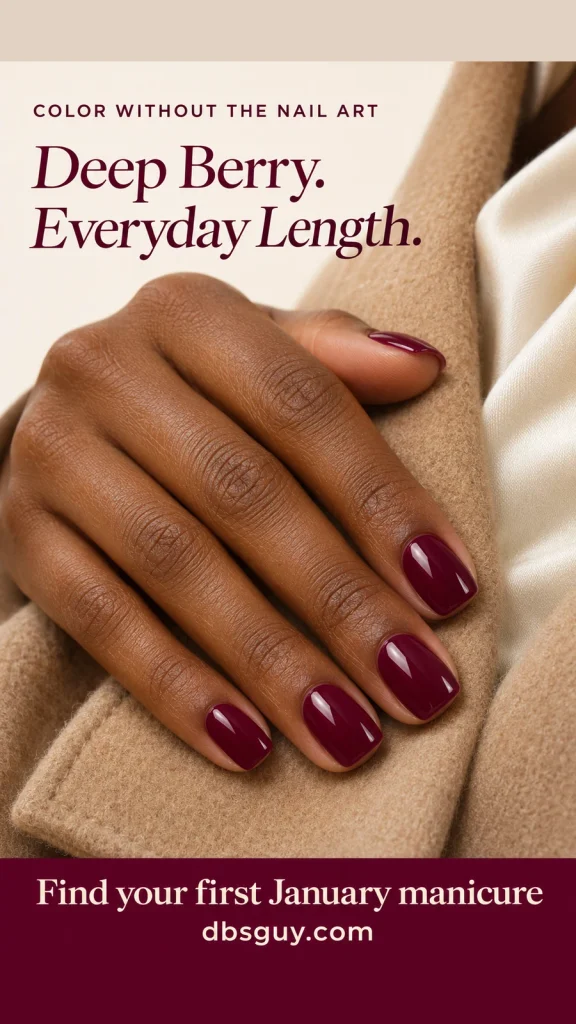
What to ask for: “Please keep a short soft-square shape, with the corners gently rounded. I’d like an opaque berry-wine shade that still looks red-purple in daylight, with a glossy finish and no nail art.”
Check the swatch away from the brightest salon light. Dark polish creates a stronger contrast with the natural nail, so chips and grow-out may stand out more than they would with a sheer shade. Choose it because you love that depth and are comfortable refreshing or removing it when needed.
Confirm the Appointment Details Before You Book
Send one reference and describe the changes you want. A clear message helps the salon confirm the right appointment and quote:
“I’d like this color and finish at my current short length, with a soft-square shape. I currently have [regular polish / gel / an enhancement / bare nails]. Which service would you recommend, and what are the total cost, appointment length, and removal or maintenance arrangements?”
Ask whether the quote includes existing-product removal and any French-tip charge. If you are choosing a simpler version of the picture, say exactly which detail you are keeping. Show the artist your chosen length and check one color sample before the full set is painted.
Give the New Manicure a Sensible Start
Keep cuticle care gentle, and ask how salon tools are cleaned between clients. Moisturize your nails and surrounding skin, especially after polish removal. Avoid covering brittle or damaged nails with an enhancement just to hide the problem.
For gel services, the American Academy of Dermatology’s gel-manicure guidance recommends broad-spectrum, water-resistant SPF 30 or higher on your hands before curing, or dark opaque gloves with the fingertips removed. Do not pick off gel; arrange proper removal. Gel can contribute to brittleness, peeling, and cracking, so seek a dermatologist’s advice for persistent nail problems or unusual changes.
Follow the care and removal instructions for the products actually used. A polish color is an aesthetic choice, and a fresh-looking manicure does not establish that a nail is healthy.
Questions About Your First January Manicure
Do January nails have to be pale blue or white?
No. Blue and white can suggest winter, but rose and deep berry also work with a January wardrobe. Keep a favorite color if you enjoy wearing it. The calendar does not require a particular palette.
Do I need gel to get one of these looks?
The references describe a look, not a required product system. Ask whether your salon can create the color and finish in regular polish. If you choose gel, make that decision with its care and removal needs in mind.
What if my nails are different lengths?
Ask your artist how to create a comfortable, balanced outline with the length you have. You can keep the color idea even if the shape needs adapting. Added length is a separate decision.
What should I do if I still cannot choose?
Keep your usual length and shape, then compare sheer rose with one color you already love. Decide which you would rather see while getting dressed tomorrow. Save the other swatch for your next manicure.