I Just Learned The Real, Traumatizing Stories Behind These 10 Famous Fairy Tales, And I Think My Childhood Is Officially Ruined

Almost everyone grows up with the polished versions of the classic fairy tales: the animated films, the picture books, the bedtime retellings with every rough edge sanded off. What fewer people realise is that most of these stories were not written for children at all. They were published centuries ago, for adult readers, in a world with very different ideas about justice, danger and happy endings.
When you go back to the earliest printed versions — the Grimms’ collection of 1812, Hans Christian Andersen’s tales of the 1830s and 40s, and the Italian and French storytellers who came before them — the same beloved characters keep walking into much darker stories. A quick reader note before we begin: a few of these originals involve violence and adult themes, described here plainly and briefly, the way literary historians describe them.
1. Cinderella
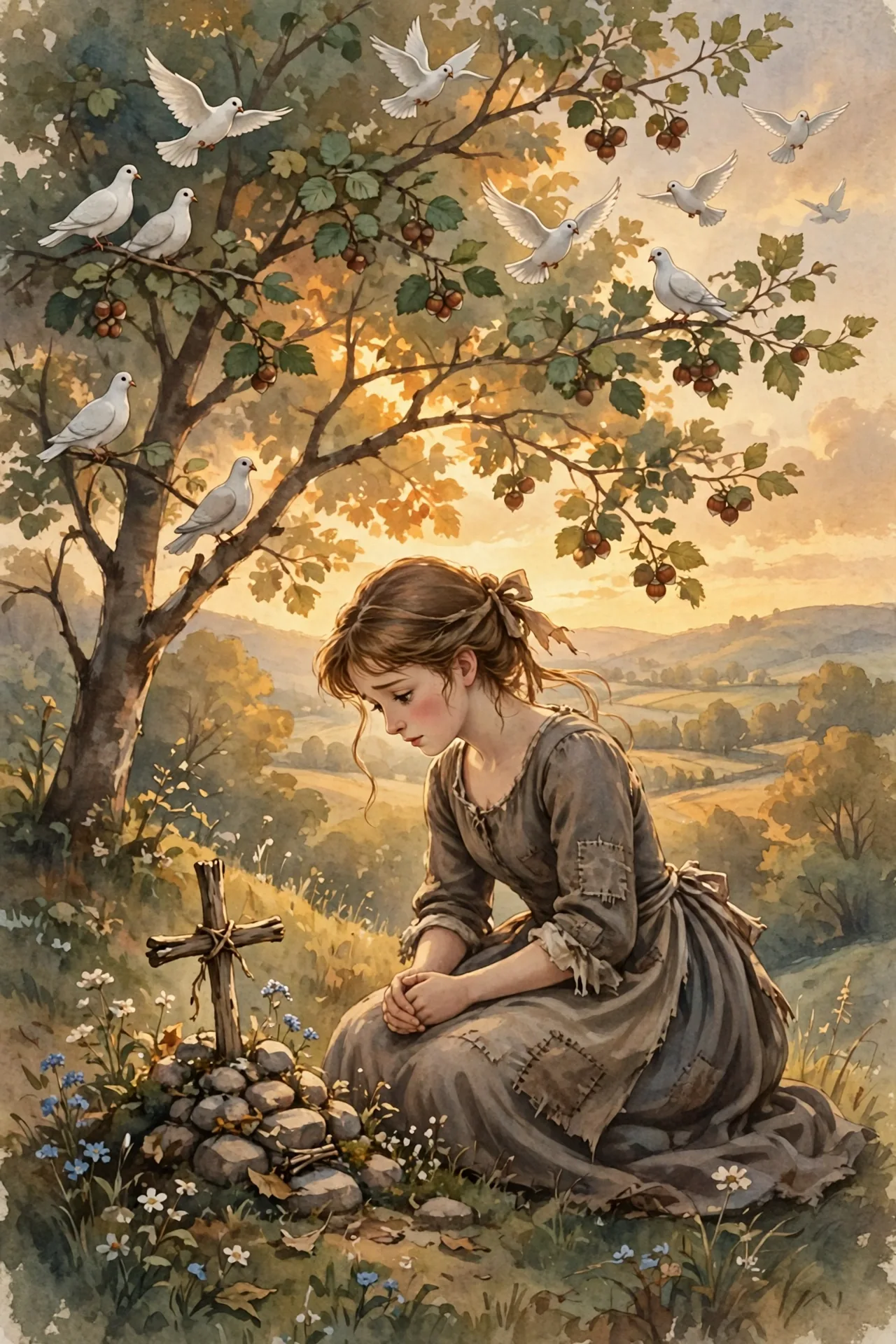
In the Brothers Grimm version, “Aschenputtel” (1812), there is no fairy godmother. Cinderella plants a hazel branch on her mother’s grave, waters it with her tears, and receives her dresses from a tree and a flock of white birds — who also sort her lentils and, eventually, act as instruments of justice.
Determined to fit the golden slipper — gold, not glass — the two stepsisters cut pieces off their own feet: one slices off a toe, the other a piece of her heel, encouraged by their mother. The deception is exposed both times by doves singing about the blood in the shoe. At Cinderella’s wedding, those same birds peck out the sisters’ eyes, leaving them blind for life. It is a story about grace, but the grace is strictly one-directional.
2. Snow White
In the Grimms’ first edition of 1812, the jealous queen is not a stepmother at all — she is Snow White’s biological mother. (The Grimms softened this to a stepmother in later editions.) She orders a huntsman to kill the girl and bring back her lungs and liver as proof, which she then has salted and cooked, believing she is eating them.
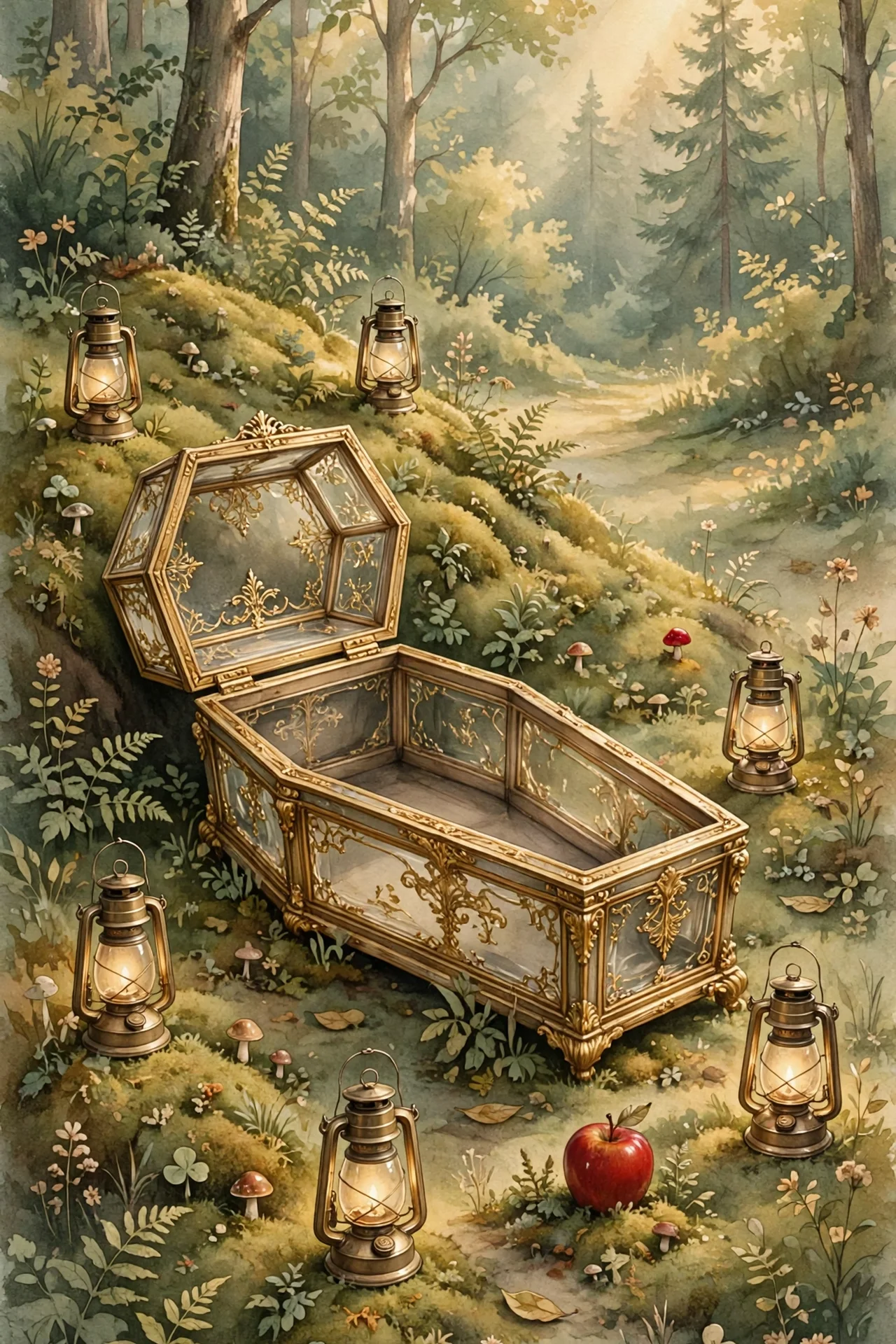
The ending differs, too. There is no kiss: servants carrying Snow White’s glass coffin stumble, and the jolt dislodges the piece of poisoned apple from her throat. And the queen’s punishment is one of the grimmest in the whole collection — at the wedding, she is forced to step into red-hot iron shoes and dance until she drops dead.
3. Rapunzel
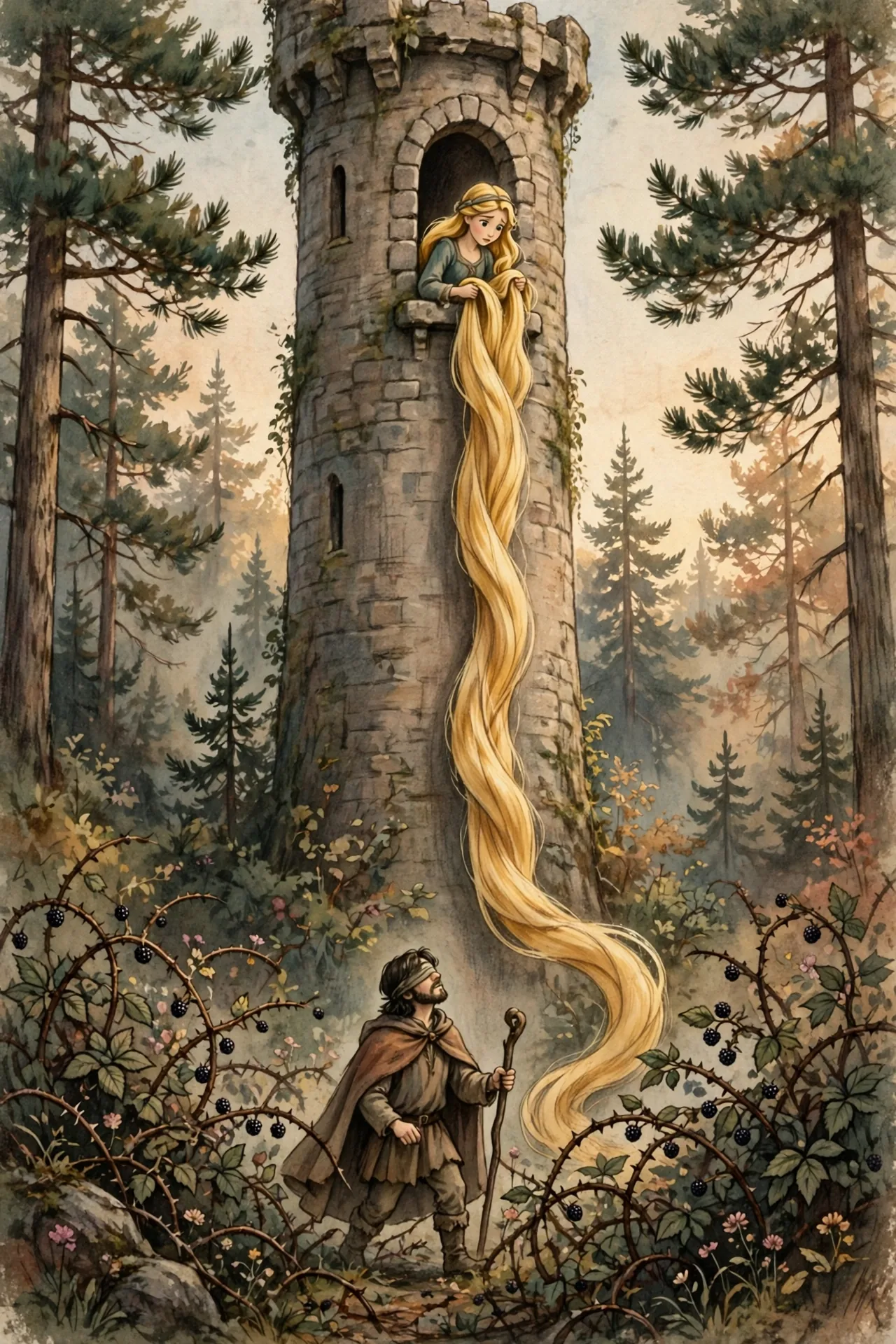
The Grimms’ Rapunzel does get a prince — but the story does not end at the tower window. When the sorceress discovers the visits, she cuts off Rapunzel’s hair, banishes her to a wilderness, and uses the braid as bait. The prince climbs up, finds the sorceress waiting, and in despair throws himself from the tower.
He survives the fall but lands in thorns that blind him. He wanders sightless for years — while Rapunzel, in exile, gives birth to twins. Only when the two finally find each other do her tears fall into his eyes and restore his sight. The reunion is genuinely moving, but it is earned through years of suffering the cartoon version simply deletes.
4. The Little Mermaid
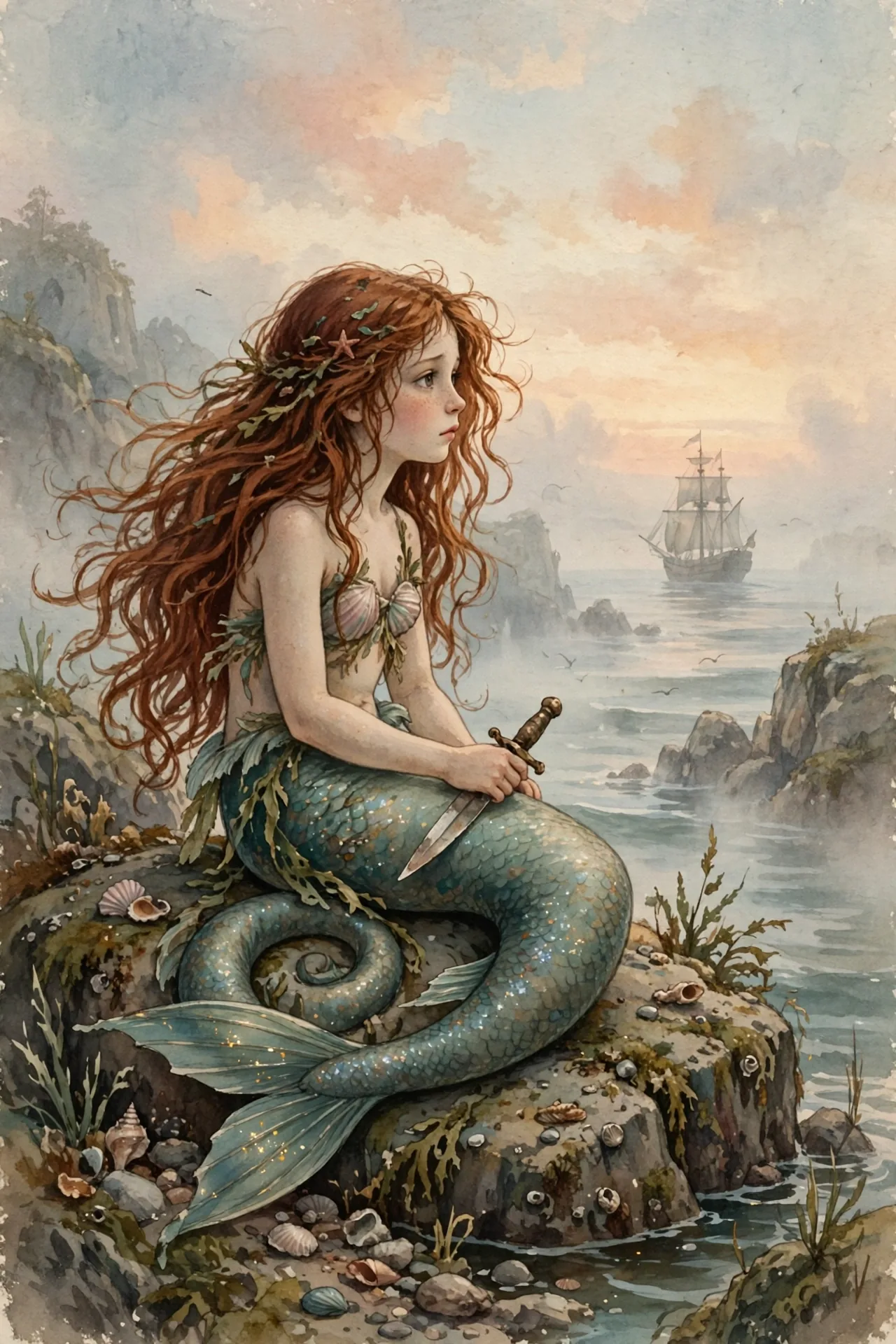
Hans Christian Andersen’s 1837 original is less a romance than a story about the price of a soul. The sea witch’s bargain costs the mermaid her voice in the most literal way — her tongue is cut out — and her new legs come with a permanent condition: every step feels like walking on sharp knives.
The prince marries someone else. The mermaid’s sisters rise from the sea with their hair shorn, having traded it for a knife: if she kills the prince before dawn and lets his blood fall on her feet, she can live. She refuses, throws herself into the sea, and dissolves into foam. Andersen grants her one sliver of hope — she becomes a “daughter of the air,” with the chance to earn an immortal soul through good deeds. It is beautiful, and it is absolutely not a wedding.
5. Mulan
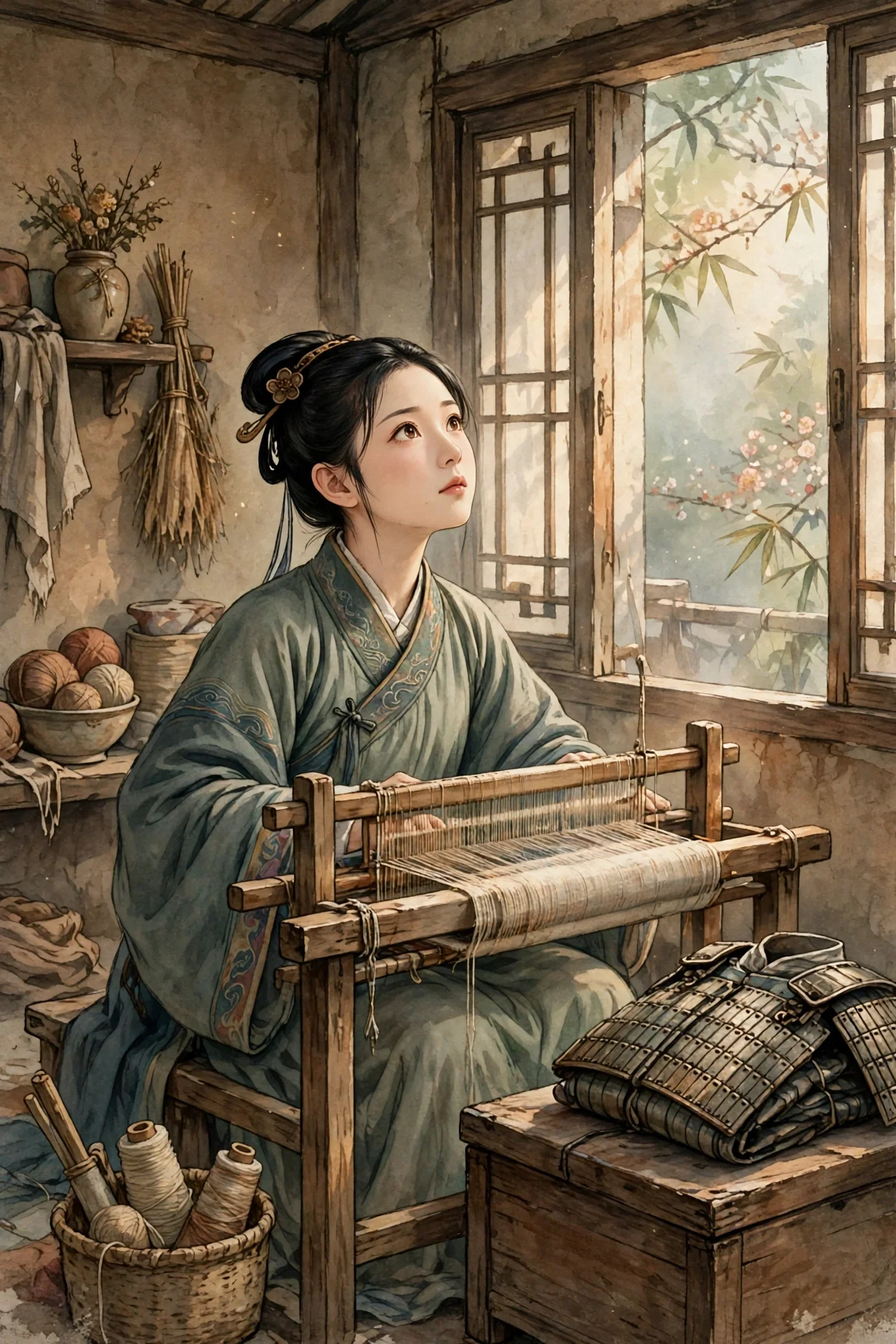
The earliest account, the “Ballad of Mulan” from roughly the fifth or sixth century, actually ends well: Mulan serves in her father’s place, refuses honours, and comes home to astonished comrades. The darkness arrives in a later retelling.
In Chu Renhuo’s 1695 novel “Romance of the Sui and Tang,” Mulan returns from the war to learn her father has died and her mother has remarried — and that the khan has summoned her to enter his household as a concubine. Rather than submit, she takes her own life. The same heroine, two endings: the ballad’s homecoming, and the novel’s grim verdict on what the world offered a woman who had saved it.
6. The Frog Prince
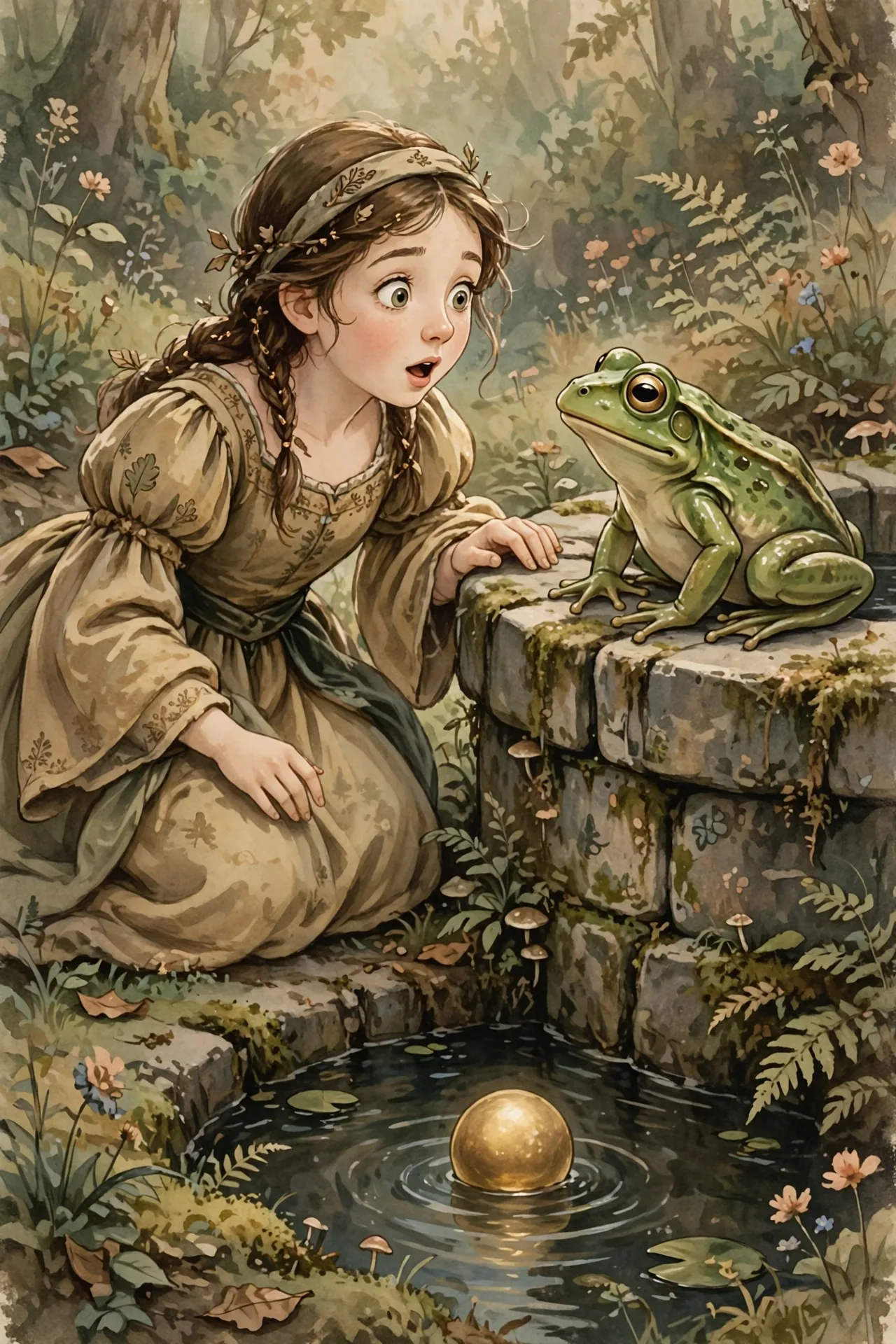
Forget the kiss — it was invented later. In the Grimms’ “The Frog Prince, or Iron Heinrich,” the princess is so repelled by the frog’s demand to share her room that she seizes him and throws him against the wall with all her strength. Only then does he become a prince.
The tale’s subtitle belongs to the prince’s servant, faithful Heinrich, who had three iron bands fastened around his heart to keep it from breaking with grief during his master’s enchantment. As the carriage carries the couple home, the bands snap one by one — from joy. The prince at first fears the carriage itself is breaking apart. It is one of the strangest and sweetest details in the whole Grimm collection.
7. Sleeping Beauty
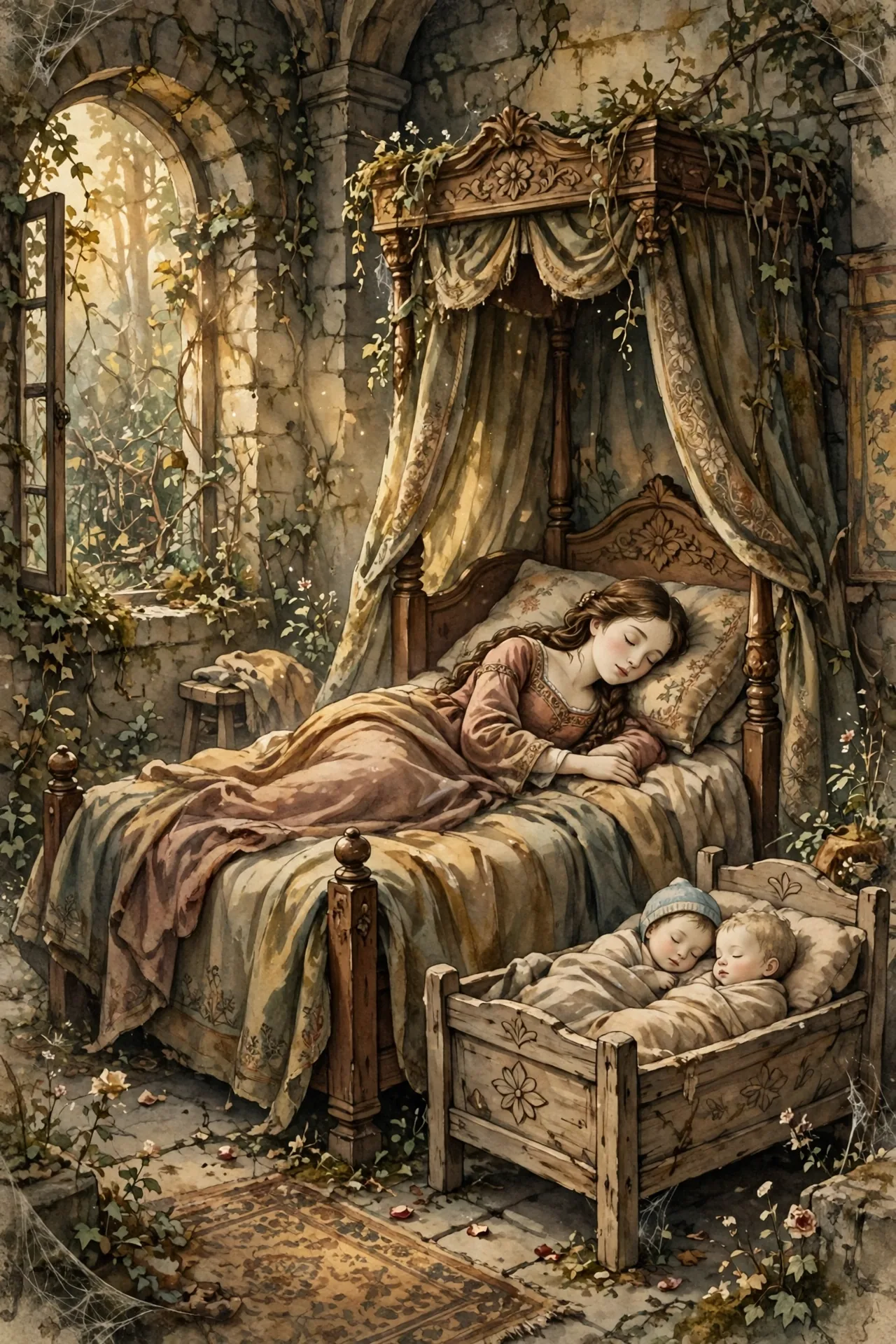
The earliest printed Sleeping Beauty is Giambattista Basile’s “Sun, Moon, and Talia,” published in his Pentamerone in 1634–36, and it is the darkest story on this list. Talia falls into a death-like sleep from a splinter of flax. A passing king finds her unconscious and assaults her in her sleep; she gives birth to twins, Sun and Moon, still sleeping — and wakes only when one of the babies, sucking at her finger, draws the splinter out.
It gets worse before it ends. The king’s wife discovers the children and orders the cook to serve them to their father at dinner; the cook hides them and substitutes lamb. The wife then tries to burn Talia in a great fire and is thrown into it herself. Basile’s moral, delivered with a straight face, is that fortune favours some people even in their sleep. Modern retellings kept the sleep and the prince, and quietly buried everything else.
8. Little Red Riding Hood
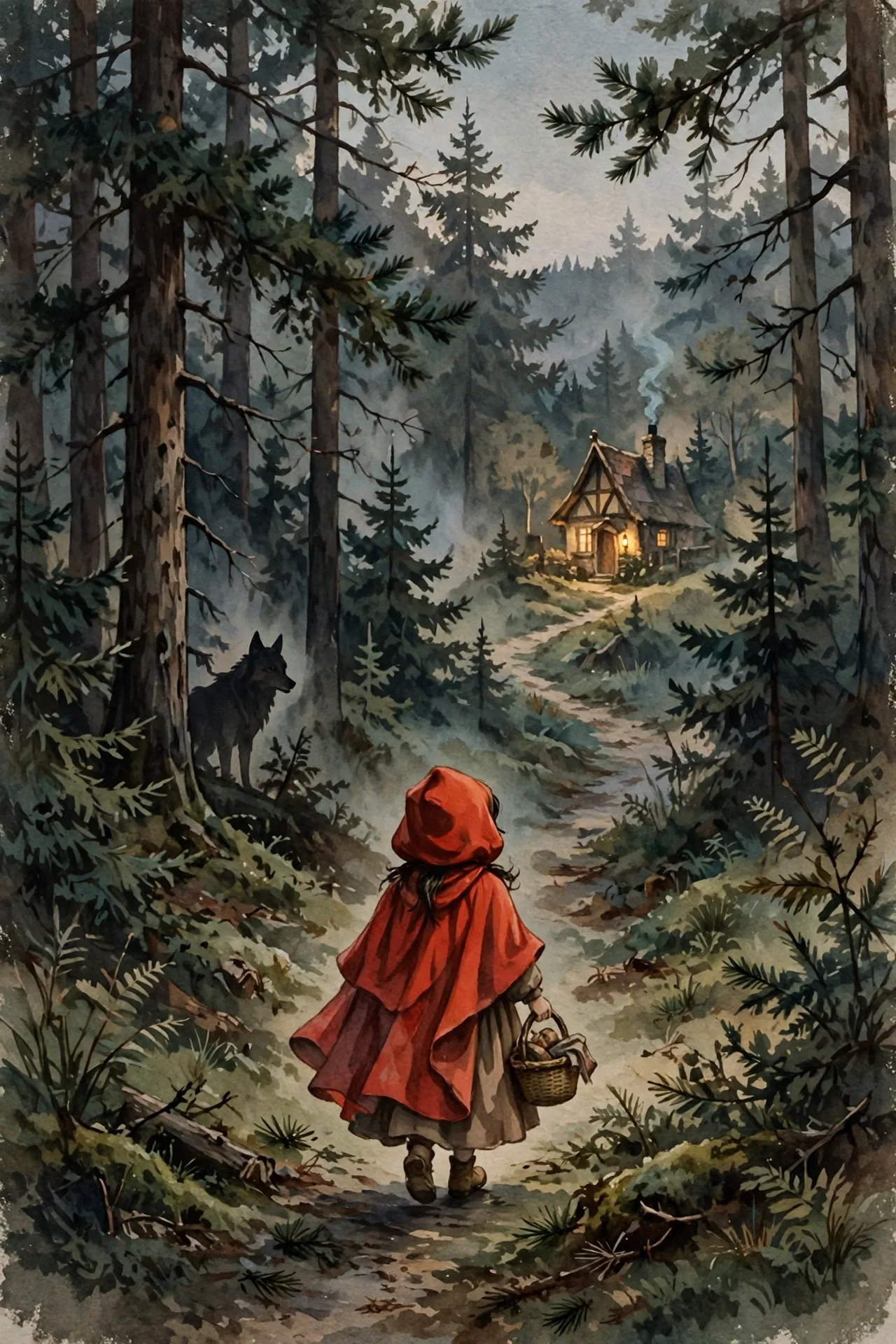
Charles Perrault published “Little Red Riding Hood” in 1697, and his version simply ends with the wolf eating the girl — grandmother first, then Red Riding Hood. No huntsman, no rescue, no stones in the belly. Perrault then appended a moral in verse, warning young ladies that wolves come in many forms, and that the smooth-talking ones are the most dangerous of all.
The rescue readers know was the Grimms’ addition more than a century later (1812), along with a second episode in which an older, wiser Red Riding Hood and her grandmother outwit another wolf and drown him in a trough. In other words, the version with the happy ending is the remix; the original is a cautionary tale with no way out.
9. The Snow Queen
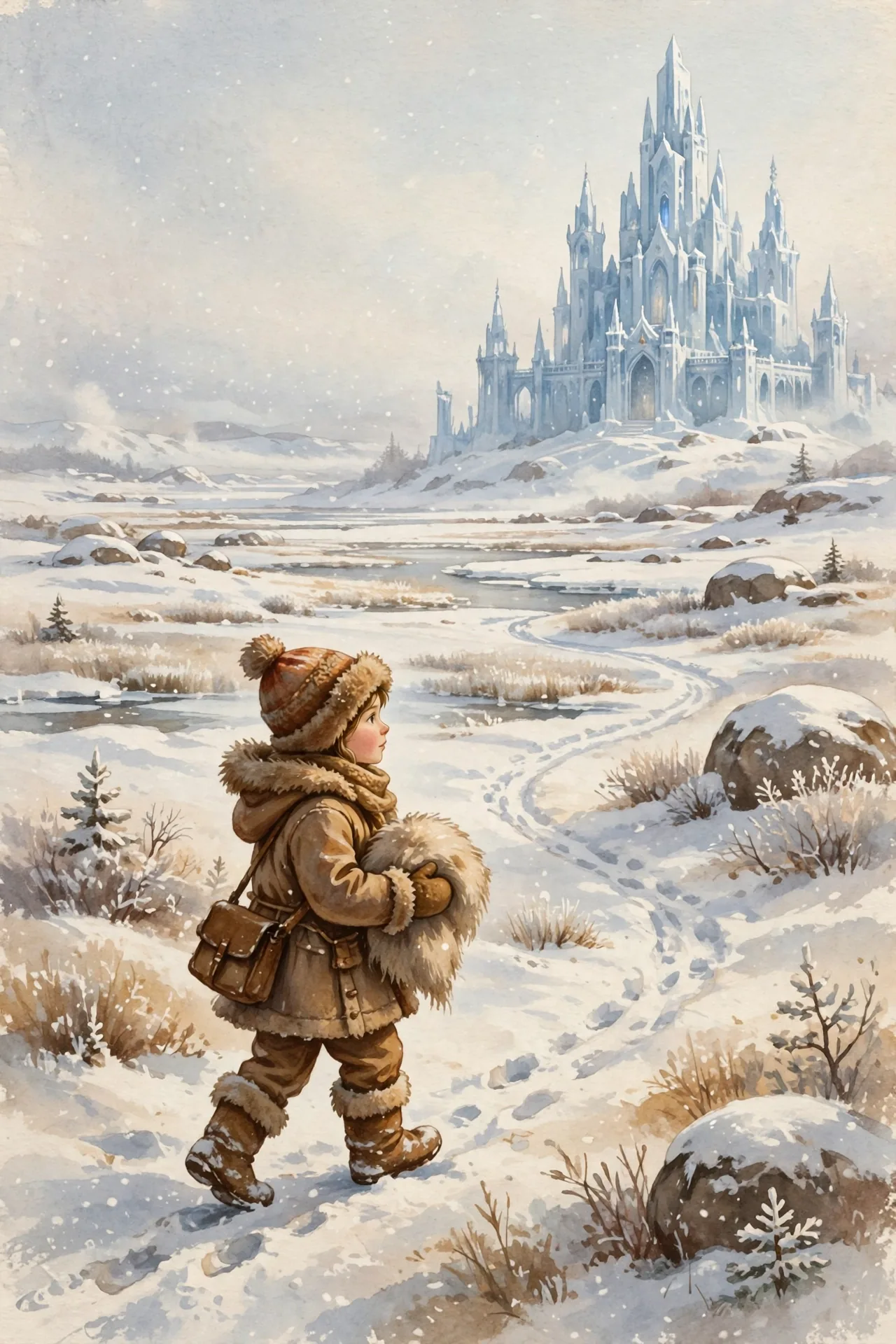
Andersen’s “The Snow Queen” (1844) is the loose inspiration for a certain animated phenomenon, but the original is a long, strange quest in seven stories. It begins with a troll’s magic mirror that makes everything good look small and everything bad look grand — and when the mirror shatters over the earth, its splinters lodge in people’s eyes and hearts.
A splinter reaches the boy Kai twice: one in the eye, one in the heart, which turns to ice. Cold and cruel now, he is taken by the Snow Queen to her palace in the far north. His friend Gerda journeys the length of the country — through a sorceress’s garden, a robber girl’s castle, and deep snow — to reach him, and it is her warm tears that melt the splinter from his heart. It is a story about a frozen heart thawed by devotion, and it is considerably weirder and sadder than its musical descendant.
10. Beauty and the Beast
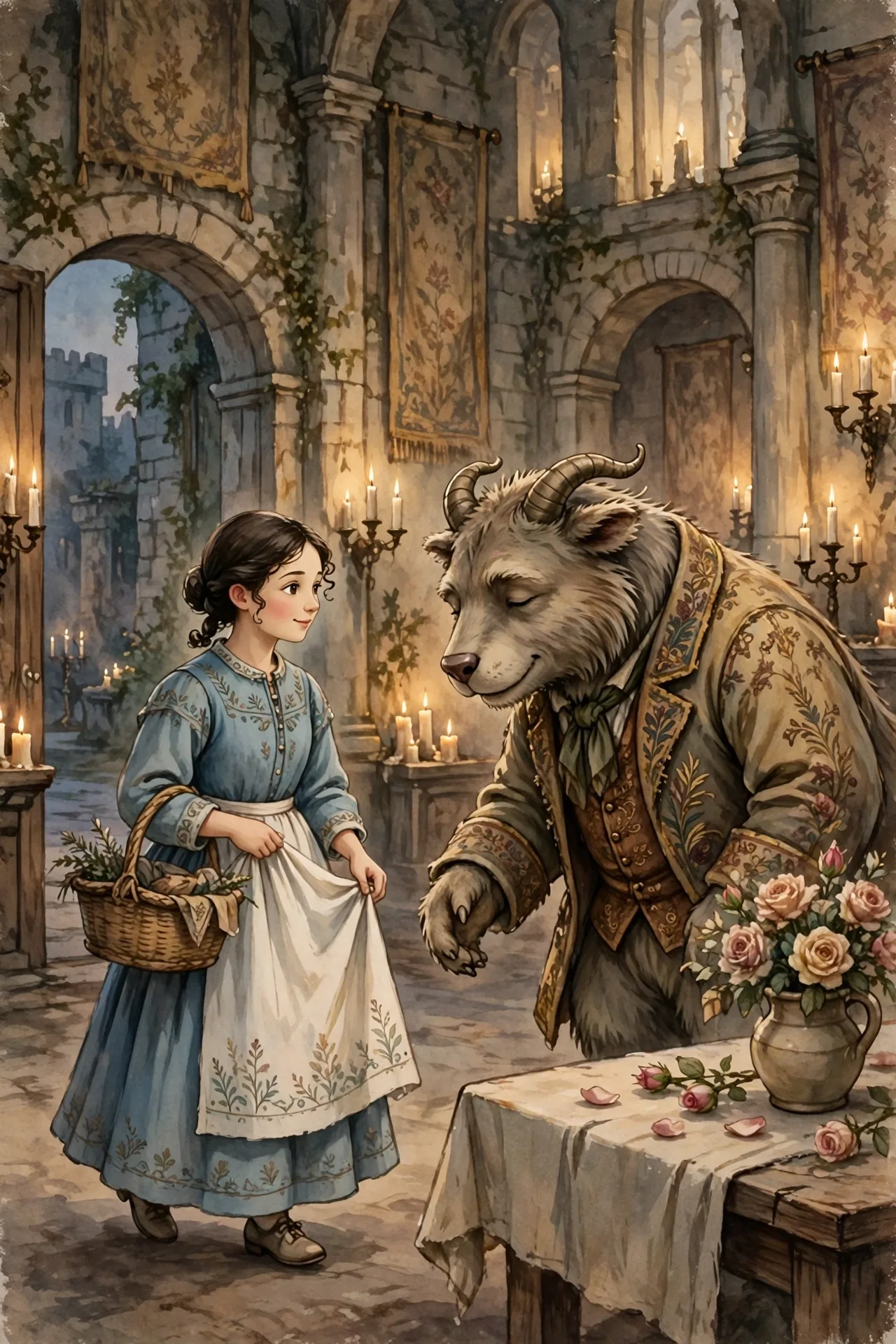
The original “Beauty and the Beast” was written by Gabrielle-Suzanne de Villeneuve in 1740 — a long, elaborate novella with fairy politics and hidden parentage — and then abridged into the familiar version by Jeanne-Marie Leprince de Beaumont in 1756. In both, the stakes are harsher than the films suggest: when Beauty’s father picks a rose from the Beast’s garden, the price demanded is his life, unless one of his daughters takes his place.
Beauty goes willingly, as a hostage in her father’s stead. And the climax is not a mob or a battle: she stays home longer than the week she promised, and returns to find the Beast lying in the garden, dying — of grief and hunger, having refused to eat in her absence. Her love saves him at the edge of death. The romance readers remember is real; what the originals add is how close it came to being a tragedy. If this dive into the older, stranger versions of famous books has whetted your appetite, you might enjoy my list of books to read next if you loved East of Eden — another set of classics with more going on beneath the surface than you might expect.