
You don’t need to diet to take care of yourself in college. Start with regular access to enough food, sleep you can protect, movement that fits your life, and help when food or body worries start taking over. Those are more useful goals than trying to keep your freshman body exactly the same.
The “Freshman 15” is a catchy label, not a prediction. A 2015 meta-analysis of first-year university students found an average gain of about 3 pounds across 22 studies involving 5,549 students, over an average of five months. Individual experiences varied. That older research does not establish what today’s students—or you—will gain.
These 13 approaches focus on making campus life more workable. Pick the one that solves your biggest problem first; you don’t need to start all 13 this week.

The visuals in this article are AI-generated concepts illustrating the ideas, rather than photographs of real students or documented results.
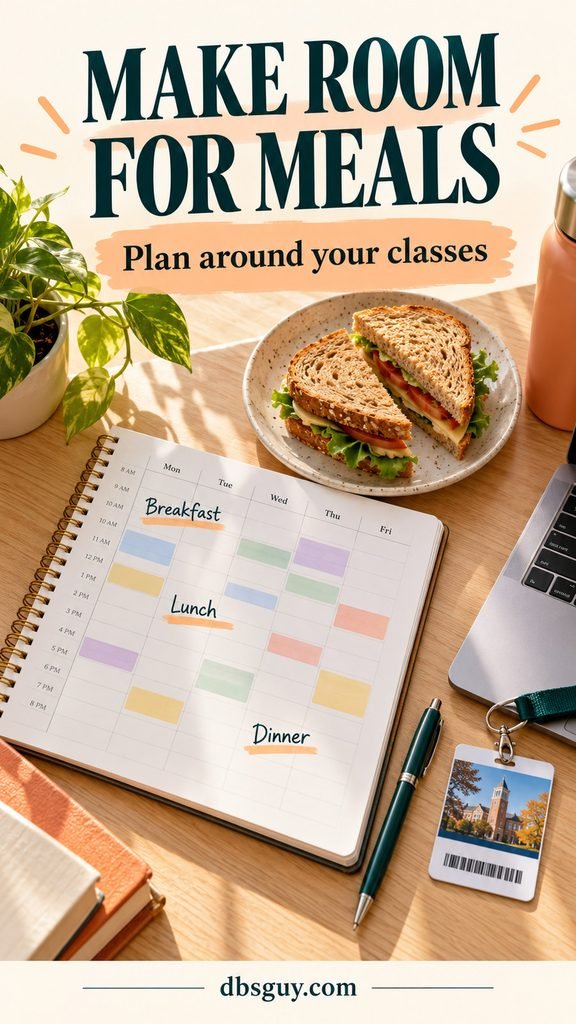
1. Put meals on the schedule alongside your classes
A dining plan won’t help much if your lab runs through lunch and the dining hall closes before your shift ends. Look at your actual week and identify where eating could get squeezed out.
For a day with back-to-back afternoon classes, that might mean lunch before the first lecture, a packed snack during the gap, and dinner after class. Save the hours of the dining locations you can realistically reach, including weekend hours.
Use reminders if you regularly forget to eat. They’re a way to make room for food, not a rule that tells you to wait when you’re hungry. If you have a clinician’s meal plan, use that as your starting point.
2. Build a satisfying dining-hall meal instead of defaulting to a side salad
Think about what you can add to make the available food into a meal. A useful starting combination is a carbohydrate food, a protein source, produce, and some fat or a sauce you enjoy. It’s a flexible reminder, not a portion limit.
Try rice with beans, broccoli, avocado, and dressing; pasta with chicken or tofu and vegetables; or a sandwich with fruit and milk or a fortified alternative. Beans can contribute both carbohydrate and protein, so you don’t need to fit every ingredient into one perfect category.
Eat enough to feel satisfied and have more if you need it. For allergies, celiac disease, or other dietary needs, ask dining staff about ingredients and preparation rather than relying on a dish’s appearance.

3. Choose a breakfast fallback before the rushed morning arrives
Your first meal doesn’t need a blender, an aesthetic bowl, or a trip across campus. Choose something you’ll actually eat and can keep on hand.
A banana rolled in a tortilla with sunflower-seed butter is one no-cook option. With reliable refrigeration, yogurt with oats and fruit is another. Buy a small supply, see what you use, and restock that instead of shopping for an imaginary version of your mornings.
If eating immediately after waking feels difficult, plan an accessible first eating opportunity a little later. The point is to avoid accidentally running through the morning on coffee alone, not to force breakfast at a particular hour.

Also read: 19 Dorm Breakfast Ideas: Microwave & No-Cook Mornings
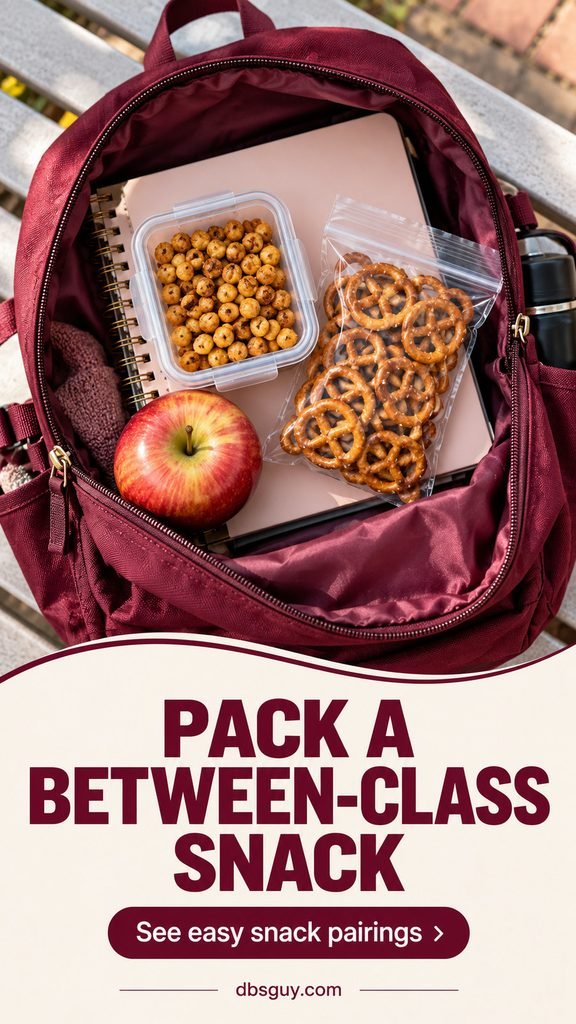
4. Pack a snack for the gap you already know is coming
A long lecture, a delayed bus, or a study session that runs over is easier to handle when food is already in your bag. Pick combinations you enjoy, such as pretzels with roasted chickpeas, an apple with nut or seed butter, or crackers with a shelf-stable protein option.
Keep one option in the bag you use most, then replace it after you eat it. Check labels for storage instructions and allergens; a snack that needs refrigeration isn’t automatically safe for an afternoon in a warm backpack.
A snack bridges a gap. If the gap becomes a missed meal, give yourself permission to get more food rather than trying to make one small snack last indefinitely.
5. Keep a real backup meal for when the dining hall is closed
This solves a different problem from a portable snack: you’re back in your room, you’re hungry, and the usual meal option is gone.
Without a fridge, keep tortillas, a small shelf-stable pouch of beans labeled ready to eat, a single-serving salsa cup, and whole fruit. Open the beans, spoon them onto a tortilla, add salsa, and eat promptly. Buy package sizes you can finish if you can’t refrigerate leftovers. With a fridge, a hummus-and-vegetable wrap is another easy backup.
Follow package storage directions. Keep a mini fridge at 40°F or below, checked with an appliance thermometer. FDA guidance says to refrigerate perishable foods within two hours, or one hour when the air temperature is above 90°F. A shelf-stable product may need refrigeration once opened.

6. Make water available without turning it into another assignment
Keep a bottle where you’ll notice it: beside your notebook, in an accessible backpack pocket, or on your desk. Choose an existing moment to refill it, such as arriving at the library or heading to lunch.
There isn’t one water-bottle quota that fits every student. Needs vary with activity, weather, health, and other factors; fluids also come from other drinks and food. Use meals and breaks as opportunities to drink, with extra attention during heat and activity.
Water isn’t a substitute for a meal or a way to ignore hunger. If you’ve been given a fluid limit for a medical reason, follow your care team’s advice.

7. Give caffeine a cutoff that protects your sleep
If afternoon coffee regularly leaves you awake at night, move it earlier or choose a caffeine-free drink. CDC sleep guidance recommends avoiding caffeine in the afternoon or evening.
Check amounts when they’re provided, including the container’s serving count. Coffee, energy drinks, pre-workout products, and some medications can all contribute caffeine. The FDA cites 400 milligrams per day as an amount not generally associated with negative effects for most adults—not a target or a personal guarantee of safety.
Individual sensitivity, medications, and health conditions matter. That adult benchmark isn’t guidance for minors; medical experts advise against energy drinks for children and teens. If you’re cutting back from daily use, reducing gradually may make withdrawal less unpleasant.

8. Make a sleep agreement your roommate can actually follow
“Let’s be considerate” is harder to act on than “After 11, calls move to the lounge and we use headphones.” Agree on lights, gaming, guests, and how either person can flag a problem. Ask an RA for help if the agreement keeps breaking down.
Work backward from the time you need to wake up, leaving room to fall asleep. CDC guidance recommends at least seven hours for adults ages 18–60 and eight to ten hours for teens ages 13–17.
Try putting your phone out of easy reach and turning off electronics at least 30 minutes before bed. If noise or persistent sleep trouble is affecting your days, address it with housing staff or student health instead of treating exhaustion as a college requirement.

9. Choose movement you can repeat without using it to earn food
Start with something that fits an ordinary week: a walk with a friend, an accessible campus route, swimming, a beginner recreation class, or strength training with instruction. Choose around your interests, access, energy, and any medical guidance you follow. If a program leaves you exhausted or repeatedly hurting, adjust it rather than pushing through.
For adults, CDC guidance calls for at least 150 minutes of moderate-intensity activity a week, or an equivalent vigorous combination, plus muscle-strengthening activity on two days. You can work toward that in smaller chunks; some activity is better than none.
For now, a practical first step might be reserving two short sessions you can manage. Keep rest available, adapt for disability or illness, and leave calorie-burn targets out of the decision. You don’t owe a workout for eating dinner.

10. Let pizza night be a meal, not a test of discipline
You can eat with friends without turning the evening into a calculation. Have your usual meals earlier in the day, choose food you like, and eat enough. Skipping lunch to “save up” for dinner makes an ordinary social meal harder to navigate.
If conversation turns to bodies or calories, a short boundary can help: “I’m taking a break from talking about weight. How did your exam go?” You don’t need to defend what’s on your plate.
You can also choose a nonalcoholic drink without explaining yourself. Don’t skip food to make room for alcohol: NIAAA notes that drinking on an empty stomach increases the likelihood of blackouts. Eating does not make heavy drinking safe.

Also read: How to Make Friends in College (When Everyone Already Seems to Know Each Other)
11. Respond to stress by checking what you need
After a rough class, ask a useful question: “Do I need food, rest, help with the assignment, company, or a few minutes away from the screen?” More than one answer can be true.
If you’re hungry and upset, you can eat and text a friend. If you’re overwhelmed by an assignment, writing down the next small task or going to office hours may be more useful than demanding more willpower from yourself.
Food can be comforting. You don’t need to punish yourself for that or delay eating until you feel perfectly calm. Add other forms of support so food doesn’t have to handle every difficult moment on its own.

12. Solve food-access problems before optimizing the grocery list
If you’re skipping meals because the money or meal swipes are running out, that needs practical support. Search your college’s website for “basic needs,” “food pantry,” or “emergency meal support,” or ask the dean of students where to start.
Check current eligibility, hours, appointment requirements, and what identification to bring. Services differ by campus; don’t assume a pantry is open to everyone or available every day. Ask about options during breaks if you’ll be staying nearby. If you have food allergies, ask what suitable items are available before making the trip.
For groceries, start with foods you can store and prepare with your actual equipment: oats, beans, bread or tortillas, fruit, and suitable protein options. Compare the cost of amounts you’ll use. A bulk bargain that spoils in a tiny fridge doesn’t solve the problem.

13. Get help when “being healthy” starts taking over your life
Pay attention if food rules keep multiplying, you avoid meals with friends, eating feels out of control, or you feel compelled to compensate through fasting, vomiting, laxatives, or exercise. You don’t need to decide on a diagnosis before asking for help.
NIMH emphasizes that eating disorders can affect people at any body weight. Contact student health, campus counseling, or your regular clinician. You can say, “Food and body worries are affecting my day, and I need help figuring out what to do.” Ask whether a registered dietitian with eating-disorder experience is available.
Tell a clinician about persistent dizziness, fainting, unusual fatigue, or rapid, unexplained weight changes, too. Those symptoms deserve evaluation rather than an internet diet plan.

A manageable place to start this week
Choose one change tied to a problem you already have. If you miss lunch on lab days, plan food for that gap. If you lie awake after late coffee, move caffeine earlier. If food is running out, contact the campus office that can help.
At the end of the week, ask what got easier: Did you have food when you needed it? Was your sleep more workable? Did you spend less time worrying about meals? Keep the useful change and adjust the part that didn’t fit.
Questions about staying healthy without dieting
Is the Freshman 15 inevitable?
No. Weight changes vary, and the phrase doesn’t describe every student’s experience. The research discussed above found an average far below 15 pounds. An average is neither a personal forecast nor a goal you need to match.
Can I eat late at night if I’m hungry?
Yes, you can respond to hunger after an evening class or late shift. Keep an accessible meal or snack available. If eating close to bedtime worsens reflux or other symptoms, ask a clinician about timing and food options that work for you.
What if I don’t have a kitchen or a fridge?
Use dining options you can reach and keep shelf-stable backups that are ready to eat. Check the label: shelf-stable before opening doesn’t mean safe to store open at room temperature. Choose smaller packages when you can’t keep leftovers cold.
Should I weigh myself to see whether the habits are working?
You don’t need a home weigh-in routine to use these ideas. Focus on whether your routine supports eating, sleeping, daily activities, and connection. Follow any monitoring your clinician recommends; if weighing makes you anxious or changes how you allow yourself to eat, tell them.
Also read
For help fitting meals, classes, shared living, and campus support together, read Freshman Year: The Complete Survival Guide.