
For a traditional Christmas dinner, start with turkey or glazed ham. For a smaller table, choose roast chicken, turkey breast, or salmon. If you want most of the cooking finished ahead, consider braised short ribs, lasagna, or a lentil-mushroom pie.
These 21 Christmas dinner menus pair one showstopper main with the sides and dessert that make sense beside it. Each includes advance-prep guidance and a practical serving tip, so you can choose a whole meal instead of collecting dishes that all need the oven at once.

The images are AI-generated menu concepts for inspiration, not photographs of kitchen-tested recipes. These are menu combinations and hosting notes; use a trusted recipe for each dish’s quantities, cooking method, and timing.
Choose the Menu That Fits Your Christmas
- For a familiar family feast: turkey in menu 1 or glazed ham in menu 2.
- For an impressive roast: prime rib, tenderloin, or Wellington in menus 3–5.
- For a smaller gathering: lamb, chicken, turkey breast, or duck in menus 9–12; buy the main to match your guest count.
- For seafood lovers: salmon, cod, or shrimp pasta in menus 13–15.
- For vegetarian or vegan guests: menus 17–20 give the main dish proper attention.
- For a sharing meal: lasagna in menu 16 or tamales in menu 21.
Ask about dietary needs before buying the centerpiece. Then count the pans, oven shelves, burners, and refrigerator space your chosen meal needs. One starch, one vegetable or bright salad, and one dessert are usually a useful starting point; a rich casserole may already supply the starch.
1. Herb-Roasted Turkey With the Classic Trimmings
A good fit for: A traditional family Christmas.
Choose this when the familiar platter matters as much as the food: a golden turkey, a gravy boat, and the sides everyone expects. Keep the supporting dishes simple so the bird can have the oven and your attention.
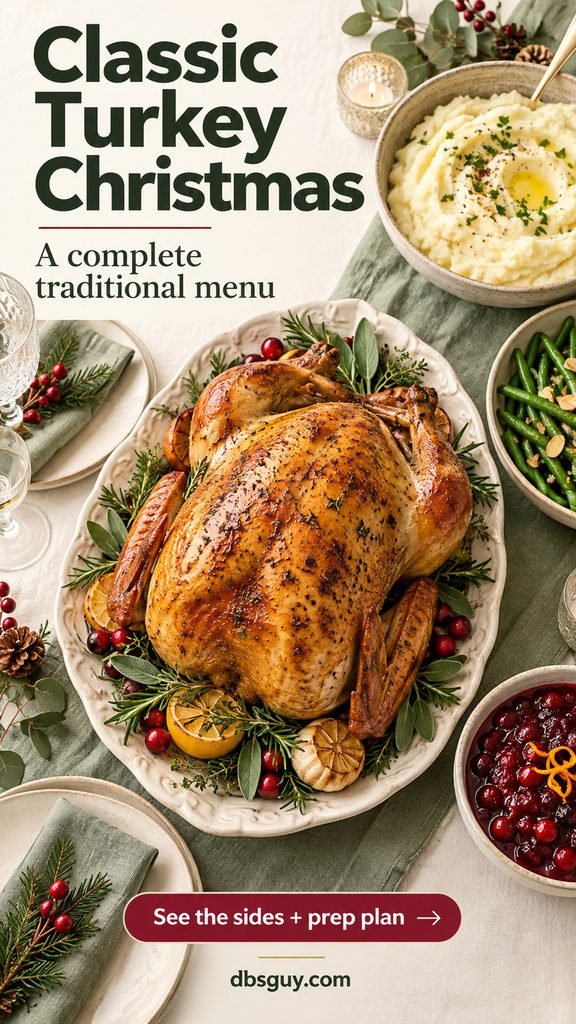
- Main: Herb-roasted whole turkey with pan gravy.
- Sides: Buttery mashed potatoes, green beans, and cranberry sauce.
- Dessert: Apple pie, baked before Christmas Day.
Get ahead: Make the cranberry sauce and pie ahead according to their recipes. Wash and trim the beans, refrigerate them, and set out the roasting pan, carving board, and thermometer the night before.
Cook the potatoes on the stovetop and finish the beans while the turkey rests. If your family wants stuffing, bake it in a separate dish and give it its own oven slot; it is an optional extra, not another last-minute obligation.
2. Orange-Mustard Glazed Ham With Scalloped Potatoes
A good fit for: A generous, serve-yourself holiday meal.
Ham gives the table a glossy centerpiece without requiring every guest to sit down the moment it is carved. Orange and mustard bring brightness to the sweet glaze, while tangy cabbage balances the richer potato dish.

- Main: Fully cooked spiral ham with an orange-mustard glaze.
- Sides: Scalloped potatoes and braised red cabbage.
- Dessert: Gingerbread cake with lightly sweetened whipped cream.
Get ahead: Cook the cabbage and bake the cake ahead. Use a scalloped-potato recipe with clear make-ahead directions, and reserve enough oven time to heat the potatoes through.
Read the ham label before planning its warming time: a fully cooked ham and a raw ham need different handling. Keep the ham covered as directed and apply a sugary glaze near the end so it can shine without scorching. Put mustard on the table for guests who prefer a sharper finish.
Also Read: 21 Christmas Table Decor Ideas That Look Expensive on a Small Budget
3. Garlic-Herb Prime Rib With Roast Potatoes
A good fit for: A splurge dinner built around one impressive roast.
Prime rib is the choice for a Christmas dinner that feels like an occasion before the first bite. Its richness needs contrast: crisp potatoes, a sharp salad, and horseradish cream rather than several creamy casseroles.

- Main: Garlic-herb prime rib with horseradish cream and pan juices.
- Sides: Crisp roast potatoes and a green salad with lemon vinaigrette.
- Dessert: Pear tart served in modest slices.
Get ahead: Make the horseradish cream and dressing ahead and refrigerate them. Ask the butcher about the roast size for your actual guest count and whether the bones can be prepared for easier carving.
Write the roast’s cooking temperature, resting period, and the potatoes’ oven temperature on the same schedule. If the potatoes need a hotter oven, plan their crisping stage after the roast comes out. Use a thermometer rather than choosing a pull temperature from the color shown in a picture.
4. Beef Tenderloin With Mushroom Sauce and Silky Mash
A good fit for: An elegant dinner with easy-to-serve slices.
A boneless tenderloin offers a polished presentation without carving around a large set of bones. Serve the mushroom sauce separately so the crust stays visible and guests can choose how much sauce they want.
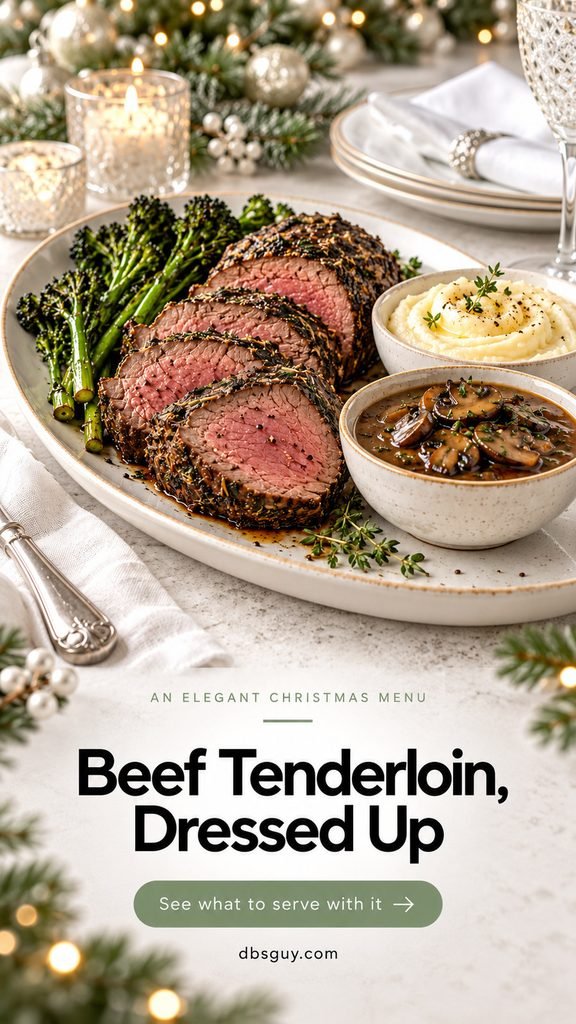
- Main: Roast beef tenderloin with a mushroom-shallot sauce.
- Sides: Celery-root and potato mash, plus lemony broccolini.
- Dessert: Chocolate pots de crème made ahead and chilled.
Get ahead: Prepare the sauce base and dessert ahead. Trim the broccolini and measure the mash ingredients so the last stretch of cooking is straightforward.
A tenderloin narrows at one end, so an evenly tied roast is easier to cook consistently; your butcher can help. Finish the sauce in a saucepan while the beef rests. If celery root is unfamiliar to your guests, use mostly potato with a smaller amount of celery root for a gentler flavor.
5. Beef Wellington With Green Beans and Celeriac Purée
A good fit for: Confident cooks who want a pastry centerpiece.
Wellington brings the drama through its golden pastry and clean slices. Because the main already includes pastry and mushroom filling, the rest of the plate can stay restrained. A second pastry side would add work without helping the menu.

- Main: Beef Wellington with a well-reduced mushroom layer.
- Sides: Green beans with lemon and a small serving of celeriac-potato purée.
- Dessert: Citrus salad with a few chocolate truffles.
Get ahead: Use a detailed recipe that specifies the beef size, chilling stages, and thermometer placement. Cook the mushroom mixture ahead if that recipe allows, and chill it fully before assembly.
This is a recipe-sensitive project, so do not improvise a make-ahead schedule from a photo. A wet mushroom layer can soften the pastry, and the center of the beef still needs a verified safe endpoint. Keep the final oven period free of other dishes that need different temperatures.
Also Read: 19 Burgundy and Gold Christmas Table Decor Ideas You Can Recreate at Home
6. Braised Short Ribs Over Creamy Polenta
A good fit for: A cozy dinner with much of the work done ahead.
Short ribs suit a candlelit Christmas dinner when you would rather finish a sauce than supervise a roast at the last minute. The braising liquid becomes part of the meal, especially when there is soft polenta to catch it.

- Main: Braised beef short ribs in a savory stock-based sauce.
- Sides: Creamy polenta and roasted carrots.
- Dessert: Cranberry-orange loaf cake.
Get ahead: Choose a recipe with a day-ahead braising option. After cooking, divide the ribs and sauce into shallow containers and refrigerate promptly; reheat thoroughly before serving.
The make-ahead advantage is the braise, not the polenta. Cook the polenta closer to dinner or use a recipe with specific reheating instructions, since it thickens as it sits. For guests who avoid alcohol, choose a stock-based braise from the start rather than assuming wine will disappear completely during cooking.
7. Old-Fashioned Pot Roast With Mashed Potatoes
A good fit for: A relaxed table that values comfort.
A chuck roast can feel just as welcoming as a more expensive cut when it arrives with soft carrots, onions, and plenty of gravy. This is a useful Christmas menu for a casual family gathering where seconds matter more than formal plating.

- Main: Pot roast braised with onions, carrots, and beef stock.
- Sides: Rustic mashed potatoes and a vinegar-dressed cabbage slaw.
- Dessert: Apple crisp baked ahead, with vanilla ice cream.
Get ahead: Peel and cut the vegetables ahead and refrigerate them separately. If using a slow cooker, follow a recipe written for its size and start with thawed meat.
Give the roast enough time to become tender; slicing it early will not turn a tough braise into a tender one. Keep the slaw crisp and lightly dressed so it supplies contrast to the gravy. Check local meat prices before calling this the cheapest option, since holiday pricing varies.
8. Apple-Cider Pork Loin With Potato Gratin
A good fit for: A roast dinner with a little sweetness.
Apple wedges and cider sauce make a pork loin look festive without burying it under a thick sugar coating. The contrast comes from bitter greens and a creamy potato side rather than another sweet vegetable.

- Main: Roast pork loin with cooked apples and apple-cider pan sauce.
- Sides: Potato gratin and sautéed mustard greens.
- Dessert: Maple rice pudding served in small bowls.
Get ahead: Make the pudding ahead and choose a gratin recipe that can be prepared in advance. Wash and dry the greens so they are ready for the skillet.
Buy pork loin for a pork-loin recipe; the much smaller tenderloin is not a direct timing substitute. Slice the rested roast across the grain and spoon the sauce beside it. If your guests dislike mustard greens, use spinach with lemon and keep the apple sauce on the savory side.
9. Herb-Crusted Rack of Lamb With Lemony Couscous
A good fit for: A small dinner that feels dressed up.
A rack of lamb has a sculptural presentation that suits an intimate Christmas table. Couscous keeps the side dish light and avoids adding another roasting pan when the lamb needs attention.

- Main: Herb-crusted rack of lamb with mint-yogurt sauce.
- Sides: Lemony couscous and roasted broccolini.
- Dessert: Orange slices with dark chocolate and pistachios, if nuts suit your guests.
Get ahead: Ask the butcher to trim the racks as needed. Mix the yogurt sauce ahead, refrigerate it, and measure the couscous ingredients before guests arrive.
Plan portions around the actual size of the racks, not the number of bones alone. Keep the sauce cool until serving and add the lemon to the couscous at the end so the flavor stays bright. For a gluten-free table, replace couscous with rice and check the crust ingredients too.
10. Lemon-Rosemary Roast Chicken for a Small Christmas
A good fit for: A small household or a quieter celebration.
A well-presented chicken makes sense when a whole turkey would leave you with more leftovers than you want. Lemon and rosemary give the meal a clear flavor direction, and one crisp salad is enough to complete the table.

- Main: Lemon-rosemary roast chicken with pan juices.
- Sides: Small roast potatoes and a shaved fennel-and-orange salad.
- Dessert: Chocolate mousse in individual glasses.
Get ahead: Make and chill the mousse ahead. Wash the salad ingredients and prepare its dressing, keeping everything separate until serving.
Choose a chicken recipe that fits your pan and leaves space around the bird; crowded potatoes can steam instead of browning. Add the citrus to the salad close to dinner, then bring the chicken to the table before carving if you want the centerpiece moment. This menu can still feel generous without adding several casseroles.
11. Roast Turkey Breast With Wild Rice Pilaf
A good fit for: Turkey lovers who prefer a smaller roast.
Turkey breast keeps the familiar holiday flavor while shifting the menu away from a whole-bird feast. Wild rice, mushrooms, and a crisp Brussels sprout salad make this feel different from simply shrinking the first menu.

- Main: Herb-roasted turkey breast with a small jug of gravy.
- Sides: Wild rice pilaf with mushrooms and a shaved Brussels sprout salad.
- Dessert: Cranberry cheesecake bars.
Get ahead: Bake and chill the cheesecake bars ahead. Prepare the salad dressing and use the pilaf recipe’s instructions for any advance grain cooking.
Bone-in, boneless, and rolled breasts need different timings, so choose the recipe after checking the package. Slice only what you plan to serve at first, and keep the remaining meat protected from drying out. Toasted seeds can add crunch to the salad when nuts are not appropriate.
12. Orange-Glazed Roast Duck With Red Cabbage
A good fit for: A rich, distinctive centerpiece for a few guests.
Duck gives Christmas dinner a glossy skin and deep flavor that do not need a long list of sides. A sharp red cabbage dish is especially useful here, and a modest potato portion keeps the plate balanced.

- Main: Roast duck with a restrained orange glaze.
- Sides: Braised red cabbage and crisp small potatoes.
- Dessert: Poached pears with a little vanilla cream.
Get ahead: Make the cabbage and pears ahead. Read the duck recipe early so you can plan its skin-drying stage, roasting rack, and safe handling of hot rendered fat.
Duck has a different meat-to-bone yield from chicken, so confirm portions when buying it. Keep any potatoes roasting in a separate pan unless your recipe specifically accounts for the duck fat and timing. Brush on the glaze at the stage directed by the recipe to avoid burning its sugar.
Also Read: 17 DIY Christmas Table Centerpieces Using Jars, Bowls, and Ornaments
13. Citrus-Dill Salmon With Herbed Rice
A good fit for: A seafood Christmas dinner with fresh flavors.
A side of salmon looks generous on a long platter, especially with thin citrus slices and dill. It is a good choice when you want a centerpiece that does not bring the same long roasting schedule as a large cut of meat.

- Main: Baked salmon with lemon, orange, and dill.
- Sides: Herbed rice and green beans, with yogurt-dill sauce on the side.
- Dessert: Lemon posset in small glasses.
Get ahead: Make the dessert ahead following its recipe. Mix the sauce and refrigerate it, then trim the beans and set out a platter long enough for the fish.
Make the rice first and plan the fish closer to serving. A fillet’s thin tail cooks differently from its thicker center, so follow your recipe’s advice for even cooking. Serve the sauce separately, and do not use the concept image’s color as a doneness test.
14. Tomato-Olive Baked Cod With White Beans
A good fit for: A lighter-feeling Christmas Eve or Christmas dinner.
Cod baked with tomatoes, olives, and lemon brings color to the table without a creamy sauce. White beans make the meal substantial, while a crunchy salad adds the texture the tender fish and beans need.
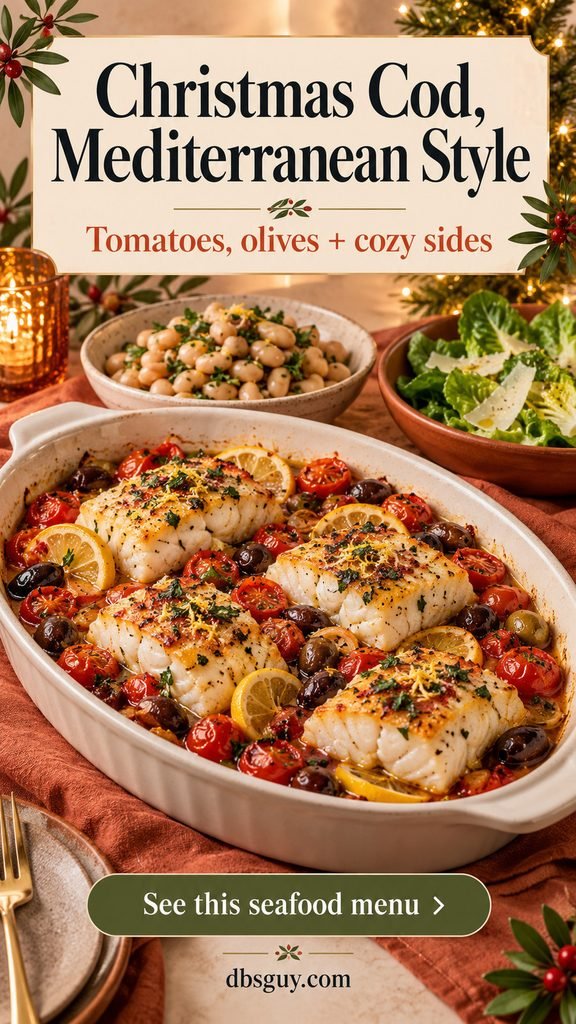
- Main: Baked cod portions in a tomato-olive sauce.
- Sides: Warm white beans with parsley and a crisp romaine salad.
- Dessert: Orange olive-oil cake.
Get ahead: Bake the cake ahead and prepare the tomato sauce if your recipe allows. Drain and rinse canned beans, then refrigerate them in a covered container until needed.
Choose similarly thick pieces of fish so they finish together. Keep the beans in a separate saucepan if you are unsure how much liquid they will absorb from the fish dish. Taste before adding salt: olives and canned ingredients can already supply plenty. Bring the baking dish to the table on a heat-safe trivet.
15. Garlic Shrimp Linguine With a Bright Green Salad
A good fit for: A small group who can sit down together.
Shrimp pasta is festive in a generous serving bowl, with parsley, lemon, and a few red pepper flakes for color. It suits a table with a clear dinner time because the pasta and shrimp are best finished close to serving.

- Main: Garlic shrimp linguine with lemon and parsley.
- Sides: A crisp green salad with shaved fennel and simple vinaigrette.
- Dessert: Make-ahead chocolate tart.
Get ahead: Make the tart and dressing ahead. Have the peeled shrimp, chopped garlic, parsley, and serving bowl ready before the pasta water goes on; keep the shrimp refrigerated until cooking.
Reserve some pasta water before draining so the sauce can coat the linguine without becoming greasy. Cook the shrimp until opaque and avoid leaving the finished pasta on a warm buffet. For a bigger party, a baked pasta is easier to serve in waves. Skip garlic bread unless your guests particularly want it.
16. Classic Lasagna With Italian Salad
A good fit for: A family-style dinner with useful advance prep.
A lasagna earns its place on a Christmas table through its bubbling top and generous slices. The main already brings pasta, sauce, and cheese, so the side dishes can be crisp, cool, and easy to pass.

- Main: Beef-and-tomato lasagna with ricotta and mozzarella.
- Sides: Italian chopped salad; a small basket of garlic bread if wanted.
- Dessert: Vanilla panna cotta with cranberry compote.
Get ahead: Choose a lasagna recipe with explicit overnight assembly directions. Make and chill the dessert ahead, and keep the salad dressing separate from the vegetables.
A casserole straight from the refrigerator may need a different baking time from a freshly assembled one. Follow the recipe, verify the center is hot, and include its resting time before cutting. Put any optional bread in after the lasagna comes out rather than trying to brown everything at once.
17. Spinach-Ricotta Stuffed Shells With Roasted Broccoli
A good fit for: A vegetarian dinner that feels generous.
Stuffed shells make a colorful, easy-to-portion centerpiece with their red sauce, pale ricotta, and green spinach filling. They are useful for a mixed table when you want the vegetarian main to feel planned rather than added at the last minute.

- Main: Spinach-ricotta shells baked in marinara sauce.
- Sides: Roasted broccoli and a lemony green salad.
- Dessert: Vanilla ice cream with warm berry sauce.
Get ahead: Squeeze the cooked spinach well before mixing the filling. Use your recipe’s directions for assembling ahead, refrigerating, and baking from chilled.
Check cheese labels for vegetarian rennet when cooking for strict vegetarians, and use a meat-free marinara. A shallow baking dish helps show off the shells, but leave enough sauce to keep their edges from becoming dry. Roast the broccoli in a separate oven slot so it can brown instead of steaming under the casserole.
18. Vegan Mushroom-Lentil Wellington With Onion Gravy
A good fit for: A plant-based menu with a pastry centerpiece.
This Wellington uses mushrooms and lentils to create a savory filling that slices under a golden crust. Onion gravy and colorful vegetables make the meal feel complete without leaning on dairy or a meat substitute.

- Main: Mushroom-lentil Wellington made with vegan puff pastry.
- Sides: Olive-oil mashed potatoes and green beans, with onion gravy.
- Dessert: Poached pears with dairy-free dark chocolate sauce.
Get ahead: Cook the filling ahead only as your recipe directs, and cool it before wrapping. Make the gravy base ahead and refrigerate it; save the pastry baking for the day.
Check the pastry, brushing mixture, stock, and chocolate labels for animal ingredients. Reduce excess moisture in the filling so the pastry has a better chance to crisp. This is a different project from beef Wellington, with its own binding and baking needs, so use a recipe developed for the plant-based filling.
19. Wild Rice-Stuffed Acorn Squash With Pomegranate
A good fit for: A colorful vegan meal with individual portions.
Roasted squash halves make the serving plan visible: each guest gets a shell filled with wild rice, chickpeas, herbs, and dried cranberries. Pomegranate seeds add a festive finish without needing an elaborate garnish.

- Main: Acorn squash halves filled with wild rice, chickpeas, cranberries, and optional pecans.
- Sides: Sautéed kale and a tahini-lemon sauce.
- Dessert: Dairy-free apple crumble.
Get ahead: Cook the rice and prepare the filling ahead according to the recipe. Roast the squash ahead only if the recipe explains how to cool, refrigerate, and reheat it without losing its shape.
Check that all the squash halves fit on your sheet pans before committing to this menu. A small flat slice from the underside can help a half sit steadily, but keep the edible shell intact. Tahini contains sesame, and the optional pecans shown contain tree nuts; confirm allergies and adjust the filling and dressing as needed.
20. Lentil-Mushroom Shepherd’s Pie With Winter Slaw
A good fit for: A comforting vegan casserole.
A deeply savory lentil-and-mushroom filling under ridged mashed potatoes gives this Christmas dinner a familiar comfort-food shape. The pie already supplies the starch, so a fresh slaw is a more useful partner than another potato dish.

- Main: Lentil-mushroom shepherd’s pie topped with dairy-free mashed potatoes.
- Sides: A crunchy carrot-and-cabbage slaw with lemon dressing.
- Dessert: Baked apples with raisins and dairy-free vanilla ice cream.
Get ahead: Make the filling and topping ahead following a casserole recipe with chilled-baking directions. Shred the slaw vegetables and refrigerate them separately from the dressing.
Use vegetable stock and check any Worcestershire-style sauce for fish; a vegan label removes the guesswork. Leave a few ridges in the topping so they can brown. Bake on a sheet pan if the dish is full, and leave time for the filling to settle before spooning it onto plates.
21. Tamales With Beans, Slaw, and Two Salsas
A good fit for: A festive sharing meal, especially with prepared tamales.
Tamales offer a different kind of showstopper: a welcoming platter that guests unwrap at the table. Ordering them from a local maker can also make room for the family traditions you want to spend time on.

- Main: Pork tamales with salsa roja and salsa verde.
- Sides: Black beans and lime-dressed cabbage slaw.
- Dessert: Cinnamon rice pudding.
Get ahead: If buying tamales, confirm the pickup date, storage directions, filling, and reheating method. Make the beans and pudding ahead using their recipes’ cooling and reheating guidance.
Plan steamer capacity before dinner; several trays of tamales may not reheat at once. Offer a clearly labeled vegetarian filling if needed, and ask about the masa as well as the filling because it may contain lard or meat stock. Give each salsa its own spoon and put a small bowl on the table for the discarded husks.
Plan a Christmas Dinner Your Kitchen Can Handle
Start With the Oven Schedule
Write down the temperature and cooking time from each recipe, including chilling, resting, and reheating. A roast, gratin, and crisp vegetable can all be reasonable dishes individually and still make an awkward menu if each needs the same shelf at a different temperature.
Give the main the oven time it needs, choose a stovetop starch where that helps, and use a cold salad for contrast. For a single-oven household, make the dessert the day before or choose one that is served chilled. Never assume the main’s resting period is long enough to cook an entire raw casserole.
Use a Short Make-Ahead Checklist
- Before Christmas week: confirm guests and dietary needs, select recipes, order a specialty roast or tamales if needed, and check pan sizes. Follow the chosen recipe and package guidance for thawing; do not leave it until Christmas morning.
- The day before: prepare suitable desserts, sauces, dressings, and braises. Cool cooked foods promptly in shallow containers and refrigerate them. Label anything that needs a separate serving spoon.
- On Christmas Day: follow the main’s cooking plan, keep cold dishes refrigerated until needed, and finish vegetables and salads closer to dinner.
- Before serving: check the main and reheated dishes with a food thermometer, carve or portion the centerpiece, and set out only as much perishable food as you can serve safely.
A useful division of labor is one person responsible for the main, one for the final vegetable, and one for drinks and table clearing. If guests bring food, agree on whether it will arrive hot, chilled, or ready to reheat so an unexpected casserole does not derail the oven schedule.
Also Read: 15 Christmas Kitchen Decor Ideas That Keep Your Counters Clear
Cook, Serve, and Store the Meal Safely
Use a food thermometer; a browned crust or pink center cannot establish safety. The FoodSafety.gov safe minimum temperature chart lists the endpoints to use.
- Turkey, chicken, and duck: 165°F (74°C). Check appropriate thick areas without touching bone; stuffing cooked inside poultry also needs 165°F.
- Whole cuts of beef, pork, and lamb: 145°F (63°C), followed by at least a 3-minute rest. Ground beef and pork need 160°F (71°C).
- Fish: 145°F (63°C). Cook shrimp until the flesh is opaque and pearly or white.
- Casseroles and reheated leftovers: 165°F (74°C). Fully cooked ham has specific reheating guidance, including a lower endpoint for ham packaged in a USDA-inspected plant; check its label and the chart.
For a buffet, hold hot food at 140°F (60°C) or above and cold food at 40°F (4°C) or below. Refrigerate perishable leftovers in shallow containers within 2 hours, or within 1 hour if the temperature is above 90°F (32°C). Use refrigerated cooked leftovers within 3–4 days, or freeze them. Reheat only the amount you plan to serve.
Christmas Dinner Menu Questions
What is the easiest Christmas dinner menu to prepare ahead?
Lasagna is a practical choice when you use an overnight-assembly recipe and pair it with a salad and chilled dessert. Braised short ribs are another option, although the polenta and vegetables still need finishing. Choose the one whose prep instructions match your available time and equipment.
What should I serve for Christmas dinner for two?
A smaller roast chicken, a suitably sized turkey breast, or salmon portions can give you a satisfying meal without a large whole-bird project. Keep the sides to one starch and one vegetable or salad, and choose a dessert you can portion easily. Buy for the leftovers you actually want.
How many side dishes do I need?
Start with two: one starch and one vegetable or salad. Add a sauce or condiment that belongs with the main. A family tradition may deserve a third side, but a lasagna, stuffed squash, or shepherd’s pie already contains enough starch to make another potato dish optional.
Can I combine two of these menus?
Yes. Keep one shared starch and vegetable, then add a second main only if it solves a real guest need. For example, a roast for meat eaters and stuffed squash for vegan guests can share greens when their dressing is vegan. Use separate utensils and check allergens, stock, and sauces.
What can I serve instead of turkey or ham?
For a roast, consider prime rib, beef tenderloin, lamb, chicken, or duck. Salmon and cod work for a seafood table. Stuffed shells, mushroom-lentil Wellington, stuffed squash, and lentil-mushroom pie give vegetarian or vegan guests substantial choices.
Should I make every dish from scratch?
Choose the parts of the meal that matter most to you. Bakery bread, a prepared dessert, or tamales from a trusted local maker can fit a thoughtful Christmas dinner. Confirm storage and reheating directions, and spend your cooking time on the dish you want to make.
Pick the menu that suits your guests, save its image, and write the grocery list around that choice. A clear plan leaves room for the part of Christmas dinner people came for: sitting down together.