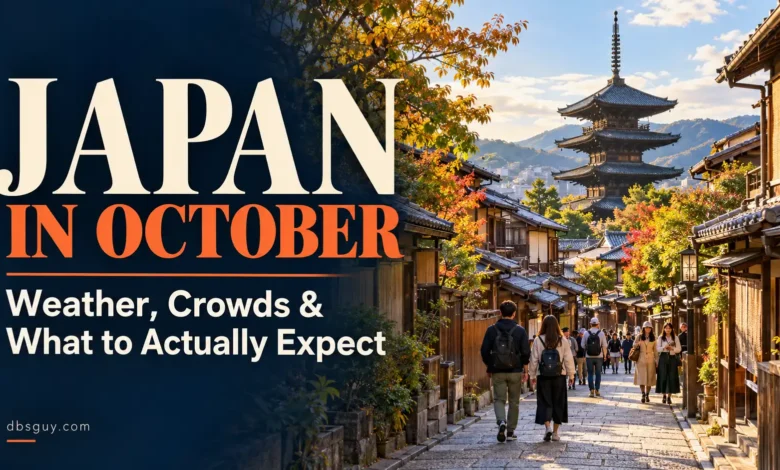
Japan in October is a strong choice for sightseeing, but your experience depends on where you go. Tokyo, Kyoto, and Osaka generally offer milder days than summer, while northern Japan and the mountains feel noticeably cooler. Rain remains possible, famous sights stay busy, and peak red-leaf scenery usually arrives later in Tokyo and Kyoto.
If you clicked on a beautiful autumn pin, here is the detail that can change your whole trip: October fall color is a destination decision, not a countrywide guarantee. Choose northern or higher-elevation stops if leaves are the priority. Choose the classic cities if you mainly want temples, neighborhoods, food, and comfortable walking weather.
- For a first visit: October works well for a Tokyo–Kyoto trip, even when the trees are still mostly green.
- For fall foliage: investigate Hokkaido, Tohoku, and mountain areas, then match the specific location to your dates.
- For fewer crowds: plan around weekends, holidays, and local events rather than expecting the whole month to be quiet.
- For packing: bring removable layers, comfortable shoes, and rain protection; add warmth for northern or mountain stops.
The images in this guide are AI-generated travel concepts, not photographs documenting actual locations, weather, or crowd levels.
What October Weather in Japan Actually Feels Like
A pleasant afternoon in Osaka and an early morning in Hokkaido can require different outfits. That is why a single “Japan October temperature” is not especially useful.
The following are rounded average daily highs and lows from the Japan Meteorological Agency’s 1991–2020 climate normals. They describe a typical month, not the forecast for your travel dates.
- Tokyo: about 72°F during the day and 59°F at night (22°C / 15°C). A light layer is useful when you leave early or stay out late.
- Kyoto: about 74°F / 58°F (23°C / 14°C). A sunny temple walk can feel warm, followed by a cooler evening.
- Osaka: about 75°F / 61°F (24°C / 16°C). Think flexible city clothes rather than a heavy winter wardrobe.
- Sapporo: about 62°F / 46°F (16°C / 8°C). Bring warmer layers; mountain conditions can be colder than the city.
Okinawa is a different kind of October trip. Naha’s monthly mean temperature is about 78°F (25.5°C), so lightweight clothing makes more sense there. Do not use a Tokyo packing list as your entire plan for the southern islands.
Early October Versus Late October
Early October can still bring warm afternoons in central and southern Japan. As the month progresses, mornings and evenings generally cool down, especially inland and at elevation. A short-sleeve top underneath a cardigan or light jacket gives you more flexibility than one thick sweater.
For a city trip, choose dates around the activities you want and the hotels you can actually book. For a mountain trip, the date matters more: temperatures, leaf conditions, transport, and trail access can change within the month.
Plan for Rain, Even if the Forecast Looks Promising
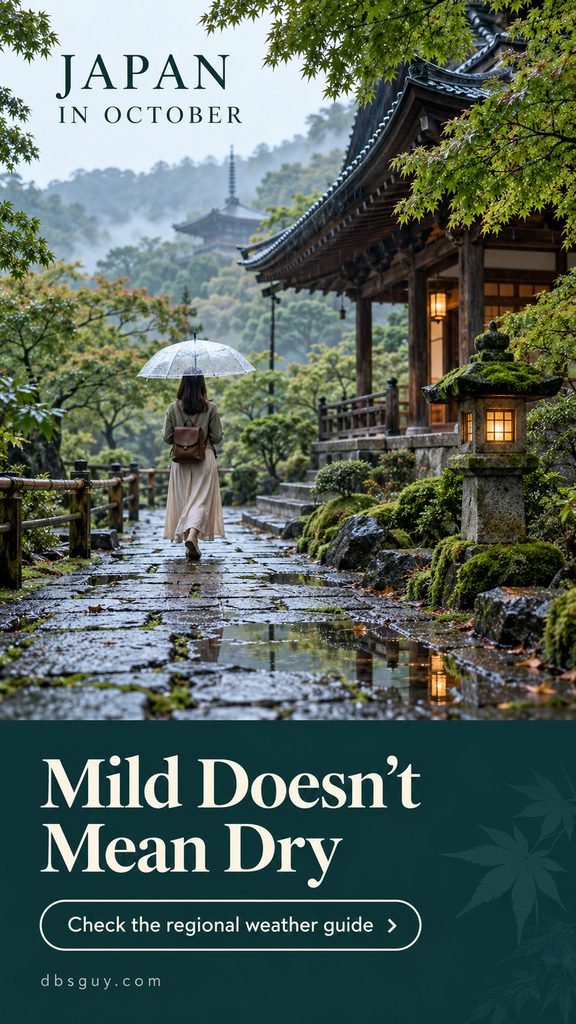
October is not reliably dry everywhere. Tokyo’s historical October rainfall average is about 9.2 inches (234.8 mm), its highest monthly total in those climate normals. That does not mean rain falls all day every day; monthly totals can include substantial downpours.
Typhoon activity also continues into October, although historical activity is lower than in September. Check weather alerts and transport notices close to departure, and leave room to swap an outdoor day for a museum, indoor market, or neighborhood café day.
For the underlying historical temperature and rainfall figures, see the Japan Meteorological Agency’s climate normals. Use a current local forecast for decisions about your actual trip.
Where to See Autumn Colors in October
The Japan National Tourism Organization’s October guidance points travelers toward northern and higher-altitude areas for earlier foliage. Tokyo and Kyoto generally reach their main color season in November, with some displays continuing into December.
A few changing trees in late October are possible. A city filled with peak red maples is a different expectation. If that classic Kyoto autumn view is the main reason you are booking, a later fall trip is usually a better starting point.

Match the Elevation to Your Week
- Hokkaido: the season starts early in high mountain areas, sometimes in September. An October visit can suit lower areas after those peaks have passed. Check a specific park or valley, not just “Hokkaido foliage.”
- Tohoku: northern Honshu offers mountain and highland possibilities during October. A town and the mountains above it can be at different stages.
- Oku-Nikko: higher landscapes begin changing before central Nikko’s shrine area. The official Nikko tourism guide places the shrine-and-temple area’s typical peak in early November, so a central-Nikko day trip is not automatically an October leaf trip.
- Japanese Alps: higher elevations can color earlier than nearby towns. Choose a place with appropriate access and walking conditions for your dates.
A useful planning method: shortlist one foliage area that fits your route, check recent local reports before committing to a specific outing, and keep a weather backup. An overnight near the landscape you want can be more practical than trying to squeeze mountains and several shrines into a rushed day.
Do not chase a forecast date so tightly that the trip only works with perfect leaves. A lake walk, hot spring stay, or scenic valley should still interest you if color is early, late, or partly finished. For mountain walks, check local conditions and closures; city temperatures do not describe a high trail.
Still weighing Japan against a fall trip closer to home? Also read: 11 Scenic Fall Road Trips in the USA Worth Planning Your Whole Weekend Around.
How Crowded Is Japan in October?
October is popular enough that you should plan for crowds at major attractions. A less intense foliage season in Kyoto does not make its best-known streets empty. Busy stations, famous temples, and sought-after restaurants can still shape your day.
There is also no reliable nationwide “quiet week.” A city may feel manageable while a mountain road or festival town nearby is packed. Nikko’s official autumn guidance specifically warns about congestion and recommends staying close to the foliage you want to see.

Dates That Deserve an Extra Look
- Sports Day: Japan’s national holiday falls on the second Monday in October. In 2026 it was October 12, creating the October 10–12 long weekend. In 2027 it falls on October 11. Check the calendar for your year.
- Takayama Autumn Festival: held annually on October 9–10. If attending is the goal, arrange accommodation and transport around it; if you want a quieter visit, choose other dates.
- Kyoto’s Jidai Matsuri: normally October 22; the city’s 2026 announcement lists that date. Event arrangements and weather postponements should be checked before travel.
- Foliage weekends: a local color peak can concentrate visitors in a small area, even when the rest of your route feels relatively calm.
Make the Busy Parts Easier
Give your most important sight the first available visiting slot, respecting its opening hours. Stay within one neighborhood for a substantial part of the day instead of repeatedly crossing the city. Use weekdays for a foliage excursion when your schedule allows, and allow extra time for mountain buses that share congested roads.
Book the things with limited capacity first: a particular hotel, a ryokan stay, an attraction with timed entry, or an intercity departure you need. Then leave ordinary neighborhood wandering flexible. This is planning advice, not a promise that an early start removes every queue.
For late-October evenings, choose a confirmed event with published visitor guidance rather than assuming a famous nightlife district will host an open street party.
What to Pack for Japan in October
For Tokyo, Kyoto, and Osaka, start with an outfit you could comfortably wear for a long day of walking: a breathable top, easy pants, broken-in shoes, and a layer you can take off. Your jacket should fit in your bag when the afternoon warms up.

A Practical City-Trip Checklist
- Mixed tops: short sleeves for warmer afternoons and a few long-sleeve options for cooler days.
- One useful midlayer: a cardigan, light sweater, or fleece that works with several outfits.
- Light outerwear: a jacket or rain shell that packs down reasonably well. Choose more warmth if your forecast calls for it.
- Comfortable bottoms: pants or another easy walking option; choose fabrics you will still enjoy wearing after a damp day.
- Broken-in walking shoes and spare socks: wet feet can make an otherwise pleasant sightseeing day frustrating.
- Rain protection: a compact umbrella and a way to keep important items dry.
- A small zipped day bag: enough space for your removed layer, water, and everyday essentials.
For Hokkaido or mountain stays, add a warmer insulating layer and suitable footwear for your actual activities. A light city jacket is not a mountain hiking system. For Okinawa, shift toward lighter clothes and sun protection, while keeping rain gear.
For a week, repeat outfits and use laundry if available rather than carrying a different look for every day. Check the forecast for each overnight stop shortly before packing; the coldest stop may determine the extra layer you need.
For your long flight, also read: Airport Outfit Ideas: What To Wear When Traveling.
Choose an October Route That Fits Your Priorities
The easiest way to enjoy October is to give the trip a clear purpose. A first visit centered on city culture needs a different route from a foliage trip. Count your nights in Japan separately from your flight days, especially when arriving from the United States.
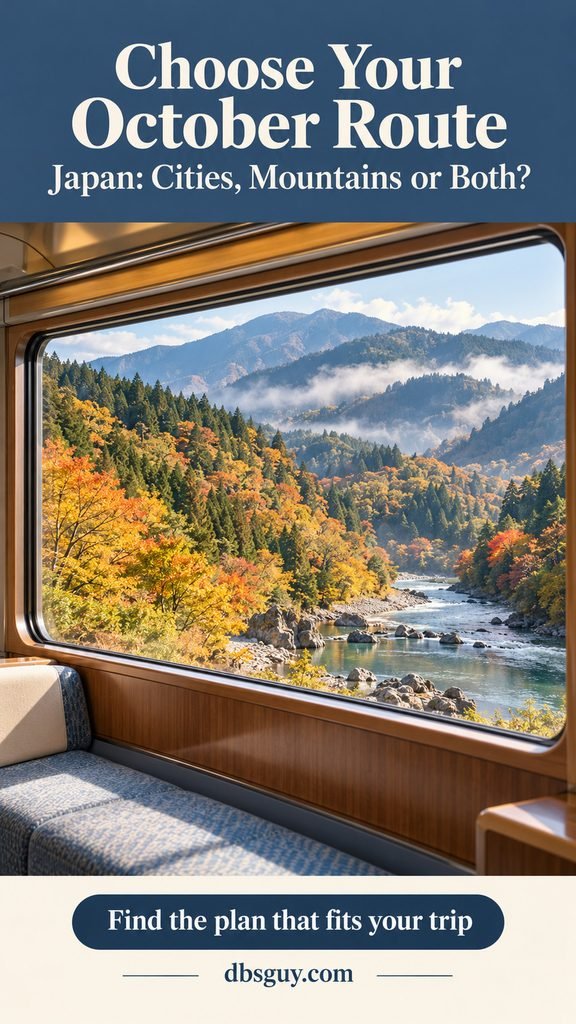
For a First Trip: Keep the City Route Simple
A seven-night starting point: four nights in Tokyo and three in Kyoto. Use Tokyo for neighborhood walks, food, and indoor options when it rains. In Kyoto, choose a small number of temple areas and leave time to enjoy them. Treat green gardens as part of the visit rather than a failed autumn forecast.
With ten nights, one workable split is four in Tokyo, four in Kyoto, and two in Osaka. A Nara day trip can fit from the Kyoto or Osaka portion if it matters to you. These are suggested pacing choices, not a fixed itinerary or a claim that every traveler needs all three cities.
For Fall Colors: Replace City Nights With One Nature Stop
Instead of adding several distant detours, use one or two of your existing nights for a well-chosen mountain or northern base. Oku-Nikko may suit a Tokyo-focused trip when local conditions match your dates; a broader Tohoku or Hokkaido trip deserves its own transport plan.
Check what reaching the foliage actually involves. A railway station labeled with a destination name may still be followed by a mountain bus or other transfer. Stay near the area you want to enjoy, and keep the day after arrival realistic.
For a Relaxed Trip: Give Each Day One Main Commitment
Pair an outdoor plan with an indoor alternative in the same area. For example, use a clear morning for a garden walk and keep a nearby museum or café afternoon flexible. An onsen overnight can suit a cooler part of the route, but check the accommodation’s meal times, bathing policies, and arrival arrangements before booking.
Compare the actual price of hotels and transport for your dates. October is not an automatic bargain month, and a festival town or popular foliage base may offer little flexibility. You can often make the trip simpler by reducing hotel changes before trying to squeeze more destinations into it.
Planning this as a honeymoon? Also read: Honeymoon Ideas for October: Best Destinations and Activities.
Japan in October FAQs
Is October a Good Time to Visit Japan?
Yes, especially if you want city sightseeing with milder temperatures than summer. It works best when you accept variable weather and choose foliage destinations deliberately. For peak maple scenery in Tokyo and Kyoto, consider later fall.
Is Early or Late October Better?
Early October can suit travelers who prefer warmer city afternoons. Late October usually brings cooler conditions, but that does not guarantee peak leaves in the major cities. For foliage, choose the place first, then compare its usual timing with your week.
Will I Need a Heavy Coat?
Many city travelers can manage with removable layers and light outerwear, depending on the forecast and personal comfort. Northern destinations, high elevations, and late-month cold spells call for a warmer plan.
Is Japan Cheaper or Less Busy in October Than November?
There is no dependable answer for the whole country. November foliage can put pressure on particular cities and gardens, while October has its own events and mountain peaks. Compare your exact dates, accommodation, and route rather than assuming a seasonal discount.
Can I See Mount Fuji in October?
You may, but clouds can hide the mountain on any given day. If seeing it matters, allow more than one opportunity and make sure the surrounding outing still appeals to you without a clear summit view.
Should I Book October or November?
Choose October if your priority is a varied sightseeing trip and you are happy to look north or uphill for leaves. Start with November if the defining goal is autumn color in Tokyo or Kyoto, then check the timing for the specific gardens and areas you want.
The trip to expect: worthwhile city walks, changing weather, busy pockets, and autumn that arrives on different schedules. Build around those details, and Japan in October offers plenty to enjoy without needing every day to look like a red-maple postcard.