To spend less on textbooks, confirm the exact course requirements, check free access, and compare the complete cost of renting with buying used. If you buy a copy, protect its condition and compare sell-back offers when the class ends. You can make a different choice for every book on your schedule.
The goal is to avoid paying the new-book price by default. Some required access codes, custom materials, or course packages may have no cheaper approved alternative. A discount only helps if you can still read the assigned material and complete the work.

The images are AI-generated concepts illustrating textbook-shopping and packing decisions. They do not document actual purchases, retailer offers, or tested savings.
1. Confirm the book—and the online access—before shopping
Start with your syllabus, course website, and official bookstore listing. Save the requirements in one note for each class. A similar cover is not enough to identify the right purchase.
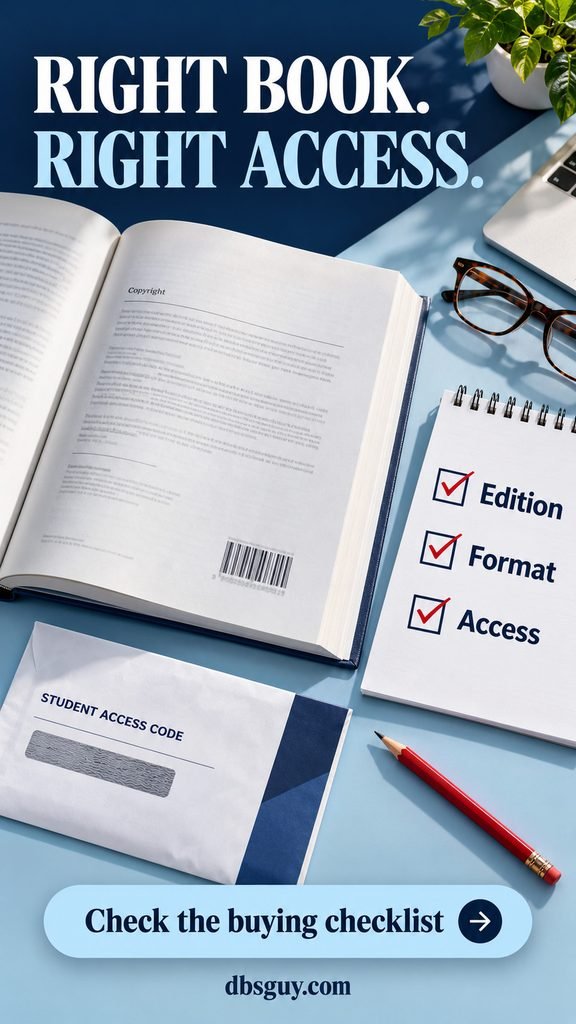
- Book: record the title, author, edition, volume, and ISBN supplied for the course.
- Format: check whether print, an eTextbook, loose-leaf pages, or a custom edition is required or permitted.
- Extras: identify any workbook, lab manual, online homework platform, or unused access code.
- Timing: find the first reading or graded assignment and how long you need access, including finals or a second course.
Search by ISBN, then read the listing. A book-only copy and a book-plus-code package can have different ISBNs. Ask the bookstore or instructor to identify an approved book-only option before substituting one for a required bundle.
Check what your student account already covers
Look for a course-materials charge and any campus access program before paying a publisher separately. Programs sometimes provide digital materials through your course website and bill your student account. That access may already include the book and homework you need.
If your program offers an opt-out, compare equivalent materials and check your school’s deadline and refund process. Do not opt out until you know how you will keep access to required assignments. Campus programs have different rules; another student’s deadline may not apply to you.
Do not assume a used book includes a usable code
Pearson’s eTextbook support guidance, for example, says its access codes can be redeemed once and cannot be shared between students. An envelope tucked inside a secondhand book does not establish that a code is unused.
Check whether the required homework product already includes an eTextbook. You may not need an additional print copy. Conversely, buying an eTextbook alone may not provide the graded homework platform your class uses.
A useful question for your instructor: “Does this class require the full package listed by the bookstore, or can I use the book-only edition with separate access? Does the required access include the eTextbook?” Include your course section so the answer fits your class.
For the other tasks surrounding the start of classes, see First Week of College: The Freshman Survival Guide (Orientation to First Friday).
2. Check free options, then compare the complete cost
Before choosing a rental or used copy, find out whether you already have a workable way to read the required book.

- Campus library: search the exact title or ISBN and ask about course reserves. Confirm checkout length, availability, and whether the copy can leave the library. A short reserve loan needs a different study plan from a book you keep all term.
- Library eTextbook: ask whether the library has the assigned edition and what download, printing, and simultaneous-user limits apply. Confirm access before relying on it for a deadline.
- Assigned open textbook: if your course uses OpenStax, its official textbook guidance explains how to read online or download a free PDF. A free book on the same subject is not automatically a substitute for your assigned text, and a separate homework service may still cost money.
If a library copy will not cover your schedule, use it only as a backup while arranging dependable access. Ask the instructor early if cost is preventing you from getting the required materials.
Where to compare rental and used-book prices
Begin with your campus bookstore’s complete offer, then search the same ISBN on a comparison service such as CampusBooks or SlugBooks. Check the actual seller’s listing and checkout total before ordering. A comparison result is a starting point, not confirmation of stock, delivery, or included materials.
Write down the book price, tax, shipping, required extras, access period, and return terms. For rentals, include any return-shipping cost. For used purchases, keep possible resale money separate from what you must pay today.
Run the rental-versus-used calculation
Rental cost: the rental charge, required extras, tax, and shipping in both directions. Late, damage, or nonreturn charges are additional risks to check, not savings to assume away.
Used-book cost after resale: the complete purchase cost minus your resale proceeds after selling fees and shipping expenses.
Here is an illustrative example, not a current price quote, for the same approved print book with no separate access requirement. Assume tax and shipping are already included:
- Rent: pay $40 and return the book on time in acceptable condition.
- Buy used: pay $65 now. If you later receive $30 after all selling expenses, the net cost is $35.
- No resale: if no buyer accepts it, your purchase still cost $65. You do not have the expected $30 back.
In that example, buying used beats renting only if your resale proceeds after selling expenses exceed $25. A hoped-for $5 advantage may not justify the extra upfront cash and selling work. Buying can still make sense if you need the book for another class.
Run a separate check for access codes. In another hypothetical comparison, a $35 used book plus $85 in required access costs $120; an approved $100 bundle would be cheaper if it includes everything. Compare the entire requirement, and check whether that access purchase already includes the digital book.
3. Rent a textbook when one term of access is enough
Renting is worth considering for a class you will finish in one term, especially when the checkout total is comfortably below an acceptable used copy. You give up ownership and take on a return obligation.
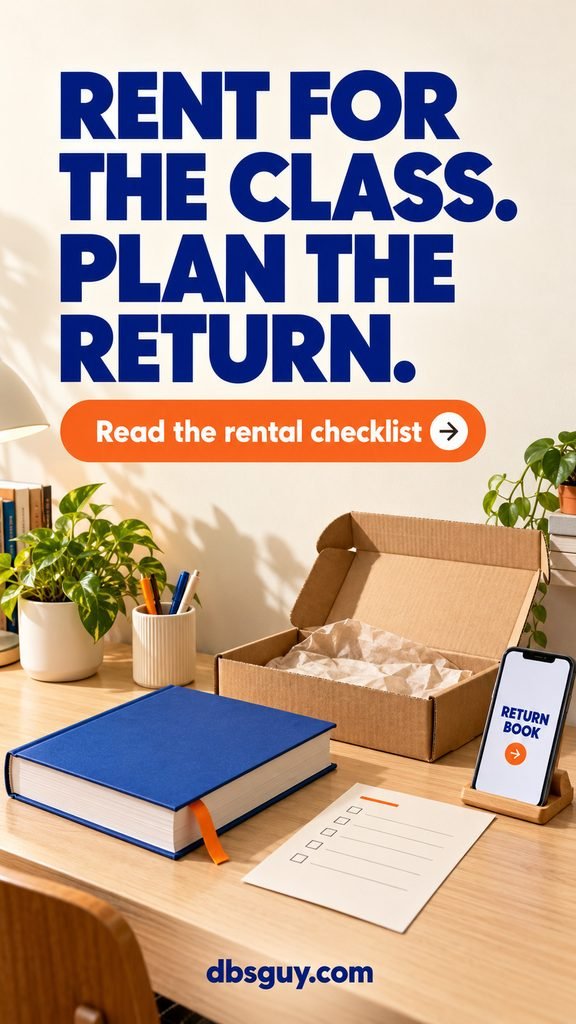
Before paying, confirm these details in the specific rental agreement:
- Term: does it cover the final exam and every date you need the book?
- Deadline: must you hand it in, have it scanned by a carrier, or have it arrive by the due date?
- Condition: what writing or highlighting is allowed, and what counts as damage?
- Charges: what happens after a late, lost, damaged, or unreturned rental? Check extension and purchase options too.
- Shipping and extras: is a return label included, and are required supplements specifically included?
Retailer rules differ. eCampus, for example, warns that supplemental materials are not guaranteed with rental or used copies. Read the item description rather than treating a photo of a complete package as a promise.
When the book arrives, verify the ISBN and photograph its covers, page edges, and existing damage. Report a problem promptly through the seller’s process. Keep a screenshot of the agreement and put reminders in your calendar while the order is still fresh.
Plan the return around move-out. Identify the carrier drop-off location or bookstore hours before finals. After your last required use, remove bookmarks and loose notes, follow the packing instructions, and keep the receipt or tracking record until the return is confirmed. Do not send books from different rental companies together.
If you already know you need the book for a second term, compare one suitable rental term or extension with buying used now. Two separate short rentals may change the decision.
4. Buy used when ownership has practical value
A used copy can suit a two-course sequence, a reference book you expect to keep, or a class where you want to annotate heavily. It also avoids a rental return deadline. The condition and contents matter more than a seller’s “great deal” label.

Inspect a local copy before paying. For an online order, read the condition notes, review available photos, and check who handles returns. A third-party marketplace purchase may have different terms from one sold by the store itself.
- Pages and binding: look for missing pages, water damage, loose sections, and a split spine.
- Readability: light highlighting may be fine for your use; dense notes covering problems or diagrams may not be.
- Workbook content: confirm that exercises are not already completed or required pages removed.
- Contents: establish whether you are buying only the book, loose-leaf pages, or an actual complete package.
- Delivery and returns: check arrival estimates, the return window, return postage, and any restrictions before committing.
Ask about older editions before substituting one
Send the instructor the specific older edition and ISBN you found. Ask whether assigned problems, readings, and page references will work. An older or international edition can differ in ways that matter to your class; a matching title does not settle that question.
You could ask: “Would the fourth edition, ISBN [number], work for this course? If the exercises differ, will the assigned questions be available through the course site?” Get an answer before you place a nonreturnable order.
Buying from a student who just finished the course is another option. Still check the current syllabus: the instructor may have changed editions or platforms. Agree on the condition and included items, rather than assuming last term’s purchase meets this term’s requirements.
If resale matters to your decision, use a separate notebook for extensive notes and keep food and drinks away from the pages. Protecting the book gives a future buyer fewer reasons to reject it, but does not guarantee a buyback offer.
5. Compare sell-back offers and keep proof of shipment
Once you finish using a book you own, check your campus bookstore’s offer and online buyback quotes for its exact ISBN. SlugBooks offers buyback comparison as well as purchase comparison. You can also consider selling directly to another student, with the extra time and uncertainty that involves.

Compare what you will receive. Check cash versus store credit, payment fees, shipping costs, minimum order requirements, and processing times. A higher store-credit offer is only useful if you have a purchase planned there and understand the expiration rules.
An offer available when you buy the book is not a guaranteed offer at the end of the semester unless a specific buyback agreement says so. Demand, edition changes, condition, and the buyer’s inventory can affect whether a book is accepted.
When you are ready to accept a quote:
- Match the copy. Check the ISBN on the physical book against the offer and review restrictions on editions, packages, and condition.
- Read the rejection policy. Find out whether an unacceptable book will be returned, kept, or discarded, and who pays any return cost.
- Save the order. Keep the quote, ISBN list, condition photos, packing instructions, and payment method.
- Meet the actual shipping rule. Check whether the deadline requires carrier acceptance or delivery. Printing a label is not the same as handing over the parcel.
- Pack and track. Use a sound box, protect the books from movement, include the required packing slip, and save tracking until payment or any dispute is resolved.
Quote windows can be short: eCampus, for example, specifies a seven-day carrier-scan window to preserve its quoted buyback value. Follow the current terms on your own order rather than assuming that every buyer uses the same deadline.
Compare offers after your final required use, while you still have time to pack before moving out. There is no universal week that guarantees the highest price. Keep a book you genuinely need later, and return rentals to their owner instead of putting them in the sell-back pile.
Textbook buying questions
Should I wait until the first class to buy textbooks?
Check the posted requirements first. Reading, quizzes, and homework can begin immediately. Ask about an unclear edition or optional purchase before paying, but arrange access to anything needed for the first assignment. If shipping will be late, ask about an authorized temporary option.
Are digital textbooks always cheaper?
No. Compare the full access term with print rental and used options, including any required homework product. Check device compatibility, offline use, printing limits, and what happens when access ends. Do not budget for reselling a digital license unless its terms explicitly allow transfer.
Can I sell a rented textbook?
No—the rented copy belongs to the rental provider. Return it as agreed. If the provider offers a purchase option and you use it, confirm that ownership has transferred and no return remains due before considering resale.
What if I cannot afford the required access code?
Contact the instructor before the first deadline and ask which campus office handles course-material assistance. Ask about authorized temporary access or other support, but confirm eligibility and duration. A free reading copy does not necessarily let you submit graded online work.
Choose one book at a time
Open your next course’s materials list and record the ISBN, required access, and first deadline. Check free access, then compare one rental with one acceptable used copy using their complete costs. Save the return or sell-back steps alongside the purchase. That gives you a decision you can explain—and a plan for what happens after finals.