21 December Nails Aesthetic: Milky Shades, Muted Colors and Your Coziest Sweater


Your coziest sweater already brings plenty of texture. A soft December manicure can either echo that knit or give it a smooth, glossy contrast. Start with milky ivory, oat beige, or blush if you want a barely-there color. Choose dusty lavender, sage, or slate blue when you want more color without moving into bright holiday shades.
These 21 ideas for a soft December manicure keep the palette gentle, but give you different ways to use it: sheer finishes, soft fades, fine French tips, painted sweater details, and a few quiet festive accents. Each idea includes the color, placement, or finish to discuss with your nail artist, plus an adjustment where a smaller nail needs one.
The visuals are AI-generated nail-design concepts. They illustrate color, placement, and finish; they are not photographs of completed or tested salon work. Actual polish, lighting, and nail shape will affect the result.
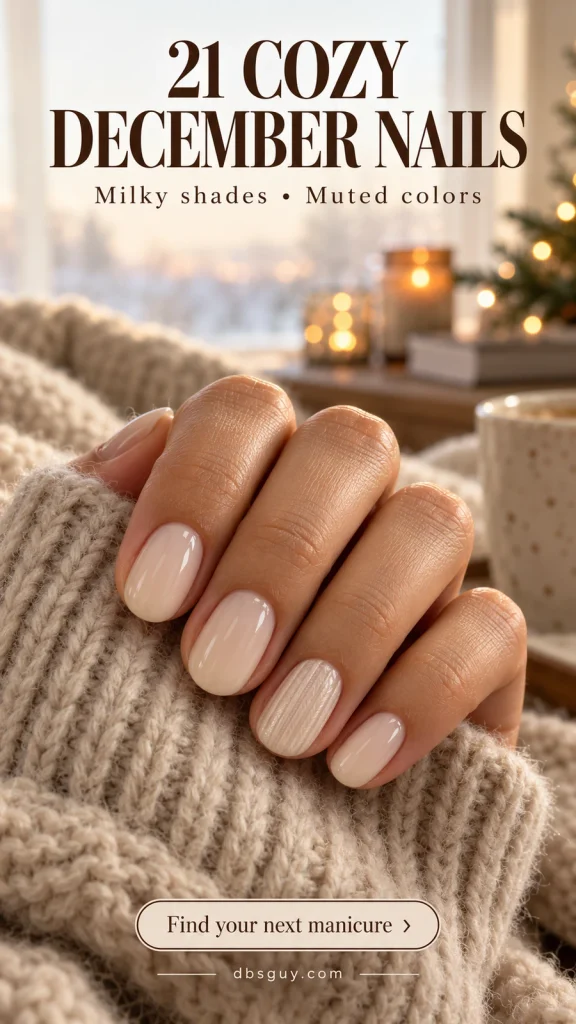
Choose the kind of softness you want
- Mostly natural nail showing: start with cloud milk, blush milk, or the soft French fade.
- A visible but muted color: look at lavender fog, sage, or mushroom taupe.
- A sweater reference: choose the flat Fair Isle band if you prefer a smooth surface; choose oatmeal ribs or slim ivory V stitches for relief.
- A little December sparkle: try champagne-frosted tips, pearly taupe, or one fine gold line.
Sheerness and shine are separate choices. A nail can be sheer and glossy, opaque and glossy, or opaque with a matte finish. Describe both so “soft nails” does not leave your artist guessing.
1. Cloud-Milk Nails With a Glassy Finish
For a quiet December manicure, start with milky ivory and a glossy surface. The reference keeps the nails short and softly squared, so the pale color feels easy to wear beside a thick charcoal sweater. There is no glitter or accent nail competing with the finish.
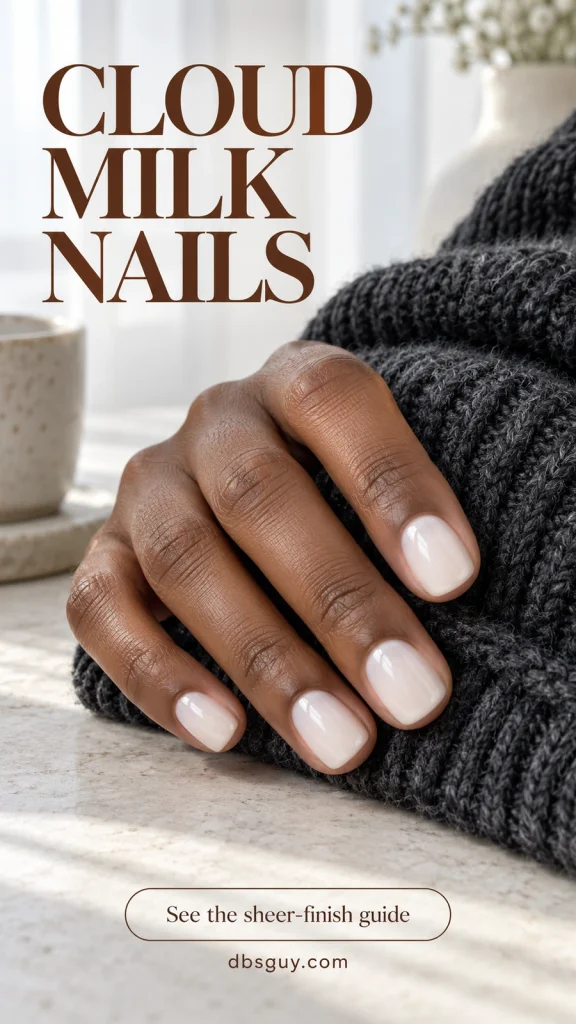
Ask to see a sheer white swatch over a natural-looking nail tip. “Milky” describes the softened appearance, but it does not tell your artist exactly how much coverage you want. Say whether you are comfortable seeing the natural free edge through the polish. If you want more coverage, choose a creamier formula rather than assuming extra coats will preserve the same translucency.
2. Warm Oat-Milk Nails
Oat milk adds a little beige warmth to the milky-white idea. It is a useful direction if your winter wardrobe centers on camel, chocolate, or cream and a cool white feels sharper than you want. Keep the silhouette rounded or gently tapered, with a smooth glossy finish.

Compare an oat swatch with an ivory one beside your hand and sweater. A bottle that looks neutral on a screen can look distinctly yellow, pink, or gray in person. Choose the difference you actually enjoy; there is no rule that a warm sweater requires a warm manicure. For this version, skip shimmer so the creamy color stays the main detail.
3. Blush-Milk Oval Nails
Blush milk keeps the softness of a pale manicure while letting pink show through. The rounded oval shape works particularly well with the uncomplicated color: you notice the smooth outline and gentle shine before you notice any nail art.
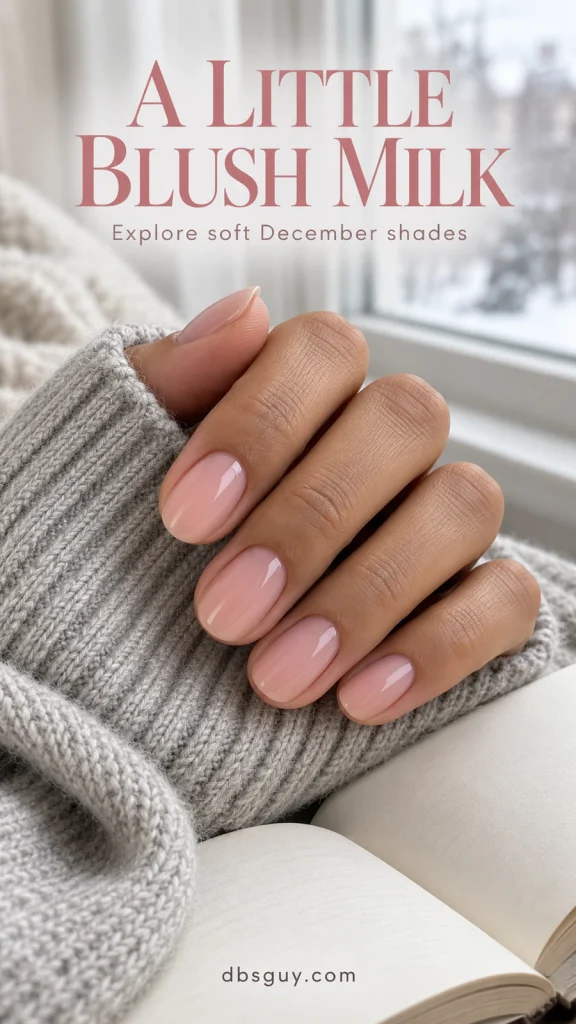
Choose this if you want something that works with both a gray cardigan and a dressed-up December outfit. Ask for translucent pink with a milky cast, rather than an opaque pastel. For a home manicure, use a polish sold with the level of sheerness you want and follow its application directions. Do not judge the final color while the first thin layer is still wet.
4. A Soft Milky French Fade
A French fade gives you a lighter tip without the crisp white stripe of a traditional French manicure. Here, the pink-beige base blends into ivory at the free edge. That gradual transition is the feature to point out when you bring the reference to a salon.
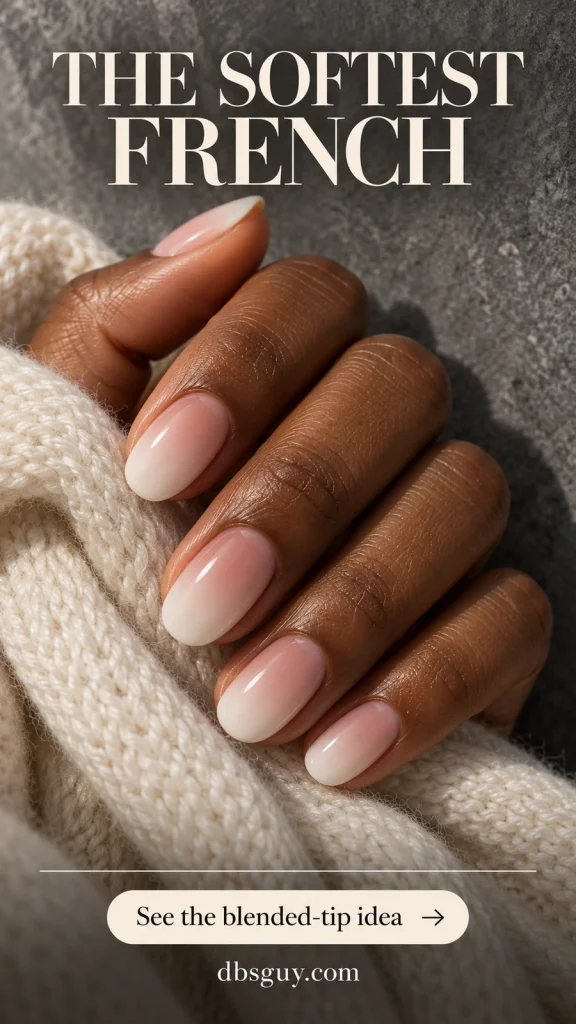
Ask for a diffused milky tip and a visible blend, not a white band with a blurred border. On shorter nails, keep the pale area proportionate to the available length so the whole nail does not turn white. A soft oval or rounded shape echoes the gentle finish. If you prefer a sharply defined smile line, idea eight will be closer to what you want.
5. Lavender Fog on Rounded Nails
Lavender fog is a muted purple with enough gray to feel subdued. It changes the palette without adding another pattern, which makes it a good companion to textured charcoal knitwear. Keep every nail the same color if you want the shade itself to be the point.
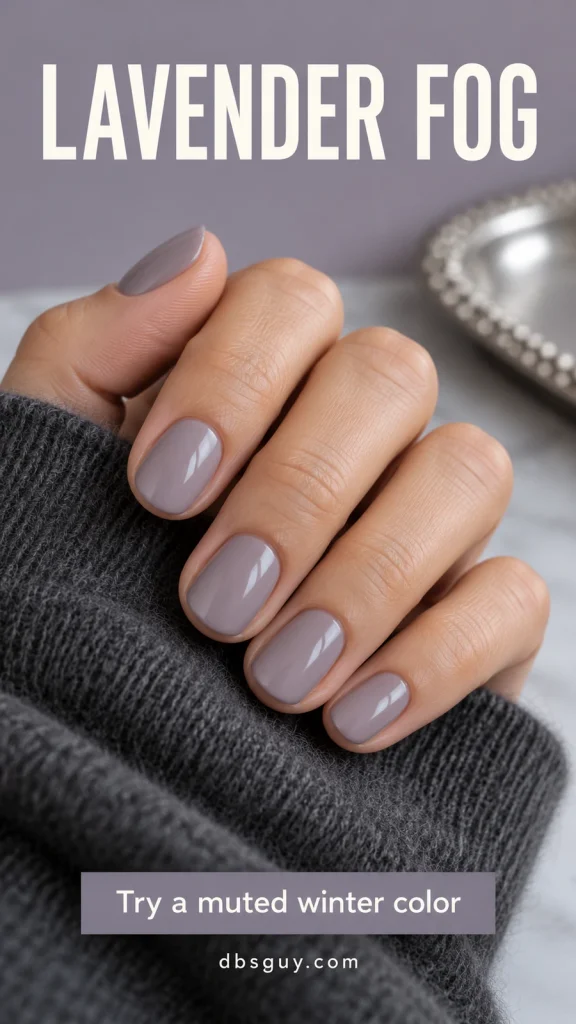
At the salon, compare a dusty lavender with a brighter lilac before deciding. Both may look pale in the bottle, but the brighter option will create a different mood. Ask for a rounded outline and a smooth cream finish. If your reference looks nearly gray in dim light, check the swatch near a window before deciding it is too dark or too purple.
6. Dusty Rose With a Mauve Half-Moon
A small mauve half-moon gives dusty rose a second color without covering the whole nail in art. Place it at the base of one accent nail and keep the rest of the set plain. The two shades should be different enough that the curve remains visible.
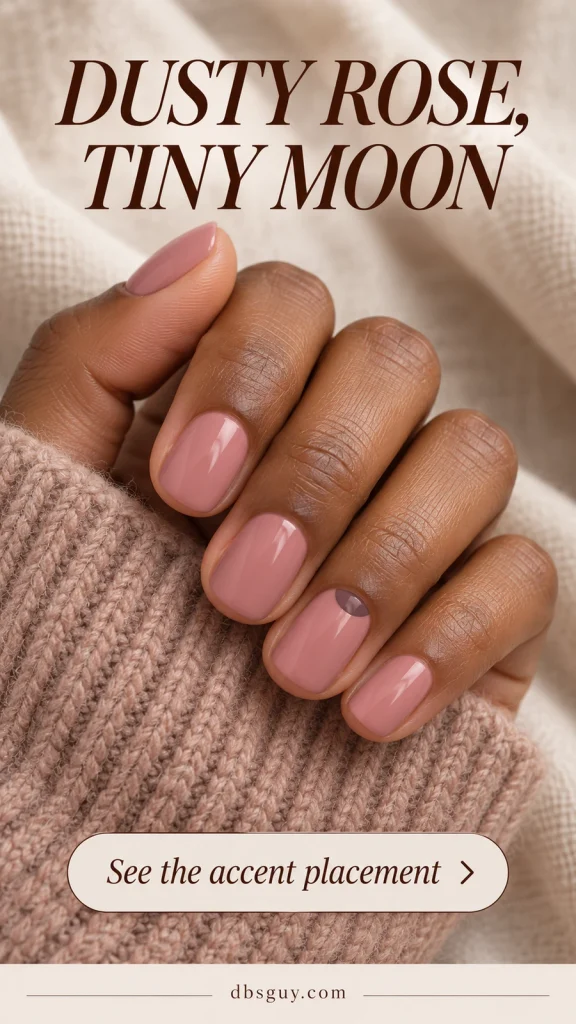
This is a color choice as much as a placement choice: burgundy would make a stronger contrast, while a muted mauve stays within the soft palette. Ask for a shallow painted semicircle near the cuticle, leaving the product off the skin. On a short nail, reduce the height of the moon rather than narrowing it into an awkward dot.
7. Soft Sage With a Milky Side Curve
Sage is a gentle way to wear green when an emerald manicure feels too saturated. Make most nails solid sage, then give one nail a milky base and a broad green curve down one side. The pale space keeps the accent from looking crowded.
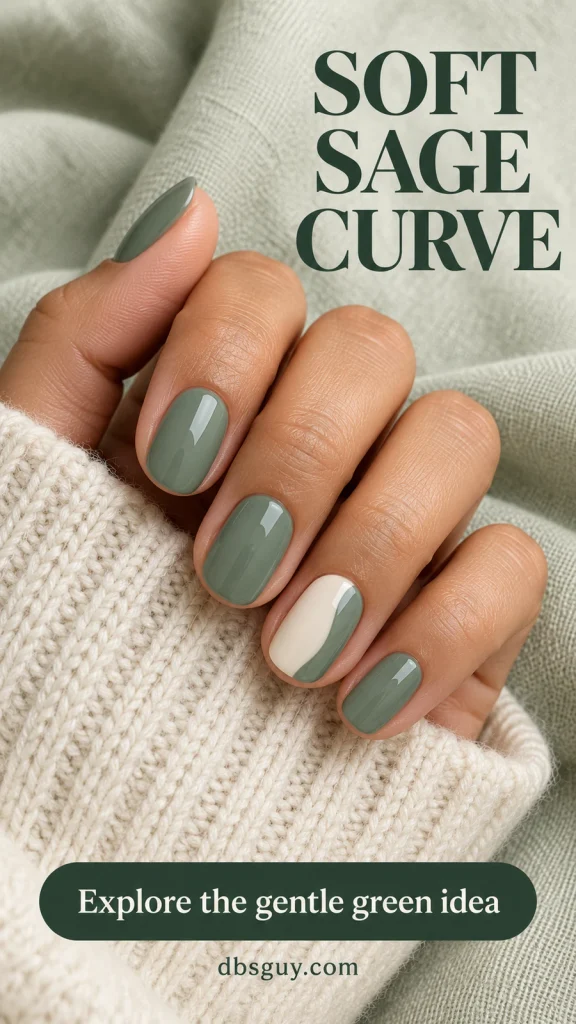
Ask your artist to treat the curve as an area of color, not a thin outline around the nail. Leave enough ivory visible that you can read both shapes. This design can work on a short oval because it does not depend on a long free edge. Pair it with cream knitwear for a close color relationship, or a dark sweater if you want the green to stand out more.
8. Slate-Blue Micro French Tips
A slate-blue micro French puts the color at the very edge of a milky nude base. It is a useful compromise if you like blue December nails but want the finished set to stay mostly neutral. Keep the tip curved and fine rather than turning it into a wide block.
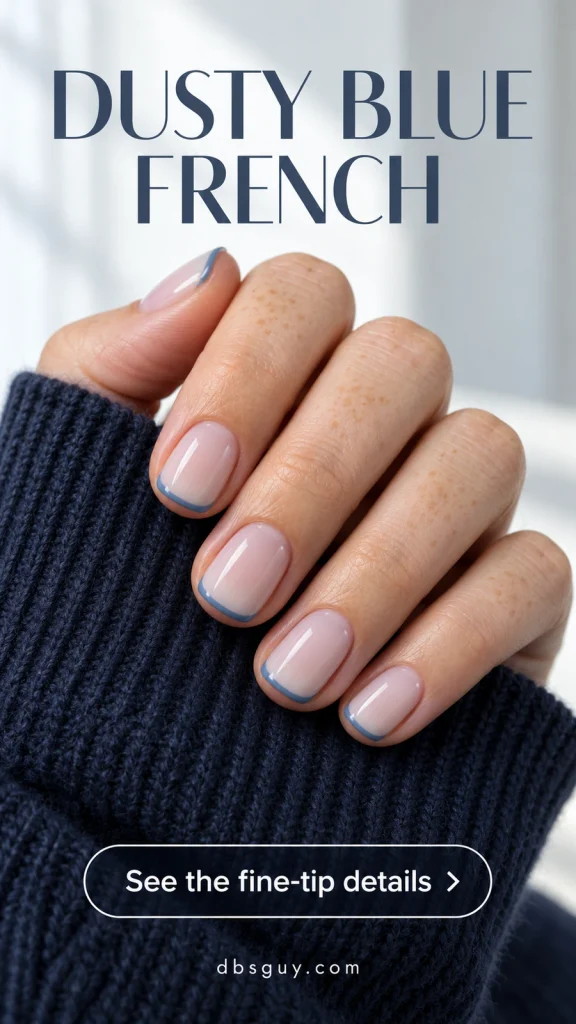
Bring a dusty blue reference rather than simply requesting “winter blue,” which could mean anything from icy pastel to navy. On very short nails, ask whether a hairline tip will remain distinct on your shape. The line does not need to be identical in width to the reference; it needs to look balanced on your own nails.
9. Mushroom Nails With Sheer Half-Moons
Mushroom taupe sits between beige and gray. Leaving small sheer half-moons at the base gives this otherwise solid manicure an intentional break in coverage. Unlike the painted mauve accent in idea six, the little crescent here is part of the negative-space design.
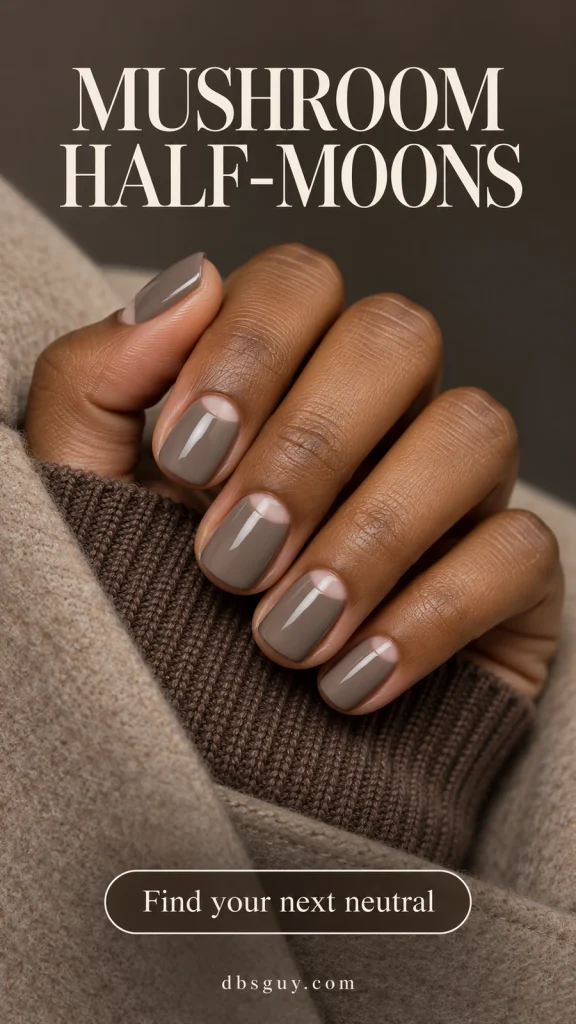
Keep the exposed area small and consistent across the set. Ask for a clean rounded boundary rather than a large bare section that takes over the nail. This choice suits someone who enjoys a defined graphic detail but wants to stay with one polish color. The sheer area does not make a manicure maintenance-free; the rest of the finish and nail edges will still need attention as it wears.
10. A Cocoa-to-Cream Tonal Manicure
A tonal manicure lets you wear the whole cozy neutral palette at once. Choose cream, oat, camel-taupe, milk chocolate, and deep cocoa, with one color on each nail. The set feels connected because the shades move through a similar warm color family.
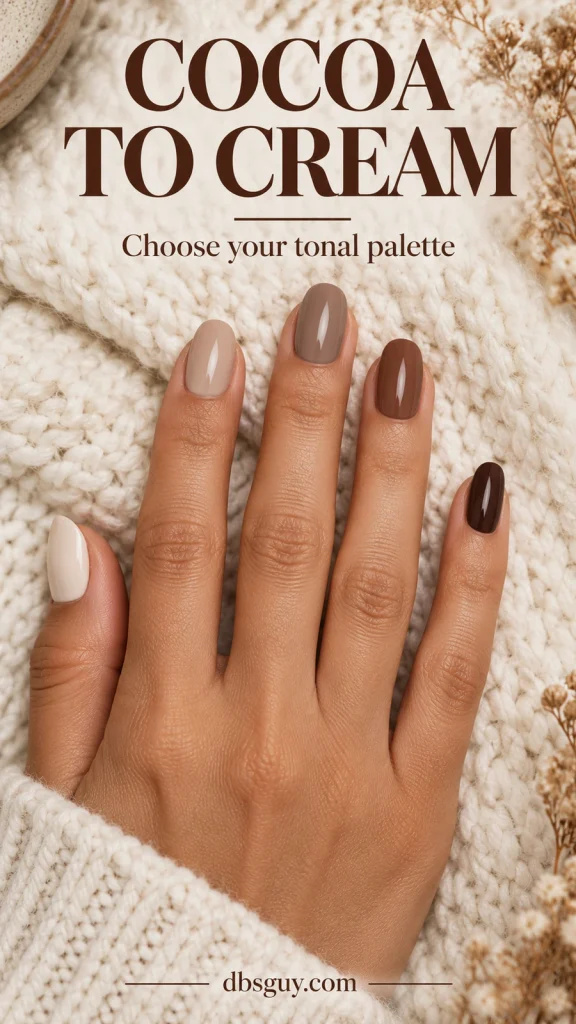
Look at the five swatches together before choosing their order. The middle shades need enough separation to avoid looking like accidental mismatches. For an even quieter version, use a smaller range from oat to medium taupe. Keep the same shape and surface finish across the hand; mixing several colors, nail shapes, and finishes at once would make this particular idea harder to read.
11. Cream Nails With One Charcoal Windowpane
One charcoal windowpane nail brings a little of your winter scarf into a cream manicure. Use a sparse grid on a single accent and leave the other nails plain. You want to see separate fine lines with cream showing between them.
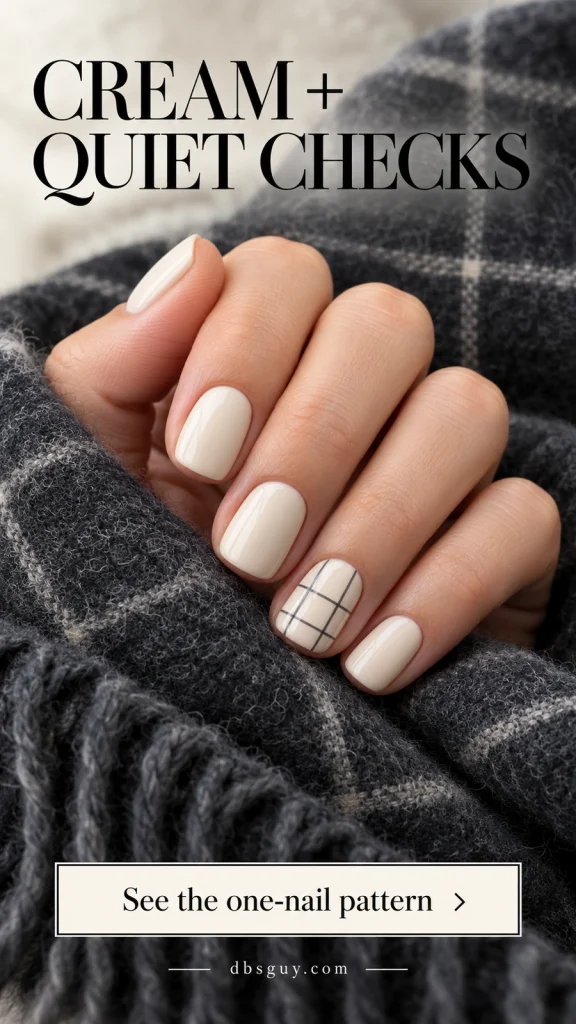
Ask for windowpane checks rather than a dense multicolor plaid. A short nail may only have room for a few intersections, and that is enough to suggest the pattern. If you are trying a similar look at home, a fine-line nail sticker can be an alternative to painting straight lines. Choose one sized for the nail so the edges do not need to fold onto the surrounding skin.
12. A Flat Fair Isle Band on Taupe
A narrow Fair Isle band suggests sweater pattern without requiring a raised surface. The taupe base and ivory stitches stay within the neutral palette, while the small zigzags and dots supply the decoration. Keep the band close to the tip on one nail.
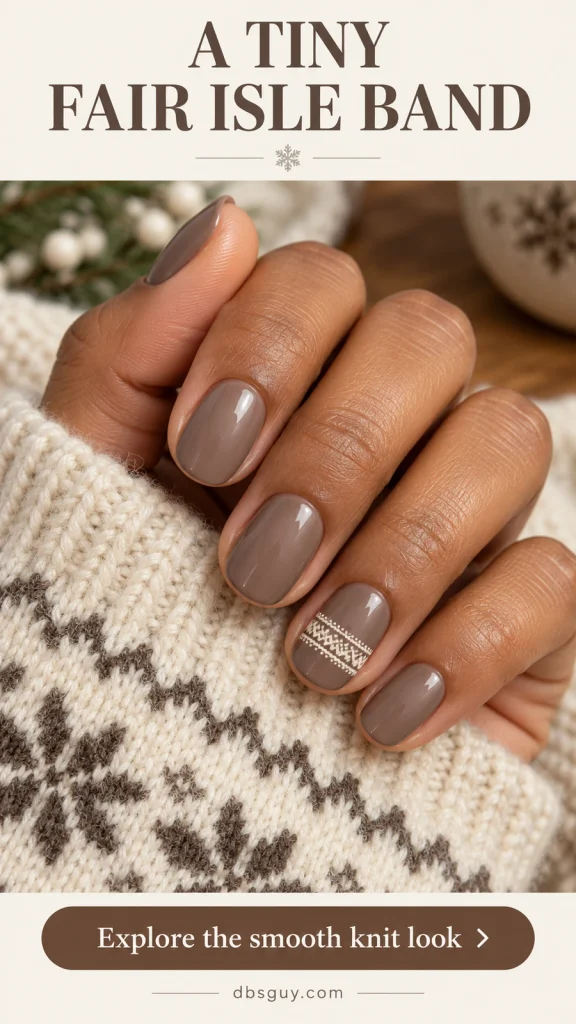
Be specific that you want flat painted art or a suitable flat decal. “Sweater nails” can also mean a textured service, which is a different request. On a short nail, simplify the motif instead of compressing a complicated knit chart into a tiny strip. A clean zigzag with a few evenly spaced dots can communicate the idea more clearly than several rows of crowded shapes.
13. Greige Nails With Glossy French Tips
Greige tips can stand out through reflection even when they match the base color. Give the nail beds a matte or satin finish and the French tips a glossy surface. The reference works because the curved tips catch the light while the rest looks softer.
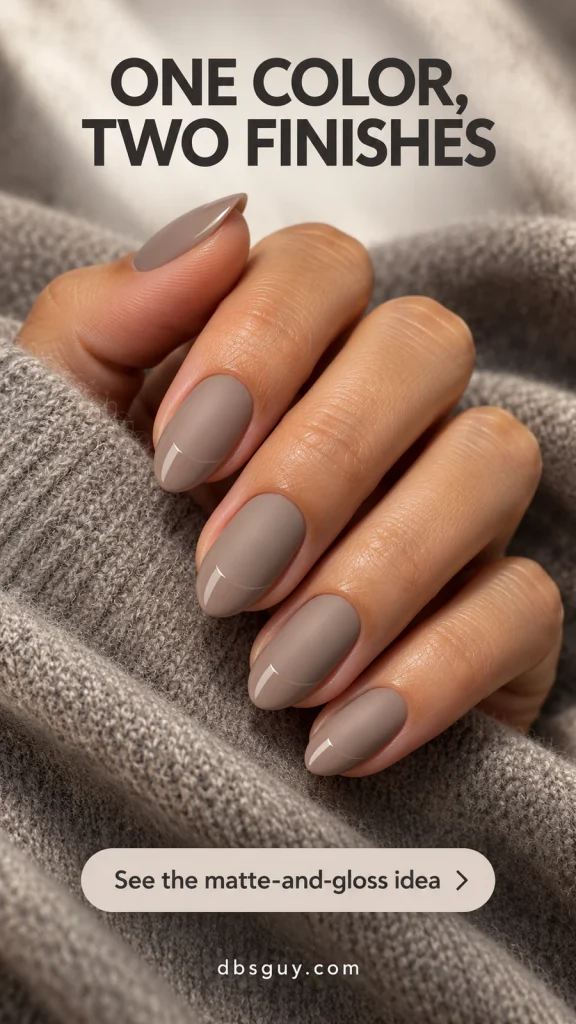
Ask to see the finish difference under ordinary light. In very flat lighting, this design may look almost like a single-color manicure, which can be part of its appeal. Keep the same greige throughout if you want a surface contrast; adding white tips would change the idea. Your artist can choose a product-compatible way to create the two finishes rather than relying on one universal top-coat sequence.
14. Oatmeal Nails With One Ribbed Accent
For a tactile sweater reference, try slender ribs on one oatmeal nail. Parallel lines give a different effect from a braided cable: they resemble the cuff of a ribbed sweater. Plain glossy nails around the accent keep the small ridges easy to see.

Request a low-profile ribbed design and ask to feel a sample if the salon has one. If you dislike any raised surface, ask for painted tonal stripes instead and expect a flatter result. This is a design brief for a nail professional, not a reason to build thick layers of ordinary polish at home. Choose the color and amount of relief separately so the finished texture suits how you use your hands.
If the texture is the part you love most, explore these sweater nail designs for December for more knit-focused options.
15. Lavender Nails With Tiny Ivory Stitches
Tiny ivory V stitches turn a dusty lavender manicure into a quiet knit-inspired set. Put a short row along the curved tip of one accent nail and leave the remaining nails plain. The reference uses slim, slightly raised stitches. Request flat painted V marks instead if you want a completely smooth nail.
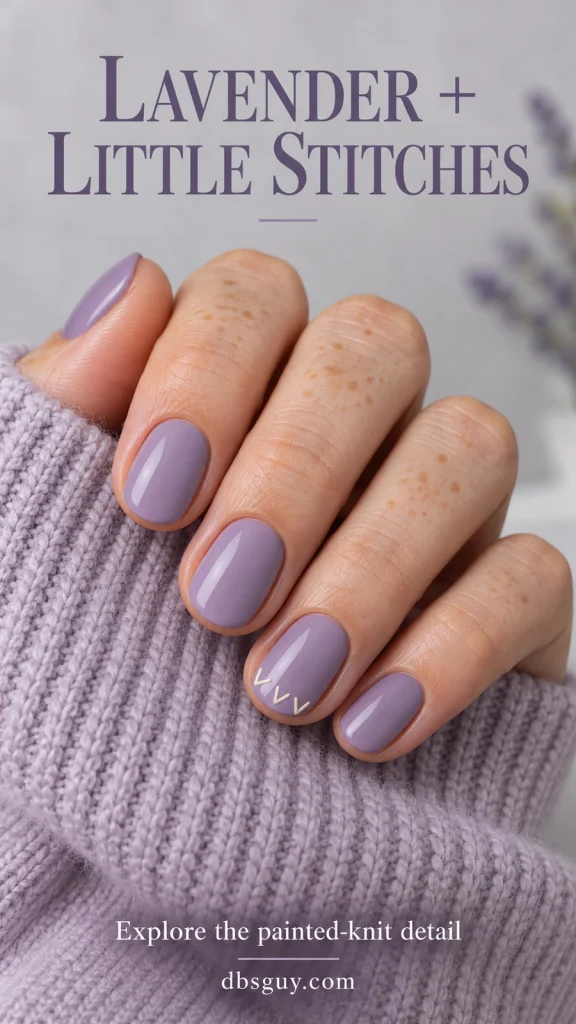
Give each V a little breathing room. If the reference has more stitches than your own short nail can hold, use fewer rather than shrinking them until they disappear. The contrast should come from ivory against lavender, with no need for another border or glitter. This is a good choice when you want a sweater detail that only becomes obvious when someone looks closely.
16. Sage-and-Cream Diagonal Color Blocks
Sage and cream can share the same nail without looking like a holiday motif. Divide each nail diagonally into two clear fields of color. The diagonal is the decoration, so there is no need to outline it or add a third shade.
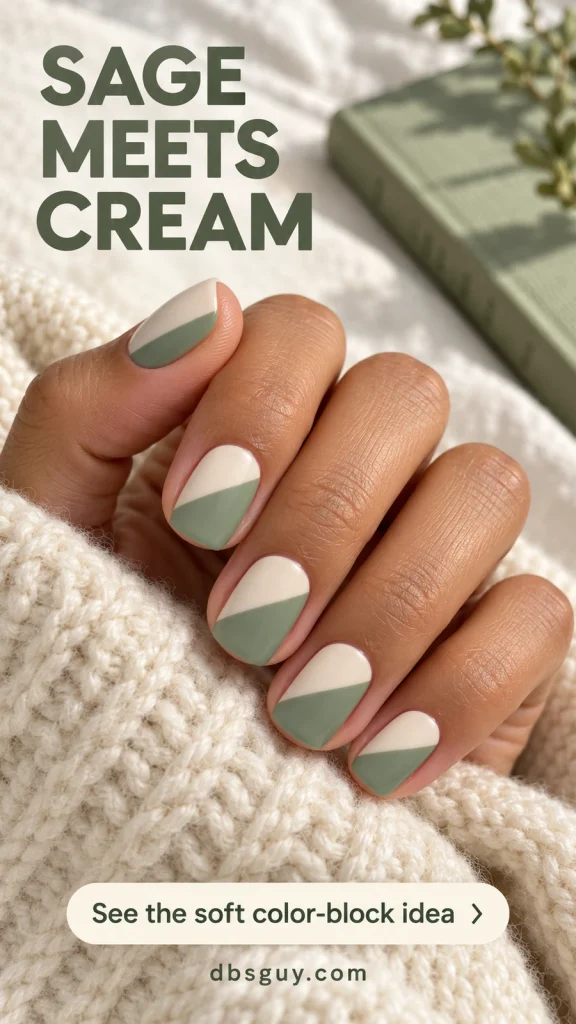
Decide which color should take up more space before the appointment. A near-even split looks graphic; a smaller cream section gives you a mostly green manicure. On a short squoval, a simple diagonal preserves more open space than a complicated wave. Ask for the same general direction across the hand if you want an orderly set, while allowing the line to be adjusted to each nail’s proportions.
17. Blue Milk With a Soft Vertical Fade
Blue milk can look especially soft when the blend runs from side to side. Ivory on one edge fades into dusty blue on the other, leaving the tip free of a traditional French border. The direction of the fade makes this different from a pale-tip ombre.
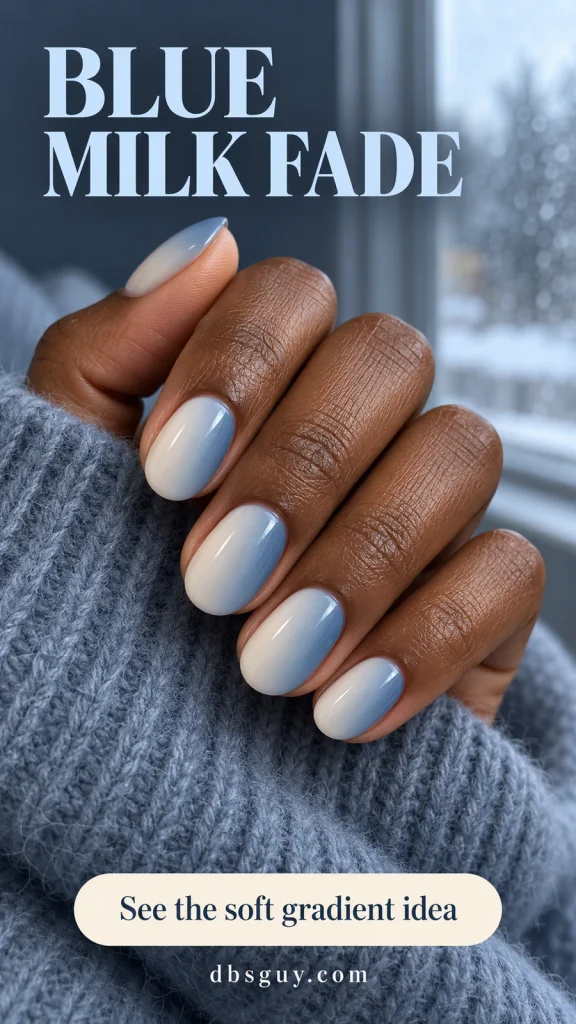
Show the image and say “a sideways gradient” so the placement is clear. Keep the two colors light enough to merge gently but distinct enough that the blue still shows. On a very narrow nail, your artist may recommend a simpler version or a slightly stronger blue for visibility. Leave off snowflakes and glitter if the blended color is what drew you to the design.
18. Sheer Beige With Champagne Frosted Tips
A little champagne shimmer at the tips can take a sheer beige manicure to a December dinner. Keep the particles fine and let them fade toward the middle, so the base remains visible. This is a scattered light-catching finish rather than a dense glitter stripe.
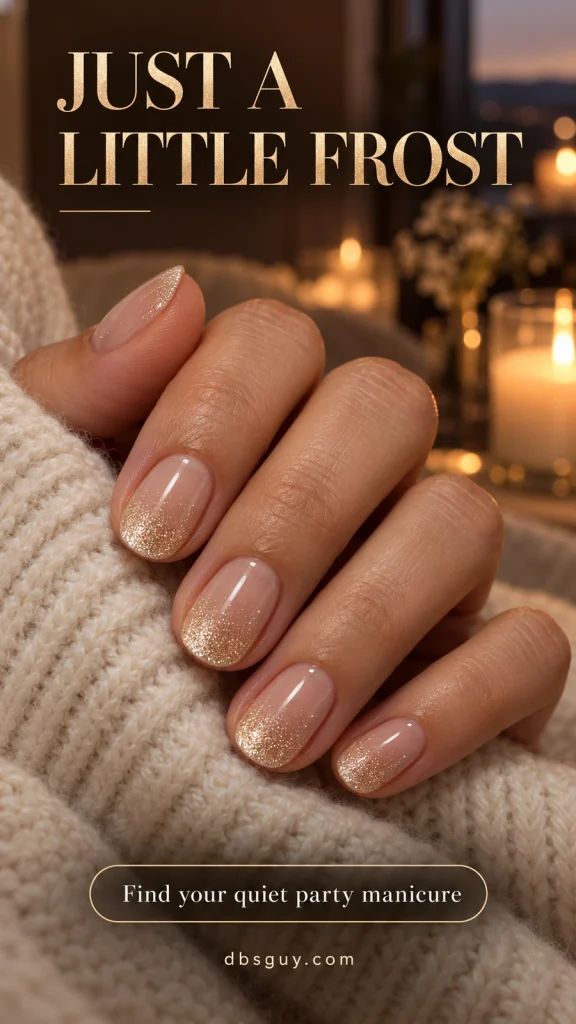
Compare fine shimmer with a chunky glitter sample before choosing. The particle size affects how noticeable the detail will be at arm’s length. For a home version, look for a fine-shimmer polish that can be layered over your base and follow the products’ directions. Stop adding shimmer while you can still see the soft beige underneath; full coverage will create a different effect.
For a stronger shift toward evening sparkle, see our December nails from early sparkle to New Year’s Eve.
19. Pearly Taupe With a Soft Glazed Finish
Pearly taupe keeps the manicure neutral while changing how its surface reflects light. The goal is a diffused glow over a soft taupe base, rather than a bright mirror-metal finish. It works well beside a dark knit because the pale sheen remains easy to notice.
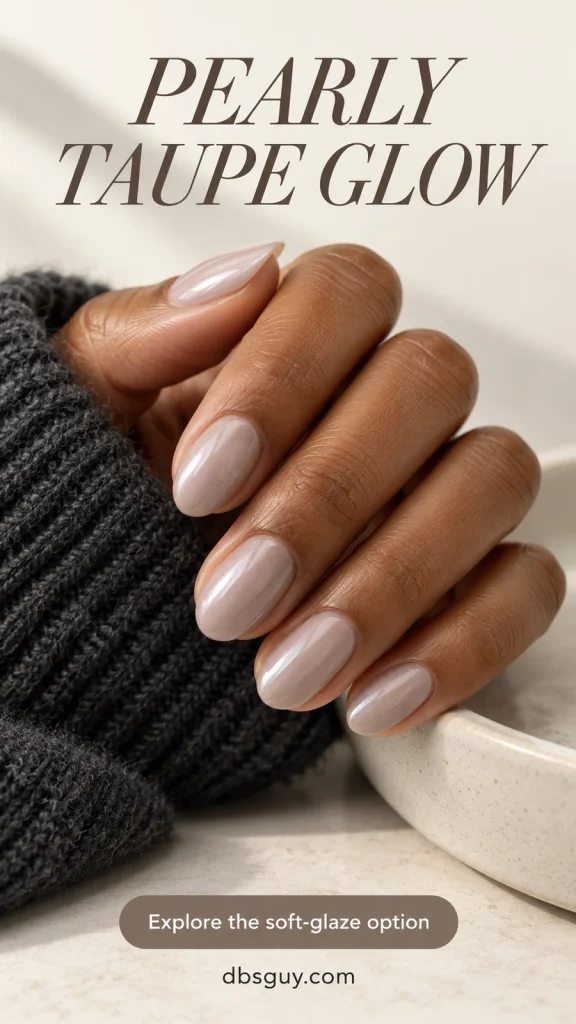
Use the words “soft pearl” and compare a sample with a stronger chrome finish. The same reference can look warmer or cooler under different lighting, so check the result away from the brightest salon lamp when possible. A pearlescent regular polish can be a simpler option if it gives the effect you like; you do not have to choose a powder service just because an inspiration image looks glazed.
20. Milky Ivory With One Fine Gold Line
One fine gold line can make milky ivory feel festive while leaving the rest of the set quiet. Place it near the base of an accent nail and keep the remaining nails plain. A chocolate sweater provides enough contrast for both the ivory and gold to show.
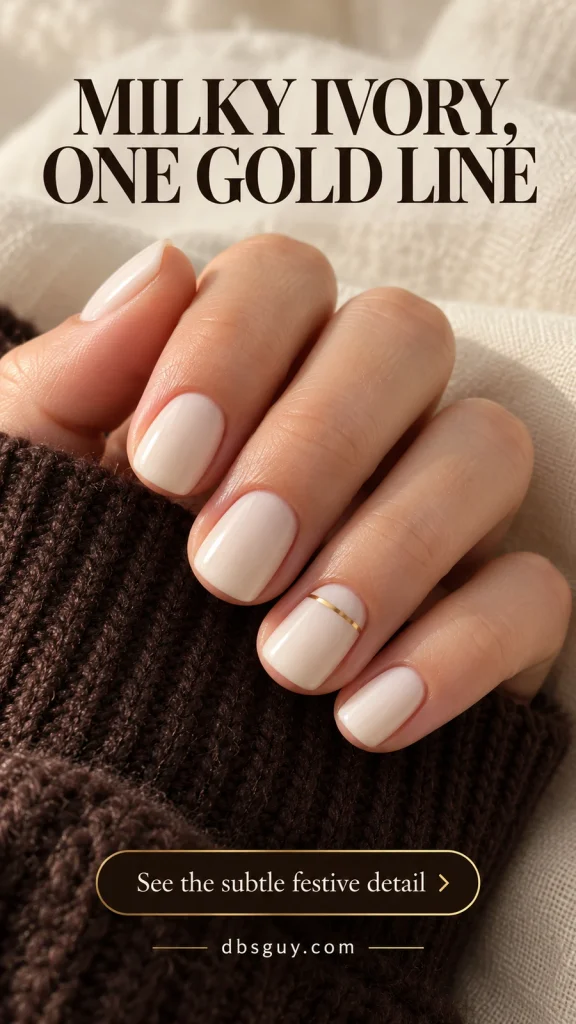
Ask for a thin metallic line rather than a wide foil band. If you choose nail striping tape, discuss how it will be finished so there is no loose edge sticking out. On a very short nail, move the line slightly inward if needed to give it visible ivory space on both sides. The placement can be adjusted without adding another decoration.
21. Soft Slate With One Tiny Snowflake
Soft slate offers a darker ending to the palette without moving into black or navy. Add one small ivory snowflake to an accent nail and leave the surrounding nails plain. The gray makes the fine branches visible, while the ivory connects the set to a cream sweater or mitten.
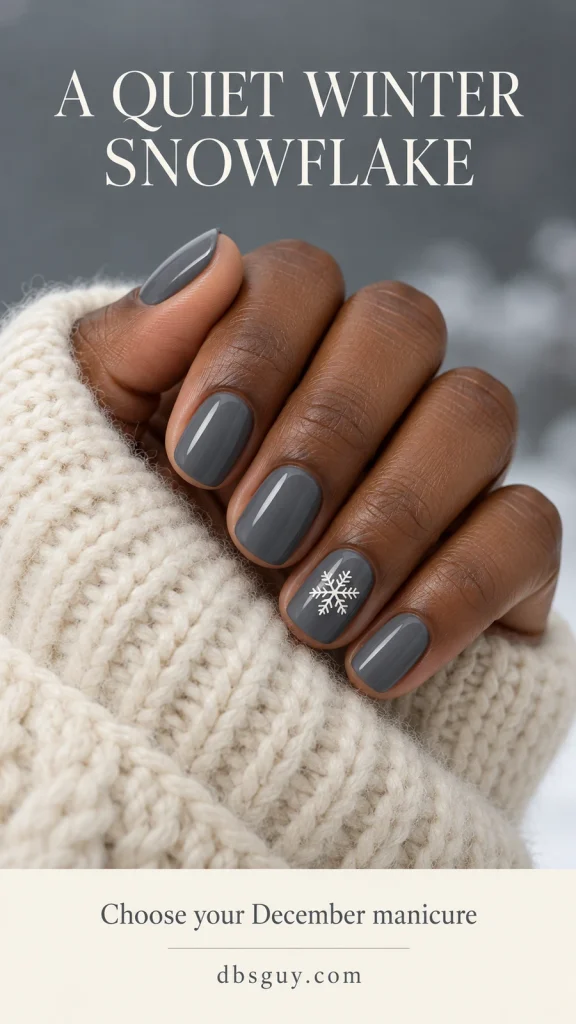
Ask for one simplified snowflake with enough space around it to read clearly. If your nail is small, fewer tiny side branches will look cleaner than a crowded lace-like design. Keep the surface smooth if raised decoration is not your preference. This is the clearest winter motif in the collection, so it is a good pick when a plain neutral feels a little too quiet.
Turn your favorite image into a clear salon request
Save one main reference and tell your artist which part matters most. For example: “I want the sheer ivory of idea one, in my current short shape, with no shimmer.” If you like the Fair Isle pattern but want a pink base, say that before the design starts. A specific change is easier to discuss than several images with conflicting colors and finishes.
Ask to see the shade beside your hand and your sweater, then check it in daylight if possible. You can choose warm, cool, or contrasting colors on any skin tone; a swatch helps you judge the effect you prefer. Keep the reference shape flexible if your natural nails are shorter than the image.
For a home manicure, the plain colors and suitable pearlescent lacquers are the most straightforward starting points in this collection. Follow the directions for your chosen base, color, and top coat. Do not use these concept images as instructions for mixing products, choosing a gel lamp, or setting a curing time.
Give nail care the same attention as the color. The American Academy of Dermatology’s manicure guidance recommends moisturizing nails, especially after polish removal, and avoiding cutting or forcefully pushing back cuticles. At a salon, ask how tools are cleaned. If you have an ongoing nail problem, get it assessed rather than covering it with a decorative set.
Questions to settle before you pick a design
What makes a manicure look milky rather than bright white?
A milky look has a softened white or pale-colored appearance, often with some translucency. An opaque bright white gives a stronger block of color. Because formulas vary, use a swatch to agree on how visible your natural nail line should be instead of requesting a fixed number of coats.
Can I wear this aesthetic on very short nails?
Yes. Plain milky shades, a muted solid color, a fine tip, or a small single accent can all be adapted to a short nail. Simplify detailed patterns and leave open space around them. You do not need extensions just to wear a December color palette.
Do sweater nails have to be raised?
No. A Fair Isle band or little V stitches can be painted flat. A ribbed accent has actual surface texture. Show your artist the version you want and discuss how much relief, if any, you are comfortable with.
Can I get a cozy December manicure with regular polish?
Yes. Many of the solid colors, sheer finishes, fine lines, and painted motifs can be interpreted with regular lacquer. Pearlescent polish can suggest a soft glaze. A raised textured design is a separate service request; ask your artist which options fit the finish and maintenance you want.
Which idea is the easiest place to start if I cannot decide?
Choose the plain color you would enjoy seeing beside the sweater you wear most. Cloud milk keeps the manicure light, oat milk adds warmth, and lavender fog gives you muted color. You can save the art for another appointment; a well-chosen shade is a complete design on its own.