For quiet luxury college outfits on a student budget, start with clothes that fit comfortably, a few colors that work together, and shoes you can walk to class in. A cream sweater with dark jeans or a white tee with charcoal trousers already gives you the understated look. Build the combinations below around pieces you own.

The visuals are AI-generated outfit concepts. They illustrate styling ideas; they do not document clothing we bought or wear-tested.
Find a look for your day
- Everyday lectures: start with the sweater and jeans in look 1, tee and trousers in look 2, or black basics in look 8.
- Presentations and club meetings: look 3 adds a neat shirt; look 6 adds a blazer without requiring a suit.
- Warm afternoons: look 5 uses tailored shorts; look 9 keeps the outfit to one shirt dress.
- Skirt and dress days: look 4 pairs a cardigan with a midi skirt, and look 10 reuses a blue shirt over a knit dress.
- Cooler weather: look 7 has a removable cardigan; look 11 adds a coat. Adjust your actual layers to the forecast.
Keep the budget attached to your closet
Here, quiet luxury means an understated styling approach: simple shapes, restrained details, and fabric that hangs the way you want it to. Expensive fibers, designer bags, and a wardrobe full of beige are optional. Your everyday backpack belongs in these outfits, too.
Choose two or three looks you could wear this week. Pull out their shared pieces before shopping. Dark jeans appear in looks 1 and 6, the blue shirt returns in looks 3 and 10, and white sneakers work across several combinations.
If you have $75 available for clothing, an illustrative plan is to set caps of $30 for trousers, $25 for a knit, and $20 for a shirt. These are personal spending limits, not verified store prices or a complete outfit total. They exclude tax, shipping, shoes, bags, and alterations. Subtract those costs first when they apply, and buy fewer pieces if necessary.
Already own the pants? Keep that money. A useful purchase fills a gap in an outfit you will wear; it does not need to complete all 11 pictures.
Also Read: How to Shop Your Own Closet and Find the Outfits You Already Own
1. A cream sweater with dark straight-leg jeans
The pieces: cream crewneck sweater, dark-indigo straight-leg jeans, black penny loafers, and a black backpack.
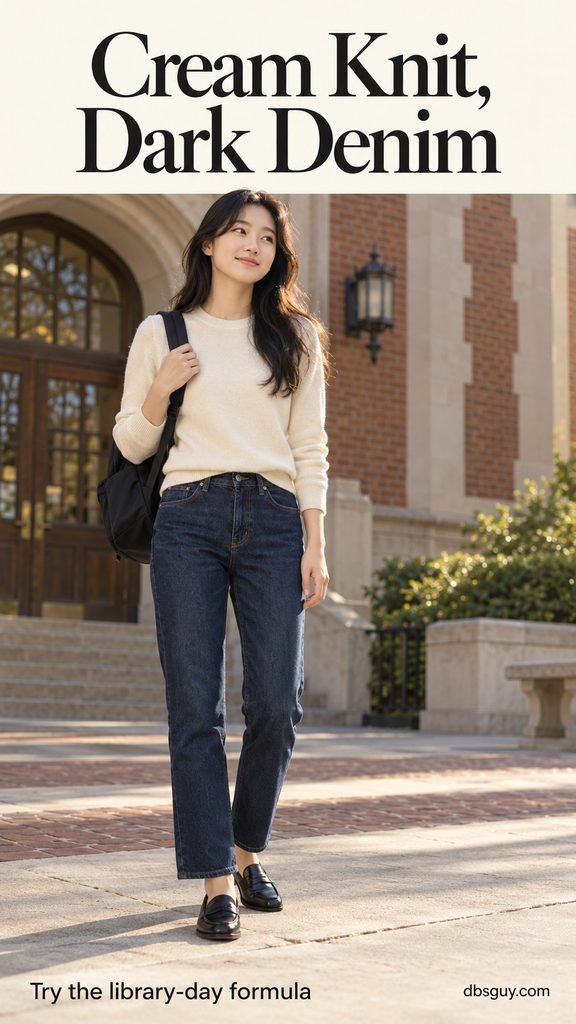
The light knit and dark denim give this library-day outfit a clear contrast. Choose a sweater that fits under your normal jacket, with a neckline that holds its shape. Cotton or a washable blend can give you the look without adding a cashmere purchase to the budget.
Let the hem sit near the waistband, or tuck a small section if that feels comfortable. Check the jeans while sitting and climbing a step; a neat standing photo is only part of a campus outfit.
Keep your existing sneakers if loafers are missing from your closet. The dark denim and cream knit still carry the combination.
2. A white tee with charcoal wide-leg trousers
The pieces: plain white crewneck tee, charcoal wide-leg trousers, white sneakers, and a black canvas tote.
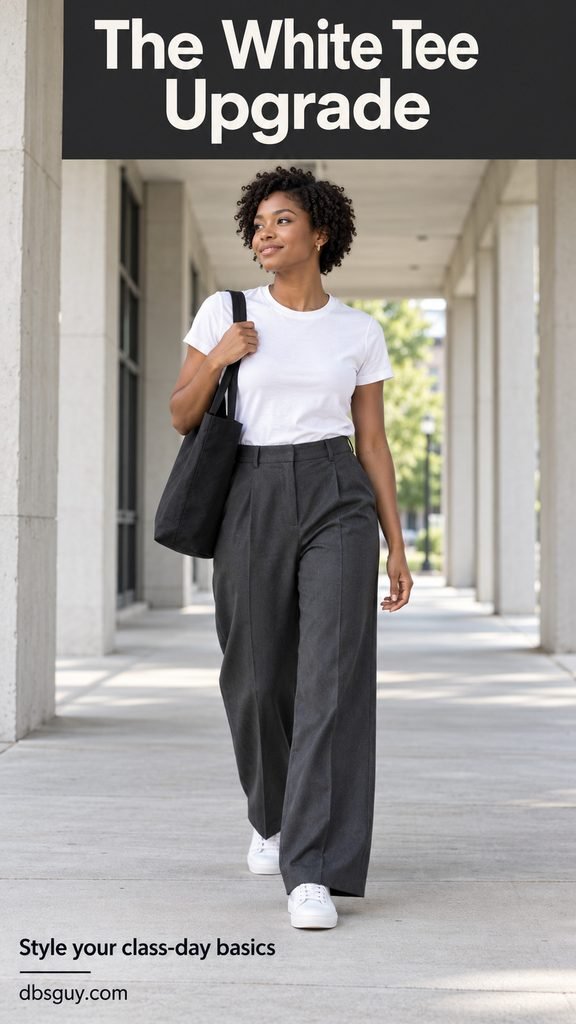
This is an easy place to reuse something that feels too dressy for class. Trousers from a presentation outfit become everyday pants with a tee and sneakers. The charcoal fabric supplies the structure, so you can leave off the blazer.
Try the pants with the shoes you will wear. The hems should clear the ground, and the waistband should stay comfortable through a seated lecture. If a full tuck feels bulky, use a shorter tee or leave a tidy hem loose.
Before buying another white top, check yours in daylight with your intended undergarments. Choose enough opacity for your comfort rather than relying on an online product photo.
3. A blue button-down with ecru ankle pants
The pieces: light-blue button-down shirt, ecru straight-leg ankle pants, brown loafers, and a brown tote.
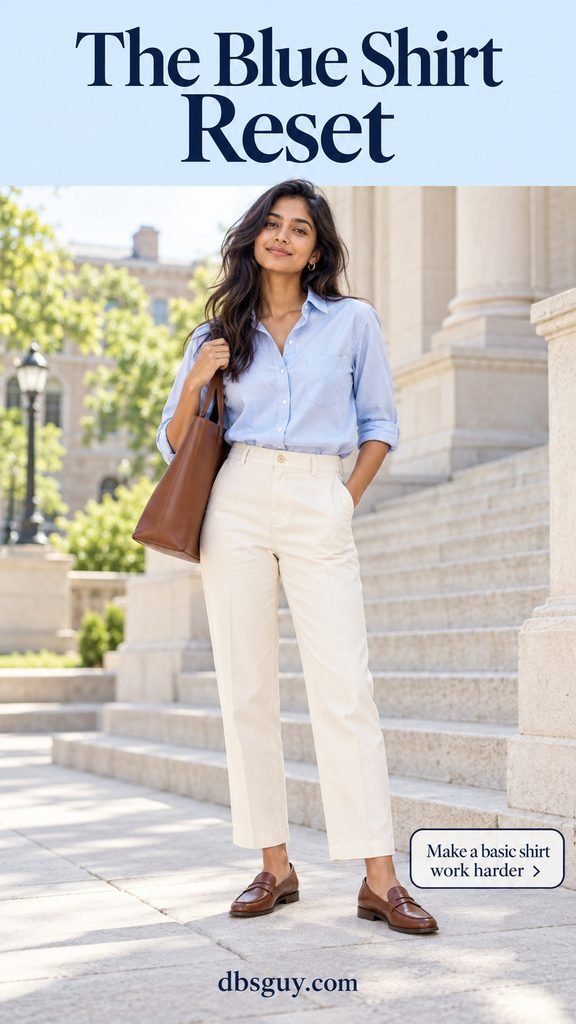
A blue shirt brings color into an understated outfit without complicating the palette. With pale pants, it feels a little more dressed for an advisor meeting or a day when you want a crisp starting point.
Look for room across the upper back and a button front that stays closed when you sit. Roll long sleeves evenly and tuck only as much fabric as the waistband can hold comfortably. A shorter shirt with a straight hem can work untucked.
Khaki pants you already own can replace ecru. If you shop secondhand for the shirt, use garment measurements and inspect the collar and underarms instead of choosing by the size label alone.
4. An oatmeal cardigan with a black midi skirt
The pieces: oatmeal button-front cardigan, black A-line midi skirt, low Mary Janes, and a black shoulder bag.
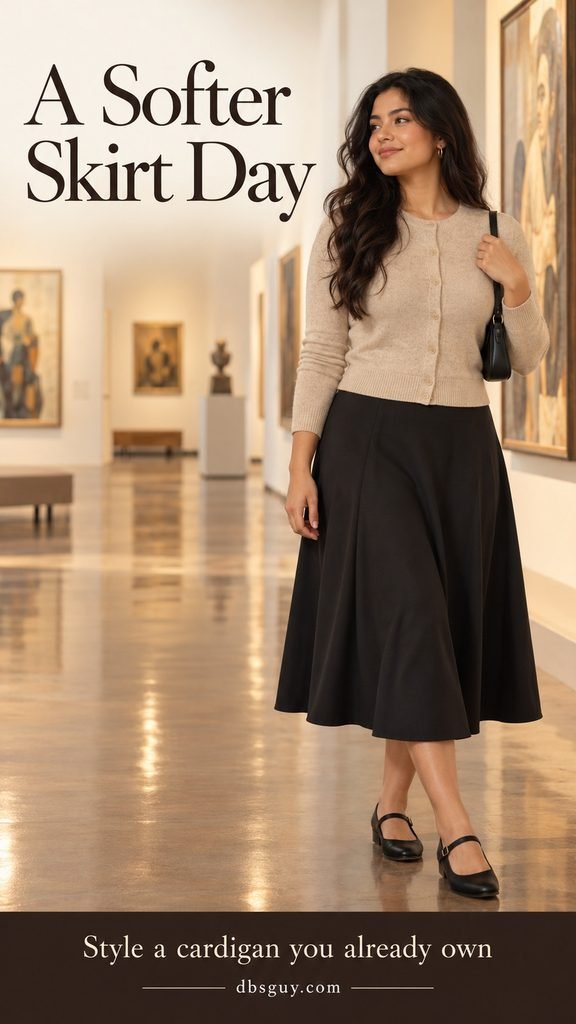
Buttoning a cardigan as a top gives a skirt outfit a soft outline. A matte black skirt makes this version easy to repeat for seminars, a campus gallery visit, or coffee afterward. A simple knit and a skirt with movement provide enough texture without adding a print.
Check that the buttons do not pull when you reach forward. If you prefer a layer underneath, use a camisole you already have. Walk up a few stairs in the skirt before committing to its length.
The small bag in the concept suits a light day. Take your usual backpack when you need books, and choose familiar sneakers if your route is long.
5. A navy knit polo with tailored Bermuda shorts
The pieces: navy short-sleeve knit polo, stone Bermuda shorts, white sneakers, and a canvas tote.

A knit polo gives a warm-weather shorts outfit some definition around the neckline. Longer shorts keep the combination relaxed, while navy and stone make the pieces easy to reuse separately.
Choose a length you enjoy wearing while seated, with enough room through the thigh to walk freely. Check that the pockets lie reasonably flat. A shorter top can sit over the waistband without a bulky tuck.
A plain navy tee works if you do not own a polo. Save that purchase for a time when it would also work with your jeans or trousers. Bring a layer from home if your classrooms run cold.
Also Read: 30 Refined Quiet Luxury Summer Outfits for 2026
6. A taupe blazer over a black tee and jeans
The pieces: taupe blazer, black crewneck tee, dark straight-leg jeans, black loafers, and a practical black tote.

Use this for a presentation or club event when you want a jacket but do not need formal businesswear. The black tee leaves the blazer’s outline clear, and jeans keep the combination close to your everyday wardrobe. Check an event’s expectations before treating denim as interview attire.
When trying a blazer, reach forward as if typing and lift your arms. The shoulders should allow normal movement. A bargain jacket that needs substantial reshaping may cost more than planned once alterations are included.
Borrow one for an occasional presentation before buying your own. Navy or black can replace taupe; there is no need for a new color just to reproduce a picture.
Also Read: How to Find the Real Gaps in Your Wardrobe (Not the Ones You Think)
7. Chocolate cardigan layers with ivory wide-leg jeans
The pieces: long chocolate open cardigan, matching tank, ivory wide-leg jeans, brown loafers, and a brown tote.
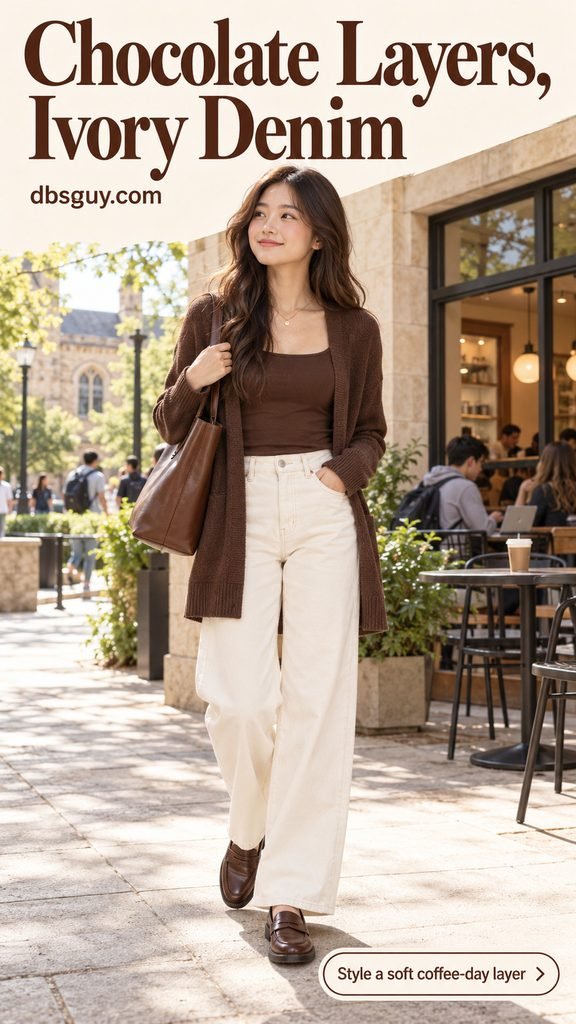
A long open cardigan changes the silhouette of a tank and jeans without the structure of a blazer. Similar brown shades in the top layers make the outfit feel coordinated, while ivory denim lets you see the cardigan’s shape. It suits a coffee stop or an afternoon with changing indoor temperatures.
Leave the cardigan open and tuck the tank only if you prefer it. Check that the longer knit does not bunch under your bag or when you sit. Wide jeans need hems that clear your shoes, and pale denim deserves a daylight opacity check.
Reuse a black tank under a brown cardigan if that is what you own. Coordinated layers do not have to become a matching-set purchase.
8. Black knitwear and ponte pants with a burgundy accent
The pieces: black fine-knit top, straight-leg black ponte pants, white sneakers, and a burgundy shoulder bag.
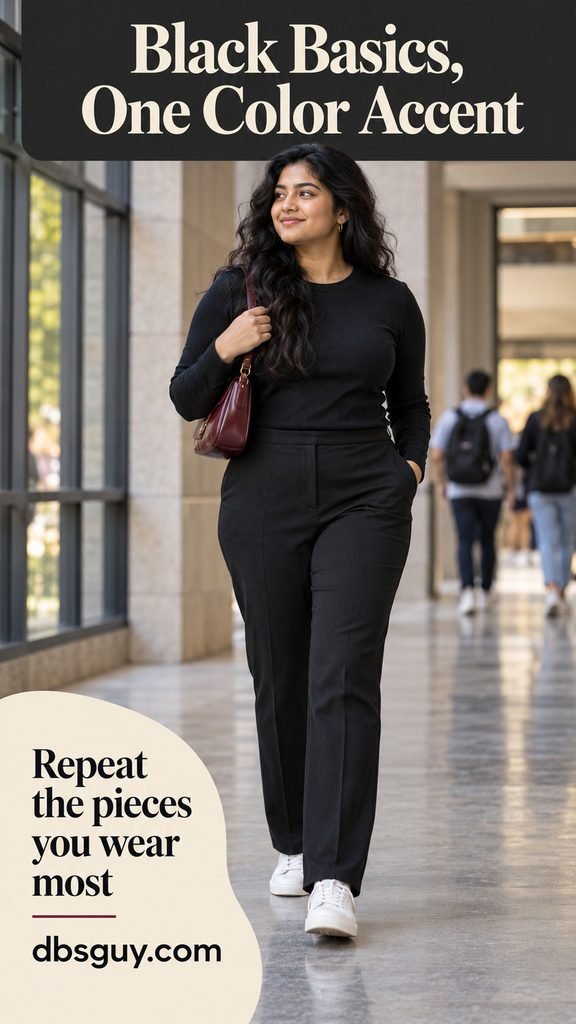
This is a useful long-lecture outfit when you want a simple outline and some stretch. The knit top and smoother pants give black-on-black texture. White sneakers break up the dark base, while burgundy supplies a small amount of color.
For a tailored effect, choose pants without jogger cuffs. Sit, bend your knees, and check whether the fabric or waistband pulls. The silhouette should still feel easy after you leave the fitting room.
The accent bag is optional. Keep your backpack if it carries your laptop better. Slightly different shades of black are fine when you like them together.
9. An olive shirt dress with brown sandals
The pieces: olive cotton shirt dress, brown flat sandals with back straps, and an ivory canvas tote.
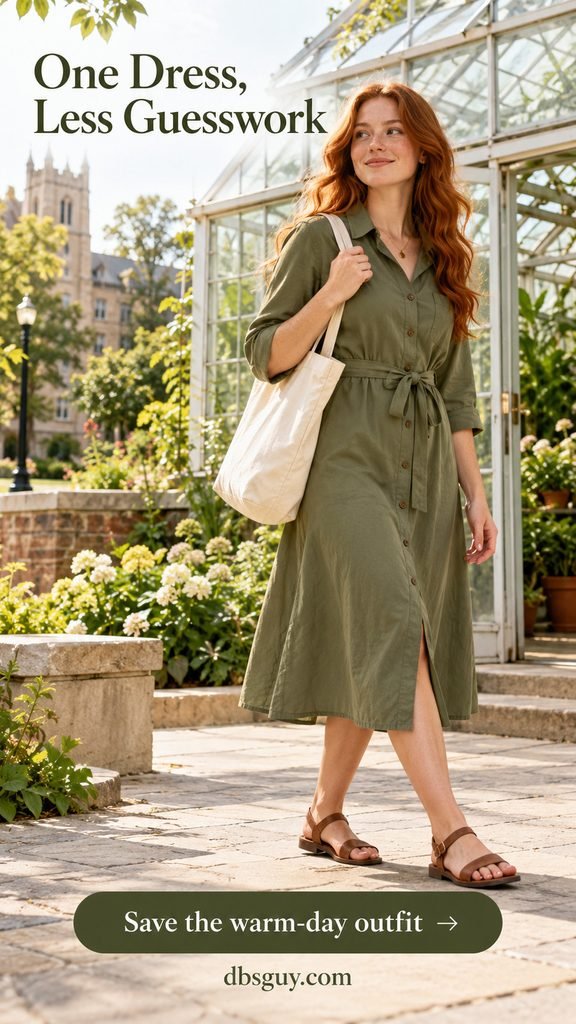
A shirt dress takes the matching decision out of a warm morning. Olive pairs easily with brown or cream accessories, and the soft fabric tie adds shape without requiring a separate belt.
Keep the tie loose enough to sit comfortably, or remove it for a straighter silhouette. Check the button front while seated and the stride room around your knees. A dress that needs constant adjusting is not doing the job of an easy class outfit.
Use sandals you already know are comfortable. Sneakers work when you need closed shoes; follow any lab or studio clothing requirements. Check that the dress’s care routine fits your dorm setup before buying it.
10. A navy knit midi dress under an open blue shirt
The pieces: navy short-sleeve knit midi dress, light-blue button-down worn open, white sneakers, and a navy backpack.
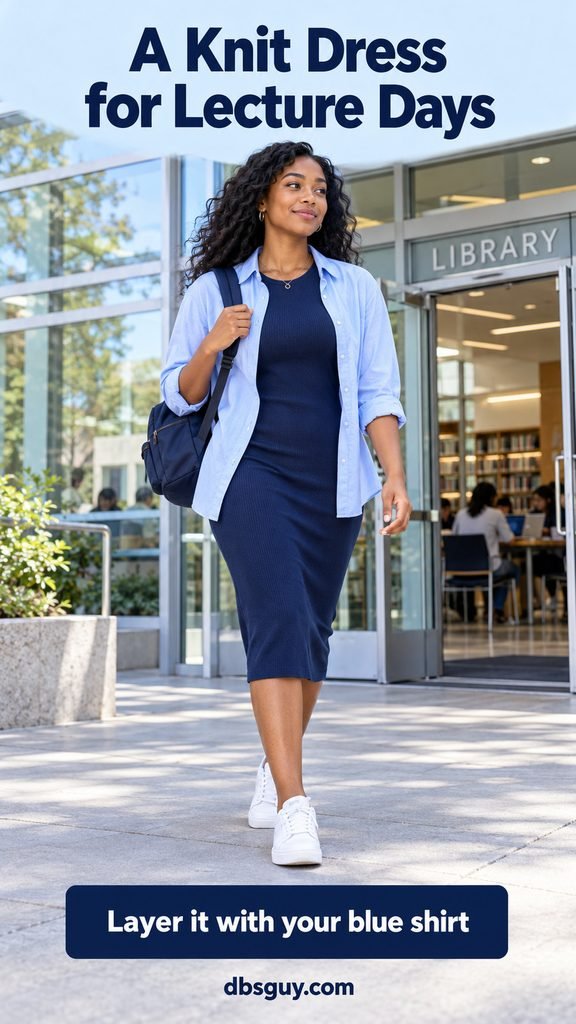
The blue shirt from look 3 becomes a light layer over a dress. Wearing it open creates a clear navy center, and rolled sleeves keep the shirt relaxed. This is useful when your walk outside is warm but you like more coverage indoors.
Choose a dress with room to walk and sit without repeatedly pulling down the hem. Test the shirt with your backpack on; a layer that bunches heavily under the straps may be more annoying than useful.
If you already own the dress, try this combination before buying a cardigan to go with it. The blue shirt can return to pants the next day.
11. A camel coat over gray and charcoal layers
The pieces: camel coat, light-gray mockneck, charcoal trousers, black ankle boots, and a black backpack.
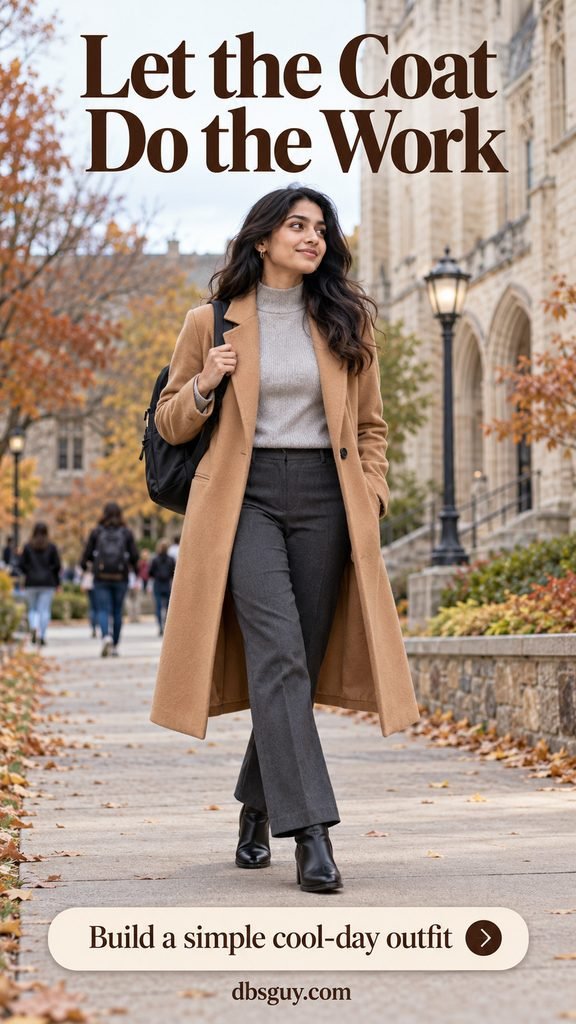
A camel coat gives familiar gray layers a defined outer shape. Keep the underneath simple so those pieces work when you take the coat off in class. The concept’s coat falls below the knee; choose a length that suits your route and storage space.
Try a secondhand coat over the layers you plan to wear. Check the lining, closures, pockets, and underarms, then add any cleaning or repair cost before deciding whether it is a bargain.
This is a dry, cool-day styling idea, not a warmth rating. In severe cold, rain, or ice, use outerwear and footwear suited to the weather. Your existing insulated jacket can replace camel without another purchase.
Check these details before spending anything
- Fabric: inspect opacity, snags, thinning, and drape in ordinary daylight. Fiber names alone do not tell you how well a garment is made.
- Movement: sit, reach, and walk in the complete outfit. Watch for pulling buttons, restrictive waistbands, and hems that catch under shoes.
- Secondhand condition: examine collars, cuffs, seams, zippers, and pockets. Compare measurements with something that fits, especially when returns are limited.
- Care: read the label before buying and cleaning. The FTC explains what garment care instructions cover, including washing, drying, and relevant warnings. Include the care routine in your budget decision.
- Finishing: remove visible lint. Check the garment’s instructions before pressing or steaming rather than applying the same heat to every fabric.
Questions about quiet luxury college outfits
Can I wear sneakers and a backpack with this style?
Yes. Use the shoes that work for your walking day; they do not have to be white. A plain backpack can sit comfortably alongside tailored trousers, a knit, or a dress. Let what you need to carry determine the bag.
Do I need cashmere, silk, or real leather?
No. Color, proportion, and restrained details create these understated combinations. A cotton knit, matte skirt, or washable trouser can serve that purpose. Compare the actual garment’s condition, fit, feel, and care requirements rather than treating an expensive fiber as a guarantee.
What should I buy first if I can afford only one piece?
Find the missing piece in the most outfits you already want to wear. If your tops work with only one pair of pants, another usable bottom may help most. If you already have several complete looks, try those first and keep the money for a real need.
How do I keep the outfits from feeling too formal?
Start with the tee and trousers or sweater and jeans. Add a blazer only when you want one. Repeating your everyday shoes and bag helps a more polished piece feel at home in your wardrobe.
Lay out one complete look with shoes and a bag before your next class day. Check that you can move comfortably, then take a quick phone photo. You will have an outfit to repeat and a clearer idea of whether anything is actually missing.